



Community Hub0 Subscribers
Community hub
from Wikipedia
| Years |
|---|
| Millennium |
| 2nd millennium |
| Centuries |
| Decades |
| Years |
| 1881 by topic |
|---|
| Humanities |
| By country |
| Other topics |
| Lists of leaders |
| Birth and death categories |
| Establishments and disestablishments categories |
| Works category |

.jpg)

1881 (MDCCCLXXXI) was a common year starting on Saturday of the Gregorian calendar and a common year starting on Thursday of the Julian calendar, the 1881st year of the Common Era (CE) and Anno Domini (AD) designations, the 881st year of the 2nd millennium, the 81st year of the 19th century, and the 2nd year of the 1880s decade. As of the start of 1881, the Gregorian calendar was 12 days ahead of the Julian calendar, which remained in localized use until 1923.
Events
[edit]January
[edit]- January 1–24 – Siege of Geok Tepe: Russian troops under General Mikhail Skobelev defeat the Turkomans.
- January 13 – War of the Pacific – Battle of San Juan and Chorrillos: The Chilean army defeats Peruvian forces.
- January 15 – War of the Pacific – Battle of Miraflores: The Chileans take Lima, capital of Peru, after defeating its second line of defense in Miraflores.
- January 24 – William Edward Forster, chief secretary for Ireland, introduces his Coercion Bill, which temporarily suspends habeas corpus so that those people suspected of committing an offence can be detained without trial; it goes through a long debate before it is accepted February 2. Note that Coercion bills had been passed almost annually in the 19th century,[1] with a total of 105 such bills passed from 1801 to 1921.[2]
- January 25 – Thomas Edison and Alexander Graham Bell form the Oriental Telephone Company.
February
[edit]- February 13 – The first issue of the feminist newspaper La Citoyenne is published by Hubertine Auclert in Paris.
- February 16 – The Canadian Pacific Railway is incorporated.[3]
- February 18 – Carlos Finlay introduces his discovery of the transmission of Yellow Fever by mosquitoes Aedes aegypti, in the Fifth International Sanitary Conference held in Washington, D.C.
- February 19 – Kansas becomes the first U.S. state to prohibit all alcoholic beverages.
- February 24 (February 12 Old Style) – Qing dynasty China signs the Treaty of Saint Petersburg with the Russian Empire providing for the return to China of the eastern part of the Ili Basin.[dubious – discuss]
- February 25 – Phoenix, Arizona, is incorporated.
March
[edit]- March 1 – The Cunard Line's SS Servia, the first large steel transatlantic liner, is launched at Clydebank in Scotland.[4]
- March 13 (March 1 Old Style) – Assassination of Alexander II of Russia: Emperor Alexander II of Russia ("the Liberator") is killed near his palace in Saint Petersburg when bombs are thrown at him, an act committed by the revolutionary socialist group Narodnaya Volya coordinated by Sophia Perovskaya but falsely blamed upon Russian Jews. He is succeeded by his son, Alexander III. The assassin Ignacy Hryniewiecki is also killed by his own bomb.
- March 23
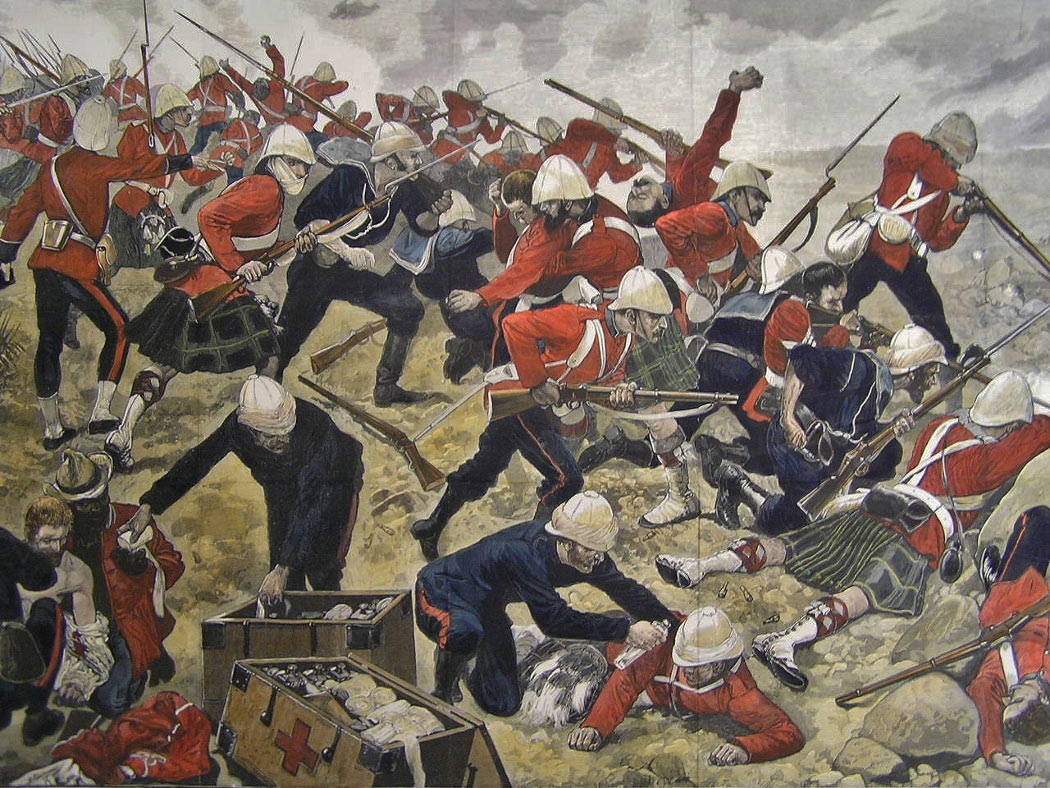
- The First Boer War comes to an end.
- A fire caused by a gas explosion destroys the Opéra de Nice in the south of France with fatalities.
- March 26 (March 14 Old Style) – The Principality of Romania is proclaimed the Kingdom of Romania.
- March 31 – Edward Rudolf founds the 'Church of England Central Society for Providing Homes for Waifs and Strays' (later The Children's Society).[5]
April
[edit]- April 11 – Spelman College is established in Atlanta, Georgia.
- April 14 – The Four Dead in Five Seconds Gunfight erupts in El Paso, Texas.
- April 15
- Temuco, Chile, is founded.
- Anti-Semitic pogroms in Southern Russia begin.
- April 21 – The University of Connecticut is founded as the Storrs Agricultural School.
- April 25 – Caulfield Grammar School is founded in Melbourne, Australia.
- April 28 – Billy the Kid escapes from his 2 jailers at the Lincoln County Jail in Mesilla, New Mexico, killing James Bell and Robert Ollinger, before stealing a horse and riding out of town.
- April 30 – SS Tararua hits a reef and sinks off the coast of New Zealand's South Island with only 20 survivors of the 151 on board.[6]
May
[edit]- May 12 – In North Africa, Tunisia becomes a French protectorate by the Treaty of Bardo.
- May 13 – The Pacific island of Rotuma cedes to Great Britain, becoming a dependency of the Colony of Fiji.

- May 16 – The world's first regular electric tram service is started near Berlin, by Siemens & Halske.
- May 21
- The American Red Cross is established by Clara Barton.
- The United States Tennis Association is established by a small group of tennis club members; the first U.S. Tennis Championships are played this year.
- May 22 (May 10 Old Style) – Prince Karl of Hohenzollern-Sigmaringen is crowned King of Romania.
June
[edit]- June 12 – The USS Jeannette is crushed in an Arctic Ocean ice pack.[7]
- June 18 – The League of the Three Emperors is resurrected.
- June 20 – The current Cincinnati Reds baseball team plays its first game.
- June 26 – War of the Pacific – Battle of Sangrar: Peruvian and Chilean forces battle to a draw.
July
[edit]- July 1 – General Order 70, the culmination of the Cardwell–Childers reforms of the British Army's organization, comes into effect.
- July 2 – Assassination of James A. Garfield: United States President James A. Garfield is shot by lawyer Charles J. Guiteau in Washington, D.C. The wound becomes infected, killing Garfield on September 19.
- July 4 – Tuskegee Institute opens in Alabama.
- July 7 – The first episode of Carlo Collodi's The Adventures of Pinocchio is published in Italy.
- July 14–20 – The London Social Revolutionary Congress is held; delegates include Marie Le Compte, Peter Kropotkin, Errico Malatesta, Saverio Merlino, Louise Michel, Nikolai Tchaikovsky and Émile Gautier.
- July 14 – Billy the Kid is shot and killed by Pat Garrett, outside Fort Sumner, New Mexico.
- July 20 – American Indian Wars: Sioux chief Sitting Bull leads the last of his people in surrender to United States troops at Fort Buford in Montana.
- July 23 – The Boundary Treaty of 1881 between Chile and Argentina is signed in Buenos Aires.[8]
August
[edit]- August 3 – The Pretoria Convention peace treaty is signed, officially ending the war between the Boers and Britain.
- August 27 – The fifth hurricane of the Atlantic season hits Florida and the Carolinas, killing about 700.
September
[edit]- September 5 – The Thumb Fire in the U.S. state of Michigan destroys over a million acres (4,000 km2) and kills 282 people.
- September 12 – Francis Howell High School (Howell Institute) in St. Charles, Missouri, and Stephen F. Austin High School in Austin, Texas, open on the same day, putting them in a tie for the title of the oldest public high school west of the Mississippi River.
- September 19 – President James A. Garfield dies eleven weeks after being shot. Vice President Chester A. Arthur becomes the 21st president of the United States.
- September 26 – Godalming becomes the first town in England to have its streets illuminated by electric light (hydroelectrically generated).[9]
October
[edit]- October 5–December 31 – The International Cotton Exposition is held in Atlanta, Georgia, USA.
- October 10 – Richard D'Oyly Carte's Savoy Theatre opens in London, the world's first public building to be fully lit by electricity, using Joseph Swan's incandescent light bulbs.[4]
- October 13 – Determined to bring about the revival of the Hebrew language as a way of unifying Jews, Eliezer Ben-Yehuda has what is believed to be the first conversation in Modern Hebrew, with friends living in Paris.
- October 26 – The Gunfight at the O.K. Corral occurs in Tombstone, Cochise County, Arizona, USA.
- October 29 – The satirical magazine Judge is first published in the United States.
November
[edit]- November 3 – The Mapuche uprising of 1881 begins with an attack on Quillem, Chile.
- November 9 – Brahms' Piano Concerto No. 2 premieres in Budapest with the composer as soloist.
- November 11 – The Clarkson Memorial to an anti-slavery campaigner in Wisbech (England) is completed and unveiled to the public.
- November 19 – A meteorite strikes the Earth near the village of Großliebenthal, a few kilometers southwest of Odesa, Ukraine.
- November – Newcastle United F.C. is founded in the northeast of England as Stanley F.C., with a further name change to Newcastle East End F.C. the following year.
December
[edit]- December 8 – At least 380 die in a fire at the Vienna Ringtheater.
- December 25 – Catholic religious congregation Mothers of the Forsaken and Saint Joseph of the Mountain is founded by Blessed Petra of Saint Joseph.
- December 25–27 – The Warsaw pogrom is carried out in Vistula Land, Russian Empire.[10]
- December 28 – Virgil Earp is ambushed in Tombstone, Arizona, and loses the use of his left arm.
Date unknown
[edit]- Kinshasa (the capital of the modern-day Democratic Republic of the Congo) is founded by Henry Morton Stanley as a trading outpost called Léopoldville.
- On the Isle of Man (an internally self-governing dependent territory of the United Kingdom), the House of Keys Election Act extends the franchise for the national legislature to spinsters and widows owning real estate of a certain value.
- The Pali Text Society is founded by British scholar Thomas William Rhys Davids, for the study of Pali (Ceylonese) texts.
- Some Vatican archives are opened to scholars for the first time.
- Abilene, Texas, is founded.
- Rafaela, Argentina, is formed.
- New York City's oldest independent school for girls, the Convent of the Sacred Heart New York (91st Street), is founded.
- Culford School, a public school in Suffolk, England, is founded as the East Anglian School for Boys.
- Meiji Law School, predecessor of Meiji University, is founded in Yurakucho, Tokyo, Japan.[11]
- Tokyo Law College, predecessor of Hosei University, is founded in Japan.[citation needed]
- The Vocational and Technical College of Tokyo, later Tokyo Institute of Technology, is founded in Japan.[12]
- Hattori Watch Shop (服部時計店) is founded by Kanetarō Hattori in Ginza, Tokyo, Japan, predecessor of watch brand Seiko.[13]
- Leyton Orient F.C. is founded in London.
Births
[edit]January
[edit]

- January 9
- Lascelles Abercrombie, English poet, critic (d. 1938)
- Giovanni Papini, Italian essayist, poet and novelist (d. 1956)
- January 13 – Essington Lewis, Australian industrialist (d. 1961)
- January 15 – John Rodgers, American naval officer, naval aviation pioneer (d. 1926)
- January 23 – Luisa Casati, Italian heiress, artistic muse and patron of the arts (d. 1957)
- January 26 – Henry Wadsworth Longfellow Dana, American academic and activist (d. 1950)
- January 30 – Whitford Kane, Irish-born American actor (d. 1956)
- January 31 – Irving Langmuir, American chemist, Nobel Prize laureate (d. 1957)
February
[edit]
- February 2 – Gustav Herglotz, German mathematician (d. 1953)
- February 4
- Eulalio Gutiérrez, President of Mexico (d. 1939)
- Fernand Léger, French artist (d. 1955)
- Kliment Voroshilov, Russian military officer, politician (d. 1969)
- February 11 – Carlo Carrà, Italian painter (d. 1966)
- February 12 – Anna Pavlova, Russian ballerina (d. 1931)
- February 13 – Eleanor Farjeon, English children's writer, poet (d. 1965)
- February 17 – Bess Streeter Aldrich, American fiction writer (d. 1954)
- February 21 – Kenneth J. Alford, British soldier, composer (d. 1945)
- February 25 – Alexei Rykov, Premier of Russia and Premier of the Soviet Union (d. 1938)
- February 27 – Sveinn Björnsson, 1st president of Iceland (d. 1952)
- February 28 – Otto Dowling, United States Navy Captain, 25th Governor of American Samoa (d. 1946)
March
[edit]
- March 4
- T. S. Stribling, American novelist (d. 1965)
- Richard C. Tolman, American mathematical physicist (d. 1948)
- March 9 – Ernest Bevin, British labour leader, politician and statesman (d. 1951)
- March 10 – Thomas Quinlan, English operatic impresario (d. 1951)
- March 17 – Walter Rudolf Hess, Swiss physiologist, Nobel Prize laureate (d. 1973)
- March 22 – Hans Wilsdorf, German-Swiss watchmaker, founder of Rolex (d. 1960)
- March 23
- Roger Martin du Gard, French writer, Nobel Prize laureate (d. 1958)
- Hermann Staudinger, German chemist, Nobel Prize laureate (d. 1965)
- March 25
- Béla Bartók, Hungarian composer (d. 1945)
- Mary Webb, English novelist (d. 1927)
- March 26 – Guccio Gucci, Italian fashion designer, founder of Gucci (d. 1953)
April
[edit]- April 1 – Octavian Goga, 37th prime minister of Romania (d. 1938)
- April 3 – Alcide De Gasperi, Italian statesman, politician, 30th prime minister of Italy (d. 1954)
- April 12 – Rudolf Ramek, 5th Chancellor of Austria (d. 1941)
- April 14 – Husain Salaahuddin, Maldivian writer (d. 1948)
- April 16 – Edward Wood, 1st Earl of Halifax, British politician (d. 1959)
- April 24 – Harald Giersing, Danish painter (d. 1927)
- April 26 – Friedrich Johannes Hugo von Engelken, Director of the United States Mint from 1916 to 1917 (d. 1930)
- April 27 – Móric Esterházy, 18th prime minister of Hungary (d. 1960)
May
[edit]- May 1 – Mary MacLane, Canadian writer (d. 1929)
- May 2 – Harry J. Capehart, American lawyer, politician, and businessperson (d. 1955)[14]
- May 4 – Alexander Kerensky, Russian politician (d. 1970)
- May 13 – Lima Barreto, Brazilian writer (d. 1922)
- May 14 – George Murray Hulbert, American politician (d. 1950)
- May 19 – Mustafa Kemal Atatürk, founder of the Republic of Turkiye and the first President of Turkey, Turkish field marshal and statesman (official birthday; d. 1938)
- May 20 – Władysław Sikorski, Polish general, politician (d. 1943)
- May 26 – Adolfo de la Huerta, 38th President of Mexico (d. 1955)
- May 30 – Georg von Küchler, German field marshal (d. 1968)
June
[edit]
- June 3 – Juliusz Rómmel, Polish general (d. 1967)
- June 9 – Marion Leonard, American silent film actress (d. 1956)
- June 11 – Maggie Gripenberg, Finnish dancer and choreographer (d. 1976)[15]
- June 17 – Tommy Burns, Canadian boxer (d. 1955)
July
[edit].jpg)

- July 3 – Leon Errol, Australian actor and comedian (d. 1951)
- July 4 – Ulysses S. Grant III, American soldier, planner (d. 1968)
- July 6 – Leo Bagrow, Russian-born historian of cartography (d. 1957)
- July 22 – Kenneth Whiting, United States Navy officer, submarine and naval aviation pioneer (d. 1943)
- July 27 – Hans Fischer, German chemist, Nobel Prize laureate (d. 1945)
- July 28 – Günther Quandt, German industrialist, founder of the industrial empire that in modern times includes BMW and Altana (d. 1954)
- July 30 – Smedley Butler, United States Marine Corps general (d. 1940)
August
[edit]- August 6 – Sir Alexander Fleming, Scottish biomedical researcher, recipient of the Nobel Prize in Physiology or Medicine (d. 1955)[16]
- August 7 – François Darlan, French admiral and 81st prime minister of France from 1941 to 1942 (d. 1942)
- August 8 – Paul Ludwig Ewald von Kleist, German field marshal (b. 1954)
- August 12 – Cecil B. DeMille, American film director, producer (d. 1959)
- August 19 – George Enescu, Romanian composer (d. 1955)
- August 20 – Edgar A. Guest, English poet (d. 1959)
- August 25 – Émile Aubrun French aviator (d. 1967)
September
[edit]- September 5
- Otto Bauer, Austrian Social Democratic politician (d. 1938)
- Henry Maitland Wilson, British field marshal (d. 1964)
- September 8
- Harry Hillman, American track athlete (d. 1945)
- Refik Saydam, 4th prime minister of Turkey (d. 1942)
- September 11 – Asta Nielsen, Danish silent film star (d. 1972)
- September 12 – Daniel Jones, British phonetician (d. 1967)
- September 15 – Ettore Bugatti, Italian car designer, founder of Bugatti (d. 1947)
- September 16 – Clive Bell, English art critic (d. 1964)
- September 17 – Aubrey Faulkner, South African cricketer (d. 1930)
- September 25
- Tullo Morgagni, Italian journalist, sports race organizer, and aviation enthusiast (d. 1919)[17]
- Lu Xun, leading figure of modern Chinese literature (d. 1936)
- September 26 – Hiram Wesley Evans, American Ku Klux Klan Imperial Wizard (d. 1966)
- September 29 – Ludwig von Mises, Austrian economist (d. 1973)
October
[edit]
- October 1
- William E. Boeing, American engineer, airplane manufacturer (d. 1956)
- Kanichiro Tashiro, Japanese general (d. 1937)[18]
- October 2 – Pannalal Bose, Indian educationist, first Education Minister of West Bengal,translated Rabindranath Tagore's ক্ষুধিত পাষাণ (Khudto Pashan) into The Hungry Stone (d. 1956)
- October 4 – Walther von Brauchitsch, German field marshal (d. 1948)
- October 6 – Kiyoshi Katsuki, Japanese general (d. 1950)[19]
- October 11 – Hans Kelsen, Austrian legal theorist (d. 1973)
- October 15
- William Temple, English Archbishop of Canterbury (d. 1944)
- P. G. Wodehouse, English-born comic writer (d. 1975)
- October 22 – Clinton Davisson, American physicist, Nobel Prize laureate (d. 1958)
- October 25 – Pablo Picasso, Spanish painter (d. 1973)
- October 26 – Margaret Wycherly, English stage, film actress (d. 1956)
November
[edit]
- November 4 – Gaby Deslys, French dancer, actress (d. 1920)
- November 5 – George A. Malcolm, American lawyer, Associate Justice of the Supreme Court of the Philippines and educator (d. 1961)
- November 8 – Robert Esnault-Pelterie, French aircraft designer, pioneer rocket theorist (d. 1957)
- November 12 – Maximilian von Weichs, German field marshal (d. 1954)
- November 14 – Nicholas Schenck, Russian-born American film studio executive (d. 1969)
- November 15 – Franklin P. Adams, American columnist, poet (d. 1960)
- November 24
- Al Christie, Canadian-born director, producer (d. 1951)
- Ye Gongchuo, Chinese politician, poet, and calligrapher (d. 1968)[20]
- November 25
- Jacob Fichman, Romanian-born Israeli poet, essayist (d. 1958)
- Pope John XXIII (b. Angelo Roncalli), Italian pontiff (1958–1963) (d. 1963)
- November 28 – Stefan Zweig, Austrian writer (d. 1942)
December
[edit]- December 2 – Heinrich Barkhausen, German physicist (d. 1956)
- December 3 – Henry Fillmore, American composer, bandleader (d. 1956)
- December 8 – Tuomas Bryggari, Finnish politician (d. 1964)[21]
- December 16 – Henri Dentz, French general (d. 1945)
- December 23 – Juan Ramón Jiménez, Spanish writer, Nobel Prize laureate (d. 1958)
- December 25 – John Dill, British Army field marshal (d. 1944)[22]
- December 30 – Wiktor Thommée, Polish general (d. 1962)
Deaths
[edit]January–June
[edit]

_detail.jpg)


- January 1 – Louis Auguste Blanqui, French socialist, political activist (b. 1805)
- January 3 – Anna McNeill Whistler, James Whistler's mother, subject of his painting (b. 1804)
- January 18 – Auguste Mariette, French Egyptologist (b. 1821)
- January 21 – Wilhelm Matthias Naeff, member of the Swiss Federal Council (b. 1802)
- January 24 – Frances Stackhouse Acton, British botanist, archaeologist, writer and artist (b. 1794)
- February 5 – Thomas Carlyle, Scottish writer, historian (b. 1795)
- February 6 – Pieter Mijer, Governor-General of the Dutch East Indies (b. 1812)
- February 8 – Marie Jules Dupré, French admiral and colonial governor (b. 1813)
- February 9 – Fyodor Dostoyevsky, Russian novelist (b. 1821)
- February 14 – Fernando Wood, New York City mayor (b. 1812)
- February 23 – Robert F. R. Lewis, American naval officer (b. 1826)
- March 2 – Sir John Cracroft Wilson, British civil servant, and politician in New Zealand (b. 1808)
- March 13 – Emperor Alexander II of Russia (assassinated) (b. 1818)
- March 28 – Modest Mussorgsky, Russian composer (b. 1839)
- March 31 – Lucy Virginia French, American blank verse poet (b. 1825)
- April 19 – Benjamin Disraeli, Prime Minister of the United Kingdom (b. 1804)
- April 26 – Ludwig Freiherr von und zu der Tann-Rathsamhausen, Bavarian general (b. 1815)
- April 27 – Ludwig von Benedek, Austrian general (b. 1804)
- May 14 – Mary Seacole, British nurse (b. 1805)
- May 24 – Samuel Palmer, English artist (b. 1805)
- May 25 – Giuseppe Maria Giulietti, Italian explorer (b. 1847)
- June 6 – Henri Vieuxtemps, Belgian composer (b. 1820)
- June 28 – Jules Armand Dufaure, 3-time prime minister of France (b. 1798)
- June 30 – Gustav von Alvensleben, Prussian general (b. 1803)
July – December
[edit]

,_by_Maurits_Verveer.jpg)


- July 1
- Baron Jules Dupotet de Sennevoy, French writer (b. 1796)
- Hermann Lotze, German philosopher and logician (b. 1817)
- July 4 – J. V. Snellman, Finnish statesman and an influential Fennoman philosopher (b. 1806)[23]
- July 14 – Billy the Kid, American gunslinger (b. 1859)
- July 17 – Jim Bridger, American explorer and trapper (b. 1804)
- August 3 – William Fargo, American expressman and politician, Mayor of Buffalo, New York (b. 1818)
- August 11 – Jane Digby, English adventurer (b. 1807)
- August 15 – Alexandru G. Golescu, 11th prime minister of Romania (b. 1819)
- September 7 – Sidney Lanier, American writer (b. 1842)
- September 8 – Prince Frederick of the Netherlands, Dutch noble, general (b. 1797)
- September 13 – Ambrose Burnside, American Civil War general, inventor, politician from Rhode Island (b. 1824)
- September 18 – Joseph Higginson, British Royal Marine in the Napoleonic Wars (b. 1792)
- September 19 – James A. Garfield, 20th President of the United States (b. 1831)
- September 22 – Solomon L. Spink, U.S. Congressman from Illinois (b. 1831)
- October 3
- Orson Pratt, American religious leader (b. 1811)
- Princess Sumiko, Japanese princess (b. 1829)
- October 31 – George W. De Long, American naval officer, explorer (starvation) (b. 1844)
- December 4 – Hugh Judson Kilpatrick, American general, politician, and diplomat (b. 1836)
- December 18 – George Edmund Street, British architect (b. 1824)
See also
[edit]References
[edit]- ^ "Government of Ireland Bill (No. 265.); Second Reading". Parliamentary Debates (Hansard). Vol. 17. House of Lords. September 5, 1893. col. 5. Retrieved November 18, 2016.
I believe that in 87 years there have been 87 Coercion Acts or renewal of Coercion Acts in that country
- ^ Farrell, Michael (1986). Emergency legislation: the apparatus of repression. Field Day Pamphlet. Vol. 11. p. 5.
- ^ "An Act Respecting the Canadian Pacific Railway"
- ^ a b Williams, Hywel (2005). Cassell's Chronology of World History. London: Weidenfeld & Nicolson. pp. 434–435. ISBN 0-304-35730-8.
- ^ "A Brief History of the Waifs and Strays' Society". Hidden Lives Revealed. Archived from the original on July 19, 2011. Retrieved August 25, 2011.
- ^ Hutching, Gerard (September 21, 2007). "Shipwrecks – SS Tararua". Te Ara – the Encyclopedia of New Zealand. Retrieved March 29, 2025.
- ^ "Dying for data: the ill-fated USS Jeannette and the pursuit of scientific discovery | National Snow and Ice Data Center". nsidc.org. Retrieved July 20, 2025.
- ^ Lacoste, Pablo (2002). "La guerra entre Chile y Argentina: Una mirada desde Chile". Historia (in Spanish). 35: 211–249. doi:10.4067/S0717-71942002003500009.
- ^ "Godalming Power Station". Engineering Timelines. Archived from the original on July 16, 2011. Retrieved July 6, 2010.
- ^ Kelemen, Lawrence. "The History of Christmas". simpletoremember.com. SimpleToRemember.com - Judaism Online. Retrieved February 8, 2016.
- ^ "History | Meiji University".
- ^ "History".
- ^ "沿革 | グループについて".
- ^ "Death Record Detail: Harry J. Capehart". West Virginia Archives and History, West Virginia Department of Arts, Culture and History. 2020. Archived from the original on October 27, 2020. Retrieved October 25, 2020.
- ^ Tammikuu: Maggie Gripenbergin muistikirjat – Teatterimuseo (in Finnish)
- ^ "BBC - History - Alexander Fleming". bbc.co.uk. Retrieved January 3, 2017.
- ^ "Tullo Morgagni, il forlivese che inventò il Giro d'Italia" (in Italian). Retrieved January 7, 2016.
- ^ Ammentorp, Steen. "Tashiro Kanishiro". The Generals of World War II.
- ^ Ammenthorp, Steen. "Kiyoshi Katsuki". The Generals of World War II.
- ^ Qijie (奇洁) (August 7, 2018). "纪念|叶恭绰逝世五十周年:衣被满天下 谁能识其恩" [Commemorating the 50th Anniversary of Ye Gongchuo's Death: Who Can Recognize His Kindness When His Clothes and Bedding Are All Over the World?]. The Paper (in Chinese). Archived from the original on September 24, 2024. Retrieved September 24, 2024.
- ^ "Kansanedustajat: Tuomas Bryggari" (in Finnish). Helsinki, Finland: Parliament of Finland. Archived from the original on June 11, 2011.
- ^ "Sir John Dill". Oxford Dictionary of National Biography (online ed.). Oxford Dictionary of National Biography. doi:10.1093/ref:odnb/32826. (Subscription, Wikipedia Library access or UK public library membership required.)
- ^ Johan Vilhelm Snellman at the Encyclopædia Britannica
from Grokipedia
Events
January
Irving Langmuir was born on January 31, 1881, in Brooklyn, New York, to a family of Swiss-German descent; he later developed foundational work in surface chemistry, earning the Nobel Prize in Chemistry in 1932 for discoveries enabling innovations like the gas-filled incandescent lamp and atomic hydrogen welding, which advanced industrial applications through empirical experimentation on adsorption and molecular forces.[6] Wilhelm Lehmbruck was born on January 4, 1881, in Meiderich, near Duisburg, Germany, into a working-class miner's family; as a sculptor influenced by realism and later expressionism, his elongated figures in works like Seated Youth (1910–1911) reflected human anguish and spatial distortion, contributing to early 20th-century modernist sculpture amid pre-World War I cultural shifts.[7] Vajiravudh, later King Rama VI of Siam (modern Thailand), was born on January 1, 1881, in the Grand Palace, Bangkok; educated at Eton and Oxford, he ascended the throne in 1910 and pursued policies of national consolidation, including promoting the Thai language in education and fostering military reforms to preserve sovereignty against colonial pressures, though his reign strained finances through patronage and infrastructure projects.February
On February 12, Anna Pavlova was born in a regimental hospital in Saint Petersburg, Russia, to Lyubov Pavlovna, a washerwoman from peasant stock, and Matvey Pavlov, a reserve soldier whose background included possible Jewish ancestry; the family resided in modest circumstances near the city.[8] At age eight, inspired by a performance of The Sleeping Beauty, she began ballet lessons, overcoming physical frailties like weak ankles to enter the Imperial Ballet School in 1891 despite examiners' initial reluctance.[9] Pavlova's career advanced rapidly, becoming prima ballerina of the Mariinsky Theatre by 1906, where she championed classical technique through roles emphasizing purity and emotional depth, later touring internationally to sustain Russian ballet heritage amid revolutionary disruptions.[10] Kliment Voroshilov entered the world on February 4 in Verkhneye, a rural settlement in the Yekaterinoslav Governorate of the Russian Empire (present-day Ukraine), born to Yefrem Voroshilov, an illiterate railway laborer, and a peasant mother in conditions of extreme poverty that compelled young Kliment to herd livestock and work in coal mines from age seven.[11] Apprenticed as a metalworker, he engaged in Marxist study circles by his teens, participating in strikes and the 1905 unrest, which propelled his ascent in Bolshevik ranks through organizational roles in Ukraine and the Caucasus.[12] Voroshilov's early proletarian experiences informed his lifelong commitment to revolutionary politics, culminating in high Soviet offices including Marshal of the Soviet Union and Chairman of the Presidium of the Supreme Soviet, though his influence waned amid internal purges.[11] On February 1, Puerto Rican composer José Ignacio Quintón was born in Caguas to a family immersed in local musical traditions, producing works like El coquí that drew on folk elements while engaging European forms.[13] His oeuvre, including sacred music and the Requiem por Angel Mislán, reflected a synthesis of indigenous rhythms with classical structure, contributing modestly to Caribbean cultural expression before his death in 1925.[13]March
Béla Bartók, a composer and ethnomusicologist pivotal in preserving Hungarian folk traditions amid the Austro-Hungarian Empire's multi-ethnic cultural pressures, was born on March 25 in Nagyszentmiklós, Kingdom of Hungary (now Sânnicolau Mare, Romania).[14] His later systematic collection of over 3,500 Hungarian peasant songs with Zoltán Kodály emphasized empirical documentation of rural melodies, resisting cosmopolitan dilutions and modernist abstractions that often eroded national musical identities. This work grounded his compositions in authentic ethnic roots, countering the era's tendency toward universalist or urban-influenced forms. Todor Aleksandrov, a Bulgarian revolutionary leader advocating for Macedonian autonomy under Bulgarian cultural influence against Ottoman and later Serbian dominance, was born on March 4 in Struga, Ottoman Empire (now North Macedonia).[15] His organizational efforts in the Internal Macedonian Revolutionary Organization reflected nationalist drives to maintain ethnic coherence in contested Balkan regions. Thomas Sigismund Stribling, an American author whose regionalist novels depicted Southern life with attention to empirical social dynamics, was born on March 4 in Clifton, Tennessee.[15] His 1933 Pulitzer-winning The Store drew from observed rural transformations, prioritizing causal historical factors over idealized narratives.April
On April 2, the sixth Impressionist exhibition opened in Paris at the residence of Ernest May, featuring approximately 187 works by 13 participants including Edgar Degas, Mary Cassatt, and Camille Pissarro, though core figures like Claude Monet and Pierre-Auguste Renoir declined to join, marking a shift toward pastels and emerging divisions within the group.[16][17] April 11 saw the opening of the Atlanta Baptist Female Seminary, later renamed Spelman College, in the basement of Friendship Baptist Church in Atlanta, Georgia, founded by Sophia B. Packard and Harriet E. Giles to provide higher education to African American women, with initial enrollment of 11 students supported by the Women's American Baptist Home Mission Society.[18] In El Paso, Texas, on April 14, the "Four Dead in Five Seconds" gunfight erupted on El Paso Street when a dispute between American and Mexican factions escalated, leading City Marshal Dallas Stoudenmire to draw his pistols and kill three men—two Mexicans and one local figure—in rapid succession amid crossfire that also wounded others, solidifying Stoudenmire's reputation as a gunfighter.[19] April 16 brought Bat Masterson to Dodge City, Kansas, where he engaged in his final gun battle near the train station while defending his brother James against opponents A.J. Peacock and Al Updegraff; shots exchanged resulted in the death of Updegraff and a bystander, with Masterson unharmed, concluding his active involvement in frontier shootouts.[20] The Natural History Museum in South Kensington, London, opened to the public on April 18, housing collections previously under the British Museum's natural history department in a new Romanesque Revival building designed by Alfred Waterhouse, displaying over 80 million specimens focused on zoology, botany, and mineralogy to advance scientific study.[21] Gilbert and Sullivan's operetta Patience; or, Bunthorne's Bride premiered on April 23 at the Opera Comique in London, running for 578 performances and satirizing the Aesthetic movement through characters like the poet Reginald Bunthorne, with music by Arthur Sullivan and libretto by W.S. Gilbert, later transferring to the Savoy Theatre.[22]May
Mustafa Kemal Atatürk was born on 19 May 1881 in Salonika (modern Thessaloniki), then a cosmopolitan port city in the Ottoman Empire's Rumelia province, to Ali Rıza Efendi, a low-ranking civil servant who worked as a customs officer and later a timber merchant, and Zübeyde Hanım, from a modestly prosperous farming family.[23][24] The Ottoman Empire at this time faced mounting challenges, including military defeats in recent wars, financial dependence on European creditors, and ethnic-nationalist unrest in its Balkan territories, which contributed to a context of attempted Tanzimat reforms but persistent administrative inefficiency and corruption. Atatürk's early education included brief attendance at a traditional religious school before transferring to a modern secular school, reflecting the empire's uneven push toward Western-style modernization amid traditionalist resistance.[23] Other notable births included Ed Walsh on 14 May in Plains Township, Pennsylvania, who became a Major League Baseball pitcher known for his spitball technique and career record of 195 wins against 126 losses, earning induction into the Baseball Hall of Fame in 1946; discrepancies in records place his birth date variably as 14 or 19 May and year as 1881 or 1882, but census and early accounts support 1881.[25][26]June
- June 3 – Mikhail Larionov, Russian avant-garde painter and co-founder of Rayonism, born in Tiraspol, Russian Empire (died 1964).
- June 17 – Tommy Burns (Noah Brusso), Canadian professional boxer and world heavyweight champion from 1906 to 1908, born in Hanover, Ontario (died 1955).[27]
- June 23 – Hermann Staudinger, German organic chemist awarded the 1953 Nobel Prize in Chemistry for his research on macromolecules, born in Worms, German Empire (died 1965).[28]
July
Smedley Darlington Butler was born on July 30, 1881, in West Chester, Pennsylvania, to Thomas Stalker Butler, a lawyer and Civil War veteran, and Maud Darlington Butler. He joined the U.S. Marine Corps at age 16 by lying about his age, embarking on a 33-year career that included combat in the Philippine–American War, Boxer Rebellion, and interventions in Mexico, Haiti, and the Dominican Republic. Butler earned two Medals of Honor—the only Marine to do so—for separate actions in Veracruz, Mexico (1914), and Haiti (1915), where he led forces against Caco rebels, demonstrating tactical acumen in suppressing guerrilla resistance. Retiring as a major general in 1931, he later exposed alleged fascist coup attempts against President Franklin D. Roosevelt in the 1933 Business Plot testimony before Congress and authored War Is a Racket (1935), arguing that U.S. foreign wars primarily benefited corporate interests through empirical analysis of military-industrial profits from interventions like those in Nicaragua and China.[29][30][31] John Joseph Evers, born July 21, 1881, in Troy, New York, emerged as a key figure in early professional baseball, debuting with the Chicago Cubs in 1902 after brief stints in minor leagues. As second baseman, his defensive prowess and rivalry-fueled intensity contributed to four National League pennants and World Series victories in 1907, 1908, and 1910, with career statistics including a .270 batting average over 1,805 games, 71 home runs, and superior fielding evidenced by leading the league in double plays multiple times. Immortalized in Franklin P. Adams' 1910 poem "Baseball's Sad Lexicon" for the Cubs' infield synergy—"Tinker to Evers to Chance"—Evers exemplified disciplined execution in high-stakes play, later managing teams and serving as a Cubs executive until his 1947 Hall of Fame induction based on peer evaluations of his strategic impact.[32] Leon Errol (born Leonce Errol Sims), born July 3, 1881, in Sydney, Australia, began in vaudeville as a dancer and comedian, migrating to the U.S. around 1900 to perform in musicals and revues. His slapstick style, marked by physical comedy and drunkard personas, led to Broadway successes like The Ziegfeld Follies and over 90 film roles from the 1930s, including the Mexican Spitfire series, where his timing and exaggerated falls drew from observable stage traditions refined through decades of touring. Errol's career spanned circuses, Shakespearean troupes, and Hollywood, culminating in supporting parts until his death in 1951, with empirical success measured by consistent bookings amid vaudeville's decline.[33]August
Alexander Fleming, the Scottish physician and microbiologist who later identified penicillin as an antibacterial agent through observation of bacterial inhibition by mold in his laboratory cultures, was born on August 6, 1881, at Lochfield Farm near Darvel in Ayrshire, Scotland, to Hugh Fleming, a farmer, and Grace Stirling Morton; he was the seventh of eight surviving children in a rural family where empirical observation of nature influenced his early interests, though formal medical training came later via scholarships and apprenticeship with an ophthalmic surgeon brother in London.[34][35] Other inventors born that month included limited figures with direct ties to empirical advancements; for instance, on August 14, Francis Ford, an early American film director and actor who pioneered narrative techniques in cinema through practical experimentation with motion picture technology, entered the world in Portland, Maine.[36] Scientific and leadership figures from August 1881 births emphasized practical innovation paths, contrasting with more theoretical pursuits in adjacent months, with Fleming's background in a self-reliant farming environment underscoring causal links between environmental exposure and methodical scientific inquiry later in life.[37]September
On September 11, Asta Nielsen was born in Vesterbro, Copenhagen, Denmark, emerging as a pioneering figure in early cinema known for her expressive acting style that influenced silent film techniques across Europe.[38][39] She starred in over 70 films, including the 1910 adaptation of Afgrunden, which showcased her ability to convey emotion through subtle gestures, predating widespread use of intertitles. Nielsen's career highlighted the transition from theater to screen, with her international tours establishing her as one of the first global film stars, though her work later declined with the advent of sound films.[38] Clive Bell, an English art critic associated with the Bloomsbury Group, was born on September 16 in East Shefford, Berkshire.[40] Bell authored Art in 1914, introducing "significant form" as a criterion for aesthetic value, emphasizing line, color, and form over narrative content, which bolstered the appreciation of post-impressionist artists like Cézanne and Matisse.[40] His theories, rooted in formalist principles, shaped modernist criticism but drew critique for sidelining cultural or historical context in favor of pure visual impact. Bell's writings facilitated the integration of avant-garde art into British discourse, influencing exhibitions and public taste during the interwar period. Alexander Kanoldt, a German painter aligned with New Objectivity, was born on September 29. His early landscapes and still lifes evolved into precise, geometric depictions that rejected impressionistic subjectivity, reflecting a technical focus on structure and light akin to early modernism. Kanoldt's contributions to magical realism emphasized empirical observation, contributing to post-World War I artistic shifts toward clarity amid social upheaval.October
Pablo Picasso was born on 25 October 1881 in Málaga, Andalusia, Spain, at 23:15.[41] He was the first child of José Ruiz y Blasco, a professor of drawing at the School of Fine Arts and Crafts in Málaga, and María Picasso y López, whose maiden name he later adopted professionally.[42][43] The family resided in a house on the Plaza de la Merced, and Picasso's father recognized his son's artistic aptitude early, providing initial instruction in drawing and painting.[44] Other notable births in October 1881 included Sarah Padden on 16 October in Sunderland, England, who became an actress known for roles in films such as A Woman's Face (1941).[45] Limited records highlight additional figures from the month, reflecting the era's documentation constraints, with Picasso emerging as the most prominent due to his later contributions to modern art.[46]November
Angelo Giuseppe Roncalli, later known as Pope John XXIII, was born on November 25, 1881, in Sotto il Monte, Bergamo, Italy, as the third of thirteen children in a sharecropping family.[47] He pursued ecclesiastical studies and was ordained a priest in 1904, eventually rising through diplomatic roles in the Holy See before his election as pope in 1958.[47] His papacy, lasting until 1963, is noted for convening the Second Vatican Council, which addressed the Church's engagement with modernity and promoted ecumenism, though these reforms sparked ongoing debates about doctrinal continuity.[47] Other individuals born in November 1881 made contributions in literature and science with lasting, though less globally dominant, legacies. Stefan Zweig was born on November 28, 1881, in Vienna, Austria, to a wealthy Jewish family; he became a prolific writer whose novellas, such as Amok and Letter from an Unknown Woman, explored psychological depths, and his historical biographies influenced interwar European intellectual circles before his suicide in 1942 amid rising totalitarianism.[48] Robert Esnault-Pelterie, born on November 8, 1881, in Paris, France, advanced early aviation through glider designs and founded principles of astronautics, publishing foundational work on rocketry that informed later space exploration efforts despite limited contemporary recognition.[48] These figures exemplify diverse fields where empirical innovations and narrative insights endured beyond immediate fame.December
On December 3, British-American explorer Henry Morton Stanley founded the settlement of Léopoldville (present-day Kinshasa) on the Congo River during his expedition on behalf of King Leopold II of Belgium, marking a key step in European colonization of Central Africa.[49] The first edition of the Los Angeles Times was published on December 4 by printers Jesse H. Yarnell and Thomas Gardiner, initially as a weekly four-page paper aimed at promoting real estate and civic development in the growing city.[50] December 5 saw the convening of the 47th United States Congress in Washington, D.C., the first under President Chester A. Arthur following the death of James A. Garfield, with Republicans holding slim majorities in both houses amid ongoing debates over civil service reform. In his first annual message to Congress on December 6, President Arthur addressed the nation on Garfield's assassination, urged improvements in civil service to prevent patronage abuses, and highlighted foreign policy matters including tensions in the Pacific and European conferences on geography and beneficence.[51] A catastrophic fire erupted at Vienna's Ring Theatre on December 8 during a performance of The Tale of Orpheus, ignited by a gas lamp; faulty construction, locked exits, and panic led to at least 620 deaths and hundreds injured, prompting Austria to enact stricter building and fire safety regulations across theaters.[52][49] December 15 marked the resignation of U.S. Secretary of State James G. Blaine, who had served under Garfield and clashed with Arthur's administration over policy directions, including South American relations; Frederick T. Frelinghuysen succeeded him.[53]Date unknown
The Gross-Lichterfelde Tramway, constructed by Siemens & Halske, commenced operation in 1881 as the world's first electric streetcar line, spanning 2.4 kilometers in a Berlin suburb. Powered by overhead lines delivering 180 volts DC to motors on the cars, it demonstrated feasible electric propulsion for public transport, though limited to a short route and low speed of about 6 km/h due to early battery and motor constraints. This development marked an incremental step in electrification, prioritizing practical engineering over exaggerated claims of immediate urban transformation.[54]Births
January
Irving Langmuir was born on January 31, 1881, in Brooklyn, New York, to a family of Swiss-German descent; he later developed foundational work in surface chemistry, earning the Nobel Prize in Chemistry in 1932 for discoveries enabling innovations like the gas-filled incandescent lamp and atomic hydrogen welding, which advanced industrial applications through empirical experimentation on adsorption and molecular forces.[6] Wilhelm Lehmbruck was born on January 4, 1881, in Meiderich, near Duisburg, Germany, into a working-class miner's family; as a sculptor influenced by realism and later expressionism, his elongated figures in works like Seated Youth (1910–1911) reflected human anguish and spatial distortion, contributing to early 20th-century modernist sculpture amid pre-World War I cultural shifts.[7] Vajiravudh, later King Rama VI of Siam (modern Thailand), was born on January 1, 1881, in the Grand Palace, Bangkok; educated at Eton and Oxford, he ascended the throne in 1910 and pursued policies of national consolidation, including promoting the Thai language in education and fostering military reforms to preserve sovereignty against colonial pressures, though his reign strained finances through patronage and infrastructure projects.February
On February 12, Anna Pavlova was born in a regimental hospital in Saint Petersburg, Russia, to Lyubov Pavlovna, a washerwoman from peasant stock, and Matvey Pavlov, a reserve soldier whose background included possible Jewish ancestry; the family resided in modest circumstances near the city.[8] At age eight, inspired by a performance of The Sleeping Beauty, she began ballet lessons, overcoming physical frailties like weak ankles to enter the Imperial Ballet School in 1891 despite examiners' initial reluctance.[9] Pavlova's career advanced rapidly, becoming prima ballerina of the Mariinsky Theatre by 1906, where she championed classical technique through roles emphasizing purity and emotional depth, later touring internationally to sustain Russian ballet heritage amid revolutionary disruptions.[10] Kliment Voroshilov entered the world on February 4 in Verkhneye, a rural settlement in the Yekaterinoslav Governorate of the Russian Empire (present-day Ukraine), born to Yefrem Voroshilov, an illiterate railway laborer, and a peasant mother in conditions of extreme poverty that compelled young Kliment to herd livestock and work in coal mines from age seven.[11] Apprenticed as a metalworker, he engaged in Marxist study circles by his teens, participating in strikes and the 1905 unrest, which propelled his ascent in Bolshevik ranks through organizational roles in Ukraine and the Caucasus.[12] Voroshilov's early proletarian experiences informed his lifelong commitment to revolutionary politics, culminating in high Soviet offices including Marshal of the Soviet Union and Chairman of the Presidium of the Supreme Soviet, though his influence waned amid internal purges.[11] On February 1, Puerto Rican composer José Ignacio Quintón was born in Caguas to a family immersed in local musical traditions, producing works like El coquí that drew on folk elements while engaging European forms.[13] His oeuvre, including sacred music and the Requiem por Angel Mislán, reflected a synthesis of indigenous rhythms with classical structure, contributing modestly to Caribbean cultural expression before his death in 1925.[13]March
Béla Bartók, a composer and ethnomusicologist pivotal in preserving Hungarian folk traditions amid the Austro-Hungarian Empire's multi-ethnic cultural pressures, was born on March 25 in Nagyszentmiklós, Kingdom of Hungary (now Sânnicolau Mare, Romania).[14] His later systematic collection of over 3,500 Hungarian peasant songs with Zoltán Kodály emphasized empirical documentation of rural melodies, resisting cosmopolitan dilutions and modernist abstractions that often eroded national musical identities. This work grounded his compositions in authentic ethnic roots, countering the era's tendency toward universalist or urban-influenced forms. Todor Aleksandrov, a Bulgarian revolutionary leader advocating for Macedonian autonomy under Bulgarian cultural influence against Ottoman and later Serbian dominance, was born on March 4 in Struga, Ottoman Empire (now North Macedonia).[15] His organizational efforts in the Internal Macedonian Revolutionary Organization reflected nationalist drives to maintain ethnic coherence in contested Balkan regions. Thomas Sigismund Stribling, an American author whose regionalist novels depicted Southern life with attention to empirical social dynamics, was born on March 4 in Clifton, Tennessee.[15] His 1933 Pulitzer-winning The Store drew from observed rural transformations, prioritizing causal historical factors over idealized narratives.April
On April 2, the sixth Impressionist exhibition opened in Paris at the residence of Ernest May, featuring approximately 187 works by 13 participants including Edgar Degas, Mary Cassatt, and Camille Pissarro, though core figures like Claude Monet and Pierre-Auguste Renoir declined to join, marking a shift toward pastels and emerging divisions within the group.[16][17] April 11 saw the opening of the Atlanta Baptist Female Seminary, later renamed Spelman College, in the basement of Friendship Baptist Church in Atlanta, Georgia, founded by Sophia B. Packard and Harriet E. Giles to provide higher education to African American women, with initial enrollment of 11 students supported by the Women's American Baptist Home Mission Society.[18] In El Paso, Texas, on April 14, the "Four Dead in Five Seconds" gunfight erupted on El Paso Street when a dispute between American and Mexican factions escalated, leading City Marshal Dallas Stoudenmire to draw his pistols and kill three men—two Mexicans and one local figure—in rapid succession amid crossfire that also wounded others, solidifying Stoudenmire's reputation as a gunfighter.[19] April 16 brought Bat Masterson to Dodge City, Kansas, where he engaged in his final gun battle near the train station while defending his brother James against opponents A.J. Peacock and Al Updegraff; shots exchanged resulted in the death of Updegraff and a bystander, with Masterson unharmed, concluding his active involvement in frontier shootouts.[20] The Natural History Museum in South Kensington, London, opened to the public on April 18, housing collections previously under the British Museum's natural history department in a new Romanesque Revival building designed by Alfred Waterhouse, displaying over 80 million specimens focused on zoology, botany, and mineralogy to advance scientific study.[21] Gilbert and Sullivan's operetta Patience; or, Bunthorne's Bride premiered on April 23 at the Opera Comique in London, running for 578 performances and satirizing the Aesthetic movement through characters like the poet Reginald Bunthorne, with music by Arthur Sullivan and libretto by W.S. Gilbert, later transferring to the Savoy Theatre.[22]May
Mustafa Kemal Atatürk was born on 19 May 1881 in Salonika (modern Thessaloniki), then a cosmopolitan port city in the Ottoman Empire's Rumelia province, to Ali Rıza Efendi, a low-ranking civil servant who worked as a customs officer and later a timber merchant, and Zübeyde Hanım, from a modestly prosperous farming family.[23][24] The Ottoman Empire at this time faced mounting challenges, including military defeats in recent wars, financial dependence on European creditors, and ethnic-nationalist unrest in its Balkan territories, which contributed to a context of attempted Tanzimat reforms but persistent administrative inefficiency and corruption. Atatürk's early education included brief attendance at a traditional religious school before transferring to a modern secular school, reflecting the empire's uneven push toward Western-style modernization amid traditionalist resistance.[23] Other notable births included Ed Walsh on 14 May in Plains Township, Pennsylvania, who became a Major League Baseball pitcher known for his spitball technique and career record of 195 wins against 126 losses, earning induction into the Baseball Hall of Fame in 1946; discrepancies in records place his birth date variably as 14 or 19 May and year as 1881 or 1882, but census and early accounts support 1881.[25][26]June
- June 3 – Mikhail Larionov, Russian avant-garde painter and co-founder of Rayonism, born in Tiraspol, Russian Empire (died 1964).
- June 17 – Tommy Burns (Noah Brusso), Canadian professional boxer and world heavyweight champion from 1906 to 1908, born in Hanover, Ontario (died 1955).[27]
- June 23 – Hermann Staudinger, German organic chemist awarded the 1953 Nobel Prize in Chemistry for his research on macromolecules, born in Worms, German Empire (died 1965).[28]