
Recent from talks
Aboriginal Tasmanians
Knowledge base stats:
Talk channels stats:
Members stats:
Aboriginal Tasmanians
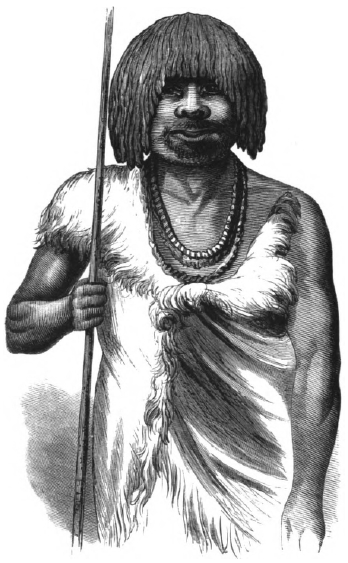
The Aboriginal Tasmanians (palawa kani: Palawa or Pakana) are the Aboriginal people of the Australian island of Tasmania, located south of the mainland. At the time of European contact, Aboriginal Tasmanians were divided into a number of distinct ethnic groups. For much of the 20th century, the Tasmanian Aboriginal people were widely, and erroneously, thought of as extinct and intentionally exterminated by white settlers. Contemporary figures (2016) for the number of people of Tasmanian Aboriginal descent vary according to the criteria used to determine this identity, ranging from 6,000 to over 23,000.
First arriving in Tasmania (then a peninsula of Australia) around 35,000 years ago, the ancestors of the Aboriginal Tasmanians were cut off from the Australian mainland by rising sea levels c. 6000 BC. They were entirely isolated from the outside world for 8,000 years until European contact.
Before British colonisation of Tasmania in 1803, there were an estimated 3,000–15,000 Aboriginal Tasmanians. The Aboriginal Tasmanian population suffered a drastic drop in numbers within three decades, so that by 1835 only some 400 full-blooded Tasmanian Aboriginal people survived, most of this remnant being incarcerated in camps where all but 47 died within the following 12 years. No consensus exists as to the cause, over which a major controversy arose. The traditional view, still affirmed, held that this dramatic demographic collapse was the result of the impact of introduced diseases, rather than the consequence of policy. Others attributed the depletion to losses in the Black War, and the prostitution of women.[page needed] Many historians of colonialism and genocide consider that the Tasmanian decimation qualifies as genocide by the definition of Raphael Lemkin adopted in the UN Genocide Convention.
By 1833, George Augustus Robinson, sponsored by Lieutenant-Governor George Arthur, had persuaded the approximately 200 surviving Aboriginal Tasmanians to surrender themselves with assurances that they would be protected and provided for, and eventually have their lands returned. These assurances were no more than a ruse by Robinson or Lieutenant-Governor Arthur to transport the Tasmanians quietly to a permanent exile in the Furneaux Islands. The survivors were moved to Wybalenna Aboriginal Establishment on Flinders Island, where disease continued to reduce their numbers. In 1847, the last 47 survivors on Wybalenna were transferred to Oyster Cove, south of Hobart. Two individuals, Truganini (1812–1876) and Fanny Cochrane Smith (1834–1905), are separately considered to have been the last people solely of Tasmanian descent.
All of the Aboriginal Tasmanian languages have been lost; research suggests that the languages spoken on the island belonged to several distinct language families. Some original Tasmanian language words remained in use with Palawa people (a community of people descended from European men and Tasmanian Aboriginal women on the Furneaux Islands off Tasmania, which survives to the present) and there are some efforts to reconstruct a language from the available wordlists. Today, some thousands of people living in Tasmania describe themselves as Aboriginal Tasmanians, since a number of Tasmanian Aboriginal women bore children to European men in the Furneaux Islands and mainland Tasmania.
People crossed into Tasmania approximately 35,000 years ago via a land bridge between the island and the rest of mainland Australia, during the Last Glacial Period. Genetic studies show that once the sea level rose to flood the Bassian Plain, the island's population was isolated for approximately 8,000 years, until European exploration in the late 18th and early 19th centuries.
The discovery of 19,000-year-old deposits at Kutikina (or Fraser) Cave demonstrated occupation of the highlands since the Ice Age. In 1990, archaeologists excavated material in the Warreen Cave in the Maxwell River valley of the south-west, proving Aboriginal occupation from as early as 34,000 BP, making Aboriginal Tasmanians the southernmost population in the world during the Pleistocene era. Digs in southwest and central Tasmania turned up abundant finds, affording "the richest archaeological evidence from Pleistocene Greater Australia" from 35,000 to 11,000 BP.
Tasmania was colonised by successive waves of Aboriginal people from southern Australia during glacial maxima, when the sea was at its lowest. The archeological and geographic record suggests a period of drying during the colder glacial period, with a desert extending from southern Australia into the midlands of Tasmania, with intermittent periods of wetter, warmer climate. Migrants from southern Australia into peninsular Tasmania would have crossed stretches of seawater and desert, and finally found oases in the King highlands.
Hub AI
Aboriginal Tasmanians AI simulator
(@Aboriginal Tasmanians_simulator)
Aboriginal Tasmanians
The Aboriginal Tasmanians (palawa kani: Palawa or Pakana) are the Aboriginal people of the Australian island of Tasmania, located south of the mainland. At the time of European contact, Aboriginal Tasmanians were divided into a number of distinct ethnic groups. For much of the 20th century, the Tasmanian Aboriginal people were widely, and erroneously, thought of as extinct and intentionally exterminated by white settlers. Contemporary figures (2016) for the number of people of Tasmanian Aboriginal descent vary according to the criteria used to determine this identity, ranging from 6,000 to over 23,000.
First arriving in Tasmania (then a peninsula of Australia) around 35,000 years ago, the ancestors of the Aboriginal Tasmanians were cut off from the Australian mainland by rising sea levels c. 6000 BC. They were entirely isolated from the outside world for 8,000 years until European contact.
Before British colonisation of Tasmania in 1803, there were an estimated 3,000–15,000 Aboriginal Tasmanians. The Aboriginal Tasmanian population suffered a drastic drop in numbers within three decades, so that by 1835 only some 400 full-blooded Tasmanian Aboriginal people survived, most of this remnant being incarcerated in camps where all but 47 died within the following 12 years. No consensus exists as to the cause, over which a major controversy arose. The traditional view, still affirmed, held that this dramatic demographic collapse was the result of the impact of introduced diseases, rather than the consequence of policy. Others attributed the depletion to losses in the Black War, and the prostitution of women.[page needed] Many historians of colonialism and genocide consider that the Tasmanian decimation qualifies as genocide by the definition of Raphael Lemkin adopted in the UN Genocide Convention.
By 1833, George Augustus Robinson, sponsored by Lieutenant-Governor George Arthur, had persuaded the approximately 200 surviving Aboriginal Tasmanians to surrender themselves with assurances that they would be protected and provided for, and eventually have their lands returned. These assurances were no more than a ruse by Robinson or Lieutenant-Governor Arthur to transport the Tasmanians quietly to a permanent exile in the Furneaux Islands. The survivors were moved to Wybalenna Aboriginal Establishment on Flinders Island, where disease continued to reduce their numbers. In 1847, the last 47 survivors on Wybalenna were transferred to Oyster Cove, south of Hobart. Two individuals, Truganini (1812–1876) and Fanny Cochrane Smith (1834–1905), are separately considered to have been the last people solely of Tasmanian descent.
All of the Aboriginal Tasmanian languages have been lost; research suggests that the languages spoken on the island belonged to several distinct language families. Some original Tasmanian language words remained in use with Palawa people (a community of people descended from European men and Tasmanian Aboriginal women on the Furneaux Islands off Tasmania, which survives to the present) and there are some efforts to reconstruct a language from the available wordlists. Today, some thousands of people living in Tasmania describe themselves as Aboriginal Tasmanians, since a number of Tasmanian Aboriginal women bore children to European men in the Furneaux Islands and mainland Tasmania.
People crossed into Tasmania approximately 35,000 years ago via a land bridge between the island and the rest of mainland Australia, during the Last Glacial Period. Genetic studies show that once the sea level rose to flood the Bassian Plain, the island's population was isolated for approximately 8,000 years, until European exploration in the late 18th and early 19th centuries.
The discovery of 19,000-year-old deposits at Kutikina (or Fraser) Cave demonstrated occupation of the highlands since the Ice Age. In 1990, archaeologists excavated material in the Warreen Cave in the Maxwell River valley of the south-west, proving Aboriginal occupation from as early as 34,000 BP, making Aboriginal Tasmanians the southernmost population in the world during the Pleistocene era. Digs in southwest and central Tasmania turned up abundant finds, affording "the richest archaeological evidence from Pleistocene Greater Australia" from 35,000 to 11,000 BP.
Tasmania was colonised by successive waves of Aboriginal people from southern Australia during glacial maxima, when the sea was at its lowest. The archeological and geographic record suggests a period of drying during the colder glacial period, with a desert extending from southern Australia into the midlands of Tasmania, with intermittent periods of wetter, warmer climate. Migrants from southern Australia into peninsular Tasmania would have crossed stretches of seawater and desert, and finally found oases in the King highlands.
Recent media