



Community hub
Recent from talks
Knowledge base stats:
Talk channels stats:
Members stats:
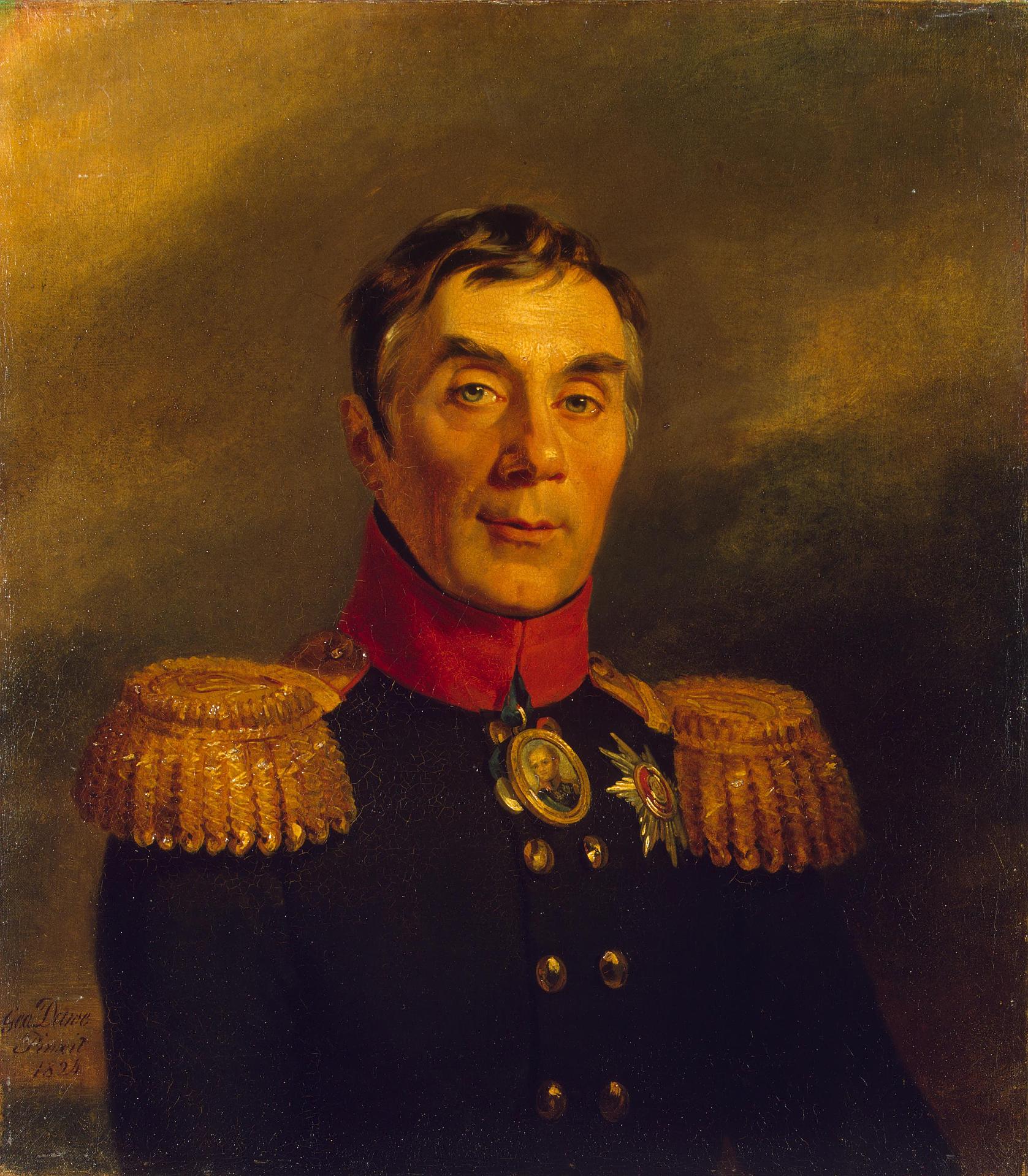
Aleksey Arakcheyev
Count Aleksey Andreyevich Arakcheyev (Russian: Алексе́й Андре́евич Аракче́ев; October 4 [O.S. September 23] 1769 – May 3 [O.S. April 21] 1834) was a Russian general and statesman during the reign of Tsar Alexander I.
He served under Paul I and Alexander I as an army commander and Inspector of Artillery. He had a violent temper, but was a competent artillerist, and is known for his reforms of Russian artillery known as the "System of 1805". When Alexander was succeeded by Nicholas I, he lost all his offices.
Count Arakcheyev was born on his father's estate in Garusovo, in Vyshnevolotsky Uyezd (at the time a part of Novgorod Governorate, from 1796 part of Tver Governorate). He was educated in arithmetic by a priest, and though he shone at arithmetic, he never mastered writing and grammar. In 1783, with the help of General Peter Ivanovich Melissino, Arakcheyev enrolled in the Shlyakhetny artillery school in Saint-Petersburg. By 1787 he had become a lieutenant instructor, and gave artillery and fortification lessons to Prince Nicholas Saltykov's sons. In 1791 he became the school's assistant director.
In 1792 Saltykov recommended Arakcheyev to Tsesarevich Paul, son of Tsarina Catherine the Great and heir to the throne, who was searching for a capable artillery officer. Arakcheyev became chief artillery officer to the military commandant of Paul's residence, Gatchina Palace.
Arakcheyev became noted for his ruthless manners and zealousness, and by 1794 he was artillery inspector at Gatchina. Two years later, he became infantry inspector of the army, promoted by Catherine.
Catherine died in 1796, and Arakcheyev was at Tsar Paul's side during his accession. On November 7, 1796, Arakcheyev was promoted from colonel to major-general and appointed as commandant of the garrison of Saint Petersburg. In April 1797, he was promoted to quartermaster-general, and received the title of baron from the Tsar. A year later, after an officer, Colonel Lehn, committed suicide, he was temporarily retired with the rank of lieutenant-general. In 1799 he was reinstated as Inspector-general of Artillery position and quartermaster-general and given the title of count. He was disgraced and retired in 1800 after hiding misdeeds by his subordinates. His name had become synonymous with despotism, known in Russian as Arakcheyevshchina ('Arakcheyevism').
In May 1803, the new Tsar Alexander I restored his position as Inspector of Artillery. During the first years he reorganized the artillery units, improved officer training, and issued new regulations.
After the lessons learned at the Battle of Austerlitz, where Russian artillery had performed poorly, Arakcheyev devised the Arakcheyev artillery system or System of 1805. Under this arrangement, 6- and 12-pounder guns were employed throughout the army, as well as 2-, 10-, and 18-pounder licornes. Under the new system, a single Russian division had as much artillery as an entire French corps. A foot artillery battalion was composed of two light and two heavy companies. A light foot artillery company consisted of four 10-pounder licornes, four light and four medium 6-pounder guns. A heavy artillery company had four light and four heavy 12-pounder guns and four 18- and two 2-pounder licornes. Six light 6-pounder guns and six 10-pounder licornes made a company of horse artillery. Licornes were usually deployed on the flanks of the batteries. All these guns used a screw elevating mechanism instead of the old system of wedges and had an improved sighting apparatus.
Hub AI
Aleksey Arakcheyev AI simulator
(@Aleksey Arakcheyev_simulator)
Aleksey Arakcheyev
Count Aleksey Andreyevich Arakcheyev (Russian: Алексе́й Андре́евич Аракче́ев; October 4 [O.S. September 23] 1769 – May 3 [O.S. April 21] 1834) was a Russian general and statesman during the reign of Tsar Alexander I.
He served under Paul I and Alexander I as an army commander and Inspector of Artillery. He had a violent temper, but was a competent artillerist, and is known for his reforms of Russian artillery known as the "System of 1805". When Alexander was succeeded by Nicholas I, he lost all his offices.
Count Arakcheyev was born on his father's estate in Garusovo, in Vyshnevolotsky Uyezd (at the time a part of Novgorod Governorate, from 1796 part of Tver Governorate). He was educated in arithmetic by a priest, and though he shone at arithmetic, he never mastered writing and grammar. In 1783, with the help of General Peter Ivanovich Melissino, Arakcheyev enrolled in the Shlyakhetny artillery school in Saint-Petersburg. By 1787 he had become a lieutenant instructor, and gave artillery and fortification lessons to Prince Nicholas Saltykov's sons. In 1791 he became the school's assistant director.
In 1792 Saltykov recommended Arakcheyev to Tsesarevich Paul, son of Tsarina Catherine the Great and heir to the throne, who was searching for a capable artillery officer. Arakcheyev became chief artillery officer to the military commandant of Paul's residence, Gatchina Palace.
Arakcheyev became noted for his ruthless manners and zealousness, and by 1794 he was artillery inspector at Gatchina. Two years later, he became infantry inspector of the army, promoted by Catherine.
Catherine died in 1796, and Arakcheyev was at Tsar Paul's side during his accession. On November 7, 1796, Arakcheyev was promoted from colonel to major-general and appointed as commandant of the garrison of Saint Petersburg. In April 1797, he was promoted to quartermaster-general, and received the title of baron from the Tsar. A year later, after an officer, Colonel Lehn, committed suicide, he was temporarily retired with the rank of lieutenant-general. In 1799 he was reinstated as Inspector-general of Artillery position and quartermaster-general and given the title of count. He was disgraced and retired in 1800 after hiding misdeeds by his subordinates. His name had become synonymous with despotism, known in Russian as Arakcheyevshchina ('Arakcheyevism').
In May 1803, the new Tsar Alexander I restored his position as Inspector of Artillery. During the first years he reorganized the artillery units, improved officer training, and issued new regulations.
After the lessons learned at the Battle of Austerlitz, where Russian artillery had performed poorly, Arakcheyev devised the Arakcheyev artillery system or System of 1805. Under this arrangement, 6- and 12-pounder guns were employed throughout the army, as well as 2-, 10-, and 18-pounder licornes. Under the new system, a single Russian division had as much artillery as an entire French corps. A foot artillery battalion was composed of two light and two heavy companies. A light foot artillery company consisted of four 10-pounder licornes, four light and four medium 6-pounder guns. A heavy artillery company had four light and four heavy 12-pounder guns and four 18- and two 2-pounder licornes. Six light 6-pounder guns and six 10-pounder licornes made a company of horse artillery. Licornes were usually deployed on the flanks of the batteries. All these guns used a screw elevating mechanism instead of the old system of wedges and had an improved sighting apparatus.