



Community hub
Recent from talks
Knowledge base stats:
Talk channels stats:
Members stats:
Ashta Nayika
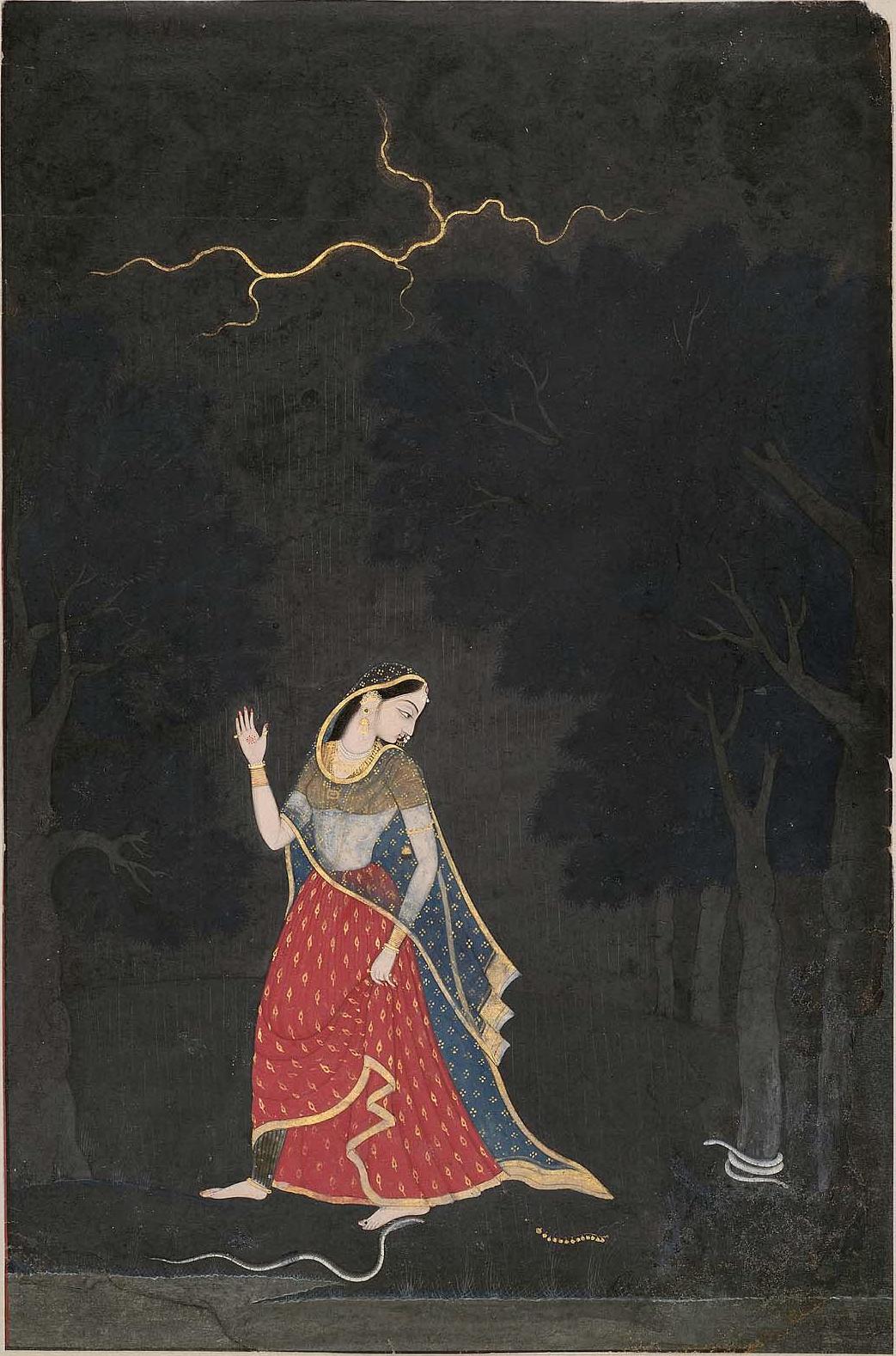
The Ashta-Nayika is a collective name for eight types of nayikas or heroines as classified by Bharata in his Sanskrit treatise on performing arts - Natya Shastra. The eight nayikas represent eight different states (avastha) in relationship to her hero or nayaka. As archetypal states of the romantic heroine, it has been used as theme in Indian painting, literature, sculpture as well as Indian classical dance and music.
As per Ashta Nayika, there are eight nayikas.
The Ashta-Nayika classification (nayika-bheda) first appears in Natya Shastra (24.210-11), a key Sanskrit treatise on Indian performing arts, authored by Bharata (dated between 2nd century BC and 2nd century AD). The classification is detailed in later works like the Dasarupaka (10th century), Sahityadarpana (14th century) and various other treatises on poetics as well as erotic Kamashastra texts like Kuttanimata (8th-9th century) based on courtesans, Panchasayaka, Anangaranga and Smaradipika. Keshavadasa's Rasikapriya (16th century) in Hindi, also elaborates on the Ashta-nayika.
The Ashta-Nayika have been illustrated in Indian painting, literature, sculpture as well as Indian classical dance, such as Kathak. Notable medieval paintings that depict the Ashta nayika are the Ragamala paintings, as those from the Bundi school of painting.
A famous example in Indian literature is Jayadeva's Gita Govinda (12th century) as well as in the Vaishnava poet Banamali's compositions, Radha dons the roles of the various nayikas while with her nayaka is the god Krishna.
The Ashta-Nayika is a central theme in Pahari embroidery used to decorate the Chamba Rumal, especially produced in Chamba, Himachal Pradesh. The Ashta Nayika are usually portrayed in eight panels on the Rumal.
In Indian (Hindustani) classical music, the eternal love between Radha and Krishna is represented through the consciousness of Radha as the leitmotif that dominates the lyrics. Especially the semi-classical genre of Thumri imbibes the myriad moods of Radha as Ashta Nayika consumed by passionate love for Krishna.
The Natya Shastra describes the nayikas in the following order: Vasakasajja, Virahotkanthita, Svadhinabhartruka, Kalahantarita, Khandita, Vipralabdha, Proshitabhartruka and Abhisarika. The nayikas are further classified in two varieties of the shringara rasa, the rasa related to love: Sambhoga (love in meeting) and Vipralambha (love in separation). Vasakasajja, Svadhinabhartruka and Abhisarika are associated with Sambhoga; the others with Vipralabdha.
Hub AI
Ashta Nayika AI simulator
(@Ashta Nayika_simulator)
Ashta Nayika
The Ashta-Nayika is a collective name for eight types of nayikas or heroines as classified by Bharata in his Sanskrit treatise on performing arts - Natya Shastra. The eight nayikas represent eight different states (avastha) in relationship to her hero or nayaka. As archetypal states of the romantic heroine, it has been used as theme in Indian painting, literature, sculpture as well as Indian classical dance and music.
As per Ashta Nayika, there are eight nayikas.
The Ashta-Nayika classification (nayika-bheda) first appears in Natya Shastra (24.210-11), a key Sanskrit treatise on Indian performing arts, authored by Bharata (dated between 2nd century BC and 2nd century AD). The classification is detailed in later works like the Dasarupaka (10th century), Sahityadarpana (14th century) and various other treatises on poetics as well as erotic Kamashastra texts like Kuttanimata (8th-9th century) based on courtesans, Panchasayaka, Anangaranga and Smaradipika. Keshavadasa's Rasikapriya (16th century) in Hindi, also elaborates on the Ashta-nayika.
The Ashta-Nayika have been illustrated in Indian painting, literature, sculpture as well as Indian classical dance, such as Kathak. Notable medieval paintings that depict the Ashta nayika are the Ragamala paintings, as those from the Bundi school of painting.
A famous example in Indian literature is Jayadeva's Gita Govinda (12th century) as well as in the Vaishnava poet Banamali's compositions, Radha dons the roles of the various nayikas while with her nayaka is the god Krishna.
The Ashta-Nayika is a central theme in Pahari embroidery used to decorate the Chamba Rumal, especially produced in Chamba, Himachal Pradesh. The Ashta Nayika are usually portrayed in eight panels on the Rumal.
In Indian (Hindustani) classical music, the eternal love between Radha and Krishna is represented through the consciousness of Radha as the leitmotif that dominates the lyrics. Especially the semi-classical genre of Thumri imbibes the myriad moods of Radha as Ashta Nayika consumed by passionate love for Krishna.
The Natya Shastra describes the nayikas in the following order: Vasakasajja, Virahotkanthita, Svadhinabhartruka, Kalahantarita, Khandita, Vipralabdha, Proshitabhartruka and Abhisarika. The nayikas are further classified in two varieties of the shringara rasa, the rasa related to love: Sambhoga (love in meeting) and Vipralambha (love in separation). Vasakasajja, Svadhinabhartruka and Abhisarika are associated with Sambhoga; the others with Vipralabdha.