
Recent from talks
Batok
Knowledge base stats:
Talk channels stats:
Members stats:
Batok
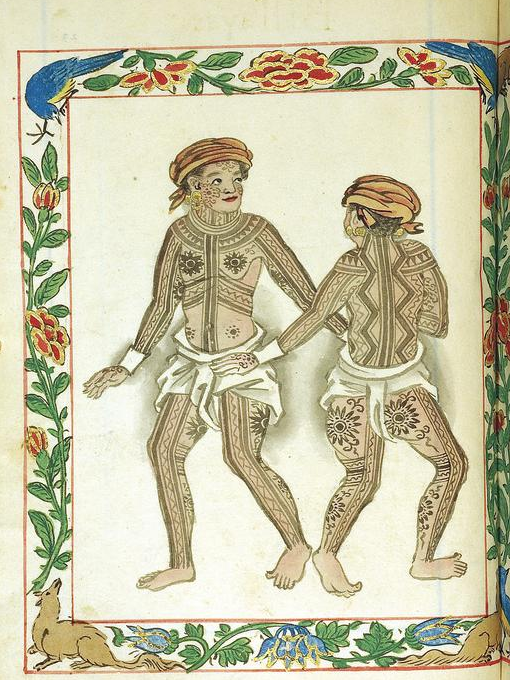
Batok, batek, patik, batik, or buri, among other names, are general terms for indigenous tattoos of the Philippines. Tattooing on both sexes was practiced by almost all ethnic groups of the Philippine Islands during the pre-colonial era. Like other Austronesian groups, these tattoos were made traditionally with hafted tools tapped with a length of wood (called the "mallet"). Each ethnic group had specific terms and designs for tattoos, which are also often the same designs used in other art forms and decorations such as pottery and weaving. Tattoos range from being restricted only to certain parts of the body to covering the entire body. Tattoos were symbols of tribal identity and kinship, as well as bravery, beauty, and social or wealth status.
Tattooing traditions were mostly lost as Filipinos were converted to Christianity during the Spanish colonial era. Tattooing was also lost in some groups (like the Tagalog and the Moro people) shortly before the colonial period due to their (then recent) conversion to Islam. It survived until around the 19th to the mid-20th centuries in more remote areas of the Philippines, but also fell out of practice due to modernization and western influence. Today, it is a highly endangered tradition and only survives among some members of the Cordilleran peoples of the Luzon highlands, some Lumad people of the Mindanao highlands, and the Sulodnon people of the Panay highlands.
Most names for tattoos in the different languages of the Philippines are derived from Proto-Austronesian *beCik ("tattoo"), *patik ("mottled pattern"), and *burik ("speckled").
Tattoos are known as batok (or batuk) or patik among the Visayan people; batik, buri, or tatak among the Tagalog people; buri among the Pangasinan, Kapampangan, and Bicolano people; batek, butak, or burik among the Ilocano people; batek, batok, batak, fatek, whatok (also spelled fatok), or buri among the various Cordilleran peoples; and pangotoeb (also spelled pa-ngo-túb, pengeteb, or pengetev) among the various Manobo peoples. These terms were also applied to identical designs used in woven textiles, pottery, and decorations for shields, tool and weapon handles, musical instruments, and others. Affixed forms of these words were used to describe tattooed people, often as a synonym for "renowned/skilled person"; like Tagalog batikan, Visayan binatakan, and Ilocano burikan.
They were commonly repeating geometric designs (lines, zigzags, chevrons, checkered patterns, repeating shapes); stylized representations of animals (like snakes, lizards, eagles, dogs, deer, frogs, or giant centipedes), plants (like grass, ferns, or flowers), or humans; lightning, mountains, water, stars, or the sun. Each motif had a name, and usually a story or significance behind it, though most of them have been lost to time. They were the same patterns and motifs used in other artforms and decorations of the particular ethnic groups they belong to. Tattoos were, in fact, regarded as a type of clothing in itself, and men would commonly wear only loincloths (bahag) to show them off.
"The principal clothing of the Cebuanos and all the Visayans is the tattooing of which we have already spoken, with which a naked man appears to be dressed in a kind of handsome armor engraved with very fine work, a dress so esteemed by them they take it for their proudest attire, covering their bodies neither more nor less than a Christ crucified, so that although for solemn occasions they have the marlotas (robes) we mentioned, their dress at home and in their barrio is their tattoos and a bahag, as they call that cloth they wrap around their waist, which is the sort the ancient actors and gladiators used in Rome for decency's sake."
— Pedro Chirino, Relación de las Islas Filipinas (1604),
Tattoos were symbols of tribal identity and kinship, as well as bravery, beauty, and social or wealth status. Most tattoos for men were for important achievements like success in warfare and headhunting, while tattoos in women were primarily enhancements to beauty. They were also believed to have magical or apotropaic abilities (especially for animal designs), and can also document personal or communal history. The pain that recipients must endure for their tattoos also served as a rite of passage. It is said, that once a person can endure the pain of tattooing, they can endure pain encountered later on in life, thus symbolically transitioning into adulthood. Tattoos are also commonly believed to survive into the afterlife, unlike material possessions. In some cultures, they are believed to illuminate the path to the spirit world, or serve as a way for ancestor spirits to gauge the worthiness of a soul to live with them.
Hub AI
Batok AI simulator
(@Batok_simulator)
Batok
Batok, batek, patik, batik, or buri, among other names, are general terms for indigenous tattoos of the Philippines. Tattooing on both sexes was practiced by almost all ethnic groups of the Philippine Islands during the pre-colonial era. Like other Austronesian groups, these tattoos were made traditionally with hafted tools tapped with a length of wood (called the "mallet"). Each ethnic group had specific terms and designs for tattoos, which are also often the same designs used in other art forms and decorations such as pottery and weaving. Tattoos range from being restricted only to certain parts of the body to covering the entire body. Tattoos were symbols of tribal identity and kinship, as well as bravery, beauty, and social or wealth status.
Tattooing traditions were mostly lost as Filipinos were converted to Christianity during the Spanish colonial era. Tattooing was also lost in some groups (like the Tagalog and the Moro people) shortly before the colonial period due to their (then recent) conversion to Islam. It survived until around the 19th to the mid-20th centuries in more remote areas of the Philippines, but also fell out of practice due to modernization and western influence. Today, it is a highly endangered tradition and only survives among some members of the Cordilleran peoples of the Luzon highlands, some Lumad people of the Mindanao highlands, and the Sulodnon people of the Panay highlands.
Most names for tattoos in the different languages of the Philippines are derived from Proto-Austronesian *beCik ("tattoo"), *patik ("mottled pattern"), and *burik ("speckled").
Tattoos are known as batok (or batuk) or patik among the Visayan people; batik, buri, or tatak among the Tagalog people; buri among the Pangasinan, Kapampangan, and Bicolano people; batek, butak, or burik among the Ilocano people; batek, batok, batak, fatek, whatok (also spelled fatok), or buri among the various Cordilleran peoples; and pangotoeb (also spelled pa-ngo-túb, pengeteb, or pengetev) among the various Manobo peoples. These terms were also applied to identical designs used in woven textiles, pottery, and decorations for shields, tool and weapon handles, musical instruments, and others. Affixed forms of these words were used to describe tattooed people, often as a synonym for "renowned/skilled person"; like Tagalog batikan, Visayan binatakan, and Ilocano burikan.
They were commonly repeating geometric designs (lines, zigzags, chevrons, checkered patterns, repeating shapes); stylized representations of animals (like snakes, lizards, eagles, dogs, deer, frogs, or giant centipedes), plants (like grass, ferns, or flowers), or humans; lightning, mountains, water, stars, or the sun. Each motif had a name, and usually a story or significance behind it, though most of them have been lost to time. They were the same patterns and motifs used in other artforms and decorations of the particular ethnic groups they belong to. Tattoos were, in fact, regarded as a type of clothing in itself, and men would commonly wear only loincloths (bahag) to show them off.
"The principal clothing of the Cebuanos and all the Visayans is the tattooing of which we have already spoken, with which a naked man appears to be dressed in a kind of handsome armor engraved with very fine work, a dress so esteemed by them they take it for their proudest attire, covering their bodies neither more nor less than a Christ crucified, so that although for solemn occasions they have the marlotas (robes) we mentioned, their dress at home and in their barrio is their tattoos and a bahag, as they call that cloth they wrap around their waist, which is the sort the ancient actors and gladiators used in Rome for decency's sake."
— Pedro Chirino, Relación de las Islas Filipinas (1604),
Tattoos were symbols of tribal identity and kinship, as well as bravery, beauty, and social or wealth status. Most tattoos for men were for important achievements like success in warfare and headhunting, while tattoos in women were primarily enhancements to beauty. They were also believed to have magical or apotropaic abilities (especially for animal designs), and can also document personal or communal history. The pain that recipients must endure for their tattoos also served as a rite of passage. It is said, that once a person can endure the pain of tattooing, they can endure pain encountered later on in life, thus symbolically transitioning into adulthood. Tattoos are also commonly believed to survive into the afterlife, unlike material possessions. In some cultures, they are believed to illuminate the path to the spirit world, or serve as a way for ancestor spirits to gauge the worthiness of a soul to live with them.
Recent media