



Community hub
Recent from talks
Knowledge base stats:
Talk channels stats:
Members stats:
Battle of Marston Moor
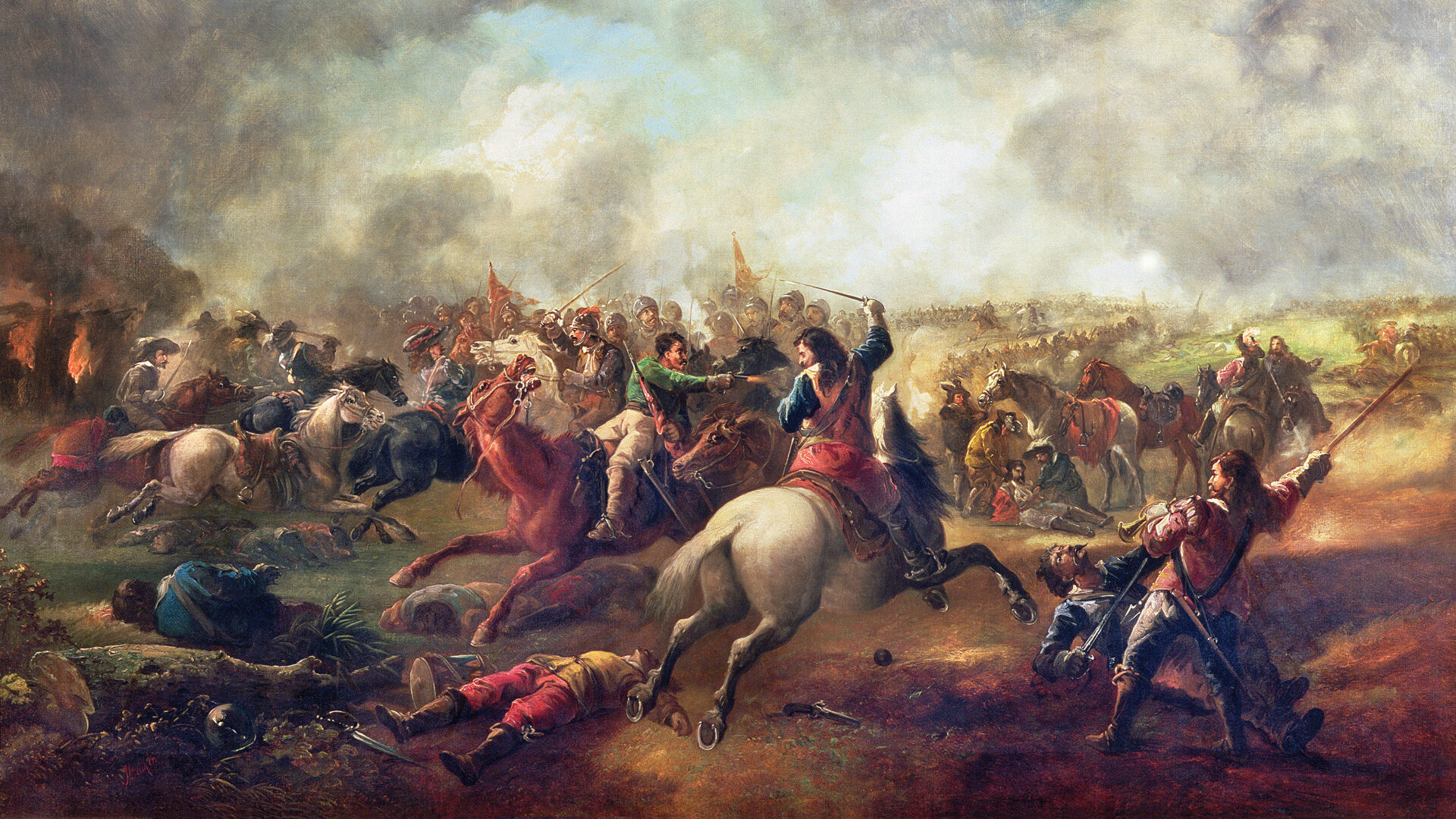
The Battle of Marston Moor was fought on 2 July 1644, during the Wars of the Three Kingdoms of 1639–1653. The combined forces of the English Parliamentarians under Lord Fairfax and the Earl of Manchester and the Scottish Covenanters under the Earl of Leven defeated the Royalists commanded by Prince Rupert of the Rhine and the Marquess of Newcastle.
During the summer of 1644, the Covenanters and Parliamentarians had been besieging York, which was defended by the Marquess of Newcastle. Rupert had gathered an army which marched through the northwest of England, gathering reinforcements and fresh recruits on the way, and across the Pennines to relieve the city. The convergence of these forces made the ensuing battle the largest of the civil wars.
On 1 July, Rupert outmanoeuvred the Covenanters and Parliamentarians to relieve the city. The next day, he sought battle with them even though he was outnumbered. He was dissuaded from attacking immediately and during the day both sides gathered their full strength on Marston Moor, an expanse of wild meadow west of York. Towards evening, the Covenanters and Parliamentarians themselves launched a surprise attack. After a confused fight lasting two hours, Parliamentarian cavalry under Oliver Cromwell routed the Royalist cavalry from the field and, with Leven's infantry, annihilated the remaining Royalist infantry.
After their defeat the Royalists effectively abandoned Northern England, losing much of the manpower from the northern counties of England (which were strongly Royalist in sympathy) and also losing access to the European continent through the ports on the North Sea coast. Although they partially retrieved their fortunes with victories later in the year in Southern England, the loss of the north was to prove a fatal handicap the next year, when they tried unsuccessfully to link up with the Scottish Royalists under the Marquess of Montrose.
In Northern England the Royalists had the advantage in numbers and local support, except in parts of Lancashire and the West Riding of Yorkshire, where the Parliamentarians had support from the clothing-manufacturing towns which "naturally maligned the gentry". On 30 June 1643, the Royalists commanded by the Marquess of Newcastle defeated the Parliamentarian army of Lord Fairfax at the Battle of Adwalton Moor near Bradford. Fairfax and his son, Sir Thomas Fairfax, fled with their remaining forces to the port of Hull, which was held for Parliament.
Newcastle sent some of his army south into Lincolnshire, as part of a planned "three-pronged" advance on London, but was forced to besiege Hull with most of his forces. The siege failed, as the Parliamentarian navy could supply and reinforce the port and the garrison flooded wide areas around the city, while the Royalist detachments sent into Lincolnshire were defeated at the battles of Gainsborough and Winceby.
In late 1643, the English Civil War widened. King Charles I negotiated a "cessation" in Ireland, which allowed him to reinforce his armies with English regiments (one of horse and twelve of foot) which had been sent to Ireland following the Irish Rebellion of 1641, but Parliament took an even greater step by signing the Solemn League and Covenant, sealing an alliance with the Scottish Covenanters.
Early in 1644, a Covenanter army under the Earl of Leven entered the north of England on behalf of the English Parliament. The Marquess of Newcastle was forced to divide his army, leaving a detachment under Sir John Belasyse to watch the Parliamentarians under Lord Fairfax in Hull, while he led his main body north to confront Leven.
Hub AI
Battle of Marston Moor AI simulator
(@Battle of Marston Moor_simulator)
Battle of Marston Moor
The Battle of Marston Moor was fought on 2 July 1644, during the Wars of the Three Kingdoms of 1639–1653. The combined forces of the English Parliamentarians under Lord Fairfax and the Earl of Manchester and the Scottish Covenanters under the Earl of Leven defeated the Royalists commanded by Prince Rupert of the Rhine and the Marquess of Newcastle.
During the summer of 1644, the Covenanters and Parliamentarians had been besieging York, which was defended by the Marquess of Newcastle. Rupert had gathered an army which marched through the northwest of England, gathering reinforcements and fresh recruits on the way, and across the Pennines to relieve the city. The convergence of these forces made the ensuing battle the largest of the civil wars.
On 1 July, Rupert outmanoeuvred the Covenanters and Parliamentarians to relieve the city. The next day, he sought battle with them even though he was outnumbered. He was dissuaded from attacking immediately and during the day both sides gathered their full strength on Marston Moor, an expanse of wild meadow west of York. Towards evening, the Covenanters and Parliamentarians themselves launched a surprise attack. After a confused fight lasting two hours, Parliamentarian cavalry under Oliver Cromwell routed the Royalist cavalry from the field and, with Leven's infantry, annihilated the remaining Royalist infantry.
After their defeat the Royalists effectively abandoned Northern England, losing much of the manpower from the northern counties of England (which were strongly Royalist in sympathy) and also losing access to the European continent through the ports on the North Sea coast. Although they partially retrieved their fortunes with victories later in the year in Southern England, the loss of the north was to prove a fatal handicap the next year, when they tried unsuccessfully to link up with the Scottish Royalists under the Marquess of Montrose.
In Northern England the Royalists had the advantage in numbers and local support, except in parts of Lancashire and the West Riding of Yorkshire, where the Parliamentarians had support from the clothing-manufacturing towns which "naturally maligned the gentry". On 30 June 1643, the Royalists commanded by the Marquess of Newcastle defeated the Parliamentarian army of Lord Fairfax at the Battle of Adwalton Moor near Bradford. Fairfax and his son, Sir Thomas Fairfax, fled with their remaining forces to the port of Hull, which was held for Parliament.
Newcastle sent some of his army south into Lincolnshire, as part of a planned "three-pronged" advance on London, but was forced to besiege Hull with most of his forces. The siege failed, as the Parliamentarian navy could supply and reinforce the port and the garrison flooded wide areas around the city, while the Royalist detachments sent into Lincolnshire were defeated at the battles of Gainsborough and Winceby.
In late 1643, the English Civil War widened. King Charles I negotiated a "cessation" in Ireland, which allowed him to reinforce his armies with English regiments (one of horse and twelve of foot) which had been sent to Ireland following the Irish Rebellion of 1641, but Parliament took an even greater step by signing the Solemn League and Covenant, sealing an alliance with the Scottish Covenanters.
Early in 1644, a Covenanter army under the Earl of Leven entered the north of England on behalf of the English Parliament. The Marquess of Newcastle was forced to divide his army, leaving a detachment under Sir John Belasyse to watch the Parliamentarians under Lord Fairfax in Hull, while he led his main body north to confront Leven.