



Community hub
Recent from talks
Knowledge base stats:
Talk channels stats:
Members stats:
Battle of Monte Cassino
The Battle of Monte Cassino, also known as the Battle for Rome, was a series of four military assaults by the Allies against Axis forces in Italy during the Italian Campaign of World War II. The objective was to break through the Winter Line and facilitate an advance towards Rome.
In the beginning of 1944, the western half of the Winter Line was anchored by German forces holding the Rapido-Gari, Liri, and Garigliano valleys and several surrounding peaks and ridges. Together, these features formed the Gustav Line. Monte Cassino, a historic hilltop abbey founded in 529 by Benedict of Nursia, dominated the nearby town of Cassino and the entrances to the Liri and Rapido valleys. Lying in a protected historic zone, it had been left unoccupied by the Germans, although they manned some positions set into the slopes below the abbey's walls.
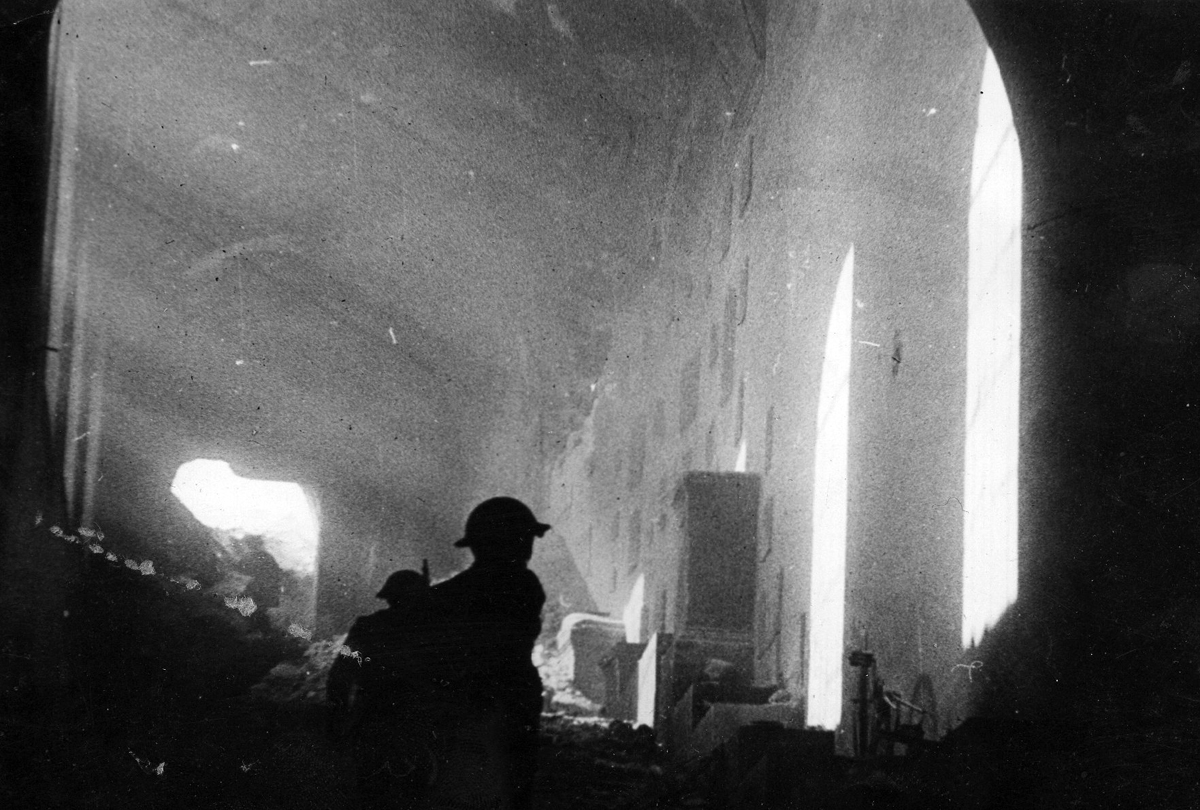
Repeated artillery attacks on assaulting allied troops caused their leaders to incorrectly conclude that the abbey was being used by the Germans as an observation post, at the very least. Fears escalated, along with casualties, and despite evidence, it was marked for destruction. On 15 February 1944, Allied bombers dropped 1,400 tonnes of high explosives, causing widespread damage. Fallschirmjäger forces occupied the area and established defensive positions amid the ruins.
Between 17 January and 18 May, Monte Cassino and the Gustav Line defences were attacked on four occasions by Allied troops. On 16 May, soldiers from the Polish II Corps launched one of the final assaults on the German defensive position as part of a twenty-division assault along a thirty-two-kilometre front. On 18 May, the Polish flag and the British flag were raised over the ruins. Following this Allied victory, the German Senger Line collapsed on 25 May, and the German defenders were driven from their positions. The capture of Monte Cassino resulted in 55,000 Allied casualties, with German losses estimated at around 20,000 killed and wounded. The battle has been described as a Pyrrhic victory.
The Allied landings in Italy in September 1943 by two Allied armies, following shortly after the Allied landings in Sicily in July, commanded by General Sir Harold Alexander, the Commander-in-Chief (C-in-C) of the 15th Army Group (later retitled the Allied Armies in Italy), were followed by an advance northward on two fronts, one on each side of the central mountain range forming the "spine" of Italy. On the western front, the American Fifth Army, commanded by Lieutenant General Mark W. Clark, which had suffered many casualties during the main landing at Salerno (codenamed Operation Avalanche) in September, moved from the main base of Naples up the Italian "boot", and on the eastern front, the British Eighth Army, commanded by General Sir Bernard Montgomery, advanced up the Adriatic coast.
Hitler directed Kesselring to hold as much land in Italy as he could, for as long as possible. Kesselring's subordinates preferred withdrawal, but nevertheless prepared defensive positions across the width of Italy, south of Rome.
The progress of Clark's Fifth Army was hindered by challenging terrain, adverse weather conditions, and well-prepared German defences. The Germans were fighting from a series of prepared positions in a manner designed to inflict maximum damage, then pulling back while buying time for the construction of the Winter Line defensive positions south of the Italian capital of Rome. The original estimates that Rome would fall by October 1943 proved far too optimistic.
Although in the east the German defensive line had been breached on the Adriatic front and Ortona was captured by the 1st Canadian Division, the advance had ground to a halt with the onset of winter blizzards at the end of December, making close air support and movement in the jagged terrain impossible. The route to Rome from the east using Route 5 was thus excluded as a viable option, leaving the routes from Naples to Rome, Highways 6 and 7, as the only possibilities; Highway 7 (the old Roman Appian Way) followed along the west coast but south of Rome ran into the Pontine Marshes, which the Germans had flooded.
Hub AI
Battle of Monte Cassino AI simulator
(@Battle of Monte Cassino_simulator)
Battle of Monte Cassino
The Battle of Monte Cassino, also known as the Battle for Rome, was a series of four military assaults by the Allies against Axis forces in Italy during the Italian Campaign of World War II. The objective was to break through the Winter Line and facilitate an advance towards Rome.
In the beginning of 1944, the western half of the Winter Line was anchored by German forces holding the Rapido-Gari, Liri, and Garigliano valleys and several surrounding peaks and ridges. Together, these features formed the Gustav Line. Monte Cassino, a historic hilltop abbey founded in 529 by Benedict of Nursia, dominated the nearby town of Cassino and the entrances to the Liri and Rapido valleys. Lying in a protected historic zone, it had been left unoccupied by the Germans, although they manned some positions set into the slopes below the abbey's walls.
Repeated artillery attacks on assaulting allied troops caused their leaders to incorrectly conclude that the abbey was being used by the Germans as an observation post, at the very least. Fears escalated, along with casualties, and despite evidence, it was marked for destruction. On 15 February 1944, Allied bombers dropped 1,400 tonnes of high explosives, causing widespread damage. Fallschirmjäger forces occupied the area and established defensive positions amid the ruins.
Between 17 January and 18 May, Monte Cassino and the Gustav Line defences were attacked on four occasions by Allied troops. On 16 May, soldiers from the Polish II Corps launched one of the final assaults on the German defensive position as part of a twenty-division assault along a thirty-two-kilometre front. On 18 May, the Polish flag and the British flag were raised over the ruins. Following this Allied victory, the German Senger Line collapsed on 25 May, and the German defenders were driven from their positions. The capture of Monte Cassino resulted in 55,000 Allied casualties, with German losses estimated at around 20,000 killed and wounded. The battle has been described as a Pyrrhic victory.
The Allied landings in Italy in September 1943 by two Allied armies, following shortly after the Allied landings in Sicily in July, commanded by General Sir Harold Alexander, the Commander-in-Chief (C-in-C) of the 15th Army Group (later retitled the Allied Armies in Italy), were followed by an advance northward on two fronts, one on each side of the central mountain range forming the "spine" of Italy. On the western front, the American Fifth Army, commanded by Lieutenant General Mark W. Clark, which had suffered many casualties during the main landing at Salerno (codenamed Operation Avalanche) in September, moved from the main base of Naples up the Italian "boot", and on the eastern front, the British Eighth Army, commanded by General Sir Bernard Montgomery, advanced up the Adriatic coast.
Hitler directed Kesselring to hold as much land in Italy as he could, for as long as possible. Kesselring's subordinates preferred withdrawal, but nevertheless prepared defensive positions across the width of Italy, south of Rome.
The progress of Clark's Fifth Army was hindered by challenging terrain, adverse weather conditions, and well-prepared German defences. The Germans were fighting from a series of prepared positions in a manner designed to inflict maximum damage, then pulling back while buying time for the construction of the Winter Line defensive positions south of the Italian capital of Rome. The original estimates that Rome would fall by October 1943 proved far too optimistic.
Although in the east the German defensive line had been breached on the Adriatic front and Ortona was captured by the 1st Canadian Division, the advance had ground to a halt with the onset of winter blizzards at the end of December, making close air support and movement in the jagged terrain impossible. The route to Rome from the east using Route 5 was thus excluded as a viable option, leaving the routes from Naples to Rome, Highways 6 and 7, as the only possibilities; Highway 7 (the old Roman Appian Way) followed along the west coast but south of Rome ran into the Pontine Marshes, which the Germans had flooded.