Hubbry Logo
search
logo
530155

Beer tower

logo
Community Hub0 Subscribers
Read side by side
from Wikipedia
Beer Giraffe dispenser
Beer tower with 3 taps which allows everyone around the table to pour their own beer simultaneously
Triple-pour beer tower

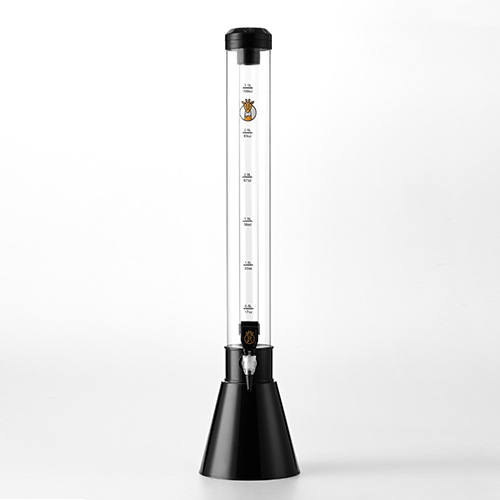
A beer tower (also known as a portable beer tap, a tabletop beer dispenser, a triton dispenser or a beer giraffe) is a beer dispensing device, sometimes found in bars, pubs and restaurants. The idea behind beer towers is that several patrons in a group can serve themselves the amount of beer they want without having to order individually.

The device comes in a variety of sizes, most often double to triple the size of standard beer pitchers that hold around 48–60 U.S. fluid ounces (1.4–1.8 L) of beer.[1]

Early versions came in the shape of a four-foot tall plastic cylinder attached to a beer tap at the bottom. Current models sometimes have several dispensing valves, to allow for simultaneous dispense.

Chilling of the beer is usually achieved with ice chambers or with freezable ice packs; these are traditionally located internally, but may be external for increased hygiene when handling. The actual dispense mechanism is usually in the form of a simplified beer tap or designed pouring mechanism.[2]

History

[edit]

The ancestor of the modern beer tower was called a portable keg tap or a picnic tap, since the device was mostly used at outdoor events, such as picnics. They were significantly larger than modern beer towers. The method involved manually pumping air into the beer container; the resulting pressure within the container would force the beer out the tap. There was also a variant with lager beer barrels that stood upright, allowing gravity to force the beer out the tap, which is the principle of the modern day system.

Usage

[edit]

Southeast Asia and Australia

[edit]

The beer tower is popular in bars and clubs throughout Thailand, Malaysia, Singapore, and the Philippines. Since 2012, the beer tower has appeared in Australian bars after first being used in Queensland.[3]

United States

[edit]

In March 2011, Boston licensing officials forbade bars from serving beer in beer towers. The officials required licensed alcohol serving businesses to request permission to use these beverage dispensers.[1]

India

[edit]

Self-service tabletop beer dispensers have been in use in India at least since 2017.[4]

[edit]

See also

[edit]

References

[edit]
Revisions and contributorsEdit on WikipediaRead on Wikipedia
from Grokipedia
A beer tower is a portable, self-service beer dispensing device designed for tabletop use in bars, pubs, and restaurants, enabling multiple patrons to pour draft beer directly from integrated taps.[1][2] These dispensers typically hold between 3 and 10 liters of beer, often feature built-in cooling mechanisms to maintain freshness, and are filled from a central draft system before being placed at customer tables.[3] Also known as a beer giraffe or tabletop dispenser, the device promotes efficient service by reducing wait times for staff and fostering social interaction among groups.[4] The modern beer tower evolved from earlier portable keg taps, originally used at outdoor events like picnics, which allowed beer to be transported and served away from fixed bar setups.[5] Common variants include single-tap models for basic use and multi-tap versions supporting simultaneous pours of different beers, enhancing versatility in high-volume settings such as beer halls or parties.[6] Their adoption has grown in regions with strong beer-drinking cultures, like Europe and parts of Asia, due to hygienic self-service benefits and the ability to minimize spillage compared to pitchers.[7] While primarily utilitarian, beer towers contribute to the convivial atmosphere of communal drinking by centralizing access to chilled draft beer at shared tables.[2]

History

Origins and Early Development

The precursors to the modern beer tower consisted of portable keg taps, also known as picnic taps, designed primarily for dispensing beer at outdoor events and social gatherings where fixed bar infrastructure was unavailable. These early devices typically involved a simple tap connected to a keg, relying on manual pumping or gravity to serve beer directly from the source.[5] Such systems addressed practical needs for mobility and self-service, evolving from basic barrel taps used in taverns and evolving with advancements in keg portability during the early 20th century.[8] Documented examples of portable keg taps appeared by the 1930s, with promotional materials highlighting their utility for picnics and beach outings, featuring compact designs that allowed users to transport and tap kegs on-site without specialized equipment.[9] This development coincided with broader improvements in beer storage and transport, including lighter keg materials and basic cooling methods like ice packing around barrels, which laid the groundwork for integrated cooling in later dispensers. Early adoption was driven by demand in recreational settings, where groups sought efficient, shared access to draft beer without bartender intervention.[10] The transition to the distinctive beer tower form—characterized by a tall, central column (often 3-4 feet high) housing beer lines, with a base tap and surrounding ice reservoir for cooling—occurred in the mid-to-late 20th century. Initial models used plastic or acrylic cylinders for affordability and visibility, enabling tabletop deployment at parties and events.[5] These innovations built on picnic tap mechanics but incorporated visual appeal and passive cooling to maintain beer temperature, reflecting causal advancements in materials science and consumer preferences for communal serving devices amid rising popularity of home and event entertaining post-World War II.[11] By the 1980s, such towers gained traction in Europe and North America for their simplicity and capacity to serve multiple users simultaneously from a single keg.[12]

Patent Milestones and Commercialization

The modern beer tower, as a self-service tabletop dispenser, evolved from earlier portable keg taps used for outdoor events and parties. A foundational patent, US 3,076,484, was granted on February 5, 1963, to inventor Robert L. Johnston for a compact beer dispenser designed for kegs at social gatherings, featuring a wheeled base, insulated lines, and multiple faucets to enable group self-pouring without bartender intervention.[13] This design addressed logistical challenges in serving draft beer at non-commercial venues, marking an early step toward scalable, user-operated systems. Subsequent patents refined structural and functional aspects for reliability in commercial use. For example, US 5,537,825, issued on July 23, 1996, to James W. Moyer, introduced a cooling system for draft beer towers using glycol circulation within the tower shaft to prevent foam instability from warm lines, facilitating consistent pours in upright configurations.[14] Such innovations prioritized thermal control and durability, essential for transitioning from ad-hoc picnic devices to standardized bar equipment. Commercialization gained traction in Europe during the 1990s, particularly in Germany, where beer towers—often termed "Biergiraffe" for their elongated form—became fixtures in biergartens and pubs to promote efficient group service and reduce wait times.[12] By the early 2000s, adoption expanded to Asia and North America, driven by hospitality demand for interactive, high-volume dispensing at events and tableside settings. Market analyses indicate sustained growth, with the global beer towers sector projected at a 3.2% compound annual growth rate from 2025 to 2035, fueled by craft beer trends and venue upgrades.[15]

Evolution in the Craft Beer Era

The craft beer revolution, which gained momentum in the late 20th century, significantly advanced the design and adoption of beer towers by emphasizing variety in beer styles and flavors. Craft breweries, producing diverse offerings such as hop-forward IPAs, barrel-aged ales, and experimental sours, required dispensing systems that enabled customers to sample multiple varieties efficiently at the table. Beer towers evolved from simpler single-tap models to multi-tap configurations, facilitating this exploration without the need for separate glasses or frequent bartender intervention.[12] Modern beer towers incorporated materials like stainless steel and glass for enhanced durability, hygiene, and visual appeal, aligning with the aesthetic preferences of craft beer venues. Innovations such as rotating taps emerged to highlight unique craft flavors, while integrated cooling systems preserved carbonation and temperature integrity essential for maintaining the nuanced profiles of fresh, unpasteurized craft beers. These developments supported the growing craft beer market, where U.S. production increased by 8.1% in 2021 alone, driving demand for versatile dispensing equipment in taprooms and bars.[12][16] The rise of craft-focused taprooms and events further propelled beer tower usage, as multi-tap towers allowed for showcasing local and seasonal brews, fostering customer engagement and supporting smaller producers. By the 2010s, brands like The Beer Giraffe popularized tabletop models with multiple spouts, boosting sales in craft-oriented establishments through interactive pouring experiences. This evolution reflected broader industry trends, with beer dispensing equipment growth attributed to surging craft beer popularity and the expansion of specialized taproom cultures.[12][17][18]

Design and Components

Structural Materials and Forms

The primary structural component of a beer tower is its transparent cylindrical reservoir, typically fabricated from high-impact plastics such as acrylic or polycarbonate to provide durability, shatter resistance, and clarity for monitoring beverage levels.[19] [20] These materials are selected for their ability to maintain structural integrity under refrigeration and frequent handling, with thicknesses often around 3-5 mm to balance weight and strength.[21] The base, essential for tabletop stability, is commonly constructed from ABS plastic or painted metal, featuring a wider diameter—such as 8 inches—to prevent tipping and accommodate multiple taps.[22] Beer towers predominantly adopt a vertical cylindrical form, with heights varying from 40 cm for compact tabletop models to over 1 meter for taller variants like the Beer Giraffe, which holds 3-6 liters depending on design.[23] Alternative forms include conical profiles that taper upward, enhancing visual appeal and potentially improving pour dynamics through gravity, as exemplified by the conic Beer Giraffe structure.[24] Multi-tap configurations, often with 1-4 spouts arranged radially at the base, allow simultaneous dispensing, while some integrate internal ice tubes—hollow cores within the cylinder—for passive cooling without altering the external silhouette.[25] Custom forms may incorporate LED lighting or branded engravings on the plastic body, but core structural variations remain limited to cylindrical and conical to optimize gravity-fed dispensing efficiency.[23] Stainless steel reinforcements occasionally appear in premium taps or bases for added hygiene and corrosion resistance, though plastic dominates for cost-effectiveness and portability.[24]

Dispensing and Cooling Systems

Beer towers utilize simple yet effective dispensing mechanisms, primarily consisting of mechanical taps or spigots mounted at the base of the structure. In gravity-fed models common for tabletop use, beer flows from an elevated reservoir through the taps when valves are opened, relying on hydrostatic pressure for controlled pouring; tower heights of approximately 1-2 meters generate sufficient head to dispense up to 3-5 liters without additional force. Pressurized variants incorporate carbon dioxide injection at 10-14 psi to propel the beer, reducing foam and enabling smoother flow even in shorter towers or with highly carbonated brews. Multi-tap configurations, often featuring 2-6 faucets, allow simultaneous dispensing for groups, with each tap connected via internal tubing to the central reservoir.[26][27] Cooling systems in beer towers are designed to maintain optimal serving temperatures of 34-38°F (1-3°C) to preserve flavor and carbonation. Basic party models employ passive methods such as double-walled acrylic cylinders or base compartments filled with ice, which chills the beer through direct contact and conduction; ice capacities typically range from 1-2 kg, sufficient for 2-4 hours of use before replenishment. More sophisticated units integrate thermoelectric Peltier coolers, which use electric current to create a temperature differential without moving parts, achieving consistent cooling for portable setups. In commercial draft-integrated towers, active systems dominate: air-cooled variants circulate refrigerated air via fans and ducts through the tower's interior, ideal for runs under 10 feet where ambient cooler temperatures suffice. Glycol-cooled towers, suited for longer distances, pump a propylene glycol-water mixture chilled to around -5°F (-20°C) through dual-jacketed lines encircling the beer tubing, ensuring minimal heat gain and foam stability; these systems require separate power packs with compressors for circulation. Specialized technologies like Kool-Rite employ stainless steel cold blocks at the faucet shanks for enhanced point-of-dispense chilling, reducing temperature rise to under 2°F in the final lines.[28][29][30][31] Selection between cooling types depends on application scale and run length, with glycol preferred for high-volume venues to minimize waste from warm beer, which can increase foam by 20-30% per degree above ideal. Maintenance involves regular cleaning of lines and blocks to prevent bacterial growth, as uncooled or poorly maintained systems risk off-flavors from temperature fluctuations.[32][33]

Accessories and Customizations

Beer towers often incorporate accessories such as faucet adapters, caps, and medallions to facilitate installation, prevent contamination, and enhance aesthetics. Faucet caps seal unused shanks to maintain hygiene and reduce foam during pours, while medallions—decorative covers or fish-eye inserts—allow for branding or customization of visible tower surfaces.[34][35] Drip trays and flow restrictor kits serve functional roles by capturing spills and regulating beer flow to minimize waste and ensure consistent dispensing.[36] Customizations extend to tap configurations, with towers available in single- to multi-faucet models, such as 1 to 8 faucets, enabling simultaneous serving of multiple beer varieties.[37] Cooling options include air-cooled designs for ambient environments, glycol-circulated systems for longer lines, or ice tube inserts in portable models to maintain beverage temperature without external power.[38] Stainless steel construction predominates for durability, but finishes like polished or powder-coated variants, along with hybrid cooling methods, can be specified based on venue requirements.[38] Aesthetic enhancements feature LED lighting integrated into towers, illuminating faucets or columns for visual appeal in low-light settings, often with customizable colors.[39] Branding customizations involve vinyl graphic wraps, engraved logos, or custom-painted surfaces tailored to client specifications, including dimensions and shapes like T-style or lantern mounts.[40] These modifications, produced by manufacturers to order, prioritize material compatibility and regulatory compliance for food-safe operation.[41]

Usage and Applications

Tabletop and Portable Models

Tabletop beer towers consist of compact, self-contained dispensers typically holding 1 to 3 liters (approximately 34 to 101 ounces) of beer or other beverages, enabling small groups to pour directly from a central unit without bartender intervention.[42] These models often feature one to three taps for simultaneous serving, transparent acrylic construction for visibility of contents, and integrated cooling via ice-filled cores or freeze tubes to preserve temperature during use.[43] Spigots provide controlled flow, while stable bases or removable parts facilitate placement on dining tables and post-event cleaning.[44] Portable variants extend usability beyond fixed indoor settings, incorporating lightweight materials like ABS plastic and designs such as tripods or narrow profiles for mobility in gardens, camping, or tailgating.[45] [46] Capacities in the 100-120 ounce range support small parties of 4-8 people, reducing refill frequency compared to individual glasses.[47] Some include LED illumination for aesthetic enhancement during evening events, though they generally operate via gravity feed rather than pressurized systems found in commercial setups.[44] In home applications, these towers promote social interaction by allowing guests to self-serve at dinner parties, game days, or celebrations, often mounted on mobile carts for repositioning.[42] Their non-reliance on external power sources or CO2 cartridges makes them suitable for battery-operated or manual variants in outdoor scenarios, though hygiene requires thorough rinsing after each use to prevent residue buildup.[48] Limitations include shorter serving durations without active refrigeration, typically 1-2 hours per fill depending on ambient conditions.[43]

Commercial and Event Settings

In commercial establishments such as bars and restaurants, beer towers serve as central dispensing units mounted on counters or integrated into bar designs, enabling the simultaneous provision of multiple beer varieties from kegs stored below or remotely.[27] These systems, often featuring 4 to 10 taps, support high-volume service during peak hours by minimizing wait times and allowing bartenders to focus on other tasks, with glycol-cooled models maintaining beer temperature consistency across extended lines.[49] T-style and pedestal configurations, such as octagonal designs, combine functionality with aesthetic appeal, incorporating branded elements to enhance venue identity.[50][51] Event applications leverage portable beer towers for self-service at gatherings like weddings, festivals, and corporate parties, where models with 3-liter capacities or multi-tap setups permit guests to pour directly, reducing reliance on staff and fostering interactive experiences.[52] These units, often equipped with built-in taps and ice compartments for cooling, are deployed in outdoor or temporary setups, with examples including mobile towers for craft beer stations that accommodate varying volumes without permanent infrastructure.[53] In regions like Southeast Asia, including Thailand and Singapore, beer towers have gained prominence in clubs and event venues for their capacity to handle large crowds efficiently.[1] Such deployments prioritize hygiene through quick-disconnect fittings and drip trays, though operators must ensure compliance with local serving regulations to mitigate overconsumption risks.[27]

Regional Variations

In Europe, beer towers frequently adopt multi-faucet designs suited for bar integrations, such as the Brauhaus "Y" style with chrome finishes and up to ten faucets, often employing glycol cooling to preserve draft quality in high-volume settings like pubs in Germany and the UK.[54] These configurations emphasize durability and efficient dispensing for communal serving, reflecting established draft beer traditions.[55] In the United States, column-style draft towers dominate commercial and residential applications, typically featuring 1 to 4 stainless steel or chrome faucets mounted on kegerators or bar counters, with options for air or glycol cooling to suit varying installation needs.[56] Pass-through models allow visibility of the beer line, enhancing aesthetic appeal in modern bar designs.[57] Asia shows a preference for portable, tabletop beer towers with built-in ice cores for non-refrigerated cooling, commonly holding 3 liters and branded by regional brews like Asahi or Tiger, popular in Singapore bars where servings cost under S$60 to facilitate group sharing during nightlife gatherings.[58] [59] Market growth in the region is driven by rising disposable incomes and evolving social drinking customs, outpacing some Western markets.[15]

Advantages and Criticisms

Operational Benefits

Beer towers facilitate rapid beverage service through multiple integrated faucets, enabling simultaneous pours that reduce customer wait times during high-volume periods in bars and events.[60] This operational efficiency supports higher table turnover rates, as servers can attend to more patrons without bottlenecks at the dispensing point.[61] Integrated cooling mechanisms, often glycol-based, maintain beer temperatures between 34°F and 38°F, ensuring consistent carbonation and minimizing excessive foam formation for optimal pour quality.[62] Such systems preserve flavor integrity by preventing temperature fluctuations that degrade taste, leading to higher customer satisfaction and reduced returns or complaints.[63] Precise flow control in beer towers decreases overpouring and spillage, potentially increasing keg yield by optimizing each serving's volume accuracy.[64] This contributes to operational cost savings, as minimized waste lowers beverage expenses, while self-serve configurations in tabletop models further reduce labor demands on staff.[1] In commercial settings, these features collectively enhance profitability by streamlining inventory management and supporting scalable service during peak demand.[26]

Potential Drawbacks and Limitations

Beer towers, particularly portable and tabletop models, pose hygiene challenges due to the accumulation of beer residue, yeast, and bacteria in internal lines, taps, and components if not cleaned frequently.[65][66] Industry guidelines recommend cleaning draft systems, including towers, every two to four weeks to mitigate risks of spoilage, mold, and contamination that can impart unpleasant flavors or cause foodborne illnesses.[67][68] Neglect in this maintenance can damage equipment over time and compromise beer quality, as residues foster microbial growth that alters taste profiles.[69] Certain designs exacerbate cleaning difficulties; for instance, towers with non-removable bases hinder access during refilling and sanitation, increasing the effort required for thorough disassembly.[44] In commercial or high-volume settings, this ongoing maintenance demands additional time, specialized cleaners, and staff training, potentially raising operational costs compared to bottled or canned dispensing.[70] Variable ease of cleaning across models—such as those with integrated cooling tubes or multiple taps—further limits reliability in less supervised environments like private events.[70] Limitations also include restricted capacity, typically holding 3 to 6 liters, which suits small groups but proves insufficient for prolonged use without frequent refills, leading to interruptions and potential waste from foam overflow if pressure is mismanaged.[71] Excessive pressure in the system can result in rapid dispensing with high foam volume, wasting beer and complicating pour control for users unfamiliar with draft mechanics.[72] These factors make beer towers less ideal for settings requiring precise temperature stability over extended periods, as inconsistencies in cooling can degrade beer freshness faster than in centralized systems.[71]

Safety, Maintenance, and Regulations

Hygiene and Operational Risks

Beer towers, as draft dispensing systems, pose hygiene risks primarily from microbial contamination in internal lines, shanks, and taps where residual sugars and proteins from beer foster biofilm formation by spoilage organisms such as Lactobacillus and wild yeasts. Inadequate cleaning allows these microbes to proliferate, leading to off-flavors, souring, or haze in dispensed beer, as documented in studies on draught dispense hygiene.[73] The Brewers Association recommends cleaning lines every two weeks using a 2-3% caustic solution recirculated for at least 15-20 minutes to remove buildup, followed by rinsing and sanitization, yet surveys indicate many commercial systems receive only monthly or irregular maintenance, exacerbating contamination risks.[74] [75] For tabletop beer towers, disassembly is often required to scrub shanks, faucets, and drip trays with non-abrasive cleaners to prevent bacterial harboring in crevices, but complex designs with multiple taps increase cleaning difficulty compared to single-faucet systems.[76] [69] Failure to address biofilm can result in detectable infections within days, particularly in warmer ambient conditions where temperatures exceed 4°C (39°F), compromising food safety and potentially causing gastrointestinal issues for consumers if pathogens like Escherichia coli ingress from poor handling.[77] Operational risks include leaks from seals, fittings, or shanks, which can release CO2 gas undetected, posing asphyxiation hazards in enclosed spaces with symptoms including headaches and dizziness at concentrations above 5,000 ppm.[78] Regular inspection protocols, such as checking for corrosion or cracks in stainless components every 1-3 months, mitigate these, but portable models used in events amplify risks from improper setup or transport damage.[79] [80] Over-pressurization or mismatched CO2 levels (typically 10-14 psi for lagers) may cause excessive foaming or system bursts, while glycol-cooled towers risk inconsistent temperatures if pumps fail, leading to warm beer that accelerates microbial growth or flat pours from lost carbonation.[81] Proper maintenance, including annual replacement of o-rings and lines, reduces these failures, though user error in non-commercial settings often stems from neglecting pressure gauges or cooling verification.[74] Beer towers, as large-volume self-serve or table-top beer dispensers typically holding 3 to 10 liters, must comply with jurisdiction-specific alcohol control laws governing on-premises consumption, licensing, and responsible service. In the United States, their use is restricted to licensed establishments authorized for beer sales, such as bars, restaurants, or event venues with appropriate permits from state liquor authorities.[82] Federal oversight via the Alcohol and Tobacco Tax and Trade Bureau applies to production and labeling but not directly to serving equipment like towers. Patrons must be verified as at least 21 years old before access, with strict prohibitions against serving minors; in self-pour models, staff-issued RFID cards or tokens activate taps only after ID checks, preventing underage access.[83] Servers and establishments face liability under dram shop laws for overserving, requiring ongoing monitoring to deny service to visibly intoxicated individuals and limit total consumption per patron, often capped at 32 ounces (about two standard drinks) per session in self-pour systems via automated cutoffs.[83] Some states, like Oregon, outright ban patron-operated self-pour dispensers, mandating bartender control.[84] Portion control regulations vary, with certain jurisdictions restricting large dispensers to curb rapid overconsumption; for example, Massachusetts authorities have fined bars for deploying beer towers, citing violations of rules limiting service to no more than two drinks at a time or pitchers to groups of two or more.[85] At events, temporary licenses are typically required for alcohol service, including towers, with additional rules on purchase from licensed wholesalers and cessation of sales near closing (e.g., 60 minutes prior in some areas).[86] Internationally, guidelines emphasize group service and recipient verification, as in Australia, where towers should only go to parties of two or more after confirming drinkers' eligibility.[87] Serving protocols prioritize harm reduction: staff must supervise self-pour towers to enforce limits, record pours for accountability, and intervene if intoxication signs appear, aligning with broader mandates against unlimited drink packages or happy-hour excesses.[83] Non-compliance risks license revocation, fines, or civil suits, underscoring the need for trained personnel to balance convenience with regulatory adherence.[88]

Best Practices for Users

Users should clean beer tower components, including faucets, lines, and drip trays, at least every two weeks using an approved alkaline cleaning solution at 2-3% concentration to prevent bacterial growth and ensure beer quality.[89][74] Disassemble removable parts, soak them in the solution, brush interiors, rinse thoroughly with water, and flush the system to remove residues, following manufacturer guidelines to avoid damage from improper chemicals.[69][66] Maintain consistent beer temperature at approximately 38°F (3°C) by ensuring the tower's cooling mechanism functions properly and avoiding placement near heat sources or direct sunlight, as fluctuations can cause excessive foaming during pours.[89][90] For CO2-pressurized systems, store tanks upright, set regulator pressure according to beer carbonation levels (typically 10-14 PSI at 38°F), and relieve system pressure before disconnecting kegs to minimize risks of leaks or bursts.[91][90] Position tabletop or portable beer towers on stable, level surfaces away from edges to prevent tipping, and use drip trays to capture spills, reducing slip hazards.[92] Limit pours to chilled glasses filled at a 45-degree angle initially, then straightened to minimize foam, and monitor total consumption to adhere to local alcohol guidelines, such as not exceeding 14 units weekly for low-risk drinking.[93][94] After use, cap nozzles to protect against contaminants and empty residual beer to avoid stagnation overnight.[95][93]

Growth Drivers and Innovations

The global beer tower market has seen steady expansion, with projections estimating a compound annual growth rate (CAGR) of 3.2% from 2025 to 2035, primarily fueled by rising consumer demand for premium, on-tap beer experiences in social and commercial settings.[15] Key drivers include the proliferation of craft beer varieties, which necessitate versatile dispensing systems capable of handling multiple flavors, and a surge in bars, restaurants, and event venues prioritizing efficient draft service to meet heightened social drinking post-pandemic.[96] [97] The broader draft towers segment, encompassing beer towers, was valued at USD 521.9 million in 2024, reflecting investments in hospitality infrastructure amid recovering on-premise consumption.[98] Technological innovations have further accelerated adoption by addressing operational challenges and enhancing user appeal. Smart dispensing systems, integrating IoT sensors for real-time monitoring of temperature, flow rates, and inventory levels, have emerged as a significant advancement, reducing waste and ensuring consistent pour quality in high-volume environments.[99] Multi-faucet towers, often with 2-5 taps, enable simultaneous serving of diverse beers, boosting throughput in bars and events; these designs captured the largest market share in related dispenser categories as of 2023.[100] Advanced cooling integrations, such as air-cooled wall-mount models and precise temperature controls, maintain beer integrity during dispensing, a trend highlighted in 2023 developments for optimal serving conditions.[101] [102] Aesthetic and sustainability-focused enhancements, including LED-illuminated towers and eco-friendly materials, cater to modern venue designs while aligning with consumer preferences for visually engaging, low-waste equipment.[103] [104] These features not only improve energy efficiency but also support premium branding in craft-focused markets, contributing to projected segment growth through 2030.[105]

Economic and Social Significance

Beer towers play a notable role in the hospitality sector's economics, supporting draft beer sales in bars, restaurants, and events where self-service dispensers increase serving efficiency and volume. The global draft beer tower market reached USD 488.2 million in 2024, driven by demand for on-tap beverages in commercial settings.[97] Relatedly, the broader beer dispenser market stood at USD 419.27 million in 2023, projected to expand to USD 595.64 million by 2030 at a compound annual growth rate (CAGR) of 5.1%, fueled by the proliferation of craft breweries and premium beer consumption in food service outlets.[106] This growth reflects beer towers' contribution to revenue streams, as they enable bulk dispensing—typically 3 to 6 liters per unit—which reduces per-pour labor costs for operators while encouraging higher overall alcohol sales through group orders.[105] Socially, beer towers enhance communal drinking experiences by allowing multiple users at a shared table to self-pour, which fosters interaction in group settings like parties and pub gatherings without repeated bartender interruptions.[107] This setup is particularly prevalent in regions such as Southeast Asia and Australia, where towers are staples in clubs and bars, promoting a casual, participatory atmosphere that aligns with beer’s historical role in social bonding.[1] However, their facilitation of rapid, high-volume consumption has drawn scrutiny for potentially amplifying risks of overindulgence in unsupervised group contexts, though empirical data on incidence rates remains limited to broader alcohol service studies.[108] In marketing, operators leverage towers for promotions via social media, tying them to events that boost venue footfall and cultural perceptions of conviviality.[109]

References

User Avatar
No comments yet.