



Community hub
Recent from talks
Knowledge base stats:
Talk channels stats:
Members stats:
Bell ARH-70 Arapaho
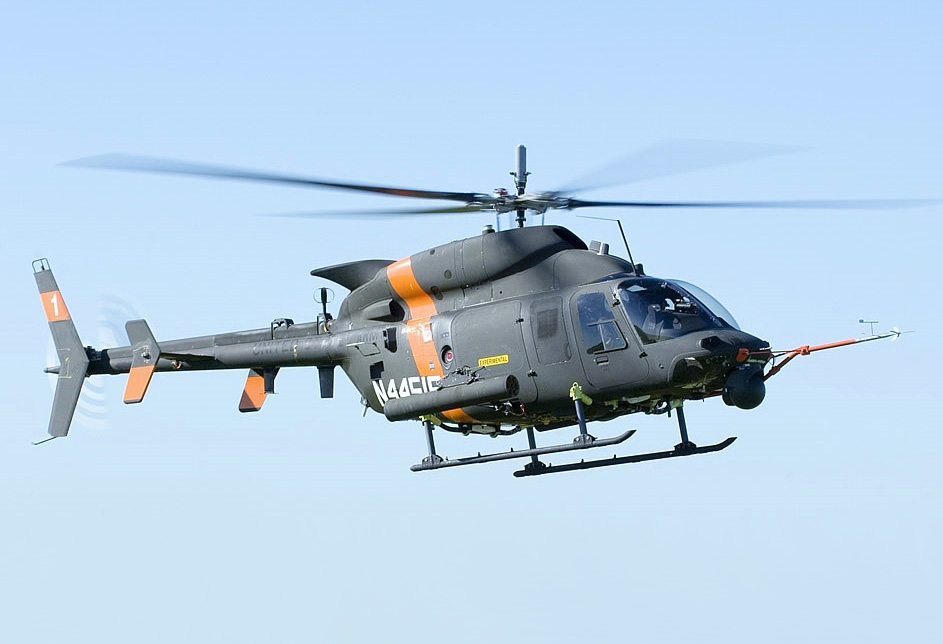
The Bell ARH-70 Arapaho was an American four-bladed, single-engine, light military helicopter designed for the United States Army's Armed Reconnaissance Helicopter (ARH) program. With a crew of two and optimized for urban combat, the ARH-70 was slated to replace the Army's aging OH-58D Kiowa Warrior.
Excessive delays and growth in program costs forced its cancellation on 16 October 2008, when the Department of Defense failed to certify the program to Congress. The ARH-70 was touted as having been built with off-the-shelf technology, the airframe being based on the Bell 407 (and as such was related to the OH-58).
The RAH-66 Comanche helicopter program was canceled by the U.S. Army on 23 February 2004. The cancellation was a result of a six-month study which recommended canceling the program before the Comanche reached production, after 20 years and development costs of over US$6.9 billion. The study estimated that the Army would save US$14 billion with the cancellation, which could then be used to update and replace the aging airframes of the Army's helicopter fleet. The study targeted the OH-58D Kiowa Warrior for replacement based on the age of the airframes, recent losses, and a lack of replacement airframes.
Army officials issued a request for proposals (RFP) for the replacement aircraft as the Armed Reconnaissance Helicopter (ARH) on 9 December 2004. The Army's concept would use commercial off-the-shelf (COTS) technology, with the goal of an operational unit of 30 helicopters and eight trainers ready by September 2008. Two companies submitted bids:
The Army announced Bell as the winner of a contract for 368 helicopters on 29 July 2005. There was some confusion as Bell figures placed the contract value at US$2.2 billion while Army estimates were over US$3 billion, compared to its earlier estimate of US$2.36 billion. The contract called for the development of prototypes and the delivery of preproduction aircraft to the Army for the Limited User Test (LUT), with the first unit equipped by the end of September 2008.
Bell's ARH demonstrator, a modified Bell 407 (s/n 53343/N91796), first flew on 3 June 2005. In February 2006, the ARH demonstrator flew with a limited avionics and Mission Equipment Package (MEP), and in April Bell fitted and mounted the Honeywell HTS900-2 engine to the demonstrator airframe, followed by a series of ground runs. The first flight was delayed, first in March and then in May, to allow Bell to configure the prototypes as preproduction aircraft. Bell and the Army both eventually agreed that this delay would be essential for maintaining the compressed timeline for development. The ARH-70's maiden flight occurred on 20 July 2006, at Bell's XworX facility in Arlington, Texas.
On 21 February 2007, during its first flight, prototype #4 (s/n 53906/N445HR) suffered a loss of engine power, due to fuel starvation, and made an autorotational landing at a nearby golf course. The aircraft was damaged beyond repair when it rolled over during the landing; the test pilots survived and were uninjured.
A month later, on 22 March 2007, the Army issued a "Stop Work" notice, giving Bell 30 days to present a plan to get the ARH program back on track. Previous estimates for the System Development Demonstration portion of the program had grown from $210 million to over $300 million. Textron, Bell's parent company, notified investors that they could lose $2–4 million on each aircraft under the contract. Bell appealed and received permission to continue development using company funds until the notice was resolved. On 18 May 2007, the Army approved continuation of the ARH program.
Hub AI
Bell ARH-70 Arapaho AI simulator
(@Bell ARH-70 Arapaho_simulator)
Bell ARH-70 Arapaho
The Bell ARH-70 Arapaho was an American four-bladed, single-engine, light military helicopter designed for the United States Army's Armed Reconnaissance Helicopter (ARH) program. With a crew of two and optimized for urban combat, the ARH-70 was slated to replace the Army's aging OH-58D Kiowa Warrior.
Excessive delays and growth in program costs forced its cancellation on 16 October 2008, when the Department of Defense failed to certify the program to Congress. The ARH-70 was touted as having been built with off-the-shelf technology, the airframe being based on the Bell 407 (and as such was related to the OH-58).
The RAH-66 Comanche helicopter program was canceled by the U.S. Army on 23 February 2004. The cancellation was a result of a six-month study which recommended canceling the program before the Comanche reached production, after 20 years and development costs of over US$6.9 billion. The study estimated that the Army would save US$14 billion with the cancellation, which could then be used to update and replace the aging airframes of the Army's helicopter fleet. The study targeted the OH-58D Kiowa Warrior for replacement based on the age of the airframes, recent losses, and a lack of replacement airframes.
Army officials issued a request for proposals (RFP) for the replacement aircraft as the Armed Reconnaissance Helicopter (ARH) on 9 December 2004. The Army's concept would use commercial off-the-shelf (COTS) technology, with the goal of an operational unit of 30 helicopters and eight trainers ready by September 2008. Two companies submitted bids:
The Army announced Bell as the winner of a contract for 368 helicopters on 29 July 2005. There was some confusion as Bell figures placed the contract value at US$2.2 billion while Army estimates were over US$3 billion, compared to its earlier estimate of US$2.36 billion. The contract called for the development of prototypes and the delivery of preproduction aircraft to the Army for the Limited User Test (LUT), with the first unit equipped by the end of September 2008.
Bell's ARH demonstrator, a modified Bell 407 (s/n 53343/N91796), first flew on 3 June 2005. In February 2006, the ARH demonstrator flew with a limited avionics and Mission Equipment Package (MEP), and in April Bell fitted and mounted the Honeywell HTS900-2 engine to the demonstrator airframe, followed by a series of ground runs. The first flight was delayed, first in March and then in May, to allow Bell to configure the prototypes as preproduction aircraft. Bell and the Army both eventually agreed that this delay would be essential for maintaining the compressed timeline for development. The ARH-70's maiden flight occurred on 20 July 2006, at Bell's XworX facility in Arlington, Texas.
On 21 February 2007, during its first flight, prototype #4 (s/n 53906/N445HR) suffered a loss of engine power, due to fuel starvation, and made an autorotational landing at a nearby golf course. The aircraft was damaged beyond repair when it rolled over during the landing; the test pilots survived and were uninjured.
A month later, on 22 March 2007, the Army issued a "Stop Work" notice, giving Bell 30 days to present a plan to get the ARH program back on track. Previous estimates for the System Development Demonstration portion of the program had grown from $210 million to over $300 million. Textron, Bell's parent company, notified investors that they could lose $2–4 million on each aircraft under the contract. Bell appealed and received permission to continue development using company funds until the notice was resolved. On 18 May 2007, the Army approved continuation of the ARH program.