
Recent from talks
Charles William Eliot
Knowledge base stats:
Talk channels stats:
Members stats:
Charles William Eliot
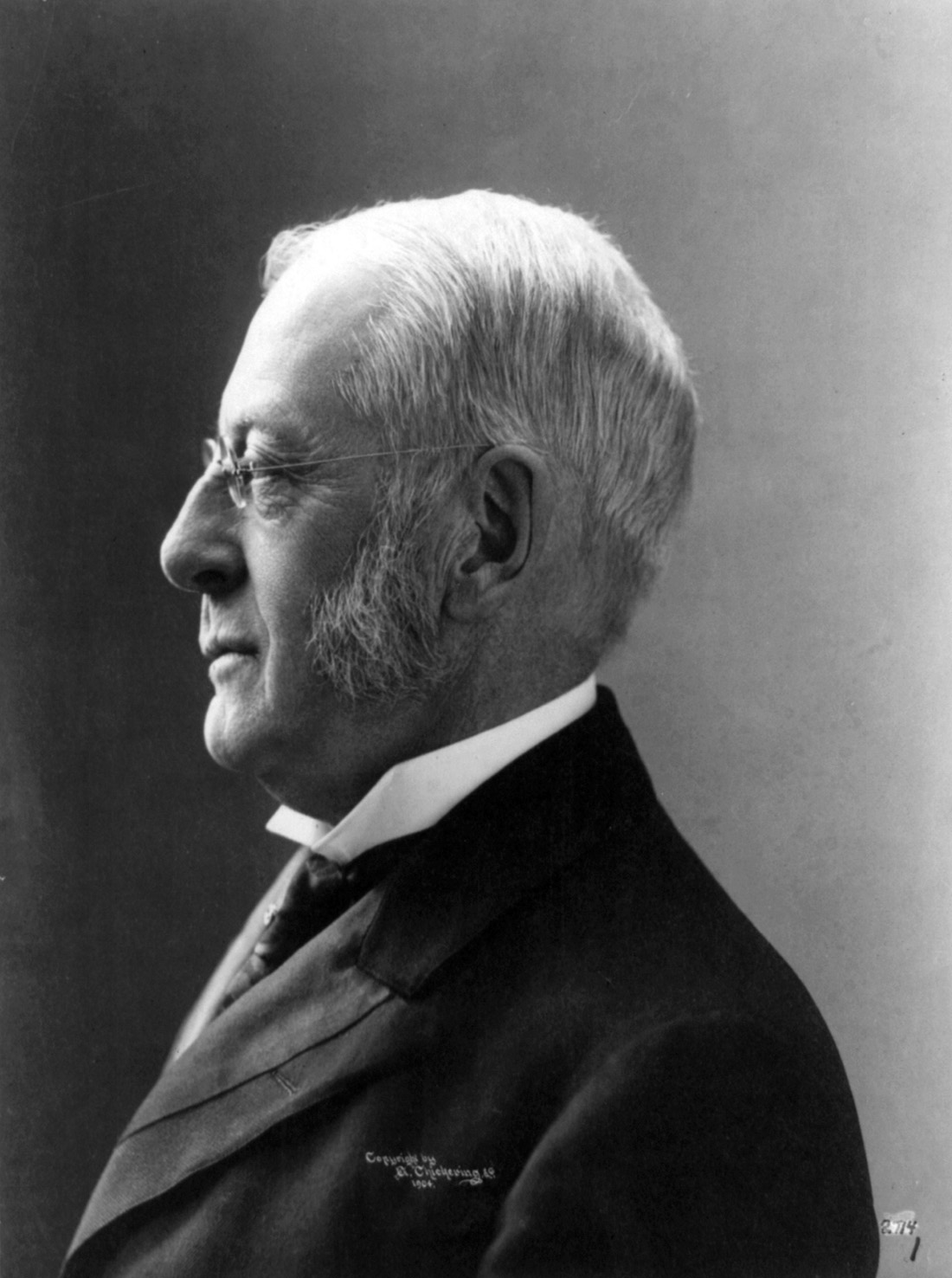
Charles William Eliot (March 20, 1834 – August 22, 1926) was an American academic who was president of Harvard University from 1869 to 1909, the longest term of any Harvard president. A member of the prominent Eliot family of Boston, he transformed Harvard from a respected provincial college into America's preeminent research university. Theodore Roosevelt called him "the only man in the world I envy."
Eliot was born a scion of the wealthy Eliot family of Boston. He was the son of politician Samuel Atkins Eliot and his wife Mary (née Lyman), and was the grandchild of banker Samuel Eliot and merchant Theodore Lyman of the Lyman Estate. His grandfather was one of the wealthiest merchants of Boston. He was one of five siblings and the only boy. Eliot graduated from Boston Latin School in 1849 and from Harvard University in 1853. He was later made an honorary member of the Hasty Pudding.
Although he had high expectations and obvious scientific talents, the first fifteen years of Eliot's career were less than auspicious. He was appointed Tutor in Mathematics at Harvard in the fall of 1854, and studied chemistry with Josiah P. Cooke. In 1858, he was promoted to Assistant Professor of Mathematics and Chemistry. He taught competently, wrote some technical pieces on chemical impurities in industrial metals, and busied himself with schemes for the reform of Harvard's Lawrence Scientific School.
But his real goal, appointment to the Rumford Professorship of Chemistry, eluded him. This was a particularly bitter blow because of a change in his family's economic circumstances—the financial failure of his father, Samuel Atkins Eliot, in the Panic of 1857. Eliot had to face the fact that "he had nothing to look to but his teacher's salary and a legacy left to him by his grandfather Lyman." After a bitter struggle over the Rumford chair, Eliot left Harvard in 1863. His friends assumed that he would "be obliged to cut chemistry and go into business in order to earn a livelihood for his family." But instead, he used his grandfather's large legacy and a small borrowed sum to spend the next two years studying the educational systems of the Old World in Europe.
Eliot's approach to investigating European education was unusual. He did not confine his attention to educational institutions, but explored the role of education in every aspect of national life. When Eliot visited schools, he took an interest in every aspect of institutional operation, from curriculum and methods of instruction through physical arrangements and custodial services. But his particular concern was with the relation between education and economic growth:
I have given special attention to the schools here provided for the education of young men for those arts and trades which require some knowledge of scientific principles and their applications, the schools which turn out master workmen, superintendents, and designers for the numerous French industries which demand taste, skill, and special technical instruction. Such schools we need at home. I can't but think that a thorough knowledge of what France has found useful for the development of her resources, may someday enable me to be of use to my country. At this moment, it is humiliating to read the figures which exhibit the increasing importations of all sorts of manufactured goods into America. Especially will it be the interest of Massachusetts to foster by every mean in her power the manufactures which are her main strength.
Eliot understood the interdependence of education and enterprise. In a letter to his cousin Arthur T. Lyman, he discussed the value to the German chemical industry of discoveries made in university laboratories. He also recognized that, while European universities depended on government for support, American institutions would have to draw on the resources of the wealthy. He wrote to his cousin:
Every one of the famous universities of Europe was founded by Princes or privileged classes—every Polytechnic School, which I have visited in France or Germany, has been supported in the main by Government. Now this is not our way of managing these matters of education, and we have not yet found any equivalent, but republican, method of producing the like results. In our generation I hardly expect to see the institutions founded which have produced such results in Europe, and after they are established they do not begin to tell upon the national industries for ten or twenty years. The Puritans thought they must have trained ministers for the Church and they supported Harvard College—when the American people are convinced that they require more competent chemists, engineers, artists, architects, than they now have, they will somehow establish the institutions to train them. In the meantime, freedom and the American spirit of enterprise will do much for us, as in the past ....
Hub AI
Charles William Eliot AI simulator
(@Charles William Eliot_simulator)
Charles William Eliot
Charles William Eliot (March 20, 1834 – August 22, 1926) was an American academic who was president of Harvard University from 1869 to 1909, the longest term of any Harvard president. A member of the prominent Eliot family of Boston, he transformed Harvard from a respected provincial college into America's preeminent research university. Theodore Roosevelt called him "the only man in the world I envy."
Eliot was born a scion of the wealthy Eliot family of Boston. He was the son of politician Samuel Atkins Eliot and his wife Mary (née Lyman), and was the grandchild of banker Samuel Eliot and merchant Theodore Lyman of the Lyman Estate. His grandfather was one of the wealthiest merchants of Boston. He was one of five siblings and the only boy. Eliot graduated from Boston Latin School in 1849 and from Harvard University in 1853. He was later made an honorary member of the Hasty Pudding.
Although he had high expectations and obvious scientific talents, the first fifteen years of Eliot's career were less than auspicious. He was appointed Tutor in Mathematics at Harvard in the fall of 1854, and studied chemistry with Josiah P. Cooke. In 1858, he was promoted to Assistant Professor of Mathematics and Chemistry. He taught competently, wrote some technical pieces on chemical impurities in industrial metals, and busied himself with schemes for the reform of Harvard's Lawrence Scientific School.
But his real goal, appointment to the Rumford Professorship of Chemistry, eluded him. This was a particularly bitter blow because of a change in his family's economic circumstances—the financial failure of his father, Samuel Atkins Eliot, in the Panic of 1857. Eliot had to face the fact that "he had nothing to look to but his teacher's salary and a legacy left to him by his grandfather Lyman." After a bitter struggle over the Rumford chair, Eliot left Harvard in 1863. His friends assumed that he would "be obliged to cut chemistry and go into business in order to earn a livelihood for his family." But instead, he used his grandfather's large legacy and a small borrowed sum to spend the next two years studying the educational systems of the Old World in Europe.
Eliot's approach to investigating European education was unusual. He did not confine his attention to educational institutions, but explored the role of education in every aspect of national life. When Eliot visited schools, he took an interest in every aspect of institutional operation, from curriculum and methods of instruction through physical arrangements and custodial services. But his particular concern was with the relation between education and economic growth:
I have given special attention to the schools here provided for the education of young men for those arts and trades which require some knowledge of scientific principles and their applications, the schools which turn out master workmen, superintendents, and designers for the numerous French industries which demand taste, skill, and special technical instruction. Such schools we need at home. I can't but think that a thorough knowledge of what France has found useful for the development of her resources, may someday enable me to be of use to my country. At this moment, it is humiliating to read the figures which exhibit the increasing importations of all sorts of manufactured goods into America. Especially will it be the interest of Massachusetts to foster by every mean in her power the manufactures which are her main strength.
Eliot understood the interdependence of education and enterprise. In a letter to his cousin Arthur T. Lyman, he discussed the value to the German chemical industry of discoveries made in university laboratories. He also recognized that, while European universities depended on government for support, American institutions would have to draw on the resources of the wealthy. He wrote to his cousin:
Every one of the famous universities of Europe was founded by Princes or privileged classes—every Polytechnic School, which I have visited in France or Germany, has been supported in the main by Government. Now this is not our way of managing these matters of education, and we have not yet found any equivalent, but republican, method of producing the like results. In our generation I hardly expect to see the institutions founded which have produced such results in Europe, and after they are established they do not begin to tell upon the national industries for ten or twenty years. The Puritans thought they must have trained ministers for the Church and they supported Harvard College—when the American people are convinced that they require more competent chemists, engineers, artists, architects, than they now have, they will somehow establish the institutions to train them. In the meantime, freedom and the American spirit of enterprise will do much for us, as in the past ....
Recent media