



Community hub
Recent from talks
Knowledge base stats:
Talk channels stats:
Members stats:
Chouannerie
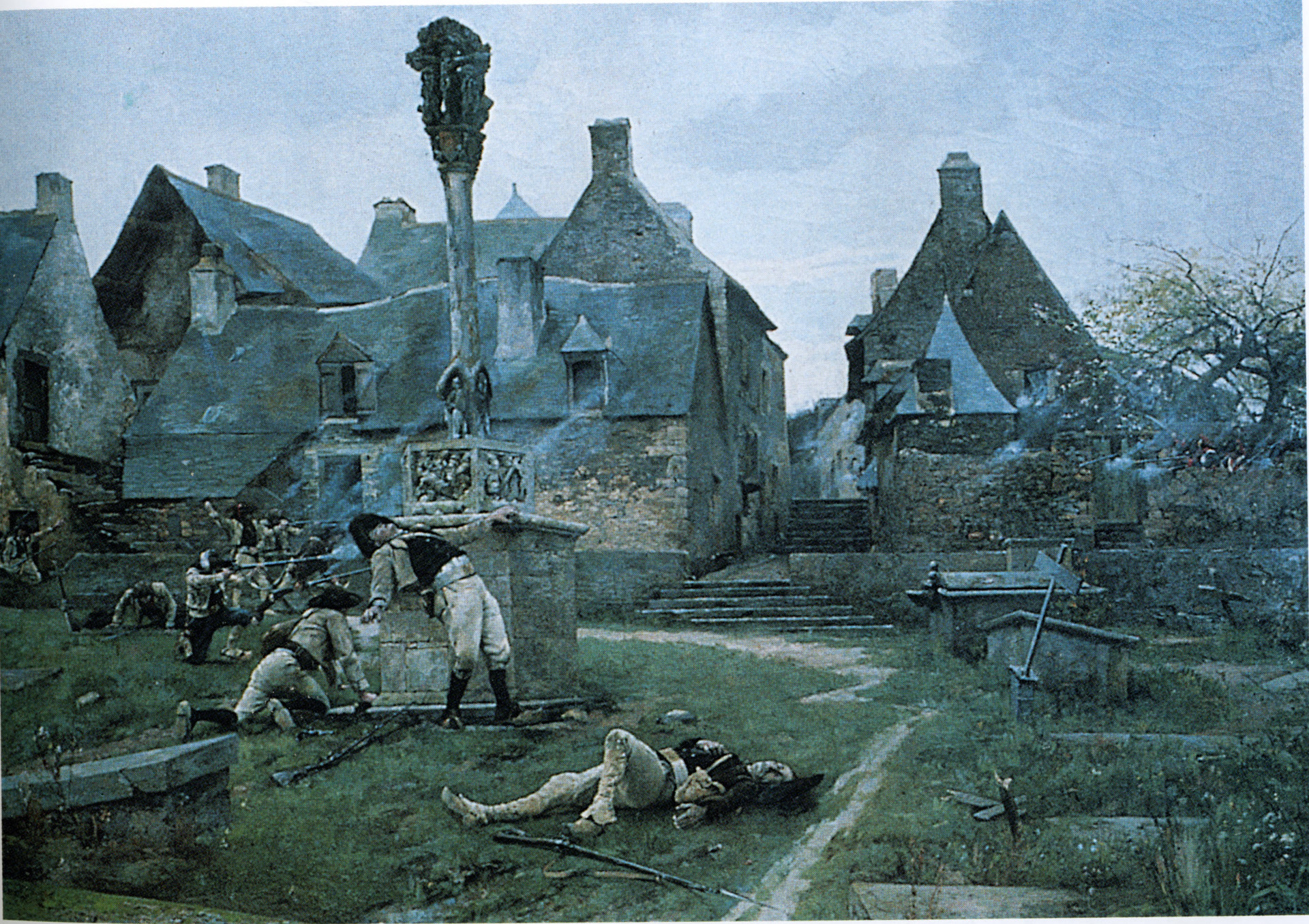
The Chouannerie (French pronunciation: [ʃwanʁi] ⓘ; from the Chouan brothers, two of its leaders) was a royalist uprising or counter-revolution in twelve of the western départements of France, particularly in the provinces of Brittany and Maine, against the First Republic during the French Revolution. It played out in three phases and lasted from spring 1794 to 1800. The revolt was comparable to the War in the Vendée, which took place in the Vendée region.
The uprising was provoked principally by the Civil Constitution of the Clergy (1790), which attempted to impose Caesaropapism upon the Catholic Church in France, and the mass conscription, or levée en masse (1793), which was decided by the National Convention. A first attempt at staging an uprising was carried out by the Association bretonne to defend the French monarchy and reinstate the devolved government, specific laws, and customs of Duchy of Brittany, which had all been repealed in 1789. The first confrontations broke out in 1792 and developed in stages into a peasant revolt, guerrilla warfare and finally full-scale battles. It ended only with the Republican forces defeating the rebels in 1800.
Briefer peasant uprisings in other départements like in Aveyron and Lozère are also identified as "chouanneries". Another petite chouannerie broke out in 1815, during the Hundred Days War, and a final one occurred in 1832.
In 1791, the adoption of the Civil Constitution of the Clergy loyalty to State requirements caused peasants around Vannes to rise to defend their bishop Sébastien-Michel Amelot from those of Lorient who wanted him to swear this oath of loyalty. In another incident, the following spring, in the area around Quimper, a justice of the peace led several parishes in an uprising in the name of King Louis XVI against the local authorities.
In the summer of 1792, further incidents occurred in the districts of Carhaix (Finistère), Lannion, Pontrieux (Côtes-d'Armor), Craon, Château-Gontier and Laval, where peasants opposed a levy of volunteers for the army. At Saint-Ouën-des-Toits, in the department of Mayenne, Jean Cottereau (known as Jean Chouan) led the insurgents. His nickname probably came from his imitation of the call of the tawny owl (the chouette hulotte) for a recognition-signal. A reward was put on his head, but he managed to reach England in March 1793. The Republican administration recognised him and his brother as the leaders of the revolt.
By January 1794, the Vendéans of the Vendée militaire, following a setback of the Virée de Galerne, tried to resist the infernal columns of General Louis Marie Turreau. Groups of Chouans north of the Loire took up arms again in the areas crossed by the Vendeans. The Chouannerie was born on the borders of the Mayenne and of the Ille-et-Vilaine, near Fougères, Vitré and Laval. The small groups, led by Jean Chouan, Aimé du Boisguy and Jean-Louis Treton (nicknamed Jambe d'Argent, i.e. "Silver Leg"), had Chouans and Vendeans who survived the Virée de Galerne, leaders who were compromised in the peasant uprisings of March 1793 and even deserters. Condemned to live in almost total secrecy, the Chouans knew that capture by the Republicans would mean certain death. Most of them were motivated by a desire to avenge their relatives who had disappeared in the Virée de Galerne.
Using guerrilla warfare tactics, Chouans in groups of a few score or a few hundred men ambushed military detachments, couriers and stagecoaches carrying government funds. They attacked Republican towns and executed informers, constitutional priests and republicans, and many administrators.
To oppose the Chouans, Republicans built strongholds or fortified towns, which were defended by local territorial guards. They were led by General Jean Antoine Rossignol, the chief commander of the Army of the Coasts of Brest. A law enacted on 23 March 1793 mandated that captured insurgents were to be executed by firing squad or by guillotine within 24 hours. Rossignol also assembled groups of fake Chouan outlaws to do as much as possible to discredit the real Chouans.
Hub AI
Chouannerie AI simulator
(@Chouannerie_simulator)
Chouannerie
The Chouannerie (French pronunciation: [ʃwanʁi] ⓘ; from the Chouan brothers, two of its leaders) was a royalist uprising or counter-revolution in twelve of the western départements of France, particularly in the provinces of Brittany and Maine, against the First Republic during the French Revolution. It played out in three phases and lasted from spring 1794 to 1800. The revolt was comparable to the War in the Vendée, which took place in the Vendée region.
The uprising was provoked principally by the Civil Constitution of the Clergy (1790), which attempted to impose Caesaropapism upon the Catholic Church in France, and the mass conscription, or levée en masse (1793), which was decided by the National Convention. A first attempt at staging an uprising was carried out by the Association bretonne to defend the French monarchy and reinstate the devolved government, specific laws, and customs of Duchy of Brittany, which had all been repealed in 1789. The first confrontations broke out in 1792 and developed in stages into a peasant revolt, guerrilla warfare and finally full-scale battles. It ended only with the Republican forces defeating the rebels in 1800.
Briefer peasant uprisings in other départements like in Aveyron and Lozère are also identified as "chouanneries". Another petite chouannerie broke out in 1815, during the Hundred Days War, and a final one occurred in 1832.
In 1791, the adoption of the Civil Constitution of the Clergy loyalty to State requirements caused peasants around Vannes to rise to defend their bishop Sébastien-Michel Amelot from those of Lorient who wanted him to swear this oath of loyalty. In another incident, the following spring, in the area around Quimper, a justice of the peace led several parishes in an uprising in the name of King Louis XVI against the local authorities.
In the summer of 1792, further incidents occurred in the districts of Carhaix (Finistère), Lannion, Pontrieux (Côtes-d'Armor), Craon, Château-Gontier and Laval, where peasants opposed a levy of volunteers for the army. At Saint-Ouën-des-Toits, in the department of Mayenne, Jean Cottereau (known as Jean Chouan) led the insurgents. His nickname probably came from his imitation of the call of the tawny owl (the chouette hulotte) for a recognition-signal. A reward was put on his head, but he managed to reach England in March 1793. The Republican administration recognised him and his brother as the leaders of the revolt.
By January 1794, the Vendéans of the Vendée militaire, following a setback of the Virée de Galerne, tried to resist the infernal columns of General Louis Marie Turreau. Groups of Chouans north of the Loire took up arms again in the areas crossed by the Vendeans. The Chouannerie was born on the borders of the Mayenne and of the Ille-et-Vilaine, near Fougères, Vitré and Laval. The small groups, led by Jean Chouan, Aimé du Boisguy and Jean-Louis Treton (nicknamed Jambe d'Argent, i.e. "Silver Leg"), had Chouans and Vendeans who survived the Virée de Galerne, leaders who were compromised in the peasant uprisings of March 1793 and even deserters. Condemned to live in almost total secrecy, the Chouans knew that capture by the Republicans would mean certain death. Most of them were motivated by a desire to avenge their relatives who had disappeared in the Virée de Galerne.
Using guerrilla warfare tactics, Chouans in groups of a few score or a few hundred men ambushed military detachments, couriers and stagecoaches carrying government funds. They attacked Republican towns and executed informers, constitutional priests and republicans, and many administrators.
To oppose the Chouans, Republicans built strongholds or fortified towns, which were defended by local territorial guards. They were led by General Jean Antoine Rossignol, the chief commander of the Army of the Coasts of Brest. A law enacted on 23 March 1793 mandated that captured insurgents were to be executed by firing squad or by guillotine within 24 hours. Rossignol also assembled groups of fake Chouan outlaws to do as much as possible to discredit the real Chouans.