Hubbry Logo
Luigi GalvaniLuigi GalvaniMain
Open search
Luigi Galvani
Community hub
Luigi Galvani
logo
8 pages, 0 posts
0 subscribers
Be the first to start a discussion here.
Luigi Galvani
Luigi Galvani
from Wikipedia

Luigi Galvani (/ɡælˈvɑːni/ gal-VAH-nee, US also /ɡɑːl-/ gahl-,[1][2][3][4] Italian: [luˈiːdʒi ɡalˈvaːni]; Latin: Aloysius Galvanus; 9 September 1737 – 4 December 1798) was an Italian physician, physicist, biologist and philosopher who studied animal electricity. In 1780, using a frog, he discovered that the muscles of dead frogs' legs twitched when struck by an electrical spark.[5]: 67–71  This was an early study of bioelectricity, following experiments by John Walsh and Hugh Williamson.

Key Information

Early life and career

[edit]

Luigi Galvani was born to goldsmith Domenico Galvani and Barbara Caterina Foschi, in Bologna, then part of the Papal States.[6] A portion of his childhood home still stands in the Giardino Salvatore Pincherle.[7][8]

In 1759, Galvani graduated with a degree in medicine and philosophy and began to practice medicine at nearby hospitals.[6] He published his first work, a paper on the anatomy and physiology of bones, in 1762, when he was 25 years old. Galvani presented the work at the Archiginnasio di Bologna, which allowed him to start lecturing at the Academy of Sciences of the Institue of Bologna (now part of the University of Bologna) where he taught anatomy for most of his career.[6]

In 1766, Galvani was appointed curator of the anatomical museum by the senate of Bologna. This position "required him to give lectures and demonstrations of anatomical operations before surgeons, painters and sculptors."[6] In 1782, he was appointed Professor of Obstetric Arts, which he remained for the next 16 years.

Animal electricity

[edit]

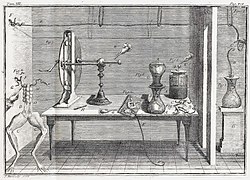
Galvani then began taking an interest in the field of "medical electricity". This field emerged in the middle of the 18th century, following electrical researches and the discovery of the effects of electricity on the human body by scientists including Bertrand Bajon and Ramón María Termeyer in the 1760s,[9] and by John Walsh[10][11] and Hugh Williamson in the 1770s.[12][13] The publication in 1791 of Galvani’s main work (De Viribus Electricitatis in Motu Musculari Commentarius), summarizing and discussing more than 10 years of research on the effect of electricity on animal preparations, had an enormous impact on the scientific community and sparked heated controversy in Europe.[14]

Galvani vs. Volta

[edit]

Alessandro Volta, a professor of experimental physics in the University of Pavia, was among the first scientists who repeated and checked Galvani’s experiments. At first, he embraced animal electricity. However, he started to doubt that the conductions were caused by specific electricity intrinsic to the animal's legs or other body parts. Volta believed that the contractions depended on the metal cable Galvani used to connect the nerves and muscles in his experiments.[13]

Every cell has a cell potential; biological electricity has the same chemical underpinnings as the current between electrochemical cells, and thus can be duplicated outside the body. Volta's intuition was correct. Volta, essentially, objected to Galvani’s conclusions about "animal electric fluid", but the two scientists disagreed respectfully and Volta coined the term "Galvanism" for a direct current of electricity produced by chemical action.[16]

Since Galvani was reluctant to intervene in the controversy with Volta, he trusted his nephew, Giovanni Aldini, to act as the main defender of the theory of animal electricity.[13]

Personal life

[edit]
1862 painting of Luigi Galvani and Lucia Galeazzi Galvani.

Galvani married scientist Lucia Galeazzi, daughter of his mentor Domenico Gusmano Galeazzi, in 1762.[6] After her death in 1790, Galvani moved in with his brother, who was living in their childhood home in Bologna.

Galvani was described by contemporaries as an "honest, mild, modest man, polite, charitable to the unfortunate and always a noble and generous friend."[6] He was noted for his religious devotion and saw his medical work as being a spiritual mission. French dermatologist Jean-Louis-Marc Alibert said of Galvani that he never ended his lessons “without exhorting his hearers and leading them back to the idea of that eternal Providence, which develops, conserves, and circulates life among so many diverse beings.”[17]

Death and legacy

[edit]

Galvani actively investigated animal electricity until the end of his life. In April 1798, the Cisalpine Republic, a French client state founded after the French occupation of Northern Italy, required every university professor to swear loyalty to the new authority. Galvani disagreed with the oath and refused to take it; as a result, he was stripped of his offices and sent into poverty. Aldini led a movement to restore him to his university position — it was successful, but his restoration was only announced shortly before his death. Galvani died in his brother’s house on 4 December 1798.[13]

Luigi Galvani's monument in Piazza Luigi Galvani (Luigi Galvani Square), in Bologna.

Galvani's report of his investigations were mentioned specifically by Mary Shelley as part of the summer reading list leading up to an ad hoc ghost story contest on a rainy day in Switzerland — and the resultant novel Frankenstein — and its reanimated construct. In Frankenstein, Victor studies the principles of galvanism but it is not mentioned in reference to the creation of the Monster.

Galvani's name also survives in everyday language as the verb 'galvanize' as well as in more specialized terms: Galvani potential, galvanic anode, galvanic bath, galvanic cell, galvanic corrosion, galvanic couple, galvanic current, galvanic isolation, galvanic series, galvanic skin response, galvanism, galvanization, hot-dip galvanization, galvanometer, Galvalume, and psycho-galvanic reflex.

Works

[edit]
  • De viribus electricitatis in motu musculari commentarius (in Latin), 1791. The Institute of Sciences, Bologna.
  • De viribus electricitatis in motu musculari (in Latin). Modena: Società tipografica. 1792.
  • Memorie sulla elettricità animale (in Italian). Bologna: Clemente Maria Sassi. 1797.
  • [Opere] (in Italian). Bologna: Emidio Dall'Olmo. 1841.

See also

[edit]

References

[edit]

Sources

[edit]
[edit]
Revisions and contributorsEdit on WikipediaRead on Wikipedia
from Grokipedia

Luigi Galvani (9 September 1737 – 4 December 1798) was an Italian physician, anatomist, and physiologist based in Bologna, renowned for pioneering the study of bioelectricity through experiments on frog preparations that demonstrated electricity's role in eliciting muscle contractions. His observations, beginning in the late 1780s, revealed that static electrical discharges or metallic contacts could trigger convulsions in excised frog legs, leading him to propose the existence of an intrinsic "animal electricity" generated within living tissues, particularly along nerves, to stimulate muscular motion. This theory, detailed in his 1791 treatise De viribus electricitatis in motu musculari commentarius, challenged prevailing views and sparked a scientific controversy with Alessandro Volta, who attributed the effects to contact electricity between dissimilar metals rather than inherent biological forces, ultimately contributing to the invention of the voltaic pile. Galvani's empirical demonstrations laid foundational principles for electrophysiology, influencing subsequent research into nerve impulses, bioelectromagnetism, and the electrochemical basis of life processes, while his reluctance to engage publicly in the debate reflected his focus on anatomical and physiological inquiry over theoretical dispute.

Early Life and Education

Birth and Family Background

Luigi Galvani was born on September 9, 1737, in , a city then within the of . His father, Domenico Galvani, worked as a , providing a modest artisan background for the . Domenico's profession supported the household, though the family's circumstances were elevated somewhat by Galvani's mother, Barbara Caterina Foschi, who came from a more affluent lineage. Galvani had at least one half-brother, , from his father's prior marriage, and historical records indicate the presence of additional siblings, reflecting a typical multigenerational structure in 18th-century . This familial environment, combining artisanal trade with connections to wealthier relatives, influenced early decisions about his , steering him away from initial religious aspirations toward secular studies.

Medical and Philosophical Training

Galvani entered the around 1755, pursuing studies in and philosophy at the behest of his father, who favored a over Galvani's initial inclinations toward other fields. His encompassed both practical , including and , and philosophical such as metaphysics, reflecting the integrated approach to and empirical science in eighteenth-century Bologna. On July 15, 1759, at age 21, Galvani earned his laurea (degree) in both and from the , marking the completion of his formal undergraduate . This dual qualification equipped him with a foundation in physiological observation and speculative reasoning, essential for his later interdisciplinary work. Following graduation, he interned at Bologna's hospitals, gaining hands-on in and while continuing anatomical studies. Galvani furthered his medical expertise by obtaining a in 1762, with a titled De ossibus focused on the formation and development of bones, demonstrating early interest in anatomical grounded in empirical . His philosophical training, influenced by professors like in metaphysics, emphasized causal explanations in nature, aligning with the era's shift toward mechanistic views of over purely vitalistic ones. This blend of rigorous medical techniques and philosophical inquiry into vital forces laid the groundwork for his subsequent experiments on muscular contraction.

Professional Career

Appointments at the University of Bologna

Galvani commenced his academic at the following the completion of his medical studies, initially serving as an unpaid lecturer in and in 1762. In 1763, he was appointed to an honorary lectureship in medicine, through which he delivered public lectures on surgical operations, general , and anatomical theory. That same year, he began practical demonstrations in , enhancing his reputation for meticulous anatomical instruction. In March 1766, the of installed Galvani as and demonstrator of the anatomical , a position requiring him to conduct lectures and dissections for students and the Accademia delle Scienze. This role solidified his involvement in the university's anatomical resources and apparatus. By 1768, he secured a paid lectureship in , marking a transition to compensated academic duties while continuing anatomical work. From 1772 to 1782, Galvani held the professorship of anatomy and custodianship of the anatomical rooms at the Accademia delle Scienze dell'Istituto di Bologna, an affiliated institute emphasizing scientific demonstration and research. In 1775, upon the death of Domenico Gusmano Galeazzi, Galvani succeeded him as reader (or ) in , a post he retained until 1790; this advancement followed his earlier stint as Galeazzi's assistant. On February 26, 1782, he was elected to the chair of , serving in this capacity until his , often in conjunction with his anatomical responsibilities to address practical needs. In 1790, Galvani transitioned to status, ceasing lecturing but maintaining private and ; political pressures in 1797, stemming from his refusal to swear allegiance to the , led to his effective suspension from duties, though he retained privileges until December 4, 1798.

Contributions to Anatomy and Obstetrics

Galvani earned his medical doctorate from the in 1762, defending a titled De ossibus that examined the formation, development, and structure of bones through comparative analysis with physiological functions. Following this, he was appointed as a in at the University of Bologna, where he delivered public demonstrations of surgical and anatomical procedures to audiences including surgeons, painters, and sculptors, emphasizing practical observation of organ systems. His early research focused on comparative anatomy, including detailed studies of renal tubules, nasal mucosa, and the ossicles of the ear, integrating anatomical structure with emerging physiological inquiries. In 1767, Galvani published findings on avian renal anatomy, identifying a three-layered structure in bird kidneys and linking it to filtration mechanisms, which advanced understanding of comparative organ morphology across species. These works employed direct dissection and microscopy, prioritizing empirical observation over speculative theories, and contributed to the transition from static anatomy to functional physiology in 18th-century Bologna. In , Galvani was appointed professor at the Institute of Sciences in Bologna around 1766, later formalized in 1782 by the Senate of Bologna as chair of obstetric arts, where he taught clinical techniques and oversaw practical training for midwives and physicians. He maintained an active clinical practice, performing deliveries and surgical interventions, though no major theoretical innovations or publications in obstetric are recorded, with his efforts centered on applied and care amid Bologna's medical reforms. This complemented his anatomical expertise, as he incorporated skeletal and dissections into obstetric instruction to explain fetal positioning and labor .

Discovery of Bioelectricity

Initial Observations and Experiments

In the late 1770s, Luigi Galvani began systematic investigations into the effects of electricity on animal tissues, utilizing dissected frog preparations such as legs severed at the spine with exposed nerves and muscles. These studies involved suspending frog trunks or legs via metallic hooks inserted into the spine or nerves, often in proximity to sources of static electricity. A key early observation, documented around , occurred when torsos with hooks in their spines twitched during the operation of a nearby or amid electrical storms. More precisely, violent contractions ensued upon repeated contact between a hook in a trunk's spine and an iron grating, demonstrating consistent muscular response to the metallic junction. Analogous results were obtained by hanging legs from an iron railing using hooks attached to the spinal nerves, where leg kicks occurred specifically upon hook-railing contact, completing a conductive circuit. Galvani further tested variations by employing different metals for hooks and supports, noting contractions only with conductors and not with insulators such as , , or . In controlled setups, muscle twitches were elicited by directing a spark from a to the in a sartorius muscle-nerve preparation, highlighting sensitivity to direct electrical discharge. These empirical findings, spanning the early , underscored repeatable contractions independent of overt external stimulation in some configurations, prompting deeper inquiry into intrinsic physiological mechanisms.

Frog Leg Preparations and Electrical Stimulation

Galvani prepared frog specimens by severing the hind legs from freshly killed frogs, removing the skin to expose the underlying muscles and nerves, particularly the sciatic (crural) nerve running from the spinal cord to the limbs. This neuromuscular preparation allowed the legs to remain viable for hours, enabling repeated observations of contractions. The exposed nerves and muscles facilitated direct contact with stimulatory agents without interference from integument. Initial electrical occurred accidentally around when an assistant's , used to dissect a prepared frog held by a , touched near an operating electrostatic generator, causing the muscle to twitch. Systematic experiments followed, including suspending the prepared legs by brass hooks inserted into the area and allowing the lower ends to contact an iron railing, which induced contractions attributed to during storms or even calm . application of sparks from Leyden jars or friction machines to the sciatic nerve or muscle also elicited vigorous twitches, confirming the role of electricity in triggering motion independent of external vital forces. Further refinements involved connecting the cut end of one frog's to the intact muscle of another preparation, demonstrating propagation of the contractile response across specimens without metallic conductors. These methods, detailed in Galvani's 1791 publication De viribus electricitatis in motu musculari commentarius, established the frog leg as a sensitive detector for subtle electrical influences, later termed a "." Observations consistently showed that contractions required intact nerve-muscle continuity and were elicited by both exogenous electricity and apparent endogenous sources, laying groundwork for bioelectricity studies.

Theory of Animal Electricity

Formulation of the Hypothesis

In his 1791 treatise De viribus electricitatis in motu musculari commentarius, Luigi Galvani articulated the hypothesis that muscular contraction arises from an intrinsic electrical force generated within animal tissues, specifically at the junction between nerves and muscles. He posited that nerves function as conductors of this "animal electricity," akin to the inner foil of a , while muscles serve as the outer conductor, with the electrical originating endogenously rather than from external sources alone. This formulation stemmed from repeated observations of contractions in isolated frog nerve-muscle preparations, even in the absence of atmospheric or frictional , leading Galvani to infer a vital, self-sustaining electrical inherent to living matter. Galvani's reasoning emphasized empirical exclusion of alternative causes: experiments demonstrated that contractions persisted when preparations were shielded from external sparks or insulated from metallic influences, yet occurred reliably upon direct contact between and muscle via conductors. He purely mechanical explanations, arguing that the and specificity of the response—confined to excitable tissues—indicated an electrical , grounded in the known of to propagate instantaneously and induce motion in sensitive bodies. This integrated first-principles observations of bioexcitability with analogies to artificial electric phenomena, proposing that disequilibrium in the internal electrical charge, triggered by stimuli, drives the contractile within muscle fibers. The treatise outlined animal electricity as a distinct category from metallic or vitreous electricity, characterized by its subtlety, organ-specific generation, and role in vital functions like sensation and volition. Galvani supported this with quantitative notes on contraction thresholds and directional propagation along nerves, anticipating modern notions of bioelectric potentials while cautioning against overgeneralization to non-excitable tissues. His formulation prioritized causal chains from tissue interfaces to motion, dismissing vitalistic excesses in favor of testable electrical mechanisms.

Empirical Basis and First-Principles Reasoning

Galvani's empirical foundation rested on systematic observations beginning , when he and his Lucia Galeazzi noticed contractions in prepared during electrical discharges from nearby Leyden jars or atmospheric storms, even without contact sparking the tissue. These initial serendipitous events prompted controlled experiments where sciatic were touched with metal instruments, eliciting twitches solely upon contact, independent of external electrical sources. Further trials isolated variables: contractions persisted when a contacted the while a held the muscle, but ceased with metals or non-conductors, indicating an interaction between dissimilar conductors and animal tissue rather than frictional or atmospheric electricity alone. To test for intrinsic sources, Galvani insulated preparations and applied from machines, confirming contractions via electrical influence but hypothesizing the frog's own agency when metals sufficed without machines. He documented over a of variations, including effects—contractions diminishing in , reviving in warmth—and directional from to muscle, mimicking physiological impulses. These repeatable phenomena, detailed in his 1791 De Viribus Electricitatis in Motu Musculari Commentarius, established that muscle response correlated directly with electrical phenomena, excluding mechanical or chemical artifacts through controls and comparative trials on non-excitable tissues. From these data, Galvani reasoned causally: since known (e.g., from Leyden jars) universally triggered contractions akin to vital motion, and experiments minimized external inputs, the motive force must originate within the animal as an inherent electrical fluid, akin to Newtonian subtle fluids animating matter. He analogized the muscle-nerve pair to a biological Leyden jar, with muscle as the outer plate accumulating "metallic" and nerve as the inner "vitreous" counterpart, their disequilibrium driving contraction upon circuit completion by metals— a deduction grounded in electrostatic principles without invoking occult vitalism. This framework prioritized observable correlations (contact-induced sparks in air gaps near preparations) and parsimony, attributing effects to electricity's established contractile power rather than ad hoc animal spirits, though later refined by ionic mechanisms.

Controversy with Alessandro Volta

Volta's Criticisms and Alternative Explanation

Alessandro Volta, having replicated Galvani's frog leg experiments in the early 1790s, contended that the observed muscular contractions did not originate from an intrinsic "animal electricity" within the biological tissues, but rather from external electrical forces generated by the experimental apparatus. He specifically criticized Galvani's interpretation of setups involving a brass hook and iron scalpel, asserting that the electricity arose solely from the contact between these dissimilar metals, independent of the frog's presence. Volta emphasized that positing a unique, organ-specific electricity in animals was an unnecessary assumption, as the phenomena could be fully explained by conventional electrical principles known from physics. To substantiate his critique, Volta conducted experiments isolating the metallic contacts from biological material, demonstrating that touching the tongue with wires of different metals—such as and silver—produced a sharp acidic sensation attributable to , without any intermediary. He further showed that the frog's nerve-muscle functioned merely as a highly sensitive detector, analogous to an , capable of registering minute electrical discharges but not generating them endogenously. In one series of tests, Volta connected multiple pairs of dissimilar metals in , observing cumulative electrical effects that intensified with each junction, thereby attributing the power to metallic "contact tension" rather than vital forces. Volta's alternative framework, outlined in his 1792 correspondence and subsequent memoirs, proposed that emerges at the interface of heterogeneous conductors, particularly metals, due to inherent differences in their affinities for electric fluid—a concept rooted in the era's of two-fluid or single-fluid . This metallic contact directly contradicted Galvani's by relocating the causal origin from the animal's "electrical organs" (inferred from muscle and ) to physicochemical interactions in the setup, while acknowledging the frog's as a biological indicator of such currents. Though Volta's initial explanations evolved and faced later refinements, his demonstrations decisively shifted focus toward exogenous sources, paving the way for artificial electric generators like the voltaic pile announced in 1800.

Galvani's Responses and Further Experiments

In response to Alessandro Volta's 1792 criticisms attributing muscle contractions to the contact between dissimilar metals rather than inherent animal electricity, Luigi Galvani conducted additional experiments detailed in his 1794 publication Dell'uso e dell'attività degli archi conduttori non metallici nella contrazione dei muscoli, co-authored with his nephew . These experiments aimed to demonstrate that contractions could occur independently of metallic contacts, thereby supporting Galvani's of electricity residing intrinsically within animal tissues. Galvani showed that frog leg contractions could be elicited using arcs composed of a single metal, where the metal ends connected nerve to muscle without intermetallic contact within the body, refuting Volta's emphasis on bimetallic interactions. He further demonstrated contractions by linking the crural nerves of two separate frog legs using saline solutions or non-metallic conductors such as charcoal and mercury, which produced consistent muscular responses without any metals in the circuit. In meticulous setups, Galvani achieved contractions through direct contact between exposed nerves and muscles of the same or different preparations, eliminating external conductors entirely and attributing the effect to the animal's internal electrical fluid. These findings reinforced Galvani's view that the electrical stimulus originated from the neuromuscular apparatus itself, potentially influenced by but fundamentally endogenous to the organism. Galvani emphasized the need for precise experimental conditions, noting that irregular results stemmed from inadequate rather than flaws in the animal electricity . While not fully resolving the , these experiments highlighted the physiological basis of excitability, paving the way for later electrophysiological validations.

Long-Term Resolution in Favor of Galvani's Core Insight

In the decades following the Galvani-Volta debate, empirical advancements in instrumentation and experimental techniques shifted scientific consensus toward the validation of intrinsic bioelectric phenomena in excitable tissues, aligning with Galvani's hypothesis that animal structures generate their own electrical forces independent of external metallic contacts. Carlo Matteucci's mid-19th-century studies, using multiplier galvanometers, demonstrated that frog muscles and electric fish organs produce measurable currents even without external circuits, attributing these to endogenous "muscular electricity" akin to Galvani's animal electricity. Matteucci's rheotome device further isolated nerve-induced potentials, providing causal evidence that electrical activity originates within biological preparations rather than solely from bimetallic interactions. Emil du Bois-Reymond's systematic investigations in the 1840s, detailed in his two-volume Untersuchungen über thierische Elektricität (1848–1849), offered definitive through refined galvanometric recordings of "negative variation" and "cone of action" in nerves, showing propagating electrical disturbances without reliance on Voltaic piles. These findings established that nerves conduct impulses via self-generated potentials, refuting pure contact-electrostatic explanations and grounding in quantifiable bioelectric data. Du Bois-Reymond explicitly credited Galvani's foundational observations, arguing that animal tissues harbor an immanent electrical polarity essential for excitability. 20th-century biophysical research culminated this resolution with precise measurements of action potentials, as in and Andrew Huxley's 1939–1952 squid axon experiments, which modeled ionic fluxes (sodium influx, potassium efflux) generating transmembrane voltages of approximately 100 millivolts—directly evidencing Galvani's predicted intrinsic electricity as the causal driver of neural signaling and contraction. This ionic framework, awarded the in or , integrated Galvani's insight into cellular mechanisms, while Volta's contributions illuminated exogenous current sources but failed to account for the autonomous bioelectric gradients observed across . Modern fields like and bioengineering thus trace their empirical origins to Galvani's first-principles recognition of electricity as a vital physiological , superseding artifactual interpretations of early frog-leg contractions.

Other Scientific Investigations

Studies on the Auditory System

In the early phase of his , following his doctoral degree in 1759, Galvani engaged in comparative anatomical investigations that included the , examining its structures such as the across various to identify morphological similarities and differences. These studies, conducted as part of his preparation for lectures in and , emphasized empirical and observation, aligning with the era's focus on structural homologies without invoking speculative physiological mechanisms. Galvani extended his anatomical work to the auditory organs of birds, publishing several papers on their ear around the mid-1760s, just prior to Scarpa's more extensive treatments of the subject. His analyses detailed the configuration of avian middle ear components, including the and associated membranes, contributing descriptive that supported emerging understandings of transmission pathways in non-mammalian vertebrates. This work reflected Galvani's methodical approach to organ-specific morphology, prioritizing verifiable dissections over theoretical . These auditory studies predated Galvani's later electrophysiological experiments and did not directly link to electrical phenomena in hearing; instead, they formed part of his broader contributions to physiological , influencing subsequent researchers in otology through precise structural rather than functional hypotheses. No evidence indicates Galvani proposed novel theories of auditory transduction, but his empirical findings provided foundational anatomical baselines for later physiological inquiries into hearing mechanisms.

Work in Comparative Anatomy

Galvani's contributions to comparative anatomy centered on the structural and functional similarities across , particularly in skeletal, renal, and auditory systems. His doctoral , De ossibus, analyzed the formation, development, and of bones, drawing comparisons between and skeletons to elucidate ossification processes and pathological variations. This work established him as a in anatomy at the University of Bologna, where he extended his investigations to include the bones of various vertebrates, emphasizing empirical dissection and chemical analysis to identify conserved developmental patterns. In the , Galvani published detailed studies on avian anatomy, including a paper describing the three-layered structure of kidneys and their comparative urinary tracts relative to mammals. These findings highlighted functional analogies in renal mechanisms despite morphological differences, based on dissections of multiple bird species. He also examined the nasal and ear structures across animals and humans, seeking causal explanations for sensory adaptations through direct observation rather than speculative theories. Galvani's auditory involved comparative dissections of bird hearing organs, revealing structural parallels to cochleae and suggesting innate physiological bases for independent of external influences. This body of work, grounded in meticulous anatomical preparations, prefigured modern evo-devo approaches by prioritizing homologies and experimental verification over prevailing vitalistic doctrines of the .

Personal Life

Marriage and Family

In 1762, Luigi Galvani married Lucia Maddalena Galeazzi, the of his mentor and Domenico Gusmano Galeazzi. The couple resided initially with the Galeazzi , where Galvani assisted in anatomical studies, before establishing their own household in . Lucia, born in 1743, actively supported her husband's scientific pursuits, collaborating on experiments and providing in his electrophysiological until her . The produced , leaving the couple without . Lucia's passing on , , from unspecified causes, profoundly affected Galvani, contributing to his withdrawal from active and subsequent deterioration. Galvani himself was the third of four sons born to Domenico Galvani, a , and Barbara Foschi, though his immediate family dynamics centered on his childless union with Lucia rather than extended kin.

Religious and Philosophical Outlook

Galvani exhibited profound Catholic devotion throughout his , initially aspiring to the priesthood by joining the dei Padri Filippini at age 15, though his parents persuaded him to pursue medical studies instead. He viewed scientific , particularly in , as compatible with , often concluding lectures with exhortations to recognize in the mechanisms of , such as the circulation and conservation of vital forces. This religious outlook shaped his resistance to secular political changes during the late 1790s, when he declined to swear allegiance to the established under French revolutionary influence, citing incompatibility with his faith; consequently, he was removed from his university position in 1797 but reinstated after the region's reconquest by Austrian and papal forces. Philosophically, Galvani adhered to a vitalist perspective, positing an intrinsic "animal electricity" as a non-metallic, inherent property of living tissues akin to a vital fluid originating from the brain to animate muscles, distinct from external electrical phenomena. This framework reflected a teleological view of nature, aligning empirical observation with a belief in purposeful design, without evident conflict between his empirical methods and theological commitments.

Later Years and Death

Health Decline and Retirement

In the years following the death of his wife Lucia on June 30, 1790, Galvani's health began to deteriorate, exacerbated by personal grief and advancing age. Despite these challenges, he continued his scholarly pursuits intermittently until political upheavals further strained his condition. The French invasion of Bologna in 1796, leading to the formation of the Cispadane Republic in 1797, compelled university faculty to swear allegiance to the new regime. Galvani, adhering to his principles, refused the oath, resulting in his forced resignation from his professorships in anatomy and surgery at the University of Bologna and the Institute of Sciences. This dismissal deprived him of his primary income and institutional support, prompting his retirement to the home of his brother Giacomo. Isolated from academic circles and facing financial hardship, Galvani's physical and mental state rapidly worsened in his brother's residence, marked by a feverish decline attributed to compounded stress and sorrow. He spent his final months in relative , unable to resume active research or teaching, until his death on December 4, 1798.

Circumstances of Death

Galvani died on 4 December 1798 in at of 61. In the wake of Napoleon's invasion of the Papal States in 1797, which led to of the , Galvani refused to swear the required to the new . This resulted in his dismissal from the , along with the loss of his salary, pension, and residence, plunging him into poverty. He relocated to his brother's house, where he lived out his final months in reduced circumstances amid ongoing health decline. The precise remains unspecified in contemporary accounts, attributed generally to causes consistent with his advanced age and prior infirmities. Following his passing, a modest was held, and he was interred in the Church of Corpus Domini alongside his , Lucia Galeazzi Galvani.

Legacy and Influence

Immediate Impact on Electrophysiology

Galvani's De Viribus Electricitatis in Motu Musculari Commentarius, published in 1791, documented experiments showing that electrical discharges from static generators or lightning caused contractions in frog sciatic nerves and gastrocnemius muscles, even when excised from the body. This established electricity as a stimulus capable of triggering physiological responses independently of the central nervous system, marking the empirical foundation for studying bioelectric phenomena. Galvani inferred an intrinsic "animal electricity" generated within nerves and muscles, analogous to electrical fluids in Leyden jars, which he tested through preparations minimizing external metallic contacts. The treatise prompted immediate scrutiny and replication, notably from , who in 1792 communicated to the Royal Society that the contractions arose from electrolytic contact potentials between dissimilar metals (e.g., brass scalpel and steel probe) rather than endogenous animal sources. Volta's experiments, using preparations as sensitive detectors, quantified voltage differences across metal interfaces, shifting focus toward metallic while validating Galvani's of tissue excitability. This critique, published in outlets like the Philosophical Transactions, ignited a decade-long , with Galvani countering in 1794 via metallic-free trials (e.g., using bridges) that contractions persisted, reinforcing the of neural . The Galvani-Volta exchange accelerated methodological rigor in electrical physiology, introducing precise instrumentation for detecting micro-currents and distinguishing bioelectric signals from artifacts. Contemporaries like Giovanni Aldini extended these findings to human cadavers by 1797, applying voltaic currents to elicit limb movements, which demonstrated scalability of electrical stimulation across species and tissues. Though Volta's metallic theory predominated short-term—culminating in his 1800 voltaic pile invention—the controversy crystallized electrophysiology's core question: the origin and mechanism of neuromuscular activation, prompting systematic inquiries into membrane potentials and conductivity absent in prior anatomical studies.

Modern Validation and Applications

Galvani's hypothesis of intrinsic "animal electricity" in excitable tissues has been rigorously validated by subsequent electrophysiological research, which established that nerve and muscle cells generate and propagate electrical signals via changes in membrane potential. Experiments in the early 20th century, building on Galvani's observations, measured resting potentials in frog nerves, confirming bioelectric activity independent of external sources. The seminal work of Alan Hodgkin and Andrew Huxley in 1952 mathematically modeled the action potential as an ionic flux of sodium and potassium across neuronal membranes, providing a biophysical mechanism for the rapid contractions Galvani induced in frog preparations and demonstrating the electrochemical basis of neural transmission. This model, derived from voltage-clamp recordings on squid giant axons, has withstood decades of experimental scrutiny and forms the foundation of computational neuroscience. These validations extend to quantitative measurements of bioelectric fields in development and regeneration, where endogenous voltage gradients guide cellular processes, as evidenced by studies on amphibian limb regeneration showing electric fields of 10-100 mV/mm directing cell migration. Modern techniques like patch-clamp recording, which probe single ion channels, affirm Galvani's core insight that electricity is integral to vitality, dispelling earlier debates with Volta by isolating tissue-generated currents. In applications, Galvani's principles bioelectronic medicine, where implantable devices deliver targeted electrical stimuli to modulate dysfunctional neural or activity. Cardiac pacemakers, first successfully implanted on , 1958, by Åke Senning using a device designed by , synchronize heartbeats by mimicking natural bioelectric pulses, preventing in over 1 million patients annually worldwide. (DBS), FDA-approved for in 1997 and in 2002, uses electrodes in the subthalamic nucleus or to deliver high-frequency pulses (typically 130 Hz, 1-5 V), reducing motor symptoms by 50-70% in responsive patients through modulation. Emerging neuromodulation therapies, such as those developed by Galvani Bioelectronics since its 2016 founding as a GlaxoSmithKline-GSK partnership, target peripheral nerves like the vagus or splenic nerve to suppress inflammation in rheumatoid arthritis and Crohn's disease by altering cytokine release via precise current delivery. These interventions, supported by closed-loop systems integrating real-time biofeedback, exemplify causal control of physiological processes through electricity, with clinical trials reporting sustained efficacy in chronic conditions.

Honors and Commemorations

Galvani was elected a member of the Accademia delle Scienze dell'Istituto di Bologna in 1765, where he contributed numerous memoirs on anatomy and physiology. He later served as president of the academy starting in 1772, overseeing its scientific activities during a period of institutional reform in Bologna. Posthumously, the Accademia delle Scienze collected and published his Opere edite ed inedite in 1841, preserving his experimental writings and theoretical contributions to . In 1879, a by sculptor Adalberto Cencetti was erected in Piazza Galvani, , portraying Galvani examining a to evoke his seminal bioelectricity experiments. Commemorative medals include a French bronze piece struck in 1823 by Armand-Auguste Caqué and an Italian one in 1888 by Tommaso Mercandetti marking the centenary of animal electricity's discovery. The Liceo Ginnasio Statale Luigi Galvani, in , bears his name, reflecting his enduring recognition as and educator.

Major Works

Key Publications and Treatises

Galvani's most influential publication, De viribus electricitatis in motu musculari commentarius (Commentary on the Forces of Electricity in Muscular Motion), was issued in 1791 by the Typographia Instituti Scientiarum in Bologna as part of the proceedings of the local Academy of Sciences. This treatise synthesized over a decade of experiments, primarily using excised , where muscular contractions occurred upon electrical discharge or contact between dissimilar metals, which Galvani interpreted as of an inherent "animal electricity" generated within nerves and muscles to initiate motion, independent of external atmospheric influences. The work included detailed illustrations of experimental setups and argued against prevailing views by positing electricity as a vital force intrinsic to living tissue, influencing subsequent debates in electrophysiology. A second edition with annotations by his nephew Giovanni Aldini appeared in 1792, expanding on the original findings amid emerging controversies. Earlier in his career, Galvani produced anatomical and physiological treatises on topics such as the structure of bird kidneys and the auditory mechanisms in amphibians, reflecting his professorial duties in anatomy and obstetrics at the University of Bologna, though these predate his electrical research and received less attention. Post-1791, Galvani contributed rejoinders to critics like Alessandro Volta, published in academic journals through the 1790s, defending his theory against metallic contact explanations for the observed phenomena.

Significance of His Writings

Galvani's seminal treatise De Viribus Electricitatis in Motu Musculari (1791) detailed systematic experiments on frog neuromuscular preparations, revealing that muscle contractions could be induced by electrical discharge from sources such as Leyden jars or atmospheric electricity, without requiring external mechanical stimuli. In these accounts, Galvani described contractions occurring when a scalpel touched a femoral nerve while a bronze hook contacted an iron rail, leading him to conclude that living tissues possess an intrinsic "animal electricity" capable of propagating through nerves to activate muscles. This publication fundamentally challenged prevailing physiological theories reliant on nebulous like "animal spirits" or vital fluids, instead privileging electrical causation in biological motion and establishing empirical groundwork for bioelectric phenomena. By demonstrating that electricity—whether exogenous or endogenous—directly influences irritability and contractility in excised tissues, Galvani's writings initiated the scientific investigation of as a rigorous , shifting focus from metaphysical to quantifiable physical processes in living organisms. The work provoked a pivotal debate with Alessandro Volta, who in 1792 contested Galvani's interpretation by attributing contractions to bimetallic contact electricity rather than inherent animal sources, prompting Volta's invention of the voltaic pile in 1800 for steady current generation. Galvani rebutted these claims through further experiments showing contractions via direct nerve-to-muscle connections absent metals, affirming endogenous electrical agency; this exchange not only clarified distinctions between bioelectricity and artificial sources but also catalyzed advancements in electrical instrumentation, including the galvanometer. Longitudinally, Galvani's documented findings enabled later validations, such as Carlo Matteucci's 1842 measurements of muscle-generated currents using early galvanometers, and culminated in the 1952 Hodgkin-Huxley model elucidating ionic mechanisms of action potentials, which underpin contemporary models of neural signaling and function. His emphasis on electricity's role in also inspired early therapeutic applications, like electrical attempts for victims and treatments for nervous disorders, while influencing through extensions in muscular electrostimulation studies.

References

Add your contribution
Related Hubs
User Avatar
No comments yet.