
Recent from talks
Argentina v England (1986 FIFA World Cup)
Knowledge base stats:
Talk channels stats:
Members stats:
Argentina v England (1986 FIFA World Cup)
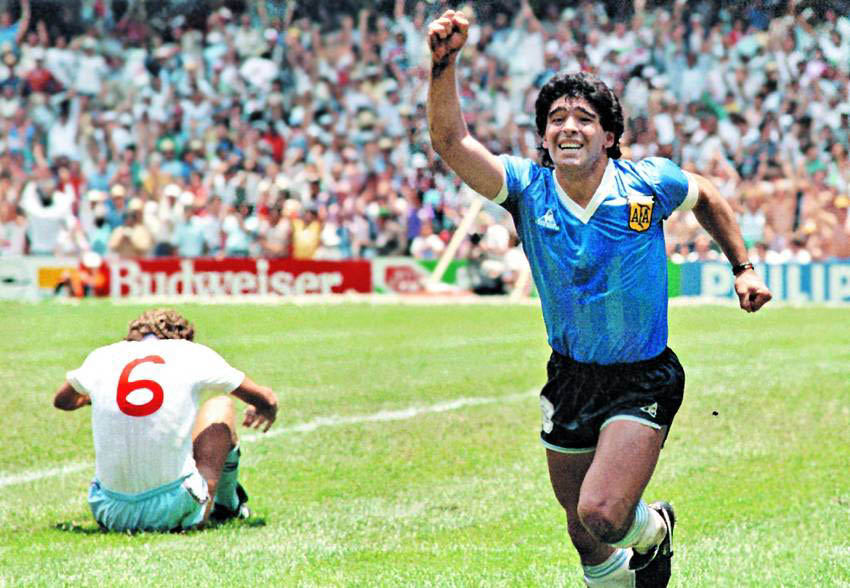
Argentina 2 - 1 England was a football match played on 22 June 1986 between Argentina and England in the quarter-finals of the 1986 FIFA World Cup at the Estadio Azteca in Mexico City. The game was held four years after the Falklands War between Argentina and the United Kingdom, and was a key part in the already intense Argentina–England football rivalry. It was also a match which included two of the most well-known goals in football history, both scored by Argentina captain Diego Maradona.
The first goal, after 51 minutes, was the "Hand of God goal," which Maradona scored by using his hand. The second, four minutes after his first, saw him dribble past five England players, Peter Beardsley, Peter Reid, Terry Butcher, Terry Fenwick, Butcher (again), and finally goalkeeper Peter Shilton, and became known as the "Goal of the Century." Argentina won the game 2–1 and went on to win the 1986 World Cup with a victory over West Germany in the final match. Maradona won the golden ball for player of the tournament; England's goalscorer on the day, Gary Lineker, won the golden boot for being the tournament's top scorer.
The rivalry between the England and Argentina national football teams is generally traced back to the 1966 FIFA World Cup. During the quarter-final game at Wembley Stadium, the home of the England national team, Argentine captain Antonio Rattin was sent off as Argentina lost in a game which contained excessive foul play. Rattin was angered at the sending-off, feeling that the German referee Rudolf Kreitlein, who did not speak Spanish, had been biased towards the English, a fellow European nation, in front of their home fans, and stamped over the royal carpet in the stadium. This led England manager Alf Ramsey to describe the Argentine players as "animals", a comment that caused outrage in Argentina.
Despite the popularity of Osvaldo Ardiles and Ricardo Villa, Argentines who played with Tottenham Hotspur in England in an era before it was commonplace for clubs to have non-British players, the rivalry remained strong.
Outside football, the Falklands War in 1982 led to a rapid deterioration in Anglo-Argentine relations. Britain administers the Falkland Islands, a small archipelago in the South Atlantic, as a British overseas territory; Argentina also claims the islands. On 2 April 1982, the Argentine military invaded the islands, and Britain responded by sending a naval task force which recaptured the islands. Though the two nations were never officially at war, the conflict resulted in 285 British and 659 Argentine deaths. As a result, the match taking place four years after the war was emotionally charged. Following the game, Maradona stated: "Although we had said before the game that football had nothing to do with the Malvinas war, we knew they had killed a lot of Argentine boys there, killed them like little birds. And this was revenge."
The 1986 FIFA World Cup was held in Mexico after the original hosts, Colombia, were unable to host the tournament. England qualified for the finals undefeated, topping Group 3 in the UEFA zone; Argentina also topped their qualifying group in CONMEBOL. In the early stages of the tournament, Argentina had been comfortable, winning two and drawing one in the group stage. England had qualified more narrowly, with a 3–0 win over Poland in the final match putting them into the round of 16. Both teams won comfortably against South American opposition in that round, Argentina against Uruguay and England against Paraguay. Although neither team began the tournaments as favourites, England's form had been improving throughout the World Cup and Argentina were buoyed by the skill of Maradona.
Argentina beat Uruguay 1–0 in the round of 16 wearing blue cotton shirts that coach Carlos Bilardo believed would prove too uncomfortable in the searing Mexico City heat. Bilardo asked Argentina's kit manufacturer to come up with lighter blue shirts for the quarter-final, an impossible request given the short deadline. With three days to go before the match, he sent out Ruben Moschella, a member of his coaching staff, to scour the shops of the Mexican capital for a suitable kit. He returned with two different blue shirts, which they subsequently weighed but were unable to choose between. It was then that Diego Maradona appeared and said: "That’s a nice jersey. We’ll beat England in that." Moschella returned to the shop and bought 38 of the shirts for the side to wear against England. A designer fashioned some makeshift Argentine Football Association (AFA) badges, which were then sewn on to each jersey opposite the logo of Le Coq Sportif, which provided kits for Argentina at the time, with silvery American football shirt numbers hurriedly ironed on to the backs.
Before the 1986 game fans from both countries had a fight in Mexico City streets and into the stadium too. As a result, several English fans were hospitalised while some of their flags were stolen by Argentine barra bravas. Those flags would be then exhibited by Boca Juniors's supporters during some Argentine league matches.
Hub AI
Argentina v England (1986 FIFA World Cup) AI simulator
(@Argentina v England (1986 FIFA World Cup)_simulator)
Argentina v England (1986 FIFA World Cup)
Argentina 2 - 1 England was a football match played on 22 June 1986 between Argentina and England in the quarter-finals of the 1986 FIFA World Cup at the Estadio Azteca in Mexico City. The game was held four years after the Falklands War between Argentina and the United Kingdom, and was a key part in the already intense Argentina–England football rivalry. It was also a match which included two of the most well-known goals in football history, both scored by Argentina captain Diego Maradona.
The first goal, after 51 minutes, was the "Hand of God goal," which Maradona scored by using his hand. The second, four minutes after his first, saw him dribble past five England players, Peter Beardsley, Peter Reid, Terry Butcher, Terry Fenwick, Butcher (again), and finally goalkeeper Peter Shilton, and became known as the "Goal of the Century." Argentina won the game 2–1 and went on to win the 1986 World Cup with a victory over West Germany in the final match. Maradona won the golden ball for player of the tournament; England's goalscorer on the day, Gary Lineker, won the golden boot for being the tournament's top scorer.
The rivalry between the England and Argentina national football teams is generally traced back to the 1966 FIFA World Cup. During the quarter-final game at Wembley Stadium, the home of the England national team, Argentine captain Antonio Rattin was sent off as Argentina lost in a game which contained excessive foul play. Rattin was angered at the sending-off, feeling that the German referee Rudolf Kreitlein, who did not speak Spanish, had been biased towards the English, a fellow European nation, in front of their home fans, and stamped over the royal carpet in the stadium. This led England manager Alf Ramsey to describe the Argentine players as "animals", a comment that caused outrage in Argentina.
Despite the popularity of Osvaldo Ardiles and Ricardo Villa, Argentines who played with Tottenham Hotspur in England in an era before it was commonplace for clubs to have non-British players, the rivalry remained strong.
Outside football, the Falklands War in 1982 led to a rapid deterioration in Anglo-Argentine relations. Britain administers the Falkland Islands, a small archipelago in the South Atlantic, as a British overseas territory; Argentina also claims the islands. On 2 April 1982, the Argentine military invaded the islands, and Britain responded by sending a naval task force which recaptured the islands. Though the two nations were never officially at war, the conflict resulted in 285 British and 659 Argentine deaths. As a result, the match taking place four years after the war was emotionally charged. Following the game, Maradona stated: "Although we had said before the game that football had nothing to do with the Malvinas war, we knew they had killed a lot of Argentine boys there, killed them like little birds. And this was revenge."
The 1986 FIFA World Cup was held in Mexico after the original hosts, Colombia, were unable to host the tournament. England qualified for the finals undefeated, topping Group 3 in the UEFA zone; Argentina also topped their qualifying group in CONMEBOL. In the early stages of the tournament, Argentina had been comfortable, winning two and drawing one in the group stage. England had qualified more narrowly, with a 3–0 win over Poland in the final match putting them into the round of 16. Both teams won comfortably against South American opposition in that round, Argentina against Uruguay and England against Paraguay. Although neither team began the tournaments as favourites, England's form had been improving throughout the World Cup and Argentina were buoyed by the skill of Maradona.
Argentina beat Uruguay 1–0 in the round of 16 wearing blue cotton shirts that coach Carlos Bilardo believed would prove too uncomfortable in the searing Mexico City heat. Bilardo asked Argentina's kit manufacturer to come up with lighter blue shirts for the quarter-final, an impossible request given the short deadline. With three days to go before the match, he sent out Ruben Moschella, a member of his coaching staff, to scour the shops of the Mexican capital for a suitable kit. He returned with two different blue shirts, which they subsequently weighed but were unable to choose between. It was then that Diego Maradona appeared and said: "That’s a nice jersey. We’ll beat England in that." Moschella returned to the shop and bought 38 of the shirts for the side to wear against England. A designer fashioned some makeshift Argentine Football Association (AFA) badges, which were then sewn on to each jersey opposite the logo of Le Coq Sportif, which provided kits for Argentina at the time, with silvery American football shirt numbers hurriedly ironed on to the backs.
Before the 1986 game fans from both countries had a fight in Mexico City streets and into the stadium too. As a result, several English fans were hospitalised while some of their flags were stolen by Argentine barra bravas. Those flags would be then exhibited by Boca Juniors's supporters during some Argentine league matches.
Recent media