Hubbry Logo
search
logo

Gray (unit)

logo
Community Hub0 Subscribers
Read side by side
from Wikipedia
gray
Unit systemSI
Unit ofabsorbed dose of ionizing radiation
SymbolGy
Named afterLouis Harold Gray
Conversions
1 Gy in ...... is equal to ...
   SI base units   m2s−2
   CGS units (non-SI)   100 rad

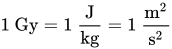
The gray (symbol: Gy) is the unit of ionizing radiation dose in the International System of Units (SI), defined as the absorption of one joule of radiation energy per kilogram of matter.[1]

It is used as a unit of the radiation quantity absorbed dose that measures the energy deposited by ionizing radiation in a unit mass of absorbing material, and is used for measuring the delivered dose in radiotherapy, food irradiation and radiation sterilization. It is important in predicting likely acute health effects, such as acute radiation syndrome and is used to calculate equivalent dose using the sievert, which is a measure of the stochastic health effect on the human body.

The gray is also used in radiation metrology as a unit of the radiation quantity kerma; defined as the sum of the initial kinetic energies of all the charged particles liberated by uncharged ionizing radiation[a] in a sample of matter per unit mass. The unit was named after British physicist Louis Harold Gray, a pioneer in the measurement of X-ray and radium radiation and their effects on living tissue.[2]

The gray was adopted as part of the International System of Units in 1975. The corresponding cgs unit to the gray is the rad (equivalent to 0.01 Gy), which remains common largely in the United States, though "strongly discouraged" in the style guide for U.S. National Institute of Standards and Technology.[3]

Applications

[edit]
External dose quantities used in radiation protection and dosimetry

The gray has a number of fields of application in measuring dose:

Radiobiology

[edit]

The measurement of absorbed dose in tissue is of fundamental importance in radiobiology and radiation therapy as it is the measure of the amount of energy the incident radiation deposits in the target tissue. The measurement of absorbed dose is a complex problem due to scattering and absorption, and many specialist dosimeters are available for these measurements, and can cover applications in 1-D, 2-D and 3-D.[4][5][6]

In radiation therapy, the amount of radiation applied varies depending on the type and stage of cancer being treated. For curative cases, the typical dose for a solid epithelial tumor ranges from 60 to 80 Gy, while lymphomas are treated with 20 to 40 Gy. Preventive (adjuvant) doses are typically around 45–60 Gy in 1.8–2 Gy fractions (for breast, head, and neck cancers).

The average radiation dose from a pelvic CT scan is 6 mGy, and that from a selective CT scan of the abdomen and the pelvis is 14 mGy.[7]

Radiation protection

[edit]
Relationship of ICRU/ICRP computed Protection dose quantities and units

The absorbed dose also plays an important role in radiation protection, as it is the starting point for calculating the stochastic health risk of low levels of radiation, which is defined as the probability of cancer induction and genetic damage.[8] The gray measures the total absorbed energy of radiation, but the probability of stochastic damage also depends on the type and energy of the radiation and the types of tissues involved. This probability is related to the equivalent dose in sieverts (Sv), which has the same dimensions as the gray. It is related to the gray by weighting factors described in the articles on equivalent dose and effective dose.

Relation between some ionizing radiation units[9]

The International Committee for Weights and Measures states: "In order to avoid any risk of confusion between the absorbed dose D and the dose equivalent H, the special names for the respective units should be used, that is, the name gray should be used instead of joules per kilogram for the unit of absorbed dose D and the name sievert instead of joules per kilogram for the unit of dose equivalent H."[10]
The accompanying diagrams show how absorbed dose (in grays) is first obtained by computational techniques, and from this value the equivalent doses are derived. For X-rays and gamma rays the gray is numerically the same value when expressed in sieverts, but for alpha particles one gray is equivalent to 20 sieverts, and a radiation weighting factor is applied accordingly.

Radiation poisoning

[edit]

The gray is conventionally used to express the severity of what are known as "tissue effects" from doses received in acute exposure to high levels of ionizing radiation. These are effects that are certain to happen, as opposed to the uncertain effects of low levels of radiation that have a probability of causing damage. A whole-body acute exposure to 5 grays or more of high-energy radiation usually leads to death within 14 days. LD1 is 2.5 Gy, LD50 is 5 Gy and LD99 is 8 Gy.[11] The LD50 dose represents 375 joules for a 75 kg adult.

Absorbed dose in matter

[edit]

The gray is used to measure absorbed dose rates in non-tissue materials for processes such as radiation hardening, food irradiation and electron irradiation. Measuring and controlling the value of absorbed dose is vital to ensuring correct operation of these processes.

Kerma

[edit]

Kerma ("kinetic energy released per unit mass") is used in radiation metrology as a measure of the liberated energy of ionisation due to irradiation, and is expressed in grays. Importantly, kerma dose is different from absorbed dose, depending on the radiation energies involved, partially because ionization energy is not accounted for. Whilst roughly equal at low energies, kerma is much higher than absorbed dose at higher energies, because some energy escapes from the absorbing volume in the form of bremsstrahlung (X-rays) or fast-moving electrons.

Kerma, when applied to air, is equivalent to the legacy roentgen unit of radiation exposure, but there is a difference in the definition of these two units. The gray is defined independently of any target material, however, the roentgen was defined specifically by the ionisation effect in dry air, which did not necessarily represent the effect on other media.

Development of the absorbed dose concept and the gray

[edit]
Using early Crookes tube X-Ray apparatus in 1896. One man is viewing his hand with a fluoroscope to optimise tube emissions, the other has his head close to the tube. No precautions are being taken.
Monument to the X-ray and Radium Martyrs of All Nations erected 1936 at St. Georg hospital in Hamburg, commemorating 359 early radiology workers.

Wilhelm Röntgen discovered X-rays on November 8, 1895, and their use spread very quickly for medical diagnostics, particularly broken bones and embedded foreign objects where they were a revolutionary improvement over previous techniques.

Due to the wide use of X-rays and the growing realisation of the dangers of ionizing radiation, measurement standards became necessary for radiation intensity and various countries developed their own, but using differing definitions and methods. Eventually, in order to promote international standardisation, the first International Congress of Radiology (ICR) meeting in London in 1925, proposed a separate body to consider units of measure. This was called the International Commission on Radiation Units and Measurements, or ICRU,[b] and came into being at the Second ICR in Stockholm in 1928, under the chairmanship of Manne Siegbahn.[12][13][c]

One of the earliest techniques of measuring the intensity of X-rays was to measure their ionising effect in air by means of an air-filled ion chamber. At the first ICRU meeting it was proposed that one unit of X-ray dose should be defined as the quantity of X-rays that would produce one esu of charge in one cubic centimetre of dry air at 0 °C and 1 standard atmosphere of pressure. This unit of radiation exposure was named the roentgen in honour of Wilhelm Röntgen, who had died five years previously. At the 1937 meeting of the ICRU, this definition was extended to apply to gamma radiation.[14] This approach, although a great step forward in standardisation, had the disadvantage of not being a direct measure of the absorption of radiation, and thereby the ionisation effect, in various types of matter including human tissue, and was a measurement only of the effect of the X-rays in a specific circumstance; the ionisation effect in dry air.[15]

In 1940, Louis Harold Gray, who had been studying the effect of neutron damage on human tissue, together with William Valentine Mayneord and the radiobiologist John Read, published a paper in which a new unit of measure, dubbed the gram roentgen (symbol: gr) was proposed, and defined as "that amount of neutron radiation which produces an increment in energy in unit volume of tissue equal to the increment of energy produced in unit volume of water by one roentgen of radiation".[16] This unit was found to be equivalent to 88 ergs in air, and made the absorbed dose, as it subsequently became known, dependent on the interaction of the radiation with the irradiated material, not just an expression of radiation exposure or intensity, which the roentgen represented. In 1953 the ICRU recommended the rad, equal to 100 erg/g, as the new unit of measure of absorbed radiation. The rad was expressed in coherent cgs units.[14]

In the late 1950s, the CGPM invited the ICRU to join other scientific bodies to work on the development of the International System of Units, or SI.[17] The CCU decided to define the SI unit of absorbed radiation as energy deposited by reabsorbed charged particles per unit mass of absorbent material, which is how the rad had been defined, but in MKS units it would be equivalent to the joule per kilogram. This was confirmed in 1975 by the 15th CGPM, and the unit was named the "gray" in honour of Louis Harold Gray, who had died in 1965. The gray was thus equal to 100 rad. Notably, the centigray (numerically equivalent to the rad) is still widely used to describe absolute absorbed doses in radiotherapy.

The adoption of the gray by the 15th General Conference on Weights and Measures as the unit of measure of the absorption of ionizing radiation, specific energy absorption, and of kerma in 1975[18] was the culmination of over half a century of work, both in the understanding of the nature of ionizing radiation and in the creation of coherent radiation quantities and units.

[edit]
Graphic showing relationships between radioactivity and detected ionizing radiation at a point.

The following table shows radiation quantities in SI and non-SI units.

Ionizing radiation related quantities
Quantity Unit Symbol Derivation Year SI equivalent
Activity (A) becquerel Bq s−1 1974 SI unit
curie Ci 3.7×10¹⁰ s−1 1953 3.7×10¹⁰ Bq
rutherford Rd 106 s−1 1946 1000000 Bq
Exposure (X) coulomb per kilogram C/kg C⋅kg−1 of air 1974 SI unit
röntgen R esu / 0.001293 g of air 1928 2.58×10⁻⁴ C/kg
Absorbed dose (D) gray Gy J⋅kg−1 1974 SI unit
erg per gram erg/g erg⋅g−1 1950 1.0×10⁻⁴ Gy
rad rad 100 erg⋅g−1 1953 0.010 Gy
Equivalent dose (H) sievert Sv J⋅kg−1 × WR 1977 SI unit
röntgen equivalent man rem 100 erg⋅g−1 × WR 1971 0.010 Sv
Effective dose (E) sievert Sv J⋅kg−1 × WR × WT 1977 SI unit
röntgen equivalent man rem 100 erg⋅g−1 × WR × WT 1971 0.010 Sv

See also

[edit]

Notes

[edit]

References

[edit]
[edit]
Revisions and contributorsEdit on WikipediaRead on Wikipedia
from Grokipedia
The gray (symbol: Gy) is the International System of Units (SI) derived unit of absorbed dose, measuring the amount of ionizing radiation energy absorbed per unit mass of matter, defined as exactly one joule per kilogram.[1] It quantifies the energy deposited by ionizing radiation, such as X-rays, gamma rays, or particles, in biological tissues or materials, and is fundamental to radiation dosimetry.[2] Adopted by the 15th General Conference on Weights and Measures (CGPM) in 1975, the gray replaced the older non-SI unit, the rad, with 1 Gy equivalent to 100 rad.[1] The unit is named in honor of Louis Harold Gray (1905–1965), a British physicist and radiobiologist who pioneered concepts in radiation absorption and biological effects.[3] Prior to its formal SI adoption, absorbed dose was measured in rads, introduced in the 1950s, but the gray's integration into the SI system standardized global radiation measurements. In practice, the gray is used across fields like radiation protection, medical imaging, and nuclear safety to assess exposure risks, where doses are typically expressed in milligrays (mGy) or micrograys (µGy) for everyday applications.[4] For instance, a whole-body absorbed dose of 1 Gy can cause acute radiation syndrome in humans, highlighting its role in evaluating health impacts from sources like radiotherapy or environmental contamination.[5] The gray specifically measures physical energy absorption and differs from the sievert (Sv), which accounts for biological effectiveness.[6]

Definition and Fundamentals

Absorbed Dose

Absorbed dose, denoted as DD, is the fundamental quantity in radiation physics that quantifies the amount of energy deposited by ionizing radiation per unit mass of irradiated material. It represents the microscopic energy transfer from radiation to matter, which can lead to physical damage at the atomic and molecular levels through ionization and excitation processes. This energy deposition occurs when ionizing radiation interacts with atoms in the material, ejecting electrons or creating ion pairs, and is essential for assessing the physical impact of radiation exposure.[7] Ionizing radiation encompasses several types, each interacting with matter differently to impart energy. Alpha particles, consisting of helium nuclei, are heavy charged particles that cause dense ionization along short tracks due to strong electrostatic interactions with atomic electrons. Beta particles, which are high-energy electrons or positrons, produce sparser ionization over longer paths compared to alpha particles. Gamma rays and X-rays are electromagnetic photons that interact indirectly, primarily through secondary electrons generated in the material. Neutrons, as uncharged particles, deposit energy indirectly via collisions with atomic nuclei, leading to recoil protons or other charged particles that then ionize the medium. These interactions vary by radiation type, energy, and the absorbing material's composition and density, determining the overall energy transfer efficiency. The absorbed dose is formally defined by the formula
D=dϵˉdm, D = \frac{d\bar{\epsilon}}{dm},
where dϵˉd\bar{\epsilon} is the mean energy imparted by ionizing radiation to matter of mass dmdm. This definition arises from the stochastic nature of energy deposition, averaging over microscopic events. The energy ϵˉ\bar{\epsilon} is transferred through specific atomic interactions: for photons like gamma rays, the photoelectric effect fully absorbs the photon energy by ejecting an inner-shell electron, with the vacancy filled by outer electrons emitting characteristic X-rays or Auger electrons; Compton scattering partially transfers photon energy to an electron while the photon scatters at a lower energy; and pair production, occurring above 1.022 MeV, converts the photon into an electron-positron pair near an atomic nucleus, with subsequent annihilation releasing additional 511 keV photons each. For charged particles such as alpha and beta, energy is deposited mainly through direct Coulomb interactions producing delta rays (secondary electrons). These mechanisms collectively account for the mean energy imparted, forming the basis for the absorbed dose calculation.[8]
The unit of absorbed dose is the joule per kilogram (J/kg), which underscores its role in measuring localized energy deposition that can disrupt chemical bonds and biological structures. In the International System of Units (SI), 1 J/kg corresponds to the special name gray (Gy), serving as the standard measure. Energy absorption differs significantly between materials; for instance, soft tissue absorbs more energy from low-energy photons via the photoelectric effect due to its higher atomic number elements like oxygen and carbon compared to air, which has lower density and primarily nitrogen and oxygen, resulting in less interaction probability. Additionally, deposition is often non-uniform, characterized by linear energy transfer (LET), the energy lost per unit distance traveled in the material (typically in keV/μm). High-LET radiation, such as alpha particles (LET ≈ 100 keV/μm in tissue), deposits energy densely over short ranges, causing clustered damage, whereas low-LET radiation like gamma rays (LET ≈ 0.2 keV/μm) spreads energy more sparsely, leading to distributed ionizations. This variability in deposition patterns is crucial for understanding radiation's physical effects.[9][10][11]

The Gray Unit

The gray (symbol: Gy) is the derived unit in the International System of Units (SI) for measuring absorbed dose, the amount of energy deposited by ionizing radiation per unit mass of irradiated material. The gray is formally defined as the absorption of one joule of energy per kilogram of mass, expressed as 1 Gy = 1 J/kg. This special name for the SI unit was adopted by the 15th General Conference on Weights and Measures (CGPM) in 1975 specifically for quantities in the field of ionizing radiation, such as absorbed dose.[1] The unit honors Louis Harold Gray (1905–1965), a British physicist renowned for his pioneering work in radiation physics and dosimetry at institutions like the Mount Vernon Hospital and the Medical Research Council.[12] As a coherent derived SI unit, the gray is constructed directly from the base SI units: the kilogram (kg) for mass and the joule (J) for energy, where the joule is itself defined as kg·m²·s⁻² from the base units of mass, length, and time. No numerical factors or additional constants are needed to express the gray in terms of these base units, ensuring its seamless integration within the SI framework. The gray supersedes the older, non-SI unit rad, with the exact equivalence of 1 Gy = 100 rad, or conversely, 1 rad = 0.01 Gy = 10 mGy. For practical measurements involving smaller doses, decimal submultiples are commonly employed, such as the milligray (mGy) and microgray (μGy). The following table summarizes key conversions:
UnitSymbolRelation to 1 Gy
GrayGy1 Gy
MilligraymGy10^{-3} Gy = 0.001 Gy
MicrograyμGy10^{-6} Gy = 0.000001 Gy
Radrad0.01 Gy = 1/100 Gy
These relations facilitate transitions between SI and legacy units in dosimetry applications.[2] Absorbed dose in grays is typically determined using calibrated dosimeters, such as ionization chambers, which quantify radiation-induced ionization in a gas volume and convert it to energy absorption via established protocols. Calibration of these chambers against primary standards, often in terms of absorbed dose to water, relies on the Bragg-Gray cavity principle to relate the ionization measured in the chamber's sensitive volume to the dose in the surrounding medium.[13]

Historical Development

Early Concepts of Radiation Dose

The discovery of X-rays by Wilhelm Conrad Röntgen in late 1895 initiated the study of ionizing radiation, but early quantification efforts centered on exposure in air via ionization effects rather than energy deposition in matter.[14] Initial measurements relied on qualitative observations and rudimentary ionization chambers, as researchers sought to standardize the intensity of X-ray beams for diagnostic and therapeutic applications.[15] This approach highlighted radiation's ability to produce electrical discharges in gases but overlooked variations in absorption across different materials, including biological tissues. In 1928, the International Congress of Radiology formalized the roentgen (R) as the unit of exposure, defined as the amount of X- or gamma radiation that produces 1 electrostatic unit of charge per cubic centimeter of dry air under standard conditions—equivalent to approximately 2.58 × 10^{-4} coulombs per kilogram. During the 1920s, the term "dose" emerged in radiological literature to denote the quantity of radiation eliciting observable biological responses, such as erythema or tissue damage, shifting emphasis toward clinical outcomes over pure physical metrics.[16] This period saw growing awareness of radiation's hazards through anecdotal reports; for instance, early fluoroscopy sessions lasting minutes to hours often resulted in skin burns after cumulative exposures estimated retrospectively at 300–600 R, underscoring the limitations of air-ionization measures in predicting tissue reactions.[17] Key advancements in dosimetry during the 1920s and 1930s included the chemical methods developed by Harold Fricke and Sidney Morse, who in 1927 introduced the ferrous sulfate (Fricke) dosimeter—a solution whose oxidation yield upon irradiation allowed precise quantification of absorbed energy through spectrophotometric analysis.[18] Their work addressed inconsistencies between exposure units like the roentgen, which ignored material-specific absorption, and actual biological impacts, such as varying sensitivities in skin versus deeper tissues.[19] These efforts revealed that ionization in air correlated poorly with energy transfer in solids or liquids, complicating dose estimations for medical procedures. By the early 1950s, accumulating evidence from experimental and clinical data demonstrated that absorbed dose—defined as energy absorbed per unit mass—offered a more reliable indicator of physical damage than exposure alone, prompting the International Commission on Radiological Units and Measurements (ICRU) to define the rad in 1953 as 100 ergs per gram (approximately 0.01 J/kg).[20] This unit, the direct predecessor to the modern gray, marked a pivotal refinement in conceptualizing radiation dose by prioritizing direct energy metrics over indirect ionization proxies.[15]

Naming and SI Adoption

The gray unit was proposed in 1975 by the International Committee for Weights and Measures (CIPM) in response to recommendations from the International Commission on Radiation Units and Measurements (ICRU), which had advocated for the adoption of the joule per kilogram (J/kg) as the unit for absorbed dose to align with the coherent SI system. This proposal honored Louis Harold Gray (1905–1965), a British physicist whose pioneering work in cellular radiobiology and dosimetry, including the development of the Bragg-Gray cavity theory for measuring absorbed dose, laid foundational principles for modern radiation measurement.02852-3/fulltext) The name "gray" and symbol "Gy" were specifically chosen to recognize his contributions to understanding radiation interactions with biological tissues. The official adoption occurred through Resolution 9 of the 15th General Conference on Weights and Measures (CGPM) in 1975, which established the gray as the special name for the SI unit of absorbed dose, defined as 1 J/kg, explicitly for use in ionizing radiation contexts. This resolution marked a key step in integrating radiation dosimetry into the SI framework, building on ICRU Report 19 from 1971, which had recommended replacing the non-SI rad (100 erg/g) with J/kg to promote uniformity in the rapidly expanding nuclear and medical fields. The 6th edition of the SI Brochure, published in 1977 by the International Bureau of Weights and Measures (BIPM), formally incorporated the gray as a derived SI unit, facilitating its standardization. The rationale for this adoption emphasized the need for coherent units to avoid inconsistencies between physical absorbed dose and biologically weighted quantities, such as the rem, thereby reducing errors in international radiation protection and research amid growing nuclear applications. The transition from the rad to the gray was phased internationally through the 1980s, with the gray equating to 100 rad, allowing gradual implementation in standards and instrumentation. Global implementation accelerated in the 1980s, particularly in medicine and regulation; for instance, the International Atomic Energy Agency (IAEA) incorporated SI units, including the gray, into its Basic Safety Standards for Radiation Protection (Safety Series No. 9, revised 1982) and subsequent guidelines, promoting their use in dosimetry protocols worldwide. In the European Union, Council Directive 80/836/Euratom (1980) mandated the gray for absorbed dose measurements in health protection standards, influencing national regulations and harmonizing practices across member states.

Applications

Radiobiology and Medical Uses

In radiobiology, the gray (Gy) quantifies the absorbed dose of ionizing radiation as the energy deposited per unit mass of biological tissue, typically leading to ionization events that cause DNA double-strand breaks, chromosomal aberrations, and subsequent cell death or reproductive inactivation.[21] This energy deposition is central to understanding radiation's stochastic and deterministic effects on living systems, where even low doses can initiate mutagenesis, while higher doses overwhelm cellular repair mechanisms.[9] A foundational model in radiobiology for predicting cell survival after irradiation is the linear-quadratic (LQ) model, which describes the surviving fraction (SF) of cells as a function of dose DD (in Gy):
SF(D)=eαDβD2 \text{SF}(D) = e^{-\alpha D - \beta D^2}
Here, α\alpha represents the linear component of cell killing due to single-track lethal events (independent of dose rate), while β\beta captures the quadratic component from interactions between sublethal damages (dose-rate dependent).[22] This model, derived from clonogenic assays, underpins dose-response analyses across cell types and has been validated in numerous in vitro and in vivo studies since its proposal in the 1980s.[22] In medical applications, particularly radiotherapy, the gray serves as the primary unit for prescribing tumoricidal doses, balancing efficacy against normal tissue toxicity. For many solid tumors, such as prostate or head-and-neck cancers, total doses range from 50 to 70 Gy, delivered in fractions of 1.8–2 Gy per day over 5–7 weeks to exploit the LQ model's fractionation sensitivity, allowing repair of sublethal damage in healthy tissues while accumulating lethal effects in tumors.[23] External beam radiotherapy, using photon or electron beams from linear accelerators, is the most common modality, while brachytherapy involves placing radioactive sources near the tumor to deliver high local doses (e.g., 20–30 Gy in fewer fractions) with rapid dose fall-off.[24] In diagnostic radiology, absorbed doses are measured in milligrays (mGy); for example, a chest CT scan typically delivers 5–7 mGy to the chest, informing cumulative exposure risks.[25] Radiobiology research employs the gray to benchmark lethal thresholds and radiation quality. The median lethal dose (LD50) for whole-body acute exposure in humans is approximately 4–5 Gy, based on extrapolations from atomic bomb survivor data, animal models, and accidental exposures, beyond which hematopoietic syndrome predominates without medical intervention.[26] The relative biological effectiveness (RBE) adjusts Gy-equivalent doses for radiation type, defined as the ratio of photon dose to test radiation dose yielding the same biological endpoint; for protons, RBE is typically 1.1, varying with linear energy transfer (LET).[27] Tissue-specific α/β\alpha/\beta ratios from the LQ model further refine this: early-responding tissues (e.g., skin, α/β10\alpha/\beta \approx 10 Gy) are more sensitive to fractionation than late-responding ones (e.g., spinal cord, α/β23\alpha/\beta \approx 2–3 Gy), guiding RBE-weighted planning.[27] Modern advancements leverage the gray in precision therapies like proton beam treatment, where doses of 50–70 Gy (RBE) are modulated via the Bragg peak—a sharp distal dose deposition that spares proximal tissues, reducing integral dose by up to 50% compared to photons.[28] Hypofractionation trials in the 2020s, such as those adapting the FAST-Forward protocol (26 Gy in 5 fractions for breast cancer), demonstrate equivalent local control with fewer sessions, minimizing logistical burdens while maintaining LQ-predicted outcomes.[29] Recent hadron therapy developments, including carbon-ion beams with RBE up to 3 for radioresistant tumors, incorporate variable RBE modeling to optimize Gy delivery.[30]

Radiation Protection

In radiation protection, the gray (Gy) serves as the fundamental unit for measuring absorbed dose, particularly in assessing and limiting deterministic effects from ionizing radiation exposure. The International Commission on Radiological Protection (ICRP) recommends using absorbed dose in Gy to set constraints on organ and tissue doses to prevent tissue reactions, such as cataracts or hematopoietic depression, where thresholds are typically around 0.5 Gy for acute whole-body exposure.[31] For planned exposure situations, ICRP Publication 103 establishes annual effective dose limits of 20 mSv averaged over 5 years (not exceeding 50 mSv in any single year) for occupational workers and 1 mSv for the public, with organ-specific equivalent dose limits that, for photons and electrons (radiation weighting factor of 1), directly correspond to absorbed doses in Gy—such as 20 mSv for the lens of the eye and 500 mSv for the skin.[32] These limits ensure that absorbed doses remain below levels causing observable harm, prioritizing prevention of non-stochastic effects. Personal dosimeters, including thermoluminescent dosimeters (TLDs) and electronic dosimeters, are employed to monitor cumulative absorbed dose in Gy for individuals in radiation environments, enabling real-time tracking and compliance verification. The ALARA (As Low As Reasonably Achievable) principle, a core tenet of ICRP's optimization system, guides efforts to minimize absorbed doses through strategies like reducing exposure time, increasing distance from sources, and enhancing shielding, thereby keeping actual doses well below regulatory limits.[32] Regulatory frameworks from organizations like the International Atomic Energy Agency (IAEA) and the U.S. Nuclear Regulatory Commission (NRC) incorporate the gray in facility design and operational guidelines, particularly for shielding calculations to control dose rates in high-radiation areas. For instance, IAEA safety standards require shielding evaluations to limit ambient dose equivalent rates to below 7.5 µSv/h in supervised areas, but calculations often model potential fields up to 1–10 Gy/h in controlled zones near reactors or accelerators to ensure structural integrity and worker safety. The NRC's 10 CFR Part 20 specifies occupational whole-body dose limits equivalent to 50 mSv per year, which translate to organ-specific absorbed doses in Gy for uniform gamma fields, with provisions for higher short-term exposures under emergency conditions while maintaining long-term constraints. For nuclear industry workers, these limits typically result in annual absorbed doses far below 0.05 Gy to critical organs, given the low radiation weighting factors for common workplace radiations. Post-2020 ICRP initiatives, including Task Group 91's review of low-dose and low-dose-rate risks, have highlighted ongoing uncertainties in chronic exposure modeling, such as the dose-rate effectiveness factor for non-cancer outcomes, prompting refined approaches to quantify and mitigate subtle long-term effects at doses under 0.1 Gy.[33]

Acute Radiation Effects

Acute radiation effects, also known as deterministic effects, occur when absorbed doses exceed specific thresholds, leading to observable tissue damage whose severity increases with dose in grays (Gy). These effects typically manifest following whole-body or partial-body exposures greater than 0.5 Gy, with mild symptoms such as nausea and vomiting appearing at 0.5–1 Gy due to initial impacts on the gastrointestinal tract and central nervous system.[5] At these levels, hemopoiesis suppression begins, characterized by lymphocytopenia and reduced white blood cell production, as bone marrow stem cells are radiosensitive and require doses above 100–200 cGy (1–2 Gy) for significant depression.[34] Higher doses of 4–6 Gy represent the LD50/30 (lethal dose for 50% of exposed individuals within 30 days without treatment), primarily causing hematopoietic syndrome through profound bone marrow failure. Doses exceeding 10 Gy trigger gastrointestinal syndrome, where mucosal lining destruction leads to severe diarrhea, dehydration, and electrolyte imbalance, often compounded by infection risks.[5] The pathophysiology of acute radiation syndrome (ARS) correlates directly with dose levels in Gy and unfolds in distinct stages: prodromal (onset within hours, featuring nausea and fatigue at >1 Gy), latent (asymptomatic period of days to weeks), manifest illness (peaking with organ-specific symptoms like pancytopenia at 2–6 Gy or bloody diarrhea at >6 Gy), and recovery or death.[5] Bone marrow doses, often measured in cGy, are critical for hematopoietic effects; for instance, 200–300 cGy suppresses granulocyte production, while 400–600 cGy results in near-total ablation, increasing susceptibility to sepsis.[35] Case studies illustrate these thresholds: In the 1986 Chernobyl accident, 134 workers and firefighters received doses of 0.8–16 Gy, with 28 fatalities from ARS due to hematopoietic and gastrointestinal damage at >4 Gy.[36] The 1999 Tokaimura criticality accident exposed two workers to localized doses of 6–10 Gy and 16–20 Gy, respectively, causing multi-organ failure and death despite intervention.[37] Historical data from the 1945 Hiroshima and Nagasaki bombings, under conditions with limited medical care, show survival rates plummeting above 4 Gy, with the LD50 estimated at approximately 3 Gy, lower than modern extrapolations of 4–5 Gy assuming supportive treatment.[38] Treatment for acute exposures of 2–10 Gy focuses on supportive care, including antiemetics, fluid resuscitation, antibiotics for infection prevention, and blood product transfusions to manage cytopenias.[39] For doses below 8 Gy, where bone marrow recovery is feasible, granulocyte colony-stimulating factor (G-CSF, such as filgrastim at 5 μg/kg/day) accelerates neutrophil regeneration and improves survival rates, as demonstrated in Chernobyl victims and animal models.[39] Analyses of low-level chronic effects from accidents like Chernobyl reveal persistent genomic instability, such as increased minisatellite mutations in exposed populations at doses as low as 0.1–0.5 Gy, highlighting long-term risks beyond immediate ARS.[40]

Kerma

Kerma, an acronym for kinetic energy released per unit mass, quantifies the initial transfer of energy from indirectly ionizing radiation, such as photons or neutrons, to charged particles in a material. It is defined as $ K = \frac{dE_{tr}}{dm} $, where $ dE_{tr} $ is the sum of the initial kinetic energies of all charged particles liberated by the indirectly ionizing radiation in a small volume element of the material, and $ dm $ is the mass of that element.[41][42] This quantity focuses on the energy imparted to charged particles at the point of interaction, preceding their subsequent energy deposition as absorbed dose.[43] Unlike absorbed dose, which measures the total energy locally deposited by charged particles, kerma specifically accounts for the kinetic energy released to those particles without considering losses due to bremsstrahlung or other radiative processes in the initial transfer. Under charged particle equilibrium—where the number of charged particles entering and leaving a volume is balanced—kerma approximates the absorbed dose, making it a useful proxy in dosimetry.[43][44] The unit of kerma is the gray (Gy), equivalent to joules per kilogram (J/kg), aligning it with the absorbed dose unit.[45] In photon dosimetry, kerma is particularly relevant and is often expressed as collision kerma, given by $ K_c = \Psi \frac{\mu_{en}}{\rho} $, where $ \Psi $ is the photon energy fluence and $ \frac{\mu_{en}}{\rho} $ is the mass energy-absorption coefficient of the material.[44] Air kerma, measured for photon beams, serves as a standard quantity to estimate absorbed dose in tissue via established conversion factors, such as approximately 1.1 Gy absorbed dose in tissue per Gy air kerma for medium-energy photons (e.g., around 1 MeV).[42] This relation is applied in cavity theory, where kerma helps derive dose in small detector volumes embedded in a medium, as in ionization chamber calibrations.[46] For neutron fields, kerma is calculated using fluence-to-kerma conversion coefficients, which integrate neutron interaction cross-sections and secondary particle energies to yield kerma per unit fluence, aiding in protection assessments for mixed radiation environments.[47] These coefficients, for instance, enable estimation of tissue kerma from measured neutron fluences in reactor or accelerator settings.[47]

Stochastic and Deterministic Effects Doses

In radiological protection, deterministic effects—also known as tissue reactions—are biological responses that exhibit a dose threshold below which the effect is not observed, with severity increasing above the threshold. These effects are primarily associated with the absorbed dose in grays (Gy), as they result from direct cell killing or dysfunction due to high local energy deposition. For instance, the threshold for transient erythema (skin reddening) is approximately 2 Gy for acute exposure, while temporary epilation (hair loss) occurs around 3 Gy. More sensitive tissues, such as the lens of the eye, have a lower threshold; according to ICRP Publication 118, the dose for detectable opacities leading to cataracts is now estimated at about 0.5 Gy for both acute and protracted exposures, a reduction from earlier estimates of 2 Gy based on updated epidemiological data.[34][48][49] In contrast, stochastic effects, such as cancer induction and heritable genetic disorders, have no established threshold and occur probabilistically, with the risk increasing linearly with dose at low levels. These effects cannot be adequately quantified using absorbed dose in Gy alone, as they depend on the radiation type's biological effectiveness and the radiosensitivity of affected tissues. To account for radiation quality, the equivalent dose $ H $ in sieverts (Sv) is used, defined as $ H_T = \sum_R w_R D_{T,R} $, where $ D_{T,R} $ is the absorbed dose in tissue or organ $ T $ from radiation type $ R $, and $ w_R $ is the dimensionless radiation weighting factor.[50][32] For example, $ w_R = 1 $ for photons (e.g., gamma rays) and electrons, $ w_R = 2 $ for protons, and $ w_R = 20 $ for alpha particles, reflecting their higher relative biological effectiveness (RBE) for stochastic damage compared to low-linear energy transfer (LET) radiations.[51][52] To further incorporate tissue-specific risks for whole-body or partial exposures, the effective dose $ E $ in Sv is calculated as $ E = \sum_T w_T H_T $, where $ w_T $ are tissue weighting factors summing to 1, representing the relative contribution of organ $ T $ to total stochastic detriment (e.g., $ w_T = 0.12 $ for lungs, 0.08 for bone marrow). This quantity allows comparison of risks from uniform or non-uniform exposures but does not apply to deterministic effects, where Gy remains the primary metric due to the lack of need for biological weighting at high doses. The absorbed dose in Gy is thus insufficient for stochastic risk assessment because it ignores variations in $ w_R $ (radiation quality) and $ w_T $ (tissue sensitivity), potentially underestimating harm from high-LET radiations.[53][32] Key distinctions arise in application: Gy measures physical energy deposition for acute, threshold-based damage like deterministic effects, whereas Sv quantifies weighted stochastic risks for chronic protection limits (e.g., annual occupational limit of 20 mSv effective dose). Illustrative examples highlight this: an absorbed dose of 1 Gy from gamma radiation equates to 1 Sv equivalent dose (since $ w_R = 1 $), posing comparable stochastic risk to 1 Gy of X-rays, but 1 Gy from alpha particles yields approximately 20 Sv due to $ w_R = 20 $, amplifying the cancer induction probability. Recent ICRP deliberations, including Task Group 118 discussions in 2023, have revisited neutron $ w_R $ values—historically energy-dependent from 2.5 to 20 in Publication 103—to refine models based on updated microdosimetric data and epidemiological evidence, addressing discrepancies in high-energy neutron risks.[32][54]

References

User Avatar
No comments yet.