
Recent from talks
Guruvayur Temple
Knowledge base stats:
Talk channels stats:
Members stats:
Guruvayur Temple
The Guruvayur Sri Krishna Temple is situated in the town of Guruvayur, Thrissur district, Kerala, India. Located approximately 26 kilometers (16 miles) northwest of Thrissur city, the temple stands as one of the most revered and actively visited Hindu pilgrimage sites globally. Dedicated to the deity Guruvayurappan, a beloved form of Vishnu, the temple is affectionately hailed by devotees as Bhuloka Vaikunta —the Holy Abode of Vishnu on Earth. In terms of foot traffic, it is one of the busiest Vaishnava shrines in the country. Reverence for this ancient shrine is deeply ingrained in the spiritual landscape of South India, placing it among the 108 Abhimana Kshethram (honored temples) of the Vaishnavate tradition. The temple is a synthesis of profound mythology, traditional Kerala architecture, and meticulously maintained ritual practices, all centered on the loving worship of Lord Krishna.
The sanctity of the Guruvayur Temple is intrinsically linked to the legendary origin of its central icon. The primary deity is believed to have been originally created by Vishnu himself in Vaikuntha. This divine idol was subsequently entrusted to Brahma, who in turn gifted it to King Sutapas and his consort Prishni. Due to their intense devotion, Vishnu granted them the boon of worshipping the idol through three successive births, culminating in the Dwapara Yuga when Vishnu was born as their son, Krishna.
Following the Swargarohanam (heavenly ascent) of Krishna and the subsequent submergence of the city of Dwarka, the idol was rescued by Krishna's disciple, Uddhava. Uddhava entrusted the relic to Brihaspati (Guru, the preceptor of the gods) and Vayu (the wind god). They installed it at the current location, which was designated as the most auspicious spot by Lord Shiva. The name of the place, Guruvayur, is a portmanteau derived from its founders: Guru + Vayu + Oor (place). Lord Shiva then relocated to the adjacent Mammiyoor Temple, maintaining his watchful presence over the main shrine.
Beyond its foundational narrative, Guruvayur is widely known as a center for miraculous healing. This reputation stems from the legend of King Janamejaya. Cursed with leprosy, the king sought the counsel of Sage Atreya, who advised him to worship Lord Krishna at Guruvayur. After a year of unyielding devotion, King Janamejaya was completely cured, firmly establishing the temple's fame as a source of physical and spiritual well-being.
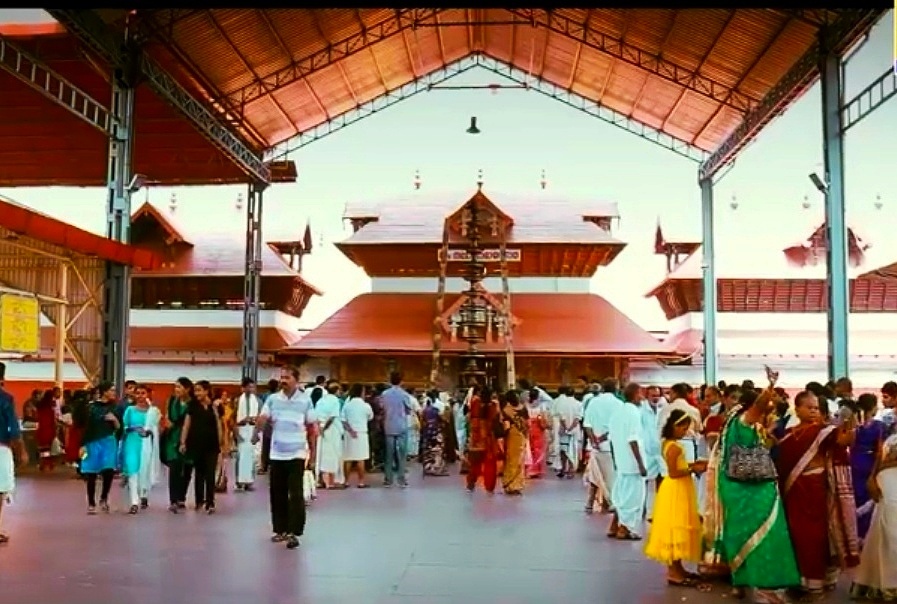
The Guruvayur Temple is a pristine example of the traditional Kerala architectural style, characterised by its sloped roofs, copper sheeting, and extensive use of wood and laterite stone. The entire complex is oriented to the East, with the main sanctum, the Sreekovil, facing the rising sun.
The Sreekovil is a rectangular, two-storied structure. Its roof is covered with copper sheets and notably plated with gold, a significant offering made by the devotee K.T.B. Menon in 1981. The inner structure is divided into three rooms, culminating in the Garbhagriha (innermost sanctum). The Sreekovil walls are a canvas for exquisite murals, which, though damaged in the devastating fire of 1970, were meticulously restored in the 1980s by masters like Mammiyoor Krishnankutty Nair. Inside, in addition to the Moolavigraha (main idol), are two processional idols: a gold idol used for the daily Sreeveli(procession) and an 18th-century Panchaloha (five-metal alloy) idol reserved for the Aarattu (holy bath) ceremony. Crucially, behind the main idol lies a huge shaligram stone, said to amplify the Vaishnava energy of the shrine.
The Presiding Deity, Guruvayurappan, is a standing, four-armed manifestation of Mahavishnu, approximately 1.2 metres tall, carved from a rare shaligram stone. The idol holds the divine attributes—the conch (Panchajanya), the discus (Sudarshana), the mace (Kaumodaki), and a lotus—thereby representing the Janardana form of Vishnu. Despite this majestic form, devotees affectionately worship the deity as Unnikannan, or Baby Krishna.
The complex is flanked by various Auxiliary Shrines. These include the roofless Vana Durga (Forest Durga) shrine of Idatharikathu Kavu Bhagavathi, and shrines dedicated to Ganapathi. Of particular note is the sub-shrine of Dharmashastha (Ayyappan) in the southeast, who is worshipped in the Dhanwantari Bhava [physician form] for the purpose of healing. The revered presence of Mahadeva (Shiva) is traditionally acknowledged towards the adjacent Mammiyur Temple, maintaining the integral connection between Shiva and Vishnu in the temple's mythological context.
Hub AI
Guruvayur Temple AI simulator
(@Guruvayur Temple_simulator)
Guruvayur Temple
The Guruvayur Sri Krishna Temple is situated in the town of Guruvayur, Thrissur district, Kerala, India. Located approximately 26 kilometers (16 miles) northwest of Thrissur city, the temple stands as one of the most revered and actively visited Hindu pilgrimage sites globally. Dedicated to the deity Guruvayurappan, a beloved form of Vishnu, the temple is affectionately hailed by devotees as Bhuloka Vaikunta —the Holy Abode of Vishnu on Earth. In terms of foot traffic, it is one of the busiest Vaishnava shrines in the country. Reverence for this ancient shrine is deeply ingrained in the spiritual landscape of South India, placing it among the 108 Abhimana Kshethram (honored temples) of the Vaishnavate tradition. The temple is a synthesis of profound mythology, traditional Kerala architecture, and meticulously maintained ritual practices, all centered on the loving worship of Lord Krishna.
The sanctity of the Guruvayur Temple is intrinsically linked to the legendary origin of its central icon. The primary deity is believed to have been originally created by Vishnu himself in Vaikuntha. This divine idol was subsequently entrusted to Brahma, who in turn gifted it to King Sutapas and his consort Prishni. Due to their intense devotion, Vishnu granted them the boon of worshipping the idol through three successive births, culminating in the Dwapara Yuga when Vishnu was born as their son, Krishna.
Following the Swargarohanam (heavenly ascent) of Krishna and the subsequent submergence of the city of Dwarka, the idol was rescued by Krishna's disciple, Uddhava. Uddhava entrusted the relic to Brihaspati (Guru, the preceptor of the gods) and Vayu (the wind god). They installed it at the current location, which was designated as the most auspicious spot by Lord Shiva. The name of the place, Guruvayur, is a portmanteau derived from its founders: Guru + Vayu + Oor (place). Lord Shiva then relocated to the adjacent Mammiyoor Temple, maintaining his watchful presence over the main shrine.
Beyond its foundational narrative, Guruvayur is widely known as a center for miraculous healing. This reputation stems from the legend of King Janamejaya. Cursed with leprosy, the king sought the counsel of Sage Atreya, who advised him to worship Lord Krishna at Guruvayur. After a year of unyielding devotion, King Janamejaya was completely cured, firmly establishing the temple's fame as a source of physical and spiritual well-being.
The Guruvayur Temple is a pristine example of the traditional Kerala architectural style, characterised by its sloped roofs, copper sheeting, and extensive use of wood and laterite stone. The entire complex is oriented to the East, with the main sanctum, the Sreekovil, facing the rising sun.
The Sreekovil is a rectangular, two-storied structure. Its roof is covered with copper sheets and notably plated with gold, a significant offering made by the devotee K.T.B. Menon in 1981. The inner structure is divided into three rooms, culminating in the Garbhagriha (innermost sanctum). The Sreekovil walls are a canvas for exquisite murals, which, though damaged in the devastating fire of 1970, were meticulously restored in the 1980s by masters like Mammiyoor Krishnankutty Nair. Inside, in addition to the Moolavigraha (main idol), are two processional idols: a gold idol used for the daily Sreeveli(procession) and an 18th-century Panchaloha (five-metal alloy) idol reserved for the Aarattu (holy bath) ceremony. Crucially, behind the main idol lies a huge shaligram stone, said to amplify the Vaishnava energy of the shrine.
The Presiding Deity, Guruvayurappan, is a standing, four-armed manifestation of Mahavishnu, approximately 1.2 metres tall, carved from a rare shaligram stone. The idol holds the divine attributes—the conch (Panchajanya), the discus (Sudarshana), the mace (Kaumodaki), and a lotus—thereby representing the Janardana form of Vishnu. Despite this majestic form, devotees affectionately worship the deity as Unnikannan, or Baby Krishna.
The complex is flanked by various Auxiliary Shrines. These include the roofless Vana Durga (Forest Durga) shrine of Idatharikathu Kavu Bhagavathi, and shrines dedicated to Ganapathi. Of particular note is the sub-shrine of Dharmashastha (Ayyappan) in the southeast, who is worshipped in the Dhanwantari Bhava [physician form] for the purpose of healing. The revered presence of Mahadeva (Shiva) is traditionally acknowledged towards the adjacent Mammiyur Temple, maintaining the integral connection between Shiva and Vishnu in the temple's mythological context.
Recent media