Hubbry Logo
search
logo
Hydride
Hydride
current hub
2265621

Hydride

logo
Community Hub0 Subscribers
Read side by side
from Wikipedia

In chemistry, a hydride is formally the anion of hydrogen (H), a hydrogen ion with two electrons.[1] In modern usage, this is typically only used for ionic bonds, but it is sometimes (and has been more frequently in the past) applied to all compounds containing covalently bound H atoms. In this broad and potentially archaic sense, water (H2O) is a hydride of oxygen, ammonia is a hydride of nitrogen, etc. In covalent compounds, it implies hydrogen is attached to a less electronegative element. In such cases, the H centre has nucleophilic character, which contrasts with the protic character of acids. The hydride anion is very rarely observed.

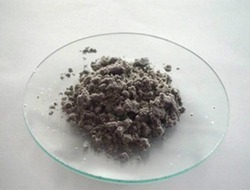
Sodium hydride as an example of hydride salt

Almost all of the elements form binary compounds with hydrogen, the exceptions being He,[2] Ne,[3] Ar,[4] Kr,[5] Pm, Os, Ir, Rn, Fr, and Ra.[6][7][8][9] Exotic molecules such as positronium hydride have also been made.

Bonds

[edit]

Bonds between hydrogen and the other elements range from being highly ionic to somewhat covalent. Some hydrides, e.g. boron hydrides, do not conform to classical electron counting rules and the bonding is described in terms of multi-centered bonds, whereas the interstitial hydrides often involve metallic bonding. Hydrides can be discrete molecules, oligomers or polymers, ionic solids, chemisorbed monolayers,[citation needed] bulk metals (interstitial), or other materials. While hydrides traditionally react as Lewis bases or reducing agents, some metal hydrides behave as hydrogen-atom donors and act as acids.

Applications

[edit]
Tris(trimethylsilyl)silane is an example of a hydride with a weak bond to H. It is used as a source of hydrogen atoms.[10]
Metal hydrides (e.g. H2RhCl(PPh3)2 derived from Wilkinson's catalyst) are intermediates in hydrogenation catalysis.

Hydride ion

[edit]

Free hydride anions exist only under extreme conditions and are not invoked for homogeneous solution. Instead, many compounds have hydrogen centres with hydridic character.

Aside from electride, the hydride ion is the simplest possible anion, consisting of two electrons and a proton. Hydrogen has a relatively low electron affinity, 72.77 kJ/mol and reacts exothermically with protons as a powerful Lewis base.

H + H+ → H2 ΔH = −1676 kJ/mol

The low electron affinity of hydrogen and the strength of the H–H bond (ΔHBE = 436 kJ/mol) means that the hydride ion would also be a strong reducing agent

H2 + 2 e ⇌ 2 H E = −2.25 V

Types of hydrides

[edit]

According to the general definition, every element of the periodic table (except some noble gases) forms one or more hydrides. These substances have been classified into three main types according to the nature of their bonding:[6]

  • Ionic hydrides, which have significant ionic bonding character.
  • Covalent hydrides, which include the hydrocarbons and many other compounds which covalently bond to hydrogen atoms.
  • Interstitial hydrides, which may be described as having metallic bonding.

While these divisions have not been used universally, they are still useful to understand differences in hydrides.

Ionic hydrides

[edit]

These are stoichiometric compounds of hydrogen. Ionic or saline hydrides[12] are composed of hydride bound to an electropositive metal, generally an alkali metal or alkaline earth metal. The divalent lanthanides such as europium and ytterbium form compounds similar to those of heavier alkaline earth metals. In these materials the hydride is viewed as a pseudohalide. Saline hydrides are insoluble in conventional solvents, reflecting their non-molecular structures. Ionic hydrides are used as bases and, occasionally, as reducing reagents in organic synthesis.[13]

C6H5C(O)CH3 + KH → C6H5C(O)CH2K + H2

Typical solvents for such reactions are ethers. Water and other protic solvents cannot serve as a medium for ionic hydrides because the hydride ion is a stronger base than hydroxide and most hydroxyl anions. Hydrogen gas is liberated in a typical acid-base reaction.

NaH + H2O → H2(g) + NaOH
ΔH = −83.6 kJ/mol, ΔG = −109.0 kJ/mol

Often alkali metal hydrides react with metal halides. Lithium aluminium hydride (often abbreviated as LAH) arises from reactions of lithium hydride with aluminium chloride.

4 LiH + AlCl3 → LiAlH4 + 3 LiCl

Covalent hydrides

[edit]

According to some definitions, covalent hydrides cover all other compounds containing hydrogen. Some definitions limit hydrides to hydrogen centres that formally react as hydrides, i.e. are nucleophilic, and hydrogen atoms bound to metal centers. These hydrides are formed by all the true non-metals (except zero group elements) and the elements Be, Cu, Zn, Cd, Hg, Al, Ga, In, Tl, Sn, Pb, Bi, and Po, which are normally metallic in nature, i.e., this class includes the hydrides of p-block elements. In these substances, the hydride bond is formally a covalent bond much like the bond made by a proton in a weak acid. This category includes hydrides that exist as discrete molecules, polymers or oligomers, and hydrogen that has been chem-adsorbed to a surface. A particularly important segment of covalent hydrides are complex metal hydrides, powerful soluble hydrides commonly used in synthetic procedures.

Molecular hydrides often involve additional ligands; for example, diisobutylaluminium hydride (DIBAL) consists of two aluminum centers bridged by hydride ligands. Hydrides that are soluble in common solvents are widely used in organic synthesis. Particularly common are sodium borohydride (NaBH4) and lithium aluminium hydride and hindered reagents such as DIBAL.

Interstitial hydrides or metallic hydrides

[edit]
Metal hydride for hydrogen storage applications

Interstitial hydrides most commonly exist within metals or alloys. They are traditionally termed "compounds" even though they do not strictly conform to the definition of a compound, more closely resembling common alloys such as steel. In such hydrides, hydrogen can exist as either atomic or diatomic entities. Mechanical or thermal processing, such as bending, striking, or annealing, may cause the hydrogen to precipitate out of solution by degassing. Their bonding is generally considered metallic. Such bulk transition metals form interstitial binary hydrides when exposed to hydrogen. These systems are usually non-stoichiometric, with variable amounts of hydrogen atoms in the lattice. In materials engineering, the phenomenon of hydrogen embrittlement results from the formation of interstitial hydrides. Hydrides of this type form according to either one of two main mechanisms. The first mechanism involves the adsorption of dihydrogen, succeeded by the cleaving of the H-H bond, the delocalisation of the hydrogen's electrons, and finally the diffusion of the protons into the metal lattice. The other main mechanism involves the electrolytic reduction of ionised hydrogen on the surface of the metal lattice, also followed by the diffusion of the protons into the lattice. The second mechanism is responsible for the observed temporary volume expansion of certain electrodes used in electrolytic experiments.

Palladium absorbs up to 900 times its own volume of hydrogen at room temperatures, forming palladium hydride. This material has been discussed as a means to carry hydrogen for vehicular fuel cells. Interstitial hydrides show certain promise as a way for safe hydrogen storage. Neutron diffraction studies have shown that hydrogen atoms randomly occupy the octahedral interstices in the metal lattice (in an fcc lattice there is one octahedral hole per metal atom). The limit of absorption at normal pressures is PdH0.7, indicating that approximately 70% of the octahedral holes are occupied.[14]

Many interstitial hydrides have been developed that readily absorb and discharge hydrogen at room temperature and atmospheric pressure. They are usually based on intermetallic compounds and solid-solution alloys. However, their application is still limited, as they are capable of storing only about 2 weight percent of hydrogen, insufficient for automotive applications.[15]

Structure of [HRu6(CO)18], a metal cluster with an interstitial hydride ligand (small turquoise sphere at center).[16]

Transition metal hydride complexes

[edit]

Transition metal hydrides include compounds that can be classified as covalent hydrides. Some are even classified as interstitial hydrides[citation needed] and other bridging hydrides. Classical transition metal hydride feature a single bond between the hydrogen centre and the transition metal. Some transition metal hydrides are acidic, e.g., HCo(CO)4 and H2Fe(CO)4. The anions potassium nonahydridorhenate [ReH9]2− and [FeH6]4− are examples from the growing collection of known molecular homoleptic metal hydrides.[17] As pseudohalides, hydride ligands are capable of bonding with positively polarized hydrogen centres. This interaction, called dihydrogen bonding, is similar to hydrogen bonding, which exists between positively polarized protons and electronegative atoms with open lone pairs.

Isotopes

[edit]

Hydrides containing protium are known as protides, hydrides containing deuterium are known as deuterides, and hydrides containing tritium are known as tritides. Some deuterides, such as LiD, are important fusion fuels in thermonuclear weapons and useful moderators in nuclear reactors.

Mixed anion compounds

[edit]

Mixed anion compounds exist that contain hydride with other anions. These include boride hydrides, carbohydrides, hydridonitrides, oxyhydrides and others.

Appendix on nomenclature

[edit]

Protide, deuteride and tritide are used to describe ions or compounds that contain enriched hydrogen-1, deuterium or tritium, respectively.

In the classic meaning, hydride refers to any compound hydrogen forms with other elements, ranging over groups 1–16 (the binary compounds of hydrogen). The following is a list of the nomenclature for the hydride derivatives of main group compounds according to this definition:[9]

According to the convention above, the following are "hydrogen compounds" and not "hydrides":[citation needed]

Examples:

All metalloid hydrides are highly flammable. All solid non-metallic hydrides except ice are highly flammable. But when hydrogen combines with halogens it produces acids rather than hydrides, and they are not flammable.

Precedence convention

[edit]

According to IUPAC convention, by precedence (stylized electronegativity), hydrogen falls between group 15 and group 16 elements. Therefore, we have NH3, "nitrogen hydride" (ammonia), versus H2O, "hydrogen oxide" (water). This convention is sometimes broken for polonium, which on the grounds of polonium's metallicity is often referred to as "polonium hydride" instead of the expected "hydrogen polonide".

See also

[edit]

References

[edit]

Bibliography

[edit]
[edit]
Revisions and contributorsEdit on WikipediaRead on Wikipedia
from Grokipedia
A hydride is a binary chemical compound formed by the bonding of hydrogen to another chemical element, typically a metal, non-metal, or metalloid, in which hydrogen assumes a formal oxidation state of −1 as the hydride anion (H⁻).[1] These compounds encompass a diverse range of structures and properties, arising from the unique ability of hydrogen to form ionic, covalent, or metallic bonds depending on the electronegativity difference with the paired element.[2] Hydrides play critical roles in various applications, including as strong reducing agents in organic synthesis, hydrogen storage materials for clean energy technologies, and components in batteries and fuel cells.[3] Hydrides are classified into three primary categories based on their bonding characteristics and the nature of the elements involved: ionic, covalent (or molecular), and metallic (or interstitial).[4] Ionic hydrides form between hydrogen and highly electropositive s-block metals (Groups 1 and 2), such as lithium hydride (LiH) and sodium hydride (NaH), resulting in crystalline salts with high melting points and reactivity toward water to liberate hydrogen gas (H₂).[4] These are typically colorless, brittle solids used industrially as desiccants or bases.[5] Covalent hydrides arise from hydrogen's combination with p-block non-metals or less electropositive elements, like ammonia (NH₃), methane (CH₄), and phosphine (PH₃), forming discrete molecules that are often gases or low-boiling liquids at room temperature and exhibit varying polarity and hydrogen bonding.[4] Metallic hydrides, also known as interstitial hydrides, occur with d- and f-block transition metals, such as titanium hydride (TiH₂) or palladium hydride (PdHₓ), where hydrogen atoms occupy lattice voids in the metal structure, leading to materials with high hydrogen absorption capacity and reversible phase transitions suitable for energy storage.[2] This classification highlights the versatility of hydrides, with ongoing research focusing on complex and polymeric variants for advanced technological uses.[3]

Fundamentals

Definition and Characteristics

Hydrides are binary compounds formed by the chemical combination of hydrogen with other elements, typically electropositive metals such as alkali or alkaline earth metals, or with nonmetals through covalent bonding; this definition excludes protonated species such as the hydronium ion (H₃O⁺).[6][7] These compounds represent a broad class in inorganic chemistry, where hydrogen acts as a key component bonded to elements across the periodic table, often exhibiting hydrogen in formal oxidation states of -1, 0, or +1 depending on the bonding nature.[8] Hydrides display significant diversity in their physical states and properties, existing as gases like methane (CH₄) at standard conditions, liquids such as ammonia (NH₃), or solids including sodium hydride (NaH).[6] This variability arises partly from hydrogen's electronegativity of 2.20 on the Pauling scale, which positions it between metals and nonmetals, leading to polar bonds in many hydrides and influencing their reactivity and phase behavior.[9] In nature, hydrides are uncommon as discrete geological compounds; for instance, water (H₂O) is classified as an oxide rather than a hydride, and rare examples like silanes occur only in trace amounts under specific volcanic or serpentinization conditions, with the first confirmed natural metal hydride, vanadium hydride (VH₂), discovered in 2019 within pyroclastic ejecta.[10] Structurally, hydrides range from discrete molecular units, such as borane (BH₃), to extended ionic lattices like lithium hydride (LiH), reflecting the bonding interactions between hydrogen and the counterpart element.[6] Some hydrides, particularly those involving transition metals, exhibit non-stoichiometric compositions, where the hydrogen-to-metal ratio varies due to interstitial incorporation rather than fixed stoichiometry.[11] The term "hydride" was coined in the mid-19th century, with its first documented use around 1869, building on early 19th-century observations of hydrogen reactions with metals; for example, the preparation of alkali metal hydrides, such as lithium hydride in 1904 by direct reaction of the metal with hydrogen gas, marked key advancements in recognizing these compounds.[12][13]

The Hydride Ion

The hydride ion, denoted as H⁻, consists of a proton orbited by two electrons occupying the 1s orbital, resulting in a closed-shell electronic configuration isoelectronic with the neutral helium atom. This structure imparts high stability to the ion in isolated or lattice environments, with an ionic radius of approximately 1.40 Å in oxide hosts. As a strong Lewis base, H⁻ possesses a lone pair of electrons available for donation, enabling it to coordinate with Lewis acids. Its conjugate acid, dihydrogen (H₂), exhibits high basicity, with a pKa value ranging from 35 to 50 depending on the solvent, underscoring the ion's tendency to abstract protons vigorously.[14][15][16] The stability of H⁻ is limited in protic solutions, where it rapidly protonates to form H₂ due to its strong basicity, rendering free H⁻ ions rare outside of solid-state matrices. In contrast, the ion is thermodynamically stable within the crystal lattices of ionic hydrides, such as those of alkali metals, where electrostatic interactions with cations prevent decomposition. The electron affinity of atomic hydrogen is 0.754 eV, indicating that detachment of the added electron from H⁻ to form neutral H is endothermic by this amount, contributing to the ion's relative persistence in aprotic or low-proton environments. For instance, solvated hydride species can exist transiently in liquid ammonia, though they react with the solvent to generate amide ions and H₂.[17][18][19] Reactivity of H⁻ is dominated by its role as a potent nucleophile and reducing agent, primarily through protonation to yield H₂, as in the exothermic reaction:
H+H+H2ΔH=1676kJ/mol \text{H}^- + \text{H}^+ \rightarrow \text{H}_2 \quad \Delta H = -1676 \, \text{kJ/mol}
This value derives from thermochemical data, including the H–H bond dissociation energy (436 kJ/mol), the ionization potential of H (1312 kJ/mol), and the electron affinity of H (72.8 kJ/mol). As a reductant, H⁻ transfers its hydride equivalent to oxidants, facilitating reductions in synthetic chemistry, while its nucleophilic character allows attack on electrophilic centers. Quantum mechanically, the wavefunction of H⁻ approximates that of He, described by a 1s² orbital with both electrons in a spherically symmetric ground state, yielding a probability density concentrated near the nucleus. Compared to halide ions, H⁻ shares a similar size with F⁻ (ionic radius ~1.33 Å) but displays greater polarizability and basicity due to its lower nuclear charge and higher electron density near the hydrogen nucleus relative to hydroxide or fluoride.[20][18][15]

Bonding in Hydrides

Ionic Bonding

In ionic hydrides, bonding arises from the complete transfer of a valence electron from an electropositive metal atom to a hydrogen atom, resulting in the formation of positively charged metal cations (M⁺) and hydride anions (H⁻). These oppositely charged ions are then assembled into a crystalline lattice stabilized by electrostatic attractions. This mechanism is prevalent in hydrides of s-block metals, where the low electronegativity of the metal facilitates electron donation to hydrogen, which achieves a stable closed-shell configuration as H⁻. For instance, in lithium hydride (LiH), the interatomic Li–H distance within the rock-salt lattice is approximately 2.04 Å, reflecting the ionic radii of Li⁺ (0.76 Å) and H⁻ (1.40 Å).[21][22] The energetics of this bond formation are quantified using the Born-Haber cycle, which decomposes the overall enthalpy of formation into stepwise processes: sublimation of the metal, dissociation of H₂, ionization of the metal atom, electron affinity of hydrogen, and lattice energy release. For LiH, the standard enthalpy of formation (ΔH_f°) is -90.5 kJ/mol, with the cycle balancing endothermic steps (e.g., metal ionization energy of 520 kJ/mol for Li and H–H bond dissociation of 436 kJ/mol) against the highly exothermic lattice energy. This cycle underscores the dominance of lattice energy in stabilizing the compound, as its magnitude often exceeds 900 kJ/mol for these small ions.[23][24] Lattice energy (U), the key stabilizing factor, is calculated via the Born equation:
U=NAMq1q24πϵ0r U = -\frac{N_A M q_1 q_2}{4\pi \epsilon_0 r}
where N_A is Avogadro's constant, M is the structure-dependent Madelung constant (1.748 for the rock-salt geometry common in alkali metal hydrides), q_1 and q_2 are the ion charges (±e), ε_0 is the vacuum permittivity, and r is the interionic distance. The unusually high U values (e.g., 911 kJ/mol for LiH) stem from the compact size of H⁻, which minimizes r and amplifies the Coulombic attraction compared to larger anions like halides.[23] Theoretical models describe ionic bonding as an ideal electrostatic interaction assuming full charge separation, but deviations occur with increasing atomic number of the metal, introducing partial covalent character due to orbital overlap. Pauling's electronegativity scale predicts predominant ionic character when the difference (Δχ) exceeds ~1.9; however, for lighter s-block hydrides like those of Li or Na (Δχ ≈ 1.2–1.0), the ionic model holds well owing to the high lattice energy and minimal polarization of H⁻, whereas heavier analogs (e.g., CsH) show subtle covalency. Ionic hydrides of s-block metals are generally unstable in aqueous media, undergoing rapid hydrolysis to yield metal hydroxides and H₂ gas, as the H⁻ ion abstracts a proton from water.[25][21]

Covalent Bonding

Covalent bonding in hydrides involves the sharing of electron pairs between hydrogen and other atoms, forming discrete molecular structures typical of covalent hydrides. This sharing contrasts with the complete electron transfer seen in ionic hydrides involving the hydride ion (H⁻). In most cases, these bonds are two-center two-electron (2c-2e) interactions, where a pair of electrons is localized between two atoms, as exemplified by the H–H bond in the dihydrogen molecule (H₂), which has a bond dissociation energy of 436 kJ/mol.[26] The polarity of covalent hydride bonds arises from differences in electronegativity between hydrogen and its bonding partner, leading to partial charges on the atoms. For instance, in hydrogen chloride (HCl), the electronegativity difference of approximately 0.9 results in a polar covalent bond with hydrogen bearing a partial positive charge (δ⁺ H) and chlorine a partial negative charge (δ⁻ Cl).[27] Hybridization of atomic orbitals plays a key role in determining the geometry of covalent hydrides. In methane (CH₄), the carbon atom undergoes sp³ hybridization, forming four equivalent σ bonds with hydrogen atoms arranged in a tetrahedral geometry with bond angles of 109.5°. In unsaturated hydrides like acetylene (C₂H₂), the carbon atoms are sp hybridized, resulting in a linear structure with a carbon-carbon triple bond consisting of one σ bond and two π bonds formed by the overlap of unhybridized p orbitals.[28][29] Certain covalent hydrides, particularly those of group 13 elements, exhibit multi-center bonding due to electron deficiency. In diborane (B₂H₆), the structure features two three-center two-electron (3c-2e) bonds involving bridged hydrogen atoms between boron centers, allowing the molecule to achieve stability despite having only 12 valence electrons for 7 bonds. This electron deficiency is characteristic of group 13 hydrides like boranes, where the central atom lacks sufficient electrons for conventional 2c-2e bonding.[30][31] Theoretical frameworks provide deeper insight into these bonds. Valence bond theory describes the H–H bond in H₂ as arising from the overlap of two 1s atomic orbitals, with resonance between covalent and ionic contributions stabilizing the molecule, as originally proposed by Heitler and London. Molecular orbital theory, applied to simple cases like the H₂⁺ ion, illustrates bonding through the formation of a σ molecular orbital from two 1s atomic orbitals, occupied by one electron, resulting in a bond order of 0.5; the antibonding σ* orbital remains empty.[32]

Metallic Bonding

In metallic hydrides, also known as interstitial hydrides, hydrogen atoms occupy octahedral or tetrahedral interstitial sites within the close-packed metal lattice, leading to a bonding mechanism characterized by delocalized valence electrons. The metal atoms form a positively charged lattice, while hydrogen contributes as nearly bare protons; the conduction electrons from the metal, augmented by those from hydrogen, form an itinerant "electron gas" that binds the structure through electrostatic attraction, similar to pure metals but modified by hydrogen's presence. This delocalization is exemplified in palladium hydride (PdHxPdH_x), where hydrogen acts as a proton embedded in the electron sea, with xx typically ranging up to about 0.6 in the stable phase, enhancing lattice expansion and electronic conductivity without forming discrete bonds.[33] Band theory provides a framework for understanding these interactions, where hydrogen perturbs the host metal's electronic structure by hybridizing its 1s orbitals with the metal's s-p and d bands, often introducing new bands below the Fermi level. In transition metal hydrides, the metal s-band lowers significantly (e.g., by ~3 eV in PdHxPdH_x), creating a peak in the density of states that accommodates additional electrons from hydrogen, while d-bands remain largely unaffected at low concentrations. This leads to phase transitions, such as the α-to-β transition in the Pd-H system around x0.6x \approx 0.6, where the α-phase (low hydrogen solubility, x<0.02x < 0.02) features localized Pd-H covalent-like interactions with hydrogen 1s electrons below the Fermi level, transitioning to the β-phase with delocalized conduction electrons contributing to σ-bonding bands. Solubility limits arise from band filling; for instance, the α-phase's low capacity stems from electrons occupying states that minimize energy up to a critical concentration, beyond which the β-phase with expanded lattice accommodates more hydrogen.[34][33][35] Non-stoichiometry is a hallmark of metallic hydrides, allowing variable hydrogen content without fixed ratios, as hydrogen randomly occupies interstitial sites up to a solubility limit before forming ordered hydride phases. For example, titanium hydride exhibits compositions in the range TiH1.52TiH_{1.5-2}, where the δ-phase accommodates hydrogen variably between 1.73 and 1.99 atoms per titanium, influenced by temperature and pressure, leading to disordered occupancy at intermediate loadings and ordered arrangements in hydride precipitates. This variability arises from the delocalized nature of the electrons, enabling flexible site filling without disrupting the overall metallic cohesion. Theoretical models elucidate these behaviors through concepts like the electron-to-atom (e/a) ratio, which governs phase stability analogous to Hume-Rothery rules in alloys; in hydrides, hydrogen donation increases the e/a ratio, filling bands and promoting dihydride formation when it reaches ~7-8 for early transition metals. Pseudopotential approximations further model H-metal interactions by treating hydrogen's core as a weak pseudopotential, allowing efficient computation of band structures and binding energies; for instance, in iron-series hydrides, these methods reveal that hydrogen stabilizes octahedral sites by screening metal d-electrons, with binding energies scaling with the pseudopotential form factor.[36]

Types of Hydrides

Ionic Hydrides

Ionic hydrides, also known as saline hydrides, are binary compounds formed primarily by the reaction of hydrogen with highly electropositive s-block metals such as alkali and alkaline earth elements, resulting in the hydride anion (H⁻) paired with metal cations. These compounds exhibit predominantly ionic bonding, characterized by strong electrostatic interactions between the small, highly basic H⁻ ions and the metal cations, leading to high lattice energies and stability in solid form. Unlike covalent or metallic hydrides, ionic hydrides are typically white, crystalline solids that are nonvolatile and insoluble in non-protic solvents, though they display extreme reactivity toward water and other protic compounds due to the nucleophilic nature of H⁻./Descriptive_Chemistry/Elements_Organized_by_Block/1_s-Block_Elements/Group__1%3A_The_Alkali_Metals/2Reactions_of_the_Group_1_Elements/Group_1_Compounds) The synthesis of ionic hydrides generally involves the direct combination of the elemental metal with hydrogen gas under controlled high-temperature conditions to overcome kinetic barriers and ensure complete reaction. For instance, alkali metal hydrides like sodium hydride (NaH) are produced via the reaction 2Na + H₂ → 2NaH, typically carried out at temperatures between 300°C and 400°C in an inert atmosphere to prevent oxidation, yielding nearly quantitative conversion after several hours.[37] Alkaline earth hydrides, such as calcium hydride (CaH₂), follow a similar direct hydrogenation route but require higher temperatures, around 400–500°C, due to the greater stability of the metal lattice: Ca + H₂ → CaH₂.[38] Alternative methods include electrolysis of fused metal halides in the presence of hydrogen or reactions involving metal amides, though these are less common for simple ionic hydrides and are reserved for specialized preparations.[39] In terms of crystal structure, most ionic hydrides of alkali metals adopt the rock-salt (NaCl-type) lattice, a face-centered cubic arrangement where each metal cation is octahedrally coordinated by six H⁻ anions, and vice versa, reflecting the similar ionic radii of H⁻ (approximately 140 pm) and halides. For NaH, this manifests as a cubic unit cell with a lattice parameter of 4.88 Å at room temperature, contributing to its high density (1.36 g/cm³) and mechanical stability.[40] In contrast, some rare earth ionic hydrides, such as lanthanum dihydride (LaH₂), exhibit a fluorite (CaF₂-type) structure, where La³⁺ cations occupy a face-centered cubic lattice with H⁻ anions in tetrahedral sites, resulting in a more open framework with a lattice parameter around 5.55 Å.[41] These structural motifs underscore the ionic character, with minimal covalent contributions except in borderline cases like aluminum hydride (AlH₃), which forms a polymeric network with partial ionic bonding but is often considered transitional to covalent hydrides.[42] The physical and chemical behaviors of ionic hydrides are dominated by their strong ionic lattices, leading to elevated melting points; for example, lithium hydride (LiH) melts at 680°C without decomposition, the highest among alkali hydrides, due to its particularly high lattice energy from the small Li⁺ cation.[43] Chemically, they act as powerful reducing agents and bases, reacting vigorously with protic solvents to liberate hydrogen gas; the hydrolysis of NaH proceeds as NaH + H₂O → NaOH + H₂, an exothermic process with ΔH = -83.6 kJ/mol for solid NaOH product, driven by the protonation of H⁻ to form H₂.[44] Thermal decomposition occurs at high temperatures, reversing the synthesis: for instance, 2LiH → 2Li + H₂ above 900°C under vacuum, with stability decreasing down the alkali metal group due to increasing cation size and weaker lattice energies./Descriptive_Chemistry/Elements_Organized_by_Block/1_s-Block_Elements/Group__1%3A_The_Alkali_Metals/2Reactions_of_the_Group_1_Elements/Group_1_Compounds) Representative examples include alkali hydrides like LiH, valued for its thermal stability in hydrogen storage applications, and NaH, widely used in organic synthesis as a base; alkaline earth variants such as CaH₂ serve as desiccants and reducing agents in metallurgy.

Covalent Hydrides

Covalent hydrides are molecular compounds formed primarily by elements of groups 14 through 17 of the periodic table, where hydrogen shares electrons with the central atom through covalent bonds, often with significant polarity due to electronegativity differences.[21] In group 14, methane (CH₄) exemplifies a stable, nonpolar hydride with strong C-H bonds, while silane (SiH₄) and germane (GeH₄) show decreasing bond strengths down the group owing to larger atomic sizes and weaker orbital overlap.[21] Group 15 hydrides, such as ammonia (NH₃), exhibit basic character from the lone pair on nitrogen, with bond polarity increasing up the group; phosphine (PH₃) is less basic and more volatile.[21] In group 16, water (H₂O) displays acidic properties in its proton-donating ability, contrasting with the weaker acidity of hydrogen sulfide (H₂S), and bond strengths diminish down the group.[21] Group 17 hydrides like hydrogen fluoride (HF) are highly polar, with strong H-F bonds enabling hydrogen bonding, while heavier analogs such as HCl show reduced polarity and acidity.[21] These hydrides generally exhibit high volatility and low melting points due to their molecular nature, often existing as gases or low-boiling liquids at room temperature.[21] For instance, phosphine (PH₃) is a gas with a boiling point of -87.7°C, and hydrogen sulfide (H₂S) boils at -60°C, reflecting weak intermolecular forces in the absence of hydrogen bonding.[45] However, hydrogen bonding significantly elevates boiling points in NH₃ (-33°C), H₂O (100°C), and HF (19.5°C), leading to liquid states under ambient conditions despite their small molecular sizes.[21] Synthesis of covalent hydrides often involves hydrolysis or reduction methods tailored to the element's reactivity. Silane (SiH₄), for example, is prepared by the reaction of magnesium silicide (Mg₂Si) with hydrochloric acid: Mg₂Si + 4 HCl → 2 MgCl₂ + SiH₄, yielding a colorless, pyrophoric gas used in semiconductor production.[46] Heavier group 14 analogs like germane (GeH₄) are similarly synthesized but display greater instability, decomposing thermally above approximately 280°C to form germanium and hydrogen, though it is handled under controlled conditions due to pyrophoricity, limiting its practical handling compared to the more stable SiH₄.[47] Certain covalent hydrides deviate from simple mononuclear structures, including electron-deficient variants like boron hydrides. Diborane (B₂H₆) features a bridged structure with three-center two-electron B-H-B bonds, resulting in only 12 valence electrons for 14 needed in a conventional Lewis sense, which imparts high reactivity and volatility (boiling point -92.5°C).[48] Complex variants such as lithium aluminum hydride (LiAlH₄) adopt a polymeric solid-state structure, comprising a three-dimensional network of AlH₄ tetrahedra corner-shared with LiH₅ trigonal bipyramids, enhancing its utility as a selective reducing agent in synthesis.[49]

Metallic Hydrides

Metallic hydrides, also referred to as interstitial hydrides, form through the absorption of hydrogen gas into the crystal lattices of transition metals, primarily d-block elements, where hydrogen atoms occupy octahedral or tetrahedral interstitial sites without significantly altering the host metal structure. This process occurs reversibly under moderate conditions for certain metals, such as palladium, where the reaction Pd+0.5HX2PdHX0.7\ce{Pd + 0.5 H2 -> PdH_{0.7}} proceeds at room temperature and ambient pressure, resulting in up to 70% occupancy of octahedral sites.[50] The formation is driven by the exothermic interaction between hydrogen and the metal, leading to non-stoichiometric compounds that exhibit metallic conductivity and properties intermediate between alloys and true hydrides.[51] The thermodynamics of hydride formation are characterized by pressure-composition isotherms (PCI curves), which plot the equilibrium hydrogen pressure against the hydrogen-to-metal ratio (H/M) at constant temperature, revealing the absorption and desorption behavior. These isotherms typically feature flat plateaus corresponding to two-phase coexistence regions, where hydrogen uptake occurs at nearly constant pressure until a phase transition is complete, followed by steep rises or falls indicating single-phase solid solutions. For instance, in the palladium-hydrogen system, PCI curves demonstrate a plateau pressure around 0.02 bar at 25°C for the αβ\alpha \to \beta transition, enabling precise control of hydrogen loading. Hysteresis, observed as a pressure difference between absorption and desorption branches, arises from lattice strain and interface pinning during phase changes.[52][53][54] Phase diagrams for metallic hydrides, such as those for the Pd-H system, delineate regions of the low-hydrogen α\alpha-phase (a dilute solid solution with H/M < 0.02) and the high-hydrogen β\beta-phase (a hydride with H/M up to 0.7), separated by a two-phase coexistence area that widens with decreasing temperature. The β\beta-phase involves significant lattice expansion (up to 10% volume increase), contributing to the observed hysteresis and potential mechanical instability. In intermetallic alloys, similar diagrams apply; for example, LaNi5_5H6_6 forms a β\beta-phase hydride with a plateau pressure of about 2 bar at room temperature, making it suitable for practical applications due to its reversible cycling over thousands of absorptions.[54][55][56] Representative examples illustrate behavioral differences across groups. In groups 4 and 5, hydrides like TiH2_2 and VH (up to VH2_2) are brittle, with the δ\delta-phase TiH2_2 exhibiting high hardness but poor reversibility, requiring temperatures above 400°C for hydrogen release due to strong metal-hydrogen bonding. Conversely, group 10 metals like palladium form reversible hydrides, with PdHx_x (x0.60.7x \approx 0.6-0.7) showing rapid absorption/desorption kinetics and minimal degradation over cycles, attributed to weaker hydride stability. These properties stem from electronic factors, such as d-band filling, influencing hydrogen solubility and phase stability.[57][58][59] Engineering challenges in metallic hydrides include hydrogen embrittlement, particularly in steels, where absorbed hydrogen diffuses to crack tips, reducing fracture toughness and promoting brittle intergranular or quasi-cleavage failure under tensile stress. This phenomenon has led to catastrophic failures in high-strength pipelines and structures exposed to hydrogen-rich environments, with susceptibility increasing with steel yield strength above 1000 MPa. Hydrogen diffusion coefficients provide insight into embrittlement rates; in palladium, the value is approximately 1.3×1071.3 \times 10^{-7} cm²/s at room temperature, facilitating rapid ingress but also enabling modeling of permeation barriers. Mitigation strategies, such as alloying with elements like Nb or coatings, aim to lower solubility and enhance resistance without compromising hydride utility.[60][61][62]

Transition Metal Hydride Complexes

Transition metal hydride complexes are coordination compounds in which hydrogen atoms are bound to transition metal centers, typically as hydride ligands (H⁻) or dihydrogen units (η²-H₂), distinguishing them from bulk metallic hydrides by their molecular, soluble nature. These complexes play crucial roles in catalysis and hydrogen activation, exhibiting diverse structures and reactivity due to the d-block metals' ability to engage in multiple bonding interactions.[63] The structures of transition metal hydride complexes include terminal M-H bonds, where a single hydride is directly attached to one metal atom, as seen in the classic example HCo(CO)₄, first synthesized in 1937, or the polyhydride [FeH₄(PPh₃)₃]⁻. Bridged hydrides feature M-H-M motifs, with the hydrogen shared between two metals, commonly observed in dinuclear species and enzymatic active sites like those in NiFe hydrogenases. Additionally, side-on η²-H₂ complexes coordinate dihydrogen as a two-electron donor, exemplified by [Ru(H₂)(NH₂NEt₂)₃]²⁺, discovered by Kubas in 1984, where the H-H bond length elongates slightly from the free H₂ value. These structural variations allow for fluxional behavior and interconversion between forms.[63][64][65] Bonding in these complexes primarily involves σ-donation from the hydride ligand to the empty metal orbital, complemented by π-backbonding from filled metal d-orbitals to the hydride's antibonding orbital, which strengthens the M-H interaction and influences reactivity. Many stable complexes adhere to the 18-electron rule, achieving an octet plus d10 configuration, as in Mn(CO)₅H. Formation often proceeds via oxidative addition of H₂ to a low-valent metal precursor, such as the reaction of Mn₂(CO)₁₀ with H₂ to yield Mn(CO)₅H, a process that increases the metal's oxidation state by two units while splitting the H-H bond. This mode contrasts with heterolytic pathways but underscores the role of backbonding in stabilizing the product.[64][63][66] Synthesis of transition metal hydride complexes commonly involves the addition of H₂ under pressure to coordinatively unsaturated precursors, as in the formation of η²-H₂ complexes, or protonation of metalate anions with acids, generating terminal hydrides like those from [Re(CO)₅]⁻. Alternative routes include reaction with hydride donors such as NaBH₄ or LiAlH₄. These complexes are generally air-sensitive and require inert atmospheres for stability, with second- and third-row metals forming more robust M-H bonds due to better orbital overlap.[64][63][67] The acidity of transition metal hydrides varies significantly with the metal, ligands, and oxidation state, ranging from strongly acidic (protic character) in electron-poor late metals to basic (hydridic character) in early metals. For instance, HCo(CO)₄ exhibits a pKₐ of approximately 8.4 in acetonitrile, reflecting its enhanced acidity due to π-acceptor CO ligands that deplete electron density from the metal and thus the hydride. In contrast, complexes like Cp₂ReH are far less acidic, with pKₐ values around 20 or higher. This tunability arises from the partial positive charge on hydrogen in protic hydrides, enabling proton-transfer reactions, while hydridic ones act as nucleophiles; estimation methods using ligand acidity constants provide predictive power for pKₐ values across solvents.[68][63][68]

Mixed Anion Hydrides

Mixed anion hydrides are crystalline compounds in which the hydride anion (H⁻) coexists with other anions, such as oxide (O²⁻) or nitride (N³⁻), within the same lattice, often leading to novel structural and electronic properties due to the differing ionic sizes and electronegativities of the anions.[69] These materials frequently adopt perovskite or fluorite-related structures that accommodate the mixed anions in ordered or disordered arrangements. Representative examples include oxyhydrides like lanthanum oxyhydride (LaHO), which possesses a fluorite superstructure, and barium scandium oxyhydride (BaScO₂H), a cubic perovskite where H⁻ occupies specific interstitial sites.[70] Other notable oxyhydrides, such as strontium vanadium oxyhydride (SrVO₂H), feature perovskite lattices with H⁻ in apical positions alongside O²⁻.[70] Examples involving nitrides include calcium chromium nitride hydride (Ca₃CrN₃H), a mixed-anion catalyst structure, and barium titanium oxynitride hydrides like BaTiO₃₋ₓN₂ₓ/₃Hᵧ, which incorporate N³⁻, O²⁻, and H⁻.[71][72] Synthesis of mixed anion hydrides typically requires conditions that stabilize the reactive H⁻ anion against decomposition, such as high-pressure reactions or topochemical reductions. For instance, BaScO₂H is synthesized by reacting BaO and Sc₂O₃ with CaH₂ under 5 GPa and 1000 °C to facilitate hydride incorporation without H₂ loss.[70] Similarly, LaHO can be prepared via solid-state reaction of La₂O₃ with CaH₂ at high pressure (around 5 GPa) and elevated temperatures, promoting the exchange and diffusion of anions. Topochemical methods, involving low-temperature (300–600 °C) reduction of parent oxides or nitrides with metal hydrides like CaH₂ under hydrogen atmospheres, are also common for oxyhydrides and nitride hydrides, enabling controlled anion substitution.[70] For nitride-containing variants like Ca₃CrN₃H, solid-state metathesis or high-temperature reactions under inert conditions yield the mixed phases.[71] These compounds exhibit distinctive properties arising from the interplay of anions, including high ionic conductivity driven by the smaller size and greater mobility of H⁻ compared to O²⁻ in similar lattices, enabling pure hydride-ion conduction in materials like LaHO and SrVO₂H.[73] Oxyhydrides such as LaHO demonstrate stability under reducing conditions but are susceptible to hydrolysis, releasing H₂ upon exposure to water.[70] In perovskite oxyhydrides like BaScO₂H and SrVO₂H, local anion ordering contributes to insulating behavior and unique magnetic properties, including room-temperature antiferromagnetism in the latter.[70] Nitride hydrides, exemplified by Ca₃CrN₃H, show enhanced vibrational dynamics of H⁻, supporting catalytic applications.[71] Recent developments since 2010 have focused on oxyhydrides as proton or hydride conductors, with discoveries like SrVO₂H (reported in 2016) revealing ordered anion arrangements that boost H⁻ transport for potential use in solid-state ionic devices.[73][70] Advances in high-pressure synthesis have expanded the family, including yttrium-based oxyhydrides with tunable multi-anion chemistries for photocatalysis and energy storage.[74] As of 2025, advances include Ba–Si orthosilicate oxynitride–hydride catalysts for ammonia synthesis via anion vacancies and high-conductivity hydroborates like Na₃(BH₄)(B₁₂H₁₂) for solid-state ionic devices.[75][76]

Properties

Physical Properties

Hydrides exhibit diverse physical states depending on their bonding type. Ionic hydrides, formed by alkali and alkaline earth metals, are typically white, crystalline solids with densities ranging from approximately 0.8 to 2.5 g/cm³; for example, lithium hydride (LiH) has a density of 0.82 g/cm³, while sodium hydride (NaH) is 1.39 g/cm³.[77][78] Covalent hydrides, involving nonmetals, often exist as gases or low-boiling liquids at room temperature, with very low densities; methane (CH₄), a representative covalent hydride, has a gas density of about 0.0007 g/cm³ at standard temperature and pressure. Metallic hydrides, interstitial compounds in transition metals, are solids with densities similar to the parent metal but slightly reduced due to lattice expansion; palladium hydride (PdH_{0.6}) has a density around 11 g/cm³. Thermal properties of hydrides vary significantly across classes. Ionic hydrides generally have high melting points due to strong electrostatic interactions, such as LiH melting at 688°C.[77] In contrast, covalent hydrides display low boiling points, exemplified by ammonia (NH₃) at -33°C.[79] Specific heat capacities are moderate; LiH, for instance, has a value of 3.51 J/g·K at room temperature.[80] Metallic hydrides show thermal expansion influenced by hydrogen insertion, with interstitial hydrides like PdH exhibiting coefficients around 14 × 10^{-6} K^{-1} at room temperature, augmented by hydrogen-induced lattice changes.[81] Mechanically, ionic hydrides are hard and brittle, fracturing under shear due to ion misalignment in their lattice structures.[82] Metallic hydrides often display increased brittleness compared to pure metals, attributed to hydrogen-embrittlement effects.[83] Optically, some hydrides like lithium deuteride (LiD) are transparent in the visible spectrum, enabling applications in optical diagnostics.[84] Hydrogen absorption in metallic hydrides induces significant volume expansion, typically 10-20% for full hydride formation, as seen in palladium systems where the lattice swells by about 10% at PdH_{0.5}.[85][86] Spectroscopic techniques reveal key structural features of hydrides. Infrared (IR) spectroscopy identifies metal-hydrogen (M-H) stretching vibrations in the 1500-2200 cm^{-1} range, with terminal hydrides often appearing near 2000 cm^{-1}. Nuclear magnetic resonance (NMR) spectroscopy, particularly {}^1H NMR, probes hydrogen environments, distinguishing hydride signals in complex systems and enabling quantification in metal hydrides under high pressure.[87]

Chemical Properties

Hydrides exhibit distinct reactivity patterns depending on their type, with ionic hydrides undergoing rapid, exothermic hydrolysis upon contact with water. For instance, calcium hydride reacts vigorously according to the equation CaH₂ + 2H₂O → Ca(OH)₂ + 2H₂, releasing hydrogen gas and heat that may ignite the evolved hydrogen.[88] In contrast, covalent hydrides hydrolyze more slowly; diborane (B₂H₆), for example, decomposes in water to form boric acid (H₃BO₃) and hydrogen gas, though the reaction is still exothermic and can be violent in moist air.[89] Many hydrides are highly air-sensitive due to their strong reducing nature, stemming from the hydride ion's low standard reduction potential (E° ≈ -2.25 V for H₂ + e⁻ → H⁻), which makes them prone to oxidation. Lithium aluminum hydride (LiAlH₄), a representative complex hydride, ignites spontaneously upon exposure to moist air or water, generating flammable hydrogen gas and potentially exploding due to frictional heat or static discharge.[90] This flammability underscores their utility as powerful reducing agents but necessitates inert handling conditions. Thermal decomposition is a key reactivity mode for many hydrides, often reversible and exploited in hydrogen storage applications. Magnesium hydride (MgH₂) decomposes above approximately 300°C under 1 bar H₂ pressure via MgH₂ → Mg + H₂, allowing reabsorption of hydrogen upon cooling, though the process is kinetically sluggish without catalysts.[91] Certain transition metal hydride complexes undergo photochemical decomposition, where irradiation induces dissociative loss of H₂ or hydride transfer, facilitating photocatalytic hydrogen evolution.[92] Stability of hydrides generally increases with the electropositivity of the metal, as more electropositive elements form stronger ionic bonds with H⁻, enhancing resistance to decomposition; for example, alkali metal hydrides are more stable than those of less electropositive transition metals. Impurities, such as trace oxides or halides, can catalyze decomposition by lowering activation energies and reducing onset temperatures, thereby accelerating hydrogen release in storage systems.[93]

Isotopic Variants

Hydrides incorporating hydrogen isotopes other than protium (^1H) exhibit distinct behaviors due to differences in atomic mass, which influence bond strengths, vibrational frequencies, and reaction kinetics. Deuterium (^2H or D) and tritium (^3H or T) are the primary heavy isotopes relevant to hydride chemistry, with deuterium being stable and tritium radioactive with a half-life of 12.32 years via beta decay. The increased mass of these isotopes leads to stronger bonds compared to protium counterparts; for instance, the bond dissociation energy of D_2 is 443 kJ/mol, higher than that of H_2 at 436 kJ/mol, arising from reduced zero-point vibrational energy in the heavier isotope.[94] Deuterides and tritides are prepared through methods that leverage isotopic exchange or direct synthesis under controlled conditions to achieve high purity. Deuterides are commonly prepared by direct reaction of the metal with deuterium gas; for example, lithium deuteride (LiD) is synthesized by heating lithium metal in an atmosphere of deuterium gas.[95] Electrolysis of water enriched in heavy isotopes is another key technique for concentrating deuterium, often used in the production of heavy water (D_2O) as a precursor for deuteride synthesis, exploiting the slight isotopic fractionation during the process. Tritides, like uranium tritide (UT_3), are typically formed by exposing uranium metal to tritium gas at moderate temperatures, absorbing up to three equivalents per uranium atom to form the stoichiometric tritide phase.[96] The properties of isotopic hydrides differ notably from protium-based ones due to mass-dependent effects on intermolecular forces and reaction rates. Deuterides generally display higher melting and boiling points; for example, D_2O has a melting point of 3.82 °C compared to 0 °C for H_2O, attributed to stronger hydrogen bonding from lower zero-point vibrations. A prominent feature is the kinetic isotope effect (KIE), where reactions involving deuterium transfer occur more slowly than with protium, with typical primary KIE values of k_H/k_D around 7 for hydrogen atom or proton transfers, stemming from the higher activation energy required to stretch the heavier D-X bond. In tritides, the radioactive decay of T to ^3He introduces additional challenges, such as helium accumulation leading to structural swelling and potential release of tritium gas.[97] These isotopic variants find specialized applications leveraging their unique nuclear and physical traits. Lithium deuteride (LiD) serves as an effective neutron moderator in nuclear reactors due to its high hydrogen density and low neutron absorption cross-section, slowing fast neutrons without significant capture, as demonstrated in hydride reflector designs. Tritides like UT_3 are employed in tritium storage and handling systems for fusion research, where the beta decay produces ^3He, but the material's stability allows controlled release; notably, the D-T fusion reaction, involving deuterium and tritium, releases 17.6 MeV per fusion event and powers experimental reactors like ITER. Such uses highlight the role of isotopic hydrides in advancing nuclear technologies beyond conventional protium systems.[98][96]

Applications

Reducing Agents and Bases

Hydrides serve as versatile reducing agents in organic synthesis, particularly ionic and covalent variants that deliver hydride ions to electrophilic centers. Sodium borohydride (NaBH₄) is a mild, selective reductant commonly used to convert aldehydes and ketones to primary and secondary alcohols, respectively, without affecting esters or carboxylic acids under ambient conditions.[99][100] For instance, in the reduction of benzoin, NaBH₄ adds a hydride to the carbonyl carbon, forming a stable alkoxide intermediate that protonates upon workup to yield hydrobenzoin.[101] In contrast, lithium aluminum hydride (LiAlH₄) is a stronger reducing agent capable of fully reducing esters to primary alcohols by delivering multiple hydrides, cleaving the C-O bond in the process.[102][103] This reagent transforms ethyl acetate, for example, into ethanol via sequential hydride additions and elimination steps.[104] Beyond reduction, certain metal hydrides function as strong bases in synthetic applications by deprotonating weakly acidic sites. Sodium hydride (NaH) effectively deprotonates carbon acids to form enolates, facilitating reactions like alkylation in organic synthesis.[105] For example, treatment of acetone with NaH generates the sodium enolate, which can then react with alkyl halides to produce α-substituted ketones.[106] Potassium hydride (KH), an even stronger base due to the larger potassium cation, is employed in the anionic polymerization of epoxides such as propylene oxide, initiating ring-opening by abstracting a proton from the monomer or solvent.[107] This leads to polyether chains with controlled microstructure, as KH's high reactivity ensures rapid initiation at room temperature in tetrahydrofuran.[108] The reactivity of these hydrides stems from hydride transfer mechanisms, which can proceed concertedly or stepwise depending on the substrate and conditions. In NaBH₄ reductions, hydride delivery to the carbonyl is typically a concerted process involving nucleophilic attack and simultaneous proton transfer, forming a tetrahedral intermediate.[100][109] LiAlH₄ reductions of esters involve stepwise hydride additions, with the first hydride forming an aldehyde intermediate that is further reduced in situ.[110] Side reactions, such as over-reduction, can occur with excess reagent or protic impurities, leading to pinacol coupling in ketones or cleavage in sensitive functional groups.[111] Historically, sodium hydride was first synthesized in 1907 by Henri Moissan through the direct combination of sodium metal and hydrogen gas under high pressure and temperature, marking an early milestone in metal hydride chemistry.[13][112] Its industrial production scaled up significantly after World War II, driven by demand for base-catalyzed condensations and alkylations in pharmaceutical and polymer manufacturing, with processes involving molten sodium hydrogenation in inert media.[113] This development enabled widespread adoption of NaH in laboratory and large-scale synthesis.[113]

Hydrogen Storage and Energy

Hydrides play a crucial role in hydrogen storage for energy applications, offering compact, solid-state solutions that exceed the volumetric density of compressed or liquid hydrogen while approaching gravimetric targets for onboard vehicle use. Metallic hydrides, such as magnesium hydride (MgH₂), and complex hydrides, like sodium alanate (NaAlH₄), enable reversible hydrogen absorption and desorption through exothermic and endothermic reactions, respectively, making them suitable for fuel cell vehicles and stationary power systems. These materials address the need for safe, efficient storage amid growing demand for clean energy carriers, with research focusing on overcoming thermodynamic and kinetic barriers to meet practical deployment goals.[114] Reversible hydrogen storage in hydrides occurs via interstitial absorption in metallic lattices or multistep dehydrogenation in complex systems. For instance, MgH₂ absorbs up to 7.6 wt% hydrogen, forming a hydride phase under moderate pressure, but requires temperatures around 300°C for desorption due to its high stability. Kinetics in MgH₂ have been enhanced through doping with transition metals like titanium or nickel, reducing activation energies and enabling faster hydrogen release at lower temperatures, such as below 250°C after multiple cycles. Similarly, NaAlH₄ offers 5.6 wt% reversible capacity through a two-step process: NaAlH₄ → Na₃AlH₆ + Al + 1.5 H₂ (3.7 wt%) followed by Na₃AlH₆ → 3 Na + Al + 3 H₂ (1.9 wt%), with desorption initiating at approximately 100-150°C under ambient pressure. Catalysts like titanium chloride have historically improved NaAlH₄ reversibility, maintaining over 90% capacity retention after dozens of cycles.[115][116][117][118] Key performance metrics for hydride storage systems align with U.S. Department of Energy (DOE) targets for light-duty vehicles, which specify 5.5 wt% gravimetric and 0.040 kg H₂/L volumetric capacity by 2025, progressing to ultimate goals of 6.5 wt% and 0.050 kg H₂/L. MgH₂ exceeds the gravimetric target but falls short volumetrically at around 0.110 kg H₂/L in bulk form, while NaAlH₄ meets both at 5.6 wt% and higher densities due to its complex structure. Desorption temperatures remain a benchmark, with DOE emphasizing systems operable below 85°C for automotive refueling, though current hydrides like alanates operate at 100-200°C, necessitating heat management strategies. Cycle life targets exceed 5,000 absorptions/desorption events with minimal capacity fade, a metric where doped MgH₂ achieves over 92% retention after 10 cycles.[119][115][117][120] In energy applications, hydrides integrate with fuel cells by providing on-demand hydrogen for proton-exchange membrane systems, enhancing vehicle range without high-pressure tanks. Complex hydrides like LiBH₄ serve as solid electrolytes in all-solid-state lithium batteries, offering ionic conductivities up to 10⁻³ S/cm at room temperature when stabilized with additives like ZrO₂, enabling safer, higher-energy-density alternatives to liquid electrolytes with capacities exceeding 300 mAh/g. Hydride-based anodes, such as binary mixtures of LiBH₄ and MgH₂, support reversible lithium storage in full cells, demonstrating stable cycling over 100 charge-discharge events at potentials above 1 V. These advancements position hydrides in hybrid energy storage for electric vehicles and grid-scale batteries.[121][122][123] Recent progress from 2020-2025 emphasizes nanoconfinement to accelerate kinetics, where hydrides are infiltrated into nanoporous scaffolds like carbon aerogels or metal-organic frameworks, reducing particle sizes below 5 nm and lowering desorption barriers by up to 50%. For MgH₂, confinement in graphene scaffolds yields hydrogen release at 150°C with 6 wt% capacity retention after 100 cycles, surpassing bulk performance. NaAlH₄ nanoconfined in mesoporous silica achieves full reversibility at 80°C, aligning closer to DOE operability targets. These techniques also mitigate sintering, preserving microstructure during cycling.[124][125][126] Despite advancements, challenges persist in hydride systems, including limited cycle life from particle agglomeration and phase segregation, which can reduce capacity by 20-30% after 50 cycles without stabilization. Safety concerns arise from uncontrolled exothermic hydrogen release, potentially leading to thermal runaway, though hydrides' solid form inherently lowers explosion risks compared to gaseous storage. Ongoing research targets durable scaffolds and alloying to extend life beyond 1,000 cycles while ensuring controlled desorption for practical energy integration.[121][127][128]

Catalytic and Synthetic Uses

Hydrides play a pivotal role in catalytic hydrogenation processes, particularly through transition metal complexes that facilitate the addition of hydrogen to unsaturated substrates. Wilkinson's catalyst, chlorotris(triphenylphosphine)rhodium(I) [RhCl(PPh₃)₃], exemplifies this application by enabling the homogeneous hydrogenation of alkenes under mild conditions, typically at room temperature and atmospheric pressure. The catalytic cycle begins with the oxidative addition of dihydrogen (H₂) to the rhodium center, forming a dihydride intermediate, followed by coordination of the alkene and migratory insertion of the hydride into the metal-alkene bond to generate an alkyl hydride species.[129] This step is succeeded by a second oxidative addition of H₂ and reductive elimination of the alkane product, regenerating the catalyst.[129] Such mechanisms highlight the transient hydride species as key intermediates that drive high selectivity and efficiency, with turnover frequencies for alkene hydrogenation reaching up to 650 h⁻¹ under standard conditions.[130] In synthetic applications, hydrides serve as reagents in specialized reductions beyond simple hydrogenations. Triethylsilane (Et₃SiH), an organosilicon hydride, acts as a mild hydrogen atom donor in radical chain reductions, often replacing toxic tributyltin hydride (Bu₃SnH) for dehalogenations and azide reductions to amines.[131] The mechanism involves initiation by a radical source, such as AIBN, generating a silyl radical that propagates the chain by abstracting hydrogen from additional Et₃SiH while transferring the radical to the substrate.[132] Similarly, borane-tetrahydrofuran complex (BH₃·THF) is employed in hydroboration reactions, where the B-H bond adds across alkenes in an anti-Markovnikov, syn fashion to form organoboranes, which can be oxidized to alcohols. The addition proceeds via a four-center transition state, with boron attaching to the less substituted carbon, underscoring the hydride's role in directing regioselectivity. Industrial processes indirectly leverage hydride chemistry. Recent advancements in ruthenium-loaded metal hydrides have enabled lower-temperature ammonia synthesis by stabilizing hydride ions that enhance N₂ dissociation.[133] In asymmetric hydrogenation, rhodium complexes with chiral diphosphine ligands, pioneered by Knowles, achieve enantioselective reductions of prochiral alkenes via hydride intermediates, with turnover numbers exceeding 10⁴ in optimized systems.[134] This work, shared in the 2001 Nobel Prize with Noyori's ruthenium-based systems, has transformed pharmaceutical synthesis by enabling >99% enantiomeric excess in large-scale productions.[134]

Nomenclature

Naming Conventions

Hydrides are named according to systematic IUPAC rules that distinguish between binary compounds, molecular structures, and coordination complexes, while also retaining certain common names for widespread use. For binary hydrides involving metals, the nomenclature employs the format "element hydride," where the metal name precedes "hydride," as seen in sodium hydride for NaH.[135] In contrast, binary hydrides of nonmetals are named as "hydrogen element," such as hydrogen chloride for HCl, reflecting the compositional order based on electronegativity.[135] Molecular hydrides, which form discrete molecules, typically follow substitutive nomenclature derived from parent hydride names, replacing hydrogen atoms with substituents as needed; for instance, methane serves as the parent name for CH₄.[135] For coordination compounds or anionic complexes, additive nomenclature is applied, using prefixes like "tetrahydro" to indicate hydrogen ligands, as in tetrahydroaluminate for [AlH₄]⁻.[135] Common names coexist with systematic ones for simplicity and historical reasons, particularly for well-known compounds; water is the retained name for H₂O rather than the systematic oxidane, and silane is used for SiH₄ instead of silane being strictly substitutive.[135] Polyhydrides, where multiple hydrogen atoms are present, incorporate stoichiometric prefixes to specify composition, such as calcium dihydride for CaH₂.[135] Isotopic variants may employ terms like deuteride in place of hydride when deuterium substitutes hydrogen.[135]

Precedence Rules

In the nomenclature of mixed-anion compounds containing hydrides, IUPAC establishes a hierarchy of anions based on electronegativity and the order specified in Table VI of the recommendations, where oxygen-containing anions take precedence over hydride (H⁻).[135] For instance, in oxohydrides, the compound H₂O is named dihydrogen oxide or oxidane, treating the oxide (O²⁻) as the parent anion rather than hydride, with hydrogen atoms as substituents.[135] Similarly, halogens precede hydride in precedence due to their higher electronegativity, as seen in binary compounds like HCl named hydrogen chloride, where chloride is the anionic component.[135] For compounds with multiple anions, the parent structure is selected based on the senior anion according to this hierarchy, with lower-precedence anions named as substituents using additive nomenclature.[135] In mixed anion hydrides, such as BaScO₂H, the name is barium scandium oxide hydride, where the oxide serves as the parent and hydride as the substituent.[135] This approach ensures the primary anionic component reflects the compound's dominant structural or chemical character, with hydride often appearing alphabetically or as a prefix in the full name.[135] In coordination compounds, hydride acts as a ligand named with the prefix "hydrido-", ordered alphabetically among other ligands and following rules for anionic endings in "-ido".[135] For example, the complex RhCl(H)(PPh₃)₂ is named chlorohydridobis(triphenylphosphine)rhodium(I), where "hydrido" precedes other ligands like "chlorido" in alphabetical listing, and the metal oxidation state is indicated in Roman numerals.[135] For isotopically labeled hydrides, IUPAC specifies notation using nuclide symbols in square brackets for specific substitution or superscripts for general cases, with deuterium (²H) and tritium (³H) following standard hydrogen rules but preferring numerical superscripts over symbols like D or T.[135] An example is [²H]methane for deuterated methane (CH₃D or variants), while tritium-labeled compounds use (³H₁) or similar precise locants to denote position, ensuring clarity in spectroscopic or mechanistic contexts.[135] Exceptions to these precedence rules allow retention of historical names for well-established compounds, such as ammonia for NH₃ instead of azane, to maintain continuity in scientific literature despite the systematic preference for parent hydride names.[135]

References

User Avatar
No comments yet.