



Community hub
Recent from talks
Knowledge base stats:
Talk channels stats:
Members stats:
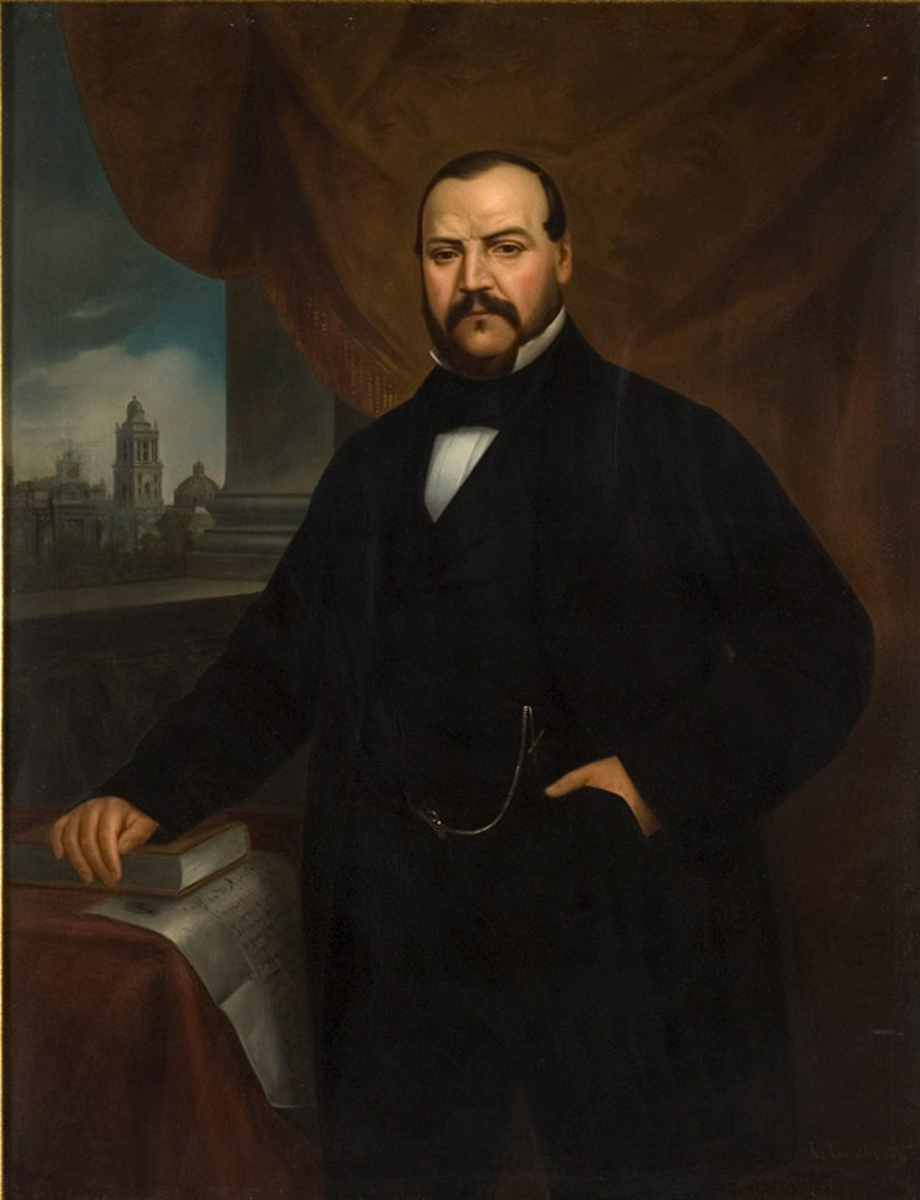
Ignacio Comonfort
Ignacio Gregorio Comonfort de los Ríos (Spanish pronunciation: [iɣˈnasjo komoɱˈfoɾ ðe los ˈri.os]; 12 March 1812 – 13 November 1863), also known as Ignacio Comonfort, was a Mexican politician and soldier who was also president during La Reforma.
He played a leading role in the liberal movement under the Plan of Ayutla to overthrow the dictatorship of Santa Anna in 1855; he then served in the cabinet of the new president, Juan Álvarez. Comonfort was a moderate liberal and assumed the presidency when Álvarez stepped down after only a few months. The Constitution of 1857 was drafted during his presidency, incorporating changes enacted in individual laws of the Liberal Reform. The constitution was met with opposition from conservatives as its forceful anticlerical provisions undermined the economic power and privileged status of the Catholic Church as an institution. Most notably the Lerdo law stripped the Church's ability to hold property. The law also forced the breakup of communal land holdings of indigenous communities, which enabled them to resist integration economically and culturally. The controversy was further inflamed when the government mandated that all civil servants take an oath to uphold the new constitution, which left Catholic public servants with the choice between either keeping their jobs or being excommunicated.
Comonfort considered the anticlerical articles of the constitution too radical, likely to provoke a violent reaction. He also objected to the deliberate weakening of the power of the executive branch of government by empowering the legislative branch. He had been dealing with revolts since the beginning of his administration and the new constitution left the president powerless to act. Hoping to reach compromise with the conservatives and other opponents of the constitution, he joined the Plan of Tacubaya, nullifying the constitution in December 1857. Congress was dissolved and Comonfort remained as president, only to be completely abandoned by his liberal allies. He backed out of the plan and resigned from the presidency. He was succeeded by the president of the Supreme Court, Benito Juárez. Comonfort went into exile as the bloody Reform War broke out, a civil war the conservatives lost in 1861. Comonfort returned to the country in 1862 to fight against the invasion by France that Mexican conservatives supported. Comonfort was killed in action in defense of the Republic on 13 November 1863.
Ignacio Comonfort was born in Puebla on 12 March 1812. His parents were lieutenant colonel Mariano Comonfort and Maria Guadalupe de los Rios. At the age of 14, he began his studies at the Carolino College in Puebla, a school run by Jesuits. He was twenty years old in 1832 when he took part in the liberal revolt which overthrew President Anastasio Bustamante and saw action at San Agustin del Palmar and Puebla. During the subsequent Siege of Mexico City, he was already a captain of the cavalry and fought at Tacubaya, Casas Blancas, Zumpango, San Lorenzo, and Posadas, and gave proof of his great military talent until Bustamante was overthrown and the Zavaleta Accords put an end to the revolution. He was named military commander of Izúcar de Matamoros.
When General Mariano Arista as part of a conservative revolt against the administration of Valentín Gómez Farías besieged Puebla with a vastly superior force, Comonfort defended one of its most exposed points. Arista was repulsed and Comonfort returned to his job as a military commander. In 1834, he returned to defend Puebla against the siege of General Guadalupe Victoria but lost. The victorious conservatives would turn the First Mexican Republic into the Centralist Republic of Mexico Comonfort left the city and returned to his family, where he remained for four years until he was named prefect and military commander of Tlapa in which he made many material improvements. He also had to deal with many southern indigenous revolts within his jurisdiction, including one case in which Comonfort, with twenty-four troops almost without ammunition, sustained a siege against two thousand indigenous troops.
He was a deputy in Congress in 1842 and 1846. The 1842 Congress was dissolved by Santa Anna and the one in 1846 by Mariano Paredes. Comonfort took part in the revolt against the Paredes government in late 1846, during the early stages of the Mexican–American War which restored the federalist Constitution of 1824. He was elected to the presidency of the third ayuntamiento in the capital and was made prefect of western State of Mexico. He participated in the Mexican–American War, occupying the dangerous position of assistant to the commander-in-chief, and was part of the congress that met at Querétaro after the U.S. Army took the capital. He was elected senator the following year in 1848, and later made a customs official in the port of Acapulco, although he was removed from this position during the last dictatorship of Santa Anna in 1854.
Comonfort's liberal sympathies, military office, and presence in the South would lead him to play a key role in the Plan of Ayutla, unifying liberal opposition to Santa Anna, formulated by the dissident Colonel Florencio Villareal on 1 March 1854. The plan proclaimed a revolutionary program in the town of Ayutla, Guerrero, condemning the dictatorship of Santa Anna, attacking measures such as military conscription, and the selling of the Mesilla valley to the U.S., known there as the Gadsden Purchase. The plan declared Santa Anna deposed and called for the convocation of a new president and a representative assembly to reorganize the government. The plan was ratified at Acapulco by Colonel Comonfort, among others, with some amendments, including a provision allowing changes to be made in accordance with the national will. Juan Álvarez was chosen as head of the movement.
Comonfort, in charge of the fortress of Acapulco, resisted a siege by Santa Anna who appeared on 20 April 1854, but soon had to retreat. During the revolution, Comonfort went on an important mission abroad to gain war materiel. Comonfort later established his base of operations in Michoacán and prepared to march on Guadalajara. After months of fighting, Santa Anna resigned in August 1855, but Comonfort refused to recognize his government-appointed successor Martín Carrera, whom he viewed as an effort by the remainders of the administration to coopt the revolution. Comonfort entered Guadalajara on 22 August 1855 and published a circular arguing that only Juan Álvarez could be recognized as the leader of the revolution. By September, Comonfort was at Lagos conferring with the independent revolutionary leaders Antonio de Haro y Tamariz and Manuel Doblado, effecting their recognition of Álvarez's leadership. Álvarez assumed the presidency in August.
Hub AI
Ignacio Comonfort AI simulator
(@Ignacio Comonfort_simulator)
Ignacio Comonfort
Ignacio Gregorio Comonfort de los Ríos (Spanish pronunciation: [iɣˈnasjo komoɱˈfoɾ ðe los ˈri.os]; 12 March 1812 – 13 November 1863), also known as Ignacio Comonfort, was a Mexican politician and soldier who was also president during La Reforma.
He played a leading role in the liberal movement under the Plan of Ayutla to overthrow the dictatorship of Santa Anna in 1855; he then served in the cabinet of the new president, Juan Álvarez. Comonfort was a moderate liberal and assumed the presidency when Álvarez stepped down after only a few months. The Constitution of 1857 was drafted during his presidency, incorporating changes enacted in individual laws of the Liberal Reform. The constitution was met with opposition from conservatives as its forceful anticlerical provisions undermined the economic power and privileged status of the Catholic Church as an institution. Most notably the Lerdo law stripped the Church's ability to hold property. The law also forced the breakup of communal land holdings of indigenous communities, which enabled them to resist integration economically and culturally. The controversy was further inflamed when the government mandated that all civil servants take an oath to uphold the new constitution, which left Catholic public servants with the choice between either keeping their jobs or being excommunicated.
Comonfort considered the anticlerical articles of the constitution too radical, likely to provoke a violent reaction. He also objected to the deliberate weakening of the power of the executive branch of government by empowering the legislative branch. He had been dealing with revolts since the beginning of his administration and the new constitution left the president powerless to act. Hoping to reach compromise with the conservatives and other opponents of the constitution, he joined the Plan of Tacubaya, nullifying the constitution in December 1857. Congress was dissolved and Comonfort remained as president, only to be completely abandoned by his liberal allies. He backed out of the plan and resigned from the presidency. He was succeeded by the president of the Supreme Court, Benito Juárez. Comonfort went into exile as the bloody Reform War broke out, a civil war the conservatives lost in 1861. Comonfort returned to the country in 1862 to fight against the invasion by France that Mexican conservatives supported. Comonfort was killed in action in defense of the Republic on 13 November 1863.
Ignacio Comonfort was born in Puebla on 12 March 1812. His parents were lieutenant colonel Mariano Comonfort and Maria Guadalupe de los Rios. At the age of 14, he began his studies at the Carolino College in Puebla, a school run by Jesuits. He was twenty years old in 1832 when he took part in the liberal revolt which overthrew President Anastasio Bustamante and saw action at San Agustin del Palmar and Puebla. During the subsequent Siege of Mexico City, he was already a captain of the cavalry and fought at Tacubaya, Casas Blancas, Zumpango, San Lorenzo, and Posadas, and gave proof of his great military talent until Bustamante was overthrown and the Zavaleta Accords put an end to the revolution. He was named military commander of Izúcar de Matamoros.
When General Mariano Arista as part of a conservative revolt against the administration of Valentín Gómez Farías besieged Puebla with a vastly superior force, Comonfort defended one of its most exposed points. Arista was repulsed and Comonfort returned to his job as a military commander. In 1834, he returned to defend Puebla against the siege of General Guadalupe Victoria but lost. The victorious conservatives would turn the First Mexican Republic into the Centralist Republic of Mexico Comonfort left the city and returned to his family, where he remained for four years until he was named prefect and military commander of Tlapa in which he made many material improvements. He also had to deal with many southern indigenous revolts within his jurisdiction, including one case in which Comonfort, with twenty-four troops almost without ammunition, sustained a siege against two thousand indigenous troops.
He was a deputy in Congress in 1842 and 1846. The 1842 Congress was dissolved by Santa Anna and the one in 1846 by Mariano Paredes. Comonfort took part in the revolt against the Paredes government in late 1846, during the early stages of the Mexican–American War which restored the federalist Constitution of 1824. He was elected to the presidency of the third ayuntamiento in the capital and was made prefect of western State of Mexico. He participated in the Mexican–American War, occupying the dangerous position of assistant to the commander-in-chief, and was part of the congress that met at Querétaro after the U.S. Army took the capital. He was elected senator the following year in 1848, and later made a customs official in the port of Acapulco, although he was removed from this position during the last dictatorship of Santa Anna in 1854.
Comonfort's liberal sympathies, military office, and presence in the South would lead him to play a key role in the Plan of Ayutla, unifying liberal opposition to Santa Anna, formulated by the dissident Colonel Florencio Villareal on 1 March 1854. The plan proclaimed a revolutionary program in the town of Ayutla, Guerrero, condemning the dictatorship of Santa Anna, attacking measures such as military conscription, and the selling of the Mesilla valley to the U.S., known there as the Gadsden Purchase. The plan declared Santa Anna deposed and called for the convocation of a new president and a representative assembly to reorganize the government. The plan was ratified at Acapulco by Colonel Comonfort, among others, with some amendments, including a provision allowing changes to be made in accordance with the national will. Juan Álvarez was chosen as head of the movement.
Comonfort, in charge of the fortress of Acapulco, resisted a siege by Santa Anna who appeared on 20 April 1854, but soon had to retreat. During the revolution, Comonfort went on an important mission abroad to gain war materiel. Comonfort later established his base of operations in Michoacán and prepared to march on Guadalajara. After months of fighting, Santa Anna resigned in August 1855, but Comonfort refused to recognize his government-appointed successor Martín Carrera, whom he viewed as an effort by the remainders of the administration to coopt the revolution. Comonfort entered Guadalajara on 22 August 1855 and published a circular arguing that only Juan Álvarez could be recognized as the leader of the revolution. By September, Comonfort was at Lagos conferring with the independent revolutionary leaders Antonio de Haro y Tamariz and Manuel Doblado, effecting their recognition of Álvarez's leadership. Álvarez assumed the presidency in August.