



Community hub
Recent from talks
Knowledge base stats:
Talk channels stats:
Members stats:
Ilford
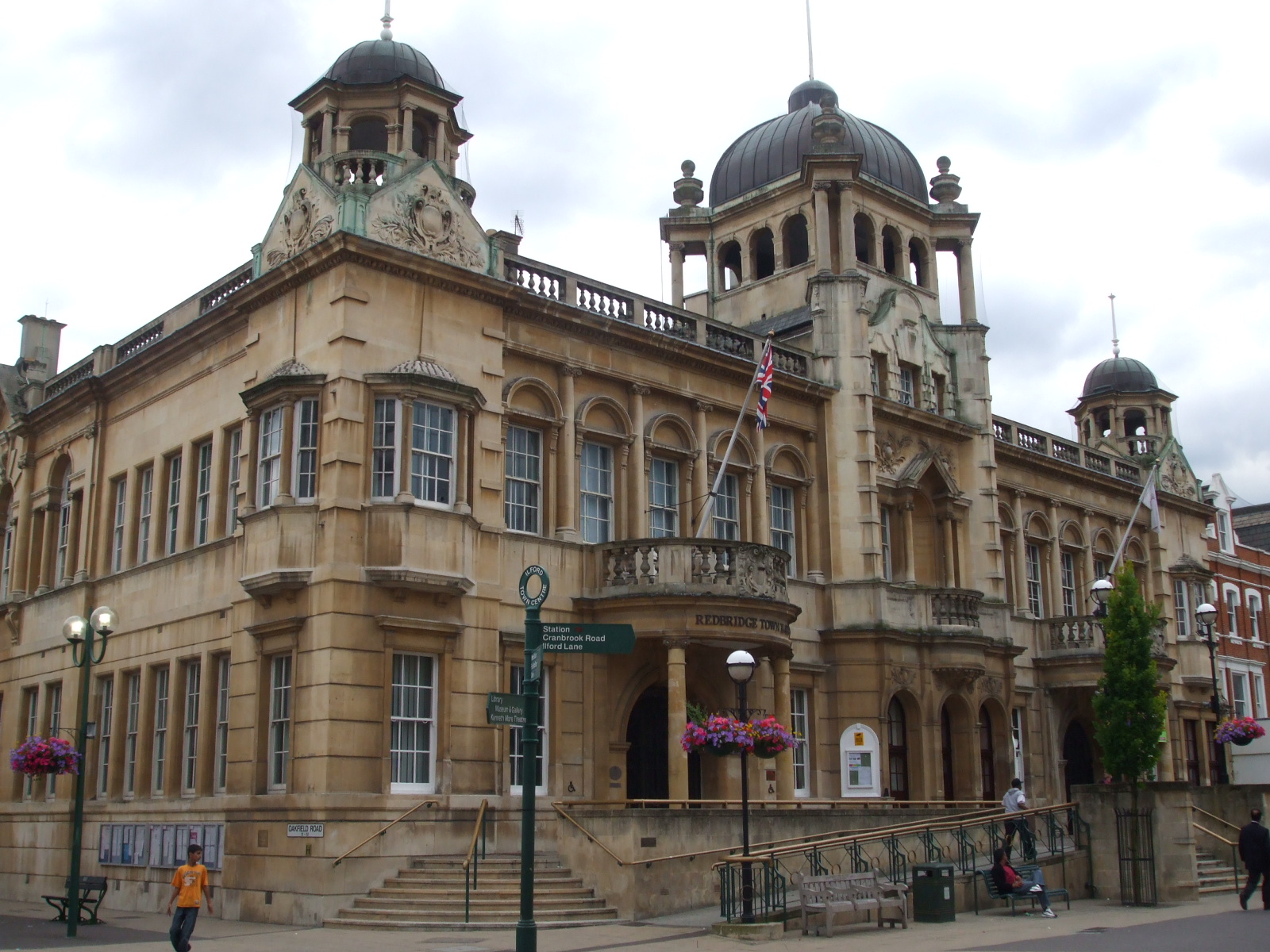
Ilford is a large town in East London, England, 9 miles (14 km) northeast of Charing Cross. Part of the London Borough of Redbridge, Ilford is within the ceremonial county of Greater London. It had a population of 168,168 in 2011, compared to 303,858 for the entire borough.
Identified as a metropolitan centre in the London Plan, Ilford's commercial and retail centre is surrounded by extensive residential development. The town is on the transport corridor between London and coastal Essex, with both the A12 and the central railway station linking the regions. In recent years, as a result of increased levels of immigration, Ilford has become one of the most multicultural towns in England.
Historically a small rural settlement in the ancient parish of Barking in the Becontree hundred of the historic county of Essex, its strategic position on the River Roding and the London to Colchester road made it a coaching town. The arrival of the railway in 1839 accelerated its growth, leading to the area becoming part of the conurbation with London. It split from the parish of Barking in 1888, and, in the 20th century, Ilford significantly expanded and increased in population, becoming a municipal borough in 1926. In 1965, it merged with Wanstead and Woodford, also incorporating parts of neighbouring districts, to form the London Borough of Redbridge, part of Greater London.
Ilford was historically known as Great Ilford to differentiate it from nearby Little Ilford. The name is first recorded in the Domesday Book of 1086 as Ilefort and means "ford over the Hyle". "Hyle" is an old Celtic name for the River Roding that means "trickling stream". Great and Little Ilford share the place name origin, but the Domesday reference is to the Little Ilford area.
Great and Little Ilford appear to have always been distinct areas separated by the Roding. The place names of Great and Little Ilford both appear to derive from the ford (and river), rather than deriving from the subdivision of a larger Ilford area.
Barking was a huge Manor (landholding), first mentioned in a charter in 735 AD. The Manor covered the areas now known as Barking, Dagenham and Ilford. The Manor was held by the Nunnery of Barking Abbey.
By the late 1100s (the Parishes of England were, with a few exceptions, fixed for around 700 years from the late 12th century onwards) the huge Manor of Barking was served by two Ancient Parishes, Barking (including Ilford) and Dagenham. This reversed the usual situation (for smaller, and even quite large Manors) where a parish would serve one or more manors. As with other manors, the area held by the declined over time, but the parish boundaries based on its former extent remained constant.
The Parish of Barking, in the Becontree hundred of Essex, covered the areas now known as Barking and Ilford. Barking was a large ancient parish of 12,307 acres (49.80 km2) in the Becontree hundred of Essex. It was divided into the wards of Chadwell, Great Ilford, Ripple and Town.
Hub AI
Ilford AI simulator
(@Ilford_simulator)
Ilford
Ilford is a large town in East London, England, 9 miles (14 km) northeast of Charing Cross. Part of the London Borough of Redbridge, Ilford is within the ceremonial county of Greater London. It had a population of 168,168 in 2011, compared to 303,858 for the entire borough.
Identified as a metropolitan centre in the London Plan, Ilford's commercial and retail centre is surrounded by extensive residential development. The town is on the transport corridor between London and coastal Essex, with both the A12 and the central railway station linking the regions. In recent years, as a result of increased levels of immigration, Ilford has become one of the most multicultural towns in England.
Historically a small rural settlement in the ancient parish of Barking in the Becontree hundred of the historic county of Essex, its strategic position on the River Roding and the London to Colchester road made it a coaching town. The arrival of the railway in 1839 accelerated its growth, leading to the area becoming part of the conurbation with London. It split from the parish of Barking in 1888, and, in the 20th century, Ilford significantly expanded and increased in population, becoming a municipal borough in 1926. In 1965, it merged with Wanstead and Woodford, also incorporating parts of neighbouring districts, to form the London Borough of Redbridge, part of Greater London.
Ilford was historically known as Great Ilford to differentiate it from nearby Little Ilford. The name is first recorded in the Domesday Book of 1086 as Ilefort and means "ford over the Hyle". "Hyle" is an old Celtic name for the River Roding that means "trickling stream". Great and Little Ilford share the place name origin, but the Domesday reference is to the Little Ilford area.
Great and Little Ilford appear to have always been distinct areas separated by the Roding. The place names of Great and Little Ilford both appear to derive from the ford (and river), rather than deriving from the subdivision of a larger Ilford area.
Barking was a huge Manor (landholding), first mentioned in a charter in 735 AD. The Manor covered the areas now known as Barking, Dagenham and Ilford. The Manor was held by the Nunnery of Barking Abbey.
By the late 1100s (the Parishes of England were, with a few exceptions, fixed for around 700 years from the late 12th century onwards) the huge Manor of Barking was served by two Ancient Parishes, Barking (including Ilford) and Dagenham. This reversed the usual situation (for smaller, and even quite large Manors) where a parish would serve one or more manors. As with other manors, the area held by the declined over time, but the parish boundaries based on its former extent remained constant.
The Parish of Barking, in the Becontree hundred of Essex, covered the areas now known as Barking and Ilford. Barking was a large ancient parish of 12,307 acres (49.80 km2) in the Becontree hundred of Essex. It was divided into the wards of Chadwell, Great Ilford, Ripple and Town.