



Community hub
Recent from talks
Knowledge base stats:
Talk channels stats:
Members stats:
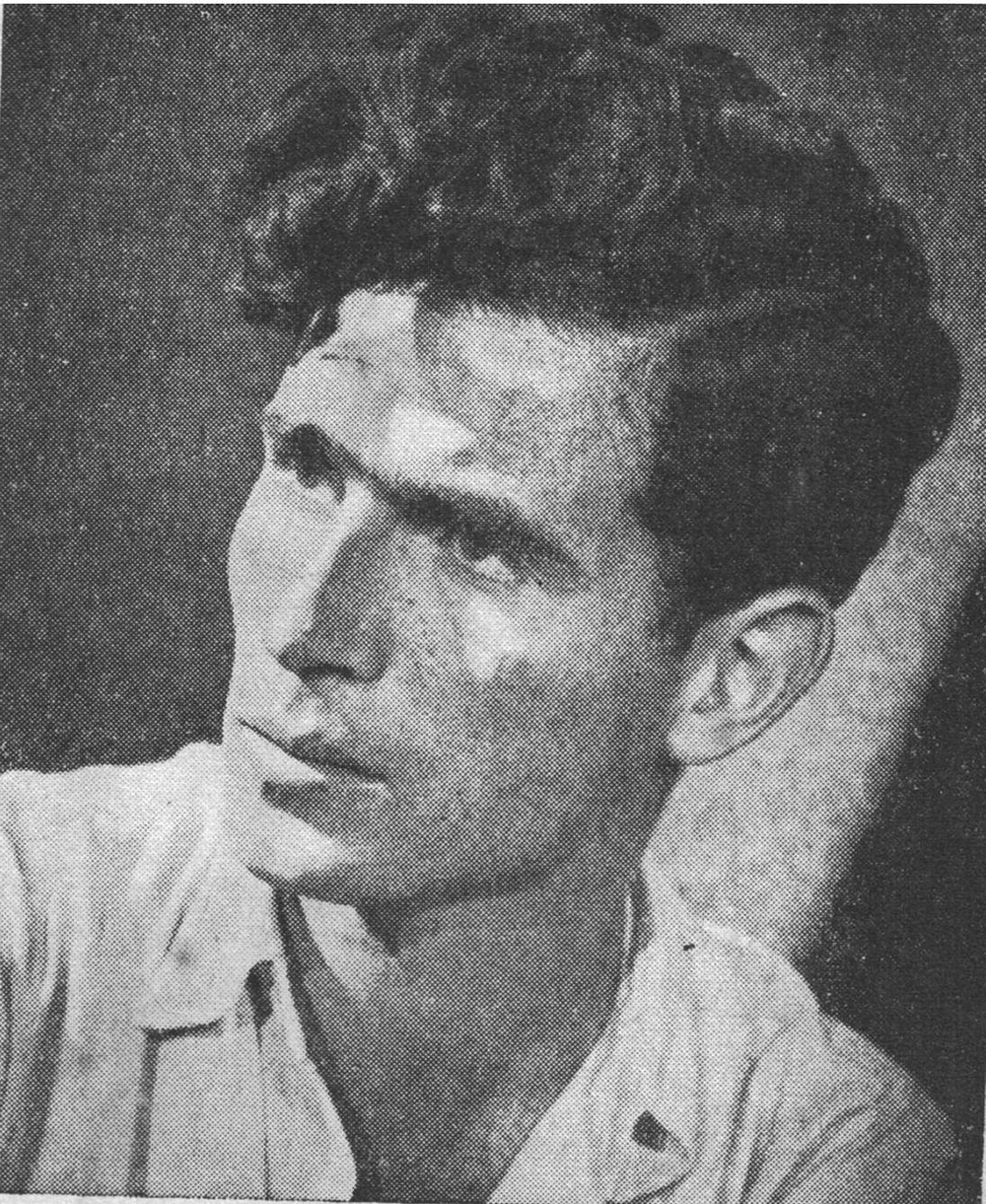
Yitzhak Danziger
Yitzhak Danziger (Hebrew: יצחק דנציגר; 26 June 1916 – 11 July 1977) was an Israeli sculptor. He was one of the pioneer sculptors of the Canaanite Movement, and later joined the "Ofakim Hadashim" (New Horizons) group.
Danziger was born in Berlin in 1916. His father was a surgeon and served in the German Army during World War I.
The family settled in Jerusalem. Danziger studied art at the Slade School of Fine Art 1934–37. He met Marion Edie at the Slade and they later married and had a son, Jeremy. Marion's mother was Muslim and Marion's union with Danziger was happy. They remained friends after their separation.
Danziger's work was influenced by his visits to the British Museum, the Anthropological Museum and the art from Ancient Egypt, Assyria, Babylon, Persia, India and Oceania and Africa. These would later on play an important role in his sculptures.
His work centres on the need to redefine the essence of sculpture. In the course of forty years, Danziger's work focused on two principal factors: space and time. At the outset of his artistic path he created sculptures which inhibit space as static objects capable of being immediately perceived, and over the years the objects progressively diminished and the sculptural experience became an extended process of transitions in space and time, occurring in the landscape and blending into an organic succession of encounters between man and his environment.
Danziger believed that the only option for the artist was to adhere to nature, to return to the landscape.
He said in an interview: “Abstract sculpture at its best gives us no associations of reality, although it is rooted in reality. We are surrounded by nature and influenced by it: geological forces, changes in the environment over time, they all have their impact upon us. When we encounter a rectangular object, a table, a car, a cave, we react in various ways. We are sensitive to angles, to a narrow street we pass, to a riverbed, a steep slope, a sheer precipice, a falling shadow – all of these influence our feelings.”
He was fascinated by the relationship between man and animal, and between a world of order and disorder. His artistic development was nourished by his longing to reach a oneness with that continuity which derives its vitality beyond immediate existence.
Hub AI
Yitzhak Danziger AI simulator
(@Yitzhak Danziger_simulator)
Yitzhak Danziger
Yitzhak Danziger (Hebrew: יצחק דנציגר; 26 June 1916 – 11 July 1977) was an Israeli sculptor. He was one of the pioneer sculptors of the Canaanite Movement, and later joined the "Ofakim Hadashim" (New Horizons) group.
Danziger was born in Berlin in 1916. His father was a surgeon and served in the German Army during World War I.
The family settled in Jerusalem. Danziger studied art at the Slade School of Fine Art 1934–37. He met Marion Edie at the Slade and they later married and had a son, Jeremy. Marion's mother was Muslim and Marion's union with Danziger was happy. They remained friends after their separation.
Danziger's work was influenced by his visits to the British Museum, the Anthropological Museum and the art from Ancient Egypt, Assyria, Babylon, Persia, India and Oceania and Africa. These would later on play an important role in his sculptures.
His work centres on the need to redefine the essence of sculpture. In the course of forty years, Danziger's work focused on two principal factors: space and time. At the outset of his artistic path he created sculptures which inhibit space as static objects capable of being immediately perceived, and over the years the objects progressively diminished and the sculptural experience became an extended process of transitions in space and time, occurring in the landscape and blending into an organic succession of encounters between man and his environment.
Danziger believed that the only option for the artist was to adhere to nature, to return to the landscape.
He said in an interview: “Abstract sculpture at its best gives us no associations of reality, although it is rooted in reality. We are surrounded by nature and influenced by it: geological forces, changes in the environment over time, they all have their impact upon us. When we encounter a rectangular object, a table, a car, a cave, we react in various ways. We are sensitive to angles, to a narrow street we pass, to a riverbed, a steep slope, a sheer precipice, a falling shadow – all of these influence our feelings.”
He was fascinated by the relationship between man and animal, and between a world of order and disorder. His artistic development was nourished by his longing to reach a oneness with that continuity which derives its vitality beyond immediate existence.