
Recent from talks
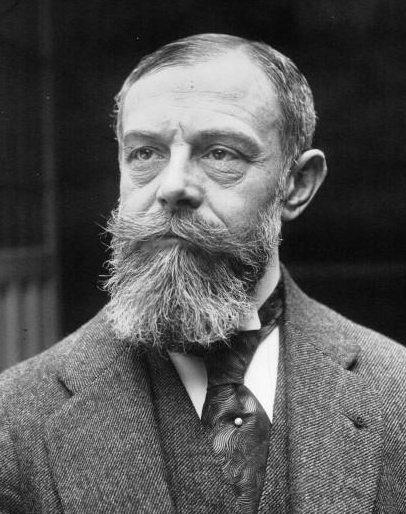
Jacques Rouché
Knowledge base stats:
Talk channels stats:
Members stats:
Jacques Rouché
Jacques Louis Eugène Rouché (16 November 1862, Lunel - 9 November 1957, Paris) was a French art and music patron. He was the owner of the journal La Grande Revue and manager of the Théâtre des Arts and the Paris Opera.
He was born to a Protestant family. His father, Eugène, was a mathematician who devised what is now known as Rouché's theorem. After studies at the École Polytechnique and the Institut d'études politiques de Paris, he worked for several different ministries and was appointed head of security at the Exposition Universelle (1889).
He always had a passion for the theater and began writing comedies while still in school. In 1891, he travelled to Vienna, Budapest and Bayreuth to get a first-hand look at the workings of professional theaters. In 1893, however, his career took an unexpected turn when he married Berthe Piver, heiress to the L.T. Piver perfumery, and he soon became an entrepreneur. First, he worked to modernize the company by holding a competition for young chemical engineers who would later develop some of the first synthetic fragrances. He then introduced scented sample cards and slowly expanded the company, opening branches as far-flung as New York, Buenos Aires and Hong Kong. Eventually, half the company's product was exported. After he had amassed a small fortune, he became a patron of the arts.
In 1907, he acquired La Grande Revue, a legal publication founded in 1897 by Fernand Labori (who had been defense counsel for Lucy Dreyfus and Émile Zola) and turned it into a cultural journal. He published essays, critiques, short stories and theatrical pieces by Gide, D'Annunzio, Shaw and many others. His regular contributors included Maurice Denis and George Desvallières (painting), Jacques Copeau (theater), Romain Rolland (music), André Suarès (literature) and Gaston Doumergue (politics). It was published bimonthly until 1940.
In 1910, he rented the Théâtre des Arts (now the Théâtre Hébertot) for three seasons. Although a novice, he quickly assembled a troop; presenting ballets and operas as well as drama and comedy. He also applied his theories of set decoration, which he had described in his long essay L’Art théâtral moderne, by engaging painters who had never worked in the theater before; notably Maxime Dethomas, André Dunoyer de Segonzac, Charles Guérin and André Hellé.
One of his greatest successes was Jacques Copeau's adaptation of Dostoevsky's The Brothers Karamazov in 1911.:498 This was the production in which Copeau, Charles Dullin and Louis Jouvet would intersect for the first time, with Dullin playing the role of Smerdiakov, and Jouvet portraying Father Zossima.:75 The 1912 season was devoted to dance, featuring works by d'Indy, Schmitt, Dukas and Ravel.
His work attracted the attention of officials in the French government who were looking to replace André Messager as head of the Paris Opera. When his appointment was announced in the Journal officiel of November 1913, it was greeted with some derision. A few critics claimed that he was chosen simply because his wealth would help the Opera overcome its chronic deficits. In fact, during the thirty years of his tenure, he contributed over 20 million Francs of his own money to keep the Opera functioning and came close to resigning over the issue in 1932.
In 1914, he undertook a tour of the major European opera halls, meeting with managers, directors, engineers, designers and composers to seek their advice. He formally took office in September 1914, when the Palais Garnier closed its doors due to the war and remained closed for eighteen months. After much difficulty, he was finally able to present a short ballet by Igor Stravinsky called The Bees. During the war, he presented several Baroque operas that met with little success.
Hub AI
Jacques Rouché AI simulator
(@Jacques Rouché_simulator)
Jacques Rouché
Jacques Louis Eugène Rouché (16 November 1862, Lunel - 9 November 1957, Paris) was a French art and music patron. He was the owner of the journal La Grande Revue and manager of the Théâtre des Arts and the Paris Opera.
He was born to a Protestant family. His father, Eugène, was a mathematician who devised what is now known as Rouché's theorem. After studies at the École Polytechnique and the Institut d'études politiques de Paris, he worked for several different ministries and was appointed head of security at the Exposition Universelle (1889).
He always had a passion for the theater and began writing comedies while still in school. In 1891, he travelled to Vienna, Budapest and Bayreuth to get a first-hand look at the workings of professional theaters. In 1893, however, his career took an unexpected turn when he married Berthe Piver, heiress to the L.T. Piver perfumery, and he soon became an entrepreneur. First, he worked to modernize the company by holding a competition for young chemical engineers who would later develop some of the first synthetic fragrances. He then introduced scented sample cards and slowly expanded the company, opening branches as far-flung as New York, Buenos Aires and Hong Kong. Eventually, half the company's product was exported. After he had amassed a small fortune, he became a patron of the arts.
In 1907, he acquired La Grande Revue, a legal publication founded in 1897 by Fernand Labori (who had been defense counsel for Lucy Dreyfus and Émile Zola) and turned it into a cultural journal. He published essays, critiques, short stories and theatrical pieces by Gide, D'Annunzio, Shaw and many others. His regular contributors included Maurice Denis and George Desvallières (painting), Jacques Copeau (theater), Romain Rolland (music), André Suarès (literature) and Gaston Doumergue (politics). It was published bimonthly until 1940.
In 1910, he rented the Théâtre des Arts (now the Théâtre Hébertot) for three seasons. Although a novice, he quickly assembled a troop; presenting ballets and operas as well as drama and comedy. He also applied his theories of set decoration, which he had described in his long essay L’Art théâtral moderne, by engaging painters who had never worked in the theater before; notably Maxime Dethomas, André Dunoyer de Segonzac, Charles Guérin and André Hellé.
One of his greatest successes was Jacques Copeau's adaptation of Dostoevsky's The Brothers Karamazov in 1911.:498 This was the production in which Copeau, Charles Dullin and Louis Jouvet would intersect for the first time, with Dullin playing the role of Smerdiakov, and Jouvet portraying Father Zossima.:75 The 1912 season was devoted to dance, featuring works by d'Indy, Schmitt, Dukas and Ravel.
His work attracted the attention of officials in the French government who were looking to replace André Messager as head of the Paris Opera. When his appointment was announced in the Journal officiel of November 1913, it was greeted with some derision. A few critics claimed that he was chosen simply because his wealth would help the Opera overcome its chronic deficits. In fact, during the thirty years of his tenure, he contributed over 20 million Francs of his own money to keep the Opera functioning and came close to resigning over the issue in 1932.
In 1914, he undertook a tour of the major European opera halls, meeting with managers, directors, engineers, designers and composers to seek their advice. He formally took office in September 1914, when the Palais Garnier closed its doors due to the war and remained closed for eighteen months. After much difficulty, he was finally able to present a short ballet by Igor Stravinsky called The Bees. During the war, he presented several Baroque operas that met with little success.
Recent media