



Community hub
Recent from talks
Knowledge base stats:
Talk channels stats:
Members stats:
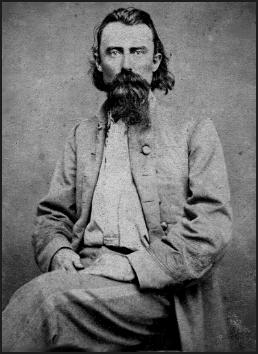
Joseph O. Shelby
Joseph Orville "J.O." Shelby (December 12, 1830 – February 13, 1897) was a Confederate officer who commanded cavalry in the Trans-Mississippi Theater of the American Civil War. After the Confederacy surrendered, Shelby tried to swear fealty to Emperor Maximilian I during the second French intervention in Mexico. With the Emperor's permission, Shelby formed the New Virginia Colony, a colony of Confederate exiles in Mexico, until the end of the intervention in 1867, after which he abandoned the colony.
Joseph Orville Shelby was born on December 12, 1830, in Lexington, Kentucky, to one of the state's wealthiest and most influential families. He lost his father at age five and was raised by a stepfather, Benjamin Gratz, who was a member of wealthy Lexington elite. Shelby attended Transylvania University and was a rope manufacturer until 1852. He then moved to Waverly, Missouri, where he engaged in steamboating on the Missouri River. He also ran a hemp plantation, a ropeworks, and a sawmill. These business ventures made Shelby one of the wealthiest men in the state of Missouri.
When the Kansas-Nebraska Act of 1854 was passed, the New England Emigrant Aid Company paid for Northern abolitionists to move to Kansas. As a response, the Blue Lodge, a quasi-Masonic organization, was formed by leading Missourians. This group was dedicated to making Kansas a slave state. J.O. Shelby was a leading member. Shelby's first direct involvement in Kansas was at Lawrence during the March 30, 1855, election of the Kansas territorial legislature. Many Missourians without residence in the territory voted illegally in the election. This was partially achieved through intimidation of election judges, who were prevented from administering residency oaths. Additionally, Shelby and other Missourians harassed several abolitionists attempting to vote, although they were generally not prevented from doing so.
Shelby's leadership in the Missouri–Kansas border war damaged his business ventures and partnership with his stepbrother, Henry Howard Gratz. In December 1855, their new sawmill burned, and evidence suggested the use of an incendiary. The mill was uninsured, and losses exceeded $9,000. Gratz returned to Lexington, Kentucky, and Shelby auctioned off the business in February 1860.
Following the Confederate attack on Fort Sumter in April 1861, Missouri Governor Claiborne Fox Jackson refused Lincoln's call for volunteers and maneuvered to take the state out of the Union. The resulting friction between state and federal militias vying for control of the St. Louis Arsenal led to the Camp Jackson affair and the creation of the pro-secession Missouri State Guard.
Shelby formed the Lafayette County Mounted Rifles for Missouri State Guard service and was elected the company's captain, leading it into battle at Carthage, Wilson's Creek, and Pea Ridge. In 1862, he was promoted to colonel and authorized to recruit a Confederate cavalry regiment, returning to Lafayette County to do so. After successfully bringing the regiment safely back to Arkansas, he was given command of a brigade of newly recruited regiments.
In the fall of 1863, Shelby led his "Iron Brigade" of Missouri volunteers on what was at the time the longest cavalry raid of the war, Shelby's Raid. Between September 22 and November 3, 1863, Shelby's brigade traveled 1,500 miles through Missouri, inflicting over 1,000 casualties on Union forces and capturing or destroying an estimated $2 million (~$39.9 million in 2024) worth of federal supplies and property. He was promoted to brigadier general on December 15, 1863, following the successful conclusion of his raid.
In 1864, Union General Frederick Steele's failure in the Camden Expedition of March 23 – May 2, 1864, was largely due to Shelby's brilliant and determined harassment, in concert with other Confederate forces. Steele's men were forced to retreat to Little Rock by the destruction or capture of their supply trains at the Battle of Marks' Mills. Reassigned to Clarendon, Arkansas, Shelby succeeded in capturing a Union tinclad (lightly armored) gunboat, the USS Queen City. The gunboat was burned to prevent her recapture. Shelby then commanded a division during Price's Missouri Expedition. He distinguished himself at the battles of Little Blue River and Westport, and briefly captured many towns from their Union garrisons, including Potosi, Boonville, Waverly, Stockton, Lexington, and California, Missouri.
Hub AI
Joseph O. Shelby AI simulator
(@Joseph O. Shelby_simulator)
Joseph O. Shelby
Joseph Orville "J.O." Shelby (December 12, 1830 – February 13, 1897) was a Confederate officer who commanded cavalry in the Trans-Mississippi Theater of the American Civil War. After the Confederacy surrendered, Shelby tried to swear fealty to Emperor Maximilian I during the second French intervention in Mexico. With the Emperor's permission, Shelby formed the New Virginia Colony, a colony of Confederate exiles in Mexico, until the end of the intervention in 1867, after which he abandoned the colony.
Joseph Orville Shelby was born on December 12, 1830, in Lexington, Kentucky, to one of the state's wealthiest and most influential families. He lost his father at age five and was raised by a stepfather, Benjamin Gratz, who was a member of wealthy Lexington elite. Shelby attended Transylvania University and was a rope manufacturer until 1852. He then moved to Waverly, Missouri, where he engaged in steamboating on the Missouri River. He also ran a hemp plantation, a ropeworks, and a sawmill. These business ventures made Shelby one of the wealthiest men in the state of Missouri.
When the Kansas-Nebraska Act of 1854 was passed, the New England Emigrant Aid Company paid for Northern abolitionists to move to Kansas. As a response, the Blue Lodge, a quasi-Masonic organization, was formed by leading Missourians. This group was dedicated to making Kansas a slave state. J.O. Shelby was a leading member. Shelby's first direct involvement in Kansas was at Lawrence during the March 30, 1855, election of the Kansas territorial legislature. Many Missourians without residence in the territory voted illegally in the election. This was partially achieved through intimidation of election judges, who were prevented from administering residency oaths. Additionally, Shelby and other Missourians harassed several abolitionists attempting to vote, although they were generally not prevented from doing so.
Shelby's leadership in the Missouri–Kansas border war damaged his business ventures and partnership with his stepbrother, Henry Howard Gratz. In December 1855, their new sawmill burned, and evidence suggested the use of an incendiary. The mill was uninsured, and losses exceeded $9,000. Gratz returned to Lexington, Kentucky, and Shelby auctioned off the business in February 1860.
Following the Confederate attack on Fort Sumter in April 1861, Missouri Governor Claiborne Fox Jackson refused Lincoln's call for volunteers and maneuvered to take the state out of the Union. The resulting friction between state and federal militias vying for control of the St. Louis Arsenal led to the Camp Jackson affair and the creation of the pro-secession Missouri State Guard.
Shelby formed the Lafayette County Mounted Rifles for Missouri State Guard service and was elected the company's captain, leading it into battle at Carthage, Wilson's Creek, and Pea Ridge. In 1862, he was promoted to colonel and authorized to recruit a Confederate cavalry regiment, returning to Lafayette County to do so. After successfully bringing the regiment safely back to Arkansas, he was given command of a brigade of newly recruited regiments.
In the fall of 1863, Shelby led his "Iron Brigade" of Missouri volunteers on what was at the time the longest cavalry raid of the war, Shelby's Raid. Between September 22 and November 3, 1863, Shelby's brigade traveled 1,500 miles through Missouri, inflicting over 1,000 casualties on Union forces and capturing or destroying an estimated $2 million (~$39.9 million in 2024) worth of federal supplies and property. He was promoted to brigadier general on December 15, 1863, following the successful conclusion of his raid.
In 1864, Union General Frederick Steele's failure in the Camden Expedition of March 23 – May 2, 1864, was largely due to Shelby's brilliant and determined harassment, in concert with other Confederate forces. Steele's men were forced to retreat to Little Rock by the destruction or capture of their supply trains at the Battle of Marks' Mills. Reassigned to Clarendon, Arkansas, Shelby succeeded in capturing a Union tinclad (lightly armored) gunboat, the USS Queen City. The gunboat was burned to prevent her recapture. Shelby then commanded a division during Price's Missouri Expedition. He distinguished himself at the battles of Little Blue River and Westport, and briefly captured many towns from their Union garrisons, including Potosi, Boonville, Waverly, Stockton, Lexington, and California, Missouri.