



Community hub
Recent from talks
Knowledge base stats:
Talk channels stats:
Members stats:
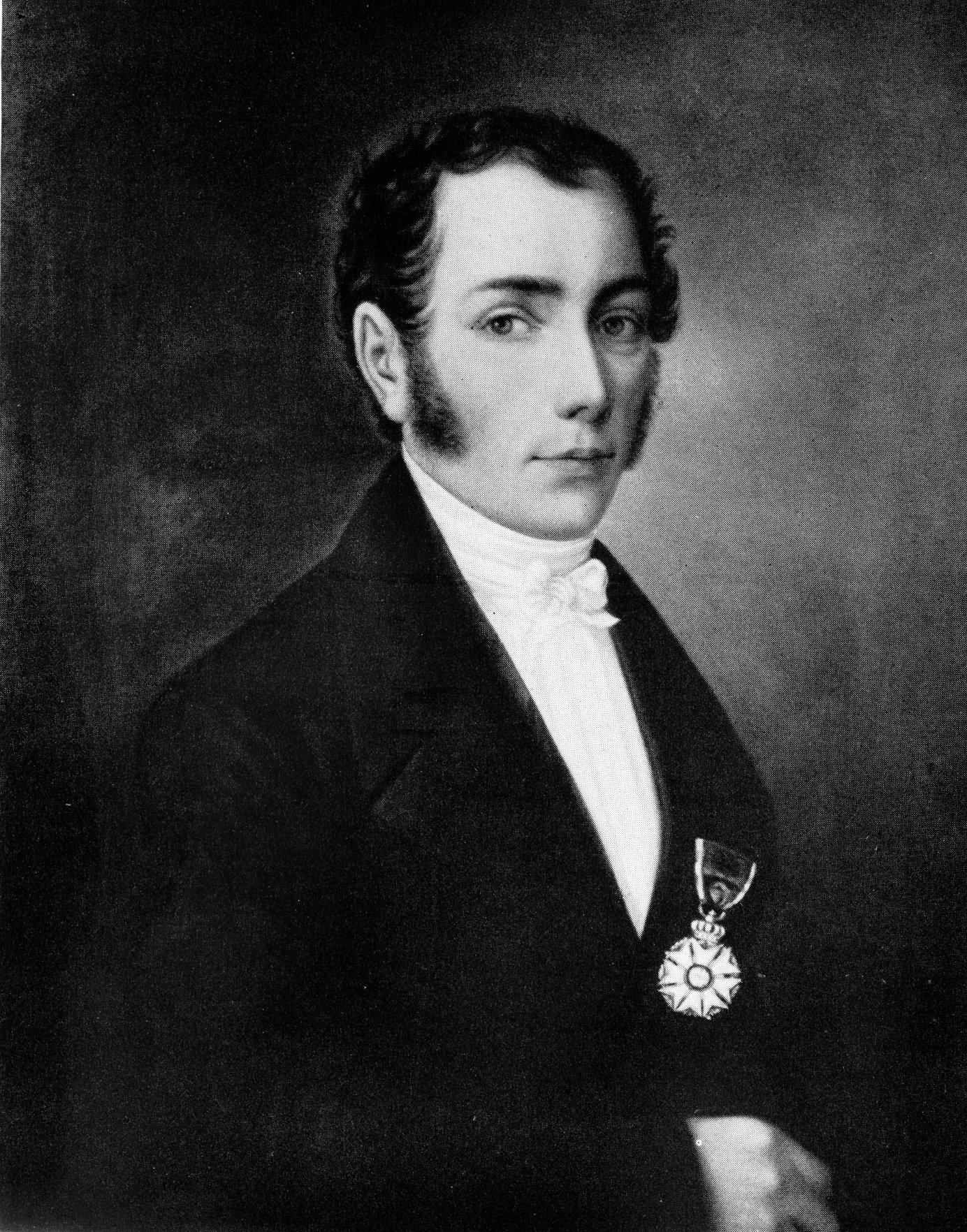
Joseph von Fraunhofer
Joseph Ritter von Fraunhofer (/ˈfraʊnˌhoʊfər/; German: [ˈfraʊnˌhoːfɐ]; 6 March 1787 – 7 June 1826) was a German physicist and optical lens manufacturer. He made optical glass, an achromatic telescope, and objective lenses. He developed diffraction grating and also invented the spectroscope. In 1814, he discovered and studied the dark absorption lines in the spectrum of the sun now known as Fraunhofer lines.
The German research organization Fraunhofer Society, which is Europe's biggest Society for the advancement of applied research, is named after him. Fraunhofer lines are used in astronomy to determine the composition of celestial bodies. His epitaph reads Aproximavit sidera, Latin for 'He brought closer the stars.'
Joseph Fraunhofer was the 11th child, born into a Roman Catholic family in Straubing, in the Electorate of Bavaria, to Franz Xaver Fraunhofer and Maria Anna Fröhlich. His father and paternal grandfather Johann Michael had been master glassmakers in Straubing. Fröhlich's family also came from a lineage of glassmakers going back to the 16th century. He was orphaned at the age of 11 and started working as an apprentice to a harsh glassmaker named Philipp Anton Weichelsberger. In 1801, the workshop in which he was working collapsed, and he was buried in the rubble. The rescue operation was led by Prince-Elector Maximilian Joseph. The prince entered Fraunhofer's life, providing him with books and forcing his employer to allow the young Fraunhofer time to study.
Joseph Utzschneider, a privy councilor, was also at the site of the disaster, and would also become a benefactor to Fraunhofer. With the money given to him by the prince upon his rescue and the support he received from Utzschneider, Fraunhofer was able to continue his education alongside his practical training. In 1806, Utzschneider and Georg von Reichenbach brought Fraunhofer into their Institute at Benediktbeuern, a secularised Benedictine monastery devoted to glassmaking. There he discovered how to make fine optical glass and invented precise methods for measuring optical dispersion.
It was at the Institute that Fraunhofer met Pierre-Louis Guinand (de), a Swiss glass technician, who instructed Fraunhofer in glassmaking at Utzschneider's behest. By 1809, the mechanical part of the Optical Institute was chiefly under Fraunhofer's direction, and Fraunhofer became one of the members of the firm that same year. In 1814, Guinand left the firm, as did Reichenbach. Guinand would later become a partner with Fraunhofer in the firm, and the name was changed to Utzschneider-und-Fraunhofer. During 1818, Fraunhofer became the director of the Optical Institute. Due to the fine optical instruments developed by Fraunhofer, Bavaria overtook England as the center of the optics industry. Even the likes of Michael Faraday were unable to produce glass that could rival Fraunhofer.
His illustrious career eventually earned him an honorary doctorate from the University of Erlangen in 1822. In 1824, Fraunhofer was appointed a Knight of the Order of Merit of the Bavarian Crown by King Maximilian I, through which he was raised into personal nobility (with the title "Ritter von", i.e. knight). The same year, he was also made an honorary citizen of Munich.[citation needed]
Like many glassmakers of his era, he was poisoned by heavy metal vapors, resulting in his premature death. Fraunhofer died in 1826 at the age of 39. His most valuable glassmaking recipes are thought to have gone to the grave with him.
One of the most difficult operations of practical optics during the time period of Fraunhofer's life was accurately polishing the spherical surfaces of large object glasses. Fraunhofer invented the machine which rendered the surface more accurately than conventional grinding. He also invented other grinding and polishing machines and introduced many improvements into the manufacture of the different kinds of glass used for optical instruments, which he always found to have flaws and irregularities of various sorts.
Hub AI
Joseph von Fraunhofer AI simulator
(@Joseph von Fraunhofer_simulator)
Joseph von Fraunhofer
Joseph Ritter von Fraunhofer (/ˈfraʊnˌhoʊfər/; German: [ˈfraʊnˌhoːfɐ]; 6 March 1787 – 7 June 1826) was a German physicist and optical lens manufacturer. He made optical glass, an achromatic telescope, and objective lenses. He developed diffraction grating and also invented the spectroscope. In 1814, he discovered and studied the dark absorption lines in the spectrum of the sun now known as Fraunhofer lines.
The German research organization Fraunhofer Society, which is Europe's biggest Society for the advancement of applied research, is named after him. Fraunhofer lines are used in astronomy to determine the composition of celestial bodies. His epitaph reads Aproximavit sidera, Latin for 'He brought closer the stars.'
Joseph Fraunhofer was the 11th child, born into a Roman Catholic family in Straubing, in the Electorate of Bavaria, to Franz Xaver Fraunhofer and Maria Anna Fröhlich. His father and paternal grandfather Johann Michael had been master glassmakers in Straubing. Fröhlich's family also came from a lineage of glassmakers going back to the 16th century. He was orphaned at the age of 11 and started working as an apprentice to a harsh glassmaker named Philipp Anton Weichelsberger. In 1801, the workshop in which he was working collapsed, and he was buried in the rubble. The rescue operation was led by Prince-Elector Maximilian Joseph. The prince entered Fraunhofer's life, providing him with books and forcing his employer to allow the young Fraunhofer time to study.
Joseph Utzschneider, a privy councilor, was also at the site of the disaster, and would also become a benefactor to Fraunhofer. With the money given to him by the prince upon his rescue and the support he received from Utzschneider, Fraunhofer was able to continue his education alongside his practical training. In 1806, Utzschneider and Georg von Reichenbach brought Fraunhofer into their Institute at Benediktbeuern, a secularised Benedictine monastery devoted to glassmaking. There he discovered how to make fine optical glass and invented precise methods for measuring optical dispersion.
It was at the Institute that Fraunhofer met Pierre-Louis Guinand (de), a Swiss glass technician, who instructed Fraunhofer in glassmaking at Utzschneider's behest. By 1809, the mechanical part of the Optical Institute was chiefly under Fraunhofer's direction, and Fraunhofer became one of the members of the firm that same year. In 1814, Guinand left the firm, as did Reichenbach. Guinand would later become a partner with Fraunhofer in the firm, and the name was changed to Utzschneider-und-Fraunhofer. During 1818, Fraunhofer became the director of the Optical Institute. Due to the fine optical instruments developed by Fraunhofer, Bavaria overtook England as the center of the optics industry. Even the likes of Michael Faraday were unable to produce glass that could rival Fraunhofer.
His illustrious career eventually earned him an honorary doctorate from the University of Erlangen in 1822. In 1824, Fraunhofer was appointed a Knight of the Order of Merit of the Bavarian Crown by King Maximilian I, through which he was raised into personal nobility (with the title "Ritter von", i.e. knight). The same year, he was also made an honorary citizen of Munich.[citation needed]
Like many glassmakers of his era, he was poisoned by heavy metal vapors, resulting in his premature death. Fraunhofer died in 1826 at the age of 39. His most valuable glassmaking recipes are thought to have gone to the grave with him.
One of the most difficult operations of practical optics during the time period of Fraunhofer's life was accurately polishing the spherical surfaces of large object glasses. Fraunhofer invented the machine which rendered the surface more accurately than conventional grinding. He also invented other grinding and polishing machines and introduced many improvements into the manufacture of the different kinds of glass used for optical instruments, which he always found to have flaws and irregularities of various sorts.