
Recent from talks
Lockheed Martin RQ-170 Sentinel
Knowledge base stats:
Talk channels stats:
Members stats:
Lockheed Martin RQ-170 Sentinel
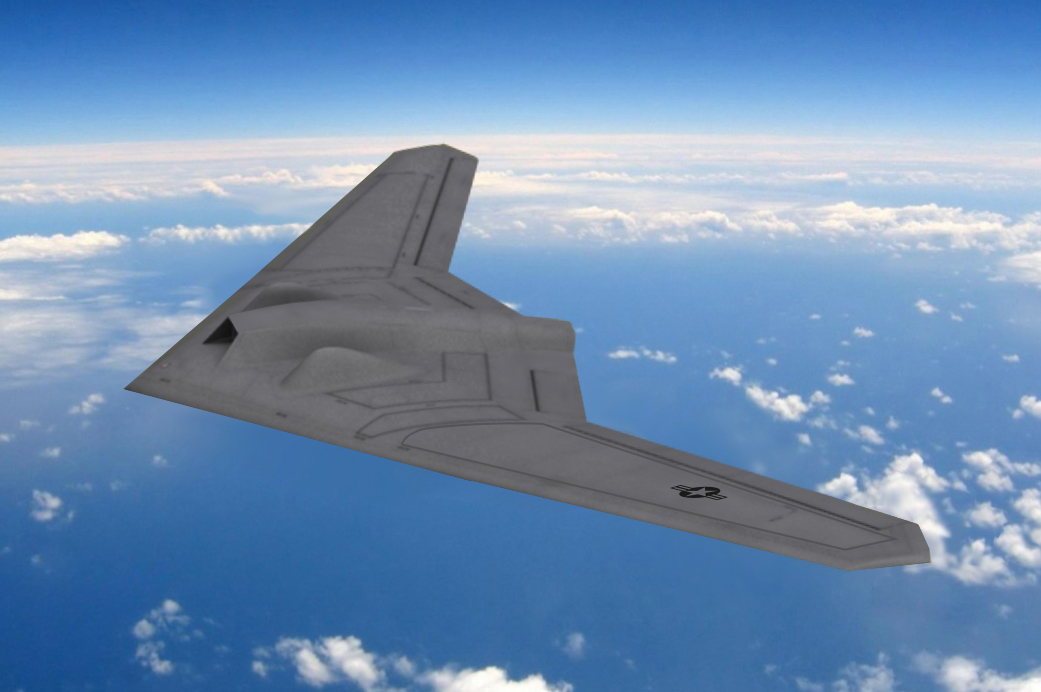
The Lockheed Martin RQ-170 Sentinel, nicknamed Wraith, is an American unmanned aerial vehicle (UAV) developed by Lockheed Martin and operated by the United States Air Force (USAF) for the Central Intelligence Agency (CIA). While the USAF has released few details on the UAV's design or capabilities, defense analysts believe that it is a stealth aircraft fitted with aerial reconnaissance equipment. Introduced in 2007, it was deployed to Afghanistan in late 2007, and to South Korea two years later, in September 2009. Some images and details of the aircraft were released after Iran captured an RQ-170 in 2011. It has a flying wing design, and uses a single engine, speculated to be either a General Electric TF34 turbofan or a Garrett TFE731.
The RQ-170 Sentinel was developed by Lockheed Martin's Skunk Works as a stealth unmanned aerial vehicle (UAV). Journalists have noted design similarities between the RQ-170 and previous stealth and UAV programs such as the Lockheed Martin RQ-3 DarkStar and Polecat. An Air Force official said, "It's the same concept as [the RQ-3] DarkStar, it's stealthy, and it uses the same apertures and data links, only it's bigger." It is a tailless flying wing aircraft with pods built into the upper surface of each wing. According to the United States Army Training Circular 3-01.80, the Sentinel has a wingspan of 65 feet 7 inches (20 m), and is 14 feet 9 inches (4.50 m) long. In a December 2012 report, journalist David Axe stated that "20 or so" RQ-170s had been built.
The "RQ" designation (R for reconnaissance, Q for unmanned) indicates that the RQ-170 Sentinel does not carry weapons. Aviation Week & Space Technology's David A. Fulghum believes that the UAV is probably a "tactical, operations-oriented platform and not a strategic intelligence-gathering design".
The USAF confirmed the "grainy photos of a gray, flying-wing-typed unmanned airplane near Kandahar Airfield." Since then, this aircraft has been known as "The Beast of Kandahar" in relation to the sighting of the RQ-170 Sentinel on 4 December 2009. A USAF colonel subsequently commented that RQ-170 is separate from the MQ-X program, which has yet to determine stealth or powerplant requirements, and thus the Sentinel will not replace the General Atomics MQ-1 Predator and General Atomics MQ-9 Reaper drones. In 2021, the 432nd Air Expeditionary Wing made a statement in which they said that "the 432nd AEW has ... successfully deployed and redeployed RQ-170 Sentinel forces."
The RQ-170 is a flying wing design containing a single (as yet classified) engine, and was estimated in 2009 by Aviation Week as having a wingspan of approximately 66 feet (20 m). Its takeoff weight is estimated as being greater than the RQ-3 DarkStar's, which was 8,500 pounds (3,900 kg). The design lacks several elements common to stealth engineering, such as zigzag edged landing gear doors and sharp leading edges, and the exhaust is not shielded by the wing. Aviation Week postulates that these elements suggest the designers have avoided "highly sensitive technologies" due to the near certainty of eventual operational loss inherent with a single engine design and a desire to avoid the risk of compromising leading edge technology. The publication also suggests that the medium-grey color implies a mid-altitude ceiling, unlikely to exceed 50,000 feet (15,000 m), since a higher ceiling would normally be painted darker for concealment. The postulated weight and ceiling parameters suggests the possible use of a General Electric TF34 engine, or a variant in the airframe.
On the basis of the few publicly available photographs of the RQ-170, aviation expert Bill Sweetman has assessed that the UAV is equipped with an electro-optical/infrared sensor and possibly an active electronically scanned array (AESA) radar mounted in its belly fairing. He has also speculated that the two undercarriage fairings over the UAV's wings may house datalinks and that the belly fairing could be designed for modular payloads, allowing the UAV to be used for strike missions and/or electronic warfare. The New York Times has reported that the RQ-170 is "almost certainly" equipped with communications intercept equipment, as well as highly sensitive hyperspectral sensors capable of detecting very small amounts of radioactive isotopes and chemicals that may indicate the existence of nuclear weapons facilities.
Following Iranian claims of downing an RQ-170 near the Afghan border in December 2011, Iranian TV showed video footage of what appears to be an advanced unmanned U.S. aircraft that most closely resembles the RQ-170 UAV. In the footage, a member of the Iranian Revolutionary Guard released dimensions of the aircraft, including a wingspan of about 26 metres (85 ft), a height of 1.84 metres (6.0 ft), and a length of 4.5 metres (15 ft).
The 30th Reconnaissance Squadron was the first unit to operate RQ-170 Sentinels. Based at Tonopah Test Range Airport in Nevada, this squadron was activated on 1 September 2005. RQ-170 Sentinels have been deployed to Afghanistan, where one was sighted at Kandahar Airfield in late 2007. This sighting, and the Sentinel's secret status at the time, led Sweetman to dub it the "Beast of Kandahar". The UAV being deployed to Afghanistan, despite the Taliban having no radar, led to speculation that the aircraft was used to spy on Pakistan or Iran. Phil Finnegan, a UAV analyst at an aerospace consulting firm, suggests the stealth capabilities of the Sentinel are being used to fly in nearby countries. Iran has an air defense system that would require stealth technology to penetrate.
Hub AI
Lockheed Martin RQ-170 Sentinel AI simulator
(@Lockheed Martin RQ-170 Sentinel_simulator)
Lockheed Martin RQ-170 Sentinel
The Lockheed Martin RQ-170 Sentinel, nicknamed Wraith, is an American unmanned aerial vehicle (UAV) developed by Lockheed Martin and operated by the United States Air Force (USAF) for the Central Intelligence Agency (CIA). While the USAF has released few details on the UAV's design or capabilities, defense analysts believe that it is a stealth aircraft fitted with aerial reconnaissance equipment. Introduced in 2007, it was deployed to Afghanistan in late 2007, and to South Korea two years later, in September 2009. Some images and details of the aircraft were released after Iran captured an RQ-170 in 2011. It has a flying wing design, and uses a single engine, speculated to be either a General Electric TF34 turbofan or a Garrett TFE731.
The RQ-170 Sentinel was developed by Lockheed Martin's Skunk Works as a stealth unmanned aerial vehicle (UAV). Journalists have noted design similarities between the RQ-170 and previous stealth and UAV programs such as the Lockheed Martin RQ-3 DarkStar and Polecat. An Air Force official said, "It's the same concept as [the RQ-3] DarkStar, it's stealthy, and it uses the same apertures and data links, only it's bigger." It is a tailless flying wing aircraft with pods built into the upper surface of each wing. According to the United States Army Training Circular 3-01.80, the Sentinel has a wingspan of 65 feet 7 inches (20 m), and is 14 feet 9 inches (4.50 m) long. In a December 2012 report, journalist David Axe stated that "20 or so" RQ-170s had been built.
The "RQ" designation (R for reconnaissance, Q for unmanned) indicates that the RQ-170 Sentinel does not carry weapons. Aviation Week & Space Technology's David A. Fulghum believes that the UAV is probably a "tactical, operations-oriented platform and not a strategic intelligence-gathering design".
The USAF confirmed the "grainy photos of a gray, flying-wing-typed unmanned airplane near Kandahar Airfield." Since then, this aircraft has been known as "The Beast of Kandahar" in relation to the sighting of the RQ-170 Sentinel on 4 December 2009. A USAF colonel subsequently commented that RQ-170 is separate from the MQ-X program, which has yet to determine stealth or powerplant requirements, and thus the Sentinel will not replace the General Atomics MQ-1 Predator and General Atomics MQ-9 Reaper drones. In 2021, the 432nd Air Expeditionary Wing made a statement in which they said that "the 432nd AEW has ... successfully deployed and redeployed RQ-170 Sentinel forces."
The RQ-170 is a flying wing design containing a single (as yet classified) engine, and was estimated in 2009 by Aviation Week as having a wingspan of approximately 66 feet (20 m). Its takeoff weight is estimated as being greater than the RQ-3 DarkStar's, which was 8,500 pounds (3,900 kg). The design lacks several elements common to stealth engineering, such as zigzag edged landing gear doors and sharp leading edges, and the exhaust is not shielded by the wing. Aviation Week postulates that these elements suggest the designers have avoided "highly sensitive technologies" due to the near certainty of eventual operational loss inherent with a single engine design and a desire to avoid the risk of compromising leading edge technology. The publication also suggests that the medium-grey color implies a mid-altitude ceiling, unlikely to exceed 50,000 feet (15,000 m), since a higher ceiling would normally be painted darker for concealment. The postulated weight and ceiling parameters suggests the possible use of a General Electric TF34 engine, or a variant in the airframe.
On the basis of the few publicly available photographs of the RQ-170, aviation expert Bill Sweetman has assessed that the UAV is equipped with an electro-optical/infrared sensor and possibly an active electronically scanned array (AESA) radar mounted in its belly fairing. He has also speculated that the two undercarriage fairings over the UAV's wings may house datalinks and that the belly fairing could be designed for modular payloads, allowing the UAV to be used for strike missions and/or electronic warfare. The New York Times has reported that the RQ-170 is "almost certainly" equipped with communications intercept equipment, as well as highly sensitive hyperspectral sensors capable of detecting very small amounts of radioactive isotopes and chemicals that may indicate the existence of nuclear weapons facilities.
Following Iranian claims of downing an RQ-170 near the Afghan border in December 2011, Iranian TV showed video footage of what appears to be an advanced unmanned U.S. aircraft that most closely resembles the RQ-170 UAV. In the footage, a member of the Iranian Revolutionary Guard released dimensions of the aircraft, including a wingspan of about 26 metres (85 ft), a height of 1.84 metres (6.0 ft), and a length of 4.5 metres (15 ft).
The 30th Reconnaissance Squadron was the first unit to operate RQ-170 Sentinels. Based at Tonopah Test Range Airport in Nevada, this squadron was activated on 1 September 2005. RQ-170 Sentinels have been deployed to Afghanistan, where one was sighted at Kandahar Airfield in late 2007. This sighting, and the Sentinel's secret status at the time, led Sweetman to dub it the "Beast of Kandahar". The UAV being deployed to Afghanistan, despite the Taliban having no radar, led to speculation that the aircraft was used to spy on Pakistan or Iran. Phil Finnegan, a UAV analyst at an aerospace consulting firm, suggests the stealth capabilities of the Sentinel are being used to fly in nearby countries. Iran has an air defense system that would require stealth technology to penetrate.
Recent media