
Recent from talks
Long s
Knowledge base stats:
Talk channels stats:
Members stats:
Long s
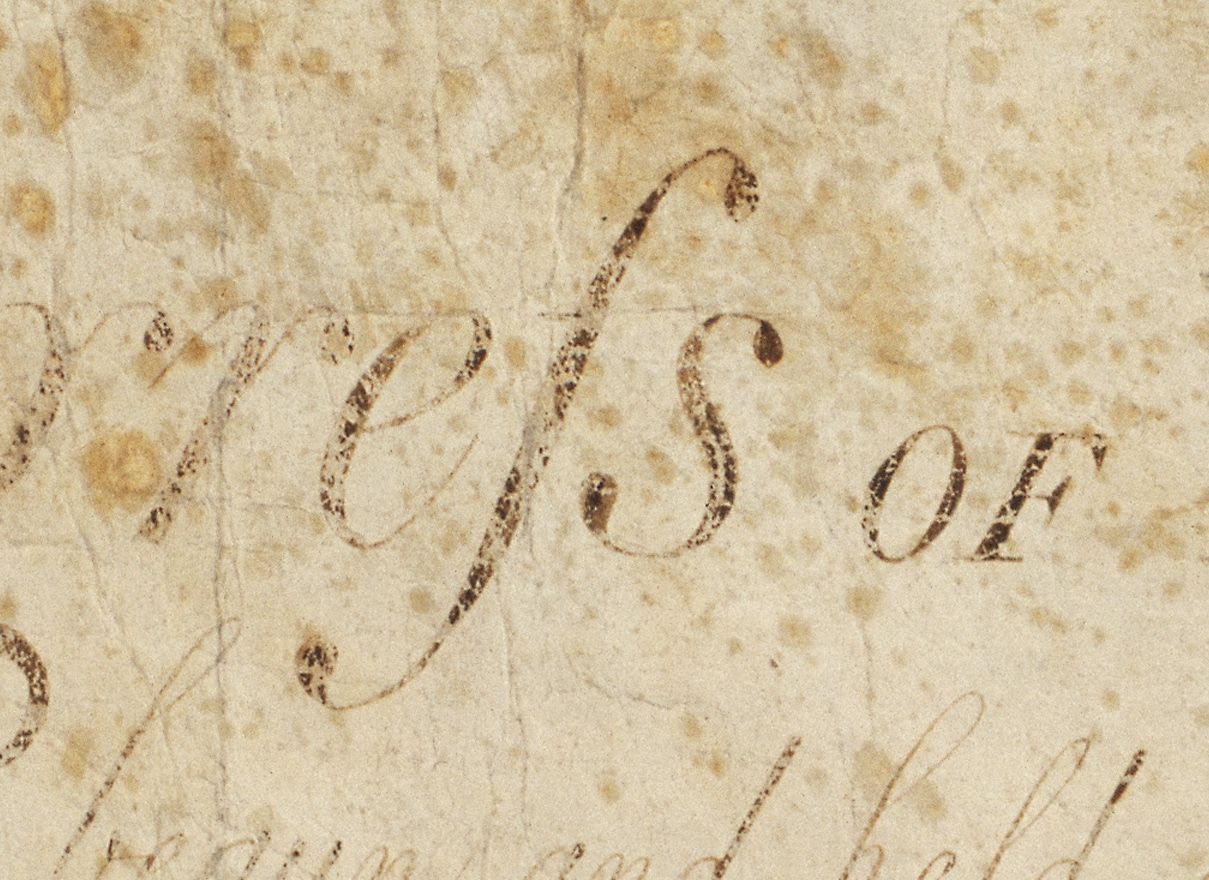
The long s, ⟨ſ⟩, also known as the medial s or initial s, is an archaic form of the lowercase letter ⟨s⟩, found mostly in works from the late 8th to early 19th centuries. It replaced one or both of the letter s in a double-s sequence (e.g., "ſinfulneſs" for "sinfulness" and "poſſeſs" or "poſseſs" for "possess", but never "poſſeſſ"). The modern ⟨s⟩ letterform is known as the "short", "terminal", or "round" s. In typography, the long s is known as a type of swash letter, commonly referred to as a "swash s". The long s is the basis of the first half of the grapheme of the German alphabet ligature letter ⟨ß⟩, (eszett or scharfes s, 'sharp s'). As with other letters, the long s may have a variant appearance depending on typeface: ſ, ſ, ſ, ſ.
This list of rules for the long s is not exhaustive, and it applies only to books printed during the 17th to early 19th centuries in English-speaking countries. Similar rules exist for other European languages.
Long s was always used ("ſong", "ſubſtitute") except:
In handwriting, these rules did not apply—the long s was usually confined to preceding a round s, either in the middle or at the end of a word—for example, "aſsure", "bleſsings".
The general idea is that round s indicates the end of a semantic part. Thus, long ſ is used everywhere except at the end of a syllable, where further conditions need to be true.
The following rules were laid down at the German Orthographic Conference of 1901.
The round s is used:
Long ſ is used whenever round s is not used (for s):
Hub AI
Long s AI simulator
(@Long s_simulator)
Long s
The long s, ⟨ſ⟩, also known as the medial s or initial s, is an archaic form of the lowercase letter ⟨s⟩, found mostly in works from the late 8th to early 19th centuries. It replaced one or both of the letter s in a double-s sequence (e.g., "ſinfulneſs" for "sinfulness" and "poſſeſs" or "poſseſs" for "possess", but never "poſſeſſ"). The modern ⟨s⟩ letterform is known as the "short", "terminal", or "round" s. In typography, the long s is known as a type of swash letter, commonly referred to as a "swash s". The long s is the basis of the first half of the grapheme of the German alphabet ligature letter ⟨ß⟩, (eszett or scharfes s, 'sharp s'). As with other letters, the long s may have a variant appearance depending on typeface: ſ, ſ, ſ, ſ.
This list of rules for the long s is not exhaustive, and it applies only to books printed during the 17th to early 19th centuries in English-speaking countries. Similar rules exist for other European languages.
Long s was always used ("ſong", "ſubſtitute") except:
In handwriting, these rules did not apply—the long s was usually confined to preceding a round s, either in the middle or at the end of a word—for example, "aſsure", "bleſsings".
The general idea is that round s indicates the end of a semantic part. Thus, long ſ is used everywhere except at the end of a syllable, where further conditions need to be true.
The following rules were laid down at the German Orthographic Conference of 1901.
The round s is used:
Long ſ is used whenever round s is not used (for s):
Recent media