
Recent from talks
Lovro von Matačić
Knowledge base stats:
Talk channels stats:
Members stats:
Lovro von Matačić
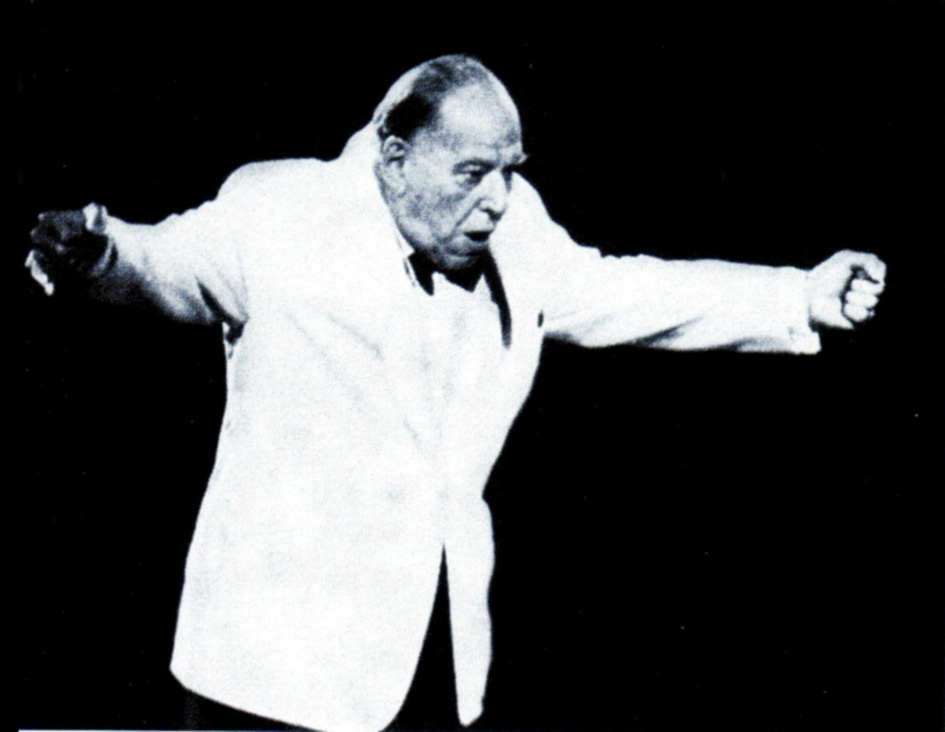
Lovro von Matačić (14 February 1899 – 4 January 1985) was a Croatian conductor and composer.
Lovro von Matačić was born in Sušak to a family that was granted a noble title in the early 17th century. Growing up, he was always surrounded by music and art: his father had a career as an opera singer, and his mother as an actress. After his parents’ divorce, the family moved to Vienna, where Lovro joined the Vienna Boys Choir of the Royal Court Chapel at the age of eight. The Choir's repertoire must have influenced his later affinities, but most of all through the music of Anton Bruckner. In the Piarists’ Gymnasium in Vienna he received training in piano, organ and music theory. His music education continued under distinguished teachers at the Vienna Hochschule für Musik, which he never attended formally, and from which he did not obtain any degrees.
Matačić proved his talent in practice when in 1916 he started volunteering as an accompanist at the Cologne Opera. When the war broke out, however, he volunteered for the army and also became an active revolutionary: in 1918 he joined the circle of left-oriented intellectuals in Vienna who recognized his artistic talent. He already had several works ready; he recited the poem Vigilia to his colleagues, and he was sixteen when the Tonkünstlerorchester of the Vienna Musikverein conducted by Bernhard Paumgartner premiered his Fantasy for the Orchestra.
Not many of Matačić's compositions have been completely preserved, although he did include some of them in his programs after becoming a distinguished conductor – such as the Confrontation Symphony or the Konjuh planina Cantata. After the war, he made a living mostly by playing in cafés, writing reviews, and by short-term conducting engagements in Osijek, Zagreb and Novi Sad, where he served the required military service as a military musician. Even then, his performances were marked with opera pieces and a vocal repertoire, but he did not find a permanent position until 1922 when he was employed by the Ljubljana Opera. In the meantime, he married Karla Dubska, a Czech singer who introduced him to the golden era of Czech music. His first success in Ljubljana was the performance of Leoš Janáček's opera Jenůfa, which would subsequently become one of the most often performed operas of Matačić's repertoire.
After Ljubljana, his engagements and successes lined up: with the Belgrade Opera and the Obilić Academic Choir, his first appearance in front of the Zagreb Philharmonic Orchestra (1927) and the Vienna Symphonic Orchestra at the Konzerthaus (1928), the Latvian National Opera in Riga, and the more permanent move to Zagreb in 1932 where he spread his activities to opera, symphony, and choir repertoire.
In 1936, Matačić conducted the Berlin Philharmonic and became the orchestra's regular guest. In 1938 he left the position of the permanent conductor at the Croatian National Theatre in Zagreb to become the director of the Belgrade Opera and the chief conductor of the Belgrade Philharmonic.
During World War II, Matačić spent most of the time in Zagreb as an army officer, but also continued conducting: he appeared in Zagreb with all major local orchestras, as well as in Vienna and Berlin. He was the Inspector of Croatian Army's music ensembles and was in charge of the entire corpus of military music in Croatia. His last concert before he was arrested was two weeks prior to the capitulation of Germany – on 23 April 1945 he appeared with the State Radio Orchestra. He always declined to comment in detail on his status during and after the war. In more than a year spent in prison, he was once again given a chance to work in music – he led the prison orchestra and choir. After his second wife Elizabeta Lilly Levenson, whom he married in 1933, managed to obtain a pardon for him, he relocated to Skopje in 1948.
Until 1954, when he managed to get an approval from Tito to be issued a passport, his activities in the former country were limited to Rijeka and Ljubljana, but soon his career gained full international momentum. The recording in 1954 of highlights from Richard Strauss's Arabella (with Elisabeth Schwarzkopf) in London for the Columbia label marked a new beginning in the conductor's life. He replaced Herbert von Karajan for that recording and afterwards signed a five-year contract with the record company. The following year he replaced Karl Böhm at the Bavarian State Opera in Munich for a triumphal performance of Strauss's Ariadne on Naxos. Appearances in Berlin, Stuttgart, Augsburg, Salzburg, Graz and elsewhere followed, where he conducted concert programs, operas, and often even directed the productions. He was invited to the Dresden State Chapel, State Opera of East Berlin, and to tours around Europe, including Ljubljana, Split, and Dubrovnik.
Hub AI
Lovro von Matačić AI simulator
(@Lovro von Matačić_simulator)
Lovro von Matačić
Lovro von Matačić (14 February 1899 – 4 January 1985) was a Croatian conductor and composer.
Lovro von Matačić was born in Sušak to a family that was granted a noble title in the early 17th century. Growing up, he was always surrounded by music and art: his father had a career as an opera singer, and his mother as an actress. After his parents’ divorce, the family moved to Vienna, where Lovro joined the Vienna Boys Choir of the Royal Court Chapel at the age of eight. The Choir's repertoire must have influenced his later affinities, but most of all through the music of Anton Bruckner. In the Piarists’ Gymnasium in Vienna he received training in piano, organ and music theory. His music education continued under distinguished teachers at the Vienna Hochschule für Musik, which he never attended formally, and from which he did not obtain any degrees.
Matačić proved his talent in practice when in 1916 he started volunteering as an accompanist at the Cologne Opera. When the war broke out, however, he volunteered for the army and also became an active revolutionary: in 1918 he joined the circle of left-oriented intellectuals in Vienna who recognized his artistic talent. He already had several works ready; he recited the poem Vigilia to his colleagues, and he was sixteen when the Tonkünstlerorchester of the Vienna Musikverein conducted by Bernhard Paumgartner premiered his Fantasy for the Orchestra.
Not many of Matačić's compositions have been completely preserved, although he did include some of them in his programs after becoming a distinguished conductor – such as the Confrontation Symphony or the Konjuh planina Cantata. After the war, he made a living mostly by playing in cafés, writing reviews, and by short-term conducting engagements in Osijek, Zagreb and Novi Sad, where he served the required military service as a military musician. Even then, his performances were marked with opera pieces and a vocal repertoire, but he did not find a permanent position until 1922 when he was employed by the Ljubljana Opera. In the meantime, he married Karla Dubska, a Czech singer who introduced him to the golden era of Czech music. His first success in Ljubljana was the performance of Leoš Janáček's opera Jenůfa, which would subsequently become one of the most often performed operas of Matačić's repertoire.
After Ljubljana, his engagements and successes lined up: with the Belgrade Opera and the Obilić Academic Choir, his first appearance in front of the Zagreb Philharmonic Orchestra (1927) and the Vienna Symphonic Orchestra at the Konzerthaus (1928), the Latvian National Opera in Riga, and the more permanent move to Zagreb in 1932 where he spread his activities to opera, symphony, and choir repertoire.
In 1936, Matačić conducted the Berlin Philharmonic and became the orchestra's regular guest. In 1938 he left the position of the permanent conductor at the Croatian National Theatre in Zagreb to become the director of the Belgrade Opera and the chief conductor of the Belgrade Philharmonic.
During World War II, Matačić spent most of the time in Zagreb as an army officer, but also continued conducting: he appeared in Zagreb with all major local orchestras, as well as in Vienna and Berlin. He was the Inspector of Croatian Army's music ensembles and was in charge of the entire corpus of military music in Croatia. His last concert before he was arrested was two weeks prior to the capitulation of Germany – on 23 April 1945 he appeared with the State Radio Orchestra. He always declined to comment in detail on his status during and after the war. In more than a year spent in prison, he was once again given a chance to work in music – he led the prison orchestra and choir. After his second wife Elizabeta Lilly Levenson, whom he married in 1933, managed to obtain a pardon for him, he relocated to Skopje in 1948.
Until 1954, when he managed to get an approval from Tito to be issued a passport, his activities in the former country were limited to Rijeka and Ljubljana, but soon his career gained full international momentum. The recording in 1954 of highlights from Richard Strauss's Arabella (with Elisabeth Schwarzkopf) in London for the Columbia label marked a new beginning in the conductor's life. He replaced Herbert von Karajan for that recording and afterwards signed a five-year contract with the record company. The following year he replaced Karl Böhm at the Bavarian State Opera in Munich for a triumphal performance of Strauss's Ariadne on Naxos. Appearances in Berlin, Stuttgart, Augsburg, Salzburg, Graz and elsewhere followed, where he conducted concert programs, operas, and often even directed the productions. He was invited to the Dresden State Chapel, State Opera of East Berlin, and to tours around Europe, including Ljubljana, Split, and Dubrovnik.
Recent media