



Community hub
Wikipedia
Marius Moga
View on Wikipedia
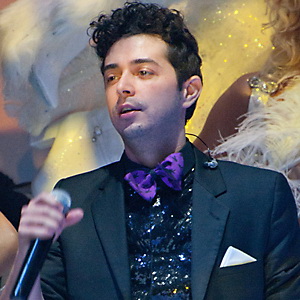
Marius Moga (Romanian pronunciation: [ˈmarjus ˈmoɡa]) is a Romanian singer, Grammy nominated[4][5] songwriter and producer and television personality.[6][7] He writes and produces music in various styles and genres, especially pop, R&B and club music. In 2011, he became the judge and mentor of the reality singing show Vocea României.
Key Information


In 2003 the artist was chosen by Walt Disney Pictures Romania to sing the main theme from the series Chip 'n Dale: Rescue Rangers.[8]
Personal life
[edit]Moga began dating Romanian actress Iulia Vântur in 2007, however the two ended their relationship in February 2009.[9][10] The couple rekindled their romance later that year but broke up again in 2011.[11][12] In December 2013, Moga started a relationship with Pro TV news reporter Bianca Lăpuște.[13] The two announced their engagement in November 2014 at Vocea României and were married on 04 July 2015.[14] On 14 October 2015, the couple welcomed their first child, a daughter.[15] As of February 2020, Moga resides with his wife and daughter in Cernica.[16]
Discography
[edit]As lead artist
[edit]| Title | Year | Peak chart positions | Album | |||||||||||
|---|---|---|---|---|---|---|---|---|---|---|---|---|---|---|
| ROU [17] |
MDA TV [18] | |||||||||||||
| "Pe barba mea"[19] | 2014 | 1 | 14 | Non-album singles | ||||||||||
| "Suntem păsări călătoare"[20] (featuring Achi) |
2015 | — | — | |||||||||||
| "Mă doare la bass"[21] (featuring Shift and What's Up) |
2018 | 40 | — | |||||||||||
| "Ai grijă de femeia ta"[22] (featuring Smiley) |
2019 | 70 | — | |||||||||||
| "Vrei să te mint?"[23] (with Lora) |
2021 | 42 | — | |||||||||||
| "O dorință"[24] | 2022 | — | — | |||||||||||
| "—" denotes a release that did not chart or was not released in that territory. | ||||||||||||||
As featured artist
[edit]| Title | Year | Peak chart positions | Album | |||||||||||
|---|---|---|---|---|---|---|---|---|---|---|---|---|---|---|
| ROU [25] |
MDA [26] | |||||||||||||
| "Închide ochii"[27] (Cream featuring Marius Moga) |
2003 | — | — | Aștept... | ||||||||||
| "Știu ce îți place"[28] (Cream featuring Marius Moga and Matteo) |
2007 | 54 | — | 48 de ore | ||||||||||
| "Zoom/Bad Boys vs. Super Girls"[29] (Nevena featuring Marius Moga and NiVo) |
2009 | — | — | Non-album singles | ||||||||||
| "Allemasse"[30] (Lukone featuring deMoga) |
2011 | 40 | — | |||||||||||
| "Tot mai sus"[2] (Guess Who featuring deMoga) |
1 | 8 | Tot mai sus | |||||||||||
| "Electronic Symphony"[31] (Lukone featuring deMoga and Liviu Teodorescu) |
2012 | — | — | Non-album single | ||||||||||
| "Sus pe toc"[32] (Shift featuring Marius Moga) |
2013 | 1 | — | Adevărul | ||||||||||
| "Atâta timp cât mă iubești"[33] (Andra featuring Marius Moga) |
2 | 13 | Non-album singles | |||||||||||
| "O facem pentru voi"[34] (YouTube Vloggers featuring Marius Moga) |
2015 | — | — | |||||||||||
| "Toată vara"[35] (Robert Toma featuring Marius Moga) |
— | — | ||||||||||||
| "Teniși"[36] (Ciprenko featuring Marius Moga) |
2016 | — | — | |||||||||||
| "Bate, bate"[37] (Alexandra Ungureanu featuring Marius Moga) |
2018 | — | — | |||||||||||
| "—" denotes a release that did not chart or was not released in that territory. | ||||||||||||||
Guest appearances
[edit]| Title | Year | Album |
|---|---|---|
| "Fără gheață nu e viață"[38] (TNT featuring Marius Moga) |
2002 | Exploziv |
| "7 Seconds"[39][40] (Buppy featuring Marius Moga and Simplu) |
2004 | Universal Reggae Menu, Vol. 1 |
| "Everything We Do"[40] (Buppy featuring Marius Moga and Don Baxter) |
2006 | |
| "Where Do You Keep Your Love"[40] (Buppy featuring Marius Moga) | ||
| "De ai fi un cântec..."[41] (Smiley featuring Marius Moga) |
2008 | În lipsa mea |
| "Come This Way"[42] (Zero featuring Marius Moga) |
2009 | Sunny Days |
Songwriting credits
[edit]Awards and nominations
[edit]| Organization | Year | Nominated work | Category | Result[a] | Ref. |
|---|---|---|---|---|---|
| 100 Greatest Romanians | 2006 | Marius Moga | N/a | 85th place | [43] |
| Balkan Music Awards | 2010 | "Colors" | Best Video in the Balkans | Nominated | [44] |
| Media Music Awards | 2014 | Marius Moga | MTV Award | Won | [45] |
| MTV Romania Music Awards | 2003 | Marius Moga | Best Male | Won | [46] |
| Radio România Actualităţi Awards | 2006 | Marius Moga | Best Songwriter | Nominated | [47] |
| 2007 | "Falling Asleep" | Best Pop/Dance Song | Nominated | [48] | |
| "Oficial îmi merge bine" | Won | ||||
| Marius Moga | Best Songwriter | Won | |||
| 2008 | N3XT | Best Pop/Dance Album | Nominated | [49] | |
| "Afrika" | Best Pop/Dance Song | Nominated | |||
| "Când sunt cu tine" | Nominated | ||||
| Marius Moga | Best Songwriter | Won | |||
| 2010 | "Colors" | Best Pop/Dance Song | Nominated | [50] | |
| 2013 | "Ce e dragostea?" | Best Message | Nominated | [51] | |
| Best Pop Song | Nominated | ||||
| Marius Moga | Best Songwriter | Won | |||
| 2014 | Marius Moga | Best Songwriter | Nominated | [52] | |
| 2015 | "Pe barba mea" | Best Message | Nominated | [53] | |
| Best Pop Song | Nominated | ||||
| Marius Moga | Best Songwriter | Nominated | |||
| 2016 | "În oglindă" | Best Duo/Group Song | Nominated | [54] [55] | |
| "Niciodată să nu spui niciodată" | Best Pop Song | Won | |||
| Song of the Year | Nominated | ||||
| Marius Moga | Best Songwriter | Nominated | |||
| "Avioane de hârtie" | Best Video | Won | |||
| Romanian Music Awards | 2011 | "Allemasse" | Best Video | Nominated | [56] |
| 2012 | "Electronic Symphony" | Best Video | Won | [57] | |
| 2014 | "Pe barba mea" | Best Male Song | Nominated | [58] | |
| "Atâta timp cât mă iubeşti" | Best Pop | Nominated | |||
| Best Song | Nominated |
Notes
[edit]- ^ Awards in certain categories do not have prior nominations and only winners are announced by the jury. For simplification and to avoid errors, each award in this list has been presumed to have had a prior nomination.
References
[edit]- ^ a b "Lista membrilor UCMR–ADA" (in Romanian). Uniunea Compozitorilor și Muzicologilor din România – Asociația pentru Drepturi de Autor. p. 123. Archived from the original on 22 February 2022. Retrieved 22 February 2022.
- ^ a b "Videoclip: Guess Who feat. deMoga – Tot mai sus" (in Romanian). Urban.ro. 14 June 2011. Archived from the original on 29 March 2022. Retrieved 29 March 2022.
- ^ Reverse (Booklet). Morandi. Roton/Mini Maxi Mo Records. 2005. 4823022800016.
{{cite AV media}}: CS1 maint: others in cite AV media (notes) (link) - ^ "Marius Moga, nominalizat la premiile Grammy. Cu ce artişti va lupta pentru un premiu - VIDEO". 7 December 2012.
- ^ "Video - Marius Moga, nominalizat la Grammy. Cele mai importante premii muzicale se decerneaza la noapte - Știrile ProTV". stirileprotv.ro.
- ^ "Cele mai bune piese compuse de Marius Moga". OK! (in Romanian). 12 December 2015. Archived from the original on 30 August 2017. Retrieved 28 March 2016.
- ^ "Fiul Andreei Esca in noul videoclip Guess Who, 'Tot Mai Sus'! VIDEO". Pro FM (in Romanian). 15 June 2011. Retrieved 5 July 2011.
{{cite news}}: CS1 maint: deprecated archival service (link) - ^ "20 de ani de magie de la primul film Disney dublat în limba română - CineMagia.ro". Archived from the original on 22 September 2020. Retrieved 10 August 2020.
- ^ Mitan, Madalina (30 October 2007). "In liceu, Marius Moga a fost terorizat de profesoare" [In high school, Marius Moga was scared of the teachers] (in Romanian). Ziare. Archived from the original on 9 April 2010. Retrieved 30 May 2022.
- ^ "Iulia Vantur si Marius Moga s-au despartit" [Iulia Vantur and Marius Moga have broken up]. Antena 1 (in Romanian). 18 February 2009. Archived from the original on 30 May 2022. Retrieved 30 May 2022.
- ^ "Iulia Vantur si Marius Moga se iubesc din nou" [Iulia Vantur and Marius Moga are loving each other again]. Viva! (in Romanian). 9 June 2009. Archived from the original on 18 June 2021. Retrieved 30 May 2022.
- ^ Florin, L. (1 September 2011). "Iulia Vantur si Marius Moga s-au despartit! Iar!" [Iulia Vantur and Marius Moga have broken up! Again!] (in Romanian). Acasă.ro. Archived from the original on 30 May 2022. Retrieved 30 May 2022.
- ^ "Iata noua iubita a lui Marius Moga!" [Here is Marius Moga's new girlfriend]. Bună Ziua Iași (in Romanian). 10 December 2013. Archived from the original on 30 May 2022. Retrieved 30 May 2022.
- ^ Constanda, Alexandra (7 July 2015). "Marius Moga s-a căsătorit cu Bianca Lăpuşte: cei doi aşteaptă o fetiţă" [Marius Moga married Bianca Lăpuşte: the two are awaiting a daughter] (in Romanian). Adevărul. Archived from the original on 15 November 2015. Retrieved 30 May 2022.
- ^ "Marius Moga si Bianca Lăpuşte au devenit parinti" [Marius Moga and Bianca Lăpuşte have become parents]. Pro TV (in Romanian). 15 October 2015. Archived from the original on 19 November 2020. Retrieved 30 May 2022.
- ^ Lixandru, Livia (2 November 2020). "Marius Moga și Bianca Lăpuște s-au mutat în afara Bucureștiului" [Marius Moga and Bianca Lăpuşte have moved outside of Bucharest]. Libertatea (in Romanian). Archived from the original on 18 April 2021. Retrieved 30 May 2022.
- ^ For peak positions in Romania:
- For "Pe barba mea": "Kiss FM - Asculti doar HITURI!" (in Romanian). Kiss FM. Archived from the original on 19 August 2014. Retrieved 28 March 2022. Note: The user may select 'Topuri' to view the chart.
- For "Mă doare la bass": Arvunescu, Victor (16 July 2018). "Top Airplay 100 – Mahmut Orhan, ce ne faci?" [Top Airplay 100 – Mahmut Orhan, what are you doing to us?] (in Romanian). Un site de muzică. Archived from the original on 16 July 2018. Retrieved 16 July 2018.
- For "Ai grijă de femeia ta": Arvunescu, Victor (30 September 2019). "Top Airplay 100 – Señorita aduce vara în mijlocul toamnei!" [Top Airplay 100 – Señorita brings summer in autumn!] (in Romanian). Un site de muzică. Archived from the original on 30 September 2019. Retrieved 2 October 2019.
- For "Vrei să te mint?": Arvunescu, Victor (4 October 2021). "Top Airplay 100 - Lună nouă, lider nou! Carla's Dreams şi EMAA vin pe primul loc!" [Top Airplay 100 – New month, new number one! Carla's Dreams and EMAA arrive at number one!] (in Romanian). Un site de muzică. Archived from the original on 4 October 2021. Retrieved 30 October 2021.
- ^ "Media Forest - Weekly Charts". Media Forest. 22 September 2014. Archived from the original on 2 October 2014. Retrieved 2 April 2022.
- ^ "Marius Moga – Pe barba mea (primul videoclip solo)" [Marius Moga – Pe barba mea (first solo music video)] (in Romanian). Urban.ro. 24 May 2014. Archived from the original on 13 March 2022. Retrieved 13 March 2022.
- ^ "Suntem păsări călătoare (feat. Achi) – Single by Marius Moga on iTunes". iTunes Store. Retrieved 29 March 2022.
- ^ "Mă doare la bass (feat. Shift and What's Up) – Single by Marius Moga on iTunes". iTunes Store. Archived from the original on 29 March 2022. Retrieved 29 March 2022.
- ^ "Ai grijă de femeia ta (feat. Smiley) – Single by Marius Moga on iTunes". iTunes Store. Archived from the original on 29 March 2022. Retrieved 29 March 2022.
- ^ "Vrei să te mint? – Single by Lora and Marius Moga on iTunes". iTunes Store. Archived from the original on 29 March 2022. Retrieved 29 March 2022.
- ^ "O dorință – Single by Marius Moga on iTunes". iTunes Store. Archived from the original on 29 March 2022. Retrieved 29 March 2022.
- ^ For peak positions in Romania:
- For "Știu ce îți place": "Romanian Top 100" (in Romanian). Romanian Top 100. Archived from the original on 4 June 2007. Retrieved 12 June 2018.
- For "Allemasse": "Romanian Top 100 – editia 26 iunie 2011" (in Romanian). Andreea.fm. 29 June 2011. Archived from the original on 6 July 2011. Retrieved 3 April 2022.
- For "Tot mai sus": "Kiss FM | Romanian Top 100" (in Romanian). Kiss FM. Archived from the original on 1 June 2012. Retrieved 17 May 2020. Note: User may download the podcast named 'Romanian Top 100 - 11 sept 2011 partea 6' by clicking on 'Download' on the side menu.
- For "Sus pe toc": "KissFM | Airplay 100" (in Romanian). Kiss FM. 27 September 2013. Archived from the original on 5 October 2013. Retrieved 28 March 2022.
- For "Atâta timp cât mă iubești": "KissFM | Airplay 100" (in Romanian). Kiss FM. 3 February 2014. Archived from the original on 8 February 2014. Retrieved 28 March 2022.
- ^ For peak positions in Moldova:
- For "Tot mai sus": "Media Forest - Weekly Charts". Media Forest. 24 October 2011. Archived from the original on 5 November 2011. Retrieved 7 April 2022.
- For "Atâta timp cât mă iubești": "Media Forest - Weekly Charts". Media Forest. 17 March 2014. Archived from the original on 27 March 2014. Retrieved 7 April 2022.
- ^ "Închide ochii by Cream feat. Marius Moga". Amazon. Archived from the original on 29 March 2022. Retrieved 29 March 2022.
- ^ "Cream – Știu ce îți place (feat. Marius Moga & Matteo)". JioSaavn. January 2007. Archived from the original on 29 March 2022. Retrieved 29 March 2022.
- ^ "Zoom/Bad Boys vs. Super Girls (feat. Marius Moga & NiVo) - Single by Nevena on iTunes". iTunes Store. Retrieved 2 May 2022.
- ^ "Allemasse (feat. deMoga) – EP by Lukone on iTunes". iTunes Store. Archived from the original on 29 March 2022. Retrieved 29 March 2022.
- ^ "Electronic Symphony (feat. DeMoga & Liviu Teodorescu) - Single by Lukone on iTunes". iTunes Store. Archived from the original on 29 March 2022. Retrieved 29 March 2022.
- ^ "Sus pe toc (feat. Marius Moga) - Single by Shift on iTunes". iTunes Store. Archived from the original on 29 March 2022. Retrieved 29 March 2022.
- ^ "Atâta timp cât mă iubești (feat. Marius Moga) - Single by Andra on iTunes". iTunes Store. Archived from the original on 29 March 2022. Retrieved 29 March 2022.
- ^ "Marius Moga si vloggerii romani – O facem pentru voi (videoclip oficial)" [Marius Moga and Romanian vloggers – O facem pentru voi (official video)] (in Romanian). Urban.ro. 9 April 2015. Archived from the original on 21 March 2022. Retrieved 21 March 2022.
- ^ "Toată vara (feat. Marius Moga) - Single by Robert Toma on iTunes". iTunes Store. Archived from the original on 29 March 2022. Retrieved 29 March 2022.
- ^ "Teniși (feat. Marius Moga) - Single by Ciprenko on iTunes". iTunes Store. Archived from the original on 29 March 2022. Retrieved 29 March 2022.
- ^ "Bate bate (feat. Marius Moga) - Single by Alexandra Ungureanu on iTunes". iTunes Store. Retrieved 16 April 2022.
- ^ Exploziv (Liner notes). TNT. Nova Music Entertainment. 2002. 5948202001201.
{{cite AV media notes}}: CS1 maint: others in cite AV media (notes) (link) - ^ Vulpescu, Andrei (18 October 2004). "Marius Moga a compus piesa care promoveaza filmul 7 Seconds" [Marius Moga wrote the song which promotes 7 Seconds]. Curentul (in Romanian). Archived from the original on 5 April 2022. Retrieved 5 April 2022.
- ^ a b c "Universal Reggae Menu, Vol. 1". Qobuz. Archived from the original on 4 April 2022. Retrieved 4 April 2022.
- ^ În lipsa mea (Booklet). Smiley. Cat Music. 2008. 6420565005281.
{{cite AV media notes}}: CS1 maint: others in cite AV media (notes) (link) - ^ Sunny Days (Liner notes). Zero. Roton/NRG!A. 2009. 5948204413026.
{{cite AV media notes}}: CS1 maint: others in cite AV media (notes) (link) - ^ "Cei mai mari Români" [The greatest Romanians] (in Romanian). TVR. Archived from the original on 17 July 2006. Retrieved 28 May 2022.
- ^ "Balkan Music Awards 2010". Balkan Music Awards. Archived from the original on 15 July 2014. Retrieved 21 November 2017.
- ^ Scris de Edi (19 September 2014). "Media Music Awards 2014: lista castigatori" [Media Music Awards 2014: winners list] (in Romanian). Urban.ro. Archived from the original on 25 September 2014. Retrieved 28 May 2022.
- ^ Vulpescu, Andrei (7 June 2003). "Unde sunt banii din industria muzicala romaneasca?" [Where are the money from the Romanian music industry?]. Curentul (in Romanian). Archived from the original on 28 May 2022. Retrieved 28 May 2022.
- ^ Scraba, Gabriela (19 January 2010). "Nominalizări şi premii din anul 2006" [The nominations and awards from 2006] (in Romanian). Radio România Actualități. Archived from the original on 10 April 2022. Retrieved 10 April 2022.
- ^ Scraba, Gabriela (19 January 2010). "Nominalizări şi premii din anul 2007" [The nominations and awards from 2007] (in Romanian). Radio România Actualități. Archived from the original on 10 April 2022. Retrieved 10 April 2022.
- ^ Scraba, Gabriela (19 January 2010). "Nominalizări şi premii din anul 2008" [The nominations and awards from 2008] (in Romanian). Radio România Actualități. Archived from the original on 10 April 2022. Retrieved 10 April 2022.
- ^ Scraba, Gabriela (3 February 2010). "Premiile muzicale Radio România Actualităţi 2010" [2010 Radio România Actualităţi awards] (in Romanian). Radio România Actualități. Archived from the original on 14 November 2013. Retrieved 10 April 2022.
- ^ Stancu, Răzvan (17 March 2013). "Ştefan Bănică, 'Artistul anului 2012'" [Ştefan Bănică, 'Artist of the year 2012'] (in Romanian). Radio România Actualități. Archived from the original on 27 August 2017. Retrieved 28 May 2022.
- ^ Iamandi, Ionuţ (23 March 2014). "Loredana, 'Artistul anului' la Premiile Muzicale Radio România" [Loredana, 'Artist of the year' at Radio România Awards] (in Romanian). Radio România Actualități. Archived from the original on 14 May 2022. Retrieved 28 May 2022.
- ^ Scraba, Gabriela (18 March 2015). "Nominalizările la Premiile Muzicale Radio România 2015" [The nominations at Radio România Awards 2015] (in Romanian). Radio România Actualități. Archived from the original on 14 May 2022. Retrieved 28 May 2022.
- ^ Scraba, Gabriela (17 February 2016). "Nominalizările la Premiile Muzicale Radio România 2016" [The nominations at Radio România Awards 2016] (in Romanian). Radio România Actualități. Archived from the original on 5 February 2022. Retrieved 28 May 2022.
- ^ "Lista completă a câștigătorilor Premiilor Muzicale Radio România 2016" [The complete list of Radio România Awards 2016 winners] (in Romanian). Radio România Actualități. 21 March 2016. Archived from the original on 5 February 2022. Retrieved 28 May 2022.
- ^ Scris de Edi (1 August 2011). "Nominalizarile Romanian Music Awards 2011" [Nominations at the Romanian Music Awards 2011] (in Romanian). Urban.ro. Archived from the original on 18 November 2015. Retrieved 7 February 2016.
- ^ Scris de Alex (9 July 2012). "Romanian Music Awards 2012 - Castigatorii!" [Romanian Music Awards 2012 - the winners!] (in Romanian). Urban.ro. Archived from the original on 26 February 2015. Retrieved 7 February 2016.
- ^ Tanasă, Raluca (27 August 2014). "Romanian Music Awards 2014: nominalizări, detalii despre vot" [Romanian Music Awards 2014: nominations, details about the voting] (in Romanian). Info Music. Archived from the original on 7 June 2015. Retrieved 7 February 2016.
External links
[edit]
- Marius Moga at IMDb
- Marius Moga at Discogs.com
- Marius Moga at Allmusic.com
| Authority control databases: Artists |
|---|


Grokipedia
Marius Moga
View on GrokipediaEarly life
Childhood and family
Marius Ioan Moga was born on December 30, 1981, in Alba Iulia, Romania, during the later years of the communist regime led by Nicolae Ceaușescu, which ended with the Romanian Revolution in December 1989.[8][9] Moga grew up in a modest family with roots in the rural village of Șugag in Alba County. His grandfather worked as a leatherworker (pielar) in Șugag, reflecting the family's working-class origins tied to traditional rural occupations.[10] His father, Ioan Moga, spent his youth playing the traditional fluier (flute) at a shepherd's hut (stână), learning the instrument from his own father and fostering an early appreciation for music in the family. Later, Ioan became a television director, a professor of photo-video techniques in Alba Iulia, a businessman, a real estate developer, and an innovator, eventually earning recognition as a citizen of honor in Alba Iulia for his contributions to the city.[10][11] Moga's mother worked in the medical system and was described as having an empathetic and bohemian personality.[11] As the only son in his immediate family until his younger brother was born, Moga experienced a somewhat solitary childhood in Alba Iulia, often spending time alone in his room. His parents supported his early creative pursuits by purchasing musical equipment and encouraging piano lessons, despite not coming from a lineage of professional artists—though a great-grandfather had founded and conducted an orchestra of shepherd flutists in Șugag.[11] His early years coincided with Romania's turbulent post-communist transition after the 1989 revolution, when he was eight years old, shaping a period of social and economic upheaval in his hometown.[9] Moga and his brother later extended the family's artistic inclinations in their own careers.[11]Education and early interests
Marius Moga attended the Colegiul Național "Horea, Cloșca și Crișan" in Alba Iulia, where he graduated from high school in 2000 with a baccalaureate average of 9.30.[12][13] Following high school, Moga pursued higher education and earned a degree in sociology, which he later connected to his understanding of music's social dynamics and audience interactions.[14][15] From a young age, Moga showed a deep fascination with music, surrounded by it in his family environment where his father introduced him to New Age genres popular in the 1990s, including works by artists like Jean-Michel Jarre, Isao Tomita, and Enigma.[14] He began with formal piano lessons but quickly developed self-taught skills in music production, experimenting with sequencers, synthesizers, and computers to compose independently.[2][14] This early exposure was bolstered by a family musical heritage, with his grandfather playing banjo and great-grandfather leading a local flute orchestra.[14] As a teenager in the late 1990s, Moga engaged in amateur musical pursuits, composing tracks alone at night and distributing demo CDs to radio stations in Bucharest in an effort to gain exposure before entering the professional scene.[14] These initial efforts reflected his passion for creating songs that could resonate widely, a dream he harbored since childhood.[16]Career
Beginnings in music
Marius Moga entered the professional music scene in the early 2000s as a composer and producer, becoming one of the pioneers of Romania's emerging pop music landscape. At the age of 18, he moved to Bucharest to pursue his career, quickly achieving his first number-one hit by writing and producing for the pop band Akcent, which was signed to Roton Romania. This collaboration marked his breakthrough, with the 2002 album În culori achieving commercial success in Romania.[2][17] In 2003, Moga expanded his visibility by singing the main theme for the Romanian version of the Disney animated series Chip 'n Dale: Rescue Rangers, selected by Walt Disney Pictures Romania for the project. This opportunity highlighted his vocal talents alongside his production skills during the nascent stages of his career.[2] Moga formed the eurodance duo Morandi in September 2004 with singer Andrei Ropcea (known as Randi), releasing their debut single "Love Me" later that year. The duo gained international traction with hits like "Angels" and "Be Free," culminating in a win for Best Romanian Act at the 2008 MTV Europe Music Awards.[2][18][19] Throughout the mid-2000s, Moga took on initial production roles for prominent Romanian artists, including Smiley and Andra, contributing to their early hits and establishing his reputation as a key figure in the local industry. His work with these artists involved crafting pop tracks that topped Romanian charts, solidifying his influence in the scene.[2]Solo career
Marius Moga's solo career as a performing artist began to take shape in the early 2010s, with his breakthrough coming through the 2011 single "Tot mai sus," a collaboration with rapper Guess Who that marked his emergence as a lead vocalist and performer. Released on September 20, 2011, the track blended hip-hop and pop elements, topping the Romanian airplay charts for 14 weeks and becoming one of the decade's most broadcast songs on television.[20] This success highlighted Moga's vocal abilities beyond production, paving the way for his independent releases. His official debut as a solo lead artist arrived with the single "Pe barba mea" in May 2014, a upbeat pop track that showcased his songwriting and performance style. The song quickly climbed the Romanian airplay charts, reaching number one on the Airplay 100 on August 10, 2014, and remaining a staple in his live sets.[21][22] By 2025, it had amassed over 2 million streams on Spotify, underscoring its enduring popularity.[23] Throughout his solo career, Moga has focused on releasing standalone singles and EPs rather than full-length studio albums, emphasizing catchy pop and dance tracks tailored for radio and streaming. Notable releases include "O dorință" in 2022, a romantic ballad that resonated with fans for its emotional depth, and more recent singles like "Hai, România!" in 2024, tying into national themes, and "Lumea-i Condusa de Femei" in 2025, addressing gender dynamics with a humorous twist. These tracks often feature Moga's signature production, blending electronic beats with accessible lyrics, and have collectively contributed to his reputation as a versatile solo act without specific gold or platinum certifications reported for individual releases.[24][25] Moga's live performances have centered on festival appearances and one-off shows promoting his solo material, rather than dedicated tours. In 2024, he delivered a high-energy set at the UNTOLD Festival in Cluj-Napoca, performing hits like "Pe barba mea" to large crowds on the Main Stage. Up to late 2025, he continued sporadic live engagements, including television appearances and smaller venues, maintaining momentum through his ongoing single releases without announcing a formal tour.[26]Production and songwriting
Marius Moga has established himself as a prominent producer and songwriter in the Romanian music industry, specializing in pop and urban genres through his Bucharest-based label, DeMoga Music. His productions frequently blend mainstream pop structures with electronic and club influences, adapting them to Romanian language contexts to appeal to local audiences.[2][25][1] In his studio work, Moga has contributed significantly to key domestic albums, including Smiley's 2008 release În lipsa mea, where he served as a primary composer and producer for tracks emphasizing catchy hooks and vocal harmonies. Similarly, he produced and composed for Andra's 2008 album Dragostea rămâne, incorporating layered vocal arrangements to enhance emotional delivery in pop tracks. These efforts reflect his approach to crafting hit formulas tailored for radio play and live performances in Romania.[27][28][29][30][31] Moga's songwriting process often involves co-authoring lyrics with collaborators, focusing on themes of love and relationships to create resonant emotional pop ballads that connect with Romanian listeners. Through his production credits, he has earned 12 gold and platinum discs, underscoring the commercial success of his domestic output. His solo productions similarly employ these pop-oriented techniques for a cohesive sound across projects.[32][33][4][34]Television and media
Marius Moga has been a prominent figure in Romanian television, particularly in music competition formats, where he has served as a coach and judge, mentoring emerging talents and shaping public perceptions of contemporary Romanian music.[2] He joined the inaugural season of Vocea României (The Voice of Romania) in 2011 as one of the original coaches, alongside Smiley, Horia Brenciu, and Loredana Groza, and continued in this role through seasons 1 to 6, ending in 2016.[3] During his tenure, Moga guided numerous contestants, including notable performers such as Sânziana Niculae, who reached the finale and finished as runner-up in season 3 (2013–2014), earning praise for her powerful vocals reminiscent of international artists like Shakira.[35] Another standout was British expat David Luke Michael Bryan, former lead singer of the Romanian Eurovision 2011 entry Hotel FM, who selected Moga as his coach during the blind auditions in season 2 (2012), aiming to advance his international career.[36] Beyond Vocea României, Moga expanded his television presence as a judge on X Factor România starting in the 2024 season, joining a panel that included Delia Matache, Puya, and Ștefan Bănică Jr., where he evaluated diverse musical acts across genres.[37] His judging style, characterized by constructive feedback rooted in his production expertise, has contributed to the show's focus on talent development in Romania's competitive music scene. In addition to on-screen roles, Moga has directed music videos for various artists, earning two MTV Best Video Awards for his visual storytelling that complements musical narratives in pop and R&B genres.[2] As a television personality, Moga's media appearances have solidified his influence on Romanian music trends, promoting innovative pop sounds and launching artists who blend local and global styles, thereby bridging his production background with broader cultural impact.[4]Other ventures
In addition to his core music production work, Marius Moga has established several entrepreneurial ventures that extend into music publishing, virtual production, and artificial intelligence applications for the entertainment industry. In 2003, he founded DeMoga Music, an independent Bucharest-based label and publishing company specializing in music production, artist management, and rights administration, which has supported the release of numerous Romanian pop and electronic tracks.[38][4] Moga maintains professional ties to major international publishers, including Universal Music Publishing Group, where he is listed as a songwriter and has collaborated on projects involving global artists and catalogs.[2] These connections have facilitated cross-border licensing and distribution for his compositions, enhancing the reach of Romanian music abroad. In 2021, Moga co-founded IREAL.ro, a virtual production studio that leverages augmented reality and digital tools to create immersive content for artists, influencers, and brands, marking an early foray into metaverse-enabled media production.[39][34] Building on this innovative trajectory, Moga co-founded Revocalize AI in 2024 alongside Sebastian Dobrincu, developing a voice transformation platform that enables AI-driven vocal cloning, tuning, and fan-generated integrations for streamlined music creation without traditional recording setups.[7][40] The tool focuses on ethical voice protection and customization, allowing users to generate studio-quality tracks in personalized voices, and has positioned Moga as a bridge between music artistry and emerging tech.[41] Moga has shared insights from these ventures through speaking engagements at industry events, such as the Creativity4Better conference and the FOMO Festival in 2024 and 2025, where he discussed the intersection of music technology and entrepreneurship.[4][39]Personal life
Relationships and marriage
Marius Moga began a high-profile relationship with Romanian actress and television presenter Iulia Vântur in 2007. The couple, both prominent figures in the Romanian entertainment industry, frequently appeared together at public events and garnered significant media attention during Moga's rising fame as a producer and solo artist. Their romance, marked by public displays of affection and joint interviews, lasted approximately four years despite a brief separation in early 2009, after which they reconciled.[42][43][44] The relationship ended definitively in August 2011, amid rumors that Moga had developed feelings for another woman, though both parties maintained amicable terms post-breakup. Vântur later reflected on Moga as a significant influence in her personal growth, crediting him with helping her better understand herself. The split received widespread coverage in Romanian media, coinciding with Moga's peak career momentum, including his work on hit songs and television appearances, which amplified public interest in his personal life.[45][46][47] In December 2013, Moga started dating Bianca Lăpuște, a Pro TV news reporter, marking the beginning of a relationship that progressed rapidly amid his ongoing professional success. The couple announced their engagement during a live episode of the television show Vocea României in November 2014, where Moga served as a coach, blending their personal milestone with his media exposure. They married in a civil ceremony on June 25, 2015, in Alba Iulia, an event that drew enthusiastic coverage from entertainment outlets due to Moga's celebrity status.[48][49][50]Family and residence
Marius Moga and his wife, Bianca Lăpuște, welcomed their first child, a daughter named Maria Elisabeta, on October 14, 2015.[51][52] The couple, who married in a civil ceremony on June 25, 2015, have since focused on building a stable family environment.[49] As of 2020, the family resides in a spacious villa in Cernica, a suburb near Bucharest, Romania, where they spent much of the early COVID-19 lockdown in isolation together.[53] To safeguard their privacy, Moga and Lăpuște have maintained a discreet approach to their personal life, rarely sharing images or details about their daughter on public platforms and limiting media exposure of family matters.[54] This intentional seclusion allows them to nurture a close-knit household away from the spotlight of Moga's music career. Fatherhood since 2015 has profoundly influenced Moga's perspective on work-life balance, as he has described how parenting Maria has taught him patience and the value of prioritizing family time amid professional demands.[55] He strives for an equitable parenting style, emphasizing open communication over strictness, which helps integrate his roles as a father and artist without overwhelming either sphere.[56]Discography
As lead artist
Marius Moga's releases as a lead artist consist primarily of standalone singles, with no full-length studio albums to date. His debut solo single, "Pe barba mea", marked his transition from behind-the-scenes production to performing, achieving significant airplay success in Romania. Subsequent singles have continued to showcase his pop and dance influences, often self-produced.Selected singles
| Title | Release date | Notes |
|---|---|---|
| Pe barba mea | May 23, 2014 | Debut solo single; video released via DeMoga Music on YouTube.[21] |
| Mă doare la bass (feat. Shift & What's Up) | June 14, 2018 | Upbeat dance track with featured rappers; released under Cat Music.[57] |
| O dorință | January 28, 2022 | Romantic pop single; available on platforms like Deezer and Apple Music.[58] |
| Hai, România! (with Loredana feat. Ionut Cercel) | June 18, 2024 | Patriotic dance remix celebrating Romanian unity.[59] |
As featured artist
Marius Moga has made notable appearances as a featured artist on several Romanian pop and urban tracks, often contributing vocals and enhancing the collaborative appeal of these releases. These features typically highlight his versatile singing style within ensemble performances, spanning from early 2000s Europop to mid-2010s hip-hop influenced singles. His involvement in such tracks has helped boost their radio play and video promotion in Romania. One of his earliest featured credits is on "Închide ochii" by Cream, released in 2003 as part of the album Aștept.... The song blends Europop and R&B elements, with Moga providing key vocal harmonies; an official music video was released by Roton Music, showcasing dance-oriented visuals typical of the era.[60][61] In 2004, Moga featured on "Sus pe toc" by Shift, a high-energy pop track from the album Adevarul. The collaboration gained traction through promotional airplay on Romanian radio stations, and its official video, produced by Cat Music, emphasized upbeat choreography and party themes.[62] Another prominent early feature came in 2007 with "Știu ce îți place (Vanilla Cream)" by Cream, alongside Matteo, from the album 48 de ore. This dance-pop single received widespread promotion via Roton Music's compilation releases like Kiss My Hits 4, including an official video that promoted a summery, flirtatious vibe.[63][64] Moga's 2008 appearance on "Am bani de dat (Tengo dinero)" by Smiley, with Alex Velea and Don Baxter, marked a shift toward urban pop fusion from Smiley's album În lipsa mea. The track's bilingual lyrics and humorous theme led to significant video views, with the official clip directed under Cat Music highlighting comedic scenarios.[65][66] In 2011, he collaborated with Guess Who on "Tot mai sus" from the album Tot mai sus, an motivational rap-pop anthem that became a radio staple. The official video, released via WHO Media, featured dynamic urban imagery and was promoted as a motivational hit in Romanian media.[67][20] That same year, Moga appeared as deMoga on "Allemasse" by LuKone, a electronic-rap single released digitally by Cat Music and DeMoga Music, focusing on high-energy beats without a widely promoted video.[68] In 2012, Moga featured on two tracks: "Ce e dragostea?" by Ștefan Bănică from the album Altceva, a ballad duet that explored romantic themes and received an official video from MediaPro Music emphasizing emotional performance; and "Electronic Symphony" by LuKone with Liviu Teodorescu, an AAC digital single via Cat Music blending electronic and pop elements.[69][70][71] His final major feature in this period was "Toată Vara" by Robert Toma in 2015, a summery pop single digitally released by Cat Music and DeMoga Music, promoted through online platforms for its lighthearted vibe.[72]| Title | Main Artist(s) | Year | Album | Notes |
|---|---|---|---|---|
| "Închide ochii" | Cream | 2003 | Aștept... | Europop single with official Roton video |
| "Sus pe toc" | Shift | 2004 | Adevarul | Upbeat pop with Cat Music promotion |
| "Știu ce îți place (Vanilla Cream)" | Cream feat. Matteo | 2007 | 48 de ore | Dance track on Roton compilations |
| "Am bani de dat (Tengo dinero)" | Smiley feat. Alex Velea & Don Baxter | 2008 | În lipsa mea | Urban pop with comedic Cat Music video |
| "Tot mai sus" | Guess Who | 2011 | Tot mai sus | Rap-pop anthem, WHO Media video |
| "Allemasse" | LuKone | 2011 | Single | Electronic-rap digital release |
| "Ce e dragostea?" | Ștefan Bănică | 2012 | Altceva | Duet ballad with MediaPro video |
| "Electronic Symphony" | LuKone feat. Liviu Teodorescu | 2012 | Single | Electronic pop AAC single |
| "Toată Vara" | Robert Toma | 2015 | Single | Summery pop digital release |
| "Atâta timp cât mă iubești" | Andra | 2013 | Iubirea schimbă tot | Romantic duet with official video.[73] |
| "Bea, dacă vrei" | Anda Adam | 2024 | Single | Contemporary R&B dance-pop.[74] |
| "Sărbători fericite (dacă poți)" | Klaudia | 2024 | Single | Holiday-themed track, released December 13, 2024.[75] |
| "Lumea-i condusă de femei" | SHIFT | 2025 | Single | Empowerment anthem, released July 3, 2025.[76] |