Hubbry Logo
search
logo
2017450

Michelle Alexander

logo
Community Hub0 Subscribers
Read side by side
from Wikipedia

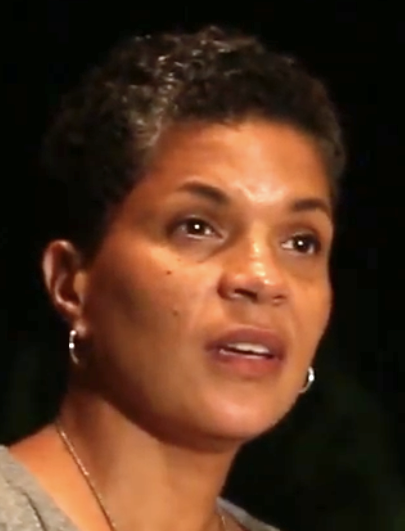
Michelle Alexander (born October 7, 1967) is an American writer, attorney, and civil rights activist. She is best known for her 2010 book The New Jim Crow: Mass Incarceration in the Age of Colorblindness. Since 2018, she has been an opinion columnist for the New York Times.

Early life

[edit]

Alexander was born on October 7, 1967, in Chicago, Illinois,[1] to an interracial couple, John Alexander and Sandra Alexander (née Huck) who were wed in 1965.[2] She spent her early childhood in Stelle, Illinois until 1977, when the family moved to the San Francisco area, where her father worked as a salesman for IBM.[1]

Alexander attended high school in Ashland, Oregon, with her younger sister, Leslie Alexander, who later became a professor of History and African American Studies and the author of 2008's African or American? Black Identity in New York City, 1784–1861.[2]

Alexander earned a B.A. degree from Vanderbilt University, where she received a Truman Scholarship. She earned a J.D. degree from Stanford Law School.[3]

Career

[edit]

Alexander served as director of the Racial Justice Project at the American Civil Liberties Union (ACLU) of Northern California from 1998 until 2005,[4] which led a national campaign against racial profiling by law enforcement. She directed the Civil Rights Clinic at Stanford Law School and was a law clerk for Justice Harry Blackmun at the U. S. Supreme Court and for Chief Judge Abner Mikva on the United States Court of Appeals for the D.C. Circuit. As an associate at Saperstein, Goldstein, Demchak & Baller, she specialized in plaintiff-side class action suits alleging race and gender discrimination.[5]

Alexander was a visiting professor at Union Theological Seminary in the City of New York from 2016 to 2021.[6]

In 2018, she was hired as an opinion columnist at the New York Times.[7] There she collaborated on a piece with Leslie Alexander entitled "Fear" which became a chapter in Nikole Hannah-Jones's "The 1619 Project."

The New Jim Crow

[edit]

Alexander published her book The New Jim Crow: Mass Incarceration in the Age of Colorblindness in 2010. In it, she argued that systemic racial discrimination in the United States resumed following the Civil Rights Movement, and that the resumption is embedded in the US war on drugs and other governmental policies and is having devastating social consequences. She considered the scope and impact of this to be comparable with that of the Jim Crow laws of the 19th and 20th centuries. Her book concentrated on the high rate of incarceration of African-American men for various crimes.[8] Alexander wrote, "Race plays a major role—indeed, a defining role—in the current system, but not because of what is commonly understood as old-fashioned, hostile bigotry. This system of control depends far more on racial indifference (defined as a lack of compassion and caring about race and racial groups) than racial hostility—a feature it actually shares with its predecessors."[9]

The New Jim Crow described how oppressed minorities are "subject to legalized discrimination in employment, housing, public benefits, and jury service, just as their parents, grandparents, and great-grandparents once were."[9] Alexander argued the harsh penalty of how "people whose only crime is drug addiction or possession of a small amount of drugs for recreational use find themselves locked out of the mainstream society—permanently—and also highlights the inequality presented from the fact that "blacks are admitted to prison on drug charges at a rate from twenty to fifty-seven times greater than that of white men."[10]

The New Jim Crow was re-released in paperback in 2012. As of March 2012 it had been on the New York Times Best Seller list for six weeks[11] and it also reached number 1 on the Washington Post bestseller list in 2012. The book has been the subject of scholarly debate and criticism.[12][13][14][15]

In the fall of 2015, all freshmen enrolled at Brown University read The New Jim Crow as part of the campus's First Readings Program initiated by the office of the dean of the college and voted on by the faculty.[16]

Yale University clinical law professor James Forman Jr., while acknowledging many similarities and insights in the Jim Crow analogy, has argued that Alexander overstates her case for decarceration, and leaves out important ways in which the newer system of mass incarceration is different. Forman Jr. identifies Alexander as one of a number of authors who have overstated and misstated their case.[17] He asserts that her framework overemphasizes the war on drugs, and ignores violent crimes, arguing that Alexander's analysis is demographically simplistic.

Alexander refers to electronic ankle monitoring practices as the "Newest Jim Crow," increasingly segregating people of color under bail reform laws that "look good on paper" but are based on a presumption of guilt and replace bail with shackles as pre-trial detainees consent to electronic monitoring in order to be released from jail.[18]

Hidden Colors 2

[edit]

Alexander appeared in the 2012 documentary Hidden Colors 2: The Triumph of Melanin, in which she discussed the impact of mass incarceration in Black communities. Alexander said: "Today there are more African American adults, under correctional control, in prison or jail, on probation or parole than were enslaved in 1850 a decade before the Civil War began.[19]

13th

[edit]

Alexander appeared in the 2016 documentary 13th directed by Ava DuVernay. As an interviewee, Alexander described the evolution of racial disparity in the United States of America through its evolution from slavery, the Jim Crow laws, the war on drugs, to mass incarceration.[20] Alexander said, "So many aspects of the Old Jim Crow are suddenly legal again once you've been branded a felon. And so it seems that in America, we haven't so much ended racial caste but simply redesigned it."[21]

Personal life

[edit]

In 2002, Alexander married Carter M. Stewart, a graduate of Stanford University and Harvard Law School.[22] Stewart at the time was a senior associate at McCutchen, Doyle, Brown & Enersen, a San Francisco law firm,[23] and later was the U.S. Attorney for the Southern District of Ohio.[24][25] They have three children.[26] Her father-in-law is a former member of the board of directors of the New York Times.[23]

In a 2019 opinion piece for the New York Times, written subsequent to the passing of the Ohio "Heartbeat Bill", Alexander wrote of being raped during her first semester of law school, becoming pregnant as a result, and then aborting the pregnancy.[27]

Awards

[edit]

See also

[edit]

References

[edit]
[edit]
Revisions and contributorsEdit on WikipediaRead on Wikipedia
from Grokipedia
Michelle Alexander (born October 7, 1967) is an American civil rights attorney, legal scholar, and author whose 2010 book The New Jim Crow: Mass Incarceration in the Age of Colorblindness argues that the U.S. criminal justice system's emphasis on drug offenses has created a racialized undercaste disproportionately affecting Black Americans, functioning as a modern analogue to post-Civil War Jim Crow laws.[1][2] The work, published by The New Press, became a New York Times bestseller and has been cited in judicial opinions and adopted for widespread reading programs, shaping advocacy for criminal justice reform.[2][3] Alexander, who earned her undergraduate degree from Vanderbilt University and a J.D. from Stanford Law School in 1992, began her career as a litigator before serving as director of the ACLU's Racial Justice Project in Northern California, where she challenged California's Three Strikes law.[4][5] She later held faculty positions at Stanford Law School and Ohio State University's Moritz College of Law, including an associate professorship and affiliation with the Kirwan Institute for the Study of Race and Ethnicity.[6][7] While praised for highlighting collateral consequences of incarceration such as felony disenfranchisement and employment barriers, Alexander's central thesis has drawn empirical critiques for underemphasizing rising violent crime rates in Black communities during the 1980s and 1990s as drivers of incarceration trends, instead attributing disparities primarily to discriminatory policy and enforcement.[8][9] These debates underscore tensions between structural explanations of racial disparities and data on behavioral factors, with some scholars arguing the "new Jim Crow" framing risks oversimplifying causal dynamics in mass imprisonment.[8]

Early Life and Education

Family and Upbringing

Michelle Alexander was born on October 7, 1967, in Chicago, Illinois, to John Alexander, an African American salesman originally from Evanston, Illinois, and Sandra Alexander, a white woman from Ashland, Oregon.[10][1] Her father later worked for IBM, and the family resided in Stelle, Illinois, a small intentional community of about 300 people, during her early childhood.[11] In 1977, the family relocated to the San Francisco Bay Area, where Alexander attended high school.[11] As the child of an interracial couple—her mother white and her father Black—she experienced firsthand the racial tensions and challenges of integration in mid-20th-century America, including societal prejudices that shaped her early awareness of racial dynamics.[12] Her father passed away prior to her rise to prominence as a legal scholar.[1]

Academic Training

Alexander earned a Bachelor of Arts degree from Vanderbilt University in 1989, during which she received the Harry S. Truman Scholarship for aspiring public service leaders.[1] She subsequently obtained a Juris Doctor degree from Stanford Law School in 1992.[4][11] These credentials positioned her for early legal roles, including federal clerkships, though her formal academic pursuits concluded with the J.D.[3]

Professional Career

Following her graduation from Stanford Law School in 1992, Alexander practiced as an associate attorney at the firm Saperstein, Goldstein, Demchak & Baller, specializing in plaintiff-side class action litigation alleging employment discrimination on the basis of race and gender.[13] In this capacity, she litigated multiple civil rights cases focused on workplace inequities.[14] In 1998, Alexander was appointed as the founding director of the Racial Justice Project at the American Civil Liberties Union (ACLU) of Northern California, serving in that role until 2005.[15] [16] Under her leadership, the project coordinated litigation, media advocacy, policy lobbying, and grassroots organizing to challenge racial disparities in criminal justice practices.[17] [16] Key initiatives included spearheading legal challenges to California's "three strikes and you're out" sentencing law, which mandated life sentences for third felony convictions regardless of offense severity, and broader efforts to reform drug enforcement policies disproportionately affecting minority communities.[14] [18] These activities highlighted patterns of racial bias in policing and sentencing, drawing on empirical data from arrest and incarceration statistics to argue for systemic reforms.[16] Alexander's tenure at the ACLU emphasized strategic litigation to expose and mitigate what she identified as racially discriminatory applications of criminal laws, including successful advocacy for Proposition 36 in California, a 2000 ballot measure providing probation and treatment for nonviolent drug offenders instead of incarceration.[14] This work informed her later scholarship, transitioning from courtroom advocacy to public policy critique while maintaining a focus on verifiable disparities in conviction rates and post-release barriers for affected populations.[17]

Academic Appointments

Alexander served as an associate professor of law at Stanford Law School from 2002, where she also directed the Civil Rights Clinics.[19] In 2005, following a Soros Justice Fellowship, she joined Ohio State University as an associate professor of law at the Moritz College of Law, holding a joint appointment with the Kirwan Institute for the Study of Race and Ethnicity.[20][21] Alexander transitioned to a visiting professorship at Union Theological Seminary in New York City in 2016, a role she maintained through 2021, during which she explored the moral and spiritual dimensions of mass incarceration.[22][23]

Major Works and Media Involvement

The New Jim Crow: Mass Incarceration in the Age of Colorblindness

The New Jim Crow: Mass Incarceration in the Age of Colorblindness was first published on January 5, 2010, by The New Press, with ISBN 978-1595581037.[24] The book presents Michelle Alexander's central thesis that the U.S. criminal justice system, fueled by the War on Drugs initiated in the 1980s, operates as a racial caste system functionally equivalent to Jim Crow segregation, operating under the guise of colorblind policies.[25] Alexander argues this system targets African American communities, resulting in mass incarceration rates that peaked at over 2.3 million people by 2008, with black men incarcerated at rates six times higher than white men, creating a permanent underclass through lifelong collateral consequences such as felony disenfranchisement affecting 6 million people, employment discrimination, and housing exclusions.[25][26] Alexander structures her argument across chapters examining historical parallels from slavery to Jim Crow to mass incarceration, claiming the system evades scrutiny because it appears race-neutral while enforcing racial hierarchies via discretionary policing, plea bargaining pressures leading to 94% of convictions without trial, and post-release stigmas.[26] She cites data showing that by 2000, the U.S. had more black men under correctional control (including probation and parole) than were enslaved in 1850, attributing this not primarily to crime rates but to policy choices like mandatory minimum sentences and three-strikes laws that amplified drug arrests, despite whites comprising the majority of drug users.[25] Alexander posits that ending the drug war alone is insufficient without addressing the broader caste-like exclusion, urging a "moral vision" beyond incremental reforms to dismantle what she describes as legalized discrimination.[26] The book's claims rely heavily on arrest and incarceration disparities, such as blacks facing 80% of federal drug convictions despite similar self-reported drug use prevalence across races in surveys like the National Survey on Drug Use and Health, which Alexander interprets as evidence of systemic bias rather than differences in offense types or detectability.[25] However, empirical analyses indicate that racial gaps in drug arrests correlate with higher black involvement in outdoor, low-level distribution networks more likely to be policed, and that drugs account for only about 20% of state prison populations, with violent offenses comprising over 50%, suggesting class and behavioral factors contribute significantly to overall incarceration patterns.[8] Alexander's framework has been influential in advocacy, cited in over 100 judicial opinions and adopted for community reads, though its portrayal of incarceration as predominantly drug-driven has faced scrutiny for underemphasizing black community demands for tougher penalties amid rising violent crime in the 1980s and 1990s.[27][8]

Contributions to Documentaries and Other Projects

Alexander appeared in the 2012 documentary The House I Live In, directed by Eugene Jarecki, where she provided commentary as the author of The New Jim Crow, critiquing the war on drugs as a mechanism perpetuating racial disparities in incarceration rates.[28] The film, which explores the societal costs of U.S. drug policy, features her analysis linking enforcement practices to broader patterns of social control.[28] In the same year, she contributed to Hidden Colors 2: The Triumph of Melanin, a documentary examining African-American history and contemporary challenges, including the prison industrial complex; Alexander discussed the systemic barriers faced by Black communities due to mass incarceration policies.[29] Alexander featured in Ava DuVernay's 2016 Netflix documentary 13th, offering insights on how the Thirteenth Amendment's exception for criminal punishment enabled the reemergence of racial caste systems post-slavery, stating that felony branding legalizes many Jim Crow-era restrictions anew.[30] Her segment ties historical amendments to modern prison expansion, emphasizing the criminalization of Black Americans from the 1980s onward.[30] In the 2017 PBS documentary Rikers: An American Jail, produced by Bill Moyers, Alexander argued that the U.S. criminal justice system operates as a form of racial control, particularly targeting Black men via drug war policies, using Rikers Island as a case study of pretrial detention abuses.[31] She highlighted how such facilities exacerbate cycles of poverty and recidivism without addressing root causes.[31] She also appeared in the 2017 Spike miniseries TIME: The Kalief Browder Story, a documentary recounting the experiences of Kalief Browder, who endured three years in Rikers without trial for a minor charge; Alexander contextualized the case within nationwide patterns of over-incarceration and bail system failures disproportionately affecting low-income minorities.[32] Beyond film, Alexander contributed to the radio documentary series Bringing Down the New Jim Crow, produced in conjunction with her book, which featured discussions on dismantling mass incarceration through policy reform and community organizing efforts.[33]

Subsequent Writings and Public Commentary

Following the 2010 publication of The New Jim Crow, Alexander contributed a series of opinion essays to The New York Times, where she addressed criminal justice reform, racial inequality, political resistance, and intersecting social issues.[34] Her 2012 piece advocated for a mass exercise of the right to trial by criminal defendants to overload the system and highlight incentives in plea bargaining that pressure even innocent individuals to plead guilty, estimating that over 90% of cases end in pleas.[35] In subsequent essays, she critiqued the scale of plea bargaining, noting federal cases exceed 97% pleas, as a mechanism perpetuating mass incarceration.[35] Alexander's 2018 debut column for the paper argued that opposition to the Trump administration, framed as "resistance," fell short of requiring a deeper spiritual and moral reckoning among Americans to address entrenched injustices.[36] She extended her commentary to international affairs in a 2019 essay commemorating Martin Luther King Jr., calling for renewed attention to Palestinian rights and criticizing U.S. policy toward Israel as inconsistent with King's advocacy against oppression, while acknowledging King's own evolving views on the issue.[37] That year, she also examined violence within the criminal justice context, urging honest confrontation with crime's harms to survivors while questioning punitive approaches that fail to deliver healing or reduce recidivism.[38] In a personal essay, Alexander disclosed her experience of rape leading to pregnancy, critiquing abortion restrictions as compounding trauma for victims.[39] In early 2020, marking the tenth anniversary of her book, Alexander wrote that persistent mass deportation and incarceration reflected national denial rather than aberration, linking these to broader failures in reckoning with racial caste systems.[40] Later that year, amid protests following George Floyd's death, she described the moment as an opportunity for transformative change beyond symbolic gestures, emphasizing the need to dismantle systems of control targeting marginalized communities.[41] For the book's tenth-anniversary edition, she added a preface reflecting on ongoing relevance amid events like the Black Lives Matter movement, while noting shifts in public discourse on incarceration.[42] Alexander has engaged in public commentary through interviews and lectures, including a 2020 New Yorker discussion where she assessed the book's impact on policy debates but expressed reservations about reforms that fail to address root causes like poverty and discrimination driving crime rates.[27] In a 2016 On Being podcast, she elaborated on punitive culture as an extension of historical racial control, advocating spiritual dimensions to abolitionist efforts.[43] She delivered lectures, such as at Princeton University in 2018, reinforcing arguments against colorblindness in policy.[44] These contributions have sustained discourse on her core thesis, though she has not published a subsequent full-length book.

Core Arguments and Advocacy Positions

Thesis on Mass Incarceration as Racial Control

In her 2010 book The New Jim Crow: Mass Incarceration in the Age of Colorblindness, Michelle Alexander posits that the United States' system of mass incarceration operates as a contemporary racial caste system, functionally replacing Jim Crow segregation by relegating a large proportion of African American men to a permanent underclass through felony convictions and their collateral consequences.[45] She contends that this system emerged primarily via the War on Drugs, initiated in the 1980s under Presidents Reagan and later intensified by Clinton-era policies, which disproportionately targeted black communities despite comparable or lower rates of drug use among African Americans relative to whites.[46] [5] For instance, Alexander cites data showing that by the mid-1980s, prison admissions for African Americans quadrupled in three years amid crackdowns on low-level drug offenses, creating a pipeline from urban neighborhoods to prisons that mirrored historical mechanisms of racial subjugation.[47] Alexander argues that the War on Drugs was less about curbing addiction—illegal drug use was declining when it escalated—and more a politically motivated tool for social control, exploiting racial anxieties post-civil rights era to maintain white dominance under the guise of colorblind policies that prohibit explicit racial references.[46] [48] She draws parallels to Jim Crow by highlighting how felony status imposes lifelong disabilities, including voting disenfranchisement affecting over 5.6 million people as of 2010 (disproportionately black), exclusion from public housing and employment, and social stigma that perpetuates poverty and family disruption across generations.[49] This, she claims, entrenches a "racial undercaste" where one in three black males born today can expect lifelong felony conviction, barring reintegration into mainstream society.[47] Central to her thesis is the role of discretion in policing and sentencing, which she asserts enables implicit racial bias: aggressive stop-and-frisk tactics in black neighborhoods yield drug arrests at rates far exceeding actual prevalence, while mandatory minimums for crack (associated with black users) versus powder cocaine (linked to whites) codified disparities until partially reformed in 2010.[50] Alexander maintains that post-release supervision and "ban the box" barriers further entomb individuals in caste-like exclusion, rendering mass incarceration invisible as racism because it is framed as race-neutral crime fighting.[45] While Alexander's framework emphasizes intent and design in perpetuating racial hierarchies, empirical analyses of incarceration trends attribute much of the rise— from 300,000 prisoners in 1980 to over 2 million by 2010—to surging violent crime rates in the 1980s and 1990s, including homicide peaks among young black males, rather than solely drug policy or bias.[51] Critics, including legal scholars, argue her Jim Crow analogy overlooks these non-racial drivers and overstates systemic intent, noting that incarceration rates have since declined 25% from 2009 peaks without dismantling alleged caste structures, and that black-white arrest gaps narrow when controlling for offense seriousness.[8] Alexander's reliance on aggregate disparities, while highlighting real inequities, has been challenged for conflating correlation with causation, as peer-reviewed studies show family structure, urban decay, and behavioral factors as significant contributors to offending rates independent of policy alone.[52]

Positions on Broader Social Issues

Alexander has critiqued affirmative action as a superficial remedy that benefits a small elite segment of the Black population while diverting attention from systemic racial exclusion through mass incarceration. In The New Jim Crow (2010), she contends that such programs foster an illusion of progress by showcasing Black graduates from elite institutions like Harvard and Yale or corporate leaders, thereby concealing the exclusion of millions from civic life via felony disenfranchisement and employment barriers.[47] This view posits that affirmative action reinforces colorblindness narratives, undercutting demands for deeper structural reforms.[53] On police reform, Alexander advocates dismantling aspects of the current system rooted in the war on drugs, which she describes as enabling widespread racial profiling and low-level arrests that funnel individuals into the criminal justice pipeline. In a 2020 interview, she emphasized treating all people with dignity and compassion, rejecting purely punitive approaches in favor of addressing underlying social controls.[27] She has supported initiatives like education in prisons but warned against reforms that fail to confront the system's role in perpetuating caste-like hierarchies, as discussed in her 2014 analysis of policing as a tool of social control.[46][54] Alexander links criminal justice policies to broader economic inequality, echoing Martin Luther King Jr.'s late-1960s focus on poverty affecting both Black and poor white communities. She argues that mass incarceration exacerbates economic marginalization by imposing lifelong barriers to employment and housing, trapping affected groups in cycles of poverty independent of race in underclass dynamics.[55] In her writings, this perspective frames the drug war not merely as racial but as a mechanism reinforcing class-based exclusion, with empirical data showing disproportionate impacts on low-income populations.[56] She has extended her critique to immigration enforcement, comparing mass deportation under policies like those intensified in the 2010s to the mechanics of mass incarceration, both serving to deny basic rights and maintain social hierarchies. In a 2020 New York Times opinion piece, Alexander highlighted national denial of these parallel systems of exclusion affecting non-citizens and citizens alike.[40] This stance underscores her broader advocacy for cross-racial coalitions against policies that entrench inequality through state mechanisms.[27]

Reception, Impact, and Criticisms

Positive Reception and Cultural Influence

The New Jim Crow, published in January 2010, initially received modest attention but gradually gained widespread acclaim for its analysis of mass incarceration as a mechanism of racial control. Reviewers described it as "invaluable" and "a stunning piece of scholarship" that challenges the War on Drugs and highlights its disproportionate impact on Black Americans.[57] By 2012, it had reached The New York Times bestseller list, with sales surging in subsequent years, including a jump to nearly 14,000 copies in one week amid heightened social justice discussions in 2020.[58][59] The book's reception transformed perspectives among thinkers and activists, who credit it with reshaping the discourse on criminal justice reform.[60] It has been cited in U.S. Supreme Court opinions, such as by Justice Sonia Sotomayor in 2016, underscoring its influence on legal interpretations of equal protection in the context of incarceration policies.[61] Alexander's arguments have been praised for connecting historical oppression to contemporary systems, fostering a broader organizational focus on ending mass incarceration.[62] Culturally, The New Jim Crow has permeated public discourse, inspiring activism and media coverage on racial disparities in the justice system. Its tenth-anniversary reflections in outlets like The New Yorker highlight its enduring role in prompting national conversations about colorblindness and systemic bias.[27] The work has drawn attention to mass incarceration's societal costs, influencing educational curricula and public policy advocacy, as evidenced by Alexander's recognition with the 2016 Heinz Award for elevating these issues nationally.[63]

Empirical and Methodological Critiques

Critics have argued that Alexander's analysis in The New Jim Crow overemphasizes non-violent drug offenses while minimizing the role of violent crime in driving incarceration rates. Although the book portrays mass incarceration primarily as a product of the war on drugs targeting black communities, data indicate that only about 16% of state prisoners—where the majority of inmates are held—are incarcerated for drug crimes, with the bulk serving time for violent offenses such as homicide, robbery, and assault.[64] This focus obscures the fact that violent crime rates, particularly in black urban areas, surged in the 1980s and 1990s due to factors like the crack epidemic and gang activity, prompting tougher sentencing responses; black offenders accounted for over 50% of arrests for murder and non-negligent manslaughter in peak years, despite comprising roughly 13% of the population. By largely ignoring these dynamics, Alexander's framework fails to engage with causal factors like elevated victimization and offending rates in affected communities, which empirical studies link to socioeconomic conditions rather than systemic racial animus alone. Methodologically, Alexander's reliance on disparate impact statistics—such as higher black incarceration rates—as prima facie evidence of intentional racial control has been faulted for neglecting confounding variables like criminal history and offense severity. Research controlling for prior convictions and case facts shows that raw sentencing disparities largely disappear; for instance, federal data from the U.S. Sentencing Commission reveal no significant racial differences in sentence lengths once these factors are accounted for, contradicting claims of widespread bias in judicial outcomes. Moreover, the book's projection that one in three black males would face lifetime imprisonment assumed static arrest and conviction rates, a method critiqued for extrapolating from peak-era trends without adjusting for subsequent declines in crime and incarceration since the early 2000s.[64] Critics like John Pfaff contend this "standard story" misattributes prosecutorial discretion—felony filing rates doubled in the 1990s amid falling crime—to racial targeting rather than responses to violence, as drug offenses constitute just 4% of state commitments for simple possession.[64] Additionally, portrayals of the war on drugs as a top-down racial conspiracy overlook its grassroots origins in black-led demands for crack suppression, initiated by figures like Rep. Charlie Rangel and community groups devastated by epidemic-related violence.[65] Heather Mac Donald has described Alexander's narrative as duplicitous for framing policies like New York's Rockefeller laws—enacted at black legislators' urging—as tools of re-enslavement, while empirical evidence shows similar penalties applied to methamphetamine offenses disproportionately affecting whites and Hispanics. This selective framing, per legal scholars, diverts attention from evidence-based reforms addressing violence over decarceration of non-violent offenders, potentially exacerbating community harms.

Debates on Causality and Policy Implications

Critics of Alexander's thesis contend that mass incarceration's racial disparities primarily reflect differences in criminal offending rates rather than systemic racial bias in enforcement or sentencing. Empirical analyses indicate that after controlling for offense type and criminal history, racial differences in incarceration probabilities diminish significantly, with black offenders facing incarceration rates only slightly higher than whites for comparable violent crimes. Victimization surveys and arrest data align closely with self-reported offending, showing black Americans committing violent crimes, including homicides, at rates 6-8 times higher than whites during the 1980s-1990s crime surge that preceded incarceration peaks.[66][67][68] James Forman Jr. argues that Alexander's racial control narrative overlooks the role of intra-community violence, noting black homicide rates quadrupled from 1970 to 1990, prompting black-led calls for tougher policing and sentencing to protect communities from crime waves. This perspective challenges the causality by emphasizing that incarceration expansions responded to real public safety crises, including black victims comprising over 90% of black homicides, rather than top-down racial engineering. Forman critiques the Jim Crow analogy for ignoring black agency in supporting anti-crime policies and for underplaying class-based factors intertwined with race.[69][8] John Pfaff further disputes the war on drugs as the dominant causal driver, estimating drug offenses accounted for only 16% of state prison admissions by the mid-2010s, while violent offenses comprised over 50%, with incarceration trends tracking national crime fluctuations—rising amid 1980s-1990s violence and declining post-1990s without policy reversals. Pfaff attributes growth to prosecutorial charging decisions and local priorities rather than federal drug mandates or sentencing alone, arguing Alexander's focus inflates drug war significance while sidelining violence reduction needs. Recent data confirms drugs represent 15-20% of state prisoners as of 2023, underscoring limited decarceration potential from drug policy shifts alone.[64][70] On policy implications, Alexander advocates decriminalizing drug possession, reallocating funds from enforcement to treatment, and dismantling collateral consequences to disrupt the "racial caste" cycle, positing these as pathways to equity without exacerbating crime. Evidence from Oregon's 2020 Measure 110 shows decriminalization slashed drug possession arrests by over 60% initially, but overdose deaths surged 20% annually amid fentanyl proliferation, prompting partial repeal in 2024 amid public safety concerns. Studies on cannabis decriminalization indicate reduced arrests without broad crime spikes, yet overall U.S. incarceration reductions in 45 states from 2010-2022 correlated with multifaceted reforms, not drug policy alone, and coincided with crime drops in most cases. Critics warn that prioritizing decarceration over violence prevention risks repeating 1990s patterns, as empirical links between imprisonment and crime deterrence remain weak but non-zero for high-rate offenders.[71][72][73]

Personal Life

Family and Relationships

Michelle Alexander was born on October 7, 1967, in Chicago, Illinois, to Sandra Alexander, a white Lutheran from Ashland, Oregon, and John Alexander, a Black Methodist originally from Evanston, Illinois.[74][1] Her parents married in Chicago in 1965 amid racial tensions of the era.[74] Part of her childhood was spent in Stelle, Illinois, a small intentional community of about 300 residents focused on self-sufficiency and alternative living.[11] In 2002, Alexander married Carter Mitchell Stewart, a lawyer who graduated from Stanford University and Harvard Law School, in a ceremony at Sausalito Presbyterian Church in Sausalito, California.[75] The couple has three children, who were elementary school-aged as of 2013.[11][1]

Awards and Honors

Key Recognitions

Alexander received the Heinz Award in the Public Policy category in 2016, which included a $250,000 prize, recognizing her efforts in highlighting mass incarceration's disproportionate impact on African Americans.[63][76] Her book The New Jim Crow: Mass Incarceration in the Age of Colorblindness (2010) earned the NAACP Image Award for Outstanding Literary Work in Nonfiction in 2011.[3] In 2005, she was awarded a Soros Justice Fellowship from the Open Society Foundations, providing financial support for research and writing that contributed to the development of The New Jim Crow.[77] Alexander was honored with the National Social Justice Award by the New Jersey Institute for Social Justice at its 2024 gala, acknowledging her advocacy on racial justice and criminal justice reform.[78]

References

User Avatar
No comments yet.