
Recent from talks
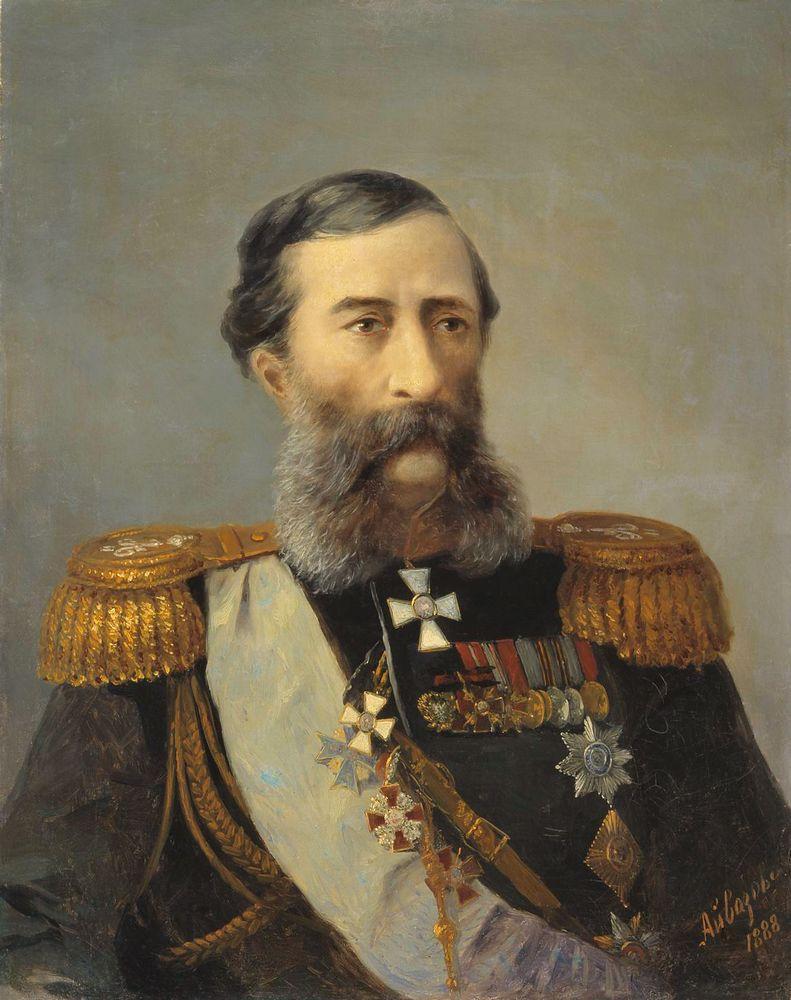
Mikhail Loris-Melikov
Knowledge base stats:
Talk channels stats:
Members stats:
Mikhail Loris-Melikov
Count Mikhail Tarielovich Loris-Melikov (Russian: Михаил Тариелович Лорис-Меликов; Armenian: Միքայել Լոռու-Մելիքյան; October 21 [O.S. November 2] 1824 – 24 December 1888) was a Russian statesman of an Armenian origin who served as general of the cavalry and adjutant general of His Imperial Majesty's Retinue.
The princes of Lori, Loris-Melikov, are the representatives of an old noble family whose ancestors in the 14th century owned the town of Lori and the province of the same name. They belonged to the top aristocratic society of Georgia. The princely family of Loris-Melikov was established in the Russian nobility in 1832.
He was born in Tiflis, Caucasus Viceroyalty, Russian Empire, in 1826, into the Melikov family of Armenian origin, to Prince Tariel Zurabovich Loris-Melikov and his wife, Princess Ekaterina Ahverdova, and was educated in St Petersburg, first at the Lazarev Institute of Oriental Languages, and afterwards at the Guards' Cadet Institute. While at the Lazarev Institute, a practical joke against one of his instructors landed him in hot water and led to his expulsion from the school.
He joined a hussar regiment, and four years afterwards (1847) he was sent to the Caucasus, where he remained for more than twenty years, and made for himself during troubled times the reputation of a distinguished cavalry officer and an able administrator. In the latter capacity, though a keen soldier, he aimed always at preparing the warlike and turbulent population committed to his charge for the transition from military to normal civil administration, and in this work, his favorite instrument was the schoolmaster.
Loris-Melikov first saw action against the forces of another power during the Crimean War. He served as the commander of a cavalry squadron on the Russo-Ottoman borderlands and took part in the battles at Bayandur, Aleksandropol, and Kars. He was recognized for his military exploits and promoted to major general.
During the Russo-Ottoman War of 1877–1878, he served as the chief of staff of Grand Duke Michael. At the rank of adjutant-general, he was given command of the Aleksandropol Detachment on the frontier with the Ottoman (a force that amounted to 32 battalions, four squadrons, and 112 field guns). After taking the fortress of Ardahan, he was repulsed by Ahmed Muhtar Pasha at Zevin, but subsequently defeated his opponent at Ajaria, took Kars by storm, and laid siege to Erzurum. For these services, he received the title of count. He was awarded the Order of Saint George of the second degree on October 27, 1877, for his service in Ajaria.
In the following year, Loris-Melikov became the temporary governor-general of the region of the Lower Volga to combat an outbreak of the plague. The measures he adopted proved so effectual that he was transferred to the provinces of Central Russia to combat the Nihilists and Anarchists, who had adopted a policy of terrorism and had succeeded in assassinating the governor of Kharkov.
His success in this struggle has led to his appointment as chief of the Supreme Administrative Commission, which had been created in St Petersburg after the February 1880 assassination attempt on Alexander II to deal with the terrorist agitation in general.
Hub AI
Mikhail Loris-Melikov AI simulator
(@Mikhail Loris-Melikov_simulator)
Mikhail Loris-Melikov
Count Mikhail Tarielovich Loris-Melikov (Russian: Михаил Тариелович Лорис-Меликов; Armenian: Միքայել Լոռու-Մելիքյան; October 21 [O.S. November 2] 1824 – 24 December 1888) was a Russian statesman of an Armenian origin who served as general of the cavalry and adjutant general of His Imperial Majesty's Retinue.
The princes of Lori, Loris-Melikov, are the representatives of an old noble family whose ancestors in the 14th century owned the town of Lori and the province of the same name. They belonged to the top aristocratic society of Georgia. The princely family of Loris-Melikov was established in the Russian nobility in 1832.
He was born in Tiflis, Caucasus Viceroyalty, Russian Empire, in 1826, into the Melikov family of Armenian origin, to Prince Tariel Zurabovich Loris-Melikov and his wife, Princess Ekaterina Ahverdova, and was educated in St Petersburg, first at the Lazarev Institute of Oriental Languages, and afterwards at the Guards' Cadet Institute. While at the Lazarev Institute, a practical joke against one of his instructors landed him in hot water and led to his expulsion from the school.
He joined a hussar regiment, and four years afterwards (1847) he was sent to the Caucasus, where he remained for more than twenty years, and made for himself during troubled times the reputation of a distinguished cavalry officer and an able administrator. In the latter capacity, though a keen soldier, he aimed always at preparing the warlike and turbulent population committed to his charge for the transition from military to normal civil administration, and in this work, his favorite instrument was the schoolmaster.
Loris-Melikov first saw action against the forces of another power during the Crimean War. He served as the commander of a cavalry squadron on the Russo-Ottoman borderlands and took part in the battles at Bayandur, Aleksandropol, and Kars. He was recognized for his military exploits and promoted to major general.
During the Russo-Ottoman War of 1877–1878, he served as the chief of staff of Grand Duke Michael. At the rank of adjutant-general, he was given command of the Aleksandropol Detachment on the frontier with the Ottoman (a force that amounted to 32 battalions, four squadrons, and 112 field guns). After taking the fortress of Ardahan, he was repulsed by Ahmed Muhtar Pasha at Zevin, but subsequently defeated his opponent at Ajaria, took Kars by storm, and laid siege to Erzurum. For these services, he received the title of count. He was awarded the Order of Saint George of the second degree on October 27, 1877, for his service in Ajaria.
In the following year, Loris-Melikov became the temporary governor-general of the region of the Lower Volga to combat an outbreak of the plague. The measures he adopted proved so effectual that he was transferred to the provinces of Central Russia to combat the Nihilists and Anarchists, who had adopted a policy of terrorism and had succeeded in assassinating the governor of Kharkov.
His success in this struggle has led to his appointment as chief of the Supreme Administrative Commission, which had been created in St Petersburg after the February 1880 assassination attempt on Alexander II to deal with the terrorist agitation in general.
Recent media