Hubbry Logo
search
logo
931119

Multiple-barrel firearm

logo
Community Hub0 Subscribers
Read side by side
from Wikipedia
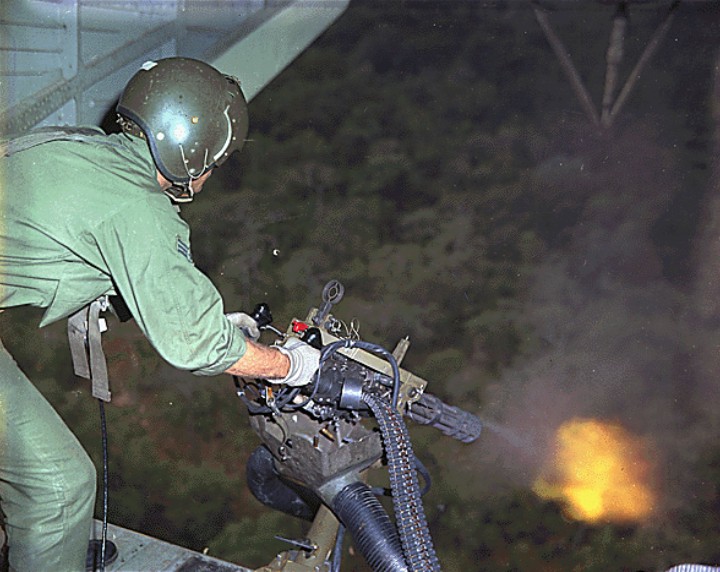
An U.S. Air Force rotary-wing crewman fires a Minigun during the Vietnam War.

A multiple-barrel firearm is any type of firearm with more than one gun barrel, usually to increase the rate of fire or hit probability and to reduce barrel erosion or overheating.[1]

History

[edit]

Volley gun

[edit]
The mitrailleuse, a 19th-century volley gun

Multiple-barrel firearms date back to the 14th century, when the first primitive volley guns were developed.[2] They are made with several single-shot barrels assembled together for firing a large number of shots, either simultaneously or in quick succession. These firearms were limited in firepower by the number of barrels bundled, and needed to be manually prepared, ignited, and reloaded after each firing.

In practice the large volley guns were not particularly more useful than a cannon firing canister shot or grapeshot. Since they were still mounted on a carriage, they could be as hard to aim and move around as a heavy cannon, and the many barrels took as long (if not longer) to reload.[3] They also tended to be relatively expensive since they were structurally more complex than a cannon, due to all the barrels and ignition fuses, and each barrel had to be individually maintained and cleaned.

Pepperbox

[edit]
A Russian pepperbox carbine made at Tula Arsenal.

A pepper-box gun or "pepperbox revolver" has three or more barrels revolving around a central axis, and gets the name from its resemblance to the household pepper shakers. It has existed in all ammunition systems: matchlock, wheellock, flintlock, caplock, pinfire, rimfire, and centerfire. They were popular firearms in North America from the 1830s until the 1860s, during the American Civil War, but the concept was introduced much earlier. After each shot, the user manually rotates a next barrel into alignment with the hammer mechanism, and each barrel needs to be reloaded and maintained individually.

In the 15th century, there were design attempts to have several single-shot barrels attached to a stock, being fired individually by means of a match. Around 1790, pepperboxes were built on the basis of flintlock systems, notably by Nock in England and "Segallas" in Belgium. These weapons were built on the success of the earlier two-barrel turnover pistols, which were fitted with three to seven barrels. These early pepperboxes had to be manually rotated by hand.[4]

The invention of the percussion cap building on the innovations of the Rev. Alexander Forsyth's patent of 1807 (which ran until 1821), and the Industrial Revolution allowed pepperbox revolvers to be mass-produced, making them more affordable than the early handmade guns previously only seen in possessions of the rich. Examples of these early weapons are the American three-barrel Manhattan pistol, the English Budding (probably the first English percussion pepperbox) and the Swedish Engholm. Most percussion pepperboxes have a circular flange around the rear of the cylinder to prevent the capped nipples being accidentally fired if the gun were to be knocked while in a pocket, or dropped and to protect the eyes from cap fragments.

Samuel Colt owned a revolving three-barrel matchlock musket from British India,[5] and an eight-barrel pepperbox shotgun was designed in 1967, but never went into production.

Derringer

[edit]
Remington Model 95 with pearl grips and barrels open for reloading
COP .357 Magnum derringer

The original Philadelphia Deringer was a small single-barrel, muzzleloading caplock pistol designed by Henry Deringer (1786–1868) and produced from 1852 to 1868, and was a popular concealed carry single-shot handgun of the era widely copycatted by competitors.[6] However, it was the breechloading over-and-under Remington Model 95, manufactured by Remington Arms from 1866 to 1935,[7][8] that has truly achieved widespread popularity to the point that it completely overshadowed all other designs and becoming synonymous with the word "derringer". It used a break action design with two single-shot barrels chamber for the .41 rimfire cartridge, and a cam on the hammer alternated between the barrels. The Remington derringer design is still being manufactured today by American Derringer, Bond Arms, and Cobra Arms,[9] and used by Cowboy Action Shooting reenactors as well as a concealed-carry weapon.

The Sharps Derringers had four-barrels with a revolving firing pin (often called the "Sharps Pepperbox" despite not having a revolving-barrel design) and they were first patented in 1849,[10] but were not manufactured until 1859, when Christian Sharps patented a more practical design. When loading and unloading, the four barrels slide forward to open the breech. Production of these came to an end with the death of Christian Sharps in 1874.

Modern derringer designs are almost all multi-barrelled, most variants have two-barrels or four-barrels, thus essentially makes them a compact and concealable handheld version of the volley gun. The COP 357 is a .357 Magnum-caliber four-barrel (side-by-side and over-and-under), double-action hammerless derringer introduced in 1984, and not much larger than a .25 ACP semi-automatic pistol. A smaller-caliber .22 Magnum "Mini COP" was also made by American Derringer.

DoubleTap Defense introduced a double-barreled (over-and-under), double-action hammerless DoubleTap derringer in 2012.[11][better source needed] The name comes from the double tap shooting technique, in which two consecutive shots are quickly fired at the same target before engaging the next one.[12] These derringers also hold two extra rounds of cartridge in the grip, allegedly drawing inspiration from the FP-45 Liberator pistol.[13]

Double-barrel shotgun

[edit]
Confederate cavalryman with a side-by-side double-barreled shotgun

By 1790, Joseph Manton, acknowledged as the “father of the modern shotgun”, first brought together all the facets of the contemporary flintlock shotguns into the form of the modern double-barreled shotguns. Soon, caplock ignition replaced flintlock, and then rather quickly, was replaced by the self-contained shell cartridge.[14]

During the 19th century, shotguns were mainly employed by cavalry units, as mounted units favored its moving target effectiveness, and devastating close-range firepower. Both sides of the American Civil War employed shotguns, and the U.S. Cavalry used them extensively during the Indian Wars. Shotguns also remained popular with citizen militias, guards (e.g. the shotgun messengers) and lawmen as a self-defense weapon, and became one of the many symbols of the American Old West.

In 1909, Boss & Co. introduced the over-and-under shotgun,[14] which has remained the more popular configuration for double-barreled shotguns. Nowadays the pump-action and semi-automatic shotguns have taken over most roles in civilian home defense, law enforcement, and military usage, though the over-and-under shotguns still remain popular for waterfowl hunting, upland hunting, and clay pigeon shooting.

Double rifle

[edit]

The development of the double rifle has always followed the development of the double-barrelled shotgun, the two are generally very similar but the stresses of firing a solid projectile are far greater than shot. The first double-barrelled muskets were created in the 1830s when deer stalking became popular in Scotland. Previously single barrelled weapons had been used but, recognising the need for a rapid second shot to dispatch a wounded animal, double-barrelled muskets were built along the same format as double-barrelled shotguns already in common use.

These first double-barrelled weapons were black powdersmoothbore muzzleloaders built with either flintlock or percussion cap ignition systems. Whilst true rifling dates from the mid 16th century, the invention of the express rifle by James Purdey "the Younger" in 1856 allowed for far greater muzzle velocities to be achieved through a rifled longarm, significantly improving the trajectory and as such greatly improving the range of these rifles. These express rifles had two deep opposing grooves which were wide and deep enough to prevent the lead bullets from stripping the rifling if fired at high velocities, a significant problem previously.

Various experimental breech loaders had been in existence since the 16th century, however developments such as the Ferguson rifle in the 1770s and early pinfire cartridges in the 1830s had little impact on sporting rifles due to their experimental nature, expense and the extraordinary strength and reliability of the percussion muzzleloader. In 1858, Westley Richards patented the break open, top leaver breech loading action, whilst a useful development these early break open designs had a great deal of elasticity in the action and upon firing they sprung open slightly, a problem that gradually worsened with repeated firing and with more powerful cartridges. Many gunmakers tried various methods to rectify this problem, all to little avail until Westley Richards invented the "Dolls head" lock in 1862 which greatly improved rigidity, this was followed by James Purdey's under-locking mechanism in 1863 and W.W. Greener's "Wedge fast" system in 1873, finally the basic break open action known to this day had the strength required to meet the stresses of large-bore projectiles. By 1914; triple, quadruple, and quintuple locking designs could be found in various proprietary actions.

By 1900, the boxlock and sidelock hammerless actions had largely superseded the hammer rifles and, with the addition of ejectors and assisted opening, the basic design of the double rifle has changed little to this day. Incidentally, it was Westley Richards who invented the first reliable safety catch for doubles, ejectors, the single selective trigger and the special extractors that enabled rimless cartridges to be used in double rifles, all features found in modern double rifles.

After the Second World War, a combination of increased labour costs and a shrinking British Empire saw an end to the demand for handcrafted sporting rifles and the double rifle was largely supplanted by the bolt action rifle during 1960s and 1970s. It was not until the 1980s and 1990s, with the emergence of the big game hunting industry in Southern Africa that the production of double rifles resumed at a steady rate, driven largely by demand from American sportsmen.

Rotary gun

[edit]
1876 Gatling gun
GAU-19 is a unique variety of modern military multiple barrel gun.

The Gatling gun is one of the best-known early rapid-fire weapons and a forerunner of the modern machine guns and automatic rotary guns. Invented by Richard Gatling, it saw occasional use by the Union forces during the American Civil War in the 1860s, which was the first time it was employed in combat. Later, it was used again in numerous military conflicts, such as the Boshin War, the Anglo-Zulu War, and the assault on San Juan Hill during the Spanish–American War.[15] It was also used by the Pennsylvania militia in episodes of the Great Railroad Strike of 1877, specifically in Pittsburgh.

The Gatling gun's operation centered on a pepperbox-like multi-barrel assembly whose design facilitated better cooling and synchronized the firing-reloading sequence. The gun was operated by manually turning a crank-like side-handle, which was geared to rotate the entire barrel assembly. Each barrel is coupled to a cam-driven bolt, which picked up a single cartridge and then fired off the shot when reaching certain positions in the rotation, afterwards it ejected the spent cartridge case and allowed the empty barrel to cool somewhat before loading a new round and repeating the cycle. This cyclic configuration overlapped the operation of the barrel-action groups, and allowed higher rates of fire to be achieved without each barrel overheating.

Richard Gatling later replaced the hand-cranked mechanism of a rifle-caliber Gatling gun with an electric motor, a relatively new invention at the time. Even after he slowed down the mechanism, the new electric motor-powered Gatling gun had a theoretical rate of fire of 3,000 rounds per minute, roughly three times the maximum rate of a typical modern single-barreled machine gun. Gatling's electric-powered design received U.S. Patent #502,185 on July 25, 1893,[16] but despite the improvements, Gatling guns soon fell into disuse after cheaper, lighter-weight and more reliable recoil- and gas-operated machine guns were invented; Gatling himself went bankrupt for a period.[17]

During World War I, several German companies were working on externally powered guns for use in aircraft. Of those, the best-known today is perhaps the Fokker-Leimberger, an externally powered 12-barrel rotary gun using the 7.92×57mm Mauser rounds; it was claimed to be capable of firing over 7,000 rpm, but suffered from frequent cartridge-case ruptures[18] due to its "nutcracker", rotary split-breech design, which is fairly different from that of a Gatling.[19] None of these German guns went into production during the war, although a competing Siemens prototype (possibly using a different action) which was tried on the Western Front scored a victory in aerial combat.[18] The British also experimented with this type of split-breech during the 1950s, but they were also unsuccessful.[20]

In the 1960s, the United States Armed Forces began exploring modern variants of the electric-powered, rotating barrel Gatling-style weapons for use in the Vietnam War. American forces in the Vietnam War, which used helicopters as one of the primary means of transporting soldiers and equipment through the dense tropical jungles, found that the thinly-armored helicopters were very vulnerable to small arms fire and rocket-propelled grenade (RPG) attacks when they slowed to land. Although helicopters had mounted single-barrel machine guns, using them to repel attackers hidden in the dense jungle foliage often led to barrels quickly overheating or the action jamming.[21][22]

In order to develop a weapon with a more reliable, higher rate of fire, General Electric designers scaled down the rotating-barrel 20 mm M61 Vulcan rotary cannon for the 7.62×51mm NATO ammunition. The resulting weapon, the M134 Minigun, could fire up to 6,000 rounds per minute without overheating. The gun has a selectably variable rate of fire specified to fire at rates of up to 6,000 rpm, with most applications set at rates between 3,000-4,000 rounds per minute.

The Minigun was mounted on Hughes OH-6 Cayuse and Bell OH-58 Kiowa side pods; in the turret and on pylon pods of Bell AH-1 Cobra attack helicopters; and on door, pylon and pod mounts on Bell UH-1 Iroquois transport helicopters. Several larger aircraft were outfitted with Miniguns specifically for close air support: the Cessna A-37 Dragonfly with an internal gun and with pods on wing hardpoints; and the Douglas A-1 Skyraider, also with pods on wing hardpoints. Other famous gunship aircraft were the Douglas AC-47 Spooky, the Fairchild AC-119 and the Lockheed AC-130.[22]

See also

[edit]
  • Combination gun – Type of firearm with at least one rifled barrel and one smoothbore barrel
  • Double-barreled rifle – Sporting rifle with two parallel barrels – Rifle with two parallel barrels
  • Double-barreled shotgun – Shotgun with two parallel barrels
  • List of multiple-barrel firearms
  • Multiple rocket launcher – Rocket artillery system capable of launching multiple rockets in quick succession
  • Small Arms – Gun for an individual – Portable weapons that can be carried and used by an individual person.

References

[edit]
Revisions and contributorsEdit on WikipediaRead on Wikipedia
from Grokipedia
A multiple-barrel firearm is any type of firearm featuring more than one gun barrel, typically arranged to enable rapid successive shots, increase firepower, or provide multiple projectiles in a single discharge, distinguishing it from single-barrel designs, which may also enable multiple shots but typically rely on internal repeating mechanisms rather than multiple barrels.[1] These weapons encompass a broad range of configurations, from simple side-by-side or over-under double-barrel shotguns used for hunting and defense, to revolving pepperbox pistols and crank-operated Gatling guns employed in military contexts for sustained fire.[2][3][4] The history of multiple-barrel firearms dates back to the medieval period, with early examples like the ribauldequin or organ gun—a volley weapon with multiple parallel barrels mounted on a cart—appearing as early as 1339 during the reign of Edward III in England, designed to deliver a devastating simultaneous barrage against enemy formations.[4] By the 18th century, double-barrel shotguns emerged in England, such as the 10-gauge coach guns used to protect stagecoaches from highwaymen, allowing two quick shots without reloading and marking a practical advancement in civilian and law enforcement applications.[2] In the early 19th century, percussion-cap technology enabled more reliable multi-shot handguns, exemplified by the pepperbox revolver, a compact pistol with 3 to 6 revolving barrels that became popular in the United States during the 1830s and 1840s as an affordable alternative to single-shot flintlocks, though its complexity often led to malfunctions.[3][5] Military innovations drove further evolution in the mid-19th century, with the Gatling gun, patented in 1862 by American inventor Richard J. Gatling (1818–1903), representing a pivotal breakthrough as one of the first successful crank-operated machine guns featuring 6 to 10 rotating barrels cooled by air during continuous fire from a gravity-fed hopper, achieving rates of up to 200 rounds per minute and seeing use in the American Civil War and later conflicts like the Spanish-American War.[4][6] Other notable designs included the French mitrailleuse, a 25- to 37-barrel volley gun on an artillery carriage deployed unsuccessfully in the Franco-Prussian War (1870–1871), and the Nordenfelt gun of 1887, a multi-barrel naval weapon invented by Thorsten Nordenfelt for anti-torpedo boat defense.[6][4] While early multiple-barrel arms often suffered from bulkiness, slow reloading, and overheating, these designs laid the groundwork for modern automatic weapons by addressing key limitations in firepower and reliability.[1]

Overview

Definition and Characteristics

A multiple-barrel firearm is a firearm equipped with two or more barrels, arranged parallel or aligned, that enables firing multiple projectiles either simultaneously or in quick succession, distinguishing it from single-barrel designs requiring reloading after each shot.[7] This configuration provides a foundational means for achieving higher firepower in a relatively compact form, applicable to various firearm categories such as shotguns, rifles, and pistols.[8] Key characteristics include the potential for elevated rates of fire through sequential or volley discharge, alongside increased design complexity and weight stemming from the integration of multiple barrels and associated mechanisms.[7] The barrels themselves may be smoothbore, optimized for dispersing shot or large projectiles as seen in early shotguns, or rifled to stabilize bullets via spin for greater accuracy in rifle applications.[9] At minimum, two barrels are required to qualify as a multiple-barrel firearm, with configurations scaling to more for specialized purposes.[8]

Advantages and Disadvantages

Multiple-barrel firearms provide higher instantaneous firepower compared to single-barrel designs, delivering multiple projectiles in quick succession or simultaneously, which is particularly effective for close-range defense or hunting scenarios.[10][11] In double-barrel shotguns, this capability offers immediate stopping power with two rapid shots, enhancing effectiveness in high-stress situations like police work.[12] In shotguns, multiple barrels allow for varied shot patterns through the use of different chokes in each barrel, providing versatility for targets at varying distances.[13] For military applications, such as volley guns, they enable burst-like fire without the engineering demands of full-automatic mechanisms, increasing the volume of fire in a single engagement.[10] Early multiple-barrel designs, like pepperbox pistols, avoided intricate reloading systems by revolving the barrels themselves, simplifying operation in primitive repeating firearms.[11] However, these firearms suffer from increased weight and bulk due to the additional barrels and supporting structure, which reduces portability and maneuverability, especially beyond two barrels.[1][11] Manufacturing multiple barrels raises production costs and complexity, contributing to higher overall expense compared to single-barrel equivalents.[1] Potential for uneven wear across barrels or misfires arises from ignition inconsistencies, as seen in volley guns where not all barrels may fire reliably, leading to reduced effectiveness.[10] Balancing these factors involves trade-offs in recoil management and ammunition efficiency; for instance, simultaneous firing in volley designs generates severe recoil that can injure the user, while sequential firing in double-barrel shotguns distributes recoil but limits sustained fire.[10] Break-action mechanisms in double-barrel shotguns mitigate some issues by simplifying reloading and maintenance, though they still constrain capacity to two rounds, slower than repeating actions.[12][14]

Design and Operation

Barrel Configurations

Multiple-barrel firearms employ various barrel configurations to optimize geometry, handling, and performance, with parallel and angular arrangements being the primary layouts. In parallel configurations, barrels are positioned either side-by-side or over-under, allowing for balanced weight distribution in shotguns and rifles where the firearm's mass is centered along the shooter's line of sight.[15] Side-by-side arrangements place barrels horizontally adjacent to each other, creating a wider overall stance that enhances the sighting plane by providing a broader visual alignment for the shooter.[16] Conversely, over-under configurations stack barrels vertically, reducing the firearm's width and aligning the recoil axis more directly with the shooter's shoulder for improved control during firing.[17] Angular or clustered setups arrange barrels in a circular or linear pattern to achieve compactness, particularly in early designs like pepperboxes where multiple barrels (typically four to six) are grouped around a central axis.[18] This geometry allows sequential indexing of each barrel into the firing position via rotation, minimizing the overall length and profile of the firearm while maintaining multiple shots in a self-contained assembly.[18] Barrels are also designed with slight convergence, angling inward to intersect at a point beyond the muzzle (often 40 yards for shotguns), which promotes consistent ballistics by aligning projectile paths without requiring post-manufacture adjustments.[19] For materials, high-strength steel alloys such as SAE 4140 chrome-moly provide durability and balanced heat dissipation, while stainless variants like 416R offer enhanced resistance to thermal erosion in repeated firing scenarios common to multi-barrel designs.[20] Precise alignment during manufacturing is critical to maintain uniform bore axes and prevent deviations that could affect projectile stability.[19] These principles interact briefly with firing mechanisms, where the static barrel layout influences how ignition sequences are synchronized to avoid stress concentrations.[18]

Firing Mechanisms

Multiple-barrel firearms employ a variety of firing mechanisms to initiate the ignition of propellant in each barrel, ranging from simple manual triggers to more complex sequencing systems designed for controlled discharge. Basic mechanisms typically include single-trigger designs that can fire all barrels simultaneously for volley effects or selectively sequence shots for rapid follow-up fire, while selective triggers allow individual barrel activation to manage firing order. In fixed parallel or superposed barrel configurations, break-action mechanisms facilitate reloading by hinging the barrels away from the breech, exposing chambers for manual loading of cartridges or powder charges.[21] Hammer designs in these firearms vary to accommodate multiple barrels, with options for individual hammers per barrel to ensure precise striking of firing pins or shared hammers that articulate to multiple strikers, reducing mechanical complexity in compact designs. Early ignition methods evolved from wheellock and doglock systems, where adaptations like combined mechanisms provided separate sparks for each barrel via individual pans and frizzens connected to a single trigger or wheel, as seen in 16th-century double-barreled wheellock pistols. Later transitions to flintlock mechanisms utilized multiple frizzens or shared pans linked by channels for simultaneous ignition, while percussion cap systems introduced nipple-based strikers that allowed for more reliable sequential or volley firing without the unreliability of loose powder trains.[22][23] Safety interlocks are integral to prevent accidental multi-barrel discharge, particularly in single-trigger systems prone to "doubling" where recoil induces unintended second shots; these include inertia blocks that lock the second sear upon initial firing and automatic safeties that engage when the action is opened. In designs with revolving barrel clusters for revolving barrel types, the mechanism advances the barrel cluster via trigger pull or manual indexing, aligning loaded chambers with a fixed firing pin while interlocks block rotation during discharge to maintain alignment. External power sources, such as hand cranks in early rapid-fire precursors, drove sequential hammer falls or ignition trains to sustain fire rates beyond manual capability.[24][25] Operational principles emphasize sequencing to distribute recoil across multiple shots and dissipate barrel heat incrementally, with triggers or selectors determining fire order based on barrel configuration—such as under-over arrangements favoring bottom-barrel-first sequencing to minimize muzzle rise. These mechanisms ensure reliable ignition while mitigating risks from synchronized high-energy releases in multi-barrel setups.[21][26]

Types

Fixed Parallel Barrels

Fixed parallel barrel firearms feature two or more stationary barrels arranged in parallel configuration, typically side-by-side, allowing sequential firing without rotation or movement of the barrels relative to each other. These designs commonly employ break-action mechanisms for reloading, where the barrels hinge open at the breech to expose the chambers for manual insertion of cartridges, facilitating quick access after firing. In some variants, bolt-action systems may be used, though break-action remains predominant for its simplicity and reliability in sporting applications.[27][28][29] Prominent examples include double-barrel shotguns, widely used for bird hunting due to their balanced handling and ability to deliver two rapid shots for flushing game. Double rifles, configured side-by-side, serve big game pursuits, providing a follow-up shot essential for dangerous animals like elephants or Cape buffalo in African safaris. Rare triple or quadruple barrel variants exist, such as 19th-century Drilling combinations with three parallel barrels—often two smoothbore for shot and one rifled—designed for versatile field use, though these are uncommon today owing to manufacturing complexity.[30][31][32] Key design elements include ejector systems, which use spring-loaded mechanisms inset at the breech to forcibly expel spent shells from fired chambers while merely extracting unfired ones, streamlining reloading in break-action models. Ribbing, a raised metal strip between barrels, aids in aligning the shooter's eye with the point of aim and dissipates heat to minimize barrel distortion during use. Barrels are typically chambered in matching calibers to ensure balance and symmetrical recoil, promoting consistent handling across shots. Selective triggers may reference firing mechanisms from broader designs, allowing choice between barrels.[33][34][30][35] These firearms find primary application in civilian hunting and sport shooting, where the dual-shot capacity suits pursuits like upland bird hunting or big game stalking without the need for rapid sustained fire. Military adoption remains limited, as the manual break-action reloading process hinders quick follow-up after the initial two rounds, making them less suitable for prolonged engagements compared to repeating arms.[31][36][37]

Superposed Barrels

Superposed barrels, also known as over-and-under configurations, feature two barrels stacked vertically, one directly atop the other, which significantly reduces the firearm's overall width compared to horizontal arrangements. This design enhances handling in tight spaces, such as dense brush or cover, by providing a slimmer profile that minimizes snags and improves maneuverability during movement.[38][39] Prominent examples of superposed barrel firearms include over-under shotguns like the Browning Superposed series, which popularized this layout in the mid-20th century with its break-action design allowing sequential firing of each barrel. Combination guns, such as over-under models pairing a rifle barrel (often in calibers like .22 Hornet or 9.3x74R) with a shotgun barrel (typically 20- or 12-gauge), offer versatility for mixed-game pursuits, enabling shooters to switch between rifled precision and shot dispersion without changing weapons. Double rifles in over-under configuration also exist for big game hunting.[40][41] Engineering in superposed designs emphasizes precise alignment through monoblock construction, where both barrels are machined from a single forged steel block or seamlessly joined at the breech to ensure consistent point of impact between shots. Manufacturers often equip each barrel with independent choke systems—such as improved cylinder in the bottom barrel for wider initial patterns and modified in the top for tighter follow-up spreads—to optimize shot dispersion for varying ranges and targets. Weight distribution, which can feel slightly muzzle-heavy due to the vertical stacking, is mitigated by extended forends that provide better forward balance and grip support for sustained aiming.[42][43][39] These firearms excel in upland bird hunting, where the compact form and single sighting plane facilitate rapid swings through unpredictable cover for flushing pheasants or quail. In clay shooting disciplines like sporting clays or trap, the superposed setup supports quick target acquisition by aligning the shooter's eye naturally along the rib, enabling faster follow-through on crossing or rising presentations.[44][45]

Revolving Barrels

Revolving barrel firearms feature a cluster of barrels arranged in a cylindrical configuration that rotates around a central axis to sequentially align each barrel with a single firing mechanism, allowing for rapid successive shots without the need for multiple hammers or actions. This design enables higher rates of fire compared to single-barrel weapons of similar eras by distributing the firing sequence across multiple pre-loaded barrels.[46] The rotation can be manual, as in early handheld models, or powered mechanically or electrically in larger systems, ensuring precise alignment for safe and effective operation.[5] A primary example is the pepperbox pistol, a compact handgun with 3 to 6 barrels rotating around a central pin, typically fired via a percussion lock where the entire barrel cluster or a ring trigger advances the rotation to position the next barrel under the hammer. These were hand-rotated or self-cocking in double-action variants, providing quick follow-up shots for close-range use. Cylinder locking in pepperbox designs relies on mechanical stops or detents that secure the barrels in alignment to prevent misalignment during firing, a critical feature to avoid misfires or accidents. Calibers ranged from small percussion rounds like .31 to .40, suited for personal defense. Early applications included self-protection by traders and hunters in 19th-century American frontier settings, such as at Fort Union, where they were carried but rarely traded due to their specialized nature.[5][47] Larger revolving systems, such as the Gatling gun, employ a hand-cranked mechanism to rotate 5 to 10 barrels around a central shaft, with each barrel firing once per revolution as it aligns with the firing position, achieving rates up to 200 rounds per minute in early models. The design incorporates locks that engage during the rotation cycle to secure the breech for each shot, operated by cams and springs to synchronize loading, firing, and extraction. Cooling is facilitated by the rotation itself, as the multi-barrel setup allows non-firing barrels to dissipate heat to the air between cycles, extending barrel life and enabling sustained fire; for instance, later variants like the T-171E1 achieved 40,425 rounds before significant wear. Calibers varied widely, from .45-70 rifle rounds to 1-inch explosive shells, supporting crew-served roles in military suppression. These guns transitioned from ground-based anti-infantry use to aerial applications in aircraft like the A-10 and AC-130 gunships for air-to-ground support.[46] Modern iterations, exemplified by the M134 Minigun, use an electric motor to drive the rotation of six barrels at speeds up to 6,000 rounds per minute, with bolts and cams handling the firing sequence in a fully automatic manner. The outer housing serves as the receiver, housing the rotary assembly, while locking occurs through the precise mechanical alignment and cam-actuated bolts that secure each chamber during ignition. Like its predecessors, cooling benefits from barrel rotation, distributing thermal load across the cluster to prevent overheating during prolonged bursts, with the air-cooled design supporting high-volume fire. Chambered in 7.62x51mm NATO, it exemplifies scalability from small arms to heavy machine gun equivalents. Applications focus on vehicle-mounted and aerial suppression, including helicopters, fixed-wing aircraft, and ground vehicles for defensive fire.[48]

Volley Guns

Volley guns are multiple-barrel firearms engineered for the simultaneous discharge of all barrels through a unified ignition system, enabling a concentrated burst of projectiles to deliver massed fire over a wide area. These weapons typically feature parallel-clustered barrels, ranging from 3 to 50 in number, mounted on a shared frame or stock to facilitate synchronized firing via a single fuse, match, or electrical trigger mechanism that ignites the powder charges concurrently. The design prioritizes volume of fire over precision, with smoothbore barrels often loaded with loose balls, grapeshot, or scatter projectiles to maximize area denial effects, though this results in inherent inaccuracy due to the divergent spread of shots from varying barrel alignments and propellant inconsistencies.[7][49] Prominent historical examples include the 16th-century ribauldequin, also known as an organ gun for its resemblance to church organ pipes, which consisted of multiple small-caliber iron barrels bundled together and fired via a connected match or fuse to unleash a hail of iron shot. A well-preserved 17th-century specimen from Lviv, Ukraine, features nine smoothbore barrels of approximately 25 mm bore diameter, embedded in an oak stock and secured with iron bands, ignited manually through touch-holes for defensive volleys. In the 18th century, handheld volley pistols like the duck's foot emerged, with four to six splayed barrels arranged in a fan pattern and discharged simultaneously by a single flintlock mechanism to spray shot at close range, while the Nock volley gun employed seven .52-caliber barrels in a hexagonal cluster, triggered at once for naval boarding defense.[49][50][51] These firearms found primary use in historical antipersonnel roles during sieges and close-quarters combat, where their volley capability could repel massed infantry assaults through breached fortifications or on ship decks by creating a devastating cone of projectiles.[7]

History

Early Developments

The concept of multiple-barrel firearms drew inspiration from pre-gunpowder projectile launchers designed for rapid or volley fire, such as the ancient Chinese repeating crossbow known as the chukonu. Developed around the 2nd century BCE, this lever-operated weapon featured a magazine holding up to 10 short bolts and could discharge them in quick succession, achieving a rate of about 10 shots in 20 seconds at effective ranges of up to 80 yards, though with limited penetration compared to single-shot crossbows. While primarily used in sieges and close-quarters combat in Asia until the 19th century, its semiautomatic mechanism served as an early analog to later multi-barrel systems by emphasizing volume of fire over individual projectile power.[52] The advent of gunpowder in Europe led to the first true multiple-barrel firearms during the 14th to 16th centuries, with the ribauldequin—also called an organ gun—emerging as a key innovation. This volley gun consisted of several small-caliber iron barrels, typically 5 to 12 in number, mounted parallel on a wheeled carriage resembling a small cannon, allowing a shower of iron shot to be fired simultaneously or in rapid sequence. Primarily employed for naval engagements and sieges, the ribauldequin provided concentrated firepower against massed infantry or ship rigging, with the first documented use occurring in 1339 by English forces under Edward III during the Hundred Years' War in France.[26] Despite their potential, early multiple-barrel designs faced significant operational challenges that limited widespread adoption. Ignition systems, often relying on hand-applied slow matches or primitive mechanisms, were prone to uneven fire spread, where flames might ignite central barrels first and sequentially light others, reducing the intended volley effect and increasing the risk of premature or partial discharges. These reliability issues, compounded by the difficulty of reloading multiple barrels under combat conditions and the high chance of misfires in damp or windy environments, confined ribauldequins to specialized roles rather than general infantry use by the late 16th century.[26] Parallel developments occurred in Asia, where Japanese gunsmiths adapted Portuguese matchlock technology introduced in 1543 to create tanegashima firearms, including rare multi-barrel variants for personal defense. By the 17th and 18th centuries, examples such as the three-barrel swivel-breech pistol—featuring matchlock mechanisms on a rotating axis for sequential firing—emerged for use by high-ranking samurai or in palanquins, reflecting similar efforts to enhance close-range firepower amid the Sengoku period's conflicts, though production remained limited due to the emphasis on single-shot accuracy and sword-based tactics.[53]

19th-Century Innovations

The advent of the percussion cap in the early 19th century facilitated significant innovations in multiple-barrel firearms, particularly in concealed carry designs. In the 1830s, American inventor Ethan Allen patented a double-action mechanism (US Patent 461, 1837) that enabled rapid sequential firing without cocking the hammer manually, which he applied to pepperbox revolvers featuring multiple rotating barrels clustered around a central axis.[54] These compact .31-caliber pistols became popular for personal defense due to their simplicity and firepower in a pocket-sized form. Concurrently, John W. Cochran developed a turret-style revolver with a rotating disc cylinder containing multiple chambers, patented in 1837, offering an alternative to traditional revolving designs and emphasizing reliability in self-defense applications.[55] Pocket derringers also evolved, with superimposed (over-under) barrel configurations emerging as practical solutions for dual shots in minimal space; for instance, William W. Marston's three-barrel derringer, patented in 1857 (US Patent 17,386), stacked barrels vertically to enhance concealability while using percussion ignition.[56] Advancements in shotguns and rifles during the mid-19th century reflected growing demand for reliable hunting arms, bolstered by improved metallurgy that allowed stronger barrel configurations resistant to higher pressures. Double-barrel shotguns proliferated in the 1850s, with side-by-side designs becoming standard for waterfowl and upland game; Daniel M. Lefever contributed through early breech-loading patents, such as his 1872 design (assigned to Lefever and Dangerfield), which laid groundwork for hammerless actions in double-barrel configurations, enhancing safety and speed for sporting use.[57] Similarly, double rifles gained prominence for colonial big-game hunting in Africa and India, where their dual barrels provided a rapid follow-up shot against dangerous animals like elephants or tigers; British makers like W.W. Greener produced robust .500-caliber models in the 1860s, tailored for imperial expeditions and emphasizing nitro-proofed steel barrels for durability.[58] Military applications saw rotary and volley designs tested amid the American Civil War, though early metallic cartridges posed reliability issues such as misfires from inconsistent rimfire ignition and powder fouling. Richard J. Gatling's hand-cranked, six-barrel rotary gun, patented in 1862 (US Patent 36,836), represented a breakthrough in sustained fire, capable of 200-300 rounds per minute using paper cartridges, though initial field trials highlighted feeding jams under combat conditions.[59] Volley guns, like the Billinghurst-Requa battery with 25 parallel barrels, underwent Union Army trials in 1864, firing 175 rounds per minute in a single barrage but proving cumbersome and inaccurate beyond short ranges, limiting adoption despite demonstrations at battles like Petersburg.[60] These innovations coincided with industrial mass production techniques, including precision machining and interchangeable parts pioneered at armories like Springfield, which enabled scalable output of multiple-barrel components from the 1840s onward, transitioning designs from defensive curiosities to versatile hunting tools.[61]

20th-Century Advancements

The 20th century marked a pivotal shift in multiple-barrel firearm design, driven by the demands of mechanized warfare during the World Wars and the subsequent Cold War era, emphasizing automation and sustained fire capabilities. Lessons from World War II, where single-barrel machine guns like the Browning M2 struggled with overheating during prolonged engagements against armored targets, prompted the U.S. military to revive the revolving barrel concept for higher rates of fire. In 1946, the U.S. Army Ordnance Department contracted General Electric to develop an electrically powered Gatling-type weapon under Project Vulcan, leading to early prototypes that addressed heat dissipation through multiple rotating barrels.[46] These efforts built briefly on 19th-century revolving barrel principles but incorporated electric motors for reliable, high-speed operation, reducing manual cranking vulnerabilities exposed in earlier conflicts.[46] The M61 Vulcan 20mm rotary cannon emerged as a cornerstone of this era, standardized in 1956 after iterative prototypes like the T-45 (1949, 2,500 rpm) and T-171 (1952, 6,000 rpm) demonstrated superior cooling via six externally powered barrels that distributed thermal loads and minimized erosion.[46] Gear-driven rotation, synchronized with an external electric motor, allowed rates up to 7,200 rpm while weighing only 255 pounds, enabling seamless integration into fighter aircraft such as the F-104C for air-to-ground attacks.[62] This design's ability to sustain fire without barrel swap-outs represented a significant evolution over single-barrel cannons, which overheated after short bursts, proving essential for post-war aerial superiority.[62] Post-war advancements accelerated in the 1960s with the adoption of the M134 Minigun, a 7.62mm scaled-down derivative of the Vulcan developed by General Electric in 1960 to equip helicopters and vehicles amid escalating Vietnam War needs.[63] Featuring six gear-driven barrels powered by an external electric motor, it achieved rates of up to 6,000 rpm, with improved delink feeders and air-cooling systems that prevented jams and overheating in humid jungle environments—issues that plagued single-barrel M60 machine guns during ambushes.[63] Over 10,000 units were procured for mounting on UH-1 Iroquois helicopters and patrol boats, where the rotary mechanism reduced wear by cycling barrels sequentially, allowing continuous suppressive fire far beyond the 200-300 round limits of traditional machine guns.[64] In Vietnam, the Minigun's debut in 1967 transformed close air support and convoy defense, as seen in operations like the Tet Offensive, where its "brrrt" signature delivered 50 rounds per second to shred foliage and expose hidden positions, shifting military doctrine toward multi-barrel systems for overwhelming, sustained firepower.[64] Paralleling military innovations, civilian sporting double-barreled shotguns saw refinements for competitive precision, exemplified by the Italian Perazzi over-under models introduced in the 1950s, which featured lighter alloys and adjustable triggers optimized for Olympic skeet and trap events starting in 1968.[65] These enhancements prioritized balance and rapid follow-up shots, influencing international standards for clay target disciplines.[65]

Modern Applications

In military and defense contexts, multiple-barrel firearms continue to play a critical role in close-in weapon systems and counter-unmanned aerial vehicle (UAV) operations. The Phalanx Close-In Weapon System (CIWS), employed by the United States Navy and allied forces, utilizes a six-barrel 20mm M61 Vulcan Gatling gun to provide automated defense against incoming missiles and aircraft, firing up to 4,500 rounds per minute with radar-guided targeting.[66] This system exemplifies the enduring utility of rotary cannons in naval applications, where high-volume fire is essential for intercepting fast-moving threats. Additionally, emerging drone-mounted configurations adapt multi-barrel designs for anti-drone roles; for instance, Ukrainian forces have deployed flying double-barrel recoilless shotguns to neutralize Russian reconnaissance drones at short ranges, highlighting the integration of lightweight multiple-barrel launchers with unmanned platforms for tactical flexibility.[67] In civilian and sporting uses, over-under shotguns remain popular for competitive clay target disciplines such as trap, skeet, and sporting clays, offering dual barrel configurations that allow quick switches between modified and improved cylinder chokes for varied shot patterns. High-end models like the Beretta 686 or Perazzi MX8, prized for their precision and balance, dominate professional competitions, with advancements in lightweight alloys enhancing handling during extended sessions.[68] Custom derringers, often featuring interchangeable multi-caliber barrels (e.g., .45 Colt/.410 bore), serve as compact options for concealed carry, providing reliable backup defense in urban environments while complying with state-specific permitting requirements.[69] Technological innovations and regulatory frameworks shape the evolution of these firearms. Experimental 3D-printed prototypes, such as metal double-barrel designs tested for rapid prototyping, enable custom iterations but face material durability challenges under high-pressure firing.[70] Integration with smart optics, including fire-control systems like the Smart Shooter SMASH, enhances accuracy on multi-barrel platforms by incorporating ballistic calculators and auto-tracking for dynamic targets, applicable to both sporting and defensive scenarios.[71] In the United States, the National Firearms Act (NFA) imposes strict regulations on automatic variants of multiple-barrel firearms, classifying devices capable of sustained fire (e.g., Gatling-style rotary guns) as machine guns requiring federal registration, a $200 tax stamp, and ATF approval, which limits civilian ownership to pre-1986 transfers.[72] Emerging trends include hybrid drive systems and specialized applications. Rotary cannons like the M61 Vulcan employ electric motor drives for high-speed barrel rotation, with hybrid electric-hydraulic enhancements in prototypes improving power efficiency and reducing heat buildup during prolonged operation.[73] In wildlife management, double-rifle configurations are favored for dangerous game control in Africa, delivering two rapid, high-caliber shots (.458 Winchester Magnum or similar) to ensure humane dispatch of large animals like elephants or Cape buffalo.[74] Non-lethal multi-barrel launchers, such as the Milkor MGL-LTL six-shot 40mm revolver grenade launcher, deploy less-lethal munitions like pepper balls or foam rounds for crowd control and law enforcement, offering volley fire capabilities without permanent injury.[75]

References

User Avatar
No comments yet.