Hubbry Logo
search
logo
1790893

NETS (company)

logo
Community Hub0 Subscribers
Read side by side
from Wikipedia
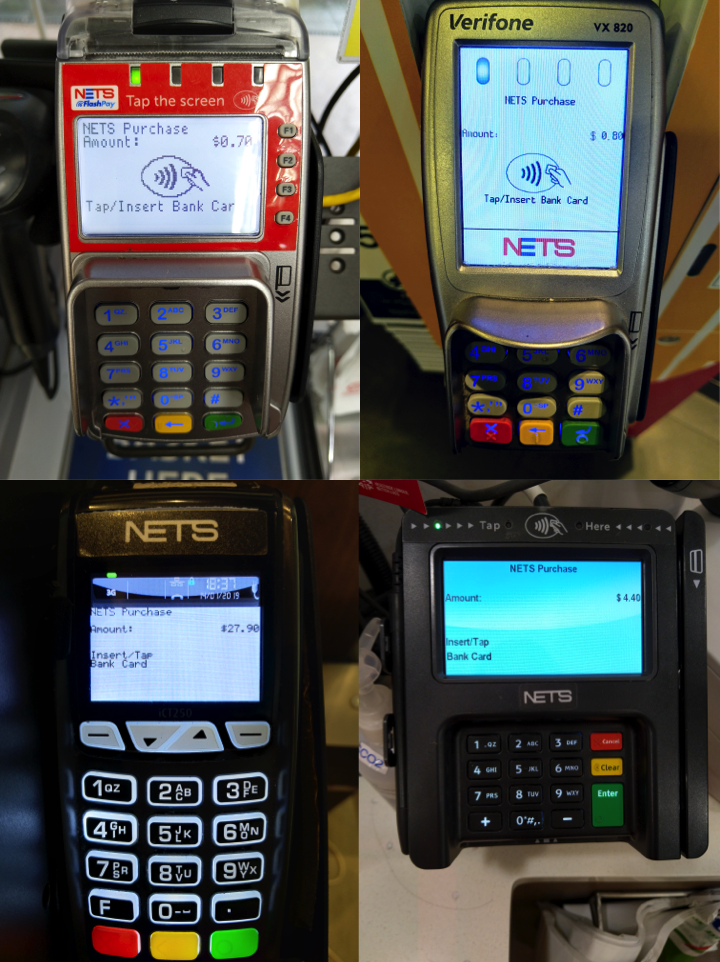
NETS Debit on various payment terminals (clockwise from top-left): Verifone VX520, Verifone VX820, Ingenico ICT250, Ingenico ISC250.

Key Information

Network for Electronic Transfers, colloquially known as NETS, is a Singaporean electronic payment service provider. Founded in 1986 by a consortium of local banks, it aims to establish the debit network and drive the adoption of electronic payments in Singapore. It is owned by DBS Bank, OCBC Bank and United Overseas Bank (UOB).[1]

The NETS Group (comprising NETS, BCS and BCSIS) provides a full suite of payments and financial processing services including direct debit and credit payments at point-of-sale (NETS) and online (eNETS), mobile payments (NETSPay), card services (CashCard, FlashPay card), electronic funds transfer (FAST, PayNow, GIRO) and payment and clearing services (Real-Time Gross Settlement, Cheque Truncation System). NETS is also a member of the Asian Payment Network (APN) and a council member of UnionPay International.

History

[edit]

NETS was first introduced to the public on 27 June 1985 as a 2-month pilot project involving 10,000 ATM card holders from the five local banks, namely DBS Bank, OCBC Bank, UOB, POSB Bank and OUB through 64 terminals installed at participating government offices, supermarkets, department stores and petrol kiosks.[2] The service was officially launched on 18 January 1986, allowing 1.3 million ATM card holders to make transactions through the initial NETS network of 195 terminals located in various retail outlets and by 1993, consumer spending through NETS reached S$1.14 billion.[3]

In 2020, NETS Group signed a long-term lease to two full floors and a ground-floor unit, at Boustead Projects' development, 351 on Braddell.[4]

Acceptance

[edit]

NETS operates Singapore's national debit scheme enabling customers of DBS Bank, POSB, HSBC, Maybank, OCBC Bank, Standard Chartered Bank, CIMB and UOB to make payments using their physical/contactless ATM cards or mobile devices at more than 120,000 acceptance points in Singapore including major retailers, food courts, hawker centres, convenience stores and supermarkets.[citation needed]

The nationwide acceptance infrastructure is the largest in Singapore and includes 54,000 Unified Point-of-Sale (Unified POS) terminals (which accept NETS, NETS FlashPay, debit and credit cards such as VISA, Mastercard, American Express, UnionPay, RuPay and JCB) and 94,000 QR acceptance points (for payments via NETSPay, PayLah!, Pay Anyone and Mighty). In 2011, NETS' debit system was designated as national payment system by the Monetary Authority of Singapore (MAS).[1]

In November 2018, it was announced that NETS can be used at 4,500 acceptance points in Malaysia, allowing users of NETS enabled cards issued by DBS, POSB, OCBC Bank and United Overseas Bank.[5]

Card services

[edit]

CashCard

[edit]
NETS CashCard
LocationSingapore
Launched1995; 30 years ago (1995)
Technology
  • EMV Chip
OperatorNETS Pte Ltd
CurrencySGD ($500 maximum load)
Credit expiry5 years
Validity
  • Electronic parking
  • Electronic road pricing
  • Retail payments
Retailed
  • Petrol kiosks (ceased in favour of NETS Motoring Card)
  • NETS Customer Service Centre

NETS introduced the 1st generation chip-based CashCard in 1995. The CashCard is a stored value card that is predominantly used as a payment mode for Singapore's Electronic Road Pricing (ERP) and car park charges since the introduction of the in-vehicle unit in 1997. The CashCard can also be used for retail purchases.

vCashCard

[edit]

In May 2015, NETS launched vCashCard, a virtual wallet for road tolls payment that allows motorists to drive through Singapore's Electronic Road Pricing (ERP) gantries seamlessly.[6] Road toll payments are automatically charged to their bank accounts or debit/credit cards. With NETS vCashCard, motorists do not need to worry about forgetting to insert a physical CashCard/FlashPay into the in-vehicle unit or having insufficient value in the CashCard/FlashPay and paying unnecessary ERP admin fees. Motorists can sign up for auto top-up service and view their ERP transactions at the vCashCard website or NETS vCashCard app from App Store or Google Play.

Contactless CashCard

[edit]

In May 2018, the 2nd generation contactless CashCard was released. The CEPAS CashCard card is based on the same specifications as the CEPAS FlashPay card, thus both cards can be used interchangeably. The Contactless CashCard was rebranded NETS Motoring Card in March 2021.[7]

FlashPay

[edit]
NETS FlashPay
NETS Motoring Card
LocationSingapore
Launched
  • 9 October 2009; 16 years ago (2009-10-09) (NETS FlashPay branding)
  • 2 May 2018; 7 years ago (2018-05-02) (NETS Contactless CashCard branding)
  • 22 March 2021; 4 years ago (2021-03-22) (NETS Motoring Card branding)
Technology
OperatorNETS Pte Ltd
CurrencySGD ($500 maximum load)
Credit expiry7 years
Auto rechargeAuto Top-Up by credit/debit card
Validity
Retailed
  • SimplyGo ticket offices
  • NETS Customer Service Centre
  • Convenience stores (7-Eleven, Cheers, Buzz)
  • Lazada and Shopee online channels
  • Petrol kiosks (NETS Motoring Card)
Website

The Singapore Government launched CEPAS 2.0 (Contactless e-Purse Application), a Singaporean specification of a common standard for electronic money smart card, in 2009. The transit market was opened to more issuers, enabling NETS to participate and subsequently launch the NETS FlashPay card on 9 October 2009.

FlashPay is a multipurpose contactless stored value smart card that can be used for a huge variety of quick payments at/on – MRT/LRT, public buses, taxis, ERP gantries (with the dual-mode in-vehicle unit), car parks (which have been upgraded to accept CEPAS-compliant cards), and 102,000 retail acceptance points island-wide.[8] It is comparable to the Octopus card in Hong Kong. Compared to EZ-Link, FlashPay is accepted at more retail shops, including most convenience stores, supermarkets, and fast food restaurants.

In October 2010, NETS launched the Auto Top Up service for the NETS FlashPay card, allowing commuters to automatically top up the value on their cards to a predetermined amount (S$30, S$40 or S$50) when it runs low or when there is insufficient stored value on the card to make payment at all MRT and LRT stations, public buses, ERP gantries and EPS (upgraded) carparks.[9]

The FlashPay Reader app was released in February 2016 for Android devices with NFC capabilities.[10] It allows topping up of FlashPay cards using NFC-enabled Android phones, with debit cards and credit cards as payment options. Cardholders can also check their card balance, card expiry date, view the last 30 transactions, register for Auto Top-Up by Credit/Debit Card and view RSVP balance with the FlashPay Reader.

Prepaid Card

[edit]
NETS Prepaid Card
LocationSingapore
Launched22 November 2022; 2 years ago (2022-11-22)
Technology
OperatorNETS Pte Ltd
CurrencySGD ($1,000 maximum load)
Credit expiry5 years
Auto rechargeAuto Top-up with credit or debit card on NETS App
Validity
Retailed
  • SimplyGo ticket office
  • Convenience stores (7-Eleven, Cheers, Buzz)
WebsiteNETS Prepaid Card

In November 2022, NETS launched the Prepaid Card.[11] The NETS Prepaid Card can be used by tourists, who do not have a Singapore-based bank account, to make payments at retail merchants that accept NETS.

Unlike the FlashPay card, the Prepaid Card uses online account-based ticketing, which works with the SimplyGo ticketing system. It is however not compatible with the ERP.

On 10 January 2024, LTA announced that NETS FlashPay cards will no longer be accepted for public transport fare payment from 1 June 2024, due to phasing out of the legacy card-based ticketing system. Commuters with NETS FlashPay Cards may exchange their current card for a free NETS Prepaid Card at SimplyGo Ticket Offices or Ticketing Service Centres.[12][13] Due to bottlenecks, high transaction volume, and technical issues with the SimplyGo transition on both EZ-Link and NETS payment networks, NETS announced that the free exchange for NETS Prepaid Cards which was planned to commence on 19 January 2024 has been postponed until further notice.[14]

Payment types

[edit]

NETS EFTPOS

[edit]

NETS EFTPOS is a nationwide infrastructure that enables DBS, HSBC, Maybank, OCBC, POSB, UOB and Standard Chartered Bank customers to make purchases at points-of-sale using their ATM cards. The NETS EFTPOS service is available at more than 130,000 acceptance points throughout Singapore.

NETS Unified POS

[edit]

NETS Unified POS was introduced to accept contact/contactless, credit and debit payments on one terminal. The terminal accepts NETS, NETS FlashPay, debit and credit schemes such as VISA, MasterCard, American Express, UnionPay and JCB, cards issued by partnering banks (e.g. BCA bank), as well as NFC-enabled mobile wallets like Apple Pay, Android Pay and Samsung Pay. NETS Unified POS can be integrated with loyalty programmes, prepaid services and point-of-sale via Electronic Cash Register interface.

eNETS

[edit]

eNETS is an online payment gateway services. It enables payment from all major credit cards and currencies as well as Direct Debit (internet banking payments) from the major banks in Singapore and China, including DBS (Singapore and Hong Kong), UOB, OCBC, Citibank and BNU.

NETS eCommerce

[edit]

NETS eCommerce was launched in 2016 to provide a quick and affordable end-to-end service to set up webstores. It is integrated with secured payment options using eNETS Debit and Credit.

NETS Contactless, NETS QR, and NETSPay

[edit]
NETSPay
DeveloperNetwork for Electronic Transfers Pte Ltd.
Initial release20 October 2017; 8 years ago (2017-10-20)
Final release
1.1.25 / October 8, 2023; 2 years ago (2023-10-08)
PlatformAndroid (NFC, QR code)
iOS (QR code)
Contactless bank card (NFC)
LicenseProprietary
WebsiteNETSPay

NETSPay is a digital wallet app. Launched in October 2017, it introduces 2 new payment options for NETS debit, NETS Contactless and NETS QR. NETS Contactless is supported on Android devices via NFC and HCE, and NETS QR is supported on Android & iOS devices via QR code.

ATM cardholders can digitise their bankcards with the app, replacing the debit card chip and PIN transaction at point-of-sale terminals that have been upgraded to accept contactless and QR code payments. Fingerprint ID or passcode authentication is required to access the app, with a user configurable session timeout. No PIN is required for transactions below $100.

NETS Contactless ATM cards were launched from the first quarter of 2018. In December 2018, NETS Contactless cards issued by DBS/POSB, UOB, OCBC began to be accepted for LTA's public transport account-based ticketing trial.[15] In May 2023, the NETS Contactless functionality was extended to Mastercard and Visa debit cards, in addition to the chip and PIN transaction method.[16]

The NETSPay wallet was discontinued on 1 December 2020 and the NETSPay app was discontinued on 31 October 2023.[17]

On 20 June 2025, NETS partnered with Shopee to allow ShopeePay users to make payments by scanning NETS QR codes on SGQR labels. (This currently excludes dynamically-generated NETS QR codes on POS terminals.)[18][19]

SGQR QR payments

[edit]

In September 2018, it was announced that the Singapore government has appointed NETS as the master acquirer to unify and roll out e-payments to all 12,000 stalls at hawker centres, canteens and coffee shops in Singapore.[20] The Government will cover transaction fees of 0.5% payable by merchants until 31 December 2024.[21] The initiative began its roll out to hawker stalls starting from June 2019 under SGQR, a single standardised QR code for e-payments.[22] The participating payment schemes for the NETS unified e-payment system at hawkers centres include: ActiveSG, Alipay, American Express, Singtel Dash, DBS PayLah, Diners Club International, Discover, EZ-Link, GrabPay, SLIDE Wallet, LifeUp Pay, LiquidPay, NETSPay, OCBC PayAnyone, RazerPay, Standard Chartered, UnionPay, UOB Mighty, VIA by Singtel, WeChat Pay, Aby Pay, Shopee Pay, XNAP.[23][24]

In November 2023, the Monetary Authority of Singapore announced a proof of concept for SGQR+, an upgraded version of SGQR that provides interoperability among a wide variety of payment schemes in a convenient and cost-effective way, through a single merchant acquirer. Merchants only need to maintain a relationship with a single preferred primary acquirer to accept multiple payment schemes, instead of multiple acquirers under the existing system.[25][26] Examples of similar integrated QR code payment systems in ASEAN include: QRIS in Indonesia, DuitNow in Malaysia, Thai QR in Thailand. Under the SGQR+ Proof of Concept, the stakeholders include Liquid Group (as Switch Operator) and NETS (as Master Merchant Acquirer).[27] The participating payment schemes for SGQR+ Proof Of Concept include: ActiveSG, Alipay, Alipay+, Changi Pay, Diners, Discover, DuitNow, EZ-Link, GLN, Google Pay (via XNAP), GrabPay, iAPPS, LiquidPay, Mastercard, Moolahgo, NETS, PromptPay, ShopeePay, Singtel Dash, UnionPay, Visa, WeChat, XNAP.[28]

Payment terminals

[edit]

These terminals are issued to retailers to accept NETS debit, NETS FlashPay/CashCard, debit/credit card payments.

Countertop Model Pin Pad Model Retailers Contactless Payment QR Code Payment Remarks
Verifone VX520 Verifone 1000SE Default terminal issued to most retail outlets from 2014 to 2017.

Phased out in 2023 and replaced by Ingenico Desk 5000

Depends
(might not detect some NFC devices/cards)
Printed on paper roll
  • Terminals with firmware that has not been updated do not support NETS Contactless and NETS QR, only NETS debit Chip-and-PIN and NETS FlashPay.
  • As the terminal screen is too small, a QR code has to be generated and printed on receipt paper for each NETS QR code transaction.
Ingenico ICT220 Ingenico IPP310 Most retail outlets with explicit support for NETS QR and NETS Contactless. (2018-present) Yes Yes
  • Supports NETS debit (Chip-and-PIN, contactless, dynamic QR code) and NETS FlashPay.
  • NETS QR code is generated dynamically and displayed on terminal screen.
  • Capable of accepting Visa PayWave, MasterCard PayPass, Amex ExpressPay*, UnionPay QuickPass*, JCB QUICPay* (*dependent on merchant)
Ingenico iWL250 n/a Retailers that require a portable terminal. (e.g. atrium fairs, roadshows)

Replaced by Ingenico Move 5000

Yes Yes
Ingenico ISC250 n/a 7-Eleven, Isetan, Starbucks
Self-checkout counters at Cold Storage, Giant Hypermarket (2018-2025)

Gradually replaced by Ingenico Desk 5000 in mid-2025.

Yes Yes
Ingenico ICT250 n/a Koufu food court (2018-2023)
Self-ordering kiosks at Burger King (2018-2023), KFC (2018-2025), KOI Thé, Pepper Lunch (2018-2023), etc.
Yes Yes
Verifone VX820 n/a NTUC Unity Healthcare (2018-2023), Cheers (2018-2023)
Self-checkout counters at McDonald's (2018-2023), NTUC FairPrice (2018-2023)

Phased out in 2023-2024 and replaced by Ingenico Desk 5000

Depends
(might not detect some NFC devices/cards)
Yes
Castles VEGA3000 n/a This terminal is issued to hawker centres. (2019-present) Yes Yes
Ingenico Desk 5000 n/a This is the default terminal is issued to most retail outlets since 2020-2021.

Current retailers as of 2024 include: Koufu food court, Burger King, McDonald's, Daiso, NTUC FairPrice (upgraded counters)

Retailers that support NETS/NETS FlashPay/NETS QR single selection for cashier: Yoshinoya, Watsons, Breadtalk, Bengawan Solo

Yes Yes
Ingenico Move 5000 n/a Retailers that require a portable terminal. (e.g. atrium fairs, roadshows) (2022-present) Yes Yes
Castles UPT1000F n/a This terminal is installed at some carpark gantries and vending machines since 2022-2023. Yes
Verifone VX680 n/a Food Junction (2018-2023)

Phased out in 2023-2024 and replaced by Ingenico Desk 5000

FlashPay RSVP
  • Used for NETS FlashPay RSVP (Retailer Stored Value Programme) payment.
    The NETS FlashPay RSVP private wallet will be discontinued on 19 November 2023.[29][30]

The launch of NETS QR and NETS Contactless in October 2017 required merchants' payment terminals to undergo a software update, as previously only chip-and-pin NETS debit payment was available. Merchants may display decals in stores to advertise acceptance of QR and contactless payments. Customers can identify if NETS QR and NETS Contactless are accepted by looking at the options listed on the payment terminal's menu.

Option Terminal with new firmware
(Ingenico ICT220)
Terminal with old firmware
(Verifone VX520)
F1 NETS FlashPay NETS FlashPay
F2 NETS (will prompt "Tap/Insert Bank Card") NETS (will prompt "Insert Bank Card")
F3 Credit Card/UPI International Card
F4 NETS QR Credit Card

On the Castles VEGA3000 and Ingenico Desk/Move5000 terminals issued since late 2022-2023, the "NETS EFTPOS Debit" and "NETS FlashPay" payment modes are combined into a single menu item as "NETS".

Hence, the cashier only has to press a single selection for NETS on the newer terminals, instead of pressing separate selections for NETS EFTPOS Debit and NETS FlashPay payment on previous terminals.[31][32]

For purchase transactions that are not entered manually on the payment terminal, and are generated automatically by some integrated point-of-sale (POS) systems, the payment mode (NETS, NETS FlashPay, NETS QR) still needs to be selected separately on the POS system by the cashier. Auto-generated purchase transactions can be identified by a light blue background on the payment terminal's payment screen.

Payment Mode Device Navigation
(Ingenico Desk/Move5000)
  • NETS EFTPOS Debit
    • upgraded debit cards & ATM cards with NETS contactless feature
    • NETS Prepaid Card
  • NETS FlashPay
    • NETS Motoring Card
–Enter purchase amount on the terminal
–Select "NETS" payment mode
–Tap and hold card/smartphone on the terminal for about 5 seconds, until a beep is heard
  • NETS QR
–Enter purchase amount on the terminal
–Select "NETS" payment mode
–Press "Select to pay by NETS QR"
–Scan NETS QR code with NETSPay, DBS PayLah, OCBC PayAnyone, or UOB TMRW mobile app

Comparison of payment modes

[edit]

Card payments – linked to bank account

[edit]
Payment Mode Description Year Introduced Registration Requirement Magnetic Stripe Chip and PIN Contactless payment Top Up Locations
• NETS Bank Card

(EFTPOS Debit)

Direct debit from bank account. 1985: Magnetic stripe card

2014: EMV card

2017: Tap-to-pay (with contactless ATM cards & NETSPay mobile app)

2023: Tap-to-pay (with co-branded VISA debit cards) [16]

The card is tied to user's bank account. No
(deprecated in 2014)
Yes Yes
(With a contactless ATM card at upgraded terminals; some cards still do not have contactless functionality.) (PIN required for ≥ $100)
• NETS Prepaid Card for SimplyGo

(Account-based Online Debit)

Online account-based ticketing wallet, for retail and public transport payments. It functions similarly to the NETS EFTPOS Debit card.

As the card information is stored on a central server, the card balance can be topped up without presence of physical card.

✓ It is compatible with the SimplyGo system for remote management of public transport cards.

✗ Fare cost and card balance will not be displayed at the gantry. Commuters have to create an account and sign in to the SimplyGo website or app, to view their travel history and its related fares.

✗ It is not compatible with ERP and carpark payments.

2022[33] Email address and phone number (international numbers are allowed) are required for registering an online account on the NETS mobile app.

The prepaid card is non-transferrable, after it has been registered to a user's online account.

No Yes
(card may need to be inserted for transactions ≥ $100 on older terminals, but PIN is not required)
Yes
(No authentication required)
Top-ups can currently only be done online with a NETS Bank Card (linked to a local bank account), or Visa/Mastercard/Amex cards (international cards are allowed) on the NETS mobile app.

Top-ups are currently unavailable at self-help machines.

Card payments – stored-valued cards

[edit]
Payment Mode Description Year Introduced Registration Requirement Magnetic Stripe Chip and PIN Contactless payment Top Up Locations
• NETS CashCard (1st generation)

(Card-based Offline Debit)

Card-based stored-value wallet, superseded by FlashPay/Contactless CashCard/Motoring Card.

It is the only stored-valued card which is compatible with 1st gen in-vehicle units and old carpark gantries that have not been upgraded since the release of the CEPAS specification in 2009.

1995
(discontinued in 2022)
No registration required.

Card is transferrable.

No
(deprecated in 2014)
Yes
(No authentication required)
No Top-ups can be made with cash or NETS EFTPOS cards.
  • NETS Self Service Stations, Top Up Machines
  • Local bank ATMs (DBS/POSB, OCBC and UOB)
  • 7-Eleven stores*
  • Cheers* and FairPrice Xpress*

(* a service fee is chargeable)

• NETS FlashPay (also branded as: NETS Motoring Card)

(Card-based Offline Debit)

Card-based stored-value wallet, based on CEPAS standard for retail (convenience stores, supermarkets, vending machines, fast food restaurants), public transport, and motoring payments.

✓ It can be used for retail and public transport payments, without remote management functionality.
It was originally announced that public transport payments would be phased-out on 1 June 2024, but the decision has since been reversed.[34]

✓ Commuters can see their fare cost and card balance at the gantry.

✓ It is compatible with dual mode in-vehicle units for ERP and carpark payments.

2009: NETS FlashPay
2018: NETS Contactless CashCard (2nd generation)
2021: NETS Motoring Card

Sales of NETS FlashPay cards at TransitLink Ticket Offices were stopped on 15 March 2022, to encourage adoption of the SimplyGo account-based system.[35][36]
After LTA's decision on 22 January 2024 to extend the existing adult card-based ticketing system, NETS has announced that they will resume sales of NETS FlashPay cards at SimplyGo Ticket Offices and convenience stores.[37]

NETS FlashPay cards are also sold under an alternate branding, NETS Motoring cards (previously Contactless CashCard), at petrol stations and convenience stores.

No No Yes
(No authentication required)
Top-ups can be made with cash, NETS EFTPOS cards, Visa/Mastercard/JCB cards.
  • Add Value Machine Plus (AVM+), General Ticketing Machines (GTMs)
  • TransitLink Ticket Office
  • NETS Self Service Stations, Top Up Machines
  • Local bank ATMs (DBS/POSB, OCBC and UOB)
  • 7-Eleven stores*
  • Cheers* and FairPrice Xpress*
  • NETS FlashPay Reader App*

(* a service fee is chargeable)

App payments

[edit]
Payment Mode Description Year Introduced Registration Requirement Contactless payment QR code payment Other Info
• NETSPay Stores digitised NETS EFTPOS Debit cards.

Includes a prepaid wallet for peer-to-peer money transfers and UnionPay support.

2017

The NETSPay app was discontinued on 31 October 2023.[17]

The card is tied to user's bank account. Yes
(with an NFC-enabled phone at upgraded terminals, PIN required for ≥ $100)
Yes
(at upgraded terminals, PIN required for ≥ $100)
Direct deduction from bank account for topping up UnionPay wallet. (discontinued on 1 Dec 2020)[38]
• NETS QR Direct debit from bank account or mobile wallet.

2017 (banking apps)

2025 (mobile wallets)

iBanking account or mobile wallet account No Yes

Support for banking apps was introduced to: DBS PayLah, OCBC app, UOB TMRW.[39]

Support for mobile wallets was introduced to: ShopeePay, Singtel Dash. Overseas wallets include: Alipay+, BHIM app, Indonesian digital payment apps, Malaysian digital payment apps, Thai Bank apps, UnionPay app, WeChat Pay.

Currently, ShopeePay and Singtel Dash only support static NETS QR codes on printed SGQR labels, not dynamically-generated NETS QR codes on POS terminals.[40]

Online payments

[edit]
Payment Mode Description Year Introduced Required Information Stored Payment Details Supported Platforms Payment Process
• eNETS An online payment gateway for online payments via bank account direct debit.

It can be used at merchants such as Singapore government services, airlines bookings, bill payments at AXS online.

2001[41] • iBanking login details

• Hardware token or bank mobile app to authenticate each transaction

No
iBanking login & authentication required each time.
Mobile: Web Browser

Desktop: Web Browser

While making payment on a merchant's app/website, the user will be redirected to the eNETS website. The user has to login with their iBanking login details and authenticate the transaction with a hardware token or mobile app by the bank.
• NETSPay A digital wallet app that stores digitised NETS EFTPOS Debit cards.

It can be used for both physical and online purchases, at merchants such as AXS Payment, Qoo10.

2017

The NETSPay app was discontinued on 31 October 2023.[17]

• ATM card number (last 4 digits)

• NRIC number

• SMS OTP verification (one-time setup)

Up to 10 bank cards Mobile: Android, iOS app. Screen lock required on mobile device.

Desktop: Web Browser (needs to be used with mobile device that has the NETSPay app and a camera)

Mobile: While making payment on a merchant's app/website, the user will be automatically redirected to the NETSPay app. For purchases ≥ $100, PIN is required.

Desktop: The user has to open the NETSPay app on a mobile device to scan the QR code shown on the website on the desktop computer.

• NETS Click An in-app payment service for NETS EFTPOS Debit cards.

It can be used on merchant apps such as CDG Zig, Singtel Prepaid hi!App, AXS Payment.[42]

2019 • ATM card number (last 4 digits)

• NRIC number

• SMS OTP verification (one-time setup)

Only 1 bank card Mobile: Merchant apps with NETS Click integration on Android, iOS.

Desktop: Unavailable

Mobile: After adding a bank card, the user can make mobile payments on selected merchants' mobile apps with just a click.

ATM switching services

[edit]

NETS provides local and regional ATM switching services for banks.[43] NETS partnered with Malaysian Electronic Payment System (MEPS) in Malaysia to enable bilateral cross-border ATM withdrawal services, and UnionPay in China to enable its cardholders to make purchases and withdraw cash from ATMs in Singapore. India also made a deal in 2018 wherein Indian RuPay Cards have acceptance in Singapore and same for the Singaporean counterpart in India.

[edit]

See also

[edit]

References

[edit]
Revisions and contributorsEdit on WikipediaRead on Wikipedia
from Grokipedia
NETS is a leading Singaporean payments services group that provides electronic payment solutions, enabling seamless digital transactions for consumers, merchants, and banks across the payments value chain.[1][2] Founded in 1985 as a joint venture by major local banks, NETS operates Singapore's national payment infrastructure, including debit schemes, contactless payments, and electronic funds transfer systems.[1][3] The company comprises three main entities: NETS, which handles payment networks and card services; Banking Computer Services (BCS), focused on clearing and settlement; and NETS Solutions, providing financial market infrastructure and technology solutions for financial institutions and corporates.[1] Fully owned by Singapore's three largest banks—DBS Bank, OCBC Bank, and United Overseas Bank (UOB)—NETS maintains a strong position in the market with the largest acceptance network, exceeding 150,000 points of sale.[1][3] Its key offerings include the NETS debit card, contactless payments (with a transaction limit increasing to S$200 as of July 2025), prepaid cards like NETS FlashPay, and integration with real-time transfer systems such as PayNow and FAST.[1][4] Over the decades, NETS has driven Singapore's shift toward a cashless society, introducing innovations like the NETS CashCard in 1997 and supporting government initiatives for widespread digital adoption.[1] As of 2025, it continues to expand cross-border capabilities and merchant empowerment tools, processing millions of transactions daily while prioritizing security and accessibility.[3][2]

Overview

Founding and Mission

NETS was established on June 27, 1985, as a two-month pilot project initiated by a consortium of five major Singaporean banks—DBS Bank, POSB, OCBC Bank, UOB, and OUB—to pioneer electronic payments and reduce reliance on cash transactions.[5][6] The pilot involved 10,000 ATM cardholders and 64 EFTPOS terminals installed at select merchant locations, marking Singapore's early steps toward a shared national debit infrastructure that avoided fragmented bank-specific systems.[5][3] The company's founding mission centered on implementing a nationwide Electronic Funds Transfer at Point-of-Sale (EFTPOS) system to facilitate debit card payments for everyday purchases, aligning with Singapore's broader vision of transitioning to a cashless society.[1] This consortium-driven approach aimed to create a unified electronic banking platform that promoted efficiency, security, and widespread adoption of digital transactions across the financial ecosystem.[3][7] Early implementation faced challenges, including limited merchant adoption, with the pilot confined to just 39 participating outlets amid the technological constraints of 1980s infrastructure such as nascent network reliability and hardware limitations.[3] Despite these hurdles, the initiative laid the groundwork for NETS's expansion into a cornerstone of Singapore's payment landscape, evolving over decades to encompass broader digital services.[5]

Current Scope and Impact

As of 2025, NETS operates as Singapore's leading payments services group, processing over S$1.4 trillion in annual transaction value through its payment and clearing solutions, which encompass debit, contactless, QR, and online transactions.[1] This scale enables seamless payments for more than 10 million users across six local and foreign banks, while serving over 150,000 acceptance points and 39,000 merchant partners nationwide.[8][1] As the largest payment acceptance network in the country, NETS holds a dominant position in point-of-sale (POS) infrastructure, facilitating everyday commerce for consumers and businesses alike.[1] NETS has significantly contributed to Singapore's transition to a cashless society, integrating with national initiatives to promote digital payments and reduce reliance on physical currency. Its solutions support diverse transaction types, including NETS QR for unified payments via apps like DBS PayLah! and compatibility with systems such as SGQR for interoperable QR codes and SimplyGo for public transport fares using contactless NETS cards.[1] In recognition of its influence, NETS was named the Top Brand 2025 in Digital Payments by Influential Brands, highlighting its role in driving adoption and innovation in the sector.[1] These efforts have streamlined operations across retail, transport, and e-commerce, with recent enhancements like the SGQR+ rollout expanding options for merchants and consumers.[9] By providing accessible digital payment options, NETS supports financial inclusion, particularly for underserved segments, while helping businesses lower cash handling costs through efficient electronic alternatives.[1] This economic impact extends to broader societal benefits, such as faster transaction processing and reduced operational overheads, aligning with Singapore's Smart Nation vision for a digitized economy.[4] Originating from a 1985 pilot project, NETS's evolution underscores its foundational role in the nation's payment ecosystem.[1]

History

Inception and Early Years (1985-1990s)

NETS was established in 1985 by a consortium of five local banks—DBS Bank, OCBC Bank, United Overseas Bank (UOB), Overseas Union Bank (OUB), and the Post Office Savings Bank (POSB)—to pioneer electronic funds transfer at point-of-sale (EFTPOS) services in Singapore, aiming to foster a cashless society.[5] The initiative began with a two-month pilot project launched on June 27, 1985, involving 10,000 ATM cardholders from these banks and 64 EFTPOS terminals installed at 39 select locations, including government offices, supermarkets, department stores, and petrol kiosks.[5] During the pilot, participation expanded to 100,000 cardholders, demonstrating initial viability for ATM-linked debit payments where users swiped cards and entered PINs for direct bank deductions.[5] Following the pilot's success, NETS transitioned to a full island-wide rollout on January 18, 1986, supporting approximately 1.3 million ATM cardholders through 195 EFTPOS terminals at 84 retail outlets, such as department stores, supermarkets, petrol stations, government departments, and restaurants.[5] This phase integrated NETS with existing bank ATM networks for seamless debit processing, marking Singapore's early adoption of interbank electronic payments.[1] Infrastructure development accelerated in the late 1980s and 1990s, with thousands of EFTPOS terminals installed nationwide; by 1996, over 13,000 terminals were operational, rising to more than 16,000 by 1998.[10] Concurrently, transaction volumes grew substantially, reaching 42.4 million in 1996 and 57.9 million by 1998, while total value exceeded S$3.5 billion annually in the late 1990s.[10] Adoption milestones underscored NETS's foundational impact, with consumer spending surpassing S$1 billion by 1993, reflecting widespread merchant and user uptake of debit-based EFTPOS.[5] In 1992, NETS introduced Asia's first nationwide Electronic Clearing System, enhancing interbank GIRO for recurring payments like bills and salaries.[1] Building on this, 1996 saw the groundwork for nationwide prepaid solutions with the launch of the NETS CashCard, Asia's first electronic prepaid card system, which enabled stored-value transactions and further diversified electronic payment options.[11] By the end of the decade, these developments solidified NETS's role in Singapore's payment infrastructure, processing millions of debit and clearing transactions annually.[10]

Growth and Expansion (2000s-2010s)

During the 2000s, NETS experienced substantial growth in adoption and infrastructure, building on its foundational EFTPOS system to diversify payment options and expand acceptance networks. The NETS CashCard, introduced in 1996 as one of the world's first nationwide electronic prepaid cards, achieved full-scale adoption by the early 2000s, recording 100 million transactions worth SGD 174 million in 2000 alone.[12] This card became integral to Singapore's electronic payment ecosystem, particularly through its integration with the Electronic Road Pricing (ERP) system launched in 1998, enabling seamless deductions at gantries for road usage charges, and for parking payments at thousands of locations. By 2000, NETS had expanded its acceptance points to over 20,000 terminals across more than 12,000 retail outlets, facilitating broader merchant penetration and supporting the shift toward cashless transactions in retail and motoring sectors.[7][11] In the 2010s, NETS accelerated innovation with contactless and digital solutions, enhancing market penetration amid rising e-commerce and mobile usage. The launch of NETS FlashPay in October 2009 marked a pivotal shift to contactless payments for retail and public transport, allowing commuters to tap cards for bus and MRT fares and competing directly with EZ-Link. Complementing this, eNETS, established in 2000, evolved into a robust online payment gateway, processing debit and credit transactions for e-commerce merchants. Key milestones included the 2015 introduction of the NETS Unified POS Solution, which streamlined acceptance of NETS, credit, and debit cards at a single terminal, and the 2014 rollout of Fast and Secure Transfers (FAST) for 24/7 real-time fund transfers. By 2009, NETS's network had grown to over 56,000 acceptance points, reflecting its role in Singapore's Smart Nation initiative through QR code pilots at hawker centers and small merchants to promote inclusive digital payments. Partnerships with international networks, such as the 2019 real-time cross-border linkage with Malaysia's DuitNow, further extended NETS's reach beyond domestic borders.[1][13] This expansion was not without challenges, as global players like Visa and Mastercard intensified competition in card-based payments. NETS addressed this by deepening integrations with local banks, ensuring seamless interoperability for debit transactions and maintaining its dominance in low-value, everyday payments through bank-backed infrastructure. By the late 2010s, these efforts had solidified NETS's position, processing billions in transaction value annually.[1]

Recent Developments (2020-2025)

In response to the COVID-19 pandemic, NETS accelerated the adoption of QR code and contactless payment solutions to support safer, digital transactions across Singapore, emphasizing its role in driving a cashless economy.[14] This period marked a strategic shift toward enhanced digital innovation, building on NETS's foundational products like the CashCard to meet heightened demand for hygienic payment methods.[14] In 2024, NETS introduced NETS SoftPOS on August 13, a terminal-less solution that enables merchants to accept contactless card and QR payments using Android smart devices, reducing costs and setup barriers for small businesses.[15] Later that year, on November 7, NETS announced the islandwide rollout of SGQR+, an enhanced unified QR payment system, with technical implementation completed by Q4 2024 to integrate additional issuers like Maybank and expand seamless payment options for consumers.[9] Concurrently, integration changes with the SimplyGo platform led to the discontinuation of non-upgraded NETS FlashPay cards for public transit fares effective June 1, 2024, prompting a transition to account-based ticketing and prepaid alternatives.[16] NETS continued its expansion into regional interoperability through ASEAN cross-border QR payment linkages, enabling seamless transactions with networks in Indonesia (via QRIS since November 2023), Malaysia (DuitNow since March 2023), and Thailand (PromptPay).[17][18] In July 2025, the Monetary Authority of Singapore (MAS) launched a backup system for NETS contactless payments to enhance resilience against disruptions, allowing continued transactions via alternative bank channels during outages.[19] By August 2025, NETS enhanced user convenience with fee-free mobile top-ups for cards like NETS FlashPay and Prepaid via the NETS App, supporting on-the-go balance additions using linked bank or credit cards.[20] In March 2025, NETS appointed Alex Woo, a technology veteran with over 30 years of experience including roles at DBS Bank, as CEO of its subsidiary Banking Computer Services (BCS) to lead advancements in payment infrastructure.[21] That year, NETS was recognized as the top brand in digital payments at the Superbrands Singapore awards and received the Marketing - Payments accolade at the SBR National Business Awards, underscoring its impact on Singapore's payment ecosystem.[1][22] In October 2025, NETS marked its 40th anniversary, reflecting on its evolution in driving Singapore's cashless society amid diverse payment options.[3] Later that month, NETS joined five other ASEAN payment networks in a 50-year plan for cross-border interoperability.[23] In November 2025, Singapore Pools announced it would absorb transaction fees for NETS payments, enhancing accessibility.[24]

Ownership and Organization

Shareholders and Governance

NETS is owned by Singapore's three largest banks—DBS Bank, OCBC Bank, and United Overseas Bank (UOB)—a consortium arrangement established at its founding in 1985 and unchanged as of 2025.[1] This structure ensures that the company's strategic direction is guided by the interests of the domestic banking sector, fostering collaboration on national payment infrastructure initiatives.[25] The governance framework of NETS centers on a board of directors composed primarily of representatives from its shareholder banks, providing oversight on key decisions related to innovation, risk management, and market expansion. For instance, in December 2024, Lawrence Goh, UOB's Head of Group Technology & Operations, joined the board as UOB's designated representative, succeeding Eddie Khoo and bringing over 30 years of expertise in digital transformation to support NETS's payment ecosystem enhancements.[26] The board is currently chaired by Jeremy Soo, Managing Director and Head of Consumer Banking Group at DBS, who assumed the position on September 1, 2024, leveraging his extensive experience in consumer banking to steer strategic priorities.[27] Day-to-day leadership is provided by Group CEO Lawrence Chan, appointed in the early 2020s, who oversees the NETS Group with more than 20 years of experience in payments and technology, focusing on sustainable growth and technological integration.[1] Decision-making at NETS prioritizes alignment with Singapore's national payment policies, emphasizing interoperability and financial inclusion, while adhering strictly to regulatory standards from the Monetary Authority of Singapore (MAS). The company's Electronic Fund Transfers at Point of Sale (EFTPOS) system operates as a designated System-Wide Important Payment System (SWIPS) under the Payment Services Act, subjecting it to MAS oversight for operational resilience, efficiency, and minimal disruption to public confidence in retail payments.[28] This compliance-driven approach is reflected in NETS's internal risk and governance practices, led by figures such as Group Chief Risk and Compliance Officer Stephen Lee, ensuring adherence to MAS guidelines on system safety and financial stability.[1] Throughout its history, NETS has preserved its fully bank-owned model to maintain stability and close ties with the banking ecosystem, enabling consistent support for Singapore's cashless economy goals without the ownership shifts seen in some global payment networks.[25]

Corporate Structure and Subsidiaries

The NETS Group is structured as a leading payments services organization in Singapore, consisting of three primary entities: NETS, which serves as the core payments operator managing debit schemes and digital payment solutions; Banking Computer Services (BCS), responsible for interbank clearing and financial switching infrastructure; and NETS Solutions, dedicated to technology integrations for merchants.[1] This composition enables the group to cover the full spectrum of payment processing, from consumer-facing transactions to backend settlement systems.[1] BCS operates as the key infrastructure provider for Singapore's national payment ecosystem, handling interbank clearing processes such as FAST, PayNow, and GIRO to facilitate efficient fund transfers between financial institutions.[29] It also supports ATM networks through shared financial switching capabilities, ensuring seamless connectivity across banks.[29] Under bank ownership oversight, BCS processes over SGD 1.4 trillion in annual transactions, underscoring its critical role in maintaining payment stability.[1] NETS Solutions focuses on delivering specialized software and integration tools for merchants, including point-of-sale (POS) systems and application programming interfaces (APIs) that enable customized payment acceptance.[1] These offerings support value-added services like digital receipts and integrated merchant portals, allowing businesses to manage transactions, inventory, and reporting efficiently.[8] By providing scalable tech solutions, NETS Solutions enhances merchant adoption of cashless payments across in-store and online channels.[1] The entities within the NETS Group leverage shared infrastructure to create synergies, such as unified clearing and switching networks that ensure real-time settlement and interoperability for consumers, merchants, and banks.[1] This integrated approach promotes a cohesive payments ecosystem, with the total group employing more than 1,000 staff primarily based in Singapore as of 2025.[3]

Core Services

Card Services

NETS's card services encompass a range of stored-value cards designed for convenient micropayments, transit, retail, and other everyday transactions in Singapore. These cards operate on contactless technology compliant with standards like CEPAS (Contactless e-Purse Application Standard), enabling quick taps at acceptance points without the need for cash or traditional debit linkages.[30]) Issued primarily through partnerships with banks, convenience stores, and transit offices, the cards emphasize reloadability and basic security features to facilitate secure, low-value purchases.[31][32] The CashCard, launched in 1995 as one of Singapore's earliest electronic prepaid solutions for micropayments, initially targeted small retail and vending transactions. Over time, it evolved to include variants such as the vCashCard, a virtual wallet introduced in 2015 for electronic road pricing (ERP) and parking payments via mobile app integration.[33] The Contactless CashCard, released in 2018 as a second-generation NFC-enabled version, supports auto top-ups and rewards programs like WINK+Go, allowing users to tap for parking, retail, and select services while tracking balances through the NETS App.[34][35] These cards are reloadable at ATMs, kiosks, or the NETS App using linked bank accounts, with security features including balance notifications and the ability to block lost cards, though no PIN is required for low-value taps.[36] Transaction limits, such as a daily cap of S$200 for contactless payments effective from 16 July 2025, help mitigate risks.[37] NETS FlashPay, introduced in 2009 as a multi-purpose contactless stored-value card, facilitates payments for public transit (buses, MRT, LRT) and retail shopping at over 150,000 points.[38] It integrates with the SimplyGo system for account-based ticketing since 2019, offering features like auto top-up and real-time balance viewing at fare gates.[39] A planned phase-out for adult public transport fares from 1 June 2024 was postponed, and as of 2025, FlashPay remains accepted for transit alongside retail and motoring uses.[40] Cards are issued at transit offices, convenience stores like 7-Eleven, and petrol stations for S$10 (including S$5 stored value), with a maximum balance of S$500 and up to three top-ups per day.[31] Security includes a 12-month rolling spend limit of S$28,000, beyond which the card is automatically blocked, and no refunds for lost cards.[31] The NETS Prepaid Card, launched in November 2022 as a general-purpose stored-value option, serves gifts, top-ups, and versatile spending across transit and 150,000+ retail points.[32] It supports contactless taps and QR code loading via the NETS App, where users can link up to 10 cards, set spending limits, and receive transaction alerts.[30] Available for purchase at SimplyGo offices, 7-Eleven, Cheers, online platforms like Shopee, and transport terminals for S$10 (with S$5 value), the card has a five-year validity and allows refunds for lost or expired balances within 12 months.[30] Reloads occur via the app (using bank or credit cards), online portals, or stores, with auto top-up options from S$10 to S$100 and a maximum of five per day; an annual rolling limit of S$30,000 applies.[30] Like other NETS cards, it integrates seamlessly with point-of-sale terminals for tap payments.[41] Across these offerings, issuance typically involves banks and retail partners, with cards activated upon purchase and protected by app-based controls such as PIN entry for high-value transactions, remote locking, and biometric verification for top-ups.[42] Daily transaction limits, exemplified by the S$200 contactless threshold, ensure controlled usage while supporting efficient micropayments.[37]

Point-of-Sale Payment Solutions

NETS provides comprehensive point-of-sale (POS) payment solutions tailored for in-person transactions at merchants across Singapore, facilitating secure and efficient debit and card-based payments through dedicated infrastructure and processing networks. These solutions form the backbone of the country's retail payment ecosystem, enabling merchants to accept bank-linked debit payments via electronic funds transfer at point-of-sale (EFTPOS) systems. As the national debit scheme operator, NETS handles the full transaction flow from authorization to settlement, ensuring interoperability with local banks such as DBS, OCBC, UOB, and Standard Chartered.[28][43] The cornerstone of NETS's POS offerings is the NETS EFTPOS system, introduced in 1985 and publicly launched island-wide on January 18, 1986, as Singapore's pioneering electronic payment infrastructure for ATM card usage at physical locations. This PIN-based system supports direct debit from bank accounts, processing high-volume transactions securely and settling funds typically within one business day. It powers payments at over 90% of Singapore's POS terminals, underscoring its dominance in everyday retail environments like supermarkets and convenience stores. NETS acts as the sole EFTPOS scheme operator, processor, and acquirer for these transactions, integrating with more than 20,000 dedicated terminals nationwide.[5][7][28] Complementing EFTPOS, the NETS Unified POS terminal represents an advanced, all-in-one hardware solution that streamlines merchant operations by supporting multiple payment methods on a single device, including NETS debit cards and compatible credit cards from major networks. Deployed across over 54,000 units as of 2023, this terminal accepts transactions from domestic and international cards, reducing the need for multiple devices and optimizing counter space in high-traffic outlets. It enables seamless processing for over 100,000 merchants, from small retailers to large chains, by handling card dips, swipes, and taps in a unified workflow. Brief compatibility with cards like Visa and Mastercard is ensured through integrated acquiring partnerships, though detailed card products are managed separately. In August 2024, NETS launched SoftPOS, allowing merchants to accept contactless payments using Android smart devices without dedicated hardware.[44][45][43][46] NETS payment terminals feature robust hardware designed for reliability in retail settings, including contactless readers compliant with EMV standards for secure tap-to-pay functionality up to specified limits. Available in wired and wireless models, these devices incorporate PIN pads for authentication, thermal printers for receipts, and connectivity options like Ethernet or 4G for real-time transaction routing. NETS oversees the full lifecycle, from installation at merchant sites to ongoing maintenance and software updates, ensuring compliance with PCI DSS security protocols and minimizing downtime. Wireless variants offer portability with battery life comparable to mobile devices, supporting several hours of active use per charge.[8][43] The NETS acceptance network spans over 150,000 POS points across Singapore, encompassing diverse merchant categories such as food and beverage, grocery, and services, with a focus on enabling widespread debit access. This extensive coverage, including more than 96,000 locations equipped for advanced features, positions NETS as the largest acquirer in the market. Merchants incur transaction fees typically ranging from 0.8% for standard NETS debit payments to 1-3% for integrated card types, structured as a flat rate per successful transaction plus any applicable terminal rental costs; these fees support the network's operational scalability while remaining competitive for small businesses.[43][47][8][41]

Online and Digital Payment Options

NETS provides several online and digital payment solutions tailored for e-commerce and virtual transactions in Singapore, enabling secure processing for merchants and consumers alike. The flagship offering, eNETS, serves as an online debit gateway introduced in 2000 through its subsidiary ENETS Pte. Ltd., facilitating direct bank transfers and card payments without the need for physical infrastructure.[48][49] It supports debit and credit card transactions from major networks such as Visa, Mastercard, and American Express, alongside direct debits from local banks including DBS/POSB, OCBC, Standard Chartered, and UOB.[49] Additionally, eNETS incorporates 3D Secure authentication protocols, including Verified by Visa, Mastercard SecureCode, and Amex SafeKey, which require one-time passwords (OTPs) for enhanced verification during online purchases.[49] Complementing eNETS, NETS eCommerce offers a comprehensive suite for integrating payments into websites and applications, launched in 2016 to streamline setup for online merchants. This solution pre-integrates with popular shopping cart platforms, supports multi-currency transactions in SGD, USD, JPY, CNY, AUD, NZD, and GBP, and handles recurring billing for subscription-based services. In November 2023, NETS expanded cross-border QR payments with linkages to Indonesia and Malaysia via NETS QR.[50] Developers can embed these capabilities via APIs provided through the NETS Developer Portal, allowing seamless customization and real-time transaction processing for e-commerce environments.[51] In the realm of digital wallets, NETS enables virtual card versions for specific use cases, such as the vCashCard introduced in 2015, which functions as a cardless digital wallet for automatic deductions on electronic road pricing and parking fees, linked directly to users' bank accounts.[36] This extends to broader API support for developers to incorporate virtual payment options into apps, promoting frictionless online experiences while maintaining compatibility with NETS's core debit ecosystem.[51] NETS's online payment infrastructure adheres to stringent security standards, holding PCI DSS Level 1 certification to protect cardholder data during transmission and storage.[52] Fraud mitigation is further bolstered by 3D Secure protocols and advanced monitoring tools, ensuring compliance with Singapore's regulatory requirements for digital transactions as of 2025.[49]

ATM and Financial Switching

NETS operates a comprehensive ATM switching network in Singapore, routing transactions for partner banks including OCBC and UOB across their ATMs to support essential services such as cash withdrawals, balance inquiries, and card reloads.[53] This infrastructure enables seamless access for cardholders at thousands of machines nationwide, contributing to the country's total of approximately 3,000 ATMs as of 2024. By handling authorization and routing, NETS ensures efficient processing without requiring direct bank-to-bank connections for every transaction.[29] Through its subsidiary Banking Computer Services (BCS), NETS delivers real-time interbank switching for financial transactions, acting as the backbone for digital money transfers between individuals, organizations, and institutions.[29] BCS integrates with the Monetary Authority of Singapore's Electronic Payment System (MEPS), facilitating clearing and settlement of interbank funds transfers while supporting high-volume, secure routing.[53] This setup processes significant daily volumes of switches, with fees distributed among participating banks to maintain the shared network.[54] Key features of NETS's ATM and switching services include cross-border access, such as ATM cash withdrawals in Malaysia via partnerships like those with PayNet, though certain arrangements, including MyDebit CBPOS services, were discontinued in 2025.[55] In response to potential disruptions, backup mechanisms were introduced in 2025 to enhance system resilience during downtime, ensuring continued operation of critical switching functions.[19] These enhancements underscore NETS's role in maintaining reliable financial infrastructure amid growing transaction demands.[29]

Payment Methods Comparison

Debit and Bank-Linked Payments

NETS's debit and bank-linked payments primarily operate through the EFTPOS (Electronic Funds Transfer at Point of Sale) system, which facilitates real-time deductions directly from a user's linked bank account using an ATM or debit card.[7] To initiate a transaction, the cardholder presents their card at a NETS-enabled terminal, swipes or inserts it, and enters a PIN for verification, ensuring secure authorization by the issuing bank.[56] For contactless transactions, no PIN is required for amounts up to S$200 (effective from July 16, 2025), after which the terminal prompts for PIN entry.[37] These payments feature daily transaction limits set by the issuing banks, typically ranging from S$2,000 to S$5,000; for example, OCBC sets a default of S$5,000 for certain debit transactions, while UOB caps at S$2,000 and Maybank at S$3,000.[57][58][59] Security is enhanced through chip technology and PIN authentication, which prevent unauthorized use and comply with Payment Card Industry Data Security Standards.[8] A key advantage of NETS EFTPOS is the absence of interest charges or transaction fees for users, as funds are debited directly from the bank account without credit extension.[56] Merchants benefit from instant settlement, enabling immediate access to funds upon transaction approval.[60] Common use cases include high-value retail purchases, utility bill payments, and everyday services, with widespread acceptance at supermarkets, clinics, and government outlets across Singapore. However, limitations include the requirement for a physical card and PIN for transactions exceeding the contactless threshold, which can slow down processes compared to fully digital alternatives.[56] This makes it less ideal for very small, quick transactions where speed is prioritized over value. Terminal acceptance for these payments is detailed in NETS's point-of-sale solutions.[8]

Stored-Value and Prepaid Cards

NETS offers a range of stored-value and prepaid card solutions, including the NETS CashCard, NETS FlashPay, and the more recent NETS Prepaid Card, all designed as pre-loaded payment instruments that store funds for use without requiring an ongoing bank linkage after initial purchase.[30][61] These cards function by allowing users to load value upfront, enabling seamless transactions at NETS-enabled points of sale. The NETS Prepaid Card, launched in 2022 as a successor to FlashPay for many applications, supports contactless tapping and QR payments, while the CashCard and FlashPay emphasize chip-based and contactless micropayments respectively.[30] Loading and spending on these cards are facilitated through multiple channels, with no bank account necessary post-purchase for basic operations. Users can top up via the NETS App using linked bank cards, credit/debit cards, or auto top-up features; cash at 7-Eleven stores, NETS kiosks, or assisted service points; or ATMs from banks like DBS/POSB, OCBC, and UOB.[30][61] Minimum top-up amounts start at S$10, with maximums of S$100 per transaction and up to five top-ups per card per day; spending occurs via tap at over 150,000 acceptance points for retail and public transport, or for smaller values at vending machines.[30] These cards support anonymous one-off top-ups, preserving user privacy similar to cash, and enable offline tap payments at compatible terminals without real-time network dependency.[30][61] Key advantages include support for micropayments in scenarios like vending machines and transit fares, where small, frequent transactions are common, as well as anonymity for gifting purposes since no personal registration is required for anonymous use.[30][61] Their offline resilience allows continued functionality in low-connectivity environments, making them suitable for quick, on-the-go purchases without app intervention.[30] Primary use cases encompass transport fares on buses, MRTs, and LRTs; small retail transactions; and everyday expenses like vending snacks or drinks, with cards valid for up to five years for Prepaid and seven years for CashCard/FlashPay, followed by refund windows of 12 and 24 months respectively.[30][61] Limitations include balance caps of S$500 for CashCard and FlashPay, and S$1,000 per account for Prepaid Card, alongside potential reload fees such as S$0.50 at certain top-up points or S$1 monthly post-expiry for refunds.[30][61] Funds are non-retrievable if cards are lost or stolen, and an annual spending limit of S$28,000 to S$30,000 applies across products, with reserved charges like S$3.50 for low-balance transit use on Prepaid Cards.[30][61] Card issuance, including personalization options, is handled through authorized channels as outlined in NETS's broader card services.[30]

Contactless and QR-Based Payments

NETS offers contactless payment solutions through near-field communication (NFC) technology, enabling users to tap compatible cards or mobile devices at point-of-sale terminals for quick transactions. These payments support EMV standards, ensuring secure and standardized processing across participating merchants in Singapore. By 2025, contactless payments have achieved widespread adoption, with over 80% of consumers utilizing them regularly, reflecting high merchant coverage and integration into everyday retail environments.[62][63][64] NETS contactless functionality extends to both physical debit cards and NFC-enabled smartphones, allowing seamless taps without physical insertion or swiping. Transactions under S$200 do not require a PIN, streamlining low-value purchases and enhancing user convenience at supported outlets. This system has been bolstered by post-COVID preferences for touchless methods, reducing direct contact and promoting hygiene in high-traffic settings like retail and transit.[56][65][66] Complementing NFC, NETS provides QR-based payments via NETSPay, a mobile wallet app that supports scan-to-pay functionality using smartphone cameras or apps. Users scan NETS QR codes or SGQR labels at merchants to complete transactions, with options for dynamic or static codes depending on the setup. In 2024, NETS rolled out SGQR+, an upgraded unified QR system that consolidates payments from over 20 schemes, including local and international providers, into a single label for merchants. This enables interoperability and simplifies acceptance for businesses.[67][68][9] SGQR+ facilitates cross-border QR payments, with established linkages to schemes in China, Indonesia, Malaysia, and Thailand, and ongoing pilots for broader ASEAN integration through multilateral agreements signed in 2025. These efforts aim to standardize regional QR interoperability, allowing Singapore users to pay abroad using local apps like DBS PayLah! or OCBC Pay Anyone via PromptPay QR codes. QR payments, like contactless options, complete in under two seconds on average, offering speed advantages over traditional methods while maintaining hygiene benefits by minimizing physical interactions.[9][69][70] Despite these benefits, contactless and QR payments from NETS rely on device compatibility, such as NFC-enabled phones or apps with camera access, which can exclude users without modern smartphones. To address potential disruptions, the Monetary Authority of Singapore (MAS) initiated backup systems in 2025 for NETS point-of-sale networks, enabling continued contactless and QR transactions during outages through stand-in processing with banks. These measures enhance resilience without compromising the core advantages of speed and security.[71][72][19]

Mobile App and eCommerce Integrations

The NETS App serves as a consumer-facing mobile wallet that enables users to manage various NETS-linked payment instruments, including QR code scanning for payments, card top-ups, and access to transaction history. Launched to streamline digital payments, the app supports cardless QR payments through its Scan & Pay feature, allowing users to link NETS Prepaid Cards, NETS FlashPay Cards, or NETS Motoring Cards for seamless transactions at over 130,000 acceptance points in Singapore. Users can check balances, view detailed transaction records, and set up auto top-up services directly within the app, enhancing convenience for everyday payments.[42][73][74] Integration with national real-time payment systems like PayNow and FAST is a core feature, permitting instant fund transfers using mobile numbers, NRIC/FINs, or UENs for peer-to-peer or merchant payments. This linkage facilitates 24/7 instantaneous transactions, positioning the NETS App as a bridge between stored-value cards and bank-linked digital wallets. For instance, users can initiate PayNow QR payments via the app, supporting interoperability with other local e-wallets while maintaining security through device-bound authentication.[75][76] For eCommerce, NETS provides integrations through its eNETS gateway, which embeds online payment options into merchant platforms, including plugins for content management systems like WordPress WooCommerce, PrestaShop, and OpenCart to enable secure checkouts. These integrations allow merchants to accept payments via major credit/debit cards (Visa, MasterCard, American Express) and direct bank debits, with support for one-click processing where tokenized credentials are stored for returning customers. While not natively listed on Shopify's app store, eNETS can be implemented via API embeddings or third-party connectors, streamlining online transactions for Singapore-based eCommerce sites.[77][49][78] Key advantages include real-time transaction visibility and multi-bank compatibility, as the app links to NETS Bank Cards issued by major institutions like DBS, OCBC, and UOB, allowing users to consolidate balances and history from multiple accounts in one interface. Cross-border functionality extends to Malaysia via the NETS-DuitNow QR linkage, enabling Singapore users to scan DuitNow codes for payments at Malaysian merchants, with reciprocal access for Malaysian travelers in Singapore; this service remains active into 2025 amid broader ASEAN interoperability efforts under the George Town Accord. Additionally, the app's push notifications for balance updates and top-up confirmations provide immediate alerts, reducing the need for manual checks.[56][79][70] Despite these benefits, the NETS App requires a dedicated download from app stores, potentially deterring users who prefer browser-based access without installing additional software. Data privacy remains a noted concern, as the app collects personal details like NRIC and transaction data for functionality, governed by NETS's Data Protection Policy, though users must grant permissions that could raise issues around data sharing with linked banks.[74][80]

References

User Avatar
No comments yet.