



Community hub
Poppy seed
View on Wikipedia

Poppy seed is an oilseed obtained from the poppy plant (Papaver somniferum). The tiny, kidney-shaped seeds have been harvested from dried seed pods by various civilizations for thousands of years. It is still widely used in many countries, especially in Central Europe and South Asia, where it is legally grown, used in food products and sold in shops. The seeds are used whole or ground into meal as an ingredient in many foods – especially in pastry and bread – and they are pressed to yield poppyseed oil.
History
[edit]
The poppy seed is mentioned in ancient medical texts from many civilizations. For instance, the Egyptian Ebers Papyrus, written c. 1550 BCE, lists the poppy seed as a sedative.[1] The Minoan civilization (approximately 2700 to 1450 BCE), a Bronze Age civilization which arose on the island of Crete, cultivated poppies for their seeds, and used a milk, opium and honey mixture to calm crying babies. The Sumerians are another civilization that are known to have grown poppy seeds.[2]
Description
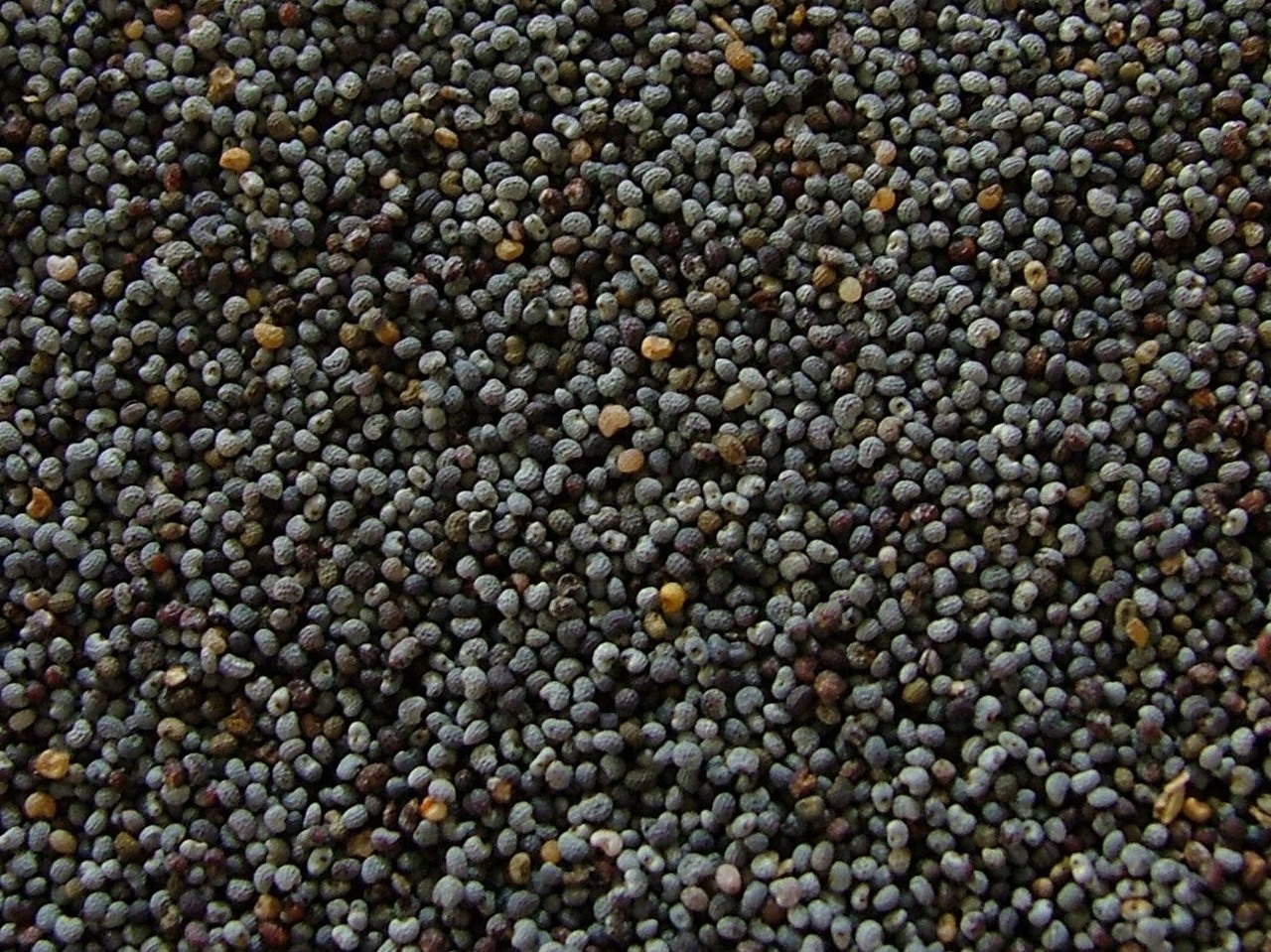
[edit]Poppy seeds are less than a millimeter in length, kidney-shaped, and have a pitted surface.[3] It takes about 3,300 poppy seeds to make up a gram, and between 1 and 2 million seeds to make up a pound.[2] The primary flavor compound is 2-pentylfuran.[4]
The seeds are cultivated for the flowers they produce. Annual and biennial poppies are used to cultivate from seed as they are not difficult to propagate, and can be put directly in the ground during winter.[5] The California poppy (Eschscholzia californica), for example, is a striking orange wildflower that grows in the Western and Northwestern United States.
Production
[edit]| Poppy seed production (2014–2018 average) | ||
|---|---|---|
| Country | Production (tonnes) | |
 Czech Republic Czech Republic
|
22,739 | |
 Turkey Turkey
|
21,479 | |
 Spain Spain
|
11,812 | |
 Hungary Hungary
|
6,047 | |
 France France
|
5,467 | |
| Source: FAOSTAT of the United Nations[6] | ||
In 2018, world production of poppy seeds was 76,240 tonnes. In 2024, the Czech Republic was the biggest producer of poppy seeds with 29,679 tonnes. Turkey, Spain, Hungary and France are other major producers.[6][7]
The poppy seeds harvest can be a by-product of cultivation of Papaver somniferum for opium, poppy straw, or both opium and poppy straw. However, harvesting for poppy seeds of superior quality is in conflict with harvesting for opium as poppy seeds should be harvested when they are ripe, after the seed pod has dried. Traditionally, opium is harvested while the seed pods are green and the seeds have just begun to grow and their latex is abundant. Poppy straw can be a by-product of cultivation of poppy seeds. Compared to the seed pod and straw, the seeds contain very low levels of opiates.[8] The seeds may be washed to obtain poppy tea but a large amount is needed, around 300–400 g depending on the levels of opiates.
Since poppy seeds are relatively expensive, they are sometimes mixed with the seeds of Amaranthus paniculatus, which closely resemble poppy seeds.[9]
Nutrition
[edit] | |||||||||||||||||||||||||||||||||||||||||||||||||||||||||
| Nutritional value per 100 g (3.5 oz) | |||||||||||||||||||||||||||||||||||||||||||||||||||||||||
|---|---|---|---|---|---|---|---|---|---|---|---|---|---|---|---|---|---|---|---|---|---|---|---|---|---|---|---|---|---|---|---|---|---|---|---|---|---|---|---|---|---|---|---|---|---|---|---|---|---|---|---|---|---|---|---|---|---|
| Energy | 2,196 kJ (525 kcal) | ||||||||||||||||||||||||||||||||||||||||||||||||||||||||
28.13 g | |||||||||||||||||||||||||||||||||||||||||||||||||||||||||
| Sugars | 2.99 g | ||||||||||||||||||||||||||||||||||||||||||||||||||||||||
| Dietary fiber | 19.5 g | ||||||||||||||||||||||||||||||||||||||||||||||||||||||||
41.56 g | |||||||||||||||||||||||||||||||||||||||||||||||||||||||||
| Saturated | 4.517 g | ||||||||||||||||||||||||||||||||||||||||||||||||||||||||
| Monounsaturated | 5.982 g | ||||||||||||||||||||||||||||||||||||||||||||||||||||||||
| Polyunsaturated | 28.569 g | ||||||||||||||||||||||||||||||||||||||||||||||||||||||||
21.22 g | |||||||||||||||||||||||||||||||||||||||||||||||||||||||||
| |||||||||||||||||||||||||||||||||||||||||||||||||||||||||
| Other constituents | Quantity | ||||||||||||||||||||||||||||||||||||||||||||||||||||||||
| Water | 5.95 g | ||||||||||||||||||||||||||||||||||||||||||||||||||||||||
| †Percentages estimated using US recommendations for adults,[10] except for potassium, which is estimated based on expert recommendation from the National Academies.[11] | |||||||||||||||||||||||||||||||||||||||||||||||||||||||||
In a 100 gram amount, poppy seeds provide 525 calories and are a rich source of thiamin, folate, and several essential minerals, including calcium, iron, magnesium, manganese, phosphorus and zinc (table). Poppy seeds are composed of 6% water, 28% carbohydrates, 42% fat, and 21% protein (table).
Food products
[edit]Intact seeds
[edit]Whole poppy seeds are widely used as a spice and decoration in and on top of many baked goods and pastries. In North America they are used in and on many food items such as poppyseed muffins, rusk, bagels (like the Montreal-style bagel), bialys, and cakes such as sponge cake. Poppy seeds can also be used like sesame seeds, added to hamburger buns or to make a bar of candy. The bars are made from boiled seeds mixed with sugar or with honey. This is especially common in the Balkans, Greece and even in the cuisines of former Austro-Hungarian countries.
The color of poppy seeds is important in some uses. According to The Joy of Cooking, "the most desirable come from Holland and are a slate-blue color."[12] When used as a thickener in some dishes, white poppy seeds are preferred, having less impact on the color of the food. In other dishes, black poppy seeds are preferred, for maximum impact. Blue poppy seeds are used in various German breads and desserts as well as in Polish cuisine.
Paste
[edit]
Poppy seeds can be ground using a generic tool such as a mortar and pestle or a small domestic type electric blade grinder, or a special purpose poppy seed grinder. A poppy seed grinder (mill) is a type of burr grinder with a set aperture that is too narrow for intact poppy seeds to pass through. A burr grinder produces a more uniform and less oily paste than these other tools.
The poppy seed paste is used for fillings in pastries, sometimes mixed with butter or milk and sugar. The ground filling is used in poppy seed rolls and some croissants and may be flavored with lemon or orange zest, rum and vanilla with raisins, heavy cream, cinnamon, and chopped blanched almonds or walnuts added. For sweet baked goods, sometimes instead of sugar a tablespoon of jam, or other sweet binding agent, like syrup is substituted. The poppy seed for fillings are best when they are finely and freshly ground because this will make a big difference in the pastry filling's texture and taste.
Poppy seed paste is available commercially, in cans. Poppy seeds are very high in oil, so commercial pastes normally contain sugar, water, and an emulsifier such as soy lecithin to keep the paste from separating. Commercial pastes also contain food preservatives to keep them from becoming rancid.
In the United States, commercial pastes are marketed under brand names including Solo and American Almond. Per 30 gram serving, the American Almond poppy seed paste has 120 calories, 4.5 grams fat, and 2 grams protein.
Oil
[edit]Poppy seeds are pressed to form poppyseed oil, a valuable commercial oil that has multiple culinary and industrial uses.
Other uses
[edit]Poppy seeds are often used as bird seed, in which case they are usually called maw seeds.[13]
Use by cuisine
[edit]Poppy seeds are used around the world in various cuisines.
European cuisine
[edit]


Across Europe, buns and soft white bread pastries are often sprinkled on top with black and white poppy seeds (for example cozonac, kalach, kolache and kołacz). The seeds of the Czech blue poppy (food safety cultivars Papaver somniferum) are widely consumed in many parts of Central and Eastern Europe. The sugared, milled mature seeds are eaten with pasta, or they are boiled with milk and used as filling or topping on various kinds of sweet pastry. Milling of mature seeds is carried out either industrially or at home, where it is generally done with a manual poppy seed mill.
Blue poppy seeds are widely used in Austrian, Croatian, Czech, Danish, German, Hungarian, Lithuanian, Polish, Romanian, Russian, Serbian, Slovak, Slovenian, Turkish and Ukrainian cuisines.
The states of former Yugoslavia (notably North Macedonia and Serbia, but also Croatia and Bosnia) have a long tradition of preparing poppy seed pastry (štrudla, baklava, pajgle) and dishes (pasta with poppy seeds). In Slovenia blue poppy seeds are used in traditional dishes such as prekmurska gibanica and makova potica.
In Poland, Hungary, Lithuania and Eastern Slovakia, a traditional dessert is prepared for the Christmas Eve dinner from poppy seeds. They are ground and mixed with water or milk; round yeast biscuits (kūčiukai in Lithuanian; opekance or bobalky in Slovak) are soaked in the resulting poppy seed 'milk' (poppy milk) and served cold.
In Central Europe, poppy strudel is very popular, especially during Christmas. In Germany, Poland and countries belonging to the former Austro-Hungarian Empire, poppy seed pastries called Mohnkuchen are often eaten around Christmas time.[14] Recipes for Mohnstriezel use poppy seed soaked in water for two hours[15] or boiled in milk. A recipe for Ukrainian poppyseed cake recommends preparing the seeds by immersing in boiling water, straining and soaking in milk overnight.[16]
Jewish cuisine
[edit]In Eastern European Jewish cuisine, pastries filled with black poppy seeds in a sugary paste are traditional during Purim, which occurs exactly one month before Passover and approximately a month before Easter. Traditional pastries include poppy seed kalács and hamantashen, both sometimes known as beigli (also spelled bejgli). Poppy seed hamantashen were the main traditional food eaten by Ashkenazi Jews at Purim until the filling was replaced by other fruit and nut fillings. Poppy seed pastries are common in Jewish bakeries and delicatessens throughout the United States.
Indian cuisine
[edit]

In Indian cuisine, particularly Bengali cuisine, white poppy seeds are added for thickness, texture and flavor to recipes. Commonly used in the preparation of korma, ground poppy seeds, along with coconut and other spices, are combined into a paste added during cooking. Poppy seeds are widely used in many regional Indian cuisines. One dish, originating from Khulna, is aloo posto (potato and poppy seeds) which consists of ground poppy seeds cooked together with potatoes and made into a smooth, rich product, which is mainly eaten with rice.[17] There are many variants to this basic dish, replacing or complementing the potatoes with other ingredients, such as onions (penyaj posto), pointed gourd (potol posto), Ridged Luffa (jhinge posto), chicken (murgi posto), and prawns (chingri posto). Chadachadi is another dish from Bengali cuisine and includes long strips of vegetables, sometimes with the stalks of leafy greens added, all lightly seasoned with spices like mustard or poppy seeds and flavored with a phoron. One dish involves grilling patties made from posto, sometimes frying them (postor bora). Another dish involves simply mixing uncooked ground poppy seeds (kancha posto) with mustard oil, chopped green chili peppers, fresh onions and rice. Kacha posto bata (uncooked poppy seeds paste) with mustard oil is a very popular dish in West Bengal as well as Bangladesh. Poppy seeds are widely used in Kashmir as a topping on various breads, especially kulcha.
Poppy seeds, along with tulsi (basil) seeds, are added to beverages such as thandai, sharbat, milkshakes, rose milk, almond milk and khus khus milk.
Pakistani cuisine
[edit]Poppy seeds locally called "khashkhash" are an essential ingredient in the preparation of a dish that consists of minced meat balls locally called "Kofta".
Health effects
[edit]Allergy (type 1 hypersensitivity) to poppy seeds is rare, but has been reported[18][19] and can cause anaphylaxis.[19]
False positive drug tests
[edit]Although the drug opium is produced by "milking" latex from the unripe fruits ("seed pods") rather than from the poppy seeds, all parts of the plant can contain or carry the opium alkaloids, especially morphine and codeine.[20] This means that eating foods (e.g., bagels) that contain poppy seeds can result in a false positive for opiates in a drug test,[20] although more refined tests can distinguish them.[21] To minimize the problems caused by false positives, the USADA recommends that athletes refrain from eating foods containing poppy seeds several days prior to a competitive event.[20]
Legal status
[edit]The sale of poppy seeds from Papaver somniferum is banned in Singapore because of the morphine content. Poppy seeds are also prohibited in Taiwan, primarily because of the risk that viable seeds will be sold and used to grow opium poppies.[22]
China prohibits spice mixes made from poppy seed and poppy seed pods because of the traces of opiates in them, and has since at least 2005.[23][24]
Despite its present use in Arab cuisine as a bread spice, poppy seeds are also banned in Saudi Arabia for drug control reasons.[25]
International travelers
[edit]Travelers to the United Arab Emirates are especially prone to difficulties and severe punishments.[26][27]
In Singapore, poppy seeds are classified as "prohibited goods" by the Central Narcotics Bureau (CNB).[28]
Gallery
[edit]-
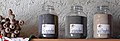 Dried poppy seed pods next to glass jars of blue, gray, and white poppy seeds used for pastries in Germany
 -
 Macro photograph of poppy seeds
 -
 White poppy seeds, close up
 -
 Czech blue poppy seeds (as food)
 -
 A cut green seed pod with fresh latex
 -
 Electron micrograph of a poppy seed
 -
 Energy-dispersive X-ray analysis showing high content of calcium and other mineral elements in the seed

_crop.jpg)


See also
[edit]References
[edit]- ^ Raghavan, Susheela (2006). Handbook of spices, seasonings, and flavorings. CRC Press. p. 158. ISBN 978-0-8493-2842-8.
- ^ a b McGee, Harold (2004). On Food and Cooking: The Science and Lore of the Kitchen. Simon and Schuster. p. 513. ISBN 978-0-684-80001-1.
- ^ Yearbook of Agriculture. United States Government Printing Office. 1896. p. 203.
- ^ Yiu H. Hui, Handbook of Food Science, Technology, and Engineering. CRC Press 2006. ISBN 0-8493-9848-7
- ^ "Poppy, chamomile and larkspur seeds are planted outside in January." Day, Molly (2009-01-14). "Gardening: Work to get seeds started in January". Muskogee Phoenix. Archived from the original on 2012-09-04. Retrieved 2009-01-24.
- ^ a b "Poppy seed production in 2018, Crops/Regions/World list/Production Quantity (pick lists)". UN Food and Agriculture Organization, Corporate Statistical Database (FAOSTAT). 2019. Retrieved 30 August 2020.
- ^ "Data on growing of poppy in the Czech Republic for year 2024" (PDF). Czech Customs Administration. Retrieved 21 July 2025.
- ^ "Poppy law" on Erowid.org
- ^ Singhal, Rekha S.; Pushpa R. Kulkarni; Dinanath V. Rege (1997). Handbook of Indices of Food Quality and Authenticity. Woodhead. p. 414. ISBN 978-1-85573-299-5.
- ^ United States Food and Drug Administration (2024). "Daily Value on the Nutrition and Supplement Facts Labels". FDA. Archived from the original on 2024-03-27. Retrieved 2024-03-28.
- ^ "TABLE 4-7 Comparison of Potassium Adequate Intakes Established in This Report to Potassium Adequate Intakes Established in the 2005 DRI Report". p. 120. In: Stallings, Virginia A.; Harrison, Meghan; Oria, Maria, eds. (2019). "Potassium: Dietary Reference Intakes for Adequacy". Dietary Reference Intakes for Sodium and Potassium. pp. 101–124. doi:10.17226/25353. ISBN 978-0-309-48834-1. PMID 30844154. NCBI NBK545428.
- ^ Irma S. Rombauer; Marion Rombauer Becker; Ethan Becker (2006). The Joy of Cooking. New York: Scribner. p. 1011. ISBN 978-0-7432-4626-2.
- ^ Ward, Artemas (1911). The Grocer's Encyclopedia (1st ed.). New York: James Kemster Printing Co. pp. 492–495. Retrieved July 5, 2014.
- ^ "Poppy Seed Moon Cake or Makosbeigli," in Meyer, June (1998). June Meyer's Authentic Hungarian Heirloom Recipes. Meyer & Assoc. ISBN 978-0-9665062-0-4.
- ^ Mohnstriezel-Poppy-Seed-Cake[permanent dead link]. Recipezaar.com. Retrieved on 2015-04-24.
- ^ Walter, Joyce (2009-01-10). "Ukrainian community in midst of celebrations". The Moose Jaw Times Herald (Saskatchewan). Archived from the original on 2009-03-02. Retrieved 2009-01-24.
- ^ "How British greed spurred the creation of one of Bengal's most loved dishes". The Indian Express. 2016-03-31. Retrieved 2023-09-01.
- ^ Keskin O, Sekerel BE; Sekerel (2006). "Poppy Seed Allergy: A case report and review of the literature". Allergy and Asthma Proceedings. 27 (4): 396–398. doi:10.2500/aap.2006.27.2881. PMID 16948357.
- ^ a b Panasoff J (2008). "Poppy seed anaphylaxis". Journal of Investigational Allergology and Clinical Immunology. 18 (3): 224–225. PMID 18564637.
- ^ a b c "Can athletes eat poppy seeds without testing positive?". United States Anti-Doping Agency. 2014-02-10.
- ^ O'Connor, Anahad (2005-01-11). "The Claim: Eating Poppy Seeds Can Make You Fail a Drug Test". The New York Times.
- ^ "Court convicts bagel shop owner over poppy seeds - Taipei Times". 4 May 2001. Retrieved 20 April 2017.
- ^ "Controls over poppy seed strengthened". Asia Times. October 18, 2005. Archived from the original on March 16, 2006. Retrieved April 20, 2017.
- ^ "In China, poppy seedpod is a spice too hot to handle". 21 October 2013. Retrieved 20 April 2017 – via LA Times.
- ^ Ignorance Is No Excuse for Breaking Law. Arabnews.com (2006-01-10). Retrieved on 2015-04-24.
- ^ Travel Warning – Khas Khas (Poppy Seed) Imprisonment in UAE Archived 2017-06-19 at the Wayback Machine. Hoax-slayer.com. Retrieved on 2015-04-24.
- ^ "Indian in UAE denies using poppy seeds as drugs". Yahoo News India. IANS. July 10, 2014. Archived from the original on March 5, 2016. Retrieved July 17, 2014.
- ^ "I would like to know if I am allowed to bring poppy seeds into Singapore for my baking business". Archived from the original on April 30, 2008. Retrieved 31 August 2015.
Further reading
[edit]- Jenő Bernáth. Poppy: The Genus Papaver. CRC Press, 1998. ISBN 978-90-5702-271-5.
 Media related to Poppy seeds at Wikimedia Commons

| Authority control databases: National |
|---|

Poppy seed
View on GrokipediaBotanical and Physical Description
Plant Origin and Morphology
Papaver somniferum L., the opium poppy, serves as the principal botanical source for commercial poppy seeds and belongs to the Papaveraceae family. This annual herbaceous plant, native to the eastern Mediterranean and extending to Central Asia, features an erect, smooth stem growing 30–120 cm tall with glaucous, pinnately lobed leaves forming a basal rosette. The plant's morphology includes solitary, terminal flowers with four broad, crumpled petals in white, pink, purple, or red hues, measuring 5–10 cm across, surrounding numerous stamens and a globose ovary.[9][10] Post-anthesis, the corolla abscises, and the ovary elongates into an obovate, dehiscent capsule 2–6 cm long, topped by a stigmatic disk with radiating rays and equipped with apical pores for seed dispersal. Each capsule encloses 1,000–5,000 minute, reniform seeds, 0.8–1.2 mm long, coated in a thin testa; the seeds' surface reticulation aids in dispersal and germination. Immature capsules contain branched laticifers producing latex, a causal factor in potential seed surface contamination during maturation.[9][11] The lifecycle from sowing to seed harvest typically requires 90–150 days in temperate climates, with optimal growth at mean temperatures of 16–20°C and low humidity. Seeds demand well-drained, loamy soils (pH 6.0–7.5) and full sun, germinating in 7–21 days under cool conditions (10–15°C); vegetative phase lasts 40–60 days, followed by flowering at 60–90 days and capsule ripening 20–40 days later, harvested when pods dry and dehisce. Autumn sowing in mild winters extends vegetative growth, enhancing yield via overwintering rosettes.[12][13] In contrast to ornamental species like Papaver rhoeas (corn poppy), which lack latex-bearing laticifers and yield non-contaminated seeds, P. somniferum's capsule morphology enables latex exudation, directly causing trace alkaloid residues on seeds from pod contact during late maturation or mechanical harvest. This species-specific trait necessitates washing protocols in seed production to minimize contaminants absent in ornamental poppies.[2]Seed Characteristics
Poppy seeds (Papaver somniferum) are small, reniform (kidney-shaped) structures typically measuring 0.5 to 1.5 mm in length and 0.5 to 1 mm in width, with variations depending on cultivar and growing conditions.[14] Their surface is pitted and reticulate, featuring fine ridges formed by elongated epidermal cells that create a textured exocarp, as observed in scanning electron microscopy images revealing intricate cellular patterns.[15] This morphology aids in seed dispersal and protection, while the minimal endosperm—characteristic of exalbuminous seeds—concentrates nutritional reserves primarily in the oily cotyledons. Color variations among poppy seeds include slate blue-grey (common in European cultivars), white (prevalent in Indian and Middle Eastern varieties), and black (often from Turkish strains), arising from differences in seed coat pigmentation and melanin content.[10] The seeds contain up to 50% oil by weight, predominantly unsaturated fatty acids stored in the cotyledons to provide a dense energy source for embryonic development during germination; lipids yield approximately twice the caloric density of carbohydrates, enabling efficient mobilization for radicle emergence and early growth under variable environmental conditions.[16] While physical seed characteristics are largely consistent across P. somniferum varieties, those bred for food production exhibit similar morphology to opium-yielding cultivars but with selection pressures favoring reduced latex production to minimize post-harvest alkaloid contamination on seed surfaces, without altering core structural traits like size or oil content.[6] Electron micrographs confirm the uniform reniform outline and ridged testa, underscoring the species-level conservation of these features despite agronomic breeding.[17]Historical Context
Ancient Origins and Traditional Uses
Archaeological evidence indicates that poppy seeds (Papaver somniferum) were utilized in Neolithic Europe as early as 5900–3500 BCE, with remains recovered from settlement sites in regions such as Switzerland, Italy, and the Iberian Peninsula, suggesting domestication and incorporation into early agricultural diets as a calorie-dense food source.[18] Direct radiocarbon dating of seeds from these contexts confirms their presence contemporaneous with the spread of farming practices, where they served primarily as edible staples rather than sources of psychoactive latex, which requires extraction from unripe pods—a process absent in early seed-focused remains.[19] This separation aligns with the plant's morphology, as mature seeds contain negligible opium alkaloids compared to the latex, enabling their safe use in grinding for meal or oil without the risks associated with pod incision.[20] In ancient Egypt, from approximately 3000 BCE, poppy seeds were cultivated for culinary applications, including pressing for oil and incorporation into breads, distinct from latex-derived opium used in elite medical contexts for sedation.[21] Texts and tomb artifacts, such as those from the Old Kingdom, depict seeds as a versatile ingredient in daily fare, valued for nutritional density amid Nile Valley agriculture, while ritual uses involved offering seed pods symbolizing fertility and renewal, though empirical records emphasize food over narcotic extraction.[22] Greek and Roman traditions, spanning the 8th century BCE to the 5th century CE, further document poppy seeds in baking and confections, with Hippocratic writings noting their mild therapeutic role in aiding digestion when consumed as food, separate from the potent opium preparations derived from pod sap.[23] Roman sources describe seeds sprinkled on loaves and pastries for flavor and texture, reflecting widespread non-opioid utilization in Mediterranean diets, where harvesting practices inherently minimized latex contamination by collecting dried seeds post-maturity.[24] Archaeological finds from these periods, including seed caches in urban sites, corroborate their staple status, underscoring a pragmatic distinction from ritual or medicinal latex uses that required specialized lancing techniques.[25]Modern Cultivation History
In the 19th century, poppy cultivation for seed production expanded significantly in Central Europe, particularly in the Czech lands, where it became concentrated on small family farms in regions like central Bohemia and South Bohemia, covering nearly 2,000 hectares by 1896.[26] This growth was driven by demand for seeds in baking and oil extraction, alongside limited opium production for medicinal uses such as pain relief.[26] In Turkey, a longstanding center of poppy farming, cultivation similarly emphasized seed yields, with 20-30% of fields dedicated solely to non-incised plants for seed harvest, amid rising global food demands.[27] However, tensions arose from the dual potential for opium extraction, prompting regulatory shifts; Turkey imposed a ban on opium poppy incising in 1971 under U.S. pressure to curb illicit drug supply, effectively redirecting cultivation toward seed-only varieties by prohibiting gum collection.[28] The ban was partially rescinded in 1974 for select provinces, but with strict rules against opium harvesting, solidifying seed production as the primary focus.[29] Following World War II, breeding programs in Europe prioritized low-morphine varieties to minimize alkaloid contamination in seeds and enable legal seed-focused farming without opium-related restrictions.[30] In the Czech Republic and neighboring Slovakia, selective breeding produced cultivars with reduced capsule alkaloids, allowing dual-purpose plants but emphasizing seed yields for culinary use while complying with international narcotics controls.[30] These efforts, combined with mechanized harvesting that avoids pod incision, supported global trade expansion as poppy seeds gained prominence in European baking traditions and exports.[31] Cultivation areas initially declined post-war due to synthetic analgesics displacing opium demand—dropping to 300 hectares in Czech lands by 1950—but rebounded with seed-oriented varieties amid steady food market growth.[26] In the 2020s, regulatory scrutiny intensified over persistent opioid alkaloid traces in seeds, stemming from harvesting and processing where latex from immature pods contacts grains, even in low-morphine strains.[32] The U.S. FDA issued a Request for Information on January 15, 2025, seeking data on cultivation, washing, and distribution practices to address varying morphine levels (up to 520 mg/kg detected in samples), highlighting causal risks from inadequate cleaning that enable unintended opiate exposure via contaminated products.[32] [33] This reflects ongoing challenges in decoupling seed purity from the plant's inherent alkaloid biology, despite breeding advances.[34]Global Production and Trade
Major Producing Regions and Statistics
The Czech Republic dominates global poppy seed production, harvesting approximately 29,000 tonnes in 2024 from 37,000 hectares at an average yield of 0.78 tonnes per hectare.[35] This output positions it as the world's leading producer, accounting for over one-third of the estimated global total, which hovered around 76,000 tonnes as of recent years based on aggregated agricultural data.[36] Other significant producers include Turkey, with historical outputs exceeding 18,000 tonnes annually, Spain at around 13,000 tonnes, and Hungary contributing about 9,000 tonnes, though exact figures vary by season due to weather and regulatory factors.[36] Australia also features prominently, particularly for low-alkaloid varieties suited for export markets compliant with international narcotics controls.[37] Global trade in poppy seeds reached $186 million in 2023, marking a 31.4% decline from $271 million in 2022, influenced by supply fluctuations and demand shifts in baking and confectionery sectors.[38] Key exporters include the Czech Republic ($58.7 million), Turkey ($26.6 million), and the European Union as a bloc ($41.7 million), underscoring Europe's central role despite regional challenges.[39] Projections indicate market recovery and growth, with estimates forecasting expansion to approximately $296 million by 2031 at a compound annual growth rate (CAGR) of 3.29%, driven by rising culinary demand and incentives for cultivating low-morphine strains to evade opioid restrictions.[40] In Europe, 2024 saw export volumes decline by about 9.5% amid adverse weather and tighter alkaloid thresholds, prompting farmers to prioritize high-yield, compliant varieties for sustained economic viability.[41]| Country | Production (tonnes) | Year | Notes |
|---|---|---|---|
| Czech Republic | 29,000 | 2024 | Leading global producer |
| Turkey | ~18,000-27,000 | 2019 | Variable by harvest conditions |
| Spain | ~13,000 | Recent | Key European exporter |
| Hungary | ~9,000 | Recent | Significant regional output |
Cultivation, Harvesting, and Processing Methods
Poppy seeds are sown directly into well-drained, fertile soil at a depth of 1-2 cm, typically in early spring or cool seasons to align with the plant's preference for full sun and moderate temperatures between 16-20°C during growth.[42][13] Cultivation under natural rainfall is common in major regions like Turkey, with soil moisture assessed pre-sowing to ensure germination without waterlogging, which poppies do not tolerate. For food-grade production, agronomic practices emphasize varieties selected for low latex production and avoidance of capsule scoring or lancing, which would release opium alkaloids onto seeds and compromise quality.[6] Harvesting occurs after full capsule maturation, around 120 days post-sowing, using mechanical methods such as inverting pods and shaking seeds into containers or sieves to collect ripe seeds while minimizing contact with latex-bearing tissues.[13][6] Direct combine harvesting is preferred in commercial fields to reduce manual handling and potential contamination, repeated every 6-8 days as pods ripen sequentially.[13] Weather dependency poses challenges, as warm, sunny conditions during capsule formation can elevate alkaloid residues on seeds, while adverse climate variability, including excessive rain or drought, reduces yields and increases cultivation risks in regions like Central Europe.[34][43] Post-harvest processing focuses on cleaning and washing to remove surface opiates, enhancing seed quality for culinary use. Washing with cold water reduces morphine levels by 40-75%, while hot water (around 60°C) achieves up to 70-100% reduction; steam or thermal treatments further decrease alkaloids by 50-80% without fully eliminating internal residues.[44][45][46] These methods comply with EU regulations limiting opium alkaloids (morphine equivalents) to 20 mg/kg in whole, ground, or milled seeds for final consumers.[47] Recent innovations include extracting seed oil for biodiesel via optimized transesterification, yielding up to 94.87% under conditions of 90 minutes reaction time, 60°C temperature, and specific catalyst ratios, supporting dual-use agronomy for food and fuel.[48]Chemical and Nutritional Composition
Macronutrients, Micronutrients, and Bioactive Compounds
Poppy seeds consist primarily of lipids, comprising 42-45% of their dry weight, with polyunsaturated fatty acids dominating the profile: linoleic acid (omega-6) at 50-65% and oleic acid (omega-9) at 15-25% of total fatty acids.[49] This high unsaturated fat content yields energy densities of 525-550 kcal per 100 g but renders the seeds prone to rancidity from oxidative stress on double bonds, mitigated by natural antioxidants like tocopherols that extend shelf life under proper storage.[49] Proteins account for 18-21 g per 100 g, enriched in essential amino acids such as glutamic acid (up to 36 mg/g), arginine (20 mg/g), and aspartic acid (17 mg/g), while carbohydrates total around 28 g, largely as non-digestible fiber (19-25 g).[49][4]| Nutrient | Amount per 100 g | Notes/Source |
|---|---|---|
| Total Fat | 41-45 g | Predominantly PUFA; USDA-derived data.[4] |
| Protein | 18-21 g | Balanced amino profile.[49] |
| Dietary Fiber | 19.5-25 g | Supports gut health.[50] |
| Calcium | 1,438 mg | Highest among common seeds.[51] |
| Manganese | 6.7 mg | Exceeds daily needs.[52] |
| Magnesium | 347 mg | Bioavailable mineral source.[51] |
| Phosphorus | 870 mg | Aids bone and energy metabolism.[52] |