Hubbry Logo
search
logo
Rizhao
Rizhao
current hub
1930888

Rizhao

logo
Community Hub0 Subscribers
Read side by side
from Wikipedia

Key Information

Rizhao
Chinese日照
Literal meaning"Sunshine"
Transcriptions
Standard Mandarin
Hanyu PinyinRìzhào
Gwoyeu RomatzyhRyhjaw
Wade–GilesJih4-chao4
IPA[ɻɨ̂.ʈʂâʊ]
Yue: Cantonese
Yale RomanizationYat-jiuh
JyutpingJat3-ziu6
Southern Min
Tâi-lôJi̍t-tsiò

Rizhao (Chinese: 日照; pinyin: Rìzhào), alternatively romanized as Jihchao, is a prefecture-level city in southeastern Shandong province, China. It is situated on the coastline along the Yellow Sea, and features a major seaport, the Port of Rizhao. It borders Qingdao to the northeast, Weifang to the north, Linyi to the west and southwest, and faces Korea and Japan across the Yellow Sea to the east.

The name of the city literally means "sunshine".[4] The city is known for its sustainability, and it mandates solar-water heaters in all new buildings. Rizhao city was recognized by the United Nations as one of the most habitable cities in the world in 2009.[5][6]

The city population stands at 2,968,365 people as of the 2020 Chinese census, of whom 1,172,205 live in the urban area of Donggang District. As of 2024, the resident population is estimated at 2,929,000. Compared with the 2,801,013 people in 2010 Chinese census, there has been a total increase of 167,352 people in the past decade, an increase of 5.97%, with an average annual growth rate of 0.58%.[7]

History

[edit]

Rizhao is located at the place where the ancient Dawenkou culture and the Longshan culture flourished. Rizhao belonged to the Dongyi people during the Xia and Shang dynasties (2070-1046 BC), and to Ju and Yue States in the Spring and Autumn period (770-476 BC) and the Warring States period (476-221 BC). It became a part of Langye Commandery in the Qin dynasty (221-206 BC). Rizhao was named Haiqu County (海曲縣) during the Western Han (206 BC-25 AD) and Xihai County under the Eastern Han (25-220 AD).[citation needed] The fangsheng pond of Haiqu's early Buddhist community is the earliest attested.[8]

During the Tang dynasty, together with Ju County, Rizhao belonged to Mi Prefecture of Henan Prefecture. In 1087, during the Northern Song dynasty, Rizhao Town was established under Ju County, originating the name meaning "(the place that first receives the) sunshine" due to its eastern coastal location.Rizhao County was set up in 1184 during the Jin dynasty. In 1940 it came under the control of the Chinese Communist Party. After being a county and since 1985 a city under the administration of Linyi, Rizhao became a prefecture-level city within Shandong province in 1989.[citation needed]

The Field Museum of Natural History in Chicago has done field survey archaeological work in Rizhao over the years.[9]

Climate

[edit]

Rizhao has a temperate, four-season, monsoon-influenced climate that lies in the transition between the humid subtropical (Köppen Cwa) and humid continental (Köppen Dwa) regimes. Winter is cool to cold and windy, but generally dry, with a January average of 0.3 °C (32.5 °F). Summer is generally hot and humid, but sweltering days are rare, with an August average of 25.5 °C (77.9 °F). Due to its proximity to the coast and being on a peninsula, it experiences a one-month delayed spring compared to much of the province. Conversely, fall is milder than inland areas in Shandong. The annual mean temperature is 13.7 °C (56.7 °F). On average, there are 2,310 hours of bright sunshine annually, and the relative humidity is 69%.[citation needed]

Climate data for Rizhao, elevation 64 m (210 ft), (1991–2020 normals, extremes 1971–2010)
Month Jan Feb Mar Apr May Jun Jul Aug Sep Oct Nov Dec Year
Record high °C (°F) 14.6
(58.3)
19.0
(66.2)
25.0
(77.0)
34.0
(93.2)
35.7
(96.3)
38.3
(100.9)
41.4
(106.5)
36.2
(97.2)
37.6
(99.7)
30.2
(86.4)
25.8
(78.4)
17.9
(64.2)
41.4
(106.5)
Mean daily maximum °C (°F) 4.4
(39.9)
6.4
(43.5)
11.3
(52.3)
17.2
(63.0)
22.5
(72.5)
25.4
(77.7)
28.5
(83.3)
28.9
(84.0)
25.9
(78.6)
20.7
(69.3)
13.4
(56.1)
6.8
(44.2)
17.6
(63.7)
Daily mean °C (°F) 0.3
(32.5)
2.3
(36.1)
6.8
(44.2)
12.7
(54.9)
18.2
(64.8)
21.8
(71.2)
25.5
(77.9)
25.9
(78.6)
22.3
(72.1)
16.6
(61.9)
9.3
(48.7)
2.7
(36.9)
13.7
(56.7)
Mean daily minimum °C (°F) −2.8
(27.0)
−0.9
(30.4)
3.4
(38.1)
9.0
(48.2)
14.7
(58.5)
19.1
(66.4)
23.1
(73.6)
23.3
(73.9)
19.0
(66.2)
12.9
(55.2)
5.8
(42.4)
−0.5
(31.1)
10.5
(50.9)
Record low °C (°F) −13.8
(7.2)
−12.6
(9.3)
−7.1
(19.2)
−2.5
(27.5)
5.9
(42.6)
11.5
(52.7)
14.9
(58.8)
13.4
(56.1)
9.4
(48.9)
0.5
(32.9)
−7.2
(19.0)
−12.2
(10.0)
−13.8
(7.2)
Average precipitation mm (inches) 11.3
(0.44)
18.6
(0.73)
22.2
(0.87)
37.7
(1.48)
77.5
(3.05)
87.2
(3.43)
197.2
(7.76)
163.4
(6.43)
86.9
(3.42)
39.0
(1.54)
35.3
(1.39)
16.5
(0.65)
792.8
(31.19)
Average precipitation days (≥ 0.1 mm) 3.3 4.5 5.0 6.8 8.0 8.6 13.0 11.3 7.5 5.2 5.2 3.5 81.9
Average snowy days 2.8 2.3 0.9 0.1 0 0 0 0 0 0 0.4 1.6 8.1
Average relative humidity (%) 59 63 63 65 70 81 86 83 73 65 63 58 69
Mean monthly sunshine hours 172.9 163.4 206.8 217.8 230.1 187.5 175.3 196.7 204.9 201.3 173.2 176.6 2,306.5
Percentage possible sunshine 55 53 55 55 53 43 40 48 56 58 57 58 53
Source 1: China Meteorological Administration[10][11]
Source 2: Weather China[12]

Administration

[edit]

The prefecture-level city of Rizhao administers four county-level divisions, including two districts and two counties.

Map

Landmarks and tourist attractions

[edit]

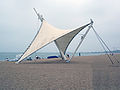
The Zaishui Art Museum on an artificial lake was completed in December 2023, along with a promenade and café by the Spanish firm SelgasCano. In addition to the museum, Jun'ya Ishigami designed a horseback-riding center, a hotel, and a 148-foot-high, concrete church.[13]

The following locations have a 4-star rating according to Chinese classification for scenic spots (旅游景区质量等级)[citation needed]

  • Wulian Mountain (五莲山风景区)
  • Daqing Mountain (大青山风景区)
  • Wanpingkou Beach (万平口风景区)
  • Rizhao Beach National Park (日照海滨国家森林公园)
  • Longmengu (龙门崮风景区)
  • Liujiawan Park (刘家湾赶海园)
  • Tiantai Mountain Tourism Area (天台山旅游区)

Sustainable development

[edit]

Since the early 1990s, the city has mandated the incorporation of solar water heaters in all new buildings and renovated public buildings, and oversees the construction process to ensure they are correctly installed.[14] The effort to install solar water heaters began in 1992. By 2007, 99% of households in the central districts used solar water heaters, contributing to the city's high sustainability rankings.

Transportation

[edit]

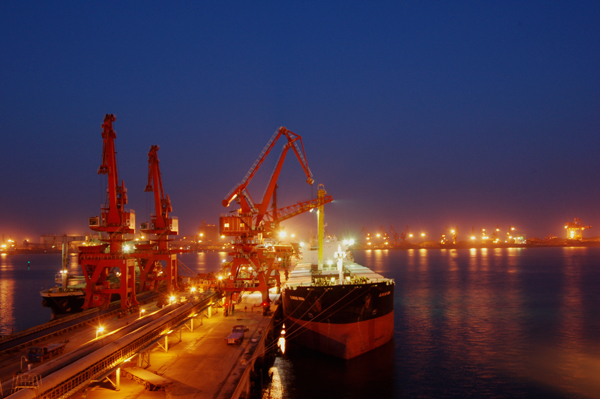
Rizhao features a major seaport (Port of Rizhao), located approximately 620 km (390 mi) north of Shanghai, 170 km (110 mi) southwest of Qingdao, and 120 km (75 mi) north of Lianyungang. The seaport serves as a site for loading and unloading iron ore and coal. Other products passing through the harbor include cement, nickel, bauxite, and the like.[15] In 2011 the Port of Rizhao, together with the cities of Qingdao, Weihai and Yantai in Shandong, signed a strategic alliance with Busan, the largest port of the Republic of Korea. The alliance aims at building a shipping and logistics center in Northeast Asia.[16] The iron ore port of Lanqiao, which opened in 2014, is located close to it as is the Lanshan port region.[17]

Rizhao Shanzihe Airport (IATA: RIZ) is an airport serving the city of Rizhao. The airport received approval from the State Council and the Central Military Commission in October 2013. It is located in the town of Houcun [zh] (后村镇), Donggang District. It was opened on 22 December 2015.[citation needed]

The city is served by two railway stations, Rizhao railway station for local trains, which was rebuilt and reopened in April 2025, and Rizhao West railway station for both local and high-speed services.

Education

[edit]

Universities and colleges

[edit]

Since becoming a city, Rizhao has seen a significant growth in the number of universities and colleges, all of which are located in or near the University City (大学城) of Donggang District.[citation needed]

[edit]

International relations

[edit]

Rizhao has established twin towns and sister city relationships with several international partners.[18][19]

City Country Year
Trabzon Turkey 1991
Muroran Japan 2002
Gisborne New Zealand 2006
Coatzacoalcos Mexico 2008
Dangjin South Korea 2010
Alhambra United States 2011
Roebourne Australia 2014
Türkmenabat Turkmenistan 2014
Addis Ababa Ethiopia 2024

As of 2025, Rizhao has also formed friendly cooperation agreements with additional localities, such as Pakhtakor District (Uzbekistan, 2023) and Kovacica (Serbia, 2025), though these may differ from formal sister city status.

References

[edit]
[edit]
Revisions and contributorsEdit on WikipediaRead on Wikipedia
from Grokipedia
Rizhao (Chinese: 日照; pinyin: Rìzhào) is a prefecture-level city in southeastern Shandong Province, People's Republic of China.[1] Located at the southern end of the Shandong Peninsula and bordering the Yellow Sea to the east, it spans an area of 5,359 square kilometers and had a population of 2.929 million residents as of 2024.[2][3][4] The city is renowned for its coastal geography, featuring 64 kilometers of sandy beaches ideal for tourism and water sports, and its temperate monsoon climate with warm, muggy summers and cold, dry winters.[5][6] Established as a prefecture-level city on June 12, 1989, after previously serving as a county under Linyi prefecture, Rizhao has ancient roots with evidence of human habitation dating back approximately 4,000 years, including artifacts from the Dawenkou Culture around 2000 BCE.[7][8] Administratively, it comprises two districts—Donggang and Lanshan—and two counties, Ju and Wulian, positioning it as a key node on the modern Maritime Silk Road.[2] The city's economy, with a GDP of 255.689 billion RMB in 2024, is driven by marine industries, including two major national ports—Rizhao Port and Lanshan Port—that handled over 500 million tons of cargo in 2023 and continue to support logistics for coal, iron, and petrochemicals.[9][3][10] Rizhao stands out for its pioneering role in sustainability, earning the United Nations Habitat Scroll of Honor Award in 2009 for its renewable energy initiatives; nearly 99% of central district households (as of 2007) and extensive public infrastructure, such as streetlights and greenhouses, rely on solar power, supported by over 2,700 annual sunshine hours.[3][11][12] Other notable sectors include pulp and paper production, with facilities like Asia Symbol generating 1.5 million tons annually, and tourism centered on its beaches and Olympic sailing venues.[3][2]

Geography

Location and environment

Rizhao is a prefecture-level city situated on the southeastern coast of Shandong Province in eastern China, bordering the Yellow Sea to the south and east. Its geographic coordinates are approximately 35°25′N 119°27′E, placing it about 170 km southwest of Qingdao and 120 km northeast of Lianyungang.[2][13] The city encompasses a total land area of 5,359 square kilometers, comprising a mix of urban, rural, and coastal landscapes that extend from inland hills to expansive seaside plains.[14][15] Rizhao's topography features predominantly low coastal plains that slope gently southeastward toward the Yellow Sea, with elevations averaging around 68 meters above sea level in central areas. Inland, the terrain rises into hilly regions, including the notable Wulian Mountain range in the southwest, which reaches heights of up to 1,000 meters and forms part of the broader Shandong hill system. The city is crisscrossed by 18 major rivers, such as the Liangcheng, Baima, and Jili Rivers, which originate in the hills and flow eastward to empty into the Yellow Sea, shaping alluvial plains and supporting local hydrology. Prominent coastal features include wide sandy beaches like Wanpingkou, a 5-kilometer stretch of fine sand ideal for marine activities.[16][17][18][19][20] The natural environment of Rizhao is characterized by its proximity to the Yellow Sea, which fosters diverse marine ecosystems rich in biodiversity, including intertidal wetlands and habitats for migratory birds and marine species. Coastal areas support varied flora and fauna, with mangroves, salt marshes, and algal communities contributing to ecological services like shoreline protection and fisheries. Inland hills and river valleys add to the biodiversity through forested zones and freshwater habitats. The city's administrative seat is Donggang District, where the built-up urban area spans approximately 100 square kilometers, integrating modern infrastructure with preserved natural coastlines.[21][22][23][14]

Climate

Rizhao features a humid subtropical climate classified as Cwa under the Köppen-Geiger system, marked by hot, humid summers and cool, relatively dry winters. The annual mean temperature stands at 13.7 °C, with distinct seasonal variations influenced by its coastal position. Precipitation averages 722 mm per year, concentrated primarily in the summer months due to the East Asian monsoon, while the region receives about 2,530 hours of sunshine annually, supporting its designation as the "Oriental Sun City."[24][25][26][27] Summers, from June to August, are hot and oppressive, with average highs of 29 °C in July and occasional peaks reaching 37.8 °C; relative humidity often exceeds 80%, exacerbating discomfort. Winters, spanning December to February, are mild yet chilly, featuring January averages near 0.8 °C and record lows dipping to -15.6 °C, accompanied by northerly winds. Spring and autumn serve as transitional periods with moderate temperatures and lower rainfall. Rizhao's proximity to the Yellow Sea introduces risks from typhoons, which can bring heavy rains, strong winds, and storm surges during late summer and early autumn.[24][28] The following table presents monthly climate averages for temperature, precipitation, and relative humidity based on 1991–2020 records from regional meteorological observations:
MonthAvg. High (°C)Avg. Low (°C)Precipitation (mm)Relative Humidity (%)
January3.9-2.311.356
February6.2-0.318.660
March11.83.722.255
April17.68.837.759
May23.214.752.062
June26.619.076.071
July29.022.5191.081
August28.522.3202.083
September24.917.940.074
October20.313.025.062
November12.76.520.061
December6.1-0.226.256
Recent observations from 2020 to 2025 reveal a modest warming trend in line with broader patterns across eastern China, where extreme high temperatures have increased in frequency. Air pollution levels have improved, with annual average AQI declining from 91 in 2021 to 79 in 2025, reflecting enhanced emission controls despite occasional spikes from industrial and seasonal sources.[29][30]

History

Ancient and prehistoric periods

Human habitation in Rizhao dates back approximately 4,000 years, with evidence from the Dawenkou Culture around 2000 BCE.[7] Artifacts from the Neolithic period include those from the Longshan and Yueshi Cultures, such as paleolithic stone tools, pottery, and a notable 4,000-year-old eggshell black pottery cup with walls 0.2 mm thick.[31] During the Shang and Zhou Dynasties (c. 16th century–256 BCE), the area featured bronze objects and early settlements. In the Western Han Dynasty, sites like the Haiqu tomb yielded further artifacts, including coins.[31]

Modern era

During the late Qing Dynasty, coastal areas in Shandong province, including the region that became Rizhao, were affected by the Opium Wars (1839–1842 and 1856–1860), which weakened defenses and led to the opening of nearby treaty ports like Yantai (Chefoo) in 1862, influencing trade along the Shandong Peninsula. In the Republican era (1912–1949), the area experienced the Japanese occupation of Shandong province from late 1937 to 1945, as part of the Second Sino-Japanese War, with the region conquered by January 1938; guerrilla activities by Chinese forces and civilians contributed to anti-Japanese resistance in Shandong. Following the establishment of the People's Republic of China in 1949, the area underwent administrative changes and urbanization; Rizhao was designated a county-level city in 1985 and elevated to prefecture-level status on June 12, 1989, supporting development under post-1978 economic reforms.[14] Rizhao Port commenced operations in 1986, becoming a major hub for bulk cargo and international trade.[10] In the 2020s, tourism has grown, with 19 key attractions receiving nearly 18.3 million visitors and generating 309 million RMB in revenue during summer 2025, driven by beaches and eco-tourism.[32] Recent developments include recovery from the COVID-19 pandemic through domestic tourism by 2023 and 2025 infrastructure expansions, such as 3D transportation networks and low-altitude logistics to enhance port integration.[33][34]

Government and administration

Administrative structure

Rizhao is a prefecture-level city located in southeastern Shandong Province, China, having been elevated to this status in 1989 from its prior configuration as a county-level city under Linyi Prefecture.[14][35] The administrative framework of Rizhao consists of four county-level divisions: two urban districts and two rural counties. These include Donggang District (东港区), which serves as the seat of the municipal government; Lanshan District (岚山区); Ju County (莒县); and Wulian County (五莲县). This structure supports a blend of urban development in the coastal districts and agricultural activities in the inland counties.[14][36] At the township level, Rizhao governs 55 divisions, comprising subdistricts (街道办事处) in the districts and towns (镇) or townships (乡) in the counties, along with a total of 1,951 village-level units. Key examples include Rizhao Subdistrict and Shijiu Subdistrict in Donggang District; Lanshantou Subdistrict in Lanshan District; and towns such as Liangcheng in Ju County and Jiaozhou in Wulian County. These lower-tier units facilitate local administration, resource management, and community services across the prefecture.[14] The current divisions reflect gradual evolution from historical setups, where Rizhao originated as a county in the Song Dynasty and underwent reorganizations in the late 20th century to align with economic growth. No significant boundary adjustments have occurred in Rizhao between 2020 and 2025, maintaining stability in its administrative hierarchy.[35]

Local governance

Rizhao's local governance operates under the leadership of the Communist Party of China (CPC) Rizhao Municipal Committee, which directs the overall political and policy direction of the city. The Rizhao Municipal People's Congress serves as the primary legislative body, electing representatives to deliberate and approve local laws, budgets, and development plans, while the Rizhao Municipal People's Government executes these decisions through administrative functions such as economic regulation and public administration. Complementing this structure, the Chinese People's Political Consultative Conference (CPPCC) Rizhao Committee facilitates multi-party consultation, uniting democratic parties, mass organizations, and non-CPC personages to advise on policy matters and promote social harmony.[37][38] The key leadership positions are held by the CPC Municipal Party Secretary, currently Li Zaiwu, who oversees party affairs and ensures alignment with national directives, and the Mayor, Wang Xinsheng, who also serves as deputy secretary and leads the municipal government in day-to-day operations. As of November 2025, these officials guide Rizhao's governance toward high-quality development, with the party secretary focusing on ideological work and the mayor on executive implementation.[39][40] Urban planning and development priorities in Rizhao emphasize sustainable growth, including the integration of port resources with industry and ecology, as well as green initiatives to reduce pollution and enhance livability. In 2025, the city allocated approximately 115.8 billion yuan for 376 urban construction projects, targeting infrastructure upgrades, low-carbon transitions, and coastal greenways to support ecological civilization.[41][42] District-level governments in Rizhao, such as those in Donggang and Lanshan Districts, exercise decentralized autonomy in delivering public services, managing local education, healthcare, environmental protection, and community administration to address specific regional needs efficiently. This devolution allows for tailored responses while remaining under municipal oversight.[43] Transparency measures have been strengthened through anti-corruption initiatives aligned with the national campaign launched in 2012 under Xi Jinping, with Rizhao's discipline inspection commissions conducting investigations, audits, and public disclosures to curb graft and promote accountability in local administration. Shandong Province, including Rizhao, has emphasized education against corruption and institutional reforms to foster clean governance.[44]

Demographics

Population statistics

According to the Seventh National Population Census conducted in 2020, Rizhao's total population was 2,968,365 residents.[45] The resident population, based on usual residence, was estimated at 2,948,200 by the end of 2023, reflecting a slight decline amid broader national demographic trends. As of 2024, the resident population was 2,928,800, with an urbanization rate of 64.62%.[46] Between the 2010 and 2020 censuses, Rizhao experienced an annual population growth rate of approximately 0.58%, driven primarily by natural increase and net migration.[45] The urbanization rate reached 61.1% in 2020, with 1,814,663 urban residents and 1,153,702 rural residents, indicating a shift toward urban centers influenced by economic opportunities in coastal areas.[45] The overall population density in 2020 was 554 people per square kilometer across Rizhao's 5,359 km² area.[45][47] Densities are notably higher in urban districts like Donggang, where the built-up areas support over 1,100 residents per square kilometer due to concentrated development and port-related activities.[48] Demographic data from the 2020 census revealed a sex ratio of approximately 104 males per 100 females, with 1,509,556 males and 1,458,809 females.[45] The age structure included 18.4% under 15 years (544,955 individuals), 65.6% aged 15–64 (1,947,575 individuals), and 16.0% aged 65 and over (475,835 individuals), yielding a median age of about 38 years.[45] Administrative divisions, such as the five counties and districts, contribute to uneven distribution, with coastal urban zones like Donggang experiencing slower growth compared to inland rural areas.

Ethnic and social composition

Rizhao's population is overwhelmingly composed of Han Chinese, who make up approximately 99.7% of residents, while ethnic minorities including the Hui, Manchu, and Zhuang each account for about 0.1%.[8] This ethnic structure aligns closely with the broader Shandong Province demographic, where Han Chinese constitute 99.3% and Hui form the largest minority at 0.6%. The primary language spoken is Mandarin Chinese in the Jiaoliao dialect, characteristic of eastern Shandong's coastal regions, with local vocabulary incorporating terms influenced by maritime and fishing activities.[49] Social indicators reflect a highly literate and urbanizing society, with Shandong Province's adult literacy rate reaching about 96.4% in recent years, driven by widespread access to compulsory education.[50] Average household sizes in the province average 2.69 persons, indicative of ongoing shifts toward smaller nuclear families amid urbanization.[51] Migration patterns feature significant rural-to-urban flows within Rizhao, contributing to a dynamic labor market, though specific floating population figures remain integrated into provincial trends of inter-regional movement.[52] Rizhao faces challenges from an aging population, particularly in rural areas, where the proportion of elderly residents is increasing rapidly, straining pension systems and traditional family-based care structures.[53] Local responses include enhanced two-way support mechanisms for the aged, such as community services and policy adjustments to address gaps in elderly welfare under China's national family planning framework.[54]

Economy

Economic overview

Rizhao's economy recorded a gross domestic product (GDP) of CN¥239.1 billion (approximately US$33.9 billion) in 2023, increasing to CN¥255.7 billion (approximately US$35.6 billion) in 2024, with per capita GDP reaching CN¥80,500 (approximately US$11,400) in 2023 and approximately CN¥86,000 (US$11,900) in 2024.[9][55][56] The city's economic expansion has been steady, achieving an average annual growth rate of approximately 6% from 2015 to 2023, driven by structural shifts toward higher-value activities. The tertiary sector has emerged as the dominant contributor, accounting for about 52% of GDP in 2023 and 48.4% in 2024, reflecting a transition from traditional manufacturing toward services and innovation-led development.[55][56] Key economic drivers include port-facilitated exports and burgeoning tourism. Rizhao Port has significantly bolstered export volumes, with a 38.54% year-on-year increase in the Lanbei Port Area from January to July 2025, supporting broader trade momentum in Shandong Province. Tourism generated CN¥35.37 billion in revenue in 2023, attracting 53.33 million domestic visitors and underscoring the sector's role in diversifying income streams.[57][58] The city faces challenges in mitigating industrial pollution, stemming from historical manufacturing activities that have led to emissions and ecological pressures, necessitating ongoing environmental remediation efforts.[59] The Rizhao Economic Development Zone, established in 1992 and upgraded to national status in 2010, has been instrumental in fostering industrial symbiosis and attracting investment, laying foundations for modern economic growth.[60]

Primary industries and trade

Rizhao's port economy serves as a cornerstone of its primary industries, with Rizhao Port handling over 500 million tons of cargo annually, making it one of the world's busiest facilities and the youngest to reach this milestone.[61] The port facilitates significant exports of commodities such as steel products from local manufacturers like Rizhao Steel Holding Group and grains, alongside imports of ore, crude oil, and coal, contributing to robust trade volumes that grew 6.1 percent year-on-year in the first seven months of 2024.[62][63][64] The city's industrial sector emphasizes petrochemicals, machinery manufacturing, and resource extraction, with key players including chemical firms upgrading traditional processes and machinery producers like Rizhao Dexin specializing in forging for special materials.[65][66] Geological surveys have identified valuable mineral resources in the region, including an undersea coal deposit off the southern coast and high-quality geothermal reserves suitable for energy applications.[67] Agriculture in Rizhao leverages its coastal location along the Yellow Sea for robust fisheries and aquaculture, with total aquatic product output exceeding 500,000 tons annually, including specialties like groupers and salmon from advanced breeding facilities.[68] The sector also produces fruits such as apples and peanuts, supporting local processing and export chains integrated with the port infrastructure. Trade activities are bolstered by Rizhao's integration into the Belt and Road Initiative, which has expanded export destinations and diversified goods shipped from the port, including steel, grains, and marine products, with notable growth in volumes to regions like ASEAN and Europe in 2025.[69] Emerging service sub-sectors, such as water sports and cultural tourism, complement primary trade by attracting investment and enhancing commercial linkages.[70]

Infrastructure

Transportation networks

Rizhao's transportation infrastructure is anchored by its major seaport, which serves as a critical gateway for international trade. The Port of Rizhao features deep-water facilities across two primary areas, Lanshan and Shijiu, with a total of 76 berths supporting diverse cargo handling, including containers, bulk commodities, and energy products.[71] These berths facilitate over 80 international and domestic container routes, connecting to ports worldwide and positioning the port as a key hub in global supply chains for iron ore, coal, and crude oil.[71] In 2023, the port achieved a cargo throughput of 522 million tons and 6.26 million TEUs, reflecting its growing role in regional logistics.[72] Road networks in Rizhao are integrated with national expressways, enhancing connectivity to surrounding provinces. The G15 Shenhai Expressway, a major north-south artery spanning from Shenyang to Haikou, passes through the city, enabling efficient access to key economic centers like Qingdao and Linyi. Local roads support urban mobility, with ongoing expansions to accommodate increasing traffic volumes. While comprehensive urban rail systems like a metro are under consideration in broader Shandong Province planning, current focus remains on highway improvements and bus integration rather than dedicated light rail by 2030.[73] Rail services provide vital links for both passenger and freight movement. Rizhao is connected via the Qingdao-Jinan High-Speed Railway, with services operating from Rizhao West Station to major cities including Jinan and Qingdao.[74] The city has two primary railway stations: Rizhao Station and the newly opened Rizhao Railway Station in April 2025, which features 15 platforms and 29 tracks designed to handle up to 16,000 passengers per hour during peak times.[75] These facilities support high-speed and conventional trains, contributing to efficient regional travel. Air travel is facilitated by Rizhao Shanzihe Airport, which handles domestic flights and has expanded its network in recent years. Passenger volume underscores its role in supporting tourism and business connectivity. Intercity transport relies on extensive bus networks and maritime options. Rizhao's public bus system links urban districts, commercial areas, and attractions like coastal parks.[76] Ferries from Rizhao Port provide international links, such as routes to South Korea, facilitating cross-sea passenger and vehicle transport to nearby regions.[77]

Public utilities

Rizhao's electricity sector emphasizes renewable sources, particularly solar energy, with approximately 99% of households in central districts adopting solar water heaters as of the mid-2000s, a hallmark of the city's sustainable energy practices since the early 2000s.[11] The local grid integrates solar photovoltaic installations and wind resources to meet growing industrial and residential demands. This infrastructure powers key sectors like manufacturing and port operations, contributing to Rizhao's reputation as a leader in green energy adoption. Water supply in Rizhao relies on a combination of reservoirs and coastal desalination facilities to ensure reliable access for its population and industries. Desalination plants, such as the one serving Rizhao Guangyuan with a capacity of 13,000 cubic meters per day, supplement traditional sources to achieve 95% coverage across urban and rural areas.[78] These systems support domestic needs, agriculture, and heavy industry while addressing seasonal variability through advanced treatment technologies. Waste management systems in Rizhao handle municipal solid waste through a network of landfills and incineration facilities, with efforts focused on reducing landfill dependency and promoting resource recovery for reuse in local manufacturing through sorted collection programs and material recovery centers. Telecommunications infrastructure supports high-speed connectivity for smart city applications and economic activities. In the 2020s, Rizhao's public utilities have faced challenges from rapid urban expansion, necessitating upgrades to electricity grids, water distribution networks, and waste processing capacities to accommodate population growth and industrial development. These enhancements align with broader sustainable goals by incorporating energy-efficient technologies in utility operations.

Education

Higher education institutions

Rizhao hosts several higher education institutions, primarily concentrated in the University City area of Donggang District, which serves as a hub for vocational and undergraduate programs tailored to the region's coastal economy. Key establishments include Rizhao Polytechnic and Shandong Vocational and Technical University of International Studies, alongside campuses of larger provincial universities such as Qufu Normal University and Jining Medical University. These institutions emphasize practical training in fields aligned with Rizhao's maritime and industrial strengths, contributing to local workforce development through specialized curricula and research initiatives.[79][80][81] Rizhao Polytechnic, established in 1998 as Shandong Province's first public higher vocational college, enrolls over 15,000 full-time students across 41 specialties in 10 secondary colleges.[82] Its programs focus on maritime and engineering disciplines, including aquaculture technology, ocean engineering, and architectural engineering, with additional offerings in big data and accounting to support sustainable development.[82][83] The institution maintains international partnerships with 65 universities in 15 countries, facilitating student and faculty exchanges that enhance global competencies in vocational training.[82] Research efforts are centered in the Ocean Engineering College, which supports practical centers for marine technology innovation, including 120 on-campus facilities and 431 off-campus training bases for applied projects in oceanography.[84] Student demographics reflect a predominantly domestic cohort, with approximately 80% from local or provincial sources across 24 regions, alongside a growing intake of international students through collaborative programs.[82] Shandong Vocational and Technical University of International Studies, founded in 2005 and upgraded to undergraduate status in 2018, serves over 21,000 students in 45 majors spanning economics, engineering, management, literature, and art.[85] Programs emphasize international business, foreign languages, and tourism management, aligning with Rizhao's trade and hospitality sectors, while engineering tracks cover digital technologies for sustainable applications.[86] The university hosts research centers such as the Rizhao Digital Engineering Technology Research Center and the Export-Oriented Economy Development Research Base, which have produced publications and patents in ocean-related sustainable technologies through 115 specialized laboratories.[86] International collaborations with over 90 institutions in countries including the UK, USA, and Japan support joint programs and faculty training, contributing to an increasing number of international enrollees.[86] Other notable institutions in the University City include the Rizhao campus of Qufu Normal University, established in 2002, which offers programs in education and sciences with a focus on teacher training, and the Rizhao campus of Jining Medical University, providing health sciences education.[80][81] Shandong Water Conservancy Vocational College complements these by specializing in water resources and environmental engineering, enrolling students in vocational programs that address regional sustainability challenges.[87] Collectively, these five-plus institutions in Donggang's University City foster a student body where local residents comprise the majority, with expanding international participation driven by partnerships and the region's economic growth.[88]

Primary and secondary education

Rizhao enforces China's national policy of nine-year compulsory education for children aged 6 to 15, achieving a gross enrollment rate of approximately 99% in primary and junior secondary levels, consistent with provincial and national standards. In 2023, the city operated 214 ordinary primary schools serving 245,573 students and 107 ordinary middle schools (primarily junior secondary) with 152,038 students, totaling over 390,000 pupils in compulsory education across more than 320 institutions. These figures reflect a robust system supporting the city's population of school-age children, with after-school services reaching 98.3% of participants (303,000 students).[89][90] Urban schools in Rizhao feature modern campuses equipped with advanced facilities, while rural areas have benefited from infrastructure upgrades since 2010, including better-equipped classrooms and access to quality resources through national rural revitalization efforts. Educational performance is evidenced by a 2024 high school segment enrollment rate of 98%, exceeding national averages, with many students advancing to competitive Gaokao examinations; Shandong Province, including Rizhao, recorded a 32.4% undergraduate admission rate that year. Vocational training within secondary education enrolls about 33,864 students annually across 14 schools, with curricula tailored to local port and shipping industries, such as logistics and maritime engineering, to meet economic demands at Rizhao Port.[89][91][92] Recent initiatives include the expansion of bilingual programs in select urban schools, emphasizing English alongside Mandarin to enhance global competitiveness, and the integration of digital classrooms citywide by 2025 under the national educational digitalization strategy, which equips institutions with AI-supported tools and online resources for interactive learning. These efforts, supported by a 116.6% increase in education investment in 2023, foster equitable access and prepare students for transitions to higher education.[89][93][94]

Culture and tourism

Cultural heritage

Rizhao's cultural heritage is deeply rooted in its coastal location and ancient Dongyi traditions, emphasizing intangible elements such as rituals, performing arts, and craftsmanship that reflect the city's identity as the "Sun City." Local traditions include sunrise rituals inspired by ancient sun worship practices of the Eastern Barbarians (Dongyi), where communities gather at dawn to perform ceremonial dances and music honoring the rising sun over the Yellow Sea, fostering a sense of communal harmony with nature.[95] These practices, tied to Rizhao's nickname, are often integrated into seasonal events that celebrate the maritime lifestyle, including seafood harvesting customs passed down through generations of fishing families.[96] The performing arts scene features vibrant folk music and dances, such as the Fishermen's Dances, which originated from local Han boat and stilts traditions and depict daily life at sea through rhythmic movements and songs.[96] These performances, recognized as intangible cultural heritage, are staged during community gatherings and have been revitalized through local ensembles like that led by singer Shi Dongying, blending traditional melodies with contemporary interpretations to engage younger audiences.[97] A notable example of artistic revival is the Longshan black pottery tradition, dating back over 4,000 years to the Neolithic era, where artisans employ ancient firing techniques to produce polished, eggshell-thin vessels; inheritors like Xing Baodong continue this craft at local kilns, promoting it as a provincial intangible cultural heritage item.[98][99] Festivals play a central role in preserving and showcasing Rizhao's heritage, with the annual Rizhao Kite Festival, held during the Qingming Festival, featuring colorful kites and folk performances.[100] Other events, like the Spring Festival celebrations, feature intangible heritage elements such as dragon dances and traditional opera, highlighting the city's blend of ancient customs and modern festivities that attract cultural enthusiasts.[101][102] Rizhao's cuisine, a subset of the renowned Lu (Shandong) culinary tradition—one of China's eight major cuisines—emphasizes fresh seafood specialties like braised sea cucumber with scallions and grilled Yellow Sea fish, prepared using time-honored methods that highlight natural flavors and nutritional balance.[103] These dishes, rooted in coastal foraging and fishing practices, hold potential for UNESCO recognition as part of broader efforts to safeguard regional food heritage, similar to the provincial intangible status of related skills like Rizhao green tea processing.[104] Preservation efforts focus on museums and heritage initiatives that protect ancient relics linked to the Yuguo (Yu State) period, with the Rizhao Museum housing key artifacts from the Dawenkou, Longshan, and Yueshi cultures, including black pottery pieces that exemplify early craftsmanship.[105] The facility, alongside specialized sites like the planned Black Pottery Research Center, supports research, education, and public exhibitions to ensure the transmission of these relics and associated intangible practices, such as peasant painting and handicraft techniques, to future generations.[99][106] Contemporary venues like the Zaishui Art Museum, opened in 2024, further aid preservation by hosting exhibits of local arts, including Longshan-inspired works, integrated into its lakeside design to evoke historical fluidity.[107]

Tourist attractions and landmarks

Rizhao's coastline features several prominent beaches that draw visitors for their golden sands and clear waters. Wanpingkou Seaside Square, part of the Wanpingkou Scenic Area, spans a 5-kilometer stretch and serves as a central hub for seaside relaxation, with facilities including promenades, showers, and rental options for beach chairs.[108] Adjacent to this is the Haibin Scenic Resort, integrated within the same area, offering family-friendly amenities like electric carts for scenic tours and direct access to calm bathing zones suitable for swimming.[109] Water sports thrive here, particularly surfing and jet skiing, supported by steady waves and dedicated zones near the park's entrances; during the 2025 summer peak season, these beaches attracted over 18 million visitors across Rizhao's key sites, highlighting their role in seasonal tourism surges.[32][18] Historical sites provide a contrast to the coastal vibe, with the Ancient City of Ju (Juguo) ruins in Juxian County standing as a major draw. This site preserves remnants from the Spring and Autumn Period, including city walls and artifacts that illustrate ancient Dongyi culture, allowing visitors to explore via guided paths and interpretive displays.[110] Nearby, Wulian Mountain National Forest Park encompasses over 30 peaks rising to 1,968 feet, featuring hiking trails through temperate forests and unique rock formations recognized for their geological significance.[111] The park's serene landscapes, including streams and cliffs, offer opportunities for nature immersion and light trekking, appealing to those seeking historical and ecological depth.[112] Modern attractions emphasize Rizhao's maritime heritage and urban scenery. Rizhao Port, one of China's key commercial harbors, provides guided tours of its facilities, including a museum that details its development and future expansions through interactive models.[113] Complementing this are the lighthouse at the Lighthouse Scenic Area, a towering nautical beacon offering panoramic coastal views, and nearby walks along forested paths in the Rizhao Coastal National Forest Park, where visitors can rent bicycles to navigate 1950s-planted groves and seaside trails.[114][115] A range of activities caters to families and cultural enthusiasts, including parks like Rizhao Ocean Park with dolphin shows and interactive exhibits, as well as temples and museums in Dongyi Town such as the Dragon Temple and Coin Museum, which showcase local folklore and artifacts.[116][117] Seasonal events, like cultural performances during National Day and Spring Festival, often occur at these venues, blending entertainment with site visits.[118] Accessibility is enhanced by well-maintained infrastructure, including public transport links and entry fees around CN¥50-100 for major sites; in 2024, tourism contributed significantly to the local economy, with domestic visitors exceeding 53 million in 2023 and continued growth into 2025 supporting related sectors.[119][120]

Sustainable development

Environmental policies

Rizhao's environmental policies emphasize sustainable urban development, integrating local regulations with national guidelines to address air, marine, and land-based challenges. These policies are grounded in the city's alignment with China's national Eco-City standards, promoted by the Ministry of Ecology and Environment, which encourage circular economy models and resource efficiency to minimize environmental burdens.[121][59] A cornerstone of Rizhao's renewable energy framework is the mandate for solar water heaters on all new buildings and renovated public structures, introduced as part of early local sustainability efforts in the 1990s and formalized through building regulations by the mid-2000s. Enforcement is managed by municipal authorities, who oversee construction processes to verify proper installation and functionality, ensuring compliance through inspections and integration into urban planning approvals. This policy has positioned Rizhao as a leader in solar adoption, supporting broader goals of energy conservation and reduced fossil fuel dependence.[122][11] To combat air pollution, Rizhao implements stringent industrial emission controls, including limits on particulate matter and sulfur dioxide from manufacturing and power sectors, in line with national air quality action plans. These measures contributed to the city achieving and surpassing PM2.5 reduction targets by 2020, with annual average concentrations falling below national benchmarks as of that year, resulting in Rizhao ranking among the top performers in air quality among 113 key monitored cities nationwide as of 2020.[123][124] Marine protection policies focus on preserving Yellow Sea ecosystems, with the establishment of local reserves such as coastal wetlands and aquatic germplasm areas to safeguard biodiversity. Following national directives post-2015, Rizhao enforces fishing quotas and seasonal moratoriums to prevent overexploitation, restricting vessel operations during breeding periods and limiting catches for key species like shellfish and finfish. These regulations are supported by monitoring programs that align with China's broader marine ecological compensation mechanisms.[125][126] Urban greening initiatives are guided by policy frameworks targeting at least 40% green coverage in built-up areas by 2025, incorporating mandatory tree planting in new developments and expansion of urban parks under the 14th Five-Year Plan. These efforts prioritize native species for soil stabilization and carbon sequestration, enforced through land-use planning and annual progress assessments by the municipal ecology bureau. As of recent studies, urban greening rates have reached approximately 37.8%.[127][128]

Green initiatives and achievements

Rizhao has achieved widespread adoption of solar energy, particularly through solar water heaters, reaching 99% coverage in central urban households by 2007. This initiative, supported by local government subsidies and promotion since the early 2000s, has extended to nearly all public buildings and over 30% of suburban households, installing more than 720,000 square meters of solar collectors. The program has generated annual energy savings equivalent to 3.8 billion kWh, substituting 1.44 million tons of standard coal and reducing CO₂ emissions by 3.25 million tons, alongside cuts in SO₂ by 22,000 tons and dust by 20,000 tons.[123][122] Key eco-projects include the Eco-City Building Plan, launched in 1989 and recognized internationally by 2009, which has driven coastal restoration over nearly 100 km of shoreline and expanded urban green coverage by 2,160 hectares, providing 19.2 square meters of green space per capita. Forest and ecological restoration efforts have integrated with this plan, transforming former industrial and quarry sites into parks and rainwater collection areas covering 320 hectares, while establishing a zero-waste Ecological Industrial Park involving over 40 enterprises. These projects have elevated Rizhao's forest coverage and overall environmental quality, with air quality consistently ranking among the top in China's 113 key monitored cities as of 2008.[123] Notable achievements encompass Rizhao's beaches maintaining high cleanliness standards through ongoing environmental management, contributing to its status as a model for sustainable coastal development. Community involvement is evident in high participation rates, with over 6,000 solar cookers in use and widespread adoption reflecting public engagement in energy-saving programs. In 2024, Rizhao continued advancing green initiatives, including maritime sustainability efforts aligned with national low-carbon goals.[123][129] Rizhao has received significant recognition, including the UN-Habitat Scroll of Honor Award in 2009 for its eco-city advancements and the World Clean Energy Award in 2007 for solar innovations. In 2024, Rizhao Port achieved certification as a four-star green port by the China Ports Association, highlighting its low-emission operations and environmental integration. Looking ahead, Rizhao aims for net-zero emissions by 2050, a goal set since 2008, emphasizing continued community-driven renewable energy expansion and ecological balance.[123][130][131]

International relations

Sister cities

Rizhao's sister city partnerships emphasize bilateral cooperation in trade, culture, and sustainable development, fostering mutual understanding between the port city and its international counterparts. The inaugural agreement was signed with Trabzon, Turkey, in 1991, highlighting trade promotion and cultural exchanges that have included reciprocal visits and joint events to strengthen economic and people-to-people ties.[132] Other established partnerships include Schönebeck, Germany (1993); Alhambra, California, United States (2006); Muroran, Japan (2008); and Dangjin, South Korea (2003), with the latter centering on maritime and economic cooperation given both cities' roles as key port hubs, and facilitating exchange programs in administration, business, and cultural activities to enhance mutual friendship.[133] In 2024, Rizhao established a sister city relationship with Addis Ababa, Ethiopia, as part of broader China-Africa initiatives under the Belt and Road framework, focusing on infrastructure collaboration, sustainable urban development, and experience-sharing in environmental management.[134][135] These relationships have yielded benefits such as student exchange programs and business delegations, enabling over time the participation of hundreds in educational and professional initiatives that build long-term connections. Recent efforts, including the 2024 Addis Ababa pact, signal expanding Africa-Asia links aimed at innovative urban and green development collaborations.[136]

International cooperation

Rizhao's port serves as a pivotal hub in China's Belt and Road Initiative (BRI), facilitating extensive maritime and rail connectivity that integrates the city into global trade networks. As a key node on the New Eurasian Land Bridge Economic Corridor, Rizhao Port connects to over 500 ports across more than 180 countries and regions as of 2024, enabling efficient cargo flows from Europe, Central Asia, and beyond. By 2025, the port's foreign trade network had expanded to span 189 countries and regions, supporting the BRI's emphasis on infrastructure and logistics cooperation.[137][57][138] The city actively hosts international forums to bolster BRI engagements, including the 15th China Global Wood Trade Conference in September 2025, which drew participants from multiple continents to discuss sustainable timber supply chains. Another event, the 12th International Trade & Development Forum on China Crop Protection held in June 2025, focused on agricultural technology exchanges, highlighting Rizhao's role in fostering cross-border economic dialogues. These gatherings underscore the port's evolution toward smart and green operations, aligning with BRI goals for high-quality development.[139][140] Rizhao has attracted significant foreign direct investment (FDI) from Japan and South Korea, particularly in industrial and development zones. The Rizhao Economic and Technological Development Zone hosts over 40 enterprises funded by Korean, Japanese, European, American, and private investors, with 26 above-designated size contributing to sectors like manufacturing and logistics. Proximity to these nations has driven investments into port-related infrastructure and trade facilitation, enhancing regional supply chains.[141][60] The city engages in broader diplomatic events, such as the 2015 forum welcoming over 300 leaders from China and five Central Asian countries to strengthen trade ties. More recently, in 2024, Shandong Port Group, including Rizhao facilities, launched the first breakbulk cargo route to North Africa, promoting economic links under the BRI framework.[142][143] Rizhao provides consular services through coordination with national authorities, assisting foreign nationals with visa processing and trade-related documentation at the port. However, the city faces geopolitical challenges in the 2020s, exemplified by U.S. sanctions in October 2025 targeting Rizhao Port's oil terminal, which led to the diversion of supertankers and disrupted energy imports. These tensions highlight the need for Rizhao to navigate international trade restrictions while maintaining BRI momentum.[144]

References

User Avatar
No comments yet.