
Recent from talks
Rosicrucianism
Knowledge base stats:
Talk channels stats:
Members stats:
Rosicrucianism
Rosicrucianism (/ˌroʊzɪˈkruːʃəˌnɪzəm, ˌrɒzɪ-/) is a spiritual and cultural movement influenced by Esoteric Christianity and Hermeticism that arose in early modern Europe in the early 17th century after the publication of several texts announcing to the world a new esoteric order. Rosicrucianism is symbolized by the Rose Cross or Rosy Cross. There have been several Rosicrucian (or Rosicrucian-inspired) organizations since the initial movement was founded, including the Order of the Golden and Rosy Cross (1750s–1790s), the Societas Rosicruciana in Anglia (1865–present), and the Hermetic Order of the Golden Dawn (1887–1903).
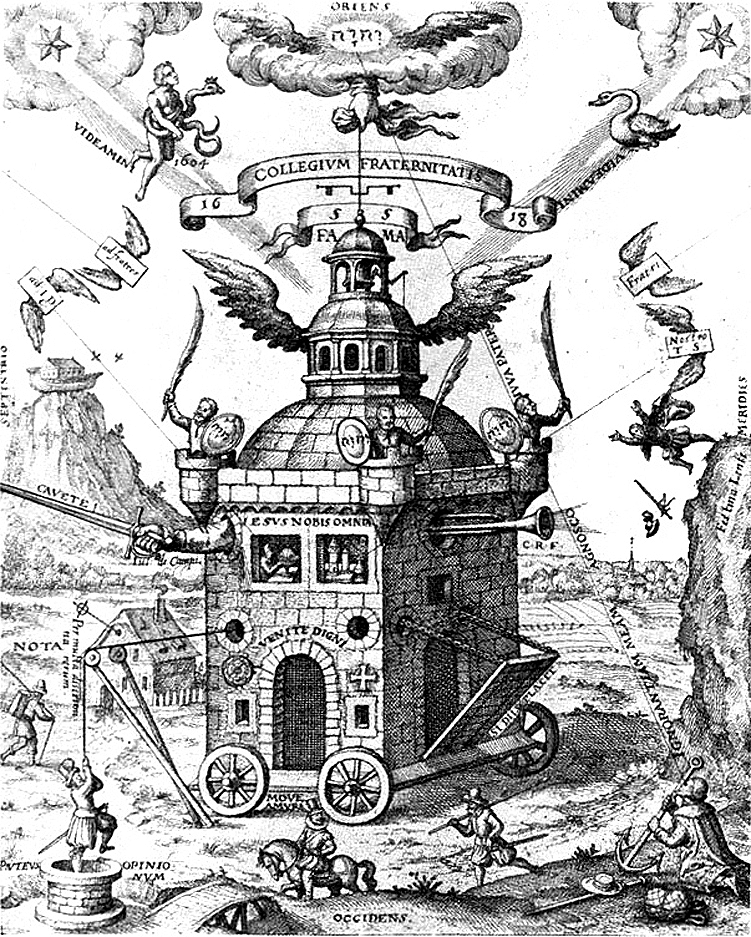
Between 1610 and 1615, two anonymous manifestos appeared in early modern Germany and soon after were published throughout Europe. The Fama Fraternitatis Rosae Crucis (The Fame of the Brotherhood of the Rosy Cross) was circulated in manuscript among German occultists from around 1610, and published at Cassel in 1614. Johannes Valentinus Andreae has been considered the possible author of the work. A literal reading narrates the travels and education of "Father Brother C.R.C." and his founding of a secret brotherhood of similarly prepared men. Names, numbers, and other details have Qabalistic allusions, in which the cognoscenti of that era were well-versed. The Confessio Fraternitatis (The Confession of the Brotherhood of RC), published in Frankfurt in 1615, responded to confusions and criticisms and elaborated the matter further. Many were attracted to the promise of a "universal reformation of mankind" through a science "built on esoteric truths of the ancient past", which, "concealed from the average man, provide insight into nature, the physical universe, and the spiritual realm", which they say had been kept secret for decades until the intellectual climate was ready to receive it. The manifestos elaborate these matters extensively but cryptically in terms of Qabalah, Hermeticism, alchemy, and Christian mysticism, subjects whose methods, symbolism, and allusions were ardently studied by many intellectuals of the period.
In 1616 a third anonymous volume was published, the Chymical Wedding of Christian Rosenkreutz. In his posthumously published autobiography, Johann Valentine Andreae acknowledged its origin in a romantic fantasy that he wrote before he was 16 years old (1602), among other likewise forgotten juvenilia, and which he elaborated in response to the Fame and Confession, and said of it that "the Chymical Wedding, with its fertile brood of monsters, a ludibrium which surprisingly some esteem and explicate with subtle investigations, is plainly futile and betrays the vanity of the curious" (Nuptiae Chymicae, cum monstrorum foecundo foetu, ludibriu, quod mireris a nonullis aestimatum et subtili indagine explicatum, plane futile et quod inanitatem curiosorum prodat). He called Rosicrucianism a "ludibrium" (a lampoon or parody) during his lifetime, in writings advocating social and religious reform through a sectarian Christian organization of his design. Some scholars of esotericism suggest that Andreae disowned Rosicrucianism to shield his clerical career from the wrath of the religious and political institutions of the day.[citation needed] "[I]t is clear from his ‘Turris Babel’, ‘Mythologia Christiana’, and other works, that he considered the manifestos a reprehensible hoax." This augmented controversies as to whether they were a hoax, whether the "Order of the Rosy Cross" existed as described in the manifestos, or whether the whole thing was a metaphor disguising a movement that really existed, but in a different form.
The promise of a spiritual transformation at a time of great turmoil, the manifestos influenced many figures to seek esoteric knowledge. Seventeenth-century occult philosophers such as Michael Maier, Robert Fludd, and Thomas Vaughan interested themselves in the Rosicrucian worldview. In his work "Silentium Post Clamores" (1617), Michael Maier described Rosicrucianism as having arisen from a "primordial tradition", saying "Our origins are Egyptian, Brahminic, derived from the mysteries of Eleusis and Samothrace, the Magi of Persia, the Pythagoreans, and the Arabs".[citation needed]
In later centuries, many esoteric societies claimed to derive from the original Rosicrucians. The most influential of these societies was the Hermetic Order of the Golden Dawn, which derived from Societas Rosicruciana in Anglia and counted many prominent figures among its members. The largest is the Rosicrucian Order, AMORC, a multinational organization based in Rosicrucian Park, San Jose, California, US. Paul Foster Case, founder of the Builders of the Adytum as a successor to the Golden Dawn, published The true and invisible Rosicrucian Order, elaborating the Qabalistic basis and interpretation of the Fame and Confession.
Between 1614 and 1617, three anonymous manifestos were published, first in Germany and soon after throughout Europe: the Fama Fraternitatis RC (The Fame of the Brotherhood of RC, 1614), the Confessio Fraternitatis (The Confession of the Brotherhood of RC, 1615), and the Chymical Wedding of Christian Rosicross anno 1459 (1616).
The Fama Fraternitatis presents the legend of a German doctor and mystic philosopher referred to as "Father Brother C.R.C." (later identified in a third manifesto as Christian Rosenkreuz, or "Rose-cross"). The year 1378 is presented as being the birth year of "our Christian Father," and it is stated that he lived 106 years. It is said that he studied in the Middle East under various masters – a story implying a possible link to Islamic mysticism or Sufism, which influenced a number of Western esoteric traditions.
During the lifetime of C.R.C., the order was said to comprise no more than eight members, each a doctor and "all bachelors of vowed virginity." Each member undertook an oath to heal the sick without accepting payment, to maintain a secret fellowship, and to find a replacement for himself before he died. Three such generations had supposedly passed between c. 1500 and c. 1600: a time when scientific, philosophical, and religious freedom had grown so that the public might benefit from the Rosicrucians' knowledge, so that they were now seeking good men.
Hub AI
Rosicrucianism AI simulator
(@Rosicrucianism_simulator)
Rosicrucianism
Rosicrucianism (/ˌroʊzɪˈkruːʃəˌnɪzəm, ˌrɒzɪ-/) is a spiritual and cultural movement influenced by Esoteric Christianity and Hermeticism that arose in early modern Europe in the early 17th century after the publication of several texts announcing to the world a new esoteric order. Rosicrucianism is symbolized by the Rose Cross or Rosy Cross. There have been several Rosicrucian (or Rosicrucian-inspired) organizations since the initial movement was founded, including the Order of the Golden and Rosy Cross (1750s–1790s), the Societas Rosicruciana in Anglia (1865–present), and the Hermetic Order of the Golden Dawn (1887–1903).
Between 1610 and 1615, two anonymous manifestos appeared in early modern Germany and soon after were published throughout Europe. The Fama Fraternitatis Rosae Crucis (The Fame of the Brotherhood of the Rosy Cross) was circulated in manuscript among German occultists from around 1610, and published at Cassel in 1614. Johannes Valentinus Andreae has been considered the possible author of the work. A literal reading narrates the travels and education of "Father Brother C.R.C." and his founding of a secret brotherhood of similarly prepared men. Names, numbers, and other details have Qabalistic allusions, in which the cognoscenti of that era were well-versed. The Confessio Fraternitatis (The Confession of the Brotherhood of RC), published in Frankfurt in 1615, responded to confusions and criticisms and elaborated the matter further. Many were attracted to the promise of a "universal reformation of mankind" through a science "built on esoteric truths of the ancient past", which, "concealed from the average man, provide insight into nature, the physical universe, and the spiritual realm", which they say had been kept secret for decades until the intellectual climate was ready to receive it. The manifestos elaborate these matters extensively but cryptically in terms of Qabalah, Hermeticism, alchemy, and Christian mysticism, subjects whose methods, symbolism, and allusions were ardently studied by many intellectuals of the period.
In 1616 a third anonymous volume was published, the Chymical Wedding of Christian Rosenkreutz. In his posthumously published autobiography, Johann Valentine Andreae acknowledged its origin in a romantic fantasy that he wrote before he was 16 years old (1602), among other likewise forgotten juvenilia, and which he elaborated in response to the Fame and Confession, and said of it that "the Chymical Wedding, with its fertile brood of monsters, a ludibrium which surprisingly some esteem and explicate with subtle investigations, is plainly futile and betrays the vanity of the curious" (Nuptiae Chymicae, cum monstrorum foecundo foetu, ludibriu, quod mireris a nonullis aestimatum et subtili indagine explicatum, plane futile et quod inanitatem curiosorum prodat). He called Rosicrucianism a "ludibrium" (a lampoon or parody) during his lifetime, in writings advocating social and religious reform through a sectarian Christian organization of his design. Some scholars of esotericism suggest that Andreae disowned Rosicrucianism to shield his clerical career from the wrath of the religious and political institutions of the day.[citation needed] "[I]t is clear from his ‘Turris Babel’, ‘Mythologia Christiana’, and other works, that he considered the manifestos a reprehensible hoax." This augmented controversies as to whether they were a hoax, whether the "Order of the Rosy Cross" existed as described in the manifestos, or whether the whole thing was a metaphor disguising a movement that really existed, but in a different form.
The promise of a spiritual transformation at a time of great turmoil, the manifestos influenced many figures to seek esoteric knowledge. Seventeenth-century occult philosophers such as Michael Maier, Robert Fludd, and Thomas Vaughan interested themselves in the Rosicrucian worldview. In his work "Silentium Post Clamores" (1617), Michael Maier described Rosicrucianism as having arisen from a "primordial tradition", saying "Our origins are Egyptian, Brahminic, derived from the mysteries of Eleusis and Samothrace, the Magi of Persia, the Pythagoreans, and the Arabs".[citation needed]
In later centuries, many esoteric societies claimed to derive from the original Rosicrucians. The most influential of these societies was the Hermetic Order of the Golden Dawn, which derived from Societas Rosicruciana in Anglia and counted many prominent figures among its members. The largest is the Rosicrucian Order, AMORC, a multinational organization based in Rosicrucian Park, San Jose, California, US. Paul Foster Case, founder of the Builders of the Adytum as a successor to the Golden Dawn, published The true and invisible Rosicrucian Order, elaborating the Qabalistic basis and interpretation of the Fame and Confession.
Between 1614 and 1617, three anonymous manifestos were published, first in Germany and soon after throughout Europe: the Fama Fraternitatis RC (The Fame of the Brotherhood of RC, 1614), the Confessio Fraternitatis (The Confession of the Brotherhood of RC, 1615), and the Chymical Wedding of Christian Rosicross anno 1459 (1616).
The Fama Fraternitatis presents the legend of a German doctor and mystic philosopher referred to as "Father Brother C.R.C." (later identified in a third manifesto as Christian Rosenkreuz, or "Rose-cross"). The year 1378 is presented as being the birth year of "our Christian Father," and it is stated that he lived 106 years. It is said that he studied in the Middle East under various masters – a story implying a possible link to Islamic mysticism or Sufism, which influenced a number of Western esoteric traditions.
During the lifetime of C.R.C., the order was said to comprise no more than eight members, each a doctor and "all bachelors of vowed virginity." Each member undertook an oath to heal the sick without accepting payment, to maintain a secret fellowship, and to find a replacement for himself before he died. Three such generations had supposedly passed between c. 1500 and c. 1600: a time when scientific, philosophical, and religious freedom had grown so that the public might benefit from the Rosicrucians' knowledge, so that they were now seeking good men.
Recent media