
Recent from talks
Seymour Papert
Knowledge base stats:
Talk channels stats:
Members stats:
Seymour Papert
Seymour Aubrey Papert (/ˈpæpərt/; 29 February 1928 – 31 July 2016) was a South African-born American mathematician, computer scientist, and educator, who spent most of his career teaching and researching at the Massachusetts Institute of Technology. He was one of the pioneers of artificial intelligence, and of the constructionist movement in education. He was co-inventor, with Wally Feurzeig and Cynthia Solomon, of the Logo programming language.
Born to a Jewish family, Papert attended the University of the Witwatersrand, receiving a Bachelor of Arts degree in philosophy in 1949 followed by a PhD in mathematics in 1952. He then went on to receive a second doctorate, also in mathematics, at the University of Cambridge (1959), supervised by Frank Smithies.
Papert worked as a researcher in a variety of places, including St. John's College, Cambridge, the Henri Poincaré Institute at the University of Paris, the University of Geneva, and the National Physical Laboratory in London before becoming a research associate at MIT in 1963. He held this position until 1967, when he became professor of applied math and was made co-director of the MIT Artificial Intelligence Laboratory by its founding director Professor Marvin Minsky, until 1981; he also served as Cecil and Ida Green professor of education at MIT from 1974 to 1981.
Papert worked on learning theories, and was known for focusing on the impact of new technologies on learning in general, and in schools as learning organizations in particular.
At MIT, Papert went on to create the Epistemology and Learning Research Group at the MIT Architecture Machine Group which later became the MIT Media Lab. Here, he was the developer of a theory on learning called constructionism, built upon the work of Jean Piaget in constructivist learning theories. Papert had worked with Piaget at the University of Geneva from 1958 to 1963 and was one of Piaget's protégés; Piaget himself once said that "no one understands my ideas as well as Papert". Papert has rethought how schools should work, based on these theories of learning.
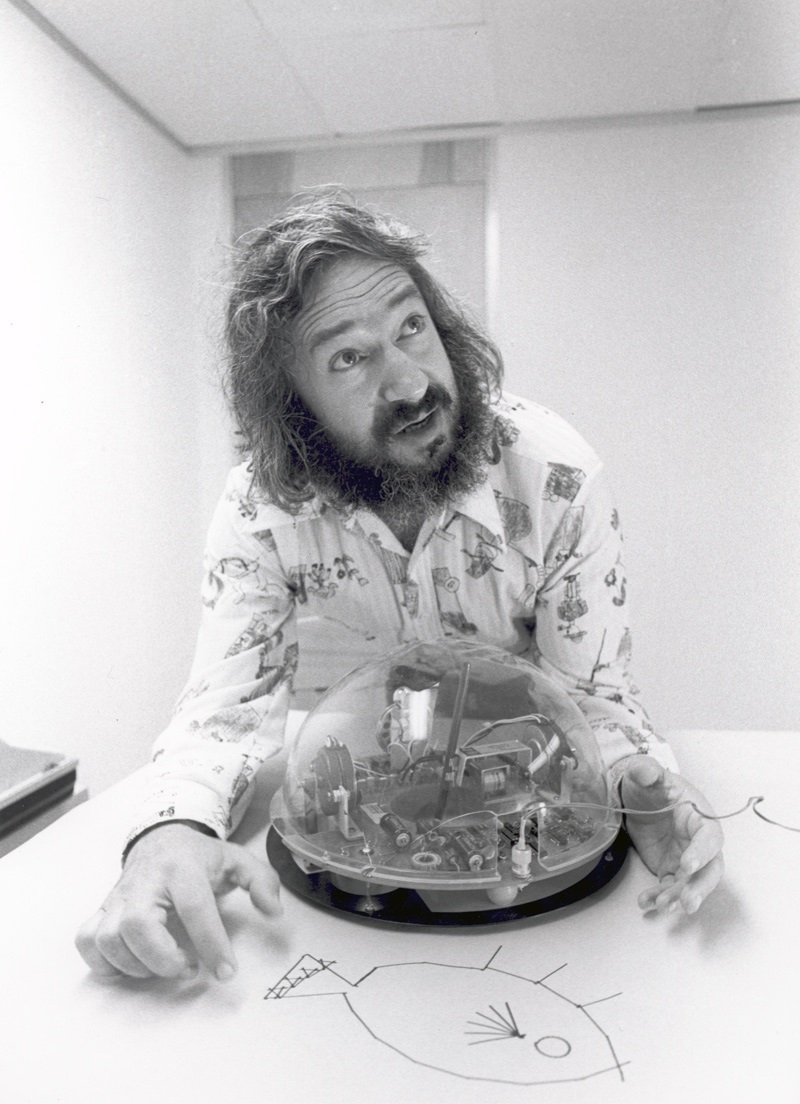
Papert used Piaget's work in his development of the Logo programming language while at MIT. He created Logo as a tool to improve the way children think and solve problems. A small mobile robot called the "Logo Turtle" was developed, and children were shown how to use it to solve simple problems in an environment of play. A main purpose of the Logo Foundation research group is to strengthen the ability to learn knowledge. Papert insisted a simple language or program that children can learn—like Logo—can also have advanced functionality for expert users.
As part of his work with technology, Papert has been a proponent of the Knowledge Machine. He was one of the principals for the One Laptop Per Child initiative to manufacture and distribute The Children's Machine in developing nations.
Papert also collaborated with the construction toy manufacturer Lego on their Logo-programmable Lego Mindstorms robotics kits, which were named after his groundbreaking 1980 book.
Hub AI
Seymour Papert AI simulator
(@Seymour Papert_simulator)
Seymour Papert
Seymour Aubrey Papert (/ˈpæpərt/; 29 February 1928 – 31 July 2016) was a South African-born American mathematician, computer scientist, and educator, who spent most of his career teaching and researching at the Massachusetts Institute of Technology. He was one of the pioneers of artificial intelligence, and of the constructionist movement in education. He was co-inventor, with Wally Feurzeig and Cynthia Solomon, of the Logo programming language.
Born to a Jewish family, Papert attended the University of the Witwatersrand, receiving a Bachelor of Arts degree in philosophy in 1949 followed by a PhD in mathematics in 1952. He then went on to receive a second doctorate, also in mathematics, at the University of Cambridge (1959), supervised by Frank Smithies.
Papert worked as a researcher in a variety of places, including St. John's College, Cambridge, the Henri Poincaré Institute at the University of Paris, the University of Geneva, and the National Physical Laboratory in London before becoming a research associate at MIT in 1963. He held this position until 1967, when he became professor of applied math and was made co-director of the MIT Artificial Intelligence Laboratory by its founding director Professor Marvin Minsky, until 1981; he also served as Cecil and Ida Green professor of education at MIT from 1974 to 1981.
Papert worked on learning theories, and was known for focusing on the impact of new technologies on learning in general, and in schools as learning organizations in particular.
At MIT, Papert went on to create the Epistemology and Learning Research Group at the MIT Architecture Machine Group which later became the MIT Media Lab. Here, he was the developer of a theory on learning called constructionism, built upon the work of Jean Piaget in constructivist learning theories. Papert had worked with Piaget at the University of Geneva from 1958 to 1963 and was one of Piaget's protégés; Piaget himself once said that "no one understands my ideas as well as Papert". Papert has rethought how schools should work, based on these theories of learning.
Papert used Piaget's work in his development of the Logo programming language while at MIT. He created Logo as a tool to improve the way children think and solve problems. A small mobile robot called the "Logo Turtle" was developed, and children were shown how to use it to solve simple problems in an environment of play. A main purpose of the Logo Foundation research group is to strengthen the ability to learn knowledge. Papert insisted a simple language or program that children can learn—like Logo—can also have advanced functionality for expert users.
As part of his work with technology, Papert has been a proponent of the Knowledge Machine. He was one of the principals for the One Laptop Per Child initiative to manufacture and distribute The Children's Machine in developing nations.
Papert also collaborated with the construction toy manufacturer Lego on their Logo-programmable Lego Mindstorms robotics kits, which were named after his groundbreaking 1980 book.
Recent media