


Community hub
Recent from talks
Contribute something
Nothing was collected or created yet.
Siamese fighting fish
View on Wikipedia
| Siamese fighting fish | |
|---|---|

| |
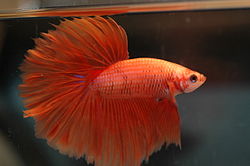
| Halfmoon male | |
Scientific classification 
| |
| Kingdom: | Animalia |
| Phylum: | Chordata |
| Class: | Actinopterygii |
| Order: | Anabantiformes |
| Family: | Osphronemidae |
| Genus: | Betta |
| Species: | B. splendens
|
| Binomial name | |
| Betta splendens Regan, 1910
| |

The Siamese fighting fish (Betta splendens), commonly known as the Siamese fighter, or locally as the betta,[2] is a freshwater fish native to Southeast Asia, namely Cambodia, Laos, Myanmar, Malaysia, Thailand, and Vietnam.[3][4] It is one of 76 species of the genus Betta, but the only one eponymously called "betta", owing to its global popularity as a pet; Betta splendens are among the most popular aquarium fish in the world, due to their diverse and colorful morphology and relatively low maintenance.[5][6]
Betta fish are endemic to the central plain of Thailand, where they were first domesticated at least 1,000 years ago, among the earliest of any fish.[6][7][8] They were initially bred for aggression and subject to gambling matches akin to cockfighting. Bettas became known outside Thailand through King Rama III (1788–1851), who is said to have given some to Theodore Cantor, a Danish physician, zoologist, and botanist.[7][failed verification] They first appeared in the West in the late 19th century, and within decades became popular as ornamental fish. B. splendens's long history of selective breeding has produced a wide variety of coloration and finnage, earning it the moniker "designer fish of the aquatic world".[9]
Bettas are well known for being highly territorial, with males prone to attacking each other whenever housed in the same tank; without a means of escape, this will usually result in the death of one or both fish. Female bettas can also become territorial towards one another in confined spaces.[10] Bettas are exceptionally tolerant of low oxygen levels and poor water quality, owing to their special labyrinth organ, a characteristic unique to the suborder Anabantoidei that allows for the intake of surface air.[11]
In addition to its worldwide popularity, the Siamese fighting fish is the national aquatic animal of Thailand,[12][13] which remains the primary breeder and exporter of bettas for the global aquarium market. Despite their abundance as pets, in the wild, B. splendens is listed as "vulnerable" by the IUCN, due to increasing pollution and habitat destruction. Efforts are being made to support betta fish breeders in Thailand as a result of their popularity as pets, cultural significance, and need for conservation.
Etymology
[edit]Outside Southeast Asia, the name "betta" is used specifically to describe B. splendens, despite the term scientifically applying to the entire genus, which includes B. splendens and at least 72 other species. Betta splendens is more accurately called by its scientific name or "Siamese fighting fish" to avoid confusion with the other members of the genus.
English-speakers often pronounce betta as "bay-tuh", after the second letter in the Greek alphabet. However, it is believed the name is derived from the Malay word ikan betta, with ikan meaning "fish" and bettah referring to an ancient warrior tribe, which is pronounced "bet-tah".[14][better source needed] Alternative sources suggests the name Betta splendens is formed from two languages, consisting of Malay for "enduring fish" and the Latin word for shining.[15]

Another vernacular name for Siamese fighting fish is plakat, often applied to the short-finned ornamental strains, which is derived from the Thai word pla kat (Thai: ปลากัด), which literally means "biting fish". This name is used in Thailand for all members of the Betta genus, which share similar aggressive tendencies, rather than for any specific strain of the Siamese fighting fish. Thus, the term "fighting fish" is used to generalise all Betta species besides the Siamese fighting fish.[16]
Siamese fighting fish were originally given the scientific name Macropodus pugnax in 1849—literally "aggressive fish with big feet", likely in reference to their elongated pelvic fins.[14] In 1897 they were identified with the genus Betta and became known as Betta pugnax, referring to their aggressiveness. In 1909, the species was finally renamed Betta splendens upon the discovery that an existing species was already named pugnax.[14]
Description
[edit]
B. splendens usually grows to a length of about 6–8 cm (2.4–3.1 in).[17] Although aquarium specimens are widely known for their brilliant colours and large, flowing fins, the natural coloration of B. splendens is generally green, brown and grey, while the fins are little short; wild fish exhibit strong colours only when agitated. In captivity, Siamese fighting fish have been selectively bred to display a vibrant array of colours and tail types.[18][19] The variety of colors we see now in pet stores is a result of the domestication of the Betta splendens. Because pet stores are more likely to sell the visually striking bettas, those are the types of bettas the breeders continue to prioritize. The more natural colored bettas like green, brown, and grey may rarely be seen now in pet stores due to the overshadowing of the more visually appealing colors.[20]
Male and female Betta splendens can look similar, but one way to distinguish between the two is to identify the ovipositor tube that's located in females used for egg delivery.[20]
Distribution and habitat
[edit]According to Witte and Schmidt (1992), Betta splendens is native to Southeast Asia, including the northern Malay Peninsula, central and eastern Thailand, Kampuchea (Cambodia), and southern Vietnam. According to Vidthayanon (2013), a Thai ichthyologist and senior researcher of biodiversity at WWF Thailand, the species is endemic to Thailand, from the Mae Khlong to Chao Phraya basins, the eastern slope of the Cardamom mountains (Cambodia), and from the Isthmus of Kra. Similarly, a report from Froese and Pauly (2019) identifies Betta splendens as native to Cambodia, Laos, Thailand, and Vietnam.[4][21] They are also found throughout the neighbouring Malay Peninsula and in adjacent parts of Sumatra, likely due to human introduction.[22]

Wherever they are found, Betta splendens generally inhabit shallow bodies of water with abundant vegetation, including marshes, floodplains, and paddy fields.[1] The historic prevalence of rice farming across Southeast Asia, which provided an ideal habitat for bettas, led to their discovery and subsequent domestication by humans.[21] The combination of shallow water and high air temperature causes gases to rapidly evaporate, leading to a significant deficit of oxygen in the betta's natural habitat.[21] This environment likely led to the evolution of the lung-like labyrinth organ, which allows Siamese fighting fish—like all members of the suborder Anabantoidei—to breathe directly from the air. Subsequently, bettas can live and even thrive in harsher environments than other freshwater fish, which in turn leaves them with fewer natural predators and competitors.[23] In the wild, bettas thrive at a fairly low population density of 1.7 individuals per square meter.[24]
The tropical climate of the betta's natural habitat is characterized by sudden and extreme fluctuations in water availability, chemistry, and temperature.[23] Water pH can range from slightly acidic (pH 6.9) to highly alkaline (pH 8.2), while air temperatures drop as low as 15 °C (59 °F) and rise as high as 40 °C (100 °F).[23] Consequently, Siamese fighting fish are highly adaptable and durable, able to tolerate a variety of harsh or toxic environments; this accounts for their popularity as pets, as well as their ability to successfully colonize bodies of water all over the world.[25]
Wild bettas prefer to live in bodies of water teeming with aquatic vegetation and surface foliage, such as fallen leaves and water lilies.[23] The abundance of plants provides security from predators and a buffer between aggressive males, who coexist by claiming dense sections of plants as territory.[25] Such vegetation also offers protection to females during spawning and to fry during their earliest and most vulnerable stages.[25]
Invasive species
[edit]The betta's worldwide popularity has led to its release and home in similarly tropical areas, including southeast Australia, Brazil, Colombia, the Dominican Republic, the southeast United States, and Singapore.[21]
In January 2014, a large population of bettas was discovered in the Adelaide River Floodplain in the Northern Territory, Australia.[26] As an invasive species, they pose a threat to native fish, frogs, and other wetland wildlife.[26] Bettas have also become established in subtropical areas of the United States, namely southern Texas and Florida, although an assessment by the U.S. Fish and Wildlife Service noted that while the climate match for this species within the United States is low, no studies have been done to assess the effect of this species upon the invaded range.[27]
Conservation status
[edit]Due to their popularity, Siamese fighting fish are highly abundant in captivity.[1] In the wild, betta habitats are threatened by chemical and agricultural run off, in addition to the contamination of human medication residue into aquatic ecosystems from the sewage system. Such contamination can also alter the reproductive behavior of the species by decreasing hatch rate and increasing the likelihood of fathers eating their own eggs. Due to the expansion of palm oil plantation in Southeast Asia, wild bettas are also facing habitat loss.[15] The primary threats are habitat destruction and pollution, caused by urban and agricultural development across central Thailand.[1] Wild specimens are categorized by the IUCN as vulnerable, indicating the species is likely to become endangered without conservation efforts.
Diet
[edit]Betta splendens is naturally carnivorous, feeding on zooplankton, small crustaceans, and the larvae of aquatic insects such as mosquitoes, as well as insects that have fallen into the water and algae.[28] Contrary to some marketing materials in the pet trade, bettas cannot subsist solely on vegetation or the roots of plants.[29]
Although Betta splendens is carnivorous, there are factors that affect juvenile health, such as limited ability for carbohydrate digestion. This can occur in young Betta splendens because their intestines are a lot shorter and their carbohydrate digestive enzymes are not as active as adult bettas. Bettas can also adhere to a diet including rotifers, infusorians, and water fleas, but some of these organisms are derived from avian and porcine farms that can cause diseases, potentially harming the bettas. Even though carbohydrates from a carnivorous diet are essential for maturation in bettas, research on betta health has provided alternatives for food other than their typical diet. Some of these alternatives include microwave cooking, digestive enzyme supplementation, and probiotics, some of which may be found in betta fish food in pet stores.[30]
Reproduction and early development
[edit]If interested in a female, male bettas will flare their gills, spread their fins, and twist their bodies in a dance-like performance. Receptive females will respond by darkening in color and developing vertical lines known as "breeding bars". Males build bubble nests of various sizes and thicknesses at the surface of the water, which interested females may examine. Most do this regularly even if there is no female present.[citation needed]
Plants or rocks that break the surface often form a base for bubble nests. During courtship, the male betta may exhibit aggressive behavior towards the female by acts of chasing or nipping at her fins.[15] The act of spawning itself is called a "nuptial embrace", for the male wraps his body around the female; around 10–40 eggs are released during each embrace, until the female is exhausted of eggs. With each deposit of eggs through the female's ovipositor, the male releases milt into the water, which fertilizes the eggs as they get released. The males can fertilize these eggs every minute for 1–4 hours while females can release anywhere between 12 and 492 eggs at a time.[31]. During and after spawning, the male uses his mouth to retrieve sinking eggs and place them in the bubble nest; during mating some females assist their partner, but more often will simply devour all the eggs she manages to catch. Once the female has released all of her eggs, she is chased away from the male's territory, as she will likely eat the eggs.[citation needed] If she is not removed from the tank, she will most likely be killed by the male.[15]After mating, females need at least four weeks to rest before mating again. Mating earlier than four weeks can result in no eggs or eggs that are incapable of developing into live offspring. Males are different because they only require about a week or so before they can continue fertilizing eggs.[32]
The eggs remain in the male's care. He carefully keeps them in his bubble nest, making sure none fall to the bottom, repairing the bubble nest as needed. Incubation lasts for 24–36 hours; newly hatched larvae remain in the nest for the next two to three days until their yolk sacs are fully absorbed. Afterwards, the fry leave the nest and the free-swimming stage begins. In this first period of their lives, B. splendens fry are totally dependent on their gills; the labyrinth organ, which allows the species to breathe atmospheric oxygen, typically develops at three to six weeks of age, depending on the general growth rate, which can be highly variable. B. splendens can reach sexual maturity in as early as 4–5 months.[24] Typically, the morphological differences between males and females can be noticed around two months after hatching. During development, betta fry can be fed either commercial artificial feeds, or live moving prey, which tends to be favored more. Examples of live feed for betta fry include baby brine shrimp, water fleas, and mosquito larvae. Although common fed to fish fry, boiled egg yolks are not preferred by the fish.[6]
-
 Betta male building a bubble nest
 -
 Spawning under a bubble nest in a breeder's tank
 -
 One-day-old fry (their yolk sacs have not yet been absorbed) in a bubble nest
 -
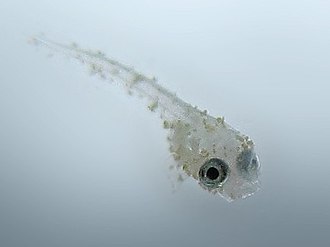 A 15-day-old, free-swimming fry is infected with Piscindooinium sp. (velvet), a common killer of betta fry in captivity.


History
[edit]Information on precisely how and when Siamese fighting fish were first domesticated and brought out of Asia is sparse.[33] Genetic analysis implies domestication at least 1,000 years ago.[34] Additional evidence from DNA sampling suggests bettas may have been bred for fighting since the 13th century. Over time, this led to the diverse genetics of modern domestic and wild bettas.[8]
Fighting fish
[edit]Some people in Malaysia and Thailand are known to have collected wild bettas at least by the 19th century, observing their aggressive nature and pitting them against each other in gambling matches akin to cockfights.[35] In the wild, betta spar for only a few minutes before one fish retreats; domesticated betta, namely Plakat bettas, are bred specifically for heightened aggression, and can engage for much longer, with winners determined by a willingness to continue fighting; once a fish retreats, the match is over. Fights to the death were rare, so bets were placed on the bravery of the fish rather than its survival.[citation needed] Due to the difference in genetics from domesticated bettas being originally bred for fighting, captive ornamental species tends to be more aggressive than wild betta species.[8]
The popularity of these fights garnered the attention of the king of Siam (Thailand), who regulated and taxed the matches and collected fighting fish of his own. In 1840, he gave some of his prized fish to Danish physician Theodore Edward Cantor, who worked in the Bengal medical service.[33] Nine years later, Cantor published the first recorded article describing these fish, giving them the name Macropodus pugnax. In 1909, British ichthyologist Charles Tate Regan found there was a related species already named Macropodus pugnax, and thus renamed the domesticated Siamese fighting fish, Betta splendens, or "splendid fighter".[citation needed]
Aquarium fish
[edit]Betta splendens first entered the Western aquarium trade in the late 19th century; the earliest known arrival is 1874 in France, when French aquaria expert and ichthyologist Pierre Carbonnier began importing and breeding several specimens. In 1896, German tropical fish expert Paul Matte brought the first specimens into Germany from Moscow, most likely from the strain developed by Carbonnier.[33] This indicates bettas were already somewhat established in France and Russia by the turn of the 20th century. Fighting fish were also present in Australia by 1904, based on an article written by British-born zoologist Edgar Ravenswood Waite and published by the Australian Museum in Sydney.[33] Waite indicates that Australian specimens were brought from Penang, Malaysia, near the border with Thailand.[33] He also makes reference to two articles about "fighting fish" published by Carbonnier in 1874 and 1881. Bettas may have first entered the United States in 1910, via importers in California; there is also evidence they were imported in 1927 from Cambodia.[33]
While it is unclear when bettas became popular in the aquarium trade, the early 20th century marked the first known departure from centuries of breeding bettas for aggression, to instead selecting for colour, finnage, and overall beauty for ornamental purposes.[33] In 1927, an article was published in Germany describing the long, flowing fins of the "veiltail" breed, which indicates an emphasis on aesthetic beauty.[36] In the 1950s, an American breeder created a larger and longer-finned veiltail, while around 1960, Indian breeders discovered a genetic mutation that allowed for two caudal fins, producing the "doubletail" variety. Within that decade, a German breeder created the "deltatail" characterised by its broader, triangular fins.[37]
In 1967, a group of betta breeders formed the International Betta Congress (IBC), the first formal interest group dedicated to Siamese fighting fish. The IBC aimed to breed varieties that would be healthier and more symmetrical in fins and body shape, with an emphasis on animal welfare.[37]
In the aquarium
[edit]Water
[edit]As tropical fish, bettas prefer a water temperature of around 75–82 °F (24–28 °C), but have been observed surviving temporarily at extremes of 56 °F (13 °C) to 95 °F (35 °C). When kept in colder climates, aquarium heaters are recommended, as colder water weakens their immune system and makes them susceptible to certain diseases.[citation needed]
Bettas are also affected by the pH of the water: a neutral pH of 7.0 is ideal, but slightly higher levels are tolerable.[38] Due to their labyrinth organ, bettas can endure low oxygen levels, but cannot survive for long in unmaintained aquaria, as poor water quality makes all tropical fish more susceptible to diseases like fin rot,[39] or scale loss. Thus, notwithstanding the betta's well known tolerance of still water, a mechanical filter is considered necessary for their long-term health and longevity.[40] Similarly, live aquatic plants provide a supplemental source of filtration, in addition to crucial enrichment to the betta.
Aquarium size and cohabitants
[edit]
Despite frequently being displayed and sold in small containers in the pet trade, bettas do best in larger environments; while they can survive in cups, bowls, and other confined spaces, they will be much happier, healthier, and longer-lived in a larger aquarium.[40] Generally, in a larger tank, bettas do more swimming and foraging, while in smaller tanks there is more resting, which is not as beneficial for the bettas. Although some betta enthusiasts claim there is a minimum tank size, determining a strict baseline is somewhat arbitrary and subject to debate; however, most people consider a 5.6 gallon tank as the minimum. Researchers found that larger tanks and tank decor greatly impact betta behavior by recognizing increased swimming activity and reduced resting. Small jars that bettas are often housed and transported in negatively influence betta behavior and well-being.[41]
Although male bettas are solitary and aggressive towards one another, they can generally cohabit with many types of fish and invertebrates if there is adequate space and hiding places. However, compatibility varies based on the temperament of the individual betta, and it is advised to carefully supervise the betta's interaction with other fish. Tankmates must be tropical, communal, nonterritorial, and not have a similar body type or long flowing fins; coldwater fish like goldfish have incompatible temperature requirements, while aggressive and predatory fish are likely to nip at the betta's fins or erode their slime coat. Species that shoal, such as tetras and danios, are considered most ideal, since they usually keep to themselves and can endure the territorial nature of bettas with their numbers. Brightly coloured fish with large fins, such as male guppies, should be avoided, as they may invite fin nipping by the male betta. Potential tankmates should usually be added before the male betta so they can establish their respective territories beforehand, rather than compete with the betta.[citation needed]
Female bettas are less aggressive and territorial than males, and thus can live with a greater variety of fish; for example, brightly coloured or large-finned fish will not usually disturb a female. Generally, female fighting fish can also tolerate larger or more numerous tankmates than males. However, like male bettas, a female's tolerance of other fish will vary by individual temperament.[citation needed]
It is not recommended to keep male and female bettas together, except temporarily for breeding purposes, which should always be undertaken with caution and supervision.[citation needed]
Health and wellness
[edit]When properly kept and fed a correct diet, Siamese fighting fish generally live between three and five years in captivity, though in rare cases may live as long as seven to ten years.[42] One study found that bettas kept in tanks of several gallons and provided with proper nutrition and "exercise"—in the form of being chased around by a stick for a short period—lived over nine years; by contrast, a control group of bettas confined to small jars lived far fewer years.[43] A larger tank with proper filtration, regular maintenance, and an abundance of decor and hiding spaces, along with a rich, protein-based diet, increases the likelihood of a long lifespan.
Like all tropical fish in captivity, bettas are susceptible to several kinds of diseases, usually caused by bacterial, fungal, or parasitic infections. In commercial and ornamental production systems, Siamese fighting fish have also been reported with more complex bacterial and mycobacterial conditions that go beyond the common hobbyist diseases. A survey in Thailand described "big belly" and "skin nodule" syndromes associated with granulomatous inflammation and culturable bacteria in farmed bettas.[44] In addition, a series of studies on farmed and research populations of Siamese fighting fish has shown that non-tuberculous Mycobacterium spp. can be an important health problem in this species. Experimental work demonstrated that several rapidly growing, non-tuberculous Mycobacterium species isolated from Betta splendens are genuinely pathogenic, producing systemic and cutaneous granulomatous lesions after different exposure routes, thus confirming mycobacteriosis as a clinically relevant disease in bettas.[45][46] Follow-up work evaluated water-treatment interventions, showing that ozone nanobubbles can lower mycobacteriosis risk in production-style systems, indicating that environmental management is a feasible control point for these infections.[47] Husbandry guidelines for research use of bettas likewise emphasize that suboptimal temperature, water quality, and stocking can predispose fish to these opportunistic infections.[48] Most illnesses result from poor water quality and cold water, both of which weaken the immune system.[49] The four most common illnesses are white spot, velvet, fin rot, and dropsy; with the exception of the latter, which is incurable, these ailments can be treated with a combination of over-the-counter fish medication, increased water temperature, and regular water changes.[50]
Setup
[edit]Bettas are fairly intelligent and inquisitive, and thus require stimulation; otherwise they can become bored and depressed, leading to lethargy and a weaker immune system.[51] Decorations such as silk or live plants, rocks, caves, driftwood, and other ornaments provide crucial enrichment—provided they do not have rough textures or jagged edges, which can damage their delicate fins. In the wild, Siamese fighting fish spend most of their time concealing themselves under floating debris or overhanging plants to avoid potential predators. Floating plants and leaves can help bettas feel more secure, while also giving males an anchor from which to build their bubble nests. Abundant vegetation of any kind is generally recommended to provide maximum security and to cater to the betta's instinct to claim protective territory.[citation needed]
Indian almond leaves are increasingly popular for providing something closer to the natural foliage under which bettas would hide in the wild. Their tannins allegedly confer several health benefits, including treating certain ailments like fin rot and bladder disease, and stabilising the pH of the water.[citation needed]
Varieties
[edit]Over a century of intensive selective breeding has produced a wide variety of colours and fin types, and breeders around the world continue to develop new varieties.[52] Often, the males of the species are sold preferentially in stores because of their beauty relative to the females, which almost never develop fins or vibrant colours as showy as their male counterparts; however, some breeders have produced females with fairly long fins and bright colours.
Betta splendens can be hybridised with B. imbellis, B. mahachaiensis, and B. smaragdina, though with the latter, the fry tend to have low survival rates. In addition to these hybrids within the genus Betta, intergeneric hybridisation of Betta splendens and Macropodus opercularis, the paradise fish, has been reported.[53]
Colors
[edit]
Wild bettas exhibit strong colours only when agitated. Over the centuries, breeders have been able to make this coloration permanent, and a wide variety of hues breed true. Colours among captive bettas include red, orange, yellow, turquoise/green, blue, steel blue, black, opaque white, pastel, and multi-coloured. Recent evidence suggests blue-colored males may show higher levels of aggression than red-colored males. On the other hand, female bettas may have a preference for red-colored mates as opposed to their blue counterparts.[15]
The betta's diverse colours are due to different layers of pigmentation in their skin. The layers, from deepest within to the outermost, consists of red, yellow, black, iridescent (blue and green), and metallic (not a colour itself, but reacts with the other colours). Any combination of these layers can be present, leading to a wide variety of colours within and among bettas.[54]
The shades of blue, turquoise, and green are slightly iridescent, and can appear to change colour with different lighting conditions or viewing angles; this is because these colours (unlike black or red) are not due to pigments, but created through refraction within a layer of translucent guanine crystals. Breeders have also developed different colour patterns such as marble and butterfly, as well as metallic shades like copper, gold, or platinum. Recent genetic evidence suggests multiple genes influencing betta coloring and pattern[55].
Some bettas will change colours throughout their lifetime, a process known as marbling, which is attributed to a transposon, in which a DNA sequence can change its position within a genome, thereby altering a cell.[56] Koi bettas have mutated over time and in some case change colours or patterns throughout their lifetime (known as true Koi), due to the defective gene that causes marbling not being repaired in the color layers after some time.[57]

Common colours:
- Super Red
- Super Blue
- Super Yellow
- Opaque
- Super Black
- Super White
- Orange
- Marble
- Candy
- Nemo
- Galaxy Nemo
- Koi
- Alien
- Copper
- Cellophane
- Gold
- Galaxy Koi
Rarer colours:
- Super Orange
- Metallic
- Turquoise
- Lavender
- Mustard Gas
- Grizzle
- Green
- Purple

Colour patterns:
- Solid – Entire fish is one colour with no variations
- Bi-colour – Fins must be a different colour to the body to be a Bi-colour.
- Cambodian – Body is pale, almost colourless, and fins are a solid colour
- Butterfly – Fins have distinct bands of colours
- Marble – Irregular patterns throughout body and fin
- Piebald – Pale flesh-coloured face irrespective of body colour.
- Full Mask – Face is same colour as body, rather than the natural pattern of being darker than the body
- Dragon – Rich strong base colour with the scales on the main part of the body a pale iridescent
- Multicolour – Three or more colours on the body that do not fit into any other pattern category
- Pastel – Light shade of colour seen only on the fins, body remains a flesh hue
- Koi – Judged from the top down and look like their carp counterparts. Patterns should be uniform with clean color defining lines.
- Nemo – Either white based or orange based and have three or four main colours: Orange, red, yellow, black

Finnage variations
[edit]Breeders have developed several different finnage and scale variations:
- Veiltail – Extended finnage length and non-symmetrical tail; caudal fin rays usually only split once; the most common tail type seen in pet stores.
- Crowntail – Fin rays are extended well beyond the membrane and consequently the tail can take on the appearance of a crown; also called fringetail
- Combtail – Less extended version of the crown tail, derived from breeding crown and another finnage type
- Halfmoon – D-shaped caudal fin that forms a 180° angle; the edges of the tail are crisp and straight
- Over-Halfmoon or Super Delta Tail – Caudal fin exceeds 180° angle (a byproduct of trying to breed half-moons), which can sometimes cause problems because the fins are too big for the fish to swim properly
- Rosetail – Variation with so much finnage that it overlaps and looks like a rose
- Feather tail – Similar to the Rosetail, with a rougher appearance
- Plakat – Short fins that resemble the fins seen in wild-type bettas
- Halfmoon plakat – Short-finned Halfmoon; plakat and halfmoon cross
- Double tail or Full-moon – Tail fin is duplicated into two lobes and the dorsal fin is significantly elongated; the two tails can show different levels of bifurcation depending on the individual
- Delta tail – Tail spread less than that of a Halfmoon (less than 180°)
- Super Delta (aka SD or SDT) – Enhanced version of the Delta; one step closer to the Halfmoon variety in that their tails have a span between 130–170 degrees
- Half-Sun – Combtail with caudal fin going 180°, like a half-moon
- Elephant Ear – Pectoral fins are much larger than normal, often white, resembling the ears of an elephant
- Spade Tail – Caudal fin has a wide base that narrows to a small point
-
 Plakat Halfmoon male and female
 -
 Cellophane Big Ear male
 -
 Female and male
 -
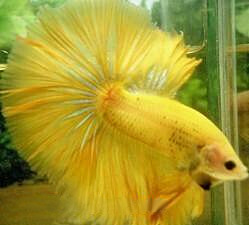 Halfmoon
 -
 Rosetail male


Behaviour and intelligence
[edit]
Siamese fighting fish display complex behavioural patterns and social interactions, which vary among individual specimens.[58][59] Research indicates they are capable of associative learning, in which they adopt a consistent response following exposure to new stimuli.[59] These characteristics have made bettas subject to intensive study by ethologists, neurologists, and comparative psychologists.[60][61][62]
Males and females flare or puff out their gill covers (opercula) to appear more impressive, either to intimidate other rivals or as an act of courtship. Flaring also occurs when they are intimidated by movement or a change of scene in their environments. In captivity, bettas can be seen flaring at their own reflection because they do not pass the mirror test for self-recognition.[citation needed] Both sexes display pale horizontal bars if stressed or frightened. However, such colour changes, common in females of any age, are rare in mature males due to their intensity of colour. Females often flare at other females, especially when setting up a pecking order. Flirting fish behave similarly, with vertical instead of horizontal stripes indicating a willingness and readiness to breed.
Betta splendens enjoy a decorated tank, as they seek to establish territory even when housed alone. They may set up a territory centered on a plant or rocky alcove, sometimes becoming highly possessive of it and aggressive toward trespassing rivals; consequently, bettas, if housed with other fish, require at least 45 litres (about 10 gallons). Contrary to popular belief, bettas are compatible with many other species of aquarium fish.[63] Given the proper parameters, bettas will only be aggressive towards smaller and slower fish than themselves, such as guppies.[64]
Betta aggression has historically made them objects of gambling; two male fish are pitted against each other to fight, with bets placed on which one will win. Combat is characterised by fin nipping, flared gills, extended fins, and intensified colour.[65] The fight continues until one participant is submissive or tries to retreat; one or both fish may die depending on the seriousness of their injuries, though bettas rarely intend to fight to the death. To avoid fights over territory, male Siamese fighting fish are best isolated from one another. Males will occasionally respond aggressively even to their own reflections. Though this is obviously safer than exposing the fish to another male, prolonged sight of their reflection may lead to stress in some individuals. Not all Siamese fighting fish respond negatively to other males, especially if the tank is large enough for each fish to create their own designated territory.[citation needed]
Aggression in females
[edit]In general, studies have shown that females exhibit similar aggressive behaviours to males, albeit less frequently and intensely.[66] An observational study examined a group of female Siamese fighting fish over a period of two weeks, during which time they were recorded attacking, flaring, and biting food. This indicated that when females are housed in small groups, they form a stable dominance order, or "pecking order". For example, the fish ranked at the top showed higher levels of mutual displays, in comparison to the fish who were of lower ranks. The researchers also found that the duration of the displays differed depending on whether an attack occurred.[67] The results of this research suggest that female Siamese fighting fish warrant as much scientific study as males, as they seem to have variations in their behaviours as well.
Courtship behaviour
[edit]There has been much research in the courtship behaviour between male and female Siamese fighting fish. Studies generally focus on the aggressive behaviours of males during the courtship process. For example, one study found that when male fish are in the bubble nest phase, their aggression toward females is quite low. This is due to the males attempting to attract potential mates to their nest, so eggs can successfully be laid.[68] It has also been found that in determining a suitable mate, females often "eavesdrop" on pairs of males that are fighting. When a female witnesses aggressive behaviour between males, she is more likely to be attracted to the male who won. In contrast, if a female did not "eavesdrop" on a fight between males, she will show no preference in mate choice. In regards to the males, the "loser" is more likely to attempt to court the fish who did not "eavesdrop", while the "winner" showed no preference between females who "eavesdropped" and those who did not.[69]
One study considered the ways in which male Siamese fighting fish alter their behaviours during courtship when another male is present. During this experiment, a dummy female was placed in the tank. The researchers expected that males would conceal their courtship from intruders; instead, when another male fish was present, the male was more likely to engage in courtship behaviours with the dummy female fish. When no barriers were present, the males were more likely to engage in gill flaring at an intruder male fish. The researchers concluded that the male was attempting to court the female and communicate with its rival at the same time.[70] These results indicate the importance of considering courtship behaviour, as the literature has suggested there are many factors that can dramatically affect the ways in which both male and females can act in courtship settings.
Metabolic costs of aggression
[edit]Studies have found that Siamese fighting fish often begin with behaviours that require high cost, and gradually decrease their behaviours as the encounter proceeds.[68] This indicates that Siamese fighting fish will first begin an encounter using much metabolic energy, but will gradually decrease, as to not use too much energy, thus making the encounter a waste if the fish is not successful. Similarly, researchers have found that when pairs of male Siamese fighting fish were kept together in the same tank for a three-day period, aggressive behaviour was most prevalent during the mornings of the first two days of their cohabitation. However, the researchers observed that the fighting between the two males decreased as the day progressed. The male in the dominant position initially had metabolic advantage; although as the experiment progressed, both fish became equal in regards to metabolic advantages.[71] In regards to oxygen consumption, one study found that when two male bettas fought, the metabolic rates of both fish did not differ before or during the fight. However, the fish who won showed higher oxygen consumption during the evening following the fight. This indicates that aggressive behaviour in the form of fighting has long-lasting effects on metabolism.[72]
Behavioural effects of chemical exposure
[edit]Siamese fighting fish are popular models for studying the neurological and physiological impact of certain chemicals, such as hormones, since their aggression is the result of cell signalling and possibly genes.[73]
One study investigated the effect of testosterone on female Siamese fighting fish. Females were given testosterone, which resulted in changes to fin length, body coloration and gonads that resembled typical male fish. Their aggressive behaviour was found to be elevated when interacting with other females, but reduced when interacting with males. The researchers then allowed the females to interact with a control group of unaltered females; when the female fish stopped receiving testosterone, those who were exposed to the normal females still exhibited male-typical behaviours. In contrast, the female fish who were kept isolated did not continue to exhibit the male typical behaviours after testosterone was discontinued.[74]
Another study exposed male Siamese fighting fish to endocrine-disrupting chemicals. The researchers were curious if exposure to these chemicals would affect the ways in which females respond to the exposed males. It was found that when shown videos of the exposed males, the females favoured those who were not exposed to the endocrine-disrupting chemicals, and avoided those males that were exposed. The researchers concluded that exposure to these chemicals can negatively affect the mating success of male Siamese fighting fish.[75]
A psychology study used male Siamese fighting fish to investigate the effects of fluoxetine, an SSRI used primarily as an antidepressant in humans. Siamese fighting fish were selected as prime models due to having comparable serotonin transporter pathways, which accounts for their aggression. It was found that when exposed to fluoxetine, male Siamese fighting fish exhibited less aggressive behaviour than is characteristic of their species.[76] Similarly, research has found that bettas are responsive to serotonin,[61] dopamine,[62] and GABA.[77]
Another commonly prescribed drug that can affect Betta splendens' behavior is metformin, which is a drug doctors prescribe to treat people with type II diabetes. Metformin can enter freshwater and wastewater areas because it does not always get fully broken down in humans, and whatever does not get fully metabolized is usually excreted through urine or feces. When metformin makes its way through the sewage systems and into betta habitats, over time it reduces the aggression of the male bettas. The longer the male bettas are exposed to concentrated metformin, the more their aggression diminishes. With decreased energy and aggression, the bettas' fitness can decline.[78]
Sleep behavior
[edit]Betta fish can exhibit unusual sleep behaviors, often resulting in new betta owners assuming that their betta fish has died. In an aquarium, betta fish sleep anywhere in the tank they feel comfortable, including at the bottom on the substrate, floating at the mid-level, or at the surface. Betta fish will sleep on their side, upside down, with their nose pointing up, or with their tail pointing up. They are also known to curl up or wedge between tight spaces, such as behind a heater. One of the more unusual sleep behaviors that betta fish exhibit is their ability to sleep out of the water, resting on a leaf or any other flat object protruding from the water. This is made possible by the betta's labyrinth organ, which acts like a human lung, pulling oxygen from the air instead of from the water. When betta fish sleep, their bright colors will often fade, and when combined with their unusual napping positions, they can appear dead. Predatory fish will often avoid eating a dead fish because of the risk of contracting diseases and parasites, making this an excellent defensive mechanism.[citation needed]
Genetics
[edit]Despite its commercial popularity, little is known about the Betta splendens genome. Current understanding is so limited that there is little evidence for the genetic basis of basic traits, including sex determination.[79] A 2021 review article[79] argued for increased scientific investigation into the genome of the Siamese fighting fish, and listed several areas of interest which are paraphrased below:
- monophyly of the genus Betta including a single-versus-multiple origin of mouthbrooding;
- the state of cryptic diversity and evolutionary forces driving speciation in the betta lineage;
- responsive genes or genetic interaction to parental care, behavioural aggression, pigmentation, and other betta biology; and
- preservation technology for betta as insurance against accidental loss of biodiversity this century.
Additionally, betta fish have been used in several studies to assess the impacts of various environmental contaminants, including oil.[80][81][82] Improved understanding of the betta genome would allow for more accurate generalisations from these studies. Lastly, the betta fish is an excellent candidate for a model organism, particularly for aggression and pigmentation development, due to their extreme phenotypes in these areas.
Currently, the complete B. splendens chromosomal[83] and mitochondrial[84] genomes have been sequenced. Both genomes have yet to be annotated, though a roadmap for future efforts has been outlined.[79] Notably, the mitochondrial genome for the peaceful betta, P. imbellis, has also been sequenced,[85] potentially allowing for meaningful comparison between species in the future.
Phylogeny and cryptic diversity
[edit]There are many species in the genus Betta, the majority of which are very morphologically similar. Within Thailand alone, there are twelve nominal species,[79] with new species being discovered every 5–10 years.[86] Past efforts to differentiate Betta species have been based on observable morphology, but given their visible similarity, this approach has masked much of the cryptic diversity in the genus. Recent speciation efforts have included use of DNA barcoding to differentiate species, specifically comparing the CO1 gene of the mitochondrial genome, resulting in new theories about the relatedness between species and allowing for the construction of new phylogenetic trees.[87]
The morphological similarity between species that can be distinguished genetically suggests that species radiation with cryptic diversity occurred in the Betta lineage. Current theories about the species radiation and speciation take into account the geographic considerations of their native habitat of Thailand, and suggest that the speciation is best described by a model of either allopatric or parapatric speciation.[79]
Genetics of betta biology
[edit]Aggression
[edit]B. splendens are known for their intense aggression, which has resulted from intense selective pressures imposed upon them from many generations of artificial selection. Fighting strains of B. splendens have been bred for aggression for over six centuries due to the culture surrounding fighting betta fish and betting money on the results.[88] This has genetically differentiated them from their wild-type counterparts—fighting strains of B. splendens have been shown to be significantly more aggressive than wild bettas,[19] and in addition show differential responses in cortisol production in new environments.[89]
The extreme genetically driven aggression in fighting strains of B. splendens and their differences from the still-observable wild-type makes them an excellent candidate for a model organism through which to study the genetic basis for aggression.
At present, use of the betta fish as a model organism for studying aggression is in its beginning phases. Little is known about the genetic basis of aggression in bettas, though differential degrees of aggression have been observed in different domesticated betta populations.[90]
Research to date
[edit]There is evidence that the genetic basis for aggression in betta fish is not exclusively sex-linked—a 2019 study found that female bettas of the fighting strain show significantly higher levels of aggression than their female wild-type counterparts, despite the fact that historically only male bettas have been used in fights and thus artificially selected for aggression.[19] However these results are of limited usefulness, given the lack of scientific consensus on the nature of sex determination in bettas.
A recent study found that a fighting pair of bettas will synchronise their gene expression profiles, with particular emphasis on 37 co-expression gene modules, some of which were only synchronised after a certain duration of time had been spent fighting.[91]
Work to identify the genetic basis for aggression has also been performed more generally in other model species, such as zebrafish.[92] These studies have identified dozens of candidate genes in their respective model organisms which could serve as starting points for research into aggression in betta fish. However, more progress must be made on the annotation of the betta genome before this is feasible.
Pigmentation
[edit]Due to the incredible variation in pigmentation of adult bettas and visible pigment in developing embryos, bettas are an attractive model organism for studying the genetic basis for coloration.[93] Additionally, producing a specific color on demand would be of great interest to the commercial betta fish industry, as the price of a fish is largely determined by its coloration. Prices for attractively coloured fish can be high—a single fish with the colours of the Thai flag was sold for over $1,500.[94]
The genetic basis for the synthesis and regulation of pigmentation in teleost fish is generally poorly understood,[79][6] and bettas are no exception. Most work in this area has been done on other model organisms such as zebrafish or African cichlid fish; however, as with aggression, work done with other model organisms to identify candidate genes will be tremendously helpful in identifying the genetic basis of pigmentation in bettas.
Work to date
[edit]In 1990, genetic differences (polymorphisms at several loci) were found between four different color varieties of bettas,[95] though the variations were noted to be small. Later experiments confirmed the presence of genetic variation in hatchery stocks in Thailand, with low average numbers of alleles per locus and high heterozygosity rates.[96]
Notable color phenotypes in B. splendens include the marbled phenotype and the color changing phenotype, the latter of which changes color over the course of its lifetime. While theories for the genetic basis of these phenotypes exist,[56] scientific evidence for the genetic basis of these phenomena are slim to nonexistent.
Other genetic work
[edit]Some of the few candidate genes identified in the literature specific to bettas are immune related genes, which were found in the first whole-body transcriptome of B. splendens obtained by high-throughput sequencing.[97]
In popular culture
[edit]- In 2019, the pla kat, or Siamese fighting fish, was officially recognized as Thailand's national aquatic animal. The Fisheries Department of Thailand had promoted this recognition the previous year, which was approved by both the National Identity Committee and the National Cultural Committee, then officially announced as adopted in February 2019.[98][99]
- The titular character in the novel Rumble Fish and subsequent film adaptation is a Siamese fighting fish.[100] In both, the character Motorcycle Boy is fascinated with the creatures and dubs them "rumble fish". He speculates that if the fish were to be set free in the river, they would not behave so aggressively. A common misconception regarding keeping B. splendens is that they should live in vases or bowls. However, this has been proven to damage their health, life expectancy, and cause negative behavioural changes.[citation needed]
- A scene in the James Bond film From Russia with Love shows three Siamese fighting fish in an aquarium as the villain Ernst Stavro Blofeld likens the modus operandi of his criminal organisation, SPECTRE, to one of the fish that observes as the other two fight to the death, then kills the weakened victor.[101]
- In 2020, a Siamese fighting fish named Lala kept in a home aquarium in Japan was livestreamed successfully 'completing' a copy of Pokémon Sapphire by use of a laser that followed the fish and triggered button inputs mapped on a grid behind the tank.[102] Lala's playthrough of the game was carried out over four months, commencing in June 2020 and concluding in November,[103] and the experiment also resulted in the discovery of a glitch that softlocked the game that had previously gone undiscovered.[104]
See also
[edit]References
[edit]- ^ a b c d Vidthayanon, C. (2011). "Betta splendens". IUCN Red List of Threatened Species. 2011 e.T180889A7653828. doi:10.2305/IUCN.UK.2011-1.RLTS.T180889A7653828.en. Retrieved 12 November 2021.
- ^ ibcadmin. "About Betta splendens – International Betta Congress". Retrieved 24 March 2021.
- ^ "All About The Betta Fish". IDZ AQUARIUM. Retrieved 24 March 2021.
- ^ a b "Siamese Fighting Fish (Betta splendens): Ecological Risk Screening Summary" (PDF). U.S. Fish and Wildlife Service. 2019.
- ^ "Fish Identification". www.fishbase.org. Retrieved 13 November 2020.
- ^ a b c d Adisorn Monvises; Bunlung Nuangsaeng; Namkang Sriwattanarothai; Bhinyo Panijpan. "The Siamese fighting fish: Well-known generally but little-known scientifically]" (PDF). Institute for Innovation and Development of Learning Process, Mahidol University, Rama 6 Road, Bangkok 10400, Thailand.
- ^ a b Sermwatanakul, Amonrat (2019). "Capacitating the local farmers to enhance global marketing of Thailand's national aquatic animal, the Siamese fighting fish" (PDF). Retrieved 25 March 2021.
- ^ a b c Roth, Annie (14 May 2021). "The 1,000-Year Secret That Made Betta Fish Beautiful". The New York Times. ISSN 0362-4331. Retrieved 16 May 2021.
- ^ About Betta splendens International Betta Congress.
- ^ "Guidelines released for keeping Fighters". Practical Fishkeeping Magazine. Retrieved 15 March 2017.
- ^ Rehn, Jeremy (October 2019). "Betta Fish: The Dazzling Siamese Fighting Fish". livescience.com. Retrieved 13 November 2020.
- ^ "Siamese fighting fish confirmed as national aquatic animal". Bangkok Post. 5 February 2019. Retrieved 29 July 2019.
- ^ AFP (5 February 2019). "Thailand makes Siamese fighting fish national aquatic animal". Business Standard India. Retrieved 29 July 2019.
- ^ a b c Dr. Martin Brammah, The Betta Bible, p. 16.
- ^ a b c d e "Betta fish, facts and information". Animals. 4 May 2022. Archived from the original on 4 May 2022. Retrieved 13 November 2022.
- ^ "Betta splendens – Siamese Fighting Fish (Micracanthus marchei)". Retrieved 1 April 2019.
- ^ Froese, Rainer; Pauly, Daniel (eds.). "Betta splendens". FishBase. February 2014 version.
- ^ "Bubbles & Bettas: Tail Types and Patterns". Bubbles & Bettas. Archived from the original on 22 November 2016. Retrieved 31 January 2017.
- ^ a b c Ramos, A.; Gonçalves, D. (8 August 2019). "Artificial selection for male winners in the Siamese fighting fish Betta splendens correlates with high female aggression". Frontiers in Zoology. 16 (1): 34. doi:10.1186/s12983-019-0333-x. ISSN 1742-9994. PMC 6686523. PMID 31406496.
- ^ a b Lichak, Madison R.; Barber, Joshua R.; Kwon, Young Mi; Francis, Kerel X.; Bendesky, Andres (1 June 2022). "Care and Use of Siamese Fighting Fish (Betta Splendens) for Research". Comparative Medicine. 72 (3): 169–180. doi:10.30802/AALAS-CM-22-000051. ISSN 2769-819X. PMC 9334006. PMID 35701081.
- ^ a b c d Dr. Martin Brammah, The Betta Bible, p. 26
- ^ ibcadmin. "About Betta splendens – International Betta Congress". Retrieved 20 November 2020.
- ^ a b c d Dr. Martin Brammah, The Betta Bible, p. 27.
- ^ a b "FA212/FA212: Evolution, Culture, and Care for Betta splendens". edis.ifas.ufl.edu. Retrieved 13 November 2022.
- ^ a b c Dr. Martin Brammah, The Betta Bible, p. 28.
- ^ a b Bray, Dianne. "Siamese Fighting Fish, Betta splendens". Fishes of Australia. Archived from the original on 12 October 2017. Retrieved 29 September 2014.
- ^ Siamese Fighting Fish (Betta splendens) Ecological Risk Screening Summary page 14
- ^ "Betta splendens (Siamese Fighting Fish)". Animal Diversity Web.
- ^ "betta food". Bettatalk.com. Archived from the original on 27 December 2019. Retrieved 1 August 2012.
- ^ Thongprajukaew, Karun; Kovitvadhi, Uthaiwan; Kovitvadhi, Satit; Somsueb, Pisamai; Rungruangsak-Torrissen, Krisna (21 December 2011). "Effects of different modified diets on growth, digestive enzyme activities and muscle compositions in juvenile Siamese fighting fish (Betta splendens Regan, 1910)". Aquaculture. 322–323: 1–9. Bibcode:2011Aquac.322....1T. doi:10.1016/j.aquaculture.2011.10.006. ISSN 0044-8486.
- ^ Lichak, Madison R.; Barber, Joshua R.; Kwon, Young Mi; Francis, Kerel X.; Bendesky, Andres (1 June 2022). "Care and Use of Siamese Fighting Fish (Betta Splendens) for Research". Comparative Medicine. 72 (3): 169–180. doi:10.30802/AALAS-CM-22-000051. ISSN 2769-819X. PMC 9334006. PMID 35701081.
- ^ Lichak, Madison R.; Barber, Joshua R.; Kwon, Young Mi; Francis, Kerel X.; Bendesky, Andres (1 June 2022). "Care and Use of Siamese Fighting Fish (Betta Splendens) for Research". Comparative Medicine. 72 (3): 169–180. doi:10.30802/AALAS-CM-22-000051. ISSN 2769-819X. PMC 9334006. PMID 35701081.
- ^ a b c d e f g Martin Brammah, The Betta Bible, pp. 29–30.
- ^ Roth, Annie (14 May 2021). "The 1,000-Year Secret That Made Betta Fish Beautiful". The New York Times. Retrieved 20 May 2021.
- ^ "The Fascinating Origin of Betta Fish and Other Fun Betta Facts". www.aqueon.com. Retrieved 26 November 2025.
- ^ Martin Brammah, The Betta Bible, p. 31.
- ^ a b Martin Brammah, The Betta Bible, p. 31–32.
- ^ "Betta water". Bettatalk.com. Archived from the original on 8 October 2015. Retrieved 5 October 2015.
- ^ Caller, Steven. "Betta Fish Introduction". My Betta Fish. Archived from the original on 12 July 2012. Retrieved 1 August 2012.
- ^ a b "Your Betta Needs More Than a Bowl – Veterinary Medicine at Illinois". University of Illinois College of Veterinary Medicine. Retrieved 15 November 2020.
- ^ Clark-Shen, Naomi; Tariel-Adam, Juliette; Gajanur, Anya; Brown, Culum (23 December 2024). "Life beyond a jar: Effects of tank size and furnishings on the behaviour and welfare of Siamese fighting fish (Betta splendens)". Animal Welfare. 33 e62. doi:10.1017/awf.2024.67. ISSN 0962-7286. PMC 11704571. PMID 39777370.
- ^ Martin Brammah. The Betta Bible: The Art and Science of Keeping Bettas, pp. 23–24.
- ^ Martin Brammah. The Betta Bible: The Art and Science of Keeping Bettas, pp. 23–24 (citing Walt Maurus, A Complete Guide to Bettas)
- ^ Dong, H. T.; Senapin, S.; Phiwsaiya, K.; Techatanakitarnan, C.; Dokladda, K.; Ruenwongsa, P.; Panijpan, B. (2018). "Histopathology and culturable bacteria associated with "big belly" and "skin nodule" syndromes in ornamental Siamese fighting fish (Betta splendens)". Microbial Pathogenesis. 122: 46–52. doi:10.1016/j.micpath.2018.06.005. PMID 29864533.
- ^ Dinh-Hung, N; Dong, H. T.; Senapin, S.; Pimsannil, K.; Thompson, K. D.; Shinn, A. P.; Soontara, C.; Sirimanapong, W.; Chatchaiphan, S.; Rodkhum, C. (2023). "Insight into characteristics and pathogenicity of five rapidly growing non-tuberculous Mycobacterium species isolated from the Siamese fighting fish (Betta splendens)". Aquaculture. 575 739822. Bibcode:2023Aquac.57539822D. doi:10.1016/j.aquaculture.2023.739822.
- ^ Dinh-Hung, N; Dong, H. T.; Senapin, S.; Linh, N. V.; Shinn, A. P.; Pirarat, N.; Hirono, I.; Chatchaiphan, S.; Rodkhum, C. (2024). "Infection and histopathological consequences in Siamese fighting fish (Betta splendens) due to exposure to a pathogenic Mycobacterium chelonae via different routes". Aquaculture. 579 740191. Bibcode:2024Aquac.57940191D. doi:10.1016/j.aquaculture.2023.740191.
- ^ Dinh-Hung, N; Dong, H. T.; Senapin, S.; Shinn, A. P.; Linh, N. L.; Dien, L. T.; Hirono, I.; Soontara, C.; Chatchaiphan, S.; Rodkhum, C. (2024). "Using ozone nanobubbles to mitigate the risk of mycobacteriosis in Siamese fighting fish (Betta splendens)". Aquaculture. 581 740390. Bibcode:2024Aquac.58140390D. doi:10.1016/j.aquaculture.2023.740390.
- ^ Lichak, Madison R.; Barber, Joshua R.; Kwon, Young Mi; Francis, Kerel X.; Bendesky, Andres (June 2022). "Care and Use of Siamese Fighting Fish (Betta splendens) for Research". Comparative Medicine. 72 (3): 169–180. doi:10.30802/AALAS-CM-22-000051. PMC 9334006. PMID 35701081.
- ^ Martin Brammah. The Betta Bible: The Art and Science of Keeping Bettas, pp. 306–313.
- ^ Martin Brammah. The Betta Bible: The Art and Science of Keeping Bettas, pp. 314–315.
- ^ "Fish are not office decorations". Retrieved 17 November 2020.
- ^ Robert (22 May 2019). "Types of Betta Fish 2020: Which is the Perfect One for You?". Fishkeeping World. Retrieved 17 November 2020.
- ^ "Betta Splendens & Siamese Fighting Fish". Retrieved 1 April 2019.
- ^ Griffin, Gerald (January 2016). "Betta Primer". Amazonas.
- ^ Wanchang Zhang et al. ,The genetic architecture of phenotypic diversity in the Betta fish (Betta splendens).Sci. Adv.8,eabm4955(2022).DOI:10.1126/sciadv.abm4955
- ^ a b "Archived copy" (PDF). Archived from the original (PDF) on 22 October 2014. Retrieved 22 October 2014.
{{cite web}}: CS1 maint: archived copy as title (link) - ^ "Koi vs Marble Betta". Worldbettas.com. 2 May 2018. Archived from the original on 1 April 2019. Retrieved 1 April 2019.
- ^ "betta". science.umd.edu. Retrieved 17 November 2020.
- ^ a b Pennisi, Elizabeth (17 June 2020). "Fighting fish synchronize their moves—and their genes". Science | AAAS. Retrieved 17 November 2020.
- ^ Bronstein, Paul M. (1998). "Agonistic Sequences and the Assessment of Opponents in Male Betta splendens". American Journal of Psychology. 265 (2): 163–177. doi:10.2307/1422809. JSTOR 1422809.
- ^ a b Clotfelter, E. D.; O'Hare, E. P.; McNitt, M. M.; Carpenter, R. E.; Summers, C. H. (2007). "Serotonin decreases aggression via 5-HT1A receptors in the fighting fish Betta splendens". Pharmacology, Biochemistry, and Behavior. 87 (2): 222–231. doi:10.1016/j.pbb.2007.04.018. PMID 17553555.
- ^ a b Clotfelter ED, McNitt MM, Carpenter RE, Summers CH. Modulation of monoamine neurotransmitters in fighting fish Betta splendens exposed to waterborne phytoestrogens. 2010:933–43.
- ^ "7 Excellent Betta Tank Mates for Your Siamese Fighting Fish". Archived from the original on 21 May 2022. Retrieved 20 August 2015.
- ^ "Betta Fish Facts". Earthsfriends.com. 18 November 2011. Retrieved 20 August 2015.
- ^ "Siamese fighting fish | fish". Encyclopedia Britannica. Retrieved 15 November 2020.
- ^ Elcoro, Mirari; Da Silva, Stephanie; Lattal, Kennon (2008). "Visual Reinforcement in the Female Siamese Fighting Fish, Betta Splendens". Journal of the Experimental Analysis of Behavior. 90 (1): 53–60. doi:10.1901/jeab.2008.90-53. PMC 2441580. PMID 18683612.
- ^ Elwood, R.W.; Rainey, C.J. (1983). "Social Organization and Aggression Within Small Groups of Female Siamese Fighting Fish, Betta Splendens". Aggressive Behavior. 9 (4): 303–308. doi:10.1002/1098-2337(1983)9:4<303::aid-ab2480090404>3.0.co;2-5.
- ^ a b Forsatkar, Mohammad; Nematollahi, Mohammad; Bron, Culum (August 2016). "Male Siamese Fighting Fish Use Gill Flaring As The First Display Towards Territorial Intruders". Journal of Ethology. 35: 51–59. doi:10.1007/s10164-016-0489-1. S2CID 34997965.
- ^ Herb, Brodie M.; Biron, Suzanne A.; Kidd, Michael R. (2003). "Courtship By Subordinate Male Simease Fighting Fish, Betta Splendens: Their Response to Eavesdropping and Naive Females". Behaviour. 140 (1): 71–78. doi:10.1163/156853903763999908. JSTOR 4536011.
- ^ Dzieweczynski, Teresa L.; Lyman, Sarah; Poor, Elysia A. (2008). "Male Siamese Fighting Fish, Betta Splendens, Increase Rather Than Conceal Courtship Behaviour When a Rival is Present". Ethology. 115 (2): 186–195. doi:10.1111/j.1439-0310.2008.01602.x.
- ^ Haller, Jozesf (1994). "Biochemical Costs of a Three Day Long Cohabitation in Dominant and Submissive Male Betta Splenons". Aggressive Behavior. 20 (5): 369–378. doi:10.1002/1098-2337(1994)20:5<369::aid-ab2480200504>3.0.co;2-f.
- ^ Castro, Nidia; Ros, Albert F.H.; Becker, Klaus; Oliveira, Rui F. (2006). "Metabolic Costs of Aggressive Behaviour in the Siamese Fighting Fish, Betta Splendons". Aggressive Behavior. 32 (5): 474–480. doi:10.1002/ab.20147. hdl:10400.12/1283.
- ^ Vu, Trieu-Duc; Iwasaki, Yuki; Shigenobu, Shuji; Maruko, Akiko; Oshima, Kenshiro; Iioka, Erica; Huang, Chao-Li; Abe, Takashi; Tamaki, Satoshi; Lin, Yi-Wen; Chen, Chih-Kuan (17 June 2020). "Behavioral and brain- transcriptomic synchronization between the two opponents of a fighting pair of the fish Betta splendens". PLOS Genetics. 16 (6) e1008831. doi:10.1371/journal.pgen.1008831. ISSN 1553-7404. PMC 7299326. PMID 32555673.
- ^ Badura, Lori L.; Freidman, Herbert (1988). "Sex Reversal in Female Betta Splendons as a Function of Testosterone Manipulation and Social Influence". Journal of Comparative Psychology. 102 (3): 262–268. doi:10.1037/0735-7036.102.3.262. PMID 3180734.
- ^ Dzieeczynski, Teresea L.; Kane, Jessica L. (2017). "The Bachorlette: Female Siamese Fighting Fish Avoid Males Exposed to an Estrogen Mimic". Behavioural Processes. 140: 169–173. doi:10.1016/j.beproc.2017.05.005. PMID 28478321. S2CID 5293321.
- ^ Eisenreich, Benjamin; Greene, Susan; Szalda-Petree, Allen (2017). "Of Fish and Mirrors: Fluoxetine Disrupts Aggression and Learning For Social Rewards". Physiology & Behavior. 173: 258–262. doi:10.1016/j.physbeh.2017.02.021. PMID 28237550. S2CID 9855266.
- ^ Yang W, Wang Y, Zhu C, et al. De novo transcriptomic characterization of Betta splendens for identifying sex-biased genes potentially involved in aggressive behavior modulation and EST-SSR maker development. bioRxiv; 2018.
- ^ MacLaren, Ronald David; Wisniewski, Kathryn; MacLaren, Christina (15 May 2018). "Environmental concentrations of metformin exposure affect aggressive behavior in the Siamese fighting fish, Betta splendens". PLOS ONE. 13 (5) e0197259. Bibcode:2018PLoSO..1397259M. doi:10.1371/journal.pone.0197259. ISSN 1932-6203. PMC 5953473. PMID 29763426.
- ^ a b c d e f Srikulnath, Kornsorn; Singchat, Worapong; Laopichienpong, Nararat; Ahmad, Syed Farhan; Jehangir, Maryam; Subpayakom, Navapong; Suntronpong, Aorarat; Jangtarwan, Kornsuang; Pongsanarm, Tavun; Panthum, Thitipong; Ariyaraphong, Nattakan (February 2021). "Overview of the betta fish genome regarding species radiation, parental care, behavioral aggression, and pigmentation model relevant to humans". Genes & Genomics. 43 (2): 91–104. doi:10.1007/s13258-020-01027-2. ISSN 1976-9571. PMID 33515118. S2CID 231762344.
- ^ Bautista, Naim M.; Pothini, Tanushri; Meng, Kelly; Burggren, Warren W. (February 2019). "Behavioral consequences of dietary exposure to crude oil extracts in the Siamese fighting fish (Betta splendens)". Aquatic Toxicology. 207: 34–42. Bibcode:2019AqTox.207...34B. doi:10.1016/j.aquatox.2018.11.025. PMID 30513419. S2CID 56145573.
- ^ Forsatkar, Mohammad Navid; Nematollahi, Mohammad Ali; Amiri, Bagher Mojazi; Huang, Wen-Bin (November 2014). "Fluoxetine inhibits aggressive behaviour during parental care in male fighting fish (Betta splendens, Regan)". Ecotoxicology. 23 (9): 1794–1802. Bibcode:2014Ecotx..23.1794F. doi:10.1007/s10646-014-1345-0. ISSN 0963-9292. PMID 25213287. S2CID 23546762.
- ^ Tudor, M. Scarlett; Lopez-Anido, Rebecca N.; Yocius, Charly A.; Conlin, Sarah M.; Hamlin, Heather J. (October 2019). "Ecologically relevant arsenic exposure alters female mate preference and anxiety-like behavior in Betta splendens". Heliyon. 5 (10) e02646. Bibcode:2019Heliy...502646T. doi:10.1016/j.heliyon.2019.e02646. PMC 6820098. PMID 31687501.
- ^ Fan, Guangyi; Chan, Judy; Ma, Kailong; Yang, Binrui; Zhang, He; Yang, Xianwei; Shi, Chengcheng; Law, Henry; Ren, Zhitao; Xu, Qiwu; Liu, Qun (11 July 2018). "Chromosome-level reference genome of the Siamese fighting fish Betta splendens, a model species for the study of aggression". GigaScience. 7 (11) giy087. doi:10.1093/gigascience/giy087. ISSN 2047-217X. PMC 6251983. PMID 30010754.
- ^ Song, Ying-Nan; Xiao, Gui-Bao; Li, Jiong-Tang (1 November 2016). "Complete mitochondrial genome of the Siamese fighting fish ( Betta splendens )". Mitochondrial DNA Part A. 27 (6): 4580–4581. doi:10.3109/19401736.2015.1101573. ISSN 2470-1394. PMID 26703926. S2CID 3841112.
- ^ Ahmad, Syed Farhan; Laopichienpong, Nararat; Singchat, Worapong; Suntronpong, Aorarat; Pongsanarm, Tavun; Panthum, Thitipong; Ariyaraphong, Nattakan; Bulan, Jakaphan; Pansrikaew, Tanawat; Jangtarwan, Kornsuang; Subpayakom, Navapong (1 October 2020). "Next-generation sequencing yields complete mitochondrial genome assembly of peaceful betta fish, Betta imbellis (Teleostei: Osphronemidae)". Mitochondrial DNA Part B. 5 (4): 3856–3858. doi:10.1080/23802359.2020.1841582. ISSN 2380-2359. PMC 7759254. PMID 33458245.
- ^ Monvises, Adisorn; Nuangsaeng, Bunlung; Sriwattanarothai, Namkang; Panijpan, Bhinyo (2009). "The Siamese fighting fish: Well-known generally but little-known scientifically". ScienceAsia. 35 (1): 8. doi:10.2306/scienceasia1513-1874.2009.35.008. ISSN 1513-1874.
- ^ Panijpan, Bhinyo; Kowasupat, Chanon; Laosinchai, Parames; Ruenwongsa, Pintip; Phongdara, Amornrat; Senapin, Saengchan; Wanna, Warapond; Phiwsaiya, Kornsunee; Kühne, Jens; Fasquel, Frédéric (December 2014). "Southeast Asian mouth-brooding Betta fighting fish (Teleostei: Perciformes) species and their phylogenetic relationships based on mitochondrial COI and nuclear ITS1 DNA sequences and analyses". Meta Gene. 2: 862–879. doi:10.1016/j.mgene.2014.10.007. PMC 4287851. PMID 25606468.
- ^ Smith, Hugh M. (1945). "The fresh-water fishes of Siam, or Thailand". Bulletin of the United States National Museum (188): 1–622. doi:10.5479/si.03629236.188.1. hdl:10088/10206. ISSN 0362-9236.
- ^ Verbeek, Peter; Iwamoto, Toshitaka; Murakami, Noboru (January 2008). "Variable stress-responsiveness in wild type and domesticated fighting fish". Physiology & Behavior. 93 (1–2): 83–88. doi:10.1016/j.physbeh.2007.08.008. PMID 17884114. S2CID 8930322.
- ^ Panijpan, Bhinyo; Sriwattanarothai, Namkang; Laosinchai, Parames (2020). "Wild Betta fighting fish species in Thailand and other Southeast Asian countries". ScienceAsia. 46 (4): 382. doi:10.2306/scienceasia1513-1874.2020.064. ISSN 1513-1874.
- ^ Vu, Trieu-Duc; Iwasaki, Yuki; Shigenobu, Shuji; Maruko, Akiko; Oshima, Kenshiro; Iioka, Erica; Huang, Chao-Li; Abe, Takashi; Tamaki, Satoshi; Lin, Yi-Wen; Chen, Chih-Kuan (17 June 2020). Bell, Alison (ed.). "Behavioral and brain- transcriptomic synchronization between the two opponents of a fighting pair of the fish Betta splendens". PLOS Genetics. 16 (6) e1008831. doi:10.1371/journal.pgen.1008831. ISSN 1553-7404. PMC 7299326. PMID 32555673.
- ^ Filby, Amy L; Paull, Gregory C; Hickmore, Tamsin FA; Tyler, Charles R (2010). "Unravelling the neurophysiological basis of aggression in a fish model". BMC Genomics. 11 (1): 498. doi:10.1186/1471-2164-11-498. ISSN 1471-2164. PMC 2996994. PMID 20846403.
- ^ Carey, Alexis N.; Lyvers, Benjamin H.; Ferrill, Rachel N.; Johnson, Rachel L.; Dumaine, Anne Marie; Sly, Belinda J. (June 2016). "Development of Betta splendens embryos and larvae reveals variation in pigmentation patterns". Zygote. 24 (3): 396–400. doi:10.1017/S0967199415000313. ISSN 0967-1994. PMID 27172056. S2CID 43321556.
- ^ Bangkok, Associated Press in (17 November 2016). "Siamese fighting fish in colours of Thai flag sells for £1,200". The Guardian. Retrieved 25 March 2021.
- ^ Khoo, Gideon; Loh, Eric Y.F.; Lim, Tit Meng; Phang, Violet P.E. (1997). "Genetic variation in different varieties of Siamese fighting fish using isoelectric focusing of sarcoplasmic proteins". Aquaculture International. 5 (6): 537–549. Bibcode:1997AqInt...5..537K. doi:10.1023/A:1018357400571. S2CID 19715819.
- ^ Meejui, Oamduen; Sukmanomon, Srijanya; Na-Nakorn, Uthairat (November 2005). "Allozyme revealed substantial genetic diversity between hatchery stocks of Siamese fighting fish, Betta splendens, in the province of Nakornpathom, Thailand". Aquaculture. 250 (1–2): 110–119. Bibcode:2005Aquac.250..110M. doi:10.1016/j.aquaculture.2005.03.020.
- ^ Amparyup, Piti; Charoensapsri, Walaiporn; Samaluka, Nusree; Chumtong, Parichat; Yocawibun, Patchari; Imjongjirak, Chanprapa (April 2020). "Transcriptome analysis identifies immune-related genes and antimicrobial peptides in Siamese fighting fish (Betta splendens)". Fish & Shellfish Immunology. 99: 403–413. Bibcode:2020FSI....99..403A. doi:10.1016/j.fsi.2020.02.030. PMID 32081810. S2CID 211230022.
- ^ "'Pla gud' to be national fish". Bangkok Post. 6 November 2018. Retrieved 6 November 2018.
- ^ "Siamese fighting fish confirmed as national aquatic animal". Bangkok Post. 5 February 2019. Retrieved 4 March 2024.
- ^ Hinton, S.E. (2013). Rumble Fish. Delacorte Press. ISBN 978-0-385-37568-9.
- ^ Moore, Roger (2012). "The Spector of Evil". Bond on Bond: The Ultimate Book on 50 Years of Bond Movies. Michael O'Mara Books. ISBN 978-1-84317-861-3.
- ^ November 2020, Demi Williams 09 (9 November 2020). "Pokémon Ruby and Sapphire has been beaten by a Siamese fighting fish". gamesradar. Retrieved 30 December 2020.
{{cite web}}: CS1 maint: numeric names: authors list (link) - ^ "Pokémon fans pet fish unbelievably manages to beat game all by itself". Dexerto. 7 November 2020. Retrieved 30 December 2020.
- ^ "Pokémon Glitch Discovered by Pet Fish". GAMING. 13 October 2020. Retrieved 30 December 2020.
Further reading
[edit]
- Simpson, M. J. A. (1968). "The display of the Siamese fighting fish Betta splendens". Animal Behaviour Monographs. 1: 1–73. doi:10.1016/S0066-1856(68)80001-9.
- Thompson, T (1966). "Operant and Classically-Conditioned Aggressive Behavior in Siamese Fighting Fish". American Zoologist. 6 (4): 629–741. doi:10.1093/icb/6.4.629. PMID 6009828.
| National | |
|---|---|
| Other | |

Siamese fighting fish
View on GrokipediaTaxonomy and Etymology
Scientific Classification
The Siamese fighting fish, Betta splendens Regan, 1910, is classified within the ray-finned fishes, characterized by their labyrinth organ for air breathing, adapted to low-oxygen environments.[7] The binomial authority is attributed to Charles Tate Regan, who described the species in 1910 based on specimens from Thailand.[8]| Taxonomic Rank | Name |
|---|---|
| Kingdom | Animalia |
| Phylum | Chordata |
| Class | Actinopterygii |
| Order | Anabantiformes |
| Suborder | Anabantoidei |
| Family | Osphronemidae |
| Genus | Betta |
| Species | B. splendens |
Etymology and Common Names
The genus name Betta originates from Malay and Javanese local terminology, as documented by ichthyologist Pieter Bleeker in 1850 and 1858, who recorded "Ikan Wadder Bettah" as the name for Betta trifasciata (synonymous with Betta picta), reflecting indigenous Southeast Asian designations for aggressive labyrinth fishes.[6] The specific epithet splendens derives from Latin, denoting "splendid" or "brilliant," in reference to the species' vivid, iridescent coloration and finnage that distinguish it among anabantoids.[10] In English-speaking contexts, B. splendens is most widely recognized as the Siamese fighting fish, a designation arising from its endemic distribution in the shallow waters of the former Kingdom of Siam—now Thailand—and its historical use in staged combats between males, a practice dating back centuries in Thai culture.[11] The term "betta" has also become a prevalent common name globally, often applied interchangeably to the species despite encompassing the broader genus scientifically.[12] Regionally, it bears names such as pla kat in Thai, translating to "biting fish" and emphasizing its territorial aggression.[13]Physical Description
Morphology and Anatomy
The Siamese fighting fish, Betta splendens, possesses a fusiform body shape, measuring 6–7 cm in total length for adults, with a laterally compressed form adapted for maneuverability in shallow, vegetated waters.[14] The body is covered in overlapping cycloid scales composed of thin, transparent plates that provide protection while maintaining flexibility.[5] The head features a small, terminal mouth with protrusible jaws suited for capturing prey, lateral eyes for wide-field vision, and an operculum bearing reddish bars in wild specimens.[14] The unpaired fins include a dorsal fin with 1 spine and 7–9 soft rays, an anal fin with 1–2 spines and 14–17 rays, and a caudal fin typically forked in wild types with 19–23 rays; paired fins consist of pectoral fins for steering and pelvic fins for precise movement.[14] Internally, B. splendens is classified among anabantoid fishes, featuring a labyrinth organ—a suprabranchial accessory respiratory structure located above the gills, formed by folded bony lamellae lined with vascularized epithelium that facilitates direct atmospheric oxygen uptake.[2][15] This organ supplements gill-based respiration, allowing tolerance of hypoxic conditions through periodic air gulping at the surface, with the labyrinth's rose-like chambers increasing surface area for gas exchange.[15] The axial skeleton comprises 29–34 vertebrae, supporting a swim bladder for buoyancy control, while the digestive system includes a short intestine adapted for carnivorous feeding on small invertebrates.[14] Gill arches are present but secondary to the labyrinth in low-oxygen scenarios, reflecting evolutionary adaptations to stagnant habitats.[2]Sexual Dimorphism and Size Variations
Siamese fighting fish, Betta splendens, exhibit pronounced sexual dimorphism, particularly in fin length, coloration, and body shape. Males possess elongated dorsal, anal, caudal, and ventral fins, which they flare during displays, alongside vivid, iridescent body coloration that intensifies during courtship or aggression.[16] In contrast, females have shorter, less elaborate fins and duller, less uniform pigmentation, adaptations that likely reduce visibility to predators in their natural shallow-water habitats.[17] Body morphology further distinguishes the sexes: males display a slender, torpedo-shaped form optimized for agile swimming and territorial defense, while females are shorter and more robust, with a rounded abdomen that expands to accommodate developing eggs.[18] This dimorphism becomes evident around two months post-hatching, coinciding with sexual maturity.[19] In terms of size, adult males typically measure 6-8 cm (2.4-3.1 inches) in total length, exceeding females, which average 5-7 cm (2-2.8 inches). Standard length data from controlled studies report males at approximately 3.87 ± 0.12 cm and females at 3.65 ± 0.14 cm, reflecting inherent sexual size dimorphism where larger body size correlates with male contest success in wild populations.[3] [20] Captive-bred strains, selected for ornamental traits, often exceed wild sizes, with some reaching up to 10 cm, though such variations stem from artificial selection rather than natural dimorphism.[19]Natural Habitat and Distribution
Native Range and Ecology
Betta splendens is native to Southeast Asia, primarily central and eastern Thailand, extending to Cambodia, southern Vietnam, and the northern Malay Peninsula.[21][9] Within Thailand, its distribution spans from Chiang Rai province in the north to Surat Thani and Phang Nga provinces in the south.[22] The species occupies inland freshwater systems in tropical regions, with records also in adjacent areas of Laos, Myanmar, and Malaysia.[11] In its native range, Betta splendens inhabits shallow, slow-moving or stagnant waters, including rice paddies, drainage ditches, marshes, ponds, and slow streams.[23][2] These habitats often feature low oxygen levels, acidic pH, and depths ranging from 10 to 25 cm in peat swamp environments.[24] The fish thrives in warm tropical conditions, with water temperatures typically between 24–30°C, reflecting adaptations to seasonal flooding in floodplains and agricultural areas.[25] Ecologically, wild Betta splendens exploits oxygen-poor waters via its labyrinth organ, enabling aerial respiration, which suits the species' occurrence in densely vegetated, shallow sites with minimal water flow.[5] Males establish territories in these confined spaces, often amid aquatic vegetation or floating plants, where they construct bubble nests for reproduction.[26] The wild populations exhibit drab coloration compared to domesticated strains, aiding camouflage in murky, vegetated habitats, and the species demonstrates tolerance for varying salinity in some brackish transitional zones.[22]Invasive Populations
Betta splendens has established self-sustaining populations beyond its native Southeast Asian range, largely attributable to accidental or intentional releases from the aquarium trade. These introductions exploit the species' physiological tolerance for low-oxygen, stagnant waters, enabling persistence in artificial and semi-natural habitats such as drainage ditches, ponds, and slow-moving streams. Documented invasive occurrences include the Adelaide River floodplain in Australia's Northern Territory, where populations were first confirmed reproducing in the wild around 2012, marking the initial significant non-native fish establishment in that region.[27][9] In South America, feral populations have proliferated in Colombia, with the first verified wild record documented in 2023 from urban-adjacent waterways in the Magdalena River basin, raising concerns over potential displacement of endemic species through aggressive territorial defense. Similarly, reproducing groups persist in Brazil and the Dominican Republic, often in anthropogenic water bodies, though quantitative impact assessments remain limited. In the United States, sporadic establishments occur in southern states like Florida, supported by climatic suitability, but federal evaluations classify the overall invasion risk as uncertain due to insufficient data on widespread ecological disruption.[28][9]00197-5) Potential adverse effects stem from the fish's combative behavior, which includes fin-nipping and exclusion of conspecifics and other species from breeding sites, alongside opportunistic predation on small aquatic invertebrates and fish fry. In the Australian case, densities exceeding 1 individual per square meter in shallow floodplain pools suggest competitive pressure on native microcrustaceans and amphibians, though long-term trophic cascades require further monitoring. Management challenges arise from the species' air-breathing labyrinth organ, allowing survival in hypoxic conditions inhospitable to many locals, and its rapid reproductive rate, with males guarding bubble nests containing up to 100 eggs. Eradication efforts, such as targeted netting or chemical treatments, have been trialed in isolated Australian sites but face scalability issues in expansive wetland systems.[9]00197-5)Conservation Status
Betta splendens maintains viable global populations through extensive captive breeding and aquaculture, primarily in Thailand and for the international ornamental trade, mitigating risks of overall extinction. However, wild populations in their native range across Thailand, Cambodia, Laos, and Vietnam are declining due to habitat loss and degradation. Shallow, stagnant freshwater habitats such as rice paddies, swamps, and slow-moving streams, which provide essential cover and breeding sites, have been extensively altered or destroyed for urban expansion, intensive agriculture, and infrastructure development.[23][29] Pollution exacerbates these pressures, with agricultural runoff containing pesticides and fertilizers, alongside urban wastewater and industrial effluents, reducing water quality and oxygen levels in remaining habitats. In central Thailand, specific locales like the Mahachai region have seen wild subpopulations eradicated by rapid land reclamation for housing and farming, where former swamp ecosystems were filled without relocation efforts for resident fish.[23][30] Documented cases from 2024 highlight sudden habitat conversions leading to complete local losses, underscoring the vulnerability of isolated wild strains to development without regulatory protections.[31] The IUCN Red List classifies B. splendens as Vulnerable for wild populations, noting a decreasing trend driven by these anthropogenic factors, though no dedicated conservation actions or protected areas specifically target the species owing to its abundance in captivity.[32] Local grassroots initiatives in Thailand have attempted rescues of threatened subpopulations, but broader systemic habitat fragmentation continues to pose high extinction risks for unaltered wild phenotypes.[33]Ecology and Physiology
Diet and Foraging Behavior
Betta splendens exhibits a carnivorous diet dominated by small aquatic invertebrates in its native shallow-water habitats of Southeast Asia. Primary food sources include mosquito larvae, other insect larvae, zooplankton, and microcrustaceans such as daphnia and copepods, which provide essential proteins and fats.[9][34] These prey items are abundant in the species' typical environments of rice paddies, ditches, and marshes, where slow currents facilitate opportunistic capture.[9] Foraging behavior centers on visual predation, with individuals patrolling territories to detect and pursue live prey using rapid strikes from ambush positions or active chases. Prey processing involves rhythmic head-bobbing motions, mouth occlusion to secure items, and cranial elevation to position larger or brittle prey for intraoral manipulation and fragmentation before ingestion, minimizing escape risks and aiding digestion.[35][36] This methodical approach contrasts with faster suction feeding in many teleosts, reflecting adaptations to handling evasive or armored invertebrates in low-oxygen, vegetated waters.[36] The labyrinth organ's requirement for air gulps structures foraging into intermittent bouts, often near the surface but extending mid-water or benthic zones in shallow depths under 1 meter. Larger spatial environments enhance foraging frequency, as evidenced by increased bout durations and reduced aggression diversion in expanded aquaria simulating natural variability.[37] Juveniles prioritize smaller zooplankton for rapid growth, transitioning to larger larvae as they mature, with daily intake approximating 5% of body weight to sustain high metabolic demands.[38]Reproduction and Early Development
Reproduction in Betta splendens involves bubble nest construction by the male, external fertilization, and extensive paternal care. Males produce nests at the water surface by blowing air bubbles coated with oral mucus, often in response to suitable environmental conditions such as stable water parameters around 28°C and low aggression levels.[2] These nests serve to contain eggs and early larvae, providing oxygenation through surface contact.[2] Courtship begins when a receptive female is introduced to the male's territory, typically after nest completion. The male performs displays including fin flaring, body undulations, and vertical barring to signal readiness, chasing the female while leading her beneath the nest.[2] Spawning occurs via a series of nuptial embraces where the male coils around the female, prompting her to release 100–400 transparent eggs (diameter approximately 1–1.5 mm) in batches; the male simultaneously ejaculates milt for external fertilization, collects the sinking eggs in his mouth, and deposits them into the nest.[2] This process repeats until the female's egg supply is depleted, lasting 1–2 hours total.[2] Post-spawning, the male drives the female away to prevent predation on the clutch.[39] The male provides sole parental care, fanning the nest to oxygenate eggs, retrieving displaced ones orally, and defending against intruders. Eggs incubate for 24–48 hours at 26–30°C, during which embryonic development progresses through cleavage (initial cell divisions), blastula formation, gastrulation, and organogenesis, culminating in a visible embryo with somites and optic vesicles by 12–24 hours post-fertilization.[2] Hatching yields larvae approximately 3–4 mm long, still bearing yolk sacs for initial nourishment. Early larval development spans 2–3 days post-hatch, with fry remaining dependent on the nest's surface tension and paternal herding; the male blows fallen larvae back to the nest using mouth and fins.[2] Yolk sac absorption completes around day 3–4, marking the transition to free-swimming juveniles capable of exogenous feeding on infusoria, paramecia, or Artemia nauplii.[2] Labyrinth organ functionality emerges gradually over weeks, initially relying on gill respiration, with high mortality risks from water quality fluctuations, fungal infections, or inadequate nutrition during this phase.[2] Fry disperse from the nest after 4–7 days, at which point male care ceases.[39]
Physiological Adaptations
The Siamese fighting fish, Betta splendens, features a labyrinth organ, a specialized respiratory structure positioned dorsal to the gills, comprising vascularized, folded epithelial plates that function akin to a primitive lung for aerial gas exchange. This adaptation permits supplemental oxygen uptake from atmospheric air, enabling survival in hypoxic aquatic environments where dissolved oxygen levels may fall below 1 mg/L, as encountered in shallow, stagnant freshwater habitats like rice paddies and ditches. The organ's efficiency allows B. splendens to derive up to 60-80% of its oxygen needs from air under low-oxygen stress, reducing dependence on gill-based aquatic respiration alone.[15][40] Physiological tolerances extend to broad physicochemical ranges, including pH from 5.0 to 9.0 and salinity up to 9.35 mS/cm (equivalent to approximately 6,000 ppm), reflecting adaptations for osmoregulation and acid-base balance in variable, often eutrophic waters. In response to elevated ammonia (96-hour LC50 of 1.69 mg/L as NH3-N) and nitrite (96-hour LC50 of 2.14 mg/L as NO2-N), individuals increase air-breathing frequency, which limits toxin diffusion across gill epithelia and mitigates metabolic acidosis.[2][41] During intense agonistic displays, heightened metabolic demands—elevating oxygen consumption by up to 2-3 times resting levels—are met predominantly through augmented aerial respiration via the labyrinth organ, preserving gill function for other roles like ionoregulation amid fin flaring and opercular expansion. This shift underscores the organ's role in decoupling respiratory demands from aquatic oxygen availability, a key factor in territorial persistence under physiological strain.[42]Behavior
Aggression and Territoriality
Male Betta splendens exhibit intense territorial aggression, primarily directed toward conspecific males, as a means of defending resources and breeding territories in their native slow-moving waters of Southeast Asia. This behavior manifests in stereotyped displays including fin spreading, gill cover erection, and lateral tail beats, which escalate to physical confrontations such as ramming, biting, and lip-locking if visual or spatial separation is absent.[2] [43] In natural settings, males actively patrol and guard defined territories, often centered around bubble nests constructed for reproduction, while females display opportunistic foraging with reduced territoriality.[2] Domesticated strains, selectively bred for over 400 years in Thailand for staged combats, demonstrate amplified aggression relative to wild populations, with mirror-induced responses serving as a reliable assay for eliciting and quantifying these behaviors.[2] Visual cues—such as biomimetic shape, twisting motion, and red coloration simulating opponent gill flaring—strongly modulate attack intensity, with combined stimuli producing bite frequencies and display durations comparable to live conspecific encounters.[43] Empirical assays reveal that larger body mass predicts higher aggression levels, likely reflecting resource-holding potential in territorial disputes.[44] Rearing conditions significantly influence territorial responses: early isolation from enriched, group environments heightens adult aggression and threatening displays, whereas prolonged communal housing suppresses maturity and fighting propensity, particularly in females who show greater sensitivity to such manipulations.[45] The presence of an audience of subordinate males can prime escalated aggression during dyadic interactions, underscoring social context in territorial motivation.[46] Pharmacological and opponent-size studies further indicate that aggression is modulated by hormonal factors and relative fighter attributes, with initial gill flaring serving as a low-cost signal to deter intruders before costly combat.[2][47]Courtship and Social Interactions
Males of Betta splendens initiate courtship by constructing a bubble nest composed of mucus-coated air bubbles, a process typically lasting about 5 hours under optimal conditions such as 28°C water temperature.[2] This nest serves as the site for egg deposition and is a key indicator of male readiness and quality, influencing female mate choice.[48] During courtship, the male displays vibrant nuptial coloration, flares his fins and gill covers, and performs circling and leading behaviors to entice the receptive female, who responds by showing vertical barring on her body and following the male to the nest.[49] The courtship sequence, including prespawning displays, mounting attempts, and clasping, averages 73–103 minutes depending on pair experience, with experienced pairs exhibiting more efficient egg retrieval.[49] Spawning involves repeated embraces where the male clasps the female in a sigmoid posture, prompting her to release eggs (ranging from 12 to 492 per clutch, averaging 252), which the male externally fertilizes; the female then gathers the eggs before the male places them in the nest.[2][49] Post-spawning, the male becomes highly aggressive toward the female, chasing her away to prevent interference, while retrieving approximately 90% of fallen eggs to the nest for aeration and protection until hatching, which occurs in 29–44 hours.[2][49] Females require about 4 weeks to recover for subsequent matings, whereas males can breed again after 1 week.[2]
Social interactions in B. splendens are dominated by aggression, particularly among males, who exhibit stereotyped responses to visual cues from conspecifics, including fin flaring, gill erection, and tail beating, often leading to severe injury or death if not separated.[2] Adult males are therefore housed individually in research and captivity to mitigate territorial conflicts.[2] Females display lower aggression levels and can be maintained in groups of at least two per liter with monitoring, though dominance hierarchies may form.[2] In choice tests, both sexes show preferences for opposite-sex partners over same-sex individuals or groups of females, reflecting the species' solitary lifestyle in the wild punctuated by brief reproductive pairings.[50] These interactions underscore the fish's adaptation to resource-limited environments, where territorial defense enhances survival but courtship temporarily overrides aggression for reproduction.[2]
Cognitive Abilities and Other Behaviors
Betta splendens exhibits associative learning capabilities, as demonstrated in conditioned place preference tasks where fish associate specific environments with rewards or stimuli, indicating memory formation and retention over multiple trials.[51] In Y-maze experiments, individuals learn to navigate toward rewarded arms while ignoring distractors, retaining spatial memory sufficient for task completion without interference from novel visual cues.[51] Spatial learning is evident in T-maze paradigms, where Betta splendens can acquire and apply route knowledge to reach goals, though retention appears limited to short-term periods, with performance declining after delays exceeding several hours in controlled tests.[52] These findings position the species as a reliable model for basic cognitive assays, comparable to other teleosts, though wild populations may display enhanced abilities due to ecological pressures not replicated in lab settings.[53] Habituation, a non-associative learning process, occurs reliably in response to repeated aggressive stimuli such as mirror images, with gill flaring and opercular displays diminishing over successive exposures, reflecting adaptive plasticity in threat assessment.[54] Recovery from habituation follows a period of stimulus absence, suggesting reversible neural adjustments rather than permanent sensory fatigue.[55] In delay-of-gratuation tasks, male Betta splendens demonstrate impulse control by selecting larger food rewards after waiting periods of up to 60 seconds over immediate smaller options, with choice ratios favoring delayed gratification in approximately 70% of trials under standardized conditions.[56] This behavior implies rudimentary executive function, though it may stem from innate foraging strategies rather than abstract reasoning. Other behaviors include operant conditioning where aggressive displays reinforce approach responses to mirror stimuli, allowing fish to be trained to perform sequences for visual access to conspecific images.[57] Exploratory tendencies manifest as increased activity in novel environments, with males showing heightened vigilance and fin manipulations toward unfamiliar objects, potentially linked to territorial evaluation.[2] No verified instances of tool use or cooperative problem-solving exist, aligning with solitary lifestyles that prioritize individual survival over social cognition.[2]Genetics
Phylogenetic Relationships
Betta splendens belongs to the genus Betta, family Osphronemidae, order Anabantiformes, with the genus encompassing over 70 species endemic to Southeast Asian freshwaters. Phylogenetic reconstructions using mitochondrial cytochrome c oxidase subunit I (COI) and nuclear internal transcribed spacer 1 (ITS1) sequences position B. splendens within the bubble-nesting clade of the genus, distinct from mouthbrooding lineages. This clade includes congeners such as B. mahachaiensis, B. siamorientalis, B. imbellis, and the B. smaragdina complex, reflecting shared evolutionary history tied to paternal bubble-nest care.[58][59] Combined COI-ITS1 analyses resolve B. splendens in a supported subclade with B. mahachaiensis and B. siamorientalis, characterized by minimal genetic divergence and morphological similarities in wild populations from Thailand. These relationships indicate recent speciation within the bubble-nesting group, potentially driven by habitat fragmentation in rice fields and slow-moving waters. Mouthbrooding, observed in basal Betta lineages and outgroups like Osphronemus, represents the ancestral (plesiomorphic) reproductive mode, with bubble-nesting evolving convergently at least twice in derived clades, including the one containing B. splendens. This pattern emerges from parsimony-based ancestral state reconstructions across 12 Betta species, correlating bubble-nesting with smaller offspring size and higher fecundity relative to mouthbrooders.[58] Within Thailand's 12 nominal Betta species, B. splendens clusters tightly with other bubble-nesters, separate from mouthbrooding forms like B. simplex and B. prima, underscoring a regional radiation approximately 5–10 million years ago based on molecular clock estimates from mitochondrial data. Genomic resequencing of diverse B. splendens populations further confirms its position in the splendens complex, revealing low wild genetic diversity compared to domesticated strains, which incorporate introgression from related species like B. imbellis.[60]Genetic Basis of Traits
The elongated fin morphology characteristic of domesticated Betta splendens, such as veiltail, crowntail, and halfmoon varieties, is primarily controlled by major-effect loci identified through genome-wide association studies (GWAS). The long-fin phenotype, dominant over short fins, maps to a locus on chromosome 14 near the kcnj15 gene, with a peak at 9.60 Mb explaining substantial variation in fin length.[60] Distinctions between specific fin shapes involve additional loci: veiltail versus halfmoon traits localize to chromosome 16 (13.48–13.79 Mb) near znf407 and tshz1; halfmoon versus crowntail to an intergenic region on chromosome 2 (12.21–12.27 Mb) near a0zsk3; and crowntail versus veiltail to chromosome 22 (8.25–8.40 Mb) involving frmd6.[60] The doubletail variant arises from a ~180-bp deletion in a conserved noncoding enhancer element regulating zic1 and zic4 on linkage group 1, disrupting normal caudal fin development.[61] Dumbo ear pectoral fins, an exaggerated outgrowth, associate with loci on chromosomes 11 and 19 near hoxa cluster genes and fbxl15.[60] Coloration in B. splendens exhibits complex inheritance influenced by both major loci and polygenic factors, with domestication amplifying diversity beyond wild-type patterns. Variants like royal blue, turquoise green, and steel blue follow codominant inheritance (1:2:1 ratio) at a locus on chromosome 24 (8.96–9.19 Mb) near mthfd1l.[60] The metallic copper phenotype links to chromosome 5 at 10.37 Mb involving srgap3, while orange suppression relative to red or yellow maps to chromosome 8 (5.83 Mb) near rnf213.[60] Albinism results from a 366-bp deletion in a cis-regulatory element upstream of mitfa on linkage group 4, abolishing melanin production.[61] Fin spotting and mosaic patterns are polygenic, with a major locus for spotting on linkage group 11 (~800-kb region containing ~100 genes) and nine loci across eight chromosomes for mosaics, including slc39a7 and plec on chromosome 11; red pigment distribution in fins and body shows QTLs on multiple linkage groups (e.g., LG6 explaining 20.6% phenotypic variance).[60][61] Aggression, a hallmark trait intensified by selective breeding for fighting, displays a polygenic architecture with 36 loci distributed across 21 chromosomes, rather than single major-effect genes.[60] Key associations include esyt2 on chromosome 4 (P = 1.83 × 10⁻⁴⁷), alongside apbb2 and pank2, showing parallels to genetic networks in human psychiatric traits like impulsivity.[60] Artificial selection experiments confirm moderate heritability, as lines bred for winning males exhibit elevated aggression levels correlating with upregulated neural genes, though environmental factors like territorial cues modulate expression.[3][60] Body size variations, such as the "giant" phenotype in some domesticated strains, associate with a locus on chromosome 8 (2.03–2.26 Mb) near mrps34 and spsb3, accounting for 8.1–9.0% of phenotypic variance, reflecting selective pressures during domestication that reduced overall genetic diversity compared to wild populations.[60] Sex determination follows an XY/XX system on chromosome 9 (27.75–27.81 Mb) involving dmrt1, with male heterogamety influencing sexually dimorphic traits like fin elaboration and aggression.[60] These findings, derived from resequencing 727 diverse individuals, underscore how cis-regulatory mutations and introgression from wild relatives have driven rapid phenotypic evolution under artificial selection.[60][61]Recent Genetic Research
In 2022, researchers produced a high-quality chromosome-level genome assembly of Betta splendens spanning 451.29 Mb across 21 chromosomes, accompanied by whole-genome resequencing of 727 domesticated and 59 wild individuals, enabling genome-wide association studies (GWAS) that revealed the polygenic architecture underlying phenotypic diversity.[62] This work identified 36 loci distributed across 21 chromosomes associated with aggression, implicating neural system-related genes such as esyt2, apbb2, and pank2, which contribute to the species' territorial behavior without a single dominant genetic determinant.[62] Additional GWAS signals linked fin morphology traits to specific loci, including kcnj15 on chromosome 14 for long fins and hoxa genes on chromosome 11 for the Dumbo phenotype, while color variations showed polygenic control, with royal-blue hues tied to mthfd1l on chromosome 24 and red/orange/yellow to rnf213 on chromosome 8.[62] A 2021 whole-genome resequencing study of 54 B. splendens individuals detected 3,582,429 variants and pinpointed three selective sweep regions totaling approximately 3.5 Mb associated with the giant body size phenotype via GWAS and FST analysis, including candidate genes like bmp8a, col11a1, and hox family members differentially expressed in brain and muscle transcriptomes.[63] Complementing this, a separate 2021 transcriptomic analysis of male brains during aggressive encounters demonstrated dynamic gene expression shifts synchronized between opponents, with post-fight convergence to a basal neurogenomic state resembling metabolic downregulation; loser fish exhibited heightened expression in genes linked to metabolism, autism spectrum disorder pathways, and long-term memory, correlating with behavioral escalation and resolution stages.[64] Advancing functional genomics, a 2023 study optimized CRISPR/Cas9-mediated knockout, knock-in, and Tol2 transgenesis for B. splendens, achieving targeted mutations in pigmentation genes such as alkal2l (71% efficiency, reducing blue coloration) and bco1l (43% efficiency, with homozygous lethality), alongside 26-30% knock-in efficiency for GFP reporters and up to 100% transient transgenic expression with 16% germline transmission.[65] These tools enable causal validation of trait-associated loci, positioning B. splendens as a model for dissecting aggression and morphology. A 2024 transcriptomic comparison identified differentially expressed pigmentation genes in skin, muscle, and tail tissues of the Thai-flag variety versus solid-color strains (blue, white, red), highlighting tissue-specific regulatory differences underlying mosaic patterns.[66]Human Uses and History
Domestication and Early History
Betta splendens, commonly known as the Siamese fighting fish, originates from the freshwater habitats of Southeast Asia, particularly the shallow, vegetated waters of rice paddies, marshes, and slow-moving streams in the Chao Phraya and Mekong River basins spanning Thailand, Laos, Cambodia, and Vietnam.[11] In the wild, these fish inhabit oxygen-poor environments, relying on labyrinth organs to breathe atmospheric air, and display muted brown or greenish hues with short fins suited for maneuvering through dense aquatic vegetation.[67] Domestication began in Thailand over 1,000 years ago, marking B. splendens as one of the earliest fish species selectively bred by humans.[68] Genomic sequencing of wild and domesticated populations reveals extensive genetic adaptations, including reduced genetic diversity and signatures of selection for heightened aggression, likely driven by human preferences for combative traits in staged fights.[67] This process predates written records but aligns with archaeological and historical indications of long-term human-fish interactions in the region.[69] Early breeding efforts in Thai society focused on enhancing territorial aggression among males, with fish collected from natural habitats and conditioned for endurance in combat arenas.[70] By the Sukhothai Kingdom (1238–1438 CE), accounts describe organized fighting fish practices among nobility and commoners, where breeders selected for stamina and ferocity, though genetic evidence suggests domestication commenced centuries earlier.[71] Initial domesticated forms retained the wild-type morphology—short fins and subdued colors—prioritizing function over aesthetics.[68]Traditional Fish Fighting
The tradition of staging combats between male Betta splendens, known as Siamese fighting fish, emerged in Thailand, where the species is native, with historical records indicating selective breeding for aggressive traits spanning centuries.[3] These fights, analogous to cockfighting, involved pairing opponents in confined spaces to provoke territorial disputes, fostering displays of aggression that included opercular flaring, charging, fin nipping, and ramming with the operculum.[2] By the 18th and 19th centuries, such staged battles had evolved into a national pastime, attracting spectators and gamblers who wagered on outcomes determined by one fish's exhaustion, retreat, or death.[2] Royal patronage, including under King Rama III (r. 1824–1851), elevated the practice, with monarchs maintaining fighting strains and licensing breeders.[72] Fights traditionally occurred during the rice-growing season from March to September, when flooded paddies provided ample wild specimens for capture by villagers, particularly children who staged informal bouts to identify local champions.[73] Combatants, often short-finned "plakat" morphs prized for maneuverability, were conditioned through isolation in small containers to amplify innate territorial instincts, sometimes supplemented by diets believed to enhance stamina, such as live insects or herbal infusions.[74] Matches lasted from minutes to hours, with victorious fish reused in subsequent bouts after recovery periods, contributing to ongoing artificial selection for endurance and ferocity.[75] Empirical observations confirm that prolonged isolation intensifies aggressive responses, as males deprived of social contact exhibit heightened reactivity to intruders, underpinning the efficacy of these preparation methods.[45] This cultural practice not only entertained but also drove domestication, yielding strains more combative than wild counterparts, though fights rarely involved modern ornamental varieties with elongated fins that impair mobility.[3] Historical accounts from Thai breeders document the integration of fighting with rural life, where outcomes influenced social status and economic exchanges, persisting into the early 20th century before aquarium trade diversification shifted emphases.[71] While peer-reviewed studies validate the genetic basis of escalated aggression in domesticated lines—traced to human-mediated selection—the tradition's origins remain anecdotal, lacking precise archaeological evidence predating written records from the Ayutthaya period (14th–18th centuries).[76]Development of the Aquarium Trade
The transition from traditional fish fighting to the aquarium trade in Thailand involved selective breeding that prioritized ornamental qualities over combat prowess, as longer fins—initially a byproduct of aggression displays—rendered fish less effective fighters but more visually appealing for display. This shift accelerated in the early 20th century, with breeders cultivating strains featuring extended caudal and anal fins, which became staples in local ornamental markets before international export.[13] Betta splendens entered the Western aquarium trade in the late 19th century, with initial imports to Europe documented around 1874 in France, followed by broader availability in the United States by 1910 through shipments emphasizing their aggressive displays and striking colors.[10] Significant Cambodian imports in 1927 introduced additional genetic diversity, enabling the development of veil-tailed varieties that reached Europe by 1926 and fueled hobbyist breeding.[13] These early trades capitalized on the species' adaptability to small containers, positioning it as an accessible pet for novice aquarists despite its territorial nature.[2] Post-World War II commercialization in Thailand transformed the trade into a major industry, with mass production techniques allowing for the export of selectively bred color morphs and fin types unsuitable for fighting. By the late 20th century, Thailand emerged as a dominant supplier, accounting for approximately 11% of the global ornamental fish market and exporting bettas valued at over 1 billion baht annually, with the species comprising 40% of that segment. Annual production reached about 20 million fish for export, generating roughly 200 million baht in revenue, driven by demand for varieties like halfmoons and crowntails.[77][78] This expansion relied on small-scale breeders and government-supported initiatives, though it raised concerns over genetic dilution in wild populations from escaped domesticated stock.[79][80]Breeding and Varieties
Selective Breeding Techniques
Selective breeding of Betta splendens primarily targets ornamental traits including fin shape, color intensity, and pattern uniformity, diverging from wild-type aggression-focused selection used historically for combat. Breeders select mature specimens exhibiting superior symmetry, vibrant hues, and robust health to serve as parents, often prioritizing heterozygous pairings to maximize genetic diversity while fixing desired phenotypes through repeated generations.[60][81] Prior to spawning, pairs are conditioned in separate tanks with live or high-protein foods such as brine shrimp or bloodworms for 7-10 days to promote gonadal development and egg production, typically yielding 100-500 eggs per clutch depending on female size and strain.[82] The breeding aquarium is prepared with shallow water (10-15 cm depth at 26-30°C), a heater, and substrate like Java moss or a leaf for nest construction; the male is introduced first to build a bubble nest using oral mucus secretions, a behavior enhanced by stable photoperiods of 12-14 hours light daily.[2][83] Spawning commences upon introducing the receptive female, signaled by her intensified vertical barring and enlarged ovipositor; the male initiates courtship with flaring and chasing, culminating in 5-20 nuptial embraces where he coils around her to extrude eggs, which he then fertilizes externally and retrieves to the nest. Post-mating, the female is promptly removed to avert infanticide, leaving the male to guard and fan the clutch for oxygenation until hatching in 24-48 hours at 28°C.[2][82] Upon yolk sac absorption after 2-3 days, free-swimming fry are separated from the male and reared in shallow, aerated tanks with daily water changes; initial feeding employs infusoria or paramecia, transitioning to Artemia nauplii by day 7-10, with selective culling of malformed or sluggish individuals to refine lineage quality. Successive generations involve line breeding for trait stabilization or strategic outcrossing to combat inbreeding depression, evidenced by reduced fertility in closed strains after 3-5 generations without intervention.[84][3] For aggression lines, breeders historically selected combat victors, correlating with heightened display frequency and metabolic vigor, though ornamental strains show diminished agonistic responses due to counter-selection.[3]Color and Pattern Variations
Selective breeding over centuries has expanded the color palette of Betta splendens far beyond the wild form's predominant olive-brown body with reddish fins, yielding vibrant hues through targeted enhancement of chromatophores—specialized cells responsible for pigmentation.[85] Iridescent colors, such as royal blue, turquoise-green, and steel-blue, arise primarily from iridophores that reflect light via guanine crystals, with genetic variation in the mthfd1l gene on chromosome 24 playing a key role in their expression.[60] Non-iridescent cell-based colors, including red, orange, and yellow, stem from xanthophores and erythrophores, influenced by loci like rnf213 on chromosome 8; disruptions in related genes such as alkal2l can shift pigmentation toward increased red intensity by reducing iridescent blue coverage.[60][65] Metallic varieties, exemplified by copper shades, result from enhanced iridophore layering and are associated with the srgap3 gene on chromosome 5, producing a shimmering effect over base colors.[60] Albino strains, lacking melanin due to mutations in the mitfa gene (including a 366-bp deletion in regulatory elements), exhibit pale bodies with red eyes but retain some iridescence if other pigments persist.[85] Pattern variations include solid colors, bicolors, and mosaics, the latter being polygenic with contributions from multiple loci across eight chromosomes, such as slc39a7 and plec.[60] Marbled patterns, characterized by shifting blotches, emerge from genetic instability, often involving transposon activity that alters pigment cell migration, though specific loci remain partially mapped.[60] Differential gene expression underpins variety-specific traits, as seen in comparisons of Thai-flag (striped) versus solid red, blue, or white strains, where 297 pigmentation-related differentially expressed genes (DEGs) affect pathways like melanogenesis (Bsmcr1r, Bsmcr5r), tyrosine metabolism (Bstyr, Bsdct), and carotenoid processing (BsBco2), with downregulation in patterned forms leading to reduced solid coloration.[66] Red pigment distribution is polygenic, with a major quantitative trait locus (QTL) on linkage group 6 explaining 20.6% of variance, alongside minor QTLs influencing head and body placement.[85] These traits, amplified through artificial selection, demonstrate how domestication has decoupled pigmentation from wild adaptive constraints, enabling ornamental diversity while occasionally introducing vulnerabilities like reduced immunity tied to carotenoid allocation.[86]Fin Types and Morphological Variants
The fin morphology of Betta splendens exhibits significant variation due to centuries of artificial selective breeding, which has produced distinct types diverging from the wild-type short fins adapted for territorial combat.[85] These modifications primarily target the caudal (tail), dorsal, anal, and pectoral fins, enhancing aesthetic display while often compromising mobility.[2] Breeders have fixed mutations and polygenic traits through targeted matings, yielding ornamental forms unsuitable for natural environments.[87] The plakat (PK) represents the short-finned variant closest to the wild phenotype, with compact, rounded caudal fins measuring less than 2 cm in length, selected for fighting prowess due to superior maneuverability.[2] In contrast, long-finned types emerged in the early 20th century; the veiltail (VT), the earliest documented long-fin breed, features an elongated caudal fin with trailing edges, typically spanning over 5 cm when extended, resulting from initial selections for fin length.[60] This form's flowing membrane between rays provides a graceful drape but reduces swimming efficiency.[88] Further refinement produced the delta tail, characterized by a more triangular caudal shape with spreads up to 120-160 degrees, bridging veiltail and advanced forms.[89] The halfmoon (HM) variant achieves a near-perfect semicircular flare of 180 degrees in the caudal fin, a trait achieved through rigorous selection for ray symmetry and membrane tension, often showcased in males during displays.[60] Crowntail (CT) bettas display extended secondary fin rays protruding beyond the webbing, creating a spiky, crown-like profile with reduced membrane coverage, emphasizing ray structure over flow.[87][2] Morphological variants include the doubletail (DT), a mutation yielding a bifurcated caudal fin resembling two superimposed tails, paired with an enlarged dorsal fin up to twice the standard size, which shortens body length and alters posture.[88] This recessive trait requires homozygous breeding and increases susceptibility to fin rot due to denser tissue.[90] Comb tails, akin to mild crowntails, feature partially extended rays for a serrated edge without full spikes.[91] These variants, while visually striking, stem from genomic changes in fin growth regulators, as identified in resequenced populations.[60]Recent Breeding Innovations
In the past decade, genomic sequencing has revolutionized breeding approaches for Betta splendens by identifying specific genetic loci underlying fin morphology and coloration, enabling breeders to employ marker-assisted selection for enhanced precision over traditional phenotypic selection alone. A 2021 analysis of the species' genome pinpointed variants in genes such as edar and fgf20 associated with elongated caudal fins and iridescent scales, traits central to ornamental varieties like halfmoons and metallics.[85] This work, combined with a 2022 high-quality chromosome-level genome assembly and resequencing of 727 diverse individuals, delineated polygenic architectures for traits including body size, aggression, and pattern variegation, allowing for predictive breeding strategies that reduce generations needed to fix desired phenotypes.[60] A pivotal innovation emerged in 2023 with the optimization of CRISPR/Cas9-mediated genome editing protocols tailored to B. splendens, including gene knockouts, knockins, and Tol2 transposon-based transgenesis, which permit direct modification of target loci with efficiencies up to 20-30% in embryonic injections.[92] These techniques have been applied to disrupt genes like tyr for pigmentation studies and dmrt1 candidates for sex determination, offering potential to engineer traits such as reduced aggression or novel color expressions unattainable through selective breeding due to polygenic complexity or recessive inheritance barriers.[16] Unlike historical line breeding, which often amplifies inbreeding depression—evidenced by higher fry mortality rates exceeding 50% in intensively selected strains—CRISPR enables targeted interventions without broad genomic erosion, though germline transmission rates remain variable at 5-15% pending adult viability assessments.[65] Parallel to genetic engineering, refined reproductive protocols have supported hybrid breeding programs integrating domesticated B. splendens with wild relatives to bolster genetic diversity and resilience, as outlined in a 2025 study adapting bubble-nest spawning techniques for conservation-oriented crosses that yield viable F1 hybrids with hybrid vigor, evidenced by 20-40% improved survival over pure domestic lines.[82] These innovations, while primarily research-driven, hold promise for commercial breeders to develop hardier strains resistant to common captivity stressors like velvet disease (Piscinodinium infections), which claim up to 80% of fry in conventional setups.[2] However, adoption lags due to regulatory hurdles and ethical concerns over off-target edits, with no widespread commercial gene-edited varieties reported as of 2025.Aquarium Husbandry
Environmental Requirements
Siamese fighting fish, or Betta splendens, originate from shallow, slow-moving waters in tropical Southeast Asia, such as rice paddies and drainage ditches, where conditions include variable temperatures often exceeding 24°C and acidic to neutral pH influenced by decaying vegetation.[93] In captivity, replicating stable tropical parameters is essential for health, with the optimal water temperature maintained at 25.5–26.5°C (78–80°F) for health, activity, metabolism, and immune function; a broader acceptable range is 24–28°C (76–82°F), while temperatures outside this range can cause lethargy (too cold) or stress (too hot). Tank size does not change the ideal temperature range, though a reliable heater is essential to maintain stability in a 10-gallon tank setup.[94][2][95] Optimal water pH ranges from 6.5 to 7.5, with stability prioritized to minimize stress, as B. splendens tolerates broader swings (5.0–9.0) but thrives under consistent neutral conditions that prevent behavioral disruptions.[95][2] Water hardness should be soft to moderate, reflecting natural low-mineral environments, though captive specimens adapt to higher levels if changes are gradual.[96] Ammonia and nitrite must remain near zero (<0.1 ppm and <0.2 ppm, respectively), with nitrates below 50 ppm, achieved through regular partial water changes (10–25% weekly) and dechlorinated water to sustain biological filtration.[95] Aquarium filtration should provide gentle flow via sponge or adjustable filters to mimic stagnant habitats, ensuring surface agitation for oxygenation without strong currents that exhaust these labyrinth-breathing fish.[95][97] The maximum adult size of B. splendens is genetically determined at approximately 6–8 cm (2.5–3 inches) total length, and contrary to the myth that fish grow to fit their container, tank size does not dictate ultimate size. However, very small bowls can stunt growth indirectly through chronic stress, poor water quality, and limited space for activity, preventing attainment of full genetic potential. Thus, a minimum tank volume of 19 liters (5 US gallons), equipped with a heater and gentle filtration, is recommended for a single adult to optimize growth, activity, and longevity while allowing territorial display and movement; a single male B. splendens is hardy, colorful, and suitable for beginners in such properly cycled, heated (78–80°F or 26–27°C), and filtered small aquariums, though larger tanks are preferable to better support welfare by reducing waste buildup and enabling enrichment with plants and hides, with horizontal footprints of at least approximately 912 square inches (e.g., 36" × 25", equivalent to ~0.59 m² based on wild densities of ~1.7 individuals per m²) preferred for approximating natural territorial spacing—suitable examples include 75-gallon tanks (48" × 18" ≈ 864 sq in) or 120-gallon tanks (48" × 24" = 1,152 sq in), ideally 75–150+ gallons prioritizing horizontal area.[98][22][95][99][100][97] Secure lids prevent jumping, and dim to moderate lighting with a 12–14 hour cycle promotes natural rhythms.[2]| Parameter | Recommended Range | Rationale |
|---|---|---|
| Temperature | 24–28°C (76–82°F) | Supports metabolism and reduces disease risk; optimal 25.5–26.5°C (78–80°F) for health, activity, metabolism, and immune function [94][2] |
| pH | 6.5–7.5 | Ensures stability and compatibility with wild tolerance[95] |
| Ammonia/Nitrite | <0.1/<0.2 ppm | Prevents toxicity via filtration maintenance [95] |
| Nitrate | <50 ppm | Limits long-term stress from accumulation [95] |
| Flow | Low/gentle | Mimics natural stagnant waters [101] |
Health Management
Maintaining optimal water parameters is essential for the health of Betta splendens, as poor quality exacerbates stress and susceptibility to pathogens. Ammonia levels should be kept below 0.25 ppm through biological filtration and daily partial water changes of 15%, with pH stabilized at 7.0 (range 6.9–7.2), salinity at 1.0 mS/cm (600–700 ppm), and temperature at 28°C using reverse osmosis water adjusted with sodium bicarbonate or aquarium salt.[2] These conditions mimic the species' tropical origins and prevent osmotic stress, with empirical data showing reduced disease incidence in recirculating systems incorporating UV sterilization.[2] Common diseases include velvet, caused by the dinoflagellate Piscinoodinium (formerly Oödinium), presenting as a gold dust-like coating and lethargy, particularly in fry; treatment involves Proform C at 30 µL/L for 5 days alongside daily water changes, with prevention via quarantine using methylene blue at 3 ppm for 5 days.[2] Fin rot, a bacterial infection often from Aeromonas or Pseudomonas secondary to fin nipping or ammonia exposure, manifests as frayed, discolored fins and responds to Furan-2 at 46 mg/L for 4 days with water changes; it is rarer in juveniles but increases in fish over 1.5 years.[2] Mycobacterium infections cause chronic wasting and require isolation and euthanasia due to poor treatment outcomes, while buoyancy disorders like swim bladder issues may resolve with 24–48 hour fasting for bloat but signal bacterial involvement if persistent.[2] Prevention emphasizes quarantine of new specimens for 1–2 weeks, daily visual inspections, and low stocking densities to minimize aggression-induced injuries that predispose to infections.[2] Adding aquarium salt reduces osmoregulatory stress and pathogen loads, enhancing growth and survival rates, such as 90% in fry fed rotifers from 5 days post-fertilization versus 75% if delayed.[2] Antimicrobial resistance in fin rot pathogens underscores the need for water quality as the primary defense over reliance on antibiotics.[102]Compatibility and Cohabitation
Male Betta splendens exhibit intense territorial aggression toward conspecifics, particularly other males, often resulting in severe injury or death if housed together.[2] This behavior stems from evolved territorial defense mechanisms, with domesticated strains displaying heightened aggression compared to wild-type populations.[103] Consequently, adult males must be maintained in solitary housing to prevent conspecific combat.[101] [94] Female B. splendens demonstrate reduced aggression relative to males but remain territorial, making multi-female cohabitation challenging.[2] Attempts to house groups of females, known as sororities, require minimum tank volumes of 20-30 gallons with abundant hiding structures and plants to mitigate conflicts, yet success varies widely due to individual temperaments and often leads to dominance hierarchies resulting in stress or injury.[104] Solitary or paired housing during breeding remains the standard to avoid such risks. Interspecific cohabitation with male or female B. splendens demands large aquaria exceeding 10 gallons and selection of non-aggressive, schooling species such as neon tetras or corydoras catfish that occupy different tank levels, though outcomes depend on the betta's personality and may still provoke fin-nipping or predation.[105] [101] Invertebrates like snails or shrimp frequently tolerate bettas without incident, provided the betta lacks predatory tendencies toward them.[105] Overall, empirical observations underscore solitary maintenance as the safest approach to minimize aggression-induced welfare issues.[45]Controversies and Welfare
Ethical Debates on Fish Fighting
The practice of staging combats between male Betta splendens, originating in Thailand where the fish is known as pla kat, traces back at least to the 19th century with records of collection and pitting for aggression displays, though oral traditions claim roots in the Sukhothai era over 600 years ago. Fights typically involve confining two males in small vessels, such as jars or tanks, where they engage in flaring, nipping, ramming, and prolonged confrontations until one submits by ceasing aggression or perishes from injury and exhaustion, often with spectators wagering on outcomes. This tradition reflects cultural values of strategy, patience, and breeder prestige in Southeast Asia, where selective breeding has amplified traits like endurance and ferocity, leading to the fish's designation as Thailand's national aquatic animal in 2019.[106][107][74] Opposition to fish fighting emphasizes empirical indicators of distress, including tissue damage, fin tears, gill lacerations, and elevated stress hormones like cortisol, which correlate with suppressed immune function and higher mortality rates post-combat. Behavioral studies document prolonged recovery times and avoidance responses in bettas exposed to noxious stimuli, supported by neurophysiological evidence of nociceptors and opioid-modulated pathways that mitigate aversive reactions, suggesting fish process harmful inputs beyond mere reflexes. While some researchers interpret these as evidence of sentience and suffering comparable to higher vertebrates, others, drawing on comparative anatomy, argue fish lack the telencephalic structures for evaluative consciousness, framing responses as adaptive nociception without subjective pain; this debate underscores how advocacy sources, such as animal rights organizations, may extrapolate mammalian paradigms to fish without fully accounting for phylogenetic differences.[3][108][109] Defenders contend that aggression constitutes a species-typical behavior, evolutionarily honed for territorial defense in shallow, resource-scarce habitats, with artificial selection merely intensifying pre-existing traits rather than inducing unnatural pathology. In wild contexts, male bettas resolve disputes via ritualized displays—flaring opercula and gill covers—escalating to combat only rarely, minimizing lethality; staged fights, while extending duration, align with this agonistic repertoire, and empirical data show losers often survive if separated promptly, challenging claims of inherent cruelty. Culturally, the practice fosters community and economic activity in breeding lineages, with a noted shift since the mid-20th century toward ornamental strains reducing combat emphasis for commercial viability, as fighting variants yield lower aesthetic value in global markets.[3][107][102] Regulatory responses vary, with outright bans in Western nations classifying fish fighting as animal cruelty; U.S. federal law since the 2007 Farm Bill amendments prohibits interstate transport, exhibition, or sponsorship of fighting ventures involving fish, punishable as a felony with up to five years imprisonment, while states like Florida elevate it to a third-degree felony with penalties including fines exceeding $5,000. In origin countries like Thailand and Cambodia, no comprehensive prohibitions exist, allowing persistence as heritage activity, though international trade pressures and welfare certifications increasingly favor non-combat breeding. These measures reflect causal priorities—preventing verifiable harm via confinement and injury—over cultural exemptions, yet enforcement gaps persist due to the practice's small scale and detectability challenges compared to larger-animal spectacles.[110][111][107]Welfare Issues in Captivity
Siamese fighting fish in captivity often endure suboptimal housing, with males routinely confined to small bowls or jars of 0.5–1.5 liters, which suppress normal swimming and elevate abnormal behaviors indicative of poor welfare. Experimental comparisons across tank volumes from 0.5 L to over 200 L demonstrate that fish in the smallest setups spend markedly less time swimming, with activity only normalizing in volumes of at least 10 L.[112] In trials using jars (1.5 L), small (3.3 L), medium (5.6 L), and large (19.3 L) tanks, smaller containers correlated with prolonged resting, increased hovering, and higher stereotypic swimming, all declining significantly in larger enclosures.[113] The absence of environmental enrichment compounds these deficiencies, as barren conditions—even in larger 19.3 L tanks—prompt up to 3.4 times more stereotypic behaviors than furnished equivalents with gravel, live plants, and refuges. Enriched setups across sizes boost swimming bouts and foraging, underscoring the need for structural complexity to facilitate natural exploratory and territorial activities. Researchers advocate minimum volumes of 5.6 L for retail display and 10 L or greater for private aquaria, always incorporating substrates and hiding spots to minimize stress and behavioral anomalies.[112][113] Inherent territorial aggression in males mandates isolation to avert severe injuries, yet visual exposure to adjacent conspecifics in partitioned retail displays elicits persistent flaring and gill extensions, potentially fostering chronic arousal without resolution. Rearing protocols influence this trait: group housing in enriched environments with plants, rocks, and shelters during early development curbs adult aggression, particularly when isolation occurs at the subadult phase (approximately 4 months), balancing reduced fighting propensity with intact sexual maturity. Such approaches may permit selective group cohabitation in adulthood, enhancing welfare beyond solitary confinement while averting excessive conspecific threats.[45]
Scientific Evidence on Stress and Enrichment
Studies on stress in Betta splendens primarily measure physiological markers such as plasma cortisol levels and stress-related gene expression (e.g., HSP70), alongside behavioral indicators like reduced swimming activity, increased resting, and abnormal postures such as clamped fins or lethargy. In commercial confinement rearing practices, fish exhibited elevated plasma cortisol (up to 2.5-fold higher than controls) and upregulated expression of stress genes including HSP70 and GR, correlating with high-density housing in small volumes (less than 1 liter per fish), though supplementation with 0.5% NaCl mitigated these effects by lowering cortisol and gene expression.[114] Behavioral assays, including mirror-induced aggression and open-field tests, further reveal chronic stress from isolation in barren small tanks (e.g., 0.5-liter bowls), where fish displayed significantly reduced active swimming (by 40-60% compared to larger enriched setups) and increased time spent inactive or displaying stereotypical behaviors like hovering near the surface.[112] Environmental enrichment, including increased tank volume (e.g., from 0.5 to 5 liters) and additions like live plants or refuges, demonstrably alters stress responses by promoting natural behaviors and reducing aggression proxies. Fish in enriched larger tanks (minimum 4 liters with furnishings) showed higher exploratory swimming and lower frequencies of stress-linked inactivity, with no corresponding rise in cortisol despite behavioral improvements, suggesting that space and structural complexity buffer against welfare deficits more than barren minimal housing.[112][113] Early-life exposure to group housing in enriched environments (e.g., communal tanks with hiding spots from juvenile stages until subadulthood) significantly lowered adult aggression levels during mirror tests (by up to 50% compared to early-isolated peers) and enabled cohabitation without injury, as measured by reduced flaring and biting frequency; however, isolation timing matters, with post-subadult separation yielding the least aggressive outcomes.[115] Contrasting findings highlight limits to enrichment's anti-stress effects: standalone structural enrichment without pharmacological intervention (e.g., serotonin reuptake inhibitors) did not significantly reduce mirror-elicited aggression in isolated males, indicating that territorial instincts may override habitat complexity in solitary adults.[116] Overall, empirical data underscore that while barren small containers induce behavioral stress indicators, targeted enrichment—particularly larger volumes with refuges—enhances activity and group tolerance, though physiological stress markers like cortisol respond variably and may require adjuncts like salinity adjustments for full mitigation in intensive settings.Cultural and Economic Impact
In Popular Culture
The Siamese fighting fish has appeared in various films as a symbol of territorial aggression and strategic conflict. In the 1963 James Bond film From Russia with Love, Ernst Stavro Blofeld watches two Siamese fighting fish combat in an aquarium behind his desk, using their battle to illustrate SPECTRE's divide-and-conquer approach, where a third fish awaits to attack the weakened victor.[118] This pre-credits sequence, directed by Terence Young, highlights the species' combative nature as a narrative device for espionage intrigue.[119] The 1975 young adult novel Rumble Fish by S.E. Hinton and its 1983 black-and-white film adaptation directed by Francis Ford Coppola center the species as a metaphor for futile, confined violence. The character Motorcycle Boy becomes fixated on Siamese fighting fish—dubbed "rumble fish"—in a pet store, viewing their separated tanks as emblematic of the protagonists' isolated, self-destructive lives amid gang rivalries; the title derives from Hinton's own pet fish.[120] [121] In animated television, the Disney XD series Fish Hooks (2010–2014) features Milo Fishtooth, an adventurous Siamese fighting fish protagonist who embodies a hyperactive, fun-seeking personality in an underwater high school setting.[122] Video games have incorporated the fish as collectibles, such as in the Animal Crossing series, where players catch and display Betta splendens in aquariums, emphasizing their ornamental appeal over combat traits.[123]Economic Significance
Thailand serves as the leading global exporter of Siamese fighting fish (Betta splendens), a key species in the ornamental fish trade that drives significant economic activity. In 2024, betta fish exports from Thailand reached a value of approximately 400 million Thai baht (about 11.8 million USD), representing roughly 40% of the nation's total ornamental fish export revenue, which was projected at 10 billion Thai baht for that year.[124][77] This sector supports over 10,000 registered breeders in Thailand, many operating small-scale farms focused on selective breeding for varied fin shapes, colors, and patterns to meet international demand.[77] The trade contributes to broader economic growth in Southeast Asia, with Thailand's ornamental fish industry—bolstered by government initiatives for improved logistics and disease control—positioning the country among the top global exporters at an 11% market share.[125] B. splendens forms a substantial portion of Thailand's ornamental exports, historically accounting for about 10% of the volume, and sustains micro-businesses that generate local employment despite vulnerabilities to pathogens and fluctuating markets.[9][126] Within the global ornamental fish market, valued at USD 5.88 billion in 2022 and projected to grow at a compound annual rate of 8.5%, betta fish's appeal as low-maintenance, visually striking aquarium species underpins their commercial viability, though exact market share data for the species remains limited.[127] Emerging producers like Indonesia are expanding betta cultivation, diversifying supply chains and intensifying competition in high-value strains.[128]References
- https://www.[researchgate](/page/ResearchGate).net/publication/377458938_Life_in_a_fishbowl_Space_and_environmental_enrichment_affect_behaviour_of_Betta_splendens