



Community hub
Recent from talks
Knowledge base stats:
Talk channels stats:
Members stats:
Stephen E. Ambrose
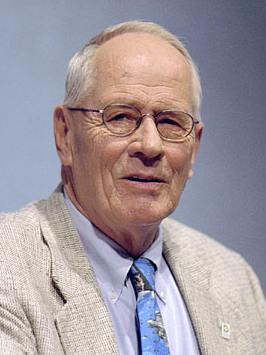
Stephen Edward Ambrose (January 10, 1936 – October 13, 2002) was an American historian, academic, and author, most noted for his books on World War II and his biographies of U.S. presidents Dwight D. Eisenhower and Richard Nixon. He was a longtime professor of history at the University of New Orleans and the author of many bestselling volumes of American popular history.
In 2002, several instances of plagiarism were discovered in his books. In 2010, after his death, Ambrose was found to have fabricated interviews and events in his biographies of Eisenhower.
Ambrose was born on January 10, 1936, in Lovington, Illinois, to Rosepha Trippe Ambrose and Stephen Hedges Ambrose. His father was a physician who served in the U.S. Navy during World War II. Ambrose was raised in Whitewater, Wisconsin, where he graduated from Whitewater High School. His family also owned a farm in Lovington, Illinois, and vacation property in Marinette County, Wisconsin. He attended college at the University of Wisconsin–Madison, where he was a member of Chi Psi fraternity and played on the University of Wisconsin football team for three years.
Ambrose planned to major in pre-medicine, but changed his major to history after hearing the first lecture in a U.S. history class entitled "Representative Americans" in his sophomore year. The course was taught by William B. Hesseltine, whom Ambrose credits with fundamentally shaping his writing and igniting his interest in history. While at Wisconsin, Ambrose was a member of the Navy and Army ROTC. He graduated with a B.A. in 1957. Ambrose received a master's degree in history from Louisiana State University in 1958, studying under T. Harry Williams. Ambrose then went on to earn a Ph.D. from the University of Wisconsin–Madison in 1963, under William B. Hesseltine.
Ambrose was a history professor from 1960 until his retirement in 1995. From 1971 onward, he was a member of the University of New Orleans faculty, where he was named the Boyd Professor of History in 1989, an honor given only to faculty who attain "national or international distinction for outstanding teaching, research, or other creative achievement". During the 1969–1970 academic year, he was the Ernest J. King Professor of Maritime History at the Naval War College. While teaching at Kansas State University as the Dwight D. Eisenhower Professor of War and Peace during the 1970–1971 academic year, Ambrose participated in heckling of Richard Nixon during a speech the president gave on the KSU campus. Given pressure from the KSU administration and having job offers elsewhere, upon finishing out the year Ambrose offered to leave and the offer was accepted. His opposition to the Vietnam War stood in contrast to his research on "presidents and the military at a time when such topics were increasingly regarded by his colleagues as old fashioned and conservative." Ambrose also taught at Louisiana State University (assistant professor of history; 1960–1964) and Johns Hopkins University (associate professor of history; 1964–1969). He held visiting posts at Rutgers University, the University of California, Berkeley, and a number of European schools, including University College Dublin, where he taught as the Mary Ball Washington Professor of American History.
He founded the Eisenhower Center at the University of New Orleans in 1989 with, "The mission of the Eisenhower Center is the study of the causes, conduct, and consequences of American national security policy and the use of force as an instrument of policy in the twentieth century." He served as its director until 1994. The center's first efforts, which Ambrose initiated, involved the collection of oral histories from World War II veterans about their experiences, particularly any participation in D-Day. By the time of publication of Ambrose's D-Day, June 6, 1944: The Climactic Battle of World War II, in 1994, the center had collected more than 1,200 oral histories. Ambrose donated $150,000 to the Center in 1998 to foster additional efforts to collect oral histories from World War II veterans.
Ambrose's earliest works concerned the American Civil War. He wrote biographies of the generals Emory Upton and Henry Halleck, the first of which was based on his dissertation.
Early in his career, Ambrose was mentored by World War II historian Forrest Pogue. In 1964, Ambrose took a position at Johns Hopkins as the Associate Editor of the Eisenhower Papers, a project aimed at organizing, cataloging and publishing Eisenhower's principal papers. From this work and discussions with Eisenhower emerged an article critical of Cornelius Ryan's The Last Battle, which had depicted Eisenhower as politically naîve, when at the end of World War II he allowed Soviet forces to take Berlin, thus shaping the Cold War that followed. Ambrose expanded this into a book, Eisenhower and Berlin, 1945: The Decision to Halt at the Elbe (1967). Ambrose was aided in the book's writing by comments and notes provided by Eisenhower, who read a draft of the book.
Hub AI
Stephen E. Ambrose AI simulator
(@Stephen E. Ambrose_simulator)
Stephen E. Ambrose
Stephen Edward Ambrose (January 10, 1936 – October 13, 2002) was an American historian, academic, and author, most noted for his books on World War II and his biographies of U.S. presidents Dwight D. Eisenhower and Richard Nixon. He was a longtime professor of history at the University of New Orleans and the author of many bestselling volumes of American popular history.
In 2002, several instances of plagiarism were discovered in his books. In 2010, after his death, Ambrose was found to have fabricated interviews and events in his biographies of Eisenhower.
Ambrose was born on January 10, 1936, in Lovington, Illinois, to Rosepha Trippe Ambrose and Stephen Hedges Ambrose. His father was a physician who served in the U.S. Navy during World War II. Ambrose was raised in Whitewater, Wisconsin, where he graduated from Whitewater High School. His family also owned a farm in Lovington, Illinois, and vacation property in Marinette County, Wisconsin. He attended college at the University of Wisconsin–Madison, where he was a member of Chi Psi fraternity and played on the University of Wisconsin football team for three years.
Ambrose planned to major in pre-medicine, but changed his major to history after hearing the first lecture in a U.S. history class entitled "Representative Americans" in his sophomore year. The course was taught by William B. Hesseltine, whom Ambrose credits with fundamentally shaping his writing and igniting his interest in history. While at Wisconsin, Ambrose was a member of the Navy and Army ROTC. He graduated with a B.A. in 1957. Ambrose received a master's degree in history from Louisiana State University in 1958, studying under T. Harry Williams. Ambrose then went on to earn a Ph.D. from the University of Wisconsin–Madison in 1963, under William B. Hesseltine.
Ambrose was a history professor from 1960 until his retirement in 1995. From 1971 onward, he was a member of the University of New Orleans faculty, where he was named the Boyd Professor of History in 1989, an honor given only to faculty who attain "national or international distinction for outstanding teaching, research, or other creative achievement". During the 1969–1970 academic year, he was the Ernest J. King Professor of Maritime History at the Naval War College. While teaching at Kansas State University as the Dwight D. Eisenhower Professor of War and Peace during the 1970–1971 academic year, Ambrose participated in heckling of Richard Nixon during a speech the president gave on the KSU campus. Given pressure from the KSU administration and having job offers elsewhere, upon finishing out the year Ambrose offered to leave and the offer was accepted. His opposition to the Vietnam War stood in contrast to his research on "presidents and the military at a time when such topics were increasingly regarded by his colleagues as old fashioned and conservative." Ambrose also taught at Louisiana State University (assistant professor of history; 1960–1964) and Johns Hopkins University (associate professor of history; 1964–1969). He held visiting posts at Rutgers University, the University of California, Berkeley, and a number of European schools, including University College Dublin, where he taught as the Mary Ball Washington Professor of American History.
He founded the Eisenhower Center at the University of New Orleans in 1989 with, "The mission of the Eisenhower Center is the study of the causes, conduct, and consequences of American national security policy and the use of force as an instrument of policy in the twentieth century." He served as its director until 1994. The center's first efforts, which Ambrose initiated, involved the collection of oral histories from World War II veterans about their experiences, particularly any participation in D-Day. By the time of publication of Ambrose's D-Day, June 6, 1944: The Climactic Battle of World War II, in 1994, the center had collected more than 1,200 oral histories. Ambrose donated $150,000 to the Center in 1998 to foster additional efforts to collect oral histories from World War II veterans.
Ambrose's earliest works concerned the American Civil War. He wrote biographies of the generals Emory Upton and Henry Halleck, the first of which was based on his dissertation.
Early in his career, Ambrose was mentored by World War II historian Forrest Pogue. In 1964, Ambrose took a position at Johns Hopkins as the Associate Editor of the Eisenhower Papers, a project aimed at organizing, cataloging and publishing Eisenhower's principal papers. From this work and discussions with Eisenhower emerged an article critical of Cornelius Ryan's The Last Battle, which had depicted Eisenhower as politically naîve, when at the end of World War II he allowed Soviet forces to take Berlin, thus shaping the Cold War that followed. Ambrose expanded this into a book, Eisenhower and Berlin, 1945: The Decision to Halt at the Elbe (1967). Ambrose was aided in the book's writing by comments and notes provided by Eisenhower, who read a draft of the book.