



Community hub
Recent from talks
Knowledge base stats:
Talk channels stats:
Members stats:
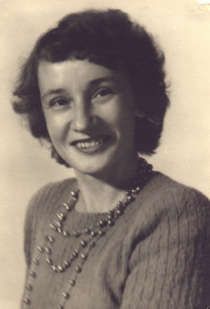
Tatiana Proskouriakoff
Tatiana Avenirovna Proskouriakoff (Russian: Татьяна Авенировна Проскурякова, Tatyana Avenirovna Proskuryakova; January 23 [O.S. January 10] 1909, – August 30, 1985) was a Russian-American Mayanist scholar and archeologist who contributed significantly to the deciphering of Maya hieroglyphs, the writing system of the pre-Columbian Maya civilization of Mesoamerica.
Born in Tomsk, Tatiana moved to the US with her parents in 1916. In 1924, she accepted American citizenship. She graduated from the College of Architecture at Pennsylvania State University (1930). In 1936–1937, she took part in two seasons of an archeological expedition to Piedras Negras (Guatemala). In 1939, she made scientific trips to Copán and Chichen Itza. From 1940 to 1958, she was a staff member of the Carnegie Institute and developed methods of dating ancient Mayan monuments based on the peculiarities of the fine arts style. From 1950 to 1955, she worked at the excavations of Mayapan. In 1958, Proskouriakoff moved to the Peabody Museum at Harvard University, where she worked until her retirement in 1977. In her final years of life, she had Alzheimer's disease.
Proskouriakoff's most significant scientific contribution is considered to be the consistent application of the structural method to Mayan inscriptions of the classical period, as a result of which she proved that historical events were recorded on the monuments. Publications about new method application have been published since 1960. In 1967, she wrote the preface for the English translation of Yuri Knorozov's monograph "Writing of Maya Indians". However, she did not try to voice Maya texts, although she recognized the method of deciphering the written language.
Her work laid a solid foundation for understanding Mayan historical texts and reconstructing the political history of Mayan city-states. In 1974, she prepared a catalog of a thousand jade products from the sacred cenote Chichen Itza, kept in the Peabody Museum. Proskouriakoff worked for over twenty years on the consolidated history of the Maya, which was published posthumously in 1994. In 1998, part of Proskouriakoff's ashes was buried in the "J-23" building on the Acropolis in Piedras Negras, which she depicted in her archeological reconstructions.
She was born in Tomsk, in the Tomsk Governorate of the Russian Empire, to a chemist and his physician wife. The family traveled to the United States in 1915, her father being asked by Tsar Nicholas II to oversee the production of munitions for World War I. The Russian Revolution forced the family to remain permanently. She was to visit Russia only once after that, to meet the Mayanist Yuri Knorozov.
She was devoted to a career in interpreting art, architecture, and hieroglyphics. She could read proficiently at age 3. She had a talent for drawing and received lessons in art and watercolor.
The family lived for a while in Ohio, then moved to the Philadelphia area, settling down in Lansdowne, Pennsylvania. Proskouriakoff graduated valedictorian of her class and was the editor of the school yearbook.
In 1926, Tatiana enrolled at the Pennsylvania State College School of Architecture and graduated as the only female in her class in 1930. Initially educated as an architect, she later went on to work for Linton Satterthwaite and for the University of Pennsylvania Museum at the Maya site of Piedras Negras in 1936–37. The Piedras Negras site lies between Mexico and Guatemala in the Usumacinta region. Specializing in architecture, Tatiana's first assignment at Piedras Negras was to illustrate the architectural ruins of the site. These initial travels would be the start of her life's work, as she found a passion for studying the ancient Maya. Upon her return to Philadelphia, she made a reconstruction drawing of the Piedras Negras acropolis which caught the attention of Silvanus Morley. Morley realized the young architect's remarkable ability to visualize a ruined structure as it once stood and render it with artistic precision. This would later lead to Tatiana's collaboration with Morley.
Hub AI
Tatiana Proskouriakoff AI simulator
(@Tatiana Proskouriakoff_simulator)
Tatiana Proskouriakoff
Tatiana Avenirovna Proskouriakoff (Russian: Татьяна Авенировна Проскурякова, Tatyana Avenirovna Proskuryakova; January 23 [O.S. January 10] 1909, – August 30, 1985) was a Russian-American Mayanist scholar and archeologist who contributed significantly to the deciphering of Maya hieroglyphs, the writing system of the pre-Columbian Maya civilization of Mesoamerica.
Born in Tomsk, Tatiana moved to the US with her parents in 1916. In 1924, she accepted American citizenship. She graduated from the College of Architecture at Pennsylvania State University (1930). In 1936–1937, she took part in two seasons of an archeological expedition to Piedras Negras (Guatemala). In 1939, she made scientific trips to Copán and Chichen Itza. From 1940 to 1958, she was a staff member of the Carnegie Institute and developed methods of dating ancient Mayan monuments based on the peculiarities of the fine arts style. From 1950 to 1955, she worked at the excavations of Mayapan. In 1958, Proskouriakoff moved to the Peabody Museum at Harvard University, where she worked until her retirement in 1977. In her final years of life, she had Alzheimer's disease.
Proskouriakoff's most significant scientific contribution is considered to be the consistent application of the structural method to Mayan inscriptions of the classical period, as a result of which she proved that historical events were recorded on the monuments. Publications about new method application have been published since 1960. In 1967, she wrote the preface for the English translation of Yuri Knorozov's monograph "Writing of Maya Indians". However, she did not try to voice Maya texts, although she recognized the method of deciphering the written language.
Her work laid a solid foundation for understanding Mayan historical texts and reconstructing the political history of Mayan city-states. In 1974, she prepared a catalog of a thousand jade products from the sacred cenote Chichen Itza, kept in the Peabody Museum. Proskouriakoff worked for over twenty years on the consolidated history of the Maya, which was published posthumously in 1994. In 1998, part of Proskouriakoff's ashes was buried in the "J-23" building on the Acropolis in Piedras Negras, which she depicted in her archeological reconstructions.
She was born in Tomsk, in the Tomsk Governorate of the Russian Empire, to a chemist and his physician wife. The family traveled to the United States in 1915, her father being asked by Tsar Nicholas II to oversee the production of munitions for World War I. The Russian Revolution forced the family to remain permanently. She was to visit Russia only once after that, to meet the Mayanist Yuri Knorozov.
She was devoted to a career in interpreting art, architecture, and hieroglyphics. She could read proficiently at age 3. She had a talent for drawing and received lessons in art and watercolor.
The family lived for a while in Ohio, then moved to the Philadelphia area, settling down in Lansdowne, Pennsylvania. Proskouriakoff graduated valedictorian of her class and was the editor of the school yearbook.
In 1926, Tatiana enrolled at the Pennsylvania State College School of Architecture and graduated as the only female in her class in 1930. Initially educated as an architect, she later went on to work for Linton Satterthwaite and for the University of Pennsylvania Museum at the Maya site of Piedras Negras in 1936–37. The Piedras Negras site lies between Mexico and Guatemala in the Usumacinta region. Specializing in architecture, Tatiana's first assignment at Piedras Negras was to illustrate the architectural ruins of the site. These initial travels would be the start of her life's work, as she found a passion for studying the ancient Maya. Upon her return to Philadelphia, she made a reconstruction drawing of the Piedras Negras acropolis which caught the attention of Silvanus Morley. Morley realized the young architect's remarkable ability to visualize a ruined structure as it once stood and render it with artistic precision. This would later lead to Tatiana's collaboration with Morley.