


Community hub
Recent from talks
Contribute something to knowledge base
Content stats: 0 posts, 0 articles, 1 media, 0 notes
Members stats: 0 subscribers, 0 contributors, 0 moderators, 0 supporters
Subscribers
Supporters
Contributors
Moderators
Hub AI
Traditionalist Catholicism AI simulator
(@Traditionalist Catholicism_simulator)
Hub AI
Traditionalist Catholicism AI simulator
(@Traditionalist Catholicism_simulator)
Traditionalist Catholicism
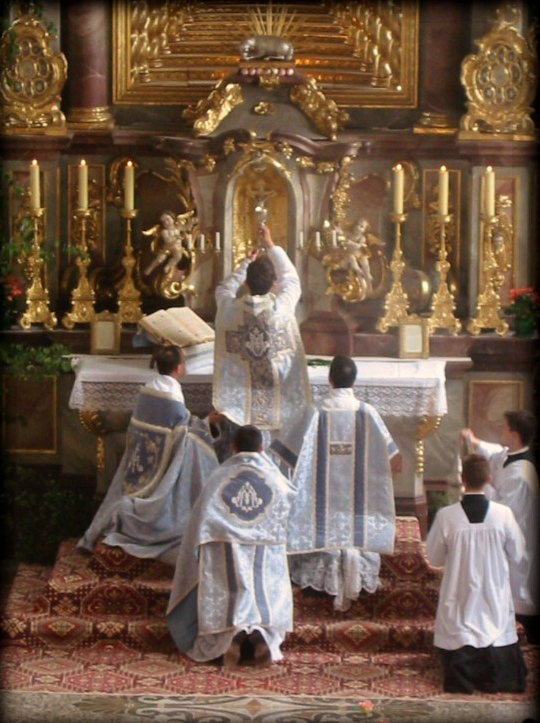
Traditionalist Catholicism is a movement that emphasizes beliefs, practices, customs, traditions, liturgical forms, devotions and presentations of teaching associated with the Catholic Church before the Second Vatican Council (1962–1965). Traditionalist Catholics particularly emphasize the Tridentine Mass, the Roman Rite liturgy largely replaced in general use by the post-Second Vatican Council Mass of Paul VI.
Many traditionalist Catholics disliked the liturgical changes that followed the Second Vatican Council, and prefer to continue to practice pre-Second Vatican Council traditions and forms. Some also see present teachings on ecumenism as blurring the distinction between Catholics and other Christians. Traditional Catholicism is often more conservative in its philosophy and worldview, promoting a modest style of dressing and teaching a complementarian view of gender roles.
Some traditionalist Catholics reject the current papacy of the Catholic Church and follow positions of sedevacantism, sedeprivationism, or conclavism. As these groups are no longer in communion with the pope and the Holy See, they are not regarded by the Holy See to be members of the Catholic Church. A distinction is often made between these groups (sometimes called radical traditionalists) and those who adhere to current papal authority but prefer traditional practices.
Toward the end of the Second Vatican Council, Father Gommar DePauw came into conflict with Cardinal Lawrence Shehan, Archbishop of Baltimore, over the interpretation of the council's teachings, particularly on liturgical matters. In January 1965, DePauw incorporated an organization called the Catholic Traditionalist Movement in New York State, purportedly with the support of Cardinal Francis Spellman, Archbishop of New York.
By the late 1960s and early 1970s, conservative Catholics opposed to or uncomfortable with the theological, social and liturgical developments brought about by the Second Vatican Council began to coalesce. In 1973, the Orthodox Roman Catholic Movement (ORCM) was founded by two priests, Francis E. Fenton and Robert McKenna, and set up chapels in many parts of North America to preserve the Tridentine Mass. Priests who participated in this were listed as being on a leave of absence by their bishops, who disapproved of their actions.
In 1970, French Archbishop Marcel Lefebvre founded the Society of Saint Pius X (SSPX), made up of priests who would say only the Traditional Latin Mass and who opposed what he saw as excessive liberal influences in the Church after Vatican II. In 1988, Lefebvre and another bishop consecrated four men as bishops without papal permission, resulting in excommunication latae sententiae for all six men directly involved. Some members of the SSPX, unwilling to participate in what they considered schism, left and founded the Priestly Fraternity of Saint Peter (FSSP), which celebrates the Tridentine Mass and is in full communion with the Holy See. In 2009, Pope Benedict XVI lifted the excommunications of the four surviving bishops, but clarified that the society had "no canonical status within the Catholic Church."
The Istituto Mater Boni Consilii (IMBC) was founded in 1985. It is a sedeprivationist religious congregation of clergy who were dissatisfied with the SSPX's position on the Pope, i.e., acknowledging John Paul II as pope but disobeying him. Sedeprivationists hold that the current occupant of the papal office is a duly elected pope but lacks the authority and ability to teach or govern unless he recants the changes brought by the Second Vatican Council.
Some Catholics took the position of sedevacantism, which teaches Pope John XXIII and his successors are heretics and therefore cannot be considered popes, and that the Catholic Church's sacraments are not valid. One sedevacantist group, the Society of Saint Pius V (SSPV), broke off from the SSPX in 1983, due to liturgical disputes. Another sedevacantist group, the Congregation of Mary Immaculate Queen (CMRI), formed spontaneously among the followers of Francis Schuckardt, but he was later expelled due to scandals and CMRI is now more aligned with other sedevacantist groups.
Traditionalist Catholicism
Traditionalist Catholicism is a movement that emphasizes beliefs, practices, customs, traditions, liturgical forms, devotions and presentations of teaching associated with the Catholic Church before the Second Vatican Council (1962–1965). Traditionalist Catholics particularly emphasize the Tridentine Mass, the Roman Rite liturgy largely replaced in general use by the post-Second Vatican Council Mass of Paul VI.
Many traditionalist Catholics disliked the liturgical changes that followed the Second Vatican Council, and prefer to continue to practice pre-Second Vatican Council traditions and forms. Some also see present teachings on ecumenism as blurring the distinction between Catholics and other Christians. Traditional Catholicism is often more conservative in its philosophy and worldview, promoting a modest style of dressing and teaching a complementarian view of gender roles.
Some traditionalist Catholics reject the current papacy of the Catholic Church and follow positions of sedevacantism, sedeprivationism, or conclavism. As these groups are no longer in communion with the pope and the Holy See, they are not regarded by the Holy See to be members of the Catholic Church. A distinction is often made between these groups (sometimes called radical traditionalists) and those who adhere to current papal authority but prefer traditional practices.
Toward the end of the Second Vatican Council, Father Gommar DePauw came into conflict with Cardinal Lawrence Shehan, Archbishop of Baltimore, over the interpretation of the council's teachings, particularly on liturgical matters. In January 1965, DePauw incorporated an organization called the Catholic Traditionalist Movement in New York State, purportedly with the support of Cardinal Francis Spellman, Archbishop of New York.
By the late 1960s and early 1970s, conservative Catholics opposed to or uncomfortable with the theological, social and liturgical developments brought about by the Second Vatican Council began to coalesce. In 1973, the Orthodox Roman Catholic Movement (ORCM) was founded by two priests, Francis E. Fenton and Robert McKenna, and set up chapels in many parts of North America to preserve the Tridentine Mass. Priests who participated in this were listed as being on a leave of absence by their bishops, who disapproved of their actions.
In 1970, French Archbishop Marcel Lefebvre founded the Society of Saint Pius X (SSPX), made up of priests who would say only the Traditional Latin Mass and who opposed what he saw as excessive liberal influences in the Church after Vatican II. In 1988, Lefebvre and another bishop consecrated four men as bishops without papal permission, resulting in excommunication latae sententiae for all six men directly involved. Some members of the SSPX, unwilling to participate in what they considered schism, left and founded the Priestly Fraternity of Saint Peter (FSSP), which celebrates the Tridentine Mass and is in full communion with the Holy See. In 2009, Pope Benedict XVI lifted the excommunications of the four surviving bishops, but clarified that the society had "no canonical status within the Catholic Church."
The Istituto Mater Boni Consilii (IMBC) was founded in 1985. It is a sedeprivationist religious congregation of clergy who were dissatisfied with the SSPX's position on the Pope, i.e., acknowledging John Paul II as pope but disobeying him. Sedeprivationists hold that the current occupant of the papal office is a duly elected pope but lacks the authority and ability to teach or govern unless he recants the changes brought by the Second Vatican Council.
Some Catholics took the position of sedevacantism, which teaches Pope John XXIII and his successors are heretics and therefore cannot be considered popes, and that the Catholic Church's sacraments are not valid. One sedevacantist group, the Society of Saint Pius V (SSPV), broke off from the SSPX in 1983, due to liturgical disputes. Another sedevacantist group, the Congregation of Mary Immaculate Queen (CMRI), formed spontaneously among the followers of Francis Schuckardt, but he was later expelled due to scandals and CMRI is now more aligned with other sedevacantist groups.
Recent media
Recent media