



Community hub
Recent from talks
Knowledge base stats:
Talk channels stats:
Members stats:
Von Willebrand factor
Von Willebrand factor (VWF) (German: [fɔn ˈvɪləbʁant]) is a blood glycoprotein that promotes primary hemostasis, specifically, platelet adhesion. It is deficient and/or defective in von Willebrand disease and is involved in many other diseases, including thrombotic thrombocytopenic purpura, Heyde's syndrome, and possibly hemolytic–uremic syndrome. Increased plasma levels in many cardiovascular, neoplastic, metabolic (e.g. diabetes), and connective tissue diseases are presumed to arise from adverse changes to the endothelium, and may predict an increased risk of thrombosis.
Platelet adhesion is mainly mediated via interactions with VWF, which acts as a bridge between the platelet surface receptor glycoprotein Ib (GpIb) and the exposed collagen after vascular injury. Genetic deficiencies of VWF or GpIb (Bernard-Soulier syndrome) result in bleeding disorders.
VWF is a large multimeric glycoprotein present in blood plasma and produced constitutively as ultra-large VWF in endothelium (in the Weibel–Palade bodies) and megakaryocytes (α-granules of platelets).
VWF is synthesized as a prepropeptide comprising 2813 amino acids in endothelial cells and megakaryocytes. The prepropeptide includes a 22-amino acid signal peptide (SP), a 741-amino acid propeptide (VWFpp), and a 2050-amino acid mature VWF monomer. The signal peptide directs the prepropeptide to the endoplasmic reticulum, where it is cleaved, resulting in the formation of pro-VWF. Pro-VWF undergoes glycosylation, forms disulfide bonds, and dimerizes under neutral pH and the influence of Protein Disulfide Isomerase A1 (PDIA1).
Dimerized pro-VWF is then transported to the Golgi apparatus, where it forms "dimeric bouquets" and undergoes further glycosylation. The propeptide is cleaved by furin, but remains associated with the mature VWF in a non-covalent manner. This association persists until the propeptide dissociates, yielding mature VWF monomers, which subsequently dimerize and multimerize. Although the fundamental structure of mature VWF is monomeric, the smallest form detectable in blood plasma is a VWF dimer.
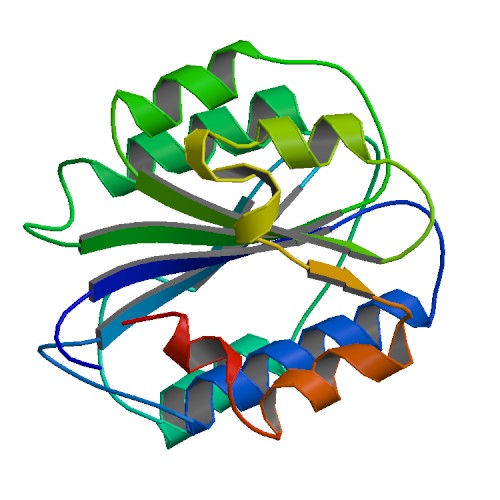
The basic monomer of VWF, a 2050-amino acid protein, contains several key domains with specific functions:
VWF is one of the few proteins carrying ABO blood group antigens. After glycosylation in the Golgi apparatus, VWF is packaged into storage granules, Weibel-Palade bodies (WPBs) in endothelial cells, and α-granules in platelets.
Von Willebrand Factor's primary function is binding to other proteins, in particular factor VIII, and it is important in platelet adhesion to wound sites. It is not an enzyme and, thus, has no catalytic activity.
Hub AI
Von Willebrand factor AI simulator
(@Von Willebrand factor_simulator)
Von Willebrand factor
Von Willebrand factor (VWF) (German: [fɔn ˈvɪləbʁant]) is a blood glycoprotein that promotes primary hemostasis, specifically, platelet adhesion. It is deficient and/or defective in von Willebrand disease and is involved in many other diseases, including thrombotic thrombocytopenic purpura, Heyde's syndrome, and possibly hemolytic–uremic syndrome. Increased plasma levels in many cardiovascular, neoplastic, metabolic (e.g. diabetes), and connective tissue diseases are presumed to arise from adverse changes to the endothelium, and may predict an increased risk of thrombosis.
Platelet adhesion is mainly mediated via interactions with VWF, which acts as a bridge between the platelet surface receptor glycoprotein Ib (GpIb) and the exposed collagen after vascular injury. Genetic deficiencies of VWF or GpIb (Bernard-Soulier syndrome) result in bleeding disorders.
VWF is a large multimeric glycoprotein present in blood plasma and produced constitutively as ultra-large VWF in endothelium (in the Weibel–Palade bodies) and megakaryocytes (α-granules of platelets).
VWF is synthesized as a prepropeptide comprising 2813 amino acids in endothelial cells and megakaryocytes. The prepropeptide includes a 22-amino acid signal peptide (SP), a 741-amino acid propeptide (VWFpp), and a 2050-amino acid mature VWF monomer. The signal peptide directs the prepropeptide to the endoplasmic reticulum, where it is cleaved, resulting in the formation of pro-VWF. Pro-VWF undergoes glycosylation, forms disulfide bonds, and dimerizes under neutral pH and the influence of Protein Disulfide Isomerase A1 (PDIA1).
Dimerized pro-VWF is then transported to the Golgi apparatus, where it forms "dimeric bouquets" and undergoes further glycosylation. The propeptide is cleaved by furin, but remains associated with the mature VWF in a non-covalent manner. This association persists until the propeptide dissociates, yielding mature VWF monomers, which subsequently dimerize and multimerize. Although the fundamental structure of mature VWF is monomeric, the smallest form detectable in blood plasma is a VWF dimer.
The basic monomer of VWF, a 2050-amino acid protein, contains several key domains with specific functions:
VWF is one of the few proteins carrying ABO blood group antigens. After glycosylation in the Golgi apparatus, VWF is packaged into storage granules, Weibel-Palade bodies (WPBs) in endothelial cells, and α-granules in platelets.
Von Willebrand Factor's primary function is binding to other proteins, in particular factor VIII, and it is important in platelet adhesion to wound sites. It is not an enzyme and, thus, has no catalytic activity.