


Community hub
Recent from talks
Contribute something
Nothing was collected or created yet.
Woodburytype
View on Wikipedia | This article relies largely or entirely on a single source. (November 2025) |

A Woodburytype is both a printing process and the print that it produces. In technical terms, the process is a photomechanical rather than a photographic one, because sensitivity to light plays no role in the actual printing. The process produces very high quality continuous tone images in monochrome, with surfaces that show a slight relief effect. Essentially, a Woodburytype is a mold-produced copy of an original photographic negative with a tonal range similar to a carbon print.
The process was introduced by the English photographer Walter B. Woodbury and was in use during the final third of the 19th century, most commonly for illustrating fine books with photographic portraits. It was ultimately displaced by halftone processes that produced prints of lower quality but were much cheaper.
Process
[edit]A dichromate-sensitized sheet of gelatin is exposed to UV-rich light through a photographic negative, causing each area of the gelatin to harden to a depth proportional to the amount of exposure. It is then soaked in warm water to dissolve the unhardened portion of the gelatin. The resulting relief image is pressed into a thick sheet of lead under about 5000 pounds per square inch of pressure. This creates an intaglio metal printing plate, which is used as a mold. It is filled with liquid pigmented gelatin and a sheet of paper is then pressed down onto it, squeezing out the excess gelatin and attaching the remainder to the paper. After the gelatin has set sufficiently, the print is stripped from the mold, trimmed, and usually mounted onto a larger sheet or card.
History
[edit]The Woodburytype process was invented by Walter B. Woodbury and patented in 1864.[1] It was the first successful photomechanical process fully able to reproduce the delicate continuous tone of photographs. It produced true middle values and did not make use of a screen or other image deconstruction method. It was often considered the most perfect, most beautiful photomechanical process and inspired a number of books, magazines, and special edition printings between 1864 and 1910. When attempts were made to adopt Woodburytype to rotary printing, the process could not compete with the quickly developing collotype and halftone photomechanical processes that almost completely replaced Woodburytype by the end of the nineteenth century.
Like many practical inventions, the Woodburytype process was built on, or had features in common with, other inventions and discoveries. It utilized the photosensitivity of dichromated gelatin, discovered in 1852 by Henry Fox Talbot, who was thereby building on Mungo Ponton's 1839 contribution of potassium dichromate to the list of known sensitizing agents for making photographs on paper. The photochemical formation of the gelatin relief dates back to the first carbon printing patent of Alphonse Poitevin (1855). The idea of washing unhardened gelatin from the lower part of an exposed gelatin layer can be found in the early experiments of Adolphe Fargier (1861) and in the development of Joseph Swan’s fully practical carbon-transfer process (1864). Alois Auer, in his 1853 book on nature printing, describes making printing plates by forcibly impressing soft low-relief objects, such as leaves, into sheets of lead. The ancient Egyptians made molds and used them to mass-produce small ceramic goods.
It is therefore not overly remarkable that some or all of the credit for the invention of “photorelief printing” was claimed by, or on behalf of, more than one inventor when the Woodburytype process was current, or that the matter can still generate heated debate among those inventors' present-day admirers.
Regardless of the fact that many historical findings support Joseph Swan’s priority of original ideas for the photorelief process introduced under the name photo-mezzotint, it was Woodbury who advanced his research ideas into a fully workable and practical method of photomechanical printing of continuous-tone photographs. Woodbury’s patents in England, France, Belgium, and the United States, as well as production of several Woodburytype process printing establishments in England, France, and the US, were responsible for the printing of hundreds of thousands of Woodburytype photographs that provided book and magazine illustrations, short-run advertisement material, and promotional material. A number of Woodburytype images were also printed for sale as individual images or as cartes-de-visite (CDV) or cabinet cards (CC).
Woodbury himself and a number of other researchers continued to improve various practical aspects of the Woodburytype process. Several important variants of the Woodburytype process were also developed and used on a very limited scale.
The Woodburytype process was a unique photomechanical process as it was the only practical fully continuous-tone photomechanical process ever invented. Woodburytype prints made using only carbon black or other stable inorganic pigments as imaging material are superbly stable from light fading. The stability of the gelatin binder might be compromised at higher temperatures and humidity due to biological deterioration. A number of Woodburytype prints were surface coated using collodion or other organic varnishes and coatings.
The majority of Woodburytype prints are easy to identify because the process was clearly described in print in books and on many prints sold commercially. Those that are described as “permanent prints” or not described at all, however, can be difficult to identify correctly even when using highly sophisticated analytical methods.
English: Woodburytype, photorelief printing, Woodbury’s process, relievo printing French: photoglyptie German: Woodburydruck
Gallery
[edit]-
 Charles Baudelaire by Étienne Carjat, c. 1862
 -
 Gioacchino Rossini by Carjat, 1865
 -
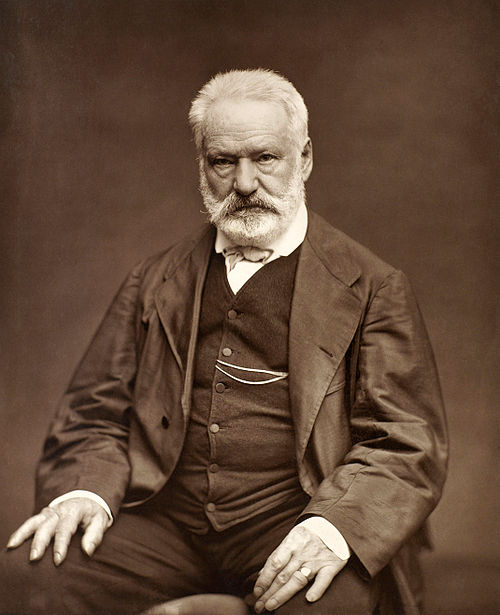 Victor Hugo by Carjat, 1876
 -
 Tom Taylor by Lock and Whitfield, c. 1880
 -
 Annie Oakley by Elliott & Fry, c. 1890s


See also
[edit]References
[edit]- ^ Ovenden, 216; Rosenblum, 198; Bloom, 30. Auer and Auer give the date of its invention as 1866.
Sources
[edit]- Art & Architecture Thesaurus, s.v. "Woodburytype (process)". Accessed 28 September 2006.
- Auer, Michèle, and Michel Auer. Encyclopédie internationale des photographes de 1839 à nos jours/Photographers Encyclopaedia International 1839 to the Present (Hermance: Editions Camera Obscura, 1985).
- Bloom, John. "Woodbury and Page: Photographers of the Old Order". In Toward Independence: A Century of Indonesia Photographed (San Francisco: The Friends of Photography, 1991), 29-30.
- Oliver, Barret. A History of the Woodburytype: The First Successful Photomechanical Printing Process and Walter Bentley Woodbury (Nevada City, Ca, Carl Mautz Publishing, 2007).
- Ovenden, Richard. John Thomson (1837-1921): Photographer (Edinburgh: National Library of Scotland, The Stationery Office, 1997), 35-36, 216.
- Rosenblum, Naomi. A World History of Photography (New York: Abbeville Press, 1984), 34, 197-198.
- Union List of Artist Names, s.v. "Woodbury, Walter Bentley". Accessed 28 September 2006.
- Stulik, Dusan C. and Kaplan, Art. Woodburytype (The Atlas of Analytical Signatures of Photographic Processes) (Los Angeles: The Getty Conservation Institute, 2013).
External links
[edit]
Woodburytype
View on GrokipediaIntroduction
Definition and Principles
The Woodburytype is a photomechanical printing process developed in the 19th century for creating high-quality, continuous-tone monochrome images that closely resemble traditional photographs. It relies on the use of pigmented gelatin reliefs to produce prints with seamless tonal gradations, distinguishing it as one of the earliest methods to achieve photographic-like reproduction through mechanical means.[5][6] At its core, the process operates on the principle of differential hardening of gelatin through controlled light exposure, where areas receiving more light become proportionally more resistant, forming a three-dimensional relief image. This relief serves as a durable mold for subsequent printing, allowing the transfer of varying thicknesses of pigmented material to capture subtle shades from deep shadows to bright highlights without interruption. The resulting images exhibit a natural continuity in tone, as the physical depth of the relief directly modulates the amount of pigment applied, mimicking the infinite gradations possible in analog photography.[5][7] Unlike other photomechanical techniques such as collotype, which uses a lithographic gelatin plate for direct inking, or heliogravure, which involves etching a metal plate for intaglio printing, the Woodburytype achieves true continuous tones without the need for halftone screening or dot patterns. This avoidance of mechanical screening ensures superior fidelity to the original negative, producing prints with exceptional detail and stability that do not degrade over time like silver-based photographs.[5][6]Key Characteristics
Woodburytype prints exhibit a slight relief texture, visible as differential gloss under raking light, which arises from variations in the thickness of the pigmented gelatin layer—thicker for deep shadows and thinner for highlights. This creates a rich tonal range, spanning continuous tones from deep blacks to subtle highlights without any graininess, providing a smooth, high-fidelity reproduction akin to traditional photographs. The surface is typically glossy due to the gelatin-based matrix, often enhanced by coatings like shellac or collodion, giving it an ultrasmooth finish that closely resembles carbon prints in appearance and feel.[1][2][6] The durability of Woodburytypes stems from their gelatin-pigment matrix, which embeds stable pigments such as carbon black within a hardened gelatin binder, rendering the images highly resistant to light-induced fading and free from the deterioration issues like silver mirroring seen in silver-based photographs. This permanence has earned them the designation of "permanent photographs," with no chemical fixing baths required during production, making them more stable overall than many contemporary silver processes. However, the gelatin can be susceptible to cracking or biological degradation under extreme humidity or temperature conditions.[6][8][1] Identification of Woodburytypes often relies on subtle markers such as faint mold lines or shearing irregularities along trimmed edges, remnants of the lead intaglio plate used in printing. These prints excel at capturing fine details through their grainless, continuous-tone structure, where microparticle clusters of pigment become visible only under high magnification (greater than 25x), distinguishing them from halftone or silver processes.[2][1][6]Historical Development
Invention and Early Patents
Walter Bentley Woodbury, born in Manchester, England, in 1834, received a scientific education and apprenticed in a patent office before pursuing photography. In 1852, he traveled to Australia during the gold rush, where he began experimenting with photographic processes, and by 1857, he had migrated to Java in the Dutch East Indies with his partner James Page to establish a studio in Batavia (modern-day Jakarta). There, Woodbury honed his skills in the collodion wet-plate process, producing high-quality portraits and views of tropical landscapes that were later published in England by Negretti & Zambra.[9][10] Returning to England around 1863, he settled in Birmingham and conceived the Woodburytype process in 1864 while working on carbon printing techniques. This invention built upon earlier discoveries in gelatin hardening, including William Henry Fox Talbot's 1852 patent for photoglyphic engraving, which utilized potassium bichromate to create light-hardened gelatin reliefs, and Alphonse-Louis Poitevin's 1855 patent for the carbon process, which employed chromated gelatin to produce pigmented relief images resistant to fading. Independently, Joseph Wilson Swan developed a similar process known as photo-mezzotint, patented in 1865, leading to a legal dispute that was ultimately resolved in Woodbury's favor.[9][1][11] The core of the Woodburytype was formalized in Woodbury's British Patent No. 2338, granted on September 23, 1864, titled "Producing Surfaces in Relief," which described a method for creating a gelatin relief from a photographic negative and pressing it into a lead plate to enable multiple ink-based prints.[11][12] Woodbury first publicly demonstrated the process on December 5, 1865, showcasing its ability to reproduce continuous tones without halftone screening. To enhance commercial viability, he filed several refinement patents between 1865 and 1867, including British Patent No. 1791 (July 6, 1865) for improvements in relief formation and multiple 1866 patents (Nos. 105, 505, and 1315) addressing mold durability and printing efficiency.[1][9][13]Commercial Adoption and Decline
The Woodburytype process saw widespread commercial adoption beginning in the 1870s, particularly for high-quality reproductions in book illustrations, portraits, and magazines.[1] Companies such as the Autotype Company produced Woodburytypes, contributing to its popularity for permanent, continuous-tone images suitable for cartes-de-visite and cabinet cards of celebrities.[14] By 1882, industrial setups could produce up to 30,000 prints per day, demonstrating its scalability for portrait series like "Men of Mark."[11] Its peak usage occurred between 1875 and 1900, driven by the process's superior ability to reproduce delicate halftones without a screen pattern, making it ideal for art books and special editions.[1] Publishers like Cassell & Co. employed it extensively for illustrated works, such as the Cabinet Portrait Gallery series (1890), which featured Woodburytype portraits from original photographs.[15] This era marked hundreds of thousands of prints produced across England, France, and the United States, often for advertisements and high-end publications like Galerie Contemporaine (1876–1884).[1] The process began to decline in the 1890s as it was overtaken by cheaper alternatives like halftone screening and collotype variants, which allowed faster production and integration with text on standard presses.[16] Economic pressures from the demand for mass production further eroded its viability, as Woodburytype required specialized equipment, labor-intensive post-processing, and could not compete with halftone's efficiency for large runs.[11] By 1910, most workshops had ceased operations, with the last known press sold for scrap in 1928, rendering the process obsolete.[16]Technical Process
Negative Preparation and Exposure
The Woodburytype process initiates with the preparation of a sensitized gelatin layer using a standard photographic negative, typically on glass, to capture tonal variations. A polished glass plate is coated with a solution comprising gelatin, albumen, sugar, and ammonium dichromate, forming a layer approximately one-eighth of an inch thick.[1] Once the solution sets, the chromatized gelatin layer is carefully stripped from the glass substrate and dried in a desiccating box to ensure even sensitivity.[1] This preparation creates a light-sensitive film that serves as the foundation for the relief image, with the dichromate acting as a photosensitizer to enable selective hardening upon exposure.[17] Exposure follows by placing the emulsion side of the glass negative in direct contact with the dried gelatin layer, forming a sandwich that is secured in a printing frame or copy frame.[1] The assembly is then exposed to ultraviolet light, traditionally sunlight, with the negative facing the light source for durations of up to 60 minutes, depending on conditions and intensity.[1] During this step, the UV light—effective at wavelengths below 540 nm—penetrates the negative and interacts with the dichromate, cross-linking and hardening the gelatin in proportion to the light intensity transmitted; areas behind transparent (light) portions of the negative harden more deeply, while those under opaque (dark) regions remain relatively soft and soluble.[17] This differential hardening establishes the tonal relief structure inherent to the process, converting the negative's density variations into a three-dimensional gelatin matrix.[1] Following exposure, the gelatin layer undergoes a development wash in a bath of hot water to remove unhardened, soluble portions.[1] This soaking process, typically lasting several hours, dissolves the softer gelatin corresponding to the lighter areas of the original negative, while the hardened regions retain their structure, yielding a bas-relief positive image.[17] The resulting relief exhibits varying thickness—thickest in shadow areas (up to approximately 1/2000th of an inch) and thinnest or absent in highlight regions—directly mirroring the continuous tones of the subject for subsequent process stages.[1] Careful control of water temperature and duration is essential to prevent over-washing, which could degrade the finer details.[17]Mold Formation and Gelatin Relief
The mold formation stage in the Woodburytype process transforms the temporary gelatin relief into a durable, reusable negative mold, enabling multiple print runs from a single exposure. Following the exposure and washing of the bichromated gelatin sheet—which hardens proportionally to light intensity, creating a relief with varying thickness—the dried gelatin matrix is carefully aligned and pressed against a smooth, leveled sheet of soft lead. This pressing occurs under high hydraulic pressure, typically around 35 MPa (approximately 5,000 psi), using a specialized press to ensure the gelatin's intaglio profile is accurately imprinted into the lead without distortion.[1][5][18] The lead plate plays a critical role as the printing mold, capturing the inverse of the gelatin relief to form an intaglio surface where depressions correspond to the original image's tones: deepest in the shadow areas of the negative (where gelatin is thickest) and shallowest in the highlight areas (where gelatin is thinnest). This topography allows for precise ink retention during subsequent printing, as thicker gelatin regions in the relief create deeper wells in the lead that hold more pigmented gelatin, while thinner regions produce shallower impressions with less ink, faithfully reproducing continuous tonal gradations without the need for halftone screens. The lead's malleability under pressure ensures the mold's fidelity to the subtle variations in the relief, making it suitable for high-volume production while maintaining the process's characteristic seamless, permanent image quality.[1][19][20] Once pressed, the mold undergoes finishing to prepare it for repeated use, including trimming any excess gelatin from the sheet's borders or areas where material may have overflowed during the high-pressure application. This step removes smeared or protruding elements that could interfere with printing alignment and tonal accuracy, ensuring the mold's surface remains clean and true to the relief's contours for optimal ink distribution and image sharpness across editions. The resulting lead mold, often described as robust enough to yield thousands of impressions, represents a key innovation in photomechanical reproduction, bridging the photochemical gelatin stage to industrial-scale output.[1][5]Printing and Image Transfer
In the Woodburytype printing process, the lead mold, formed from a gelatin relief, is filled with warm, pigmented gelatin to prepare for image transfer. This involves pouring or applying a hot mixture of gelatin-based ink, typically consisting of 17.5% gelatin and 82.5% water with added carbon black pigment (0.005–0.1% by weight), into the intaglio relief of the mold to ensure even coverage of the tonal variations.[18] The pigmented gelatin, often in shades like dark brown or purple-brown using lamp black or other carbon-based pigments, is leveled within the mold using a specialized Woodburytype printing press.[1] The transfer to paper occurs by placing a sheet of prepared receiving paper—such as gelatin-sized, shellac-varnished, or calendered glossy photographic paper—directly onto the filled mold, followed by application of even pressure in the press. This forces the pigmented gelatin from the mold's relief onto the paper, embedding the image in a continuous-tone layer.[18] The assembly remains under pressure for 5 to 10 minutes, during which the gelatin cools and solidifies, adhering firmly to the paper support while forming a durable, non-fading image.[16][1] A single mold enables the production of hundreds to thousands of impressions, making the process highly efficient for commercial reproduction. After transfer, prints are removed and may be hardened by immersion in a 3–5% alum solution to enhance stability, then dried overnight to allow water evaporation and equilibrium.[16] Finishing steps, such as trimming or mounting, complete the image, resulting in prints with exquisite detail and permanence suitable for book illustrations and cartes-de-visite.[5][1]Materials and Variations
Essential Materials
The Woodburytype process relies on high-bloom animal-derived gelatin as the primary material for creating the light-sensitive relief matrix and pigmented ink, valued for its ability to form a strong, thermo-reversible gel that hardens proportionally upon exposure to ultraviolet light.[11] This gelatin, typically sourced from bovine bones or hides, exhibits a bloom strength of around 250, ensuring sufficient rigidity to withstand high-pressure molding without deformation, and is prepared as a warm syrup at concentrations of 15-20% by weight.[11] Sensitizers such as ammonium or potassium dichromate are essential additives to render the gelatin photosensitive, absorbing UV wavelengths below 540 nm to initiate cross-linking and selective hardening during exposure.[1][11] For monochrome prints, pigments like finely dispersed carbon black—often derived from lampblack or vine black and comparable to high-quality India ink—are incorporated into the gelatin syrup at low concentrations (around 0.02% by weight) to achieve rich tonal gradients without compromising the relief's integrity.[1][11] Lead plates serve as the key substrate for mold formation due to their malleability, allowing the gelatin relief to be embossed under pressures up to 35 MPa to create durable intaglio matrices.[1] Final prints are transferred to specially prepared paper substrates, typically ultrasmooth and calendered sheets coated with gelatin sizing or shellac varnish to enhance adhesion and prevent pigment bleeding during the hydraulic pressing stage.[1]Color and Experimental Variations
One notable approach, the Photochromy or Vidal process developed between 1872 and 1875 by Léon Vidal in collaboration with Walter B. Woodbury, combined Woodburytype relief printing with chromolithography techniques, employing transparent colored pigments to create high-quality color reproductions, as seen in publications like Trésor Artistique de la France (1872 and 1875).[1] The increased complexity of preparing and aligning multiple molds, combined with the risk of color bleeding or inconsistent tone rendering, confined most practical applications to monochrome production despite the potential for vibrant, continuous-tone color images.[1] Beyond color, experimental variations in the late 19th century focused on mold materials to improve durability and scale. The standard lead molds were supplemented by alternatives like tin foil in the Stannotype process, patented by Woodbury in 1879 (English Patent 3,760) and refined in 1881 (English Patent 2,527), which eliminated the need for heavy hydraulic presses and enabled larger prints.[1] Similarly, Joseph W. Swan's Photo-Mezzotint variant, patented in 1865 (English Patent 1,791), employed copper molds produced via electrotyping for finer intaglio effects, offering greater resistance to wear during extended print runs.[1] These material adaptations, while innovative, did not significantly extend the process's commercial lifespan amid rising competition from halftone printing.Applications and Legacy
Commercial and Artistic Uses
The Woodburytype process found widespread application in publishing during the late 19th century, particularly for reproducing photographic illustrations in books and magazines from the 1870s to the 1890s.[1] It enabled the production of high-fidelity, continuous-tone images that captured subtle gradations, making it ideal for art catalogs and illustrated novels where visual detail was essential.[2] For instance, publications such as the Galerie Contemporaine (1876–1884) utilized Woodburytypes to reproduce portraits of notable figures with exceptional clarity, while Street Life in London (1877–1878) employed the process to illustrate social scenes in a documentary style akin to narrative literature.[1] This photomechanical method allowed for medium-sized print runs directly from camera negatives, offering a cost-effective alternative to labor-intensive hand-pulled prints while maintaining archival quality.[1] In portraiture, Woodburytypes were commonly produced as cartes-de-visite and cabinet cards, capitalizing on the process's ability to render fine details and permanent tones without fading.[21] These small-format prints heightened the visibility of celebrities, politicians, and royalty in the late 1860s onward, providing durable reproductions that resembled original photographs.[2] The technique's lack of grain and stable pigment ensured longevity, making it suitable for personal collections and exchange.[21] For advertising and promotional purposes, Woodburytypes appeared in short-run materials such as theater programs and product illustrations, where their rich tonal range enhanced visual appeal.[1] The process's precision allowed for intricate depictions in magazines and pamphlets, supporting commercial dissemination of images with high aesthetic value.[21] Artistically, the Woodburytype was prized for its subtle tonal gradations and continuous-tone fidelity, which mimicked the nuances of fine art photography and distinguished it from coarser halftone methods.[2] Photographers valued this quality for creating prints that preserved the depth and subtlety of original negatives, often in special-edition works blending documentary and aesthetic elements.[1]Notable Examples and Influences
One notable early example of the Woodburytype process is Walter B. Woodbury's own portrait, produced as a photomechanical print around the mid-1860s to demonstrate the technique's fidelity to photographic tones.[22] This self-referential work showcased the process's ability to reproduce continuous tones directly from a negative, serving as a promotional tool in Woodbury's presentations following his 1864 patent.[1] In the United States, photographer John Carbutt, who licensed the process and established the American Photo-Relief Printing Company in Philadelphia, created influential Woodburytypes, including his 1871 image of the Boston & Maine Railroad's No. 47 "Achilles" locomotive at the Baldwin Locomotive Works.[23] This print exemplified the medium's application to industrial subjects, highlighting its durability and detail in capturing mechanical forms for commercial distribution.[24] British photographer Henry Peach Robinson also adopted the Woodburytype for several works, such as his 1877 image "When the Day's Work is Done," which utilized the process to produce permanent, high-quality reproductions of his pictorialist compositions.[25] Robinson's use of the technique in book illustrations, including frontispieces for publications like "The Art and Practice of Silver Printing" (1881), demonstrated its value for artistic photography seeking longevity beyond silver-based prints.[26] The Woodburytype's development of gelatin relief printing paved the way for subsequent gelatin-based photomechanical methods, including advancements in photogravure by providing a model for continuous-tone reproduction without halftone screening.[20][1] Its legacy endures in museum collections, such as those at the J. Paul Getty Museum and the Getty Research Institute, where examples like Woodbury's "Treasure Spots of the World" (1875) are preserved for the study of 19th-century photographic innovation.[1]Modern Revivals
Contemporary Adaptations
In the early 21st century, the Woodburytype process saw sporadic revivals among fine art printers seeking to recapture its continuous-tone fidelity through traditional analog methods. Efforts began in the early 2000s, with practitioners experimenting in small-scale workshops to overcome historical challenges like gelatin fragility and press availability, producing limited editions for artistic portfolios. These revivals emphasized manual techniques, such as hand-casting gelatin reliefs and intaglio pressing, to maintain the process's hallmark permanence and tonal subtlety without modern mechanization. Contemporary darkroom artists have adapted the Woodburytype for exhibitions, highlighting its handmade aesthetic in an era dominated by digital imaging. Barret Oliver, a Los Angeles-based photographer specializing in 19th-century techniques, has been pivotal in these adaptations since the early 2000s, creating original prints and documenting the process in his 2007 publication A History of the Woodburytype, which includes practical recreations using traditional materials like dichromated gelatin and carbon suspensions. Collaborations, such as those between artist Chuck Close and the Two Palms print workshop in New York, produced notable series in 2012–2013, including a woodburytype portrait of Barack Obama—the first such presidential image since the 19th century—showcased in galleries like the National Portrait Gallery and emphasizing the process's archival stability for fine art display. These works, often limited to editions of 17 or fewer, underscore the technique's appeal for intimate, high-contrast portraits in contemporary exhibitions.[27][28] Preservation efforts in the 2000s have further supported these adaptations by advancing conservation knowledge for existing woodburytype prints, enabling safer handling and display in institutional settings. The Getty Conservation Institute's Atlas of Analytical Signatures of Photographic Processes (2013), based on studies from the prior decade, details techniques like ATR-FTIR spectroscopy to identify gelatin binders and protective coatings such as shellac, confirming the prints' resistance to light fading when using stable pigments like carbon black. These analyses, conducted on historical examples, have informed modern recreators on mitigating issues like gelatin cracking from humidity, ensuring that revived works align with conservation standards for long-term stability.[1]Recent Innovations and Reproductions
In the 2010s and early 2020s, researchers at the University of the West of England (UWE) advanced digital revivals of the Woodburytype process by employing CNC milling to fabricate lead molds directly from scanned photographic negatives, enabling precise replication of the original gelatin relief's tonal depth without traditional chemical exposure.[29] This approach, detailed in a 2020 study, utilized computer-aided design to convert digital image data into millable paths, producing intaglio plates that maintain the process's characteristic continuous-tone fidelity while streamlining production for small-scale archival runs.[29] Building on these techniques, 2020s research explored 3D printing adaptations to create gelatin reliefs through additive manufacturing, allowing for layered deposition of pigmented gelatin inks to form the image matrix. A presentation at the NIP & Digital Fabrication Conference highlighted two variants: printing plastic plates as intermediaries for gelatin transfer, or directly extruding gelatin-based materials to build the relief, which avoids degradation issues in traditional formulations and supports experimental scalability.[30] Concurrently, efforts toward polychromatic versions integrated color tracking in translucent gelatin-pigment films, where multiple pigmented layers were patterned to reproduce full-color tones via light scattering and absorption, as demonstrated in a 2020 analysis achieving measurable CIE Lab* color accuracy across ten-step gradients.[31] As of 2025, hybrid methods combining digital scanning, CNC/3D fabrication, and traditional pressing have gained traction in exhibitions and publications for archival reproductions, exemplified by the 2023 National Gallery of Art symposium on photomechanical prints, which showcased interdisciplinary applications of these innovations to preserve and reinterpret 19th-century images with enhanced durability and accessibility.[32]References
- https://en.wikisource.org/wiki/Dictionary_of_National_Biography%2C_1885-1900/Woodbury%2C_Walter_Bentley