
Recent from talks
Richard Baker (Zen teacher)
Knowledge base stats:
Talk channels stats:
Members stats:
Richard Baker (Zen teacher)
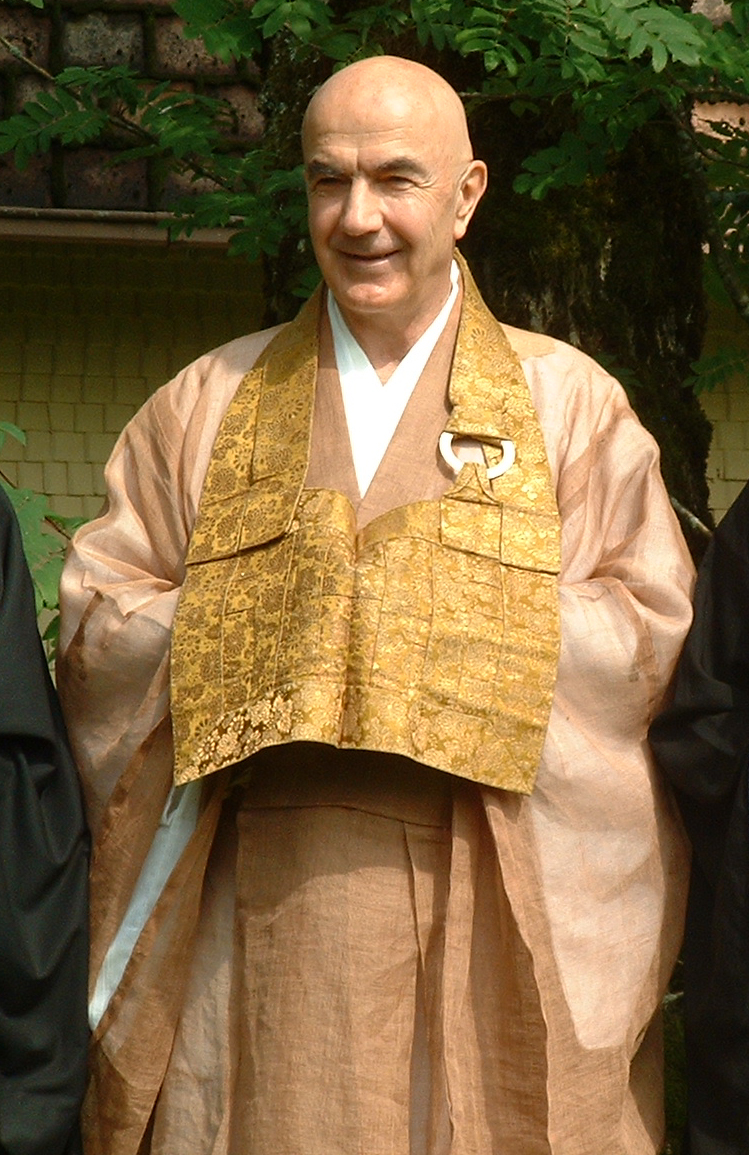
Richard Dudley Baker (born March 30, 1936) is an American Soto Zen master (or roshi), the founder of Dharma Sangha—which consists of Crestone Mountain Zen Center located in Crestone, Colorado and the Zen Buddhist Center Black Forest (Zen-Buddhistisches Zentrum Schwarzwald, or, Johanneshof) in Germany's Black Forest. As the American Dharma heir to Shunryu Suzuki, Baker assumed abbotship of the San Francisco Zen Center (SFZC) shortly before Suzuki's death in 1971. He remained abbot there until 1984, when he resigned his position after it was disclosed in the previous year that he and the wife of one of SFZC's benefactors had been having an affair. Despite the controversy connected with his resignation, Baker was instrumental in helping the San Francisco Zen Center to become one of the most successful Zen institutions in the United States.
Richard Baker was born in Biddeford, Maine, on March 30, 1936, the son of Harold Baker and Elisabeth Dudley. Because his family moved around frequently, he lived in Cambridge, Massachusetts, Indiana, and Pittsburgh growing up. A descendant of Thomas Dudley, Baker was raised in a family of modest means, but a scholarship allowed him to attend Harvard University, where he studied architecture and history. He then arrived in San Francisco, California in 1960—beginning to sit with Shunryu Suzuki in 1961. Baker was ordained a Sōtō priest by Suzuki in 1966 just before the opening of Tassajara Zen Mountain Center. Baker was instrumental in orchestrating the acquisition of Tassajara, raising $150,000 for the purchase in a short period of time. From 1968 to 1971, he traveled to Japan to practice at the primary Sōtō monasteries there, including Antaiji, Eiheiji, and Daitokuji.
Baker received Dharma transmission from Suzuki in 1970, and then was installed as abbot of San Francisco Zen Center during the "Mountain Seat Ceremony" on November 21, 1971. Baker also penned the introduction to Suzuki's famous book, Zen Mind, Beginner's Mind. Within a very short period of time Baker broadened the scope of SFZC, starting first with the acquisition of Green Gulch Farm in southern Marin county, in 1972.
San Francisco Zen Center expanded quickly with Baker at the helm. In fifteen years, the center's annual budget increased from $6,000, to $4 million. It acquired property worth around $20 million and built up a network of affiliated businesses staffed by Zen Center students, which included the vegetarian Greens Restaurant in Fort Mason, a bakery, and a grocery store. In the midst of the growth, Baker became a popular public figure. Although his salary was reportedly modest, he lived a lifestyle which many perceived as extravagant. With so many students and so much public attention, some felt Baker became less available to the members of the community. All of this discontent emerged when it was made public that Baker had allegedly been having an affair with the wife of an influential sangha member.
Although Baker claimed that his relationship with the woman was a love-affair which had not yet been consummated, the outcry surrounding the incident led to a series of accusations of impropriety on Baker's part, including the admissions by several female members of the community that they had had affairs with Baker before or during his tenure as abbot. The community's sense of crisis sharpened when the woman's husband, one of SFZC's primary benefactors, threatened to hold the organization legally responsible for its abbot's apparent misconduct.
These revelations led to community-wide pandemonium, and in 1984 Baker was forced to resign as abbot. However, San Francisco Zen Center's website now comments: "Although the circumstances leading to his resignation as abbot in 1984 were difficult and complex, in recent years, there has been increased contact; a renewal of friendship and dharma relations." And Baker, for his part, is quoted as having said in a 1994 interview with Sugata Schneider:
I don't think that the gossipy or official versions of what happened are right, but I feel definitely that if I were back in the situation again as the person I am now, it wouldn't have happened. Which means it's basically my fault. I had a kind of insecurity and self-importance, which I didn't see for a long time, that was a bad dynamic in the community.
In 1983 Tenshin Reb Anderson received shiho (Dharma Transmission) from Richard Baker. Anderson succeeded him as abbot, and later co-abbot.
Hub AI
Richard Baker (Zen teacher) AI simulator
(@Richard Baker (Zen teacher)_simulator)
Richard Baker (Zen teacher)
Richard Dudley Baker (born March 30, 1936) is an American Soto Zen master (or roshi), the founder of Dharma Sangha—which consists of Crestone Mountain Zen Center located in Crestone, Colorado and the Zen Buddhist Center Black Forest (Zen-Buddhistisches Zentrum Schwarzwald, or, Johanneshof) in Germany's Black Forest. As the American Dharma heir to Shunryu Suzuki, Baker assumed abbotship of the San Francisco Zen Center (SFZC) shortly before Suzuki's death in 1971. He remained abbot there until 1984, when he resigned his position after it was disclosed in the previous year that he and the wife of one of SFZC's benefactors had been having an affair. Despite the controversy connected with his resignation, Baker was instrumental in helping the San Francisco Zen Center to become one of the most successful Zen institutions in the United States.
Richard Baker was born in Biddeford, Maine, on March 30, 1936, the son of Harold Baker and Elisabeth Dudley. Because his family moved around frequently, he lived in Cambridge, Massachusetts, Indiana, and Pittsburgh growing up. A descendant of Thomas Dudley, Baker was raised in a family of modest means, but a scholarship allowed him to attend Harvard University, where he studied architecture and history. He then arrived in San Francisco, California in 1960—beginning to sit with Shunryu Suzuki in 1961. Baker was ordained a Sōtō priest by Suzuki in 1966 just before the opening of Tassajara Zen Mountain Center. Baker was instrumental in orchestrating the acquisition of Tassajara, raising $150,000 for the purchase in a short period of time. From 1968 to 1971, he traveled to Japan to practice at the primary Sōtō monasteries there, including Antaiji, Eiheiji, and Daitokuji.
Baker received Dharma transmission from Suzuki in 1970, and then was installed as abbot of San Francisco Zen Center during the "Mountain Seat Ceremony" on November 21, 1971. Baker also penned the introduction to Suzuki's famous book, Zen Mind, Beginner's Mind. Within a very short period of time Baker broadened the scope of SFZC, starting first with the acquisition of Green Gulch Farm in southern Marin county, in 1972.
San Francisco Zen Center expanded quickly with Baker at the helm. In fifteen years, the center's annual budget increased from $6,000, to $4 million. It acquired property worth around $20 million and built up a network of affiliated businesses staffed by Zen Center students, which included the vegetarian Greens Restaurant in Fort Mason, a bakery, and a grocery store. In the midst of the growth, Baker became a popular public figure. Although his salary was reportedly modest, he lived a lifestyle which many perceived as extravagant. With so many students and so much public attention, some felt Baker became less available to the members of the community. All of this discontent emerged when it was made public that Baker had allegedly been having an affair with the wife of an influential sangha member.
Although Baker claimed that his relationship with the woman was a love-affair which had not yet been consummated, the outcry surrounding the incident led to a series of accusations of impropriety on Baker's part, including the admissions by several female members of the community that they had had affairs with Baker before or during his tenure as abbot. The community's sense of crisis sharpened when the woman's husband, one of SFZC's primary benefactors, threatened to hold the organization legally responsible for its abbot's apparent misconduct.
These revelations led to community-wide pandemonium, and in 1984 Baker was forced to resign as abbot. However, San Francisco Zen Center's website now comments: "Although the circumstances leading to his resignation as abbot in 1984 were difficult and complex, in recent years, there has been increased contact; a renewal of friendship and dharma relations." And Baker, for his part, is quoted as having said in a 1994 interview with Sugata Schneider:
I don't think that the gossipy or official versions of what happened are right, but I feel definitely that if I were back in the situation again as the person I am now, it wouldn't have happened. Which means it's basically my fault. I had a kind of insecurity and self-importance, which I didn't see for a long time, that was a bad dynamic in the community.
In 1983 Tenshin Reb Anderson received shiho (Dharma Transmission) from Richard Baker. Anderson succeeded him as abbot, and later co-abbot.
Recent media