



Community hub
Apple's Way
View on Wikipedia
| Apple's Way | |
|---|---|
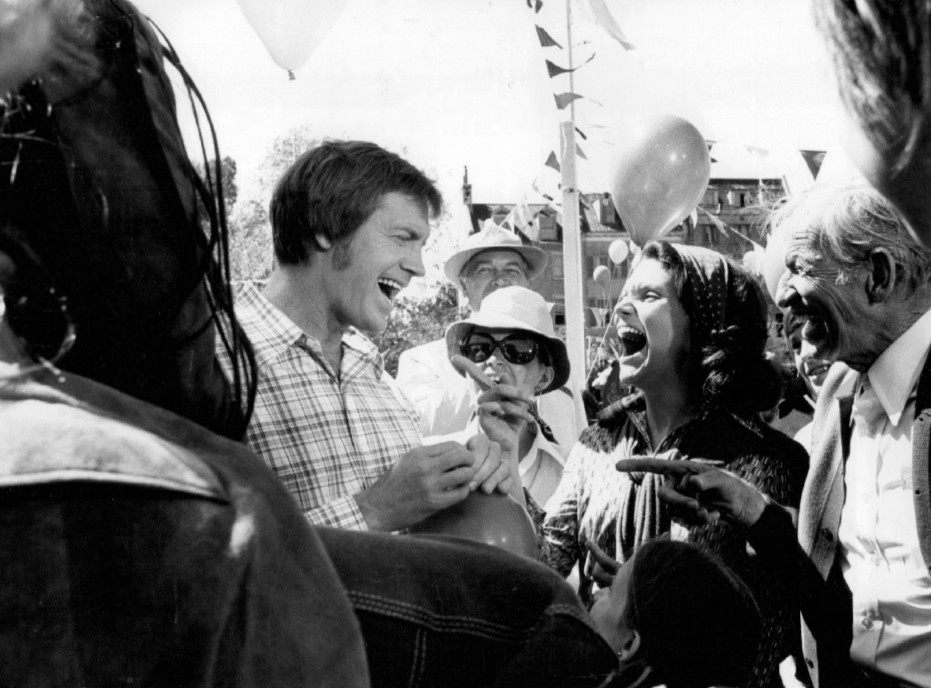
 Ronny Cox, Lee McCain and Malcolm Atterbury in a 1974 episode | |
| Genre | Drama |
| Created by | Earl Hamner Jr. |
| Starring |
|
| Composer | Morton Stevens |
| Country of origin | United States |
| Original language | English |
| No. of seasons | 2 |
| No. of episodes | 28 |
| Production | |
| Executive producers |
|
| Running time | 60 minutes |
| Production company | Lorimar Productions |
| Original release | |
| Network | CBS |
| Release | February 10, 1974 – January 12, 1975 |
Apple's Way is an American drama television series that aired on CBS from February 10, 1974, to January 12, 1975. It was created by Earl Hamner Jr.
Premise
[edit]The Apples of Los Angeles—architect George, his wife Barbara, their children Paul, Cathy, Steven, and Patricia; and Grandfather Aldon—seek refuge from the hectic pace of city living and relocate to George's hometown of Appleton, Iowa,[1] which was founded by his ancestors. The family has to adjust to a different culture and climate and to a slower pace of life. They live in a working grist mill that serves as a backdrop for the situations depicted in each episode. Well-meaning George often gets involved in causes that increased his family's tensions.
Apple's Way was a mid-season replacement for The New Perry Mason. The series did not gain the ratings CBS had hoped for, partly because[citation needed] it had to compete with NBC's long-running Top 20 hit The Wonderful World of Disney and ABC's popular crime drama The F.B.I.. The concept was "re-booted" in the second season to focus on plots that dealt more with social issues (such as freedom of speech, drug use, terminal illness) as opposed to the more rural-specific plots of the first season. The second season was produced by successful veteran producer-writer John Furia, Jr. Furia hired Worley Thorne as story editor. The series was canceled during its second season and replaced with Cher.
Cast
[edit]- Ronny Cox as George Apple
- Frances Lee McCain as Barbara Apple
- Malcolm Atterbury as Grandfather Aldon
- Vince Van Patten as Paul Apple
- Patti Cohoon as Cathy Apple
- Eric Olson as Steven Apple
- Frannie Michel as Patricia Apple (1974)
- Kristy McNichol as Patricia Apple (1974–1975)
Reception
[edit]John J. O'Connor of The New York Times gave Apple's Way a mixed review by explaining that it "could provide further respite from the glut of mindless 'action' series on television. Respite is needed, if not required, but 'human values' are not an automatic guarantee of quality and intelligence."[2] Gary Deeb of the Chicago Tribune was more approving and colorful in his assessment by stating that "contrived or not, I liked it a lot. The formula of 'Humanistic-Nebbish-Triumphs-Over-The-System,' while certainly nothing new, sometimes does wondrous things for us hard-shell cynics.[3]
Episode list
[edit]Season 1: 1974
[edit]| No. overall | No. in season | Title | Directed by: | Written by: | Original release date | Prod. code |
|---|---|---|---|---|---|---|
| 1 | 1 | "The Tree" | Harry Harris | T : A. J. Carothers | February 10, 1974 | 438204 |
| 2 | 2 | "The Musician" | Harry Harris | William Bast | February 17, 1974 | 438205 |
| 3 | 3 | "The Zoo" | Nicholas Webster | Peter S. Beagle | February 24, 1974 | 438209 |
| 4 | 4 | "The Teacher" | Jack Shea | Dale Eunson | March 3, 1974 | 438203 |
| 5 | 5 | "The Miller" | Jack Shea | Max Hodge | March 10, 1974 | 438201 |
| 6 | 6 | "The Coach" | Murray Golden | George Kirgo | March 24, 1974 | 438212 |
| 7 | 7 | "The Witness" | Herschel Daugherty | S. A. Long | March 31, 1974 | 438213 |
| 8 | 8 | "The Temptation" | Herschel Daugherty | Irv Pearlberg | April 7, 1974 | 438208 |
| 9 | 9 | "The Applicant" | Harry Harris | John McGreevey | April 21, 1974 | 438214 |
| 10 | 10 | "The Pen Pal" | Murray Golden | Irv Pearlberg | April 28, 1974 | 438215 |
| 11 | 11 | "The Accident" | Harry Harris | Emily Shoemaker | May 5, 1974 | 438218 |
| 12 | 12 | "The Fair" | Philip Leacock | Mathilde Ferro, Theodore Ferro | May 12, 1974 | 438216 |
| 13 | 13 | "The Lamb" | Harry Harris | Kathleen Hite | May 19, 1974 | 438217 |
Season 2: 1974–75
[edit]| No. overall | No. in season | Title | Directed by: | Written by: | Original release date | Prod. code |
|---|---|---|---|---|---|---|
| 14 | 1 | "The Tornado" | Marc Daniels | T : Joseph Bonaduce; S/T : John T. Dugan | September 15, 1974 | 438210 |
| 15 | 2 | "The Circus" | Marc Daniels | Austin Kalish, Irma Kalish | September 22, 1974 | 438222 |
| 16 | 3 | "The Friend" | Hal Cooper | Lan O'Kun | September 29, 1974 | 438227 |
| 17 | 4 | "The Returning" | David Moessinger | David Moessinger | October 6, 1974 | 438230 |
| 18 | 5 | "The First Love" | James Sheldon | Don Appell | October 13, 1974 | 438229 |
| 19 | 6 | "The Engagement" | James Sheldon | William Bast | October 20, 1974 | 438221 |
| 20 | 7 | "The Candy Drive" | Marc Daniels | Hindi Brooks | October 27, 1974 | 438231 |
| 21 | 8 | "The Winning Season" | Alexander Singer | Jim McGinn | November 10, 1974 | 438232 |
| 22 | 9 | "The Flag" | David Moessinger | Joseph Bonaduce | November 17, 1974 | 438235 |
| 23 | 10 | "The Real Thanksgiving" | Jack Shea | Joseph Bonaduce, Worley Thorne | November 24, 1974 | 438245 |
| 24 | 11 | "The Apprentice" | David Moessinger | Gene Thompson | December 1, 1974 | 438224 |
| 25 | 12 | "The Outsider" | Ivan Dixon | Joseph Bonaduce | December 15, 1974 | 438211 |
| 26 | 13 | "The Christmas Party" | Richard C. Bennett | Lan O'Kun | December 22, 1974 | 438226 |
| 27 | 14 | "The Outing" | Edward M. Abroms | S : Richard Fielder; S/T : Worley Thorne | January 5, 1975 | 438206 |
| 28 | 15 | "The Price" | David Moessinger | Unknown | January 12, 1975 | 438234 |
Syndication
[edit]Both TV Land and AmericanLife TV aired the series in reruns during the late 1990s and early 2000s.
Two decades after this series left the air, lead actors Ronny Cox and Frances Lee McCain were reunited in the short lived 1993–1994 television prime time soap Second Chances.
References
[edit]- ^ "50 TV Shows Set in All 50 States". PopSugar. May 26, 2016. Retrieved January 2, 2022.
- ^ O'Connor, John J. "TV: 'Apple's Way' and Search for Human Values," The New York Times, Friday 15 February 1974. Retrieved 19 July 2025.
- ^ Deeb, Gary. "Bushelful of enjoyment on Apple's Way," Chicago Tribune, Friday 8 February 1974. Retrieved 19 July 2025.
External links
[edit]- Apple's Way at IMDb
- Apple's Way at The Classic TV Archive
- Apple's Way at epguides.com
- From the creator of The Waltons, Earl Hamner's Apple's Way
Apple's Way
View on GrokipediaSeries Overview
Premise
Apple's Way is an American drama series that centers on the Apple family, who relocate from the bustling urban environment of Los Angeles, California, to the small rural town of Appleton, Iowa, in search of a simpler life and to reconnect with their ancestral roots. Tired of the city's rat race, patriarch George Apple, an architect, leads his family to restore and inhabit an old working grist mill that has been in the family for generations, using it as both home and symbolic backdrop for their new beginning. This move underscores the series' exploration of escaping modern stresses to embrace traditional values and community ties.[7][8] The family consists of George; his wife, Barbara; their four children—sons Paul and Steven, daughters Cathy and Patricia (the youngest); and George's father, Grandfather Aldon, who joins them. As they adjust to small-town living, the Apples face everyday challenges such as integrating into the local community, navigating interpersonal relationships, and fostering personal growth amid the slower pace of rural Iowa. Episodes often depict the family's efforts to balance individual aspirations with collective harmony, highlighting tensions that arise when well-intentioned actions, particularly George's involvement in local causes, strain family dynamics. These narratives emphasize humanistic values like empathy, resilience, and moral integrity, drawing from creator Earl Hamner Jr.'s signature focus on family-oriented themes.[8][6] In its first season, the series primarily revolves around the Apples' adaptation to rural life, emphasizing themes of family bonding, self-discovery, and the rewards of communal living through self-contained stories that resolve moral dilemmas within the household or town. The second season shifts toward broader social issues, incorporating topics such as environmental concerns, prejudice, freedom of speech, drug use, and community conflicts, while maintaining the episodic format of standalone tales often titled "The [Noun]" to frame poignant, reflective vignettes on ethical choices. This evolution reflects an attempt to deepen the show's relevance by addressing contemporary societal challenges through the lens of the family's experiences.[8]Background and Development
Apple's Way was created by Earl Hamner Jr., the writer and producer behind the successful CBS series The Waltons, as a contemporary take on family drama that contrasted urban life with rural simplicity.[3] Following The Waltons' popularity in emphasizing wholesome family values and Americana, Hamner aimed to craft a similar narrative but updated for the 1970s, focusing on a family's relocation from Los Angeles to a small Iowa town to explore themes of roots and human values.[3] The series was produced by Lorimar Productions, with Hamner serving as executive producer and story consultant, and Lee Rich as another executive producer.[3][9] Development began in 1973, when the project was pitched to CBS as a Sunday evening family-oriented program designed to offer viewers a gentle alternative to the dominant urban sitcoms and action shows of the era, positioning it against NBC's Wonderful World of Disney in the 7:30 p.m. slot.[10][8] The network greenlit it as a mid-season replacement, leading to a rushed production timeline that capitalized on The Waltons' momentum but contributed to some early conceptualization challenges.[8] The pilot episode aired on February 10, 1974, marking the series' debut after just months of preparation.[3] Hamner's inspirations drew from his own upbringing in rural Schuyler, Virginia, where family stories and small-town dynamics shaped his storytelling, much like in his earlier works; for Apple's Way, he adapted these elements to address modern dilemmas such as urban alienation and the search for community in a changing America.[11] Contemporary reviews noted the series' intent as a "respite from action-oriented TV," providing moral and emotional depth amid the era's fast-paced programming.[3] In its second season (1974–75), the show shifted toward greater social relevance, incorporating 1970s issues like freedom of speech and environmental concerns to align with evolving viewer interests and sustain appeal.[8] This evolution reflected CBS's broader strategy during a period of programming transitions, though the series ultimately concluded after 28 episodes on January 12, 1975.[9]Production
Production Team
Earl Hamner Jr. created Apple's Way and served as its executive producer, drawing on his success with The Waltons to develop a series centered on family dynamics and moral dilemmas. As story consultant, Hamner contributed to several scripts, ensuring a consistent narrative voice that emphasized heartfelt, character-driven storytelling over action-oriented plots.[6][3] Lee Rich, co-founder of Lorimar Productions, acted as executive producer, overseeing the series' development and production.[3] The writing team, guided by Hamner's oversight, focused on ensemble scripts that explored interpersonal relationships and ethical issues within a rural framework, often resolving conflicts with optimistic, value-affirming conclusions. Frequent directors included Harry Harris, who helmed five episodes.[12] Notable among the crew was composer Fred Karlin, who crafted the theme song to evoke pastoral serenity and familial warmth, underscoring the Apples' connection to their Iowa roots. Art direction efforts recreated authentic rural interiors, particularly the family's distinctive home within an old mill, enhancing the show's immersive depiction of small-town life.[12][8] Production faced challenges from its rushed mid-season launch in February 1974, which limited preparation time amid competition from established hits like The Wonderful World of Disney, yet CBS's commitment to family-oriented content supported its extension into a full second season. Budget limitations for building rural sets were navigated through efficient Lorimar oversight, prioritizing practical locations and sets to capture the essence of Appleton, Iowa.[8]Filming and Locations
Exteriors for Apple's Way were primarily shot on the backlots of Warner Bros. Studios in Burbank, California, utilizing the Columbia Ranch to simulate the rural landscapes of the fictional Iowa town of Appleton.[13] Rural areas in Southern California, including locations near the San Fernando Valley such as Van Nuys High School for specific episode scenes, were used to represent Midwestern settings. Interiors were filmed on soundstages at the same studio, including Stage 27 for family home scenes like the living room and kitchen. The Apple family home set was custom-built on the Columbia Ranch as a distinctive structure resembling a converted 19th-century grist mill, featuring a prominent waterwheel and detailed props such as farm tools and 1970s-era decor to convey rural authenticity.[14] The Midwest Street set at Warner Bros. was employed for community and town exteriors, enhancing the small-town Iowa ambiance.[15] Production for the first season of 13 episodes occurred episodically from late 1973 to early 1974, rushed to capitalize on the success of creator Earl Hamner's The Waltons, though the hurried schedule impacted quality as Hamner divided time between projects.[8] The second season's 15 episodes were filmed in 1974 under new producer John Furia Jr., who was brought in to address first-season shortcomings amid network expectations for improvement before the fall premiere.[16] Practical effects were used for episodes depicting weather events and community gatherings, with no major strikes or disruptions affecting the shoot.[17] The series was shot on 35mm film stock in a standard 60-minute drama format, incorporating breaks for commercials, typical of CBS network productions during the era.[3]Cast and Characters
Main Cast
The main cast of Apple's Way revolved around the core Apple family, portraying their collective adjustment to small-town life in Appleton, Iowa, after relocating from Los Angeles. The ensemble emphasized family dynamics, with each member contributing to the series' focus on interpersonal relationships and personal growth over two seasons.[6] Ronny Cox portrayed George Apple, the family patriarch and a 40-year-old architect who initiates the move back to his rural hometown to prioritize family and a simpler lifestyle.[3] Throughout the series, George's character grapples with professional challenges, such as balancing architectural projects with community values, often leading to tensions as he navigates career demands in a slower-paced environment.[8] Cox appeared in all 28 episodes, bringing a sense of idealism and compassion to the role.[12] Frances Lee McCain played Barbara Apple, George's supportive wife and a schoolteacher, the emotional anchor of the household, who helps maintain family unity amid the transition to rural living.[3][2] Her character focuses on nurturing the family's bonds and adapting to new social dynamics, appearing consistently across both seasons without changes.[5] McCain's performance highlighted Barbara's loving and steady presence in the multigenerational home.[7] Vincent Van Patten (credited as Vince Van Patten in some sources) depicted Paul Apple, the eldest son and a teenager navigating the conflicts of leaving urban excitement for small-town routines.[12] As the family's oldest child, Paul often represents youthful restlessness, engaging in storylines that explore his search for identity and independence during the adjustment period.[5] He featured in all episodes of the series.[18] The role of Patricia Apple, the youngest daughter, was initially played by Frannie Michel (credited as Franny Michel) in the first season's 13 episodes, portraying a young family member adapting to the move.[12] Kristy McNichol took over the character for the second season's 15 episodes, infusing Patricia with a spirited energy that highlighted sibling interactions and personal discoveries.[12] This recast marked the only significant change in the main ensemble, though the character's focus on family adjustment remained consistent. Eric Olson embodied Steven Apple, the younger son, whose storylines often involved curiosity about the rural surroundings and contributions to family projects.[7] As a middle child, Steven's arc underscores inventive problem-solving within the household, appearing throughout the series' run.[18] Patti Cohoon (later credited as Patti Cohoon-Friedman) portrayed Cathy Apple, the older daughter and an innocent participant in the family's daily life and challenges.[5] Cathy's character serves as an observer of the siblings' experiences, emphasizing themes of childhood wonder in the new setting, with no alterations to the role across seasons.[12]Supporting and Guest Roles
Malcolm Atterbury portrayed Grandfather Aldon, the family elder who lived with the Apples and often provided sage wisdom drawn from his rural experiences, appearing in all 28 episodes of the series.[4] His character served as a stabilizing influence, offering guidance on family matters and community values in the small town of Appleton, Iowa.[18] Recurring townsfolk added layers to the community's dynamics, portraying neighbors and local figures who shaped everyday interactions and plotlines. Lew Brown played James Ryland, a prominent local who appeared in multiple episodes, including "The Friend" and "The Flag," influencing storylines around town disputes and social gatherings.[18] Richard Bull appeared as Mr. Ryland in at least two Season 1 episodes, such as "The Tree" and "The Fair," representing authoritative community members involved in agricultural and civic issues.[4] Steve Benedict's role as Jamie Ryland recurred across both seasons, contributing to ensemble scenes depicting neighborly support and conflicts in the rural setting.[4] These supporting locals emphasized the series' focus on Midwestern small-town authenticity, with casting choices prioritizing actors who could deliver regional accents to enhance realism.[4] Notable guest stars brought fresh conflicts to individual episodes, often exploring themes like romance, prejudice, or personal growth without disrupting the core family narrative. Farrah Fawcett guest-starred as Jane Huston in the Season 2 episode "The First Love," portraying a romantic interest that highlighted teenage emotions in a rural context.[18] Valerie Bertinelli made her television debut as Peggy in the Season 2 episode "The Flag," playing a student involved in a controversial school play that sparked community debate on patriotism.[19] Perry King appeared as Jack Gale in Season 1's "The Stranger," introducing external tensions through a drifter's arrival that tested family trust.[4] Other guests, such as Leonard Stone as Frank Goode in the premiere "The Tree" and Beah Richards as Mrs. Thaxter in "The Storm," drove episodic arcs addressing environmental concerns and racial dynamics, respectively.[18] These appearances allowed the series to tackle social issues episodically while maintaining its wholesome tone. No major controversies arose in guest casting selections, which aligned with the production's emphasis on relatable, character-driven storytelling.[4]Episodes
Season 1: 1974
The first season of Apple's Way consisted of 13 episodes that aired on CBS from February 10 to May 19, 1974, broadcast on Sundays at 7:30 PM ET.[20][4] Produced by Walter Coblenz, the season emphasized the Apple family's initial adjustment to rural Iowa life, highlighting light-hearted challenges such as community integration, family dynamics, and small-town issues like environmental concerns and local events.[4] Episodes established the series' tone through pilot-like storytelling focused on everyday rural experiences, with an average runtime of approximately 60 minutes.[20] The season's episodes are listed below, including titles, air dates, directors, writers, and brief summaries of key events without revealing resolutions.| Episode | Title | Air Date | Director | Writer(s) | Summary |
|---|---|---|---|---|---|
| 1 | The Tree | Feb 10, 1974 | Harry Harris | A.J. Carothers | Shortly after arriving in Iowa, George leads an effort to save a historic family-planted tree threatened by a motel development.[21][4][20] |
| 2 | The Musician | Feb 17, 1974 | Harry Harris | William Bast | George helps design a gymnasium for an injured boy whose father pressures him toward athletics over his musical interests.[4][20] |
| 3 | The Zoo | Feb 24, 1974 | Nick Webster | Peter S. Beagle | The family discovers and attempts to aid mistreated animals at a rundown roadside zoo, leading to complications at home.[4][20] |
| 4 | The Teacher | Mar 3, 1974 | Jack Shea | Dale Eunson | A scheduling error brings George's former French teacher to tutor the children, resulting in an unexpected lesson for the family.[4][20] |
| 5 | The Miller | Mar 10, 1974 | Jack Shea | Max Hodge | George works to persuade his isolated elderly father to join the family in their new home.[4][22][20] |
| 6 | The Coach | Mar 24, 1974 | Murray Golden | George Kirgo | George supports a local basketball coach under pressure from alumni after the team's losing streak.[4][20] |
| 7 | The Witness | Mar 31, 1974 | Herschel Daugherty | S.A. Long | George faces community ridicule after reporting a UFO sighting he believes to be genuine.[4][20] |
| 8 | The Temptation | Apr 7, 1974 | Herschel Daugherty | Irv Pearlberg | George receives an offer to return to his previous architecture job in California, testing his commitment to rural life.[4][20] |
| 9 | The Applicant | Apr 21, 1974 | Harry Harris | John McGreevey | Barbara challenges a discriminatory promotion decision at work, while George experiments with selling perfume locally.[4][20] |
| 10 | The Pen Pal | Apr 28, 1974 | Murray Golden | Irv Pearlberg | Patricia's correspondence with a handicapped pen pal prompts George to organize a community fundraiser for medical aid.[4][20] |
| 11 | The Accident | May 5, 1974 | Harry Harris | Emily Shoemaker | Following his son's bicycle injury, George advocates for installing a traffic signal at a dangerous intersection.[4][20] |
| 12 | The Fair | May 12, 1974 | Philip Leacock | Mathilde Ferro, Theodore Ferro | The Apple children adapt their father's architectural design for a parade float in a local contest, facing potential rules issues.[20][23] |
| 13 | The Lamb | May 19, 1974 | Harry Harris | Kathleen Hite | Steven grapples with the prospect of selling his 4-H project sheep at auction, with George providing guidance.[4][24][20] |
Season 2: 1974–75
The second season of Apple's Way aired on CBS from September 15, 1974, to January 12, 1975, comprising 15 episodes that marked a shift in tone toward exploring 1970s social issues, including freedom of speech, community discrimination, and gun control, amid the series' declining viewership.[25] Under new producer John Furia Jr. and story editor Worley Thorne, the season emphasized topical narratives involving family growth and external conflicts, often incorporating ecology and prejudice themes to broaden appeal.[25] A key cast change saw Kristy McNichol replace Frannie Michel as the youngest daughter Patricia, injecting fresh energy into family dynamics.[4] Episodes frequently featured prominent guest stars to highlight these social elements, such as debates over patriotism and rehabilitation.[18] Ultimately, persistent low ratings and competition from NBC's The Wonderful World of Disney led to the show's cancellation after this season.[25] The season's episodes centered on the Apple family's adaptation to rural life while confronting broader societal challenges, blending personal milestones with community tensions. Representative plots included natural disasters testing family resilience, romantic dilemmas prompting discussions on maturity, and local controversies sparking debates on tolerance and ethics.| Episode | Title | Air Date | Director | Writer(s) | Plot Summary |
|---|---|---|---|---|---|
| 2-01 | The Tornado | Sep 15, 1974 | Marc Daniels | Joseph Bonaduce, John Kingsbridge | A cyclone traps George and his three eldest children in a cellar after injuring George, forcing the family to confront vulnerability and unity during the crisis.[18] |
| 2-02 | The Circus | Sep 22, 1974 | Marc Daniels | Austin Kalish, Irma Kalish | Patricia runs away to join a traveling circus, feeling unloved, which prompts George and Barbara to reflect on their parenting and family bonds.[18] |
| 2-03 | The Friend | Sep 29, 1974 | Hal Cooper | Lan O'Kun | George risks family savings to invest in a local newspaper, averting a corporate takeover and highlighting themes of community preservation and economic pressures.[18] |
| 2-04 | The Returning | Oct 6, 1974 | David Moessinger | David Moessinger | George agrees to supervise the parole of his old friend's son, Ben Haggerty, integrating rehabilitation into the family's daily life and addressing themes of second chances and discrimination.[18] |
| 2-05 | The First Love | Oct 13, 1974 | James Sheldon | Don Appell | Paul develops feelings for a 26-year-old visitor and plans to follow her to New York, challenging family expectations around adolescence and independence.[18] |
| 2-06 | The Engagement | Oct 20, 1974 | James Sheldon | William Bast | Grandpa Aldon's engagement and desire to live with his fiancée create intergenerational conflict with George over household changes and aging.[18] |
| 2-07 | The Candy Drive | Oct 27, 1974 | Marc Daniels | Hindi Brooks | The Apple children resort to deception during a school candy drive to buy a birthday gift for Barbara, leading to lessons on honesty and sibling rivalry.[18] |
| 2-08 | The Winning Season | Nov 10, 1974 | Alexander Singer | Jim McGinn | Despite a football injury, Paul insists on playing in a key game, sparking a father-son dispute over health risks and the pursuit of personal achievement.[18][26] |
| 2-09 | The Flag | Nov 17, 1974 | David Moessinger | Joseph Bonaduce | Paul and his classmates face backlash and potential expulsion for staging a play critical of American patriotism, exploring freedom of speech and community intolerance.[18][27] |
| 2-10 | The Real Thanksgiving | Nov 24, 1974 | Jack Shea | Joseph Bonaduce, Worley Thorne | A plane crash strands Paul and Cathy en route to Los Angeles, turning Thanksgiving into a tense wait that underscores family interdependence and unexpected peril.[18][28] |
| 2-11 | The Apprentice | Dec 1, 1974 | David Moessinger | Gene Thompson | Paul grapples with confessing his disinterest in architecture to George, addressing career pressures and the fear of disappointing parental aspirations.[18] |
| 2-12 | The Outsider | Dec 15, 1974 | Ivan Dixon | Joseph Bonaduce | An atheist resident halts construction of George's interfaith chapel design, igniting debates on religious tolerance and outsider integration in Appleton.[18] |
| 2-13 | The Christmas Party | Dec 22, 1974 | Richard C. Bennett | Lan O'Kun | George navigates a dilemma involving confidential information from his father during holiday preparations, testing loyalty and family secrets.[18] |
| 2-14 | The Outing | Jan 5, 1975 | Edward M. Abroms | Worley Thorne | George's camping trip to instill self-reliance in the children backfires, emphasizing survival skills and the limits of parental guidance in nature.[18] |
| 2-15 | The Price | Jan 12, 1975 | David Moessinger | Unknown | George and Steven discover a gun tied to a Chicago robbery, shattering Appleton's sense of security and prompting discussions on gun control and urban threats encroaching on rural life (series finale).[18] |