


Community hub
Recent from talks
Contribute something
Nothing was collected or created yet.
Architect
View on Wikipedia | This article needs additional citations for verification. (October 2014) |
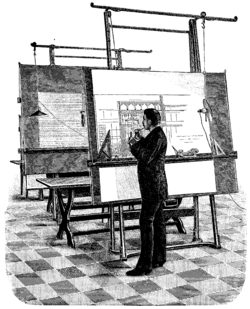
 An architect, 1893. | |
| Occupation | |
|---|---|
| Names | Architect |
Occupation type | Profession |
Activity sectors | Architecture Civil engineering Structural engineering Construction Project management Urban planning Interior design Visual arts |
| Description | |
| Competencies | Engineering, technical knowledge, building design, planning and management skills |
Education required | See professional requirements |
An architect is a person who plans, designs, and oversees the construction of buildings.[1] To practice architecture means to provide services in connection with the design of buildings and the space within the site surrounding the buildings that have human occupancy or use as their principal purpose.[2] Etymologically, the term architect derives from the Latin architectus,[3] which derives from the Greek[4] (arkhi-, chief + tekton, builder), i.e., chief builder.[5]
The professional requirements for architects vary from location to location. An architect's decisions affect public safety, and thus the architect must undergo specialised training consisting of advanced education[6] and a practicum (or internship) for practical experience to earn a license to practice architecture. Practical, technical, and academic requirements for becoming an architect vary by jurisdiction though the formal study of architecture in academic institutions has played a pivotal role in the development of the profession.
Origins
[edit]Throughout ancient and medieval history, most architectural design and construction was carried out by artisans—such as stone masons and carpenters—who rose to the role of master builders. Until modern times, there was no clear distinction between architect and engineer. In Europe, the titles architect and engineer were primarily geographical variations that referred to the same person, often used interchangeably.[7][8] "Architect" derives from Greek ἀρχιτέκτων (arkhitéktōn, "master builder," "chief tektōn").[5]

It is suggested that various developments in technology and mathematics allowed the development of the professional 'gentleman' architect, separate from the hands-on craftsman. Paper was not used in Europe for drawing until the 15th century but became increasingly available after 1500. Pencils were used for drawing by 1600. The availability of both paper and pencils allowed pre-construction drawings to be made by professionals.[10] Concurrently, the introduction of linear perspective and innovations such as the use of different projections to describe a three-dimensional building in two dimensions, together with an increased understanding of dimensional accuracy, helped building designers communicate their ideas.[10] However, development was gradual and slow-going. Until the 18th century, buildings continued to be designed and set out by craftsmen, with the exception of high-status projects.[10][11]
Architecture
[edit]In most developed countries only those qualified with an appropriate license, certification, or registration with a relevant body (often a government) may legally practice architecture. Such licensure usually requires a university degree, successful completion of exams, and a training period.[12] Representation of oneself as an architect through the use of terms and titles were restricted to licensed individuals by law, although in general, derivatives such as architectural designer were not legally protected.
To practice architecture implies the ability to practice independently of supervision. The term building design professional (or design professional), by contrast, is a much broader term that includes professionals who practice independently under an alternate profession, such as engineering professionals, or those who assist in the practice of architecture under the supervision of a licensed architect, such as intern architects. In many places, independent, non-licensed individuals may perform design services outside of professional restrictions, such as the design of houses or other smaller structures.
Practice
[edit]In the architectural profession, technical and environmental knowledge, design, and construction management require an understanding of business as well as design. However, design is the driving force throughout the project and beyond. An architect accepts a commission from a client. The commission might involve preparing feasibility reports, building audits, and designing a building or several buildings, structures, and the spaces among them. The architect participates in developing the requirements the client wants in the building. Throughout the project (planning to occupancy), the architect coordinates a design team. Structural, mechanical, and electrical engineers are hired by the client or architect, who must ensure that the work is coordinated to construct the design.
Design role
[edit]The architect, once hired by a client, is responsible for creating a design concept that meets the requirements of that client and provides a facility suitable for the required use. The architect must meet with and ask questions to the client, to ascertain all the requirements (and nuances) of the planned project.[13]
Often, the full brief is not clear in the beginning. It involves a degree of risk in the design undertaking. The architect may make early proposals to the client, which may rework the terms of the brief. The "program" (or brief) is essential to producing a project that meets all the needs of the owner. This becomes a guide for the architect in creating the design concept.
Design proposals are generally expected to be both imaginative and pragmatic. Much depends upon the time, place, finance, culture, and available crafts and technology in which the design takes place. The extent and nature of these expectations will vary. Foresight is a prerequisite when designing buildings, as it is a very complex and demanding undertaking.
Any design concept during the early stage of its generation must take into account a great number of issues and variables, including the qualities of the space(s), the end-use and life-cycle of these proposed spaces, connections, relations, and aspects between spaces, including how they are put together, and the impact of proposals on the immediate and wider locality. The selection of appropriate materials and technology must be considered, tested, and reviewed at an early stage in the design to ensure there are no setbacks (such as higher-than-expected costs) that could occur later in the project.
The site and its surrounding environment, as well as the culture and history of the place, will also influence the design. The design must also balance increasing concerns with environmental sustainability. The architect may introduce (intentionally or not), aspects of mathematics and architecture, new or current architectural theory, or references to architectural history.
A key part of the design is that the architect often must consult with engineers, surveyors, and other specialists throughout the design, ensuring that aspects such as structural supports and air conditioning elements are coordinated. The control and planning of construction costs are also part of these consultations. Coordination of the different aspects involves a high degree of specialized communication, including advanced computer technology such as building information modeling (BIM), computer-aided design (CAD), and cloud-based technologies. Finally, at all times, the architect must report back to the client, who may have reservations or recommendations that might introduce further variables into the design.
Architects also deal with local and federal jurisdictions regarding regulations and building codes]]s. The architect might need to comply with local planning and zoning laws such as required setbacks, height limitations, parking requirements, transparency requirements (windows), and land use. Some jurisdictions require adherence to design and historic preservation guidelines. Health and safety risks form a vital part of the current design, and in some jurisdictions, design reports and records are required to include ongoing considerations of materials and contaminants, waste management and recycling, traffic control, and fire safety.
Means of design
[edit]Previously, architects employed drawings[10] to illustrate and generate design proposals. While conceptual sketches are still widely used by architects,[14] computer technology has now become the industry standard.[15] Furthermore, design may include the use of photos, collages, prints, linocuts, 3D scanning technology, and other media in design production. Increasingly, computer software is shaping how architects work. BIM technology allows for the creation of a virtual building that serves as an information database for the sharing of design and building information throughout the life cycle of the building's design, construction, and maintenance.[16] Virtual reality (VR) presentations are becoming more common for visualizing structural designs and interior spaces from the point-of-view perspective.
Environmental role
[edit]Since modern buildings are known to release carbon into the atmosphere, increasing controls are being placed on buildings and associated technology to reduce emissions, increase energy efficiency, and make use of renewable energy sources. Renewable energy sources may be designed into the proposed building by local or national renewable energy providers. As a result, the architect is required to remain abreast of current regulations that are continually being updated. Some new developments exhibit extremely low energy use or passive solar building design.[17] However, the architect is also increasingly being required to provide initiatives in a wider environmental sense. Examples of this include making provisions for low-energy transport, natural daylighting instead of artificial lighting, natural ventilation instead of air conditioning, pollution, and waste management, use of recycled materials, and employment of materials which can be easily recycled.
Construction role
[edit]As the design becomes more advanced and detailed, specifications and detail designs are made of all the elements and components of the building. Techniques in the production of a building are continually advancing which places a demand on the architect to ensure that he or she remains up to date with these advances.
Depending on the client's needs and the jurisdiction's requirements, the spectrum of the architect's services during each construction stage may be extensive (detailed document preparation and construction review) or less involved (such as allowing a contractor to exercise considerable design-build functions).
Architects typically put projects to tender on behalf of their clients, advise them on the award of the project to a general contractor, facilitate and administer a contract of agreement, which is often between the client and the contractor. This contract is legally binding and covers a wide range of aspects, including the insurance and commitments of all stakeholders, the status of the design documents, provisions for the architect's access, and procedures for the control of the works as they proceed. Depending on the type of contract used, provisions for further sub-contract tenders may be required. The architect may require that some elements be covered by a warranty which specifies the expected life and other aspects of the material, product, or work.
In most jurisdictions prior notification to the relevant authority must be given before commencement of the project, giving the local authority notice to carry out independent inspections. The architect will then review and inspect the progress of the work in coordination with the local authority.
The architect will typically review contractor shop drawings and other submittals, prepare and issue site instructions, and provide Certificates for Payment to the contractor (see also Design-bid-build) which is based on the work done as well as any materials and other goods purchased or hired in the future. In the United Kingdom and other countries, a quantity surveyor is often part of the team to provide cost consulting. With large, complex projects, an independent construction manager is sometimes hired to assist in the design and management of the construction.
In many jurisdictions mandatory certification or assurance of the completed work or part of the work is required. This demand for certification entails a high degree of risk; therefore, regular inspections of the work as it progresses on site is required to ensure that the design is in compliance itself as well as following all relevant statutes and permissions.
Alternate practice and specialisations
[edit]Recent decades have seen the rise of specialisations within the profession. Many architects and architectural firms focus on certain project types (e.g. healthcare, retail, public housing, and event management), technological expertise, or project delivery methods. Some architects specialise in building code, building envelope, sustainable design, technical writing, historic preservation (US) or conservation (UK), and accessibility.
Many architects elect to move into real-estate (property) development, corporate facilities planning, project management, construction management, chief sustainability officers interior design, city planning, user experience design, and design research.
Professional requirements
[edit]Although there are variations in each location, most of the world's architects are required to register with the appropriate jurisdiction. Architects are typically required to meet three common requirements: education, experience, and examination.
Basic educational requirements generally consist of a university degree in architecture. The experience requirement for degree candidates is usually satisfied by a practicum or internship (most often two to three years). Finally, a Registration Examination or a series of exams is required prior to licensure.
Professionals who engaged in the design and supervision of construction projects before the late 19th century were not necessarily trained in a separate architecture program in an academic setting. Instead, they often trained under established architects. Prior to modern times, there was no distinction between architects and engineers and the title used varied depending on geographical location. They often carried the title of master builder[18][19] or surveyor after serving a number of years as an apprentice (such as Sir Christopher Wren). The formal study of architecture in academic institutions played a pivotal role in the development of the profession as a whole, serving as a focal point for advances in architectural technology and theory. The use of "Architect" or abbreviations such as "Ar." as a title attached to a person's name was regulated by law in some countries.
Fees
[edit]Architects' fee structure was typically based on a percentage of construction value, as a rate per unit area of the proposed construction, hourly rates, or a fixed lump sum fee. Combination of these structures were also common. Fixed fees were usually based on a project's allocated construction cost and could range between 4 and 12% of new construction cost for commercial and institutional projects, depending on the project's size and complexity. Residential projects ranged from 12 to 20%. Renovation projects typically commanded higher percentages such as 15–20%.[20]
Overall billings for architectural firms range widely, depending on their location and economic climate. Billings have traditionally been dependent on local economic conditions, but with rapid globalization, this is becoming less of a factor for large international firms. Salaries could also vary depending on experience, position within the firm (i.e. staff architect, partner, or shareholder, etc.), and the size and location of the firm.
Professional organizations
[edit]A number of national professional organizations exist to promote career and business development in architecture.
- The International Union of Architects (UIA)
- The American Institute of Architects (AIA) US
- Royal Institute of British Architects (RIBA) UK
- Architects Registration Board (ARB) UK
- The Australian Institute of Architects (AIA) Australia
- The South African Institute of Architects (SAIA) South Africa
- Association of Consultant Architects (ACA) UK[21]
- Association of Licensed Architects (ALA) US
- The Consejo Profesional de Arquitectura y Urbanismo (CPAU) Argentina
- Indian Institute of Architects (IIA) & Council of Architecture (COA) India
- The Jamaican Institute of Architects (JIA)
- The National Organization of Minority Architects (NOMA) US[22]
Prizes and awards
[edit]
A wide variety of prizes is awarded by national professional associations and other bodies, recognizing accomplished architects, their buildings, structures, and professional careers.
The most lucrative award an architect can receive is the Pritzker Prize, sometimes termed the "Nobel Prize for architecture". The inaugural Pritzker Prize winner was Philip Johnson who was cited as having "50 years of imagination and vitality embodied in a myriad of museums, theatres libraries, houses gardens and corporate structures". The Pritzker Prize has been awarded for forty-two straight editions without interruption, and there are now 22 countries with at least one winning architect. Other prestigious architectural awards are the Royal Gold Medal, the AIA Gold Medal (US), AIA Gold Medal (Australia), and the Praemium Imperiale.[23]
Architects in the UK who have made contributions to the profession through design excellence or architectural education or have in some other way advanced the profession might, until 1971, be elected Fellows of the Royal Institute of British Architects and can write FRIBA after their name if they feel so inclined. Those elected to chartered membership of the RIBA after 1971 may use the initials RIBA but cannot use the old ARIBA and FRIBA. An honorary fellow may use the initials Hon. FRIBA, and an international fellow may use the initials Int. FRIBA. Architects in the US who have made contributions to the profession through design excellence or architectural education or have in some other way advanced the profession are elected Fellows of the American Institute of Architects and can write FAIA after their name. Architects in Canada who have made outstanding contributions to the profession through contributions to research, scholarship, public service, or professional standing to the good of architecture in Canada or elsewhere may be recognized as Fellows of the Royal Architectural Institute of Canada and can write FRAIC after their name. In Hong Kong, those elected to chartered membership may use the initial HKIA, and those who have made a special contribution after nomination and election by the Hong Kong Institute of Architects (HKIA), may be elected as fellow members of HKIA and may use FHKIA after their name.
See also
[edit]
- Architectural designer
- Architectural drawing
- Architectural engineering
- Architectural technologist
- Building officials
- Chartered architect
- Civil engineer
- Construction engineering
- Construction manager
- Drafter
- Expression (architecture)
- Industrial architecture
- Landscape architect
- List of architects
- Starchitect
- State architect
- Structural engineering
- Urban designer
- Urban planner
- Women in architecture
References
[edit]- ^ "What's the difference between an architect and a building designer?". BUILD. Archived from the original on 2021-03-02. Retrieved 2021-03-03.
- ^ "The Nova Scotia Legislature". Office of the Legislative Counsel. Nova Scotia House of Assembly. 2006. Archived from the original on July 21, 2011. Retrieved 8 March 2019.
- ^ "Etymology in Architecture: Tracing the Language of Design to its Roots". ArchDaily. 2018-07-30. Archived from the original on 2021-05-26. Retrieved 2021-03-03.
- ^ "The Meaning of the Word Architect | The History of Design-Build". New England Design & Construction. 2019-10-24. Archived from the original on 2021-05-26. Retrieved 2021-03-03.
- ^ a b Harper, Douglas. "architect". Online Etymology Dictionary. Archived from the original on 5 December 2022. Retrieved 5 December 2022.
- ^ Czcibor-Piotrowski, Andrzej (2000). "The Profession and Discipline of Architecture: Practice and Education". Discipline of Architecture. University of Minnesota Press. p. 293. ISBN 978-0-8166-3665-5. JSTOR 10.5749/j.cttttqm2.18.
- ^ Murray, Peter (1986). Burckhardt, Jacob (ed.). The Architecture of the Italian Renaissance. Knopf Doubleday Publishing Group. p. 242. ISBN 0-8052-1082-2.
- ^ "Civil Engineering Defined - Civil Engineering Definitions and History". SMW Engineering Group, Inc. Archived from the original on 25 April 2012. Retrieved 8 March 2019.
- ^ "Filippo Brunelleschi". Totally History. 11 October 2012. Archived from the original on 4 July 2017. Retrieved 8 March 2019.
- ^ a b c d Pacey, Arnold (2007). Medieval Architectural Drawing: English Craftsmen's Methods and Their Later Persistence (c.1200–1700). Stroud: Tempus Publishing. pp. 225–227. ISBN 978-0-7524-4404-8. Archived from the original on 2023-12-10. Retrieved 2019-08-20.
- ^ Vardhan, Harsh. "Different types of work by architects". Archibuddy. Archived from the original on 17 March 2018. Retrieved 17 March 2018.
- ^ "The Basics". NCARB – National Council of Architectural Registration Boards. 2017-01-23. Archived from the original on 2020-05-01. Retrieved 2020-04-29.
- ^ "Architects – What do Architects do?". StudentScholarships.org. Archived from the original on 2020-05-13. Retrieved 2020-04-29.
- ^ Rosenfield, Karissa (5 June 2015). "17 Napkin Sketches by Famous Architects". ArchDaily. ISSN 0719-8884. Archived from the original on 5 March 2019. Retrieved 8 March 2019.
- ^ Rybczynski, Witold (30 March 2011). "Think Before You Build". Slate. The Slate Group. Archived from the original on 14 June 2018. Retrieved 8 December 2015 – via Graham Holdings Company.
- ^ "Frequently Asked Questions About the National BIM Standard-United States". National BIM Standard. National Institute of Building Sciences. Archived from the original on 16 October 2014. Retrieved 17 October 2014.
- ^ "What is a Passive House?". passipedia.org. Archived from the original on 2015-12-08. Retrieved 2015-12-08.
- ^ Routman, Marcus. Master Builders of Byzantium.[full citation needed]
- ^ Boero, Dina (Spring 2022). "Who Built Qal'at Sim'ān?". Journal of Late Antiquity. 15 (1): 231–276. doi:10.1353/jla.2022.0007. ProQuest 2813607353.
- ^ "RIBA". Archived from the original on 2023-08-10. Retrieved 2023-08-09.
- ^ "Association of Consultant Architects". Archived from the original on 2020-04-11. Retrieved 2020-04-11.
- ^ "National Organization of Minority Architects". Archived from the original on 2021-10-20. Retrieved 2021-10-20.
- ^ "5 Highly Prestigious Awards in Architecture That You Should Know". Arch2O.com. 2016-11-07. Archived from the original on 2019-12-10. Retrieved 2020-04-30.


 architect (P84) (see uses)


| International | |
|---|---|
| National | |
| Other | |

Architect
View on GrokipediaHistory and Origins
Ancient and Pre-Modern Architects
The role of the architect in ancient civilizations often blended engineering, artistry, and religious significance, with Imhotep standing as the earliest named practitioner around 2650 BCE. Serving as vizier to Pharaoh Djoser of Egypt's Third Dynasty, Imhotep designed the Step Pyramid at Saqqara, marking the first large-scale stone monument and a pivotal shift from mud-brick mastabas to monumental pyramid architecture.[12] This structure, comprising six stacked mastabas forming a 204-foot-high edifice, demonstrated innovative use of limestone and granite, establishing Imhotep as a deified figure revered for his multifaceted expertise in architecture, medicine, and administration.[13] In the classical world, Roman architect Vitruvius Pollio formalized architectural theory in his treatise De Architectura, composed between 30 and 15 BCE during the reign of Augustus. This ten-volume work outlined enduring principles for good design, emphasizing firmitas (firmness or structural integrity), utilitas (commodity or functionality), and venustas (delight or aesthetic appeal), which balanced technical durability with practical use and visual harmony.[14] Vitruvius drew on Greek precedents while addressing Roman engineering feats like aqueducts and temples, influencing subsequent generations by codifying architecture as a liberal art grounded in proportion, symmetry, and environmental adaptation.[15] During the medieval period in Europe, architectural practice evolved within guild systems that regulated craftsmen, including masons who served as de facto architects on Gothic cathedrals. These guilds, emerging from the 12th century, enforced apprenticeships, quality standards, and collective bargaining, transforming individual builders into organized professionals under ecclesiastical or noble patronage.[16] Master masons, often anonymous, directed large teams but gained prominence through innovative designs, such as the ribbed vaults and flying buttresses that enabled soaring interiors.[17] The Renaissance marked a transition toward the architect as an intellectual figure, exemplified by Filippo Brunelleschi's engineering of the Florence Cathedral dome from 1420 to 1436. Commissioned by the Arte della Lana wool guild, Brunelleschi revived ancient Roman techniques like herringbone brickwork and double-shell construction to span the 138-foot-wide octagonal drum without temporary scaffolding, a feat that symbolized Florentine ingenuity and humanist revival of classical forms.[18] His success elevated architects from mere craftsmen to celebrated innovators, often patronized by wealthy merchants and city republics who funded projects to display civic pride.[19] This intellectual elevation continued with Andrea Palladio in the 16th century, whose Villa Rotonda, begun in 1567 near Vicenza, embodied Renaissance ideals of symmetry and classical orders. Designed for Paolo Almerico as a suburban retreat, the central domed rotunda with four identical porticoes drew from Vitruvian principles and ancient temples, integrating architecture with landscape for harmonious proportions that influenced neoclassical styles across Europe.[20] Palladio's treatise I Quattro Libri dell'Architettura (1570) further professionalized the role by disseminating designs as scholarly models, shifting architects toward theoretical authorship under aristocratic patronage.[21] Beyond Europe, pre-modern architecture thrived in non-Western traditions, where architects operated within imperial or religious hierarchies. In China, Ming Dynasty court architects constructed the Forbidden City in Beijing from 1406 to 1420 under Emperor Yongle, creating a vast complex of 980 buildings on a north-south axis aligned with cosmological principles, featuring yellow-tiled roofs and vermilion walls to symbolize imperial authority.[22] These anonymous designers, trained in bureaucratic academies, emphasized feng shui and modular timber framing, evolving from Tang-era craftsmanship to a state-sponsored intellectual pursuit.[23] In the Islamic world, Ottoman architect Mimar Sinan exemplified mastery during the 16th century, designing the Süleymaniye Mosque complex in Istanbul from 1550 to 1557 for Sultan Suleiman the Magnificent. Sinan, who rose from military engineer to imperial chief architect, engineered a 174-foot central dome supported by cascading semi-domes, blending Byzantine influences with Islamic geometry to achieve acoustic and luminous perfection in a prayer hall measuring approximately 59 meters by 58 meters (about 3,400 square meters).[24] His 300-plus works, including külliyes with hospitals and schools, reflected patronage by the sultanate, positioning architects as vizier-like intellectuals who integrated theology, science, and aesthetics.[25] Across these eras, the architect's role gradually shifted from hands-on craftsman—embedded in guilds or workshops—to an intellectual advisor, reliant on patronage from pharaohs, popes, emperors, and merchants who commissioned works for prestige and utility. This evolution, rooted in ancient polymathy like Imhotep's and culminating in Renaissance treatises, distinguished architects by their command of geometry, materials, and cultural symbolism, laying groundwork for formalized professions.[26][27]Emergence of the Modern Profession
The Industrial Revolution, beginning in the late 18th century and accelerating through the 19th, transformed societies with rapid urbanization that overwhelmed existing building practices, particularly in industrial hubs like London. This era's population boom and factory expansion led to overcrowded, unsafe structures, prompting the introduction of formal building codes to enforce standards for public health and safety. For example, London's Metropolitan Building Act of 1844 mandated improvements in drainage, ventilation, and structural integrity to mitigate risks from substandard housing in densely packed districts.[28] These regulations highlighted the growing demand for professional architects capable of designing compliant, large-scale urban environments, shifting architecture from artisanal craft to a regulated discipline.[28] The formalization of architecture as a modern profession gained momentum in the mid-19th century through the establishment of key institutions and educational frameworks. In Britain, the Royal Institute of British Architects (RIBA) was founded in 1834 to promote architectural advancement, standardize practices, and facilitate knowledge sharing among practitioners amid the building boom.[29] Across the Atlantic, the American Institute of Architects (AIA) emerged in 1857, uniting 13 architects to elevate professional standards and address the challenges of expanding American cities.[10] Complementing these bodies, the Massachusetts Institute of Technology (MIT) launched the first U.S. architecture curriculum in 1865 under William Robert Ware, emphasizing scientific and technical training influenced by European models like the École des Beaux-Arts.[30] These developments professionalized architecture, distinguishing it from general building trades and fostering a corps of experts equipped for industrialized demands.[31] The 20th century accelerated the profession's globalization, with the World Wars catalyzing reconstruction efforts that reshaped architectural paradigms toward modernism and international collaboration. World War I and II devastated urban infrastructures across Europe and beyond, spurring architects to innovate in prefabrication, modular construction, and efficient rebuilding to meet postwar housing shortages and societal needs.[32] Post-WWII initiatives, such as the United Nations Headquarters in New York (designed 1947–1952 with significant input from Le Corbusier alongside Oscar Niemeyer and Wallace K. Harrison), symbolized this shift, embodying modernist ideals of functionalism, open spaces, and global unity in institutional design.[33] These conflicts also exposed early barriers to diversity; in the U.S., Julia Morgan became the first woman licensed as an architect in California in 1904, navigating gender discrimination to design over 700 structures despite limited access to professional networks.[34] Non-Western regions paralleled this evolution, as seen in Japan's rapid modernization. The City Planning Act of 1919, Japan's first comprehensive modern planning law, regulated urban development and integrated Western influences to address industrialization's strains on traditional architecture, paving the way for professional standards in the 1920s.[35] This legislation supported the emergence of modernist groups like the Bunriha (Secessionist Architecture Group) in 1920, which advocated for innovative designs blending local and global elements amid Tokyo's expansion.Definition and Scope
Core Role and Responsibilities
Architects are professionals trained to design and oversee the construction of buildings and other physical structures, ensuring they meet the needs of clients while adhering to technical, aesthetic, and regulatory standards. Their primary responsibilities include conducting site analysis to evaluate environmental factors, topography, and zoning constraints; developing conceptual designs that translate client visions into viable plans; selecting appropriate materials based on durability, cost, and sustainability; and ensuring all designs comply with local building codes, safety regulations, and environmental laws. These duties form the foundation of the profession, as outlined in standard architectural practice guidelines. While practices vary internationally—for instance, in the European Union, architects may face country-specific regulations under directives like the Professional Qualifications Directive (2005/36/EC), contrasting with the standardized state licensure in the US—the core responsibilities remain consistent globally.[4][36][37] Central to an architect's role is the integration of aesthetics, functionality, and safety, often framed through the Vitruvian triad of firmitas (strength or durability), utilitas (utility or functionality), and venustas (beauty or delight), principles that remain relevant in contemporary practice. In modern contexts, this triad has evolved to incorporate additional considerations such as accessibility, exemplified by the Americans with Disabilities Act (ADA) of 1990, which mandates barrier-free designs like ramps, wide doorways, and adaptive fixtures to accommodate individuals with disabilities. Globally, similar standards are promoted through frameworks like the UN Convention on the Rights of Persons with Disabilities (2006), influencing accessibility requirements in many countries. Architects balance these elements to create spaces that are not only structurally sound and practical but also visually appealing and inclusive.[38][39][40] Architects collaborate closely with engineers for structural and technical input, clients to align on project goals, and contractors to facilitate implementation, fostering a multidisciplinary approach to project success. In emerging practices as of 2025, architects increasingly incorporate digital twins—virtual replicas of physical structures for simulation and optimization—and AI-assisted preliminary modeling to enhance design efficiency, predict performance, and explore sustainable options during early conceptualization. These technologies are adopted worldwide, though implementation varies by region due to differences in technological infrastructure and regulatory support.[41][42][43]Distinctions from Related Fields
Architecture distinguishes itself from engineering primarily in its emphasis on holistic design, aesthetics, and human-centered functionality, whereas engineering prioritizes technical precision, structural integrity, and scientific calculations to ensure safety and performance. Architects conceptualize the overall form, spatial layout, and user experience of buildings, specifying design intent such as material selections for visual and experiential impact, while engineers, particularly structural or civil engineers, verify and detail the feasibility through rigorous analysis, including load-bearing computations like Euler's buckling formula for column stability under compressive forces. This division allows architects to integrate creative vision with engineering expertise, as seen in collaborative projects where architects define the building envelope and engineers calculate support systems to withstand environmental loads. Internationally, the boundaries can differ; for example, in some countries like Germany, architects often handle more engineering aspects under integrated professional training.[44][45][46] In contrast to builders and contractors, who specialize in the physical execution of construction, architects bear responsibility for the intellectual and creative aspects of design, including oversight to ensure compliance with their plans, but not direct labor management. Contractors implement the construction process, managing labor, materials, scheduling, and on-site operations, often under the architect's periodic inspections to confirm adherence to specifications. Architects remain liable for design defects under tort law, such as negligent specifications leading to structural failures, extending to foreseeable third parties beyond contractual privity, while contractors face liability for construction errors like faulty workmanship. For instance, in cases of building collapse due to flawed design parameters, architects may be held accountable in negligence suits, distinct from contractors' obligations in breach of contract for improper installation. Liability frameworks vary by jurisdiction, with common law systems like the US and UK emphasizing tort liability, while civil law countries such as France focus more on contractual obligations.[47][48][46] Architects differ from interior designers and urban planners in their comprehensive authority over a building's exterior shell, structural framework, and integration with the site, encompassing both aesthetic and load-bearing elements regulated by building codes. Interior designers concentrate on non-structural interior spaces, furnishings, and finishes to enhance usability and ambiance without altering the building's core structure, often collaborating with architects but lacking licensure to sign off on structural plans. Urban planners, meanwhile, operate at a larger scale, focusing on land use, zoning, and community infrastructure rather than individual building design. These distinctions hold globally, though professional titles and scopes may overlap in some regions, such as in Canada where "architect" is federally protected similar to the US. This delineation ensures architects address the full building lifecycle from concept to code compliance.[49][50] Legally, the architect's seal—required by state licensure laws, such as Section 7307 of New York's Education Law—affirms professional responsibility and liability for the design's adequacy, denoting that the work meets standards of care and is prepared by a qualified licensee. In the U.S., all states mandate licensure for architectural practice involving building design, with the seal serving as a certification of oversight and accountability for defects, distinguishing architects from unlicensed related fields and protecting public safety through enforced professional standards. Globally, equivalent mechanisms exist, such as the professional indemnity stamp in the UK under RIBA guidelines or registration seals in Australia, though not all countries require a physical seal. This seal does not extend to engineering or contracting documents unless the architect is dually licensed, underscoring the profession's unique regulatory boundaries.[51][52][53][54]Education and Qualifications
Academic Training
Aspiring architects in the United States typically pursue professional degrees accredited by the National Architectural Accrediting Board (NAAB), which was established in 1940 by the American Institute of Architects (AIA), the Association of Collegiate Schools of Architecture (ACSA), and the National Council of Architectural Registration Boards (NCARB) to standardize and assure quality in architectural education.[55][56] The primary pathways include the five-year Bachelor of Architecture (B.Arch.), a standalone professional undergraduate degree that integrates design and technical training from the outset, or the Master of Architecture (M.Arch.), which requires two to three years of study after a bachelor's degree in a non-architecture field, totaling around 90 credits for advanced standing options.[57][58][59] The core curriculum in NAAB-accredited programs centers on design studios, where students engage in iterative, project-based learning to develop conceptual and practical skills in spatial composition and problem-solving.[60] Complementary courses cover architectural history to contextualize design within cultural and temporal frameworks, structural principles to ensure building integrity, and environmental systems for sustainable integration.[61][62] Since the 1980s, digital tools have been incorporated, with AutoCAD—released in 1982—revolutionizing drafting and modeling in studios, followed by Rhinoceros (Rhino) software in the late 1990s for advanced 3D surface design.[63][64] A key component is portfolio development, where students compile visual and descriptive documentation of their studio work to demonstrate creative process and technical proficiency, serving as a capstone for program completion and future applications.[65][66] Entry into these programs demands a solid preparatory foundation, particularly in mathematics (including geometry, algebra, and trigonometry for spatial calculations), art and drawing for creative expression, and physics for understanding forces and materials in built environments.[67][68] Internationally, pathways differ to reflect regional standards; in the United Kingdom, the Royal Institute of British Architects (RIBA) oversees a common 3+2 structure, comprising a three-year undergraduate degree for Part 1 qualification followed by a two-year integrated master's for Part 2, emphasizing progressive professional competencies.[69][70] Similar Bologna Process-aligned models prevail across Europe, prioritizing shorter initial degrees with specialized postgraduate focus.[71] Post-2020, the COVID-19 pandemic accelerated the adoption of online and hybrid formats in architectural education worldwide, enabling remote access to virtual studios and collaborative tools while addressing limitations in traditional hands-on instruction.[72][73]Licensure and Continuing Education
In the United States, becoming a licensed architect typically requires completion of an accredited professional degree, a specified period of practical experience through the Architectural Experience Program (AXP), and passing the Architect Registration Examination (ARE) administered by the National Council of Architectural Registration Boards (NCARB). The AXP requires documentation of 3,740 hours across six practice areas; effective November 18, 2025, NCARB updated the program with refreshed descriptions for these areas and revised reporting timelines to better align with professional practice while maintaining the total hours.[74][75] The current version, ARE 5.0, introduced in 2017, consists of six divisions organized around the phases of architectural practice: Practice Management, Project Management, Programming & Analysis, Project Planning & Design, Project Development & Documentation, and Construction & Evaluation.[76] Licensure is regulated at the state level by 55 independent jurisdictional boards, including all 50 states, the District of Columbia, Guam, the Northern Mariana Islands, Puerto Rico, and the U.S. Virgin Islands, each setting specific requirements aligned with NCARB guidelines.[77] The AXP bridges academic training with professional practice by requiring supervised work in areas like design, construction documents, and project management, typically gained after graduation during internship periods.[7] Internationally, equivalents vary by country. In the United Kingdom, the Royal Institute of British Architects (RIBA) oversees the Part 3 examination, a professional practice assessment requiring prior completion of Parts 1 and 2 (academic qualifications) and at least 24 months of practical experience; successful candidates are eligible for registration with the Architects Registration Board (ARB).[78] Within the European Union, Directive 2005/36/EC facilitates mutual recognition of professional qualifications for architects among member states, allowing qualified professionals from one EU country to practice in another without additional exams, provided they meet minimum training standards.[79] Licensed architects must maintain their credentials through mandatory continuing education to stay current with evolving standards in areas such as building information modeling (BIM), sustainable design, and regulatory changes. In the U.S., requirements differ by jurisdiction but generally mandate 12 to 24 learning units (LUs) annually or biennially, with a focus on health, safety, and welfare (HSW) topics; for example, Alabama requires 12 hours per year, while Alaska mandates 24 hours every two years.[80] Recent updates reflect emerging priorities in the profession. In 2024, NCARB adopted a position statement on artificial intelligence (AI), emphasizing that architects remain accountable for AI-assisted work in licensure processes and practice, with ongoing exploration of how digital tools impact ethical responsibilities.[81] Additionally, NCARB has implemented programmatic changes since 2023 to enhance diversity in licensure pathways, including expanded accessibility for underrepresented groups in the ARE; as of NCARB's 2025 report (covering 2024 data), overall exam pass rates decreased to 55% from 58% in 2023, while representation among licensure candidates reached 46% women and 47% people of color.[82][83] These initiatives, part of broader diversity, equity, and inclusion efforts, aim to address longstanding barriers in the path to licensure.[84]Professional Practice
Design and Conceptualization
The architectural design process begins with the programming phase, where architects collaborate with clients to identify and document project requirements, including functional needs, spatial demands, budget constraints, and site-specific considerations.[85] This initial stage establishes a clear project brief, often involving site analysis and feasibility studies to ensure viability.[86] Following programming, the schematic design phase focuses on conceptualizing the project's form and layout through preliminary sketches, diagrams, and basic massing models. Architects explore multiple options to address aesthetic, spatial, and programmatic goals, producing rough drawings that convey the overall vision without detailed specifications.[4] These schematics serve as a foundation for client approval and initial cost estimates.[87] In the design development phase, architects refine the selected schematic by integrating structural, mechanical, and material details, iterating on the design to resolve technical challenges and enhance functionality. This stage involves more precise drawings and coordination with engineering consultants to ensure coherence and compliance with preliminary regulations.[88] The process culminates in the construction documents phase, where comprehensive blueprints and technical specifications are prepared, detailing every element from dimensions and materials to assembly instructions. These documents enable accurate bidding, permitting, and construction, forming the legal and practical blueprint for realization.[89] Throughout these phases, architects employ a range of tools evolving from traditional hand drawing and physical scale models to advanced digital methods. Parametric design, enabled by software like Grasshopper—a visual programming plugin for Rhinoceros 3D introduced in 2007—allows for algorithmic modeling of complex geometries by defining parametric relationships and constraints.[90] In the 2020s, virtual reality (VR) simulations have advanced architectural visualization, enabling immersive walkthroughs of designs to assess spatial experiences and detect issues early.[91] The design process is inherently iterative, incorporating feedback loops with clients, stakeholders, and regulatory bodies to refine concepts and incorporate revisions. This cyclical approach ensures alignment with evolving needs while addressing basic zoning compliance, such as height restrictions and land use, through ongoing reviews and adjustments.[92] Recent advancements in AI generative design tools, particularly Autodesk's generative design features in Forma and Fusion 360, with AI enhancements as of 2025, automate ideation by generating diverse options based on user-defined goals and constraints, accelerating exploration beyond traditional methods.[93] These tools, supported by hybrid intelligence frameworks, allow architects to train personalized assistants for efficient, constraint-aware outputs.[94]Construction Oversight and Management
During the construction phase, architects play a pivotal role in overseeing project execution to ensure that the built outcome aligns with the approved design intent, while administering contracts and facilitating communication among stakeholders. This involves monitoring progress, addressing deviations, and certifying compliance without assuming direct control over construction activities.[95] Architects assist in the bidding process by preparing and distributing bidding documents, responding to contractor inquiries through requests for information (RFIs), and advising owners on contractor selection to promote fair competition and informed decisions.[96] Once construction begins, they conduct periodic site visits at intervals appropriate to the project's stage, observing workmanship and materials to verify general conformance with the contract documents, though the frequency varies based on project complexity and contractual terms.[95] Contract administration is typically governed by standardized forms from the American Institute of Architects (AIA), such as A101–2017, the Standard Form of Agreement Between Owner and Contractor for a Stipulated Sum, which has roots dating back to the AIA's first uniform contract published in 1888 and incorporates the A201–2017 General Conditions of the Contract for Construction.[97] Under these documents, architects act as the owner's representative, reviewing submittals, issuing change orders for modifications to the work, and certifying payments, but they bear no liability for the contractor's means, methods, techniques, sequences, or procedures, including site safety.[98][99] Quality control measures include conducting inspections to confirm adherence to building codes, design specifications, and safety standards, as well as preparing or reviewing punch lists—detailed inventories of incomplete or defective work identified during final walkthroughs—to ensure corrections before substantial completion.[100][101] In cases of disputes arising from construction issues, such as delays or nonconforming work, architects facilitate initial resolution through negotiation or certification processes outlined in AIA documents, potentially escalating to mediation or arbitration to avoid litigation.[102] Since 2020, advancements in digital tools have transformed construction oversight, enabling remote monitoring through building information modeling (BIM) for clash detection and virtual collaboration, augmented reality (AR) for overlaying design data on site footage, and drones for real-time aerial inspections that reduce the need for physical visits while enhancing data accuracy and issue resolution.[103] These technologies, integrated with 360-degree cameras, allow architects to analyze progress remotely, predict potential problems, and maintain oversight efficiency, particularly in response to pandemic-related restrictions on site access.[103]Sustainability and Ethical Considerations
Architects increasingly integrate sustainability into their practice through frameworks like the Leadership in Energy and Environmental Design (LEED) certification system, developed by the U.S. Green Building Council (USGBC) and first piloted in 1998 with the initial version launched in 2000 to promote green building standards across categories such as energy efficiency, water conservation, and indoor environmental quality.[104] The system's evolution culminated in LEED v5, released on April 28, 2025, which incorporates updated performance metrics aligned with the latest climate science, including enhanced credits for embodied carbon reduction and resilience features, marking a shift toward holistic lifecycle sustainability.[105] Passive design principles further embed sustainability by optimizing building orientation to maximize solar gain during heating seasons while minimizing overheating in summer; for instance, in the Northern Hemisphere, aligning living spaces within 15–25 degrees of true south allows passive solar heating through south-facing windows, reducing reliance on mechanical systems by up to 30% in temperate climates.[106] Ethical responsibilities in architecture extend to advocating for inclusive design, which ensures universal access by applying principles like equitable use and flexible accommodations to accommodate diverse users, including those with disabilities, thereby fostering social equity in built environments.[107] This ethical imperative also drives efforts to reduce carbon footprints, exemplified by net-zero buildings such as the Bullitt Center in Seattle, completed in 2013, which generates 30% more renewable energy than it consumes annually through on-site solar panels and achieves net-zero water use via rainwater collection and treatment.[108] Architects must prioritize these reductions to align with global emission targets, as buildings account for nearly 40% of energy-related CO2 emissions worldwide.[109] In response to climate change, architects emphasize building resilience to extreme weather events, an urgency heightened post-2020 amid escalating disasters like floods and heatwaves, by incorporating adaptive features such as elevated foundations, flood-resistant materials, and vegetative roofs to withstand intensified storms and temperature swings.[110] Material lifecycle analysis (LCA) supports this by evaluating environmental impacts from extraction through disposal, enabling selections like low-carbon concrete or recycled steel that can cut a project's embodied carbon by 20–50% over traditional options, thus promoting long-term sustainability.[111] Global standards in 2025, influenced by the European Union's Green Deal, are reshaping architectural practices through the revised Energy Performance of Buildings Directive (EPBD), which mandates zero-emission buildings for new constructions by 2030 and supports the EU's Renovation Wave strategy, which aims to renovate 35 million buildings by 2030, through enhanced energy efficiency requirements and resilience across member states.[112][113] This framework compels architects to adopt circular economy principles, such as modular designs for disassembly, ensuring compliance with EU taxonomy criteria for sustainable activities and accelerating the transition to climate-neutral built environments.[114]Specializations
Building and Structural Focus
Architects specializing in building and structural focus design individual structures ranging from residential custom homes to commercial high-rises, emphasizing structural integrity, material efficiency, and aesthetic functionality. In residential architecture, professionals create bespoke homes tailored to site-specific conditions, incorporating elements like passive solar design and energy-efficient materials to enhance livability while adhering to local building codes. Commercial projects, particularly skyscrapers, demand advanced structural engineering; for instance, Fazlur Khan pioneered the tube structural system in the 1960s, which revolutionized high-rise design by using a perimeter frame to distribute loads more efficiently, enabling taller and lighter buildings such as the John Hancock Center completed in 1969. Technical niches within this specialization include historic preservation and adaptive reuse, where architects restore or repurpose existing structures to maintain cultural heritage while meeting modern standards. The Secretary of the Interior's Standards for the Treatment of Historic Properties, first issued in 1992 and codified in 1995 by the U.S. Department of the Interior's National Park Service, guide preservation efforts by outlining approaches such as preservation, rehabilitation, restoration, and reconstruction to ensure authenticity and durability.[115] Adaptive reuse involves converting obsolete buildings—like old warehouses into lofts or factories into offices—focusing on structural reinforcements and sustainable modifications to extend building lifespans, as seen in projects that comply with these standards to qualify for tax incentives under the National Historic Preservation Act. Innovations in this field have accelerated with modular and prefabricated design, which gained momentum post-2010 due to advancements in manufacturing and demands for faster construction timelines. Modular architecture involves off-site assembly of building components in factories, reducing on-site labor by up to 50% and waste by 90%, as demonstrated by firms like Katerra, which scaled production for multi-unit residential projects before its 2020 challenges. Seismic engineering integration is another key innovation, particularly in earthquake-prone regions, where architects collaborate with engineers to incorporate base isolators and damping systems; for example, the Transamerica Pyramid retrofit in San Francisco utilized viscous dampers to enhance resilience against seismic events, aligning with International Building Code requirements for performance-based design. Emerging in the 2020s, 3D-printed buildings represent an incomplete but promising area in structural architecture, enabling rapid, customized construction with minimal material use. ICON, a Texas-based company, has led this since 2018 with its Vulcan printer, which extrudes concrete layers to build homes in under 24 hours; notable projects include a 650-square-foot house in Austin printed in 2018 and community housing initiatives in Mexico by 2021, focusing on affordable, disaster-resistant structures using proprietary Lavacrete material. These advancements continue to evolve, with projects like the Wolf Ranch community (100 3D-printed homes) achieving code compliance and scalability for broader adoption as of 2025.[116]Urban and Environmental Specialties
Urban design represents a critical specialization for architects, focusing on the planning and shaping of entire cities or districts to foster functional, equitable, and aesthetically cohesive environments. This involves master planning, where architects develop comprehensive frameworks for urban growth, including zoning regulations that dictate land use, building heights, and population densities to balance development with livability. A seminal example is the master plan for Brasília, Brazil, designed by Oscar Niemeyer in collaboration with urban planner Lúcio Costa from 1956 to 1960, which reimagined the city as a utopian modernist capital with sector-based zoning to separate residential, commercial, and governmental functions, influencing global approaches to planned urban expansion. Zoning and density considerations in urban design also address transportation networks and public spaces, ensuring that high-density areas incorporate green corridors and mixed-use developments to mitigate overcrowding and promote social interaction, as outlined in the American Planning Association's guidelines on sustainable urban form. Architects specializing in urban and environmental contexts often overlap with landscape architecture, integrating natural elements into built environments to enhance ecological and human well-being. This includes site integration, where urban sites are transformed into multifunctional landscapes that connect communities with nature while addressing stormwater management and biodiversity. The High Line in New York City, redeveloped from an abandoned elevated rail line into a linear park by architects James Corner Field Operations, Diller Scofidio + Renfro, and Piet Oudolf from 2009 onward, exemplifies this approach by weaving native plantings and recreational paths into the urban fabric, revitalizing a 1.45-mile stretch of Manhattan and boosting local biodiversity. Green infrastructure, a key aspect of this specialization, incorporates permeable surfaces, rain gardens, and urban forests to manage urban runoff and reduce heat islands, with architects like those at Sasaki Associates pioneering designs that treat landscapes as active systems for environmental resilience in projects such as Toronto's Don River Naturalization. In environmental specialties, architects focus on creating eco-districts and climate-adaptive urban plans that prioritize sustainability at a neighborhood scale, responding to global challenges like rising sea levels and extreme weather. Eco-districts integrate renewable energy, waste recycling, and low-carbon materials across multiple buildings and public realms to achieve net-zero goals, as seen in the Vauban district of Freiburg, Germany, planned by architects and planners from the 1990s onward, which features car-free zones, solar-powered homes, and community gardens to minimize ecological footprints. Climate-adaptive planning gained prominence after events like Hurricane Katrina in 2005, with architects developing resilient designs for New Orleans, such as the Make It Right Foundation's initiatives led by William McDonough, which incorporated elevated structures, flood-resistant materials, and vegetative buffers to protect low-lying communities from future storms. Emerging trends in this specialization encompass smart cities, where architects leverage Internet of Things (IoT) technologies to create responsive urban systems that optimize energy use, traffic flow, and public services in real time. In the 2020s, projects like Singapore's Smart Nation initiative, involving architects from firms such as WOHA, integrate IoT sensors into building facades and infrastructure for data-driven planning, enabling adaptive lighting, air quality monitoring, and predictive maintenance to enhance urban efficiency and resident quality of life. These advancements build on foundational IoT frameworks outlined in the IEEE's standards for smart city architecture, emphasizing scalable, interoperable designs that support long-term environmental stewardship.Compensation and Economics
Fee Models and Structures
Architects employ several standard fee models to compensate for their services, with the choice depending on project scope, client preferences, and market conditions. The most common approach is a percentage of the total construction cost, which typically ranges from 5% to 20% of the estimated or actual building expenses. For commercial projects, this often averages around 10%, while residential house design projects commonly range from 8% to 20% for full services, with design phase fees forming a portion (e.g., schematic design around 10-20% of the total architect fee).[117][118][119] This model aligns the architect's compensation directly with the project's scale and value, incentivizing cost-effective design, though it requires periodic adjustments if construction costs fluctuate.[120] Fixed fees, also known as lump-sum agreements, provide a predetermined amount for the entire scope of work, offering clients budget certainty for projects with clearly defined requirements.[121] This structure is particularly suitable for smaller or straightforward designs but may not account for unforeseen changes, potentially leading to scope creep without additional billing. Hourly rates represent another flexible option, especially for consulting or partial services, with U.S. architects in 2025 charging between $100 and $250 per hour, depending on experience and location.[122][123] Several factors influence the selection and amount of these fees, including project complexity, which can elevate rates for intricate designs involving custom elements or regulatory challenges; geographic location, where urban areas command higher fees due to elevated operational costs; and phased billing, which ties payments to milestones like schematic design or construction documents, mirroring the stages of professional practice.[124] Standard contracts, such as the American Institute of Architects' (AIA) Document B101–2017, formalize these arrangements by outlining compensation methods, including percentage-based fees distributed across project phases, and provisions for adjustments.[120] Value engineering, a process to optimize costs without compromising function, can impact fees under percentage models by reducing the construction cost base, thereby lowering the architect's total compensation unless the contract includes safeguards like a minimum fee or separate billing for review services.[125] Globally, fee structures exhibit variations, with developing markets often featuring lower percentages—typically 3% to 8%—due to heightened price sensitivity and smaller project scales compared to established economies.[126] Post-pandemic inflation has prompted many firms to incorporate escalator clauses in contracts, allowing fees to adjust annually for rising material and labor costs, ensuring sustainability in compensation amid economic shifts.[127]| Fee Model | Description | Typical Range (U.S., 2025) | Advantages | Disadvantages |
|---|---|---|---|---|
| Percentage of Construction Cost | Fee as a proportion of total build expenses | 5-20% (avg. 10% commercial) | Scales with project value; aligns incentives | Fluctuates with cost changes |
| Fixed Fee | Lump-sum payment for defined scope | Varies by project size | Budget predictability for clients | Risk of under- or over-compensation |
| Hourly Rate | Billed per hour of work | $100-250/hour | Flexible for variable scopes | Less predictable total cost |