



Community hub
Recent from talks
Knowledge base stats:
Talk channels stats:
Members stats:
Instrument of Government (1634)
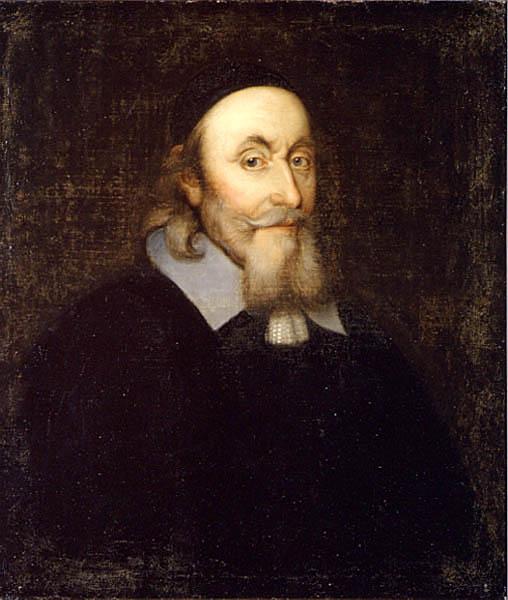
The Instrument of Government (Swedish: regeringsform) of 1634 was a document describing the form and operation of the Swedish government, retrospectively regarded as the country's first constitution, although it was not intended to function as such. It was composed by the Lord High Chancellor, Axel Oxenstierna, and was adopted by the Riksdag of the Estates (Swedish Parliament) on 29 July 1634. It was rendered void when the Riksdag repudiated it in 1680.
After King Gustav II Adolf was killed at the Battle of Lützen (1632), the Swedish crown passed to his daughter, Christina. However, she was only five years old at the time, and so power was exercised in her name by the Council of the Realm. As the dominant figure on the Council was the Lord High Chancellor, Axel Oxenstierna, he therefore became the effective regent of Sweden. However, he was at the time out of the country, having been accompanying King Gustav on his campaigns in Germany, and he chose to remain in Mainz to direct military operations rather than returning to Sweden. Indeed, he did not come back to Sweden until 1636, and it was during this period of absence that he composed the Instrument of Government.
Oxenstierna's primary purpose in drawing up the 1634 Instrument was not to effect a major change in Sweden's form of government (as would be the case with the later Instruments of Government promulgated in 1719, 1772 and 1809), but rather to describe its existing structures and norms, and to clarify the division of responsibilities among different royal officials, in order to ensure that the regency government functioned smoothly in his absence.
The Instrument of Government was the first attempt to systematically describe and regulate the structures of Swedish government and administration, as well as the judiciary and the armed forces. It also instituted a number of reforms, such as decreeing that the number of members of the Council of the Realm, hitherto an ad hoc gathering of the king's advisors, was to be fixed at twenty-five (Article #5). It furthermore established that the Council was to be headed by the five Great Officers of the Realm; one of these was Oxenstierna himself (as Lord High Chancellor), while two others were kinsmen of his, namely his brother Gabriel Gustafsson Oxenstierna (as Lord High Steward) and their cousin Gabriel Bengtsson Oxenstierna (as Lord High Treasurer).
One of the Instrument's most important reforms, and certainly the one that has had the most pervasive effect upon Swedish life since 1634, was the introduction of a system of counties (Swedish: län) to replace the traditional provinces (Article #23). The counties have been rejigged several times in the centuries since, but remain the primary units of local government in Sweden to this day.
The Instrument largely ignored the role of the Crown in its description of the operation of the Swedish government, and indeed reassigned many functions which were usually discharged by the king to the Great Officers of the Realm instead. As Sven Nilsson says in his biography of Oxenstierna:
All this management is top-down. Not by the king, who in a peculiar way stands outside the hierarchy, but by the officials…In the system instituted by this Instrument of Government, there is no place for the personal rule that characterises Gustav Adolf's time. On the contrary, it creates an alternative to the autocratic royal state, an oligarchic bureaucratic state, where power rests with the Great Officers of the Realm.
— Sven A. Nilsson, Axel Oxenstierna in Svenskt Biografiskt Lexikon (1994), p. 504.
Hub AI
Instrument of Government (1634) AI simulator
(@Instrument of Government (1634)_simulator)
Instrument of Government (1634)
The Instrument of Government (Swedish: regeringsform) of 1634 was a document describing the form and operation of the Swedish government, retrospectively regarded as the country's first constitution, although it was not intended to function as such. It was composed by the Lord High Chancellor, Axel Oxenstierna, and was adopted by the Riksdag of the Estates (Swedish Parliament) on 29 July 1634. It was rendered void when the Riksdag repudiated it in 1680.
After King Gustav II Adolf was killed at the Battle of Lützen (1632), the Swedish crown passed to his daughter, Christina. However, she was only five years old at the time, and so power was exercised in her name by the Council of the Realm. As the dominant figure on the Council was the Lord High Chancellor, Axel Oxenstierna, he therefore became the effective regent of Sweden. However, he was at the time out of the country, having been accompanying King Gustav on his campaigns in Germany, and he chose to remain in Mainz to direct military operations rather than returning to Sweden. Indeed, he did not come back to Sweden until 1636, and it was during this period of absence that he composed the Instrument of Government.
Oxenstierna's primary purpose in drawing up the 1634 Instrument was not to effect a major change in Sweden's form of government (as would be the case with the later Instruments of Government promulgated in 1719, 1772 and 1809), but rather to describe its existing structures and norms, and to clarify the division of responsibilities among different royal officials, in order to ensure that the regency government functioned smoothly in his absence.
The Instrument of Government was the first attempt to systematically describe and regulate the structures of Swedish government and administration, as well as the judiciary and the armed forces. It also instituted a number of reforms, such as decreeing that the number of members of the Council of the Realm, hitherto an ad hoc gathering of the king's advisors, was to be fixed at twenty-five (Article #5). It furthermore established that the Council was to be headed by the five Great Officers of the Realm; one of these was Oxenstierna himself (as Lord High Chancellor), while two others were kinsmen of his, namely his brother Gabriel Gustafsson Oxenstierna (as Lord High Steward) and their cousin Gabriel Bengtsson Oxenstierna (as Lord High Treasurer).
One of the Instrument's most important reforms, and certainly the one that has had the most pervasive effect upon Swedish life since 1634, was the introduction of a system of counties (Swedish: län) to replace the traditional provinces (Article #23). The counties have been rejigged several times in the centuries since, but remain the primary units of local government in Sweden to this day.
The Instrument largely ignored the role of the Crown in its description of the operation of the Swedish government, and indeed reassigned many functions which were usually discharged by the king to the Great Officers of the Realm instead. As Sven Nilsson says in his biography of Oxenstierna:
All this management is top-down. Not by the king, who in a peculiar way stands outside the hierarchy, but by the officials…In the system instituted by this Instrument of Government, there is no place for the personal rule that characterises Gustav Adolf's time. On the contrary, it creates an alternative to the autocratic royal state, an oligarchic bureaucratic state, where power rests with the Great Officers of the Realm.
— Sven A. Nilsson, Axel Oxenstierna in Svenskt Biografiskt Lexikon (1994), p. 504.