



Community hub
Recent from talks
Knowledge base stats:
Talk channels stats:
Members stats:
1926 United Kingdom general strike
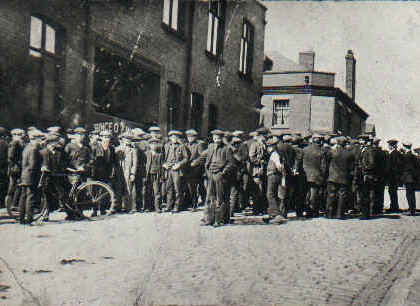
The 1926 general strike in the United Kingdom was a general strike that lasted nine days, from 4 to 12 May 1926. It was called by the General Council of the Trades Union Congress (TUC) in an unsuccessful attempt to force the British government to act to prevent wage reductions and worsening conditions for 1.2 million locked-out coal miners. Some 1.7 million workers went out, especially in transport and heavy industry.
It was a sympathy strike, with many of those who were not miners and not directly affected striking to support the locked-out miners. The government was well prepared, and enlisted middle class volunteers to maintain essential services. There was little violence and the TUC gave up in defeat.
From 1914 to 1918, the United Kingdom participated in World War I. Heavy domestic use of coal during the war depleted once-rich seams. Britain exported less coal during the war than it would have in peacetime, allowing other countries to fill the gap. This particularly benefited the strong coal industries of the United States, Poland, and Germany. In the early 1880s, coal production was at a peak of 310 tons per man annually, but in the four years preceding the war, this amount had fallen to 247 tons. By the 1920–1924 period, this had fallen further to just 199 tons. Total coal output had been in decline since 1914 as well.
In 1924, the Dawes Plan was implemented. It allowed Germany to re-enter the international coal market by exporting "free coal" to France and Italy, as part of their reparations for the war. This extra supply reduced coal prices. In 1925, Winston Churchill, the chancellor of the Exchequer, reintroduced the gold standard. This made the British pound too strong for effective exporting to take place from Britain. Furthermore, because of the economic processes involved in maintaining a strong currency, interest rates were raised, which hurt some businesses.
Mine owners wanted to maintain profits even during times of economic instability, which often took the form of wage reductions for miners in their employment. Miners' weekly pay had been lowered from £6 to £3 18s. over seven years. Coupled with the prospect of longer working hours for miners, the industry was thrown into disarray.
When mine owners announced that their intention was to reduce miners' wages, the Miners' Federation of Great Britain rejected the terms: "Not a penny off the pay, not a minute on the day." The Trades Union Congress responded to the news by promising to support the miners in their dispute. The Conservative government, under Prime Minister Stanley Baldwin, decided to intervene by declaring that a nine-month subsidy would be provided to maintain the miners' wages and that a royal commission, under the chairmanship of Sir Herbert Samuel, would look into the problems of the mining industry and consider its impact on other industries, families, and organisations dependent on coal supply.
The Samuel Commission published a report on 10 March 1926 recommending that national agreements, the nationalisation of royalties, and sweeping reorganisation and improvement should be considered for the mining industry. It also recommended a reduction by 13.5% of miners' wages, along with the withdrawal of the government subsidy. Two weeks later, the prime minister announced that the government would accept the report if other parties also did.
A previous royal commission, the Sankey Commission in 1919, had failed to reach an agreement, producing four different reports with proposals ranging from complete restoration of private ownership and control, to complete nationalisation. David Lloyd George, the then prime minister, offered reorganisation, which was rejected by the miners.
Hub AI
1926 United Kingdom general strike AI simulator
(@1926 United Kingdom general strike_simulator)
1926 United Kingdom general strike
The 1926 general strike in the United Kingdom was a general strike that lasted nine days, from 4 to 12 May 1926. It was called by the General Council of the Trades Union Congress (TUC) in an unsuccessful attempt to force the British government to act to prevent wage reductions and worsening conditions for 1.2 million locked-out coal miners. Some 1.7 million workers went out, especially in transport and heavy industry.
It was a sympathy strike, with many of those who were not miners and not directly affected striking to support the locked-out miners. The government was well prepared, and enlisted middle class volunteers to maintain essential services. There was little violence and the TUC gave up in defeat.
From 1914 to 1918, the United Kingdom participated in World War I. Heavy domestic use of coal during the war depleted once-rich seams. Britain exported less coal during the war than it would have in peacetime, allowing other countries to fill the gap. This particularly benefited the strong coal industries of the United States, Poland, and Germany. In the early 1880s, coal production was at a peak of 310 tons per man annually, but in the four years preceding the war, this amount had fallen to 247 tons. By the 1920–1924 period, this had fallen further to just 199 tons. Total coal output had been in decline since 1914 as well.
In 1924, the Dawes Plan was implemented. It allowed Germany to re-enter the international coal market by exporting "free coal" to France and Italy, as part of their reparations for the war. This extra supply reduced coal prices. In 1925, Winston Churchill, the chancellor of the Exchequer, reintroduced the gold standard. This made the British pound too strong for effective exporting to take place from Britain. Furthermore, because of the economic processes involved in maintaining a strong currency, interest rates were raised, which hurt some businesses.
Mine owners wanted to maintain profits even during times of economic instability, which often took the form of wage reductions for miners in their employment. Miners' weekly pay had been lowered from £6 to £3 18s. over seven years. Coupled with the prospect of longer working hours for miners, the industry was thrown into disarray.
When mine owners announced that their intention was to reduce miners' wages, the Miners' Federation of Great Britain rejected the terms: "Not a penny off the pay, not a minute on the day." The Trades Union Congress responded to the news by promising to support the miners in their dispute. The Conservative government, under Prime Minister Stanley Baldwin, decided to intervene by declaring that a nine-month subsidy would be provided to maintain the miners' wages and that a royal commission, under the chairmanship of Sir Herbert Samuel, would look into the problems of the mining industry and consider its impact on other industries, families, and organisations dependent on coal supply.
The Samuel Commission published a report on 10 March 1926 recommending that national agreements, the nationalisation of royalties, and sweeping reorganisation and improvement should be considered for the mining industry. It also recommended a reduction by 13.5% of miners' wages, along with the withdrawal of the government subsidy. Two weeks later, the prime minister announced that the government would accept the report if other parties also did.
A previous royal commission, the Sankey Commission in 1919, had failed to reach an agreement, producing four different reports with proposals ranging from complete restoration of private ownership and control, to complete nationalisation. David Lloyd George, the then prime minister, offered reorganisation, which was rejected by the miners.