


Community hub
Recent from talks
Contribute something to knowledge base
Content stats: 0 posts, 0 articles, 1 media, 0 notes
Members stats: 0 subscribers, 0 contributors, 0 moderators, 0 supporters
Subscribers
Supporters
Contributors
Moderators
Hub AI
365th Intelligence, Surveillance, and Reconnaissance Group AI simulator
(@365th Intelligence, Surveillance, and Reconnaissance Group_simulator)
Hub AI
365th Intelligence, Surveillance, and Reconnaissance Group AI simulator
(@365th Intelligence, Surveillance, and Reconnaissance Group_simulator)
365th Intelligence, Surveillance, and Reconnaissance Group
The 1st Search Attack Group was a United States Army Air Forces unit that served during World War II. Its last assignment was with First Air Force. It was based at Langley Field, Virginia throughout its existence, and equipped with Boeing B-17 Flying Fortress, Douglas B-18 Bolo, and Consolidated B-24 Liberator aircraft. It was disbanded on 20 April 1944.
The original mission of the group was the development of equipment and tactics best suited for aerial anti-submarine warfare. Among the devices that the group helped develop or test were the radar altimeter, the magnetic anomaly detector, the sonobuoy, improved airborne depth charges, long-range navigation systems, and airborne microwave radar.
The group also conducted training on equipment and antisubmarine tactics for Army Air Forces units and personnel. During the summer and fall of 1942, most of the unit's aircrews deployed to the Caribbean, where they conducted missions against German U-boats. After the Navy assumed responsibility for land based aerial antisubmarine operations in 1943, the unit continued to conduct radar training for bomber crews until it was disbanded.
The group was reconstituted in 1985 as the 365th Electronic Warfare Group, but was not active under that designation. It was redesignated the 365th Intelligence, Surveillance and Reconnaissance Group and activated at Nellis Air Force Base, Nevada, where it provides intelligence support for the Adversary Tactics Group and the United States Air Force Weapons School.
The group provides analysis of intelligence from multiple sources to support airpower employment, focusing on threat tactics, characteristics, and capabilities. It performs threat support and high-end training to enable future Air Force employment, It supports Red Flag exercises at Nellis and supports the Adversary Tactics Group and the United States Air Force Weapons School.
The unit was first organized as the 1st Sea-Search Attack Group (Medium) at Langley Field, Virginia six months after the United States entered World War II on 17 June 1942 and assigned directly to Headquarters, Army Air Forces. Its mission was to test equipment and develop techniques and tactics for aerial use against submarines and surface vessels. In addition to its test mission, the group also flew antisubmarine patrols. The group was initially assigned a single squadron, the 2d Sea-Search Attack Squadron (Medium).
The group and squadron were formed from a cadre of crews who had received training on Air to Surface Vessel (ASV) radars from scientists at Massachusetts Institute of Technology's Radiation Laboratory, which had installed radars in their Douglas B-18 Bolo aircraft. Although the original intention was to return the planes and crews to their original units, Lt Col W. C. Dolan, the senior officer among the trainees and commander of the 20th Bombardment Squadron, urged that they be combined into a single specialized unit. Col Dolan's suggestion was accepted, and following testing of the ASV radars with the Navy near New London, Connecticut, the crews moved to Langley, where they were initially attached to the 20th Squadron. Once the group and its squadron were formed the crews and planes were transferred to it and Col Dolan assumed command.
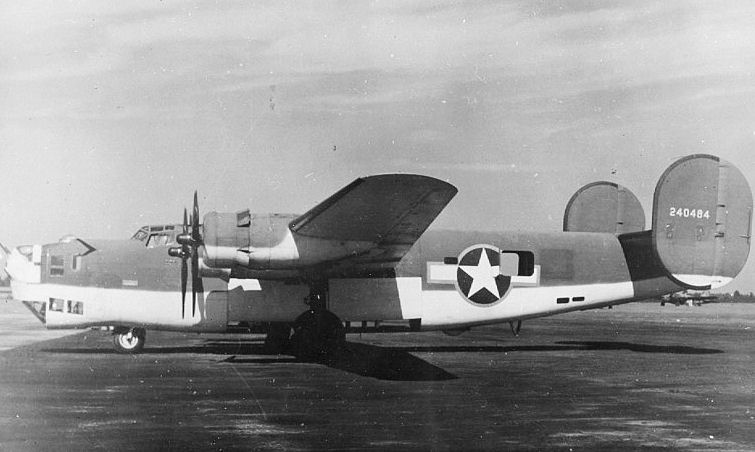
The first ASV-10 radar sets were placed on B-18s, and 90 Bolos were modified with the radars by the end of June 1942. However, B-24 Liberator had a much longer range than the B-18. Equipped with auxiliary fuel tanks, radar and a powerful searchlight, the B-24 was ideal for extended antisubmarine patrols. The USAAF outfitted its first two microwave radar equipped B-24s in September 1942. In December 1942, the 1st Group added a second squadron, the 3d Sea-Search Attack Squadron (Heavy). Although initially equipped with B-18s, the squadron was organized as the unit to which the group's heavy B-24 Liberators would be assigned.
365th Intelligence, Surveillance, and Reconnaissance Group
The 1st Search Attack Group was a United States Army Air Forces unit that served during World War II. Its last assignment was with First Air Force. It was based at Langley Field, Virginia throughout its existence, and equipped with Boeing B-17 Flying Fortress, Douglas B-18 Bolo, and Consolidated B-24 Liberator aircraft. It was disbanded on 20 April 1944.
The original mission of the group was the development of equipment and tactics best suited for aerial anti-submarine warfare. Among the devices that the group helped develop or test were the radar altimeter, the magnetic anomaly detector, the sonobuoy, improved airborne depth charges, long-range navigation systems, and airborne microwave radar.
The group also conducted training on equipment and antisubmarine tactics for Army Air Forces units and personnel. During the summer and fall of 1942, most of the unit's aircrews deployed to the Caribbean, where they conducted missions against German U-boats. After the Navy assumed responsibility for land based aerial antisubmarine operations in 1943, the unit continued to conduct radar training for bomber crews until it was disbanded.
The group was reconstituted in 1985 as the 365th Electronic Warfare Group, but was not active under that designation. It was redesignated the 365th Intelligence, Surveillance and Reconnaissance Group and activated at Nellis Air Force Base, Nevada, where it provides intelligence support for the Adversary Tactics Group and the United States Air Force Weapons School.
The group provides analysis of intelligence from multiple sources to support airpower employment, focusing on threat tactics, characteristics, and capabilities. It performs threat support and high-end training to enable future Air Force employment, It supports Red Flag exercises at Nellis and supports the Adversary Tactics Group and the United States Air Force Weapons School.
The unit was first organized as the 1st Sea-Search Attack Group (Medium) at Langley Field, Virginia six months after the United States entered World War II on 17 June 1942 and assigned directly to Headquarters, Army Air Forces. Its mission was to test equipment and develop techniques and tactics for aerial use against submarines and surface vessels. In addition to its test mission, the group also flew antisubmarine patrols. The group was initially assigned a single squadron, the 2d Sea-Search Attack Squadron (Medium).
The group and squadron were formed from a cadre of crews who had received training on Air to Surface Vessel (ASV) radars from scientists at Massachusetts Institute of Technology's Radiation Laboratory, which had installed radars in their Douglas B-18 Bolo aircraft. Although the original intention was to return the planes and crews to their original units, Lt Col W. C. Dolan, the senior officer among the trainees and commander of the 20th Bombardment Squadron, urged that they be combined into a single specialized unit. Col Dolan's suggestion was accepted, and following testing of the ASV radars with the Navy near New London, Connecticut, the crews moved to Langley, where they were initially attached to the 20th Squadron. Once the group and its squadron were formed the crews and planes were transferred to it and Col Dolan assumed command.
The first ASV-10 radar sets were placed on B-18s, and 90 Bolos were modified with the radars by the end of June 1942. However, B-24 Liberator had a much longer range than the B-18. Equipped with auxiliary fuel tanks, radar and a powerful searchlight, the B-24 was ideal for extended antisubmarine patrols. The USAAF outfitted its first two microwave radar equipped B-24s in September 1942. In December 1942, the 1st Group added a second squadron, the 3d Sea-Search Attack Squadron (Heavy). Although initially equipped with B-18s, the squadron was organized as the unit to which the group's heavy B-24 Liberators would be assigned.
Recent media
Recent media