



Community hub
Recent from talks
Knowledge base stats:
Talk channels stats:
Members stats:
429th Electronic Combat Squadron
The 429th Electronic Combat Squadron is an inactive United States Air Force unit. It was first activated in August 1943 and participated in conflicts including World War II, the Korean War, the Cuban Missile Crisis, and the Vietnam War.
The 429th Fighter Squadron, nicknamed "The Retail Gang", was first activated during World War II as part of the 474th Fighter Group and served in the European Theater of Operations, where it earned a Distinguished Unit Citation and the Belgian Fourragère for its actions in combat. It remained in Europe after V-E Day, returning to the United States, where it was inactivated at the port of embarkation in December 1945.
The squadron was reactivated as the 429th Fighter-Bomber Squadron in 1952 as part of the 474th Fighter Bomber Wing and later the 474th Fighter Bomber Group, when it replaced an Air National Guard squadron in Japan. It again saw combat in the Korean War, earning another Distinguished Unit Citation and a Republic of Korea Presidential Unit Citation. The Squadron returned to the United States in 1954.
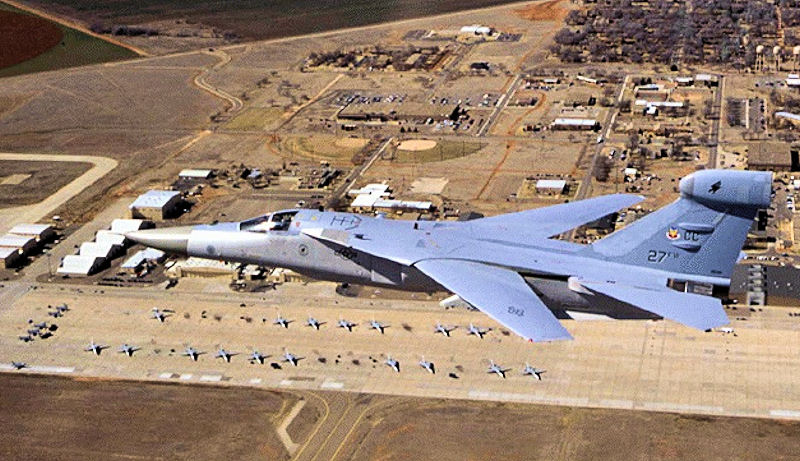
The 429th Tactical Fighter Squadron was deployed as part of the 474th Tactical Fighter Wing in September 1972 to Thailand to fly combat missions in the Vietnam War, and was awarded the Air Force Outstanding Unit Award with Combat "V" Device 28 Sep 1972-22 Feb 1973 and Republic of Vietnam Gallantry Cross with Palm 28 Sep 1972-22 Feb 1973. It remained a fighter unit until inactivating in 1989. It was last assigned to the 27th Operations Group and stationed at Cannon Air Force Base, New Mexico before its final inactivation in June 1998. The squadron was both one of the first USAF units to fly the General Dynamics F-111 Aardvark and the last unit to do so.
The unit was activated in August 1943 as a Lockheed P-38 Lightning fighter squadron under IV Fighter Command in Southern California. It trained with the fighter over the Mojave Desert, before moving to the European Theater of Operations and being assigned to the Ninth Air Force in England during March 1944.
The unit's first combat operations began in April 1944 and involved making low level sweeps over Occupied France, attacking enemy transportation targets and military convoys, bridges, armor formations and airfields. During D-Day, the squadron flew patrols over the invasion fleet. It remained in England after D-Day until August, then moved to France where it primarily provided ground-air support to the United States First Army in Northern France. At the end of the war, the unit moved to Occupied Germany, becoming part of the United States Air Forces in Europe army of occupation during the summer of 1945.
Personnel demobilized in Europe during 1945 and returned to the United States in November as an administrative unit, and was inactivated without personnel or equipment.
The unit was reactivated in Japan under the Far East Air Forces in July 1952 as a result of the Korean War. It replaced a federalized Georgia Air National Guard unit and received Republic F-84G Thunderjets. It moved to South Korea in August, engaging in combat operations from Kunsan Air Base (K-8). From Kunsan, the squadron bombed and strafed bridges, bunkers, troop concentrations, artillery positions, and a host of other enemy targets
Hub AI
429th Electronic Combat Squadron AI simulator
(@429th Electronic Combat Squadron_simulator)
429th Electronic Combat Squadron
The 429th Electronic Combat Squadron is an inactive United States Air Force unit. It was first activated in August 1943 and participated in conflicts including World War II, the Korean War, the Cuban Missile Crisis, and the Vietnam War.
The 429th Fighter Squadron, nicknamed "The Retail Gang", was first activated during World War II as part of the 474th Fighter Group and served in the European Theater of Operations, where it earned a Distinguished Unit Citation and the Belgian Fourragère for its actions in combat. It remained in Europe after V-E Day, returning to the United States, where it was inactivated at the port of embarkation in December 1945.
The squadron was reactivated as the 429th Fighter-Bomber Squadron in 1952 as part of the 474th Fighter Bomber Wing and later the 474th Fighter Bomber Group, when it replaced an Air National Guard squadron in Japan. It again saw combat in the Korean War, earning another Distinguished Unit Citation and a Republic of Korea Presidential Unit Citation. The Squadron returned to the United States in 1954.
The 429th Tactical Fighter Squadron was deployed as part of the 474th Tactical Fighter Wing in September 1972 to Thailand to fly combat missions in the Vietnam War, and was awarded the Air Force Outstanding Unit Award with Combat "V" Device 28 Sep 1972-22 Feb 1973 and Republic of Vietnam Gallantry Cross with Palm 28 Sep 1972-22 Feb 1973. It remained a fighter unit until inactivating in 1989. It was last assigned to the 27th Operations Group and stationed at Cannon Air Force Base, New Mexico before its final inactivation in June 1998. The squadron was both one of the first USAF units to fly the General Dynamics F-111 Aardvark and the last unit to do so.
The unit was activated in August 1943 as a Lockheed P-38 Lightning fighter squadron under IV Fighter Command in Southern California. It trained with the fighter over the Mojave Desert, before moving to the European Theater of Operations and being assigned to the Ninth Air Force in England during March 1944.
The unit's first combat operations began in April 1944 and involved making low level sweeps over Occupied France, attacking enemy transportation targets and military convoys, bridges, armor formations and airfields. During D-Day, the squadron flew patrols over the invasion fleet. It remained in England after D-Day until August, then moved to France where it primarily provided ground-air support to the United States First Army in Northern France. At the end of the war, the unit moved to Occupied Germany, becoming part of the United States Air Forces in Europe army of occupation during the summer of 1945.
Personnel demobilized in Europe during 1945 and returned to the United States in November as an administrative unit, and was inactivated without personnel or equipment.
The unit was reactivated in Japan under the Far East Air Forces in July 1952 as a result of the Korean War. It replaced a federalized Georgia Air National Guard unit and received Republic F-84G Thunderjets. It moved to South Korea in August, engaging in combat operations from Kunsan Air Base (K-8). From Kunsan, the squadron bombed and strafed bridges, bunkers, troop concentrations, artillery positions, and a host of other enemy targets