



Community hub
Recent from talks
Knowledge base stats:
Talk channels stats:
Members stats:
9th Attack Squadron
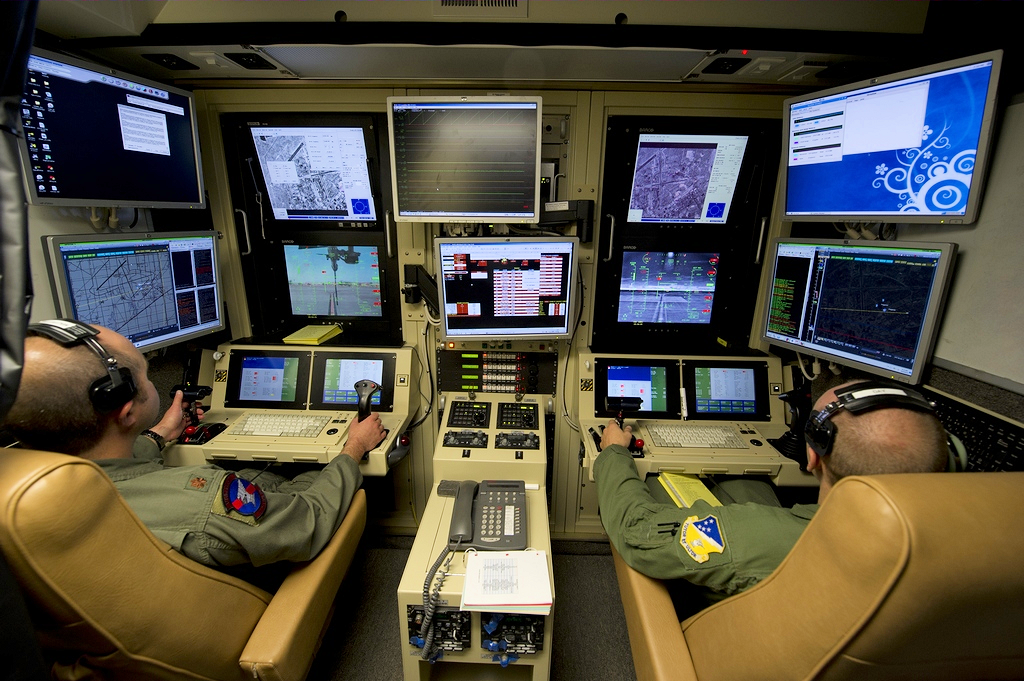
The 9th Attack Squadron is a United States Air Force squadron, assigned to the 49th Operations Group, stationed at Holloman Air Force Base, New Mexico. The squadron is a training unit for new pilots and sensor operators for the MQ-9 Reaper Remotely Piloted Aircraft (RPA).
The 9th is one of three RPA training squadron at Holloman. The squadron was activated to meet Air Force training requirements. The 9th trains Reaper pilot and sensor operators in initial qualification training at Holloman. The base's other MQ-9 squadrons are the 6th and 29th Attack Squadrons.
The squadron traces its origins to the formation of the 49th Pursuit Group at Selfridge Field, Michigan on 15 January 1941. Originally named the 9th Pursuit Squadron, it was equipped with Seversky P-35s that were transferred from the 1st Pursuit Group that had departed Selfridge for Rockwell Field, California. In May 1941, the squadron proceeded to Morrison Field, Florida, to train in the Curtiss P-40 Warhawk fighter.
With the advent of World War II, the squadron moved to Australia and became part of Fifth Air Force in January 1942. It was redesignated as the 9th Fighter Squadron in May 1942. The unit received Curtiss P-40 Warhawks in Australia and, after training for a short time, provided air defense for the Northern Territory.
The squadron moved to New Guinea in October 1942 to help stall the Japanese drive southward from Buna to Port Moresby. Engaged primarily in air defense of Port Moresby; also escorted bombers and transports, and attacked enemy installations, supply lines, and troop concentrations in support of Allied ground forces.
The 9th participated in the Allied offensive that pushed the Japanese back along the Kokoda Track, took part in the Battle of the Bismarck Sea in March 1943, fought for control of the approaches to Huon Gulf, and supported ground forces during the campaign in which the Allies eventually recovered New Guinea. It covered the landings on Noemfoor and had a part in the conquest of Biak.
After having used Lockheed P-38 Lightnings, Curtiss P-40 Warhawks and Republic P-47 Thunderbolts, the 9th was equipped completely in September 1944 with P-38's, which were used to fly long-range escort and attack missions to Mindanao, Halmahera, Seram, and Borneo. The unit arrived in the Philippines in October 1944, shortly after the assault landings on Leyte and engaged enemy fighters, attacked shipping in Ormoc Bay, supported ground forces, and covered the Allied invasion of Luzon. Other missions from the Philippines included strikes against industry and transportation on Taiwan and against shipping along the China coast. The 9th Fighter Squadron and its sister squadrons (7th and 8th Fighter Squadrons) attained a record of 668 aerial victories not matched in the Pacific Theater during World War II.
Aces of the 9th were Dick Bong (40 victories), Thomas McGuire (38 victories), Gerald Johnson (22 victories), James Watkins (12 victories), Andrew Reynolds (9.33 victories), Grover Fanning (9 victories), John O'Neil (8 victories), Wallace Jordan (6 victories), John Landers (6 victories), Ralph Wandrey (6 victories), Ernest Ambort (5 victories), Warren Curten (5 victories), Jack Donaldson (5 victories), Cheatam Gupton (5 victories), and Robert Vaught (5 victories)
Hub AI
9th Attack Squadron AI simulator
(@9th Attack Squadron_simulator)
9th Attack Squadron
The 9th Attack Squadron is a United States Air Force squadron, assigned to the 49th Operations Group, stationed at Holloman Air Force Base, New Mexico. The squadron is a training unit for new pilots and sensor operators for the MQ-9 Reaper Remotely Piloted Aircraft (RPA).
The 9th is one of three RPA training squadron at Holloman. The squadron was activated to meet Air Force training requirements. The 9th trains Reaper pilot and sensor operators in initial qualification training at Holloman. The base's other MQ-9 squadrons are the 6th and 29th Attack Squadrons.
The squadron traces its origins to the formation of the 49th Pursuit Group at Selfridge Field, Michigan on 15 January 1941. Originally named the 9th Pursuit Squadron, it was equipped with Seversky P-35s that were transferred from the 1st Pursuit Group that had departed Selfridge for Rockwell Field, California. In May 1941, the squadron proceeded to Morrison Field, Florida, to train in the Curtiss P-40 Warhawk fighter.
With the advent of World War II, the squadron moved to Australia and became part of Fifth Air Force in January 1942. It was redesignated as the 9th Fighter Squadron in May 1942. The unit received Curtiss P-40 Warhawks in Australia and, after training for a short time, provided air defense for the Northern Territory.
The squadron moved to New Guinea in October 1942 to help stall the Japanese drive southward from Buna to Port Moresby. Engaged primarily in air defense of Port Moresby; also escorted bombers and transports, and attacked enemy installations, supply lines, and troop concentrations in support of Allied ground forces.
The 9th participated in the Allied offensive that pushed the Japanese back along the Kokoda Track, took part in the Battle of the Bismarck Sea in March 1943, fought for control of the approaches to Huon Gulf, and supported ground forces during the campaign in which the Allies eventually recovered New Guinea. It covered the landings on Noemfoor and had a part in the conquest of Biak.
After having used Lockheed P-38 Lightnings, Curtiss P-40 Warhawks and Republic P-47 Thunderbolts, the 9th was equipped completely in September 1944 with P-38's, which were used to fly long-range escort and attack missions to Mindanao, Halmahera, Seram, and Borneo. The unit arrived in the Philippines in October 1944, shortly after the assault landings on Leyte and engaged enemy fighters, attacked shipping in Ormoc Bay, supported ground forces, and covered the Allied invasion of Luzon. Other missions from the Philippines included strikes against industry and transportation on Taiwan and against shipping along the China coast. The 9th Fighter Squadron and its sister squadrons (7th and 8th Fighter Squadrons) attained a record of 668 aerial victories not matched in the Pacific Theater during World War II.
Aces of the 9th were Dick Bong (40 victories), Thomas McGuire (38 victories), Gerald Johnson (22 victories), James Watkins (12 victories), Andrew Reynolds (9.33 victories), Grover Fanning (9 victories), John O'Neil (8 victories), Wallace Jordan (6 victories), John Landers (6 victories), Ralph Wandrey (6 victories), Ernest Ambort (5 victories), Warren Curten (5 victories), Jack Donaldson (5 victories), Cheatam Gupton (5 victories), and Robert Vaught (5 victories)