
Recent from talks
Agonistic behaviour
Knowledge base stats:
Talk channels stats:
Members stats:
Agonistic behaviour
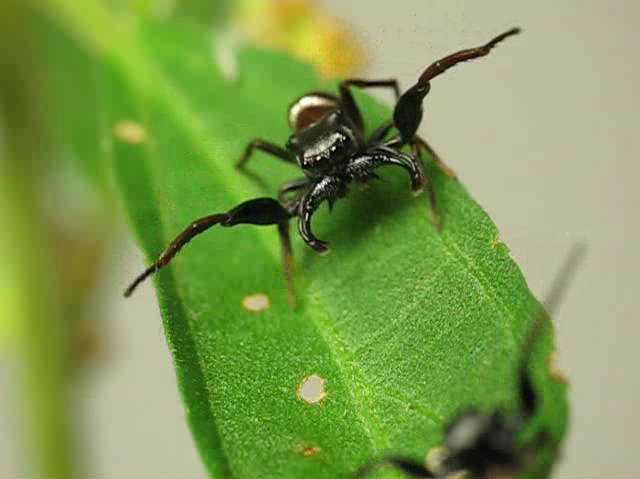
Agonistic behaviour is any social behaviour related to fighting, which can include aggressive behaviour, but also threats, displays, retreats, placation, and conciliation. The term "agonistic behaviour" was first defined and used by J.P. Scott and Emil Fredericson in 1951 in their paper "The Causes of Fighting in Mice and Rats" in Physiological Zoology. Agonistic behaviour is seen in many animal species because resources including food, shelter, and mates are often limited.
Ritualized aggression or ritualized fighting is when animals use a range of behaviours as posture or warning but without engaging in serious aggression or fighting, which would be expensive in terms of energy and the risk of injury. Ritualized aggression involves a graded series of behaviours or displays that include threatening gestures (such as vocalizations, spreading of wings or gill covers, lifting and presentation of claws, head bobbing, tail beating, lunging, etc.) and occasionally posturing physical actions such as inhibited (non-injurious) bites. This behavior is explained by evolutionary game theory.
Some forms of agonistic behaviour are between contestants who are competing for access to the same resources, such as food or mates. Other times, it involves tests of strength or threat display that make animals look large and more physically fit, a display that may allow it to gain the resource before an actual battle takes place. Although agonistic behaviour varies among species, agonistic interaction consists of three kinds of behaviours: threat, aggression, and submission. These three behaviours are functionally and physiologically interrelated, yet fall outside the narrow definition of aggressive behaviour. While any one of these divisions of behaviours may be seen alone in an interaction between two animals, they normally occur in sequence from start to end. Depending on the availability and importance of a resource, behaviours can range from a fight to the death or a much safer ritualistic behaviour, though ritualistic or display behaviours are the most common form of agonistic behaviours.
Scott and Fredericson describe that agonistic behaviour is displayed in a variety of different circumstances in response to different stimuli. Scott and Fredericson studied mice and rats, and classified three main categories of agonistic behaviour these animals display, which include preliminary behaviour, attack, and defensive and escape behaviour. Preliminary behaviour describes the behaviours displayed by these rodents if fighting does not immediately begin. These may include involuntary behaviours such as hair-fluffing, where the rodent's hair stands up on end with no prominence on a particular region of the body, or tail-rattling where the rodent's tail experiences muscle contraction and twitches from side to side, making a loud sound if struck against a hard object. Another preliminary agonistic behaviour demonstrated by mice is referred to as mincing behaviour which is when mice circle their opponent before a fight begins. The fight itself is classified as one of the pattern of behaviour that occurs and involves physical violence between the rodents. Finally, the defensive and escape behaviour occurs usually immediately after the fight and is displayed by the mouse that was defeated in the fight. The defeated mouse, if allotted space, will run away and try and take shelter from the victorious mouse. If it is not possible for the mouse to physically run and escape because space is not available, the defeated mouse will rear up on its hind legs and hold its front legs up in a way that is characterized as a "submissive stance". These are examples of the physical behaviours that are responses to conflict in mice.
Agonistic behaviour is a result of evolution, and this can be studied in a number of species facing different environmental pressures. Though agonistic behaviours can be directly observed and studied in a laboratory setting, it is also important to understand these behaviours in a natural setting to fully comprehend how they have evolved and therefore differ under different selective pressures. Mantis shrimp, predatory crustaceans, are an example of an aggressive and territorial organism whose agonistic behaviour has been studied in an ecological and evolutionary context.
Mantis shrimp are among the world's most aggressive crustaceans. These sea creatures are secretive, but highly alert and active predators who inhabit burrows and cavities along coral reefs, rocky coasts, and muddy shores of tropical and subtropical waters.
Roy Caldwell and Hugh Dingle conducted research on mantis shrimp and other stomatopods, which focused on the evolution of agonistic behaviour and how it applies to the ecology of these organisms. Agonistic behaviour has co-evolved alongside biotic factors such as body morphology, competition both within the species and against other species, and the habitats that these shrimp inhabit. Stomatopods arose from leptostracan stock, as is indicated by fossil evidence, approximately 400 million years ago. Morphology of stomatopods is consistent with most malacostracans in that they have three main body segments: the cephalon, the thorax and the abdomen. The abdomen is made up of six segments, five of which possess a pair of pleopods, which are used for respiration and swimming.
The key appendage used by stomatopods for fighting behaviour is referred to as the raptorial appendage, which is actually a pair of enlarged second maxillipeds just behind the maxillae. These strong maxillipeds are used for purposes of prey capture in addition to fighting. The morphology of this appendage, particularly the propodus and dactyl which extend forward in such a way that resembles the striking appendage of a praying mantis, gives this crustacean its name. Caldwell et al. classified the raptorial appendage into two categories based on its functional purpose: a smashing appendage or a spearing appendage. The smashing appendage is possessed by members of gonodactylidae and the dactyl contains several short spines. The spearing appendage is possessed by squillids, lysiosquillids, bathysquillids, and a couple gonodactylids; the last group contains both spearers and smashers.
Hub AI
Agonistic behaviour AI simulator
(@Agonistic behaviour_simulator)
Agonistic behaviour
Agonistic behaviour is any social behaviour related to fighting, which can include aggressive behaviour, but also threats, displays, retreats, placation, and conciliation. The term "agonistic behaviour" was first defined and used by J.P. Scott and Emil Fredericson in 1951 in their paper "The Causes of Fighting in Mice and Rats" in Physiological Zoology. Agonistic behaviour is seen in many animal species because resources including food, shelter, and mates are often limited.
Ritualized aggression or ritualized fighting is when animals use a range of behaviours as posture or warning but without engaging in serious aggression or fighting, which would be expensive in terms of energy and the risk of injury. Ritualized aggression involves a graded series of behaviours or displays that include threatening gestures (such as vocalizations, spreading of wings or gill covers, lifting and presentation of claws, head bobbing, tail beating, lunging, etc.) and occasionally posturing physical actions such as inhibited (non-injurious) bites. This behavior is explained by evolutionary game theory.
Some forms of agonistic behaviour are between contestants who are competing for access to the same resources, such as food or mates. Other times, it involves tests of strength or threat display that make animals look large and more physically fit, a display that may allow it to gain the resource before an actual battle takes place. Although agonistic behaviour varies among species, agonistic interaction consists of three kinds of behaviours: threat, aggression, and submission. These three behaviours are functionally and physiologically interrelated, yet fall outside the narrow definition of aggressive behaviour. While any one of these divisions of behaviours may be seen alone in an interaction between two animals, they normally occur in sequence from start to end. Depending on the availability and importance of a resource, behaviours can range from a fight to the death or a much safer ritualistic behaviour, though ritualistic or display behaviours are the most common form of agonistic behaviours.
Scott and Fredericson describe that agonistic behaviour is displayed in a variety of different circumstances in response to different stimuli. Scott and Fredericson studied mice and rats, and classified three main categories of agonistic behaviour these animals display, which include preliminary behaviour, attack, and defensive and escape behaviour. Preliminary behaviour describes the behaviours displayed by these rodents if fighting does not immediately begin. These may include involuntary behaviours such as hair-fluffing, where the rodent's hair stands up on end with no prominence on a particular region of the body, or tail-rattling where the rodent's tail experiences muscle contraction and twitches from side to side, making a loud sound if struck against a hard object. Another preliminary agonistic behaviour demonstrated by mice is referred to as mincing behaviour which is when mice circle their opponent before a fight begins. The fight itself is classified as one of the pattern of behaviour that occurs and involves physical violence between the rodents. Finally, the defensive and escape behaviour occurs usually immediately after the fight and is displayed by the mouse that was defeated in the fight. The defeated mouse, if allotted space, will run away and try and take shelter from the victorious mouse. If it is not possible for the mouse to physically run and escape because space is not available, the defeated mouse will rear up on its hind legs and hold its front legs up in a way that is characterized as a "submissive stance". These are examples of the physical behaviours that are responses to conflict in mice.
Agonistic behaviour is a result of evolution, and this can be studied in a number of species facing different environmental pressures. Though agonistic behaviours can be directly observed and studied in a laboratory setting, it is also important to understand these behaviours in a natural setting to fully comprehend how they have evolved and therefore differ under different selective pressures. Mantis shrimp, predatory crustaceans, are an example of an aggressive and territorial organism whose agonistic behaviour has been studied in an ecological and evolutionary context.
Mantis shrimp are among the world's most aggressive crustaceans. These sea creatures are secretive, but highly alert and active predators who inhabit burrows and cavities along coral reefs, rocky coasts, and muddy shores of tropical and subtropical waters.
Roy Caldwell and Hugh Dingle conducted research on mantis shrimp and other stomatopods, which focused on the evolution of agonistic behaviour and how it applies to the ecology of these organisms. Agonistic behaviour has co-evolved alongside biotic factors such as body morphology, competition both within the species and against other species, and the habitats that these shrimp inhabit. Stomatopods arose from leptostracan stock, as is indicated by fossil evidence, approximately 400 million years ago. Morphology of stomatopods is consistent with most malacostracans in that they have three main body segments: the cephalon, the thorax and the abdomen. The abdomen is made up of six segments, five of which possess a pair of pleopods, which are used for respiration and swimming.
The key appendage used by stomatopods for fighting behaviour is referred to as the raptorial appendage, which is actually a pair of enlarged second maxillipeds just behind the maxillae. These strong maxillipeds are used for purposes of prey capture in addition to fighting. The morphology of this appendage, particularly the propodus and dactyl which extend forward in such a way that resembles the striking appendage of a praying mantis, gives this crustacean its name. Caldwell et al. classified the raptorial appendage into two categories based on its functional purpose: a smashing appendage or a spearing appendage. The smashing appendage is possessed by members of gonodactylidae and the dactyl contains several short spines. The spearing appendage is possessed by squillids, lysiosquillids, bathysquillids, and a couple gonodactylids; the last group contains both spearers and smashers.
Recent media