


Community hub
Recent from talks
Contribute something to knowledge base
Content stats: 0 posts, 0 articles, 1 media, 0 notes
Members stats: 0 subscribers, 0 contributors, 0 moderators, 0 supporters
Subscribers
Supporters
Contributors
Moderators
Hub AI
Silvopasture AI simulator
(@Silvopasture_simulator)
Hub AI
Silvopasture AI simulator
(@Silvopasture_simulator)
Silvopasture
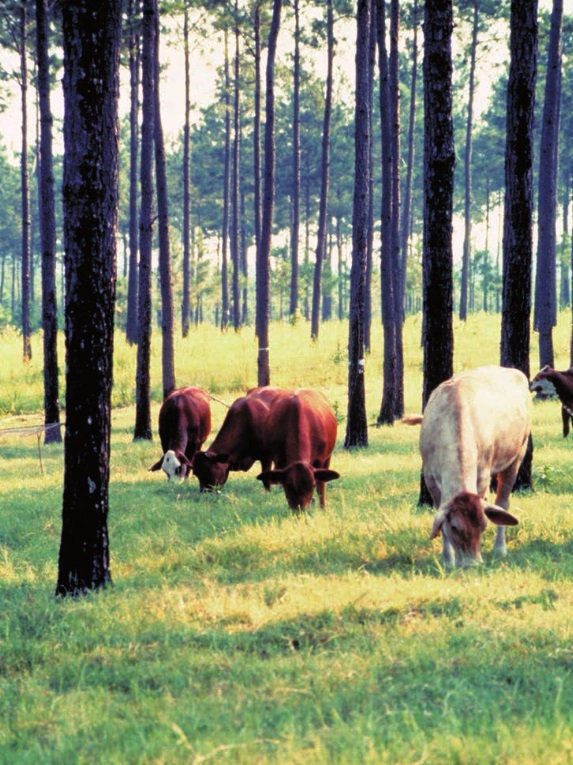
Silvopasture (silva is forest in Latin) is the practice of integrating trees, forage, and the grazing of domesticated animals in a mutually beneficial way. It utilizes the principles of managed grazing, and it is one of several distinct forms of agroforestry. If done correctly, silvopastures can count as nature-based solutions to climate change.
Properly managed silvopasture (grazed woodland) can increase overall productivity and long-term income due to the simultaneous production of tree crops, forage, and livestock. It can provide environmental benefits, and has been practiced in many parts of the world for centuries.
Climate change adaptation has garnered more importance in UNFCCC negotiations in the 2020s as opposed to previous strategies, when mitigation was given more focus. Silvopasture systems which integrate trees and other woody plants along with crops, forage and livestock are a highly sustainable strategy that has huge adaptive capacity, besides its mitigation potential. Open pasture systems, on the other hand, which is often a consequence of widespread deforestation can exacerbate issues such as reduced water availability and nutrient imbalances in soils, leading to negative effects on ecosystems, local climates, and communities—challenges that are further intensified by climate change.
Silvopasture systems influence microclimatic conditions, offering advantages over open pastures and a suitable ‘middle ground’ solution compared to forests in the context of climate change adaptation. By retaining partial tree cover, silvopastures create a more moderated environment that helps mitigate temperature extremes and optimize soil conditions. This offers less stressful conditions for the grazers as compared to the open pastures improving its feed and water intake, reproductive health, milk yields, fitness, and longevity.
The integration of trees in silvopastures provide shade, which reduces the intensity of photosynthetically active radiation (PAR) compared to open pastures, while still allowing more light than dense forests. This balance supports diverse plant growth and improved forage quality. One study measured air temperatures near the soil surface (0.25 m) to be consistently cooler in silvopastures than in open pastures, with reductions of up to 7%, while soil temperatures at depths of 5–10 cm are also significantly lower in silvopastoral systems compared to open pastures.
Silvopastures moderate soil moisture levels, with trees contributing to better water retention in some seasons through shading, less wind and reduced evaporation. Studies found that during winter and spring, soil moisture levels in silvopastures are slightly lower than forests but higher than open pastures, while in summer, they provide a balance, preventing excessive drying as seen in open pastures.
These microclimatic adaptations—cooler temperatures, moderated light levels, and improved soil moisture—enhance the resilience of silvopastures to climate stressors such as heatwaves and droughts, which in turn leads to a more robust agricultural system.
Grazing controls understory vegetation and reduces the accumulation of fuel biomass, lowering the risk of forest fires. This leads to the maintenance of profitability and biodiversity and reduction / avoidance of carbon release due to fire when compared to an open pasture and forest. This problem is of particular importance in fire-prone regions like Southern Europe.
Silvopasture
Silvopasture (silva is forest in Latin) is the practice of integrating trees, forage, and the grazing of domesticated animals in a mutually beneficial way. It utilizes the principles of managed grazing, and it is one of several distinct forms of agroforestry. If done correctly, silvopastures can count as nature-based solutions to climate change.
Properly managed silvopasture (grazed woodland) can increase overall productivity and long-term income due to the simultaneous production of tree crops, forage, and livestock. It can provide environmental benefits, and has been practiced in many parts of the world for centuries.
Climate change adaptation has garnered more importance in UNFCCC negotiations in the 2020s as opposed to previous strategies, when mitigation was given more focus. Silvopasture systems which integrate trees and other woody plants along with crops, forage and livestock are a highly sustainable strategy that has huge adaptive capacity, besides its mitigation potential. Open pasture systems, on the other hand, which is often a consequence of widespread deforestation can exacerbate issues such as reduced water availability and nutrient imbalances in soils, leading to negative effects on ecosystems, local climates, and communities—challenges that are further intensified by climate change.
Silvopasture systems influence microclimatic conditions, offering advantages over open pastures and a suitable ‘middle ground’ solution compared to forests in the context of climate change adaptation. By retaining partial tree cover, silvopastures create a more moderated environment that helps mitigate temperature extremes and optimize soil conditions. This offers less stressful conditions for the grazers as compared to the open pastures improving its feed and water intake, reproductive health, milk yields, fitness, and longevity.
The integration of trees in silvopastures provide shade, which reduces the intensity of photosynthetically active radiation (PAR) compared to open pastures, while still allowing more light than dense forests. This balance supports diverse plant growth and improved forage quality. One study measured air temperatures near the soil surface (0.25 m) to be consistently cooler in silvopastures than in open pastures, with reductions of up to 7%, while soil temperatures at depths of 5–10 cm are also significantly lower in silvopastoral systems compared to open pastures.
Silvopastures moderate soil moisture levels, with trees contributing to better water retention in some seasons through shading, less wind and reduced evaporation. Studies found that during winter and spring, soil moisture levels in silvopastures are slightly lower than forests but higher than open pastures, while in summer, they provide a balance, preventing excessive drying as seen in open pastures.
These microclimatic adaptations—cooler temperatures, moderated light levels, and improved soil moisture—enhance the resilience of silvopastures to climate stressors such as heatwaves and droughts, which in turn leads to a more robust agricultural system.
Grazing controls understory vegetation and reduces the accumulation of fuel biomass, lowering the risk of forest fires. This leads to the maintenance of profitability and biodiversity and reduction / avoidance of carbon release due to fire when compared to an open pasture and forest. This problem is of particular importance in fire-prone regions like Southern Europe.
Recent media
Recent media